
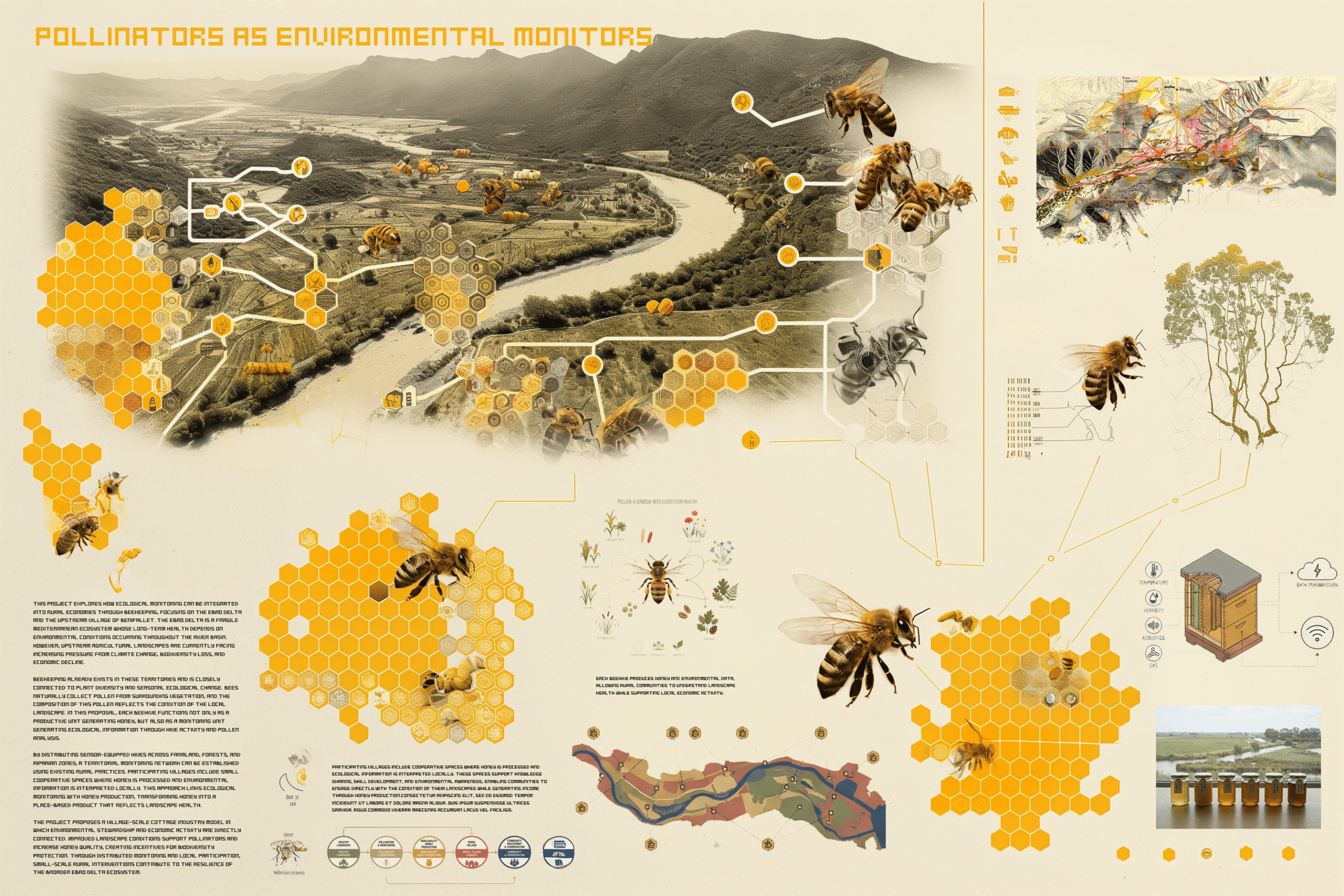
This project explores how ecological monitoring can be integrated into rural economies through beekeeping in the Ebro Delta region, with a focus on the upstream village of Benifallet. Bees naturally collect pollen from surrounding vegetation, and the composition of this pollen reflects local plant diversity and environmental conditions. By equipping beehives with simple sensors and distributing them across agricultural and natural landscapes, each hive becomes both a productive and monitoring unit. Honey produced in these conditions carries ecological information about the landscape. The project proposes a village-based cottage industry model where environmental monitoring and honey production are linked, allowing communities to generate income while supporting biodiversity and strengthening the resilience of the Ebro Delta ecosystem.
Landscape Under Pressure
Upstream agricultural landscapes are currently facing increasing pressure from climate change, biodiversity loss, and economic decline. Changes in land use and intensive farming practices are affecting plant diversity and environmental stability across the territory.
Bees as Environmental Indicators
Beekeeping already exists in these territories and is closely connected to plant diversity and seasonal ecological change. As bees forage across farmland, forests, riverbanks, and wild vegetation, they collect pollen from surrounding plant species. The composition of this pollen reflects the condition of the local landscape.
Honey as Ecological Information
Honey becomes a place specific product that carries ecological information about the environment in which it is produced. Variations in pollen content and plant diversity influence the taste, composition, and quality of honey from different regions.
Distributed Monitoring System
In this proposal, each beehive functions not only as a productive unit generating honey, but also as a monitoring unit generating environmental information through hive activity and pollen analysis. By distributing sensor equipped hives across agricultural and natural zones, a territorial monitoring network can be established using existing rural practices.
Village Based Production
Participating villages include cooperative spaces where honey is processed and ecological information is interpreted locally. These spaces support knowledge sharing and allow communities to engage directly with the condition of their landscapes.
Local Economy and Environmental Care
This approach links environmental monitoring with honey production, transforming honey into a landscape based product that reflects biodiversity and seasonal variation. The project proposes a village scale cottage industry model in which ecological stewardship and economic activity are directly connected.
By combining traditional beekeeping practices with simple monitoring tools, rural communities can generate income while supporting biodiversity and strengthening the long term resilience of the Ebro Delta
