
In our final project for the Large-Scale 3D Printing with Biomaterials workshop at IAAC, we developed a temporary acoustic barrier made from recycled cork and bio-based binders. The proposal rethinks permanence in architecture by designing a material system that can serve a specific event, then return to the soil after use.
Project Concept
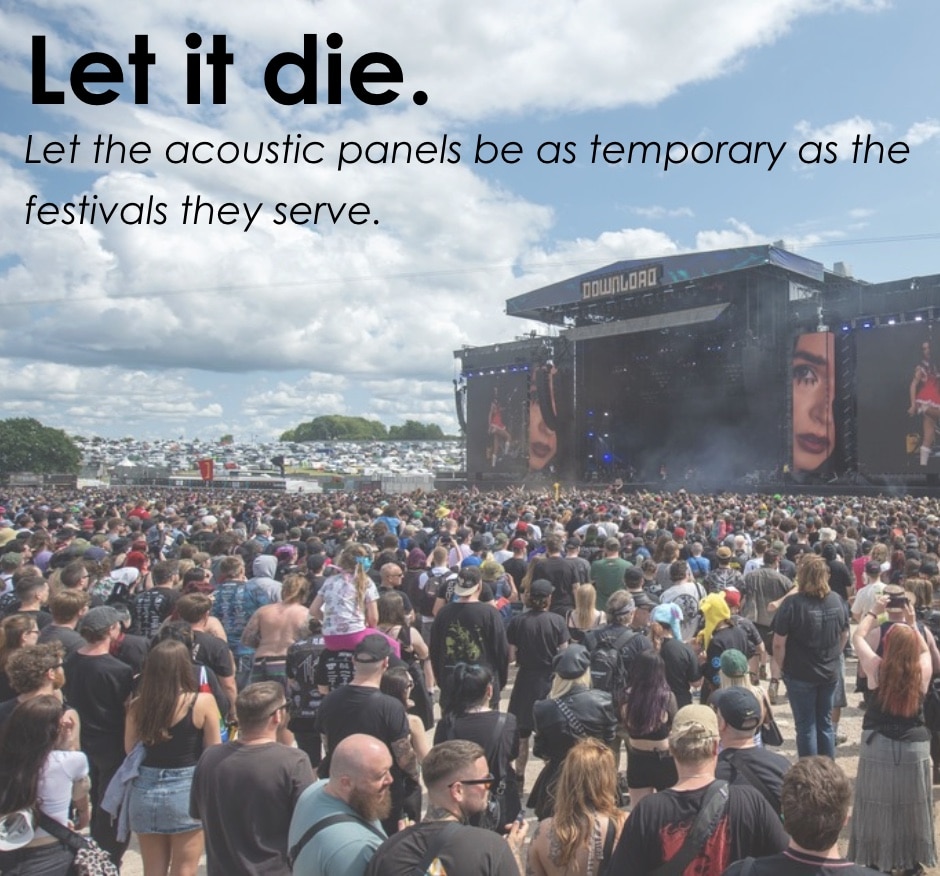
The project begins from a simple idea: not every architectural intervention needs to last forever. We wanted to create a structure that supports the acoustic and spatial needs of festivals while embracing transience as a design value. Instead of generating waste after the event, the panels are intended to be reused, disassembled, composted, or integrated into soil-based applications.
This approach frames architecture as a temporary environmental agent rather than a permanent object. Cork became the ideal material for this logic because it is renewable, biodegradable, and capable of acting as a carbon sink during its life cycle.
Material Sourcing
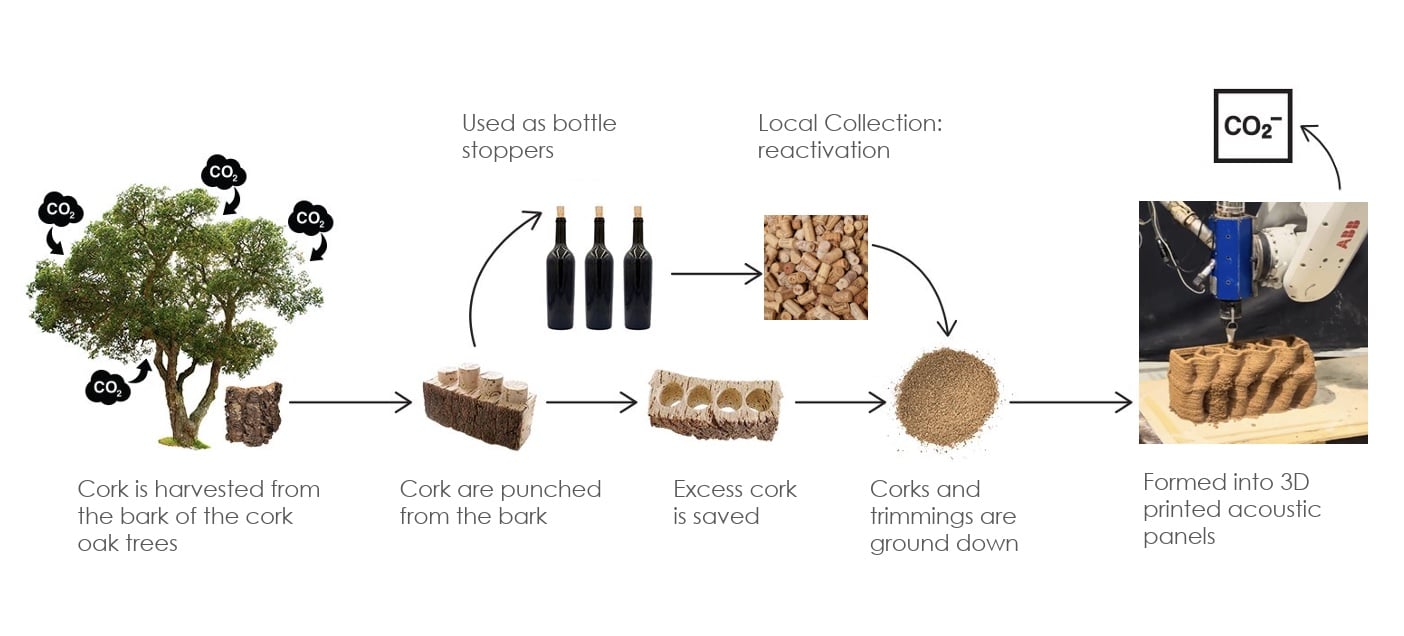
Our material strategy focused on post-consumer cork, especially used bottle stoppers and production scraps that would otherwise be discarded. Cork comes from the bark of the cork oak tree, harvested without cutting down the tree, typically every 9–12 years.
By collecting local cork waste from bars, restaurants, households, and recycling streams, the project transforms a low-value residue into a printable architectural material. This shift from waste to resource is central to the project’s ecological and design logic.
Material Preparation
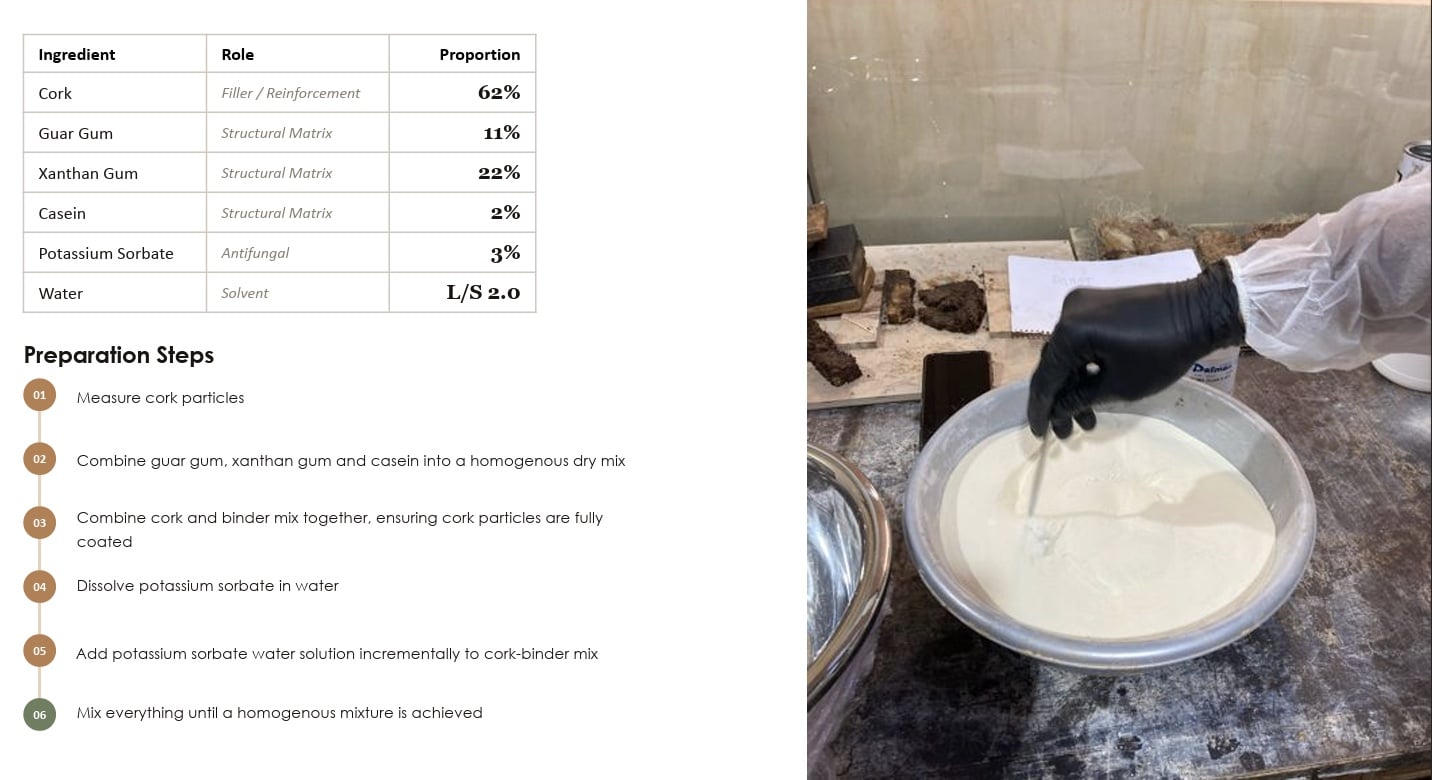
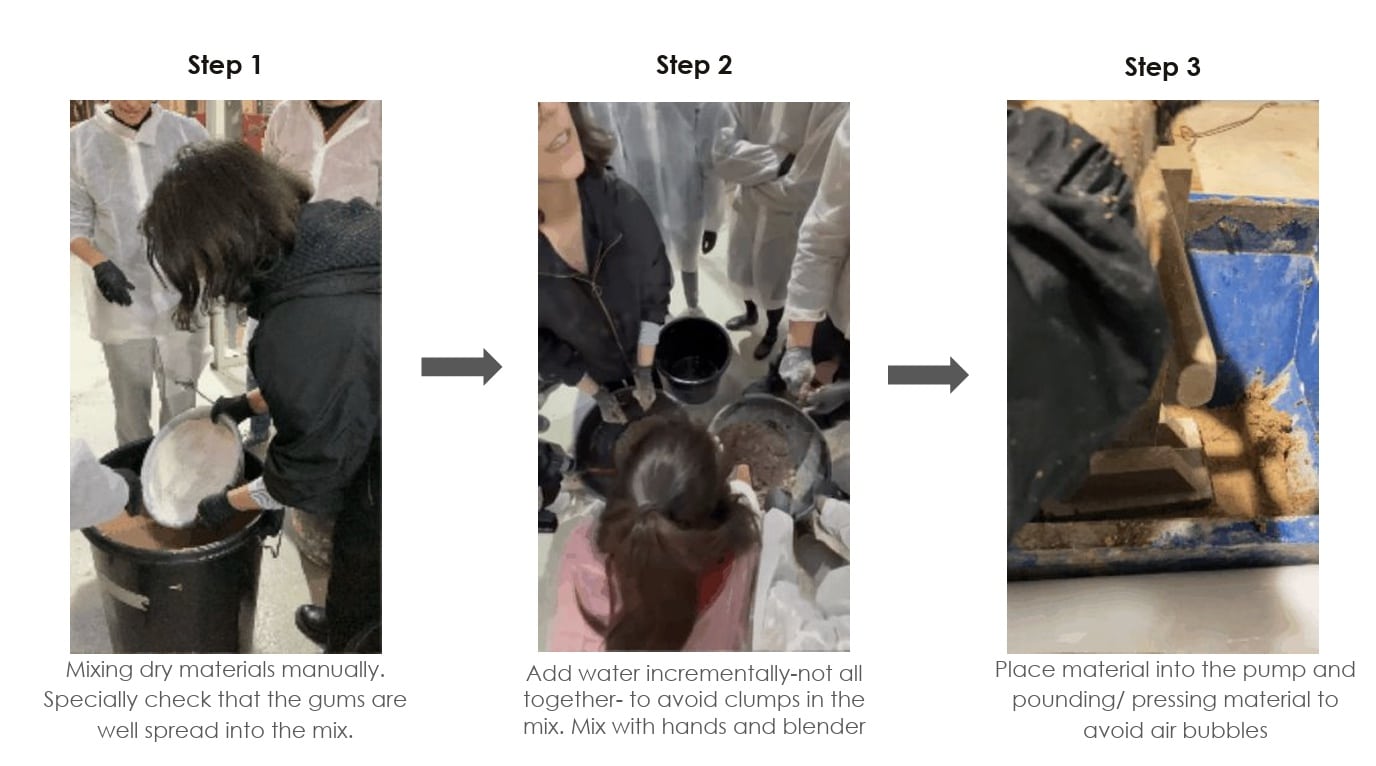
To create a printable paste, we developed a cork-based composite using guar gum, xanthan gum, casein, potassium sorbate, and water. Cork acts as the main filler and reinforcement, while the binder system gives the material enough cohesion for extrusion and structural stability. The final formula used 62% cork, 11% guar gum, 22% xanthan gum, 2% casein, 3% potassium sorbate, and water at a liquid-to-solid ratio of 2.0. The mixing process required careful handling: dry ingredients had to be blended evenly before water was added gradually to avoid clumps and ensure a homogeneous paste.
Design Development
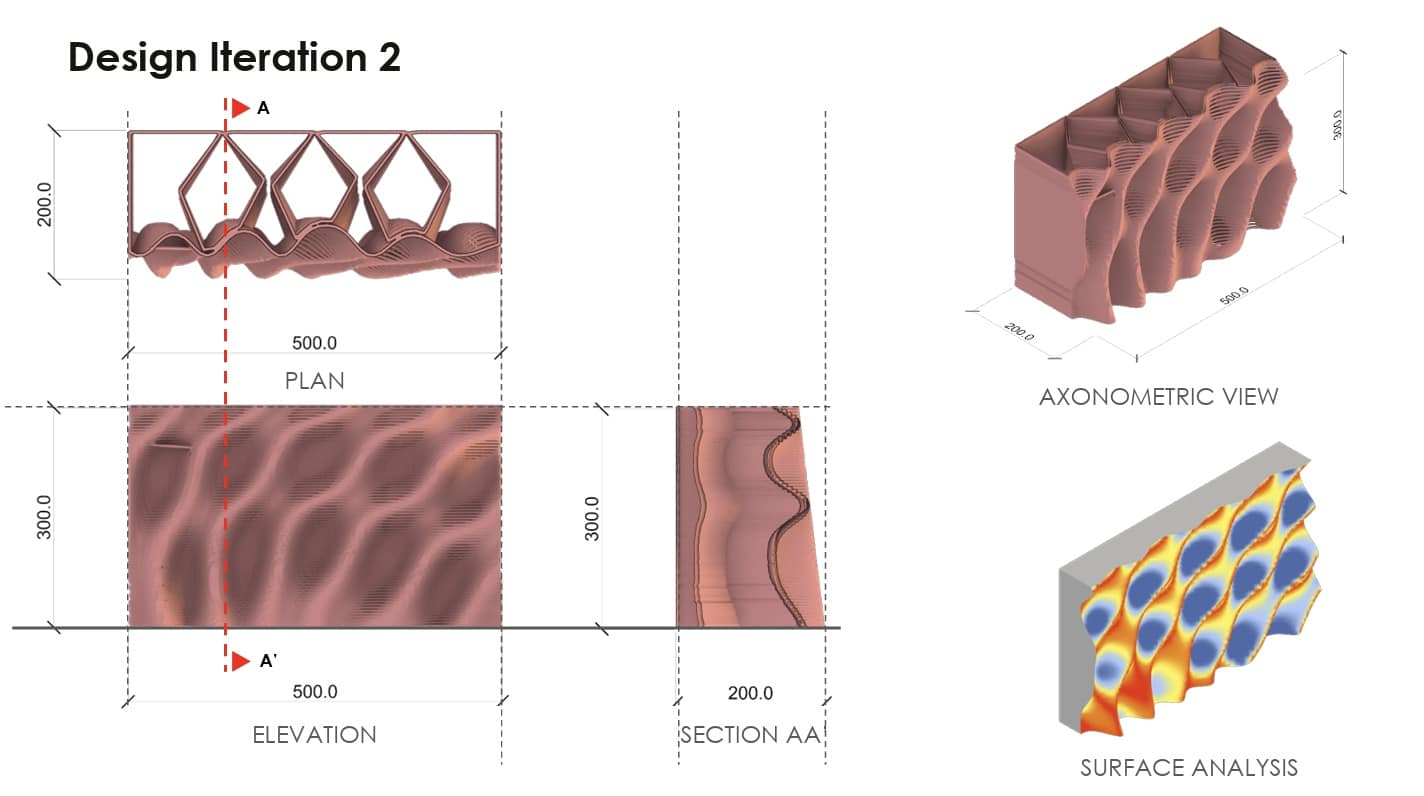
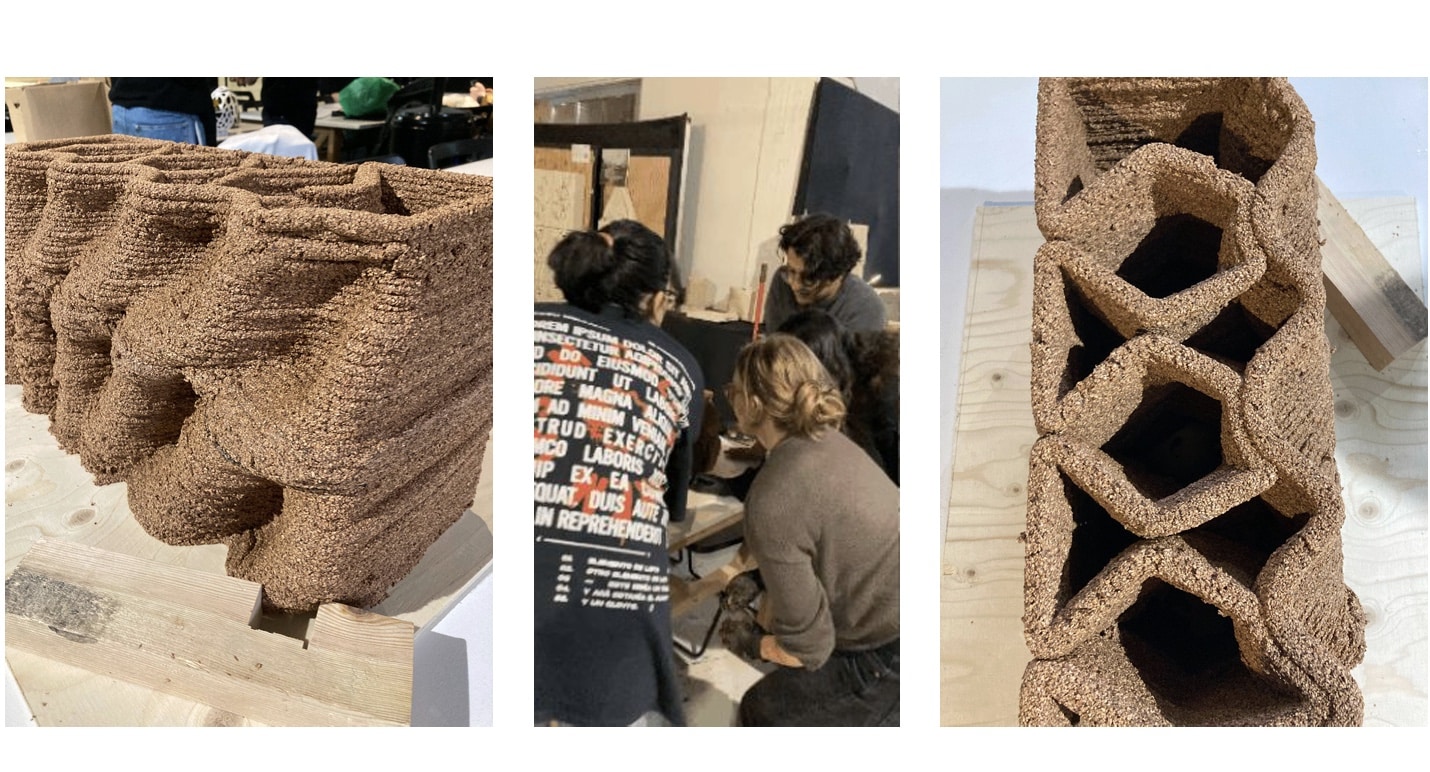
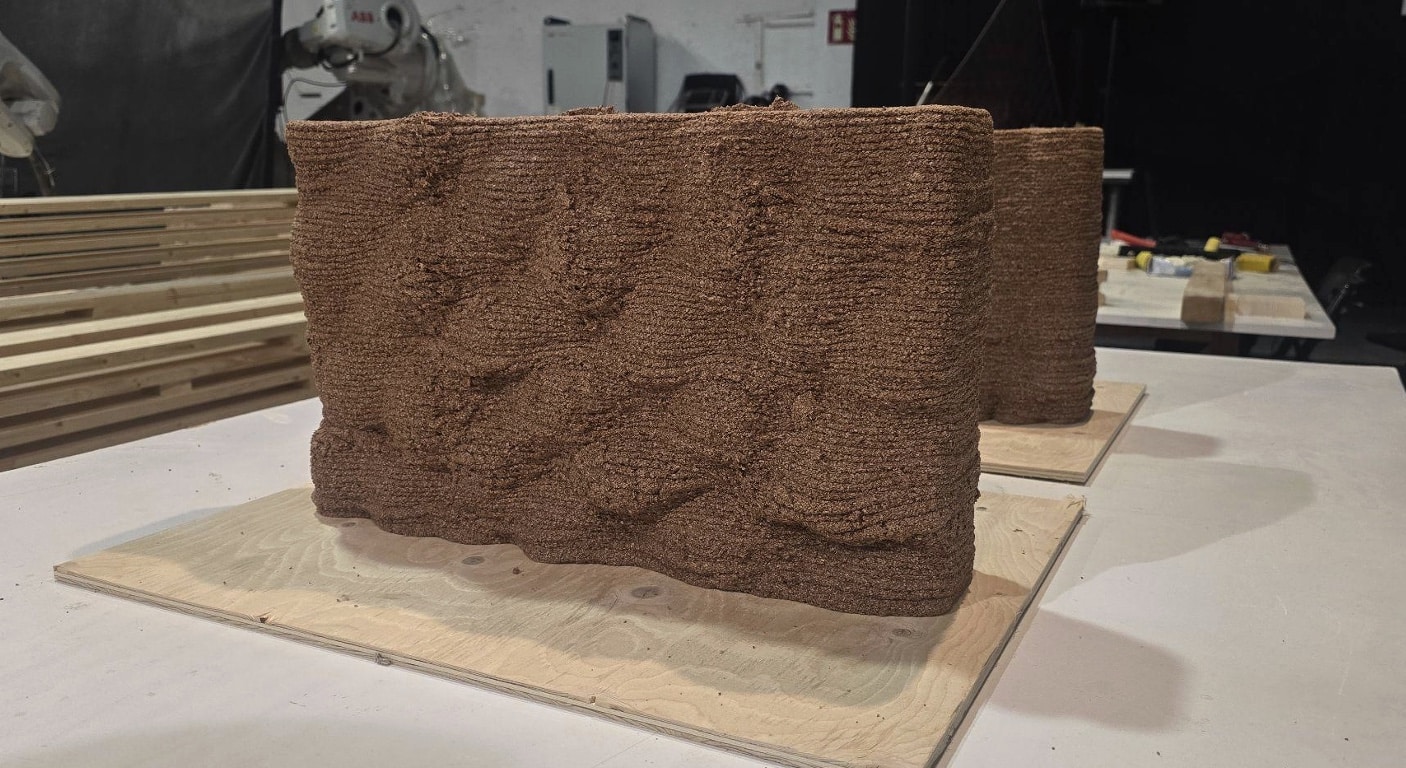
The design evolved through two main iterations, testing panel geometry, acoustic performance, and surface articulation. We explored how parametric variation could produce panels that are visually dynamic while remaining practical for large-scale fabrication and modular assembly.
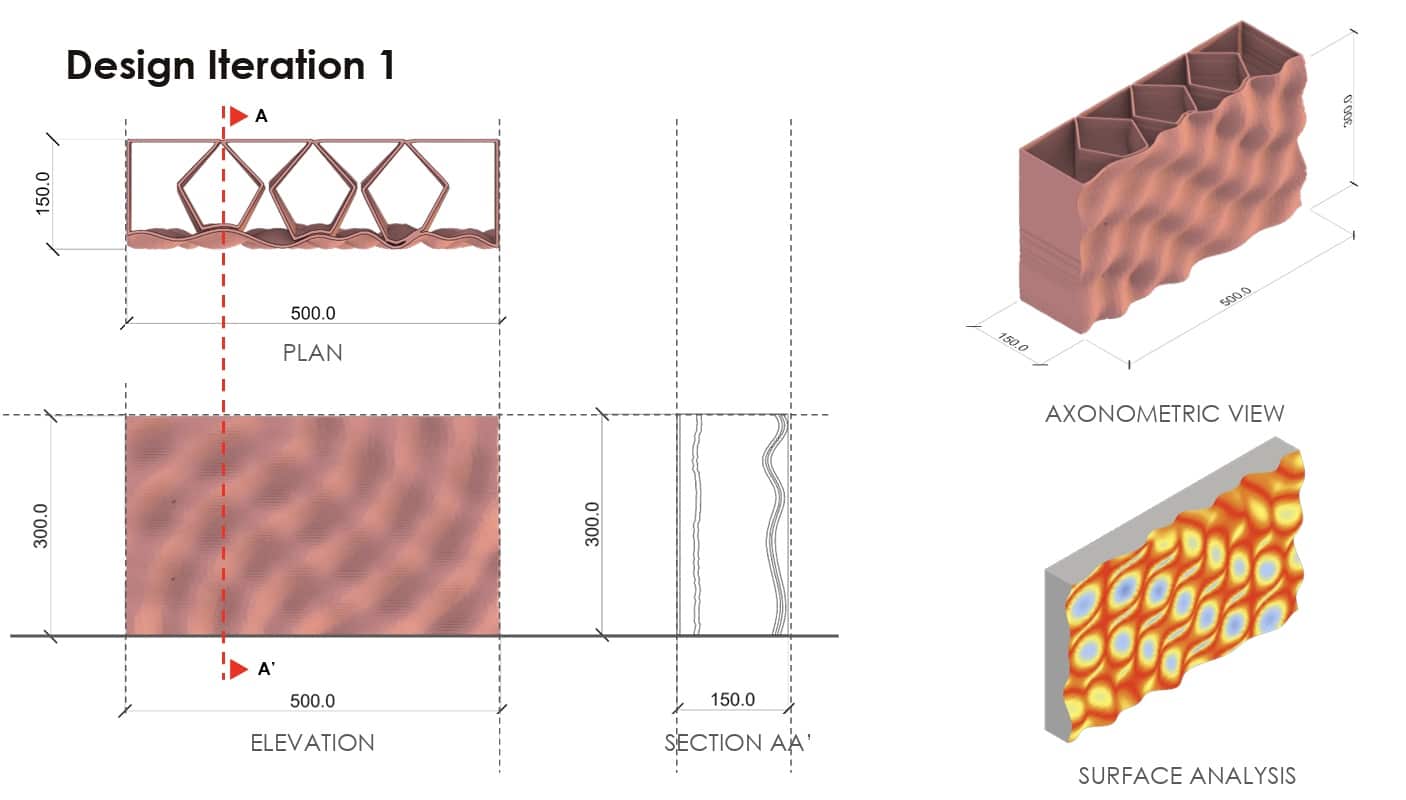
The final concept combines architectural rhythm with material efficiency. The form is intended to work as both a spatial divider and an acoustic surface, creating a temporary infrastructure for festival environments.
Fabrication Process
The panels were produced through large-scale additive manufacturing, using the cork composite as a printable paste. This process allowed us to move from material testing to architectural prototyping, demonstrating how biomaterials can be translated into performative built elements.
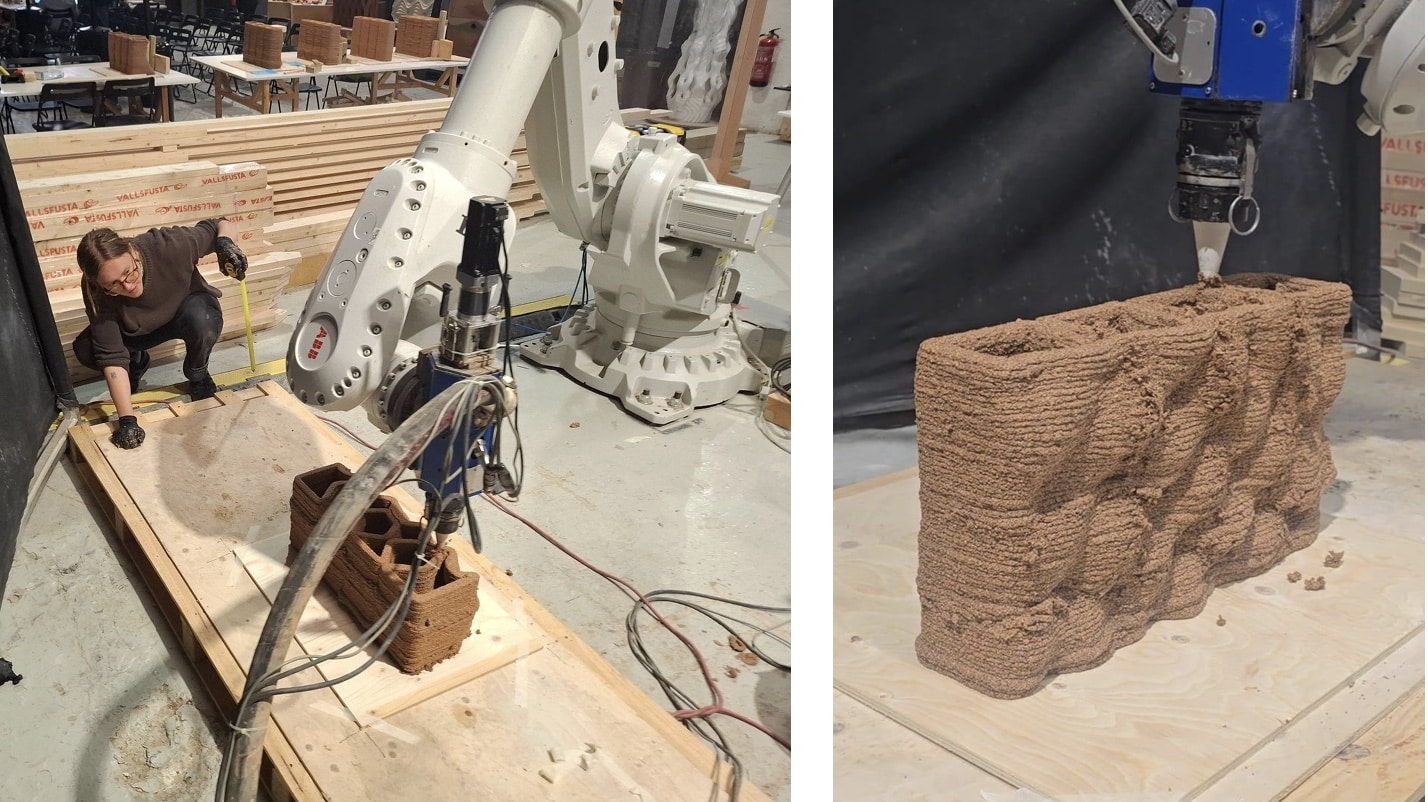
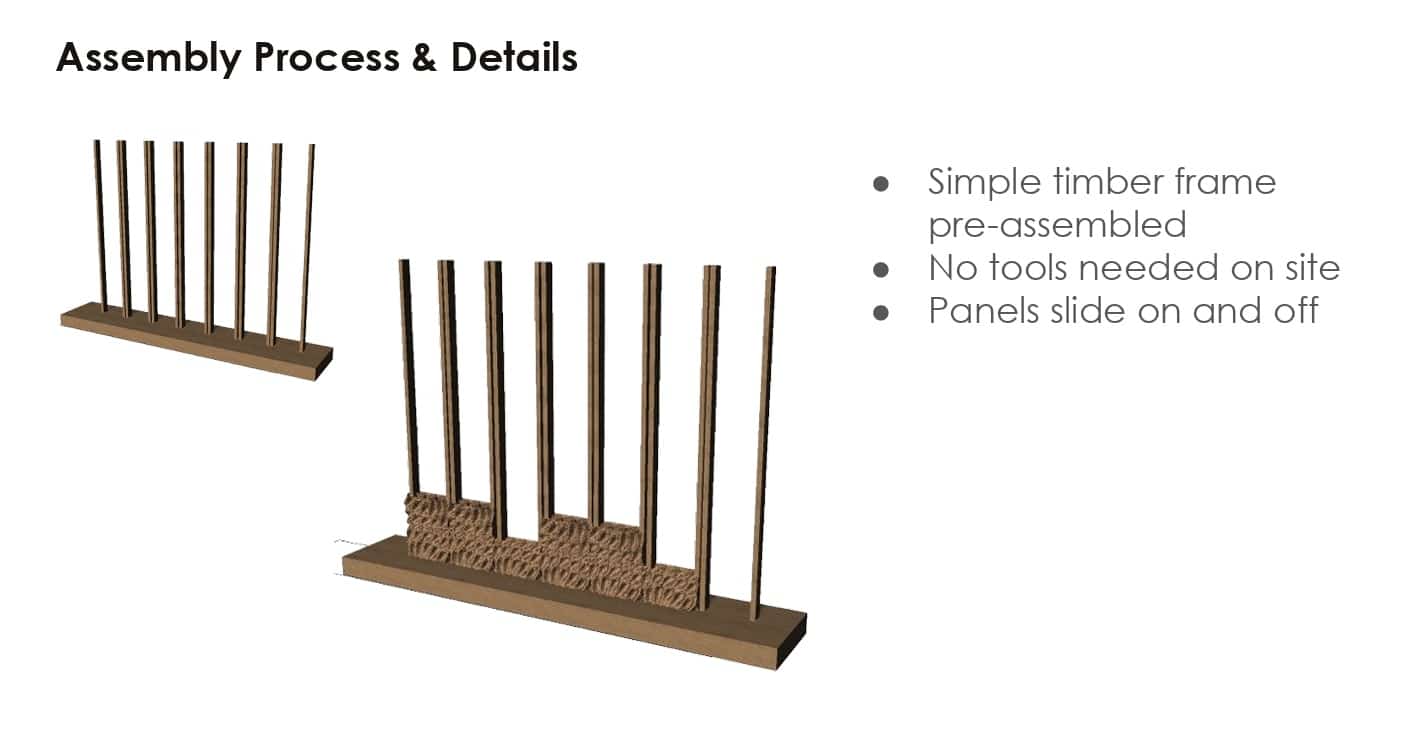
A key part of the system is its reusability and on-site simplicity. The structure uses a pre-assembled timber frame, requires no tools during installation, and allows panels to slide on and off easily.
Environmental Logic
One of the strongest arguments for the project is its environmental logic. Compared with PVC, cork offers a lower-toxicity, renewable alternative with the potential for carbon sequestration, while PVC is associated with end-of-life pollution and incineration risks.
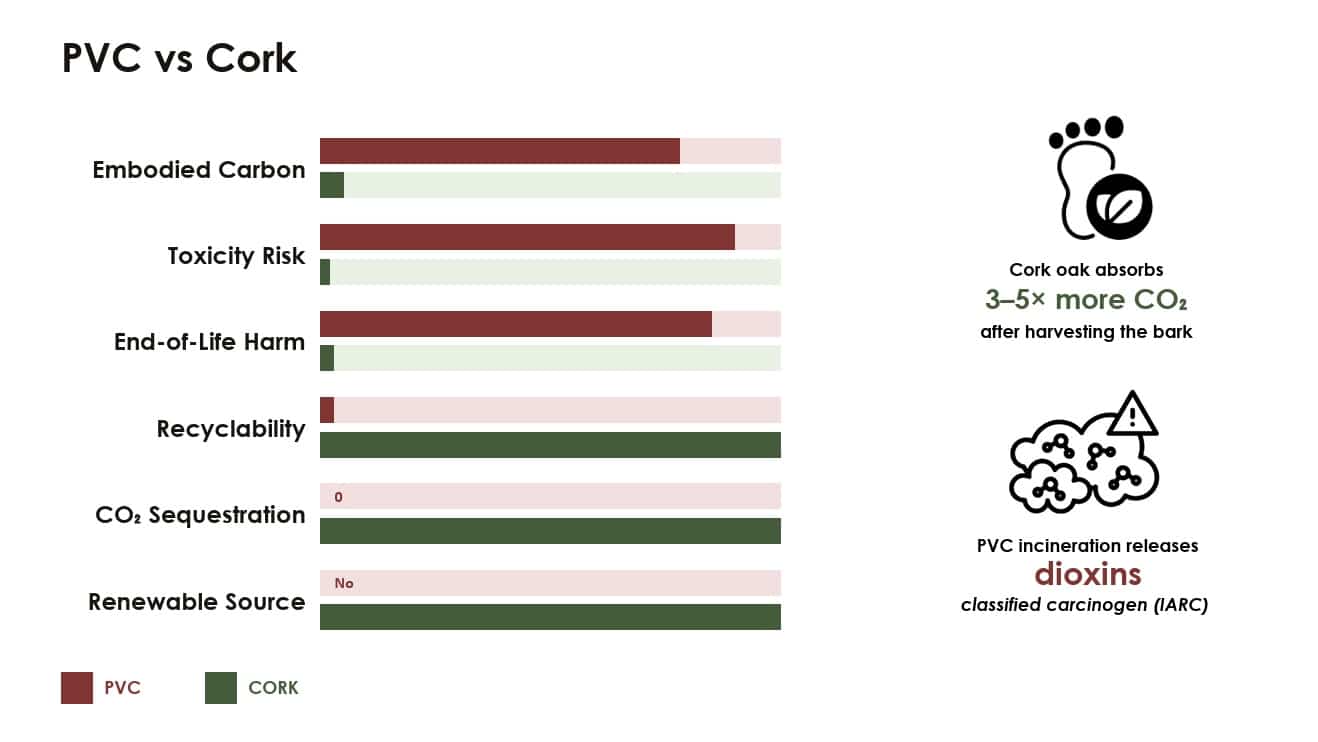
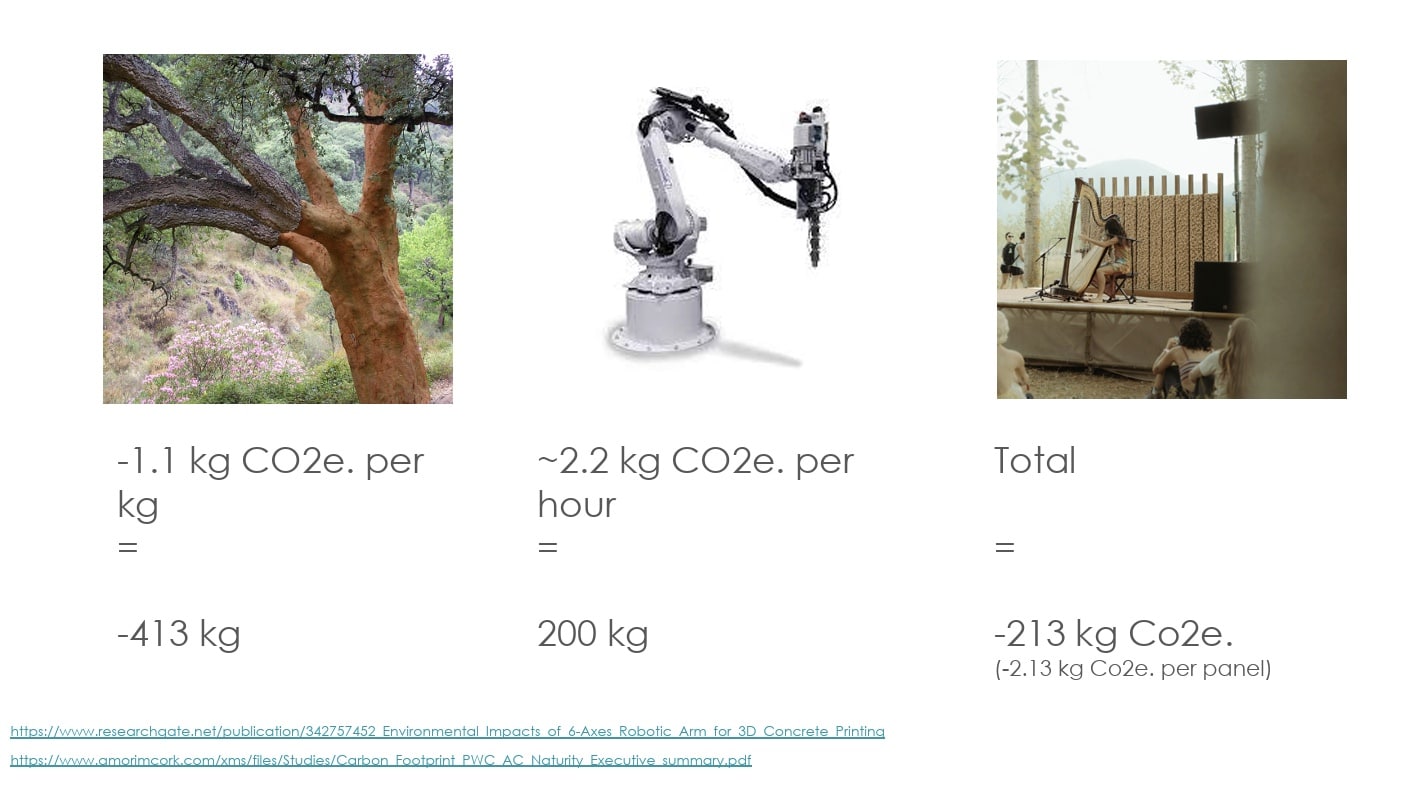
Our analysis estimated a total embodied carbon of approximately -213 kg CO2e, or about -2.13 kg CO2e per panel, reflecting cork’s capacity to store carbon and offset part of the production impact. This makes the project not only a material experiment but also a response to the environmental footprint of temporary event infrastructure.
Afterlife Strategy
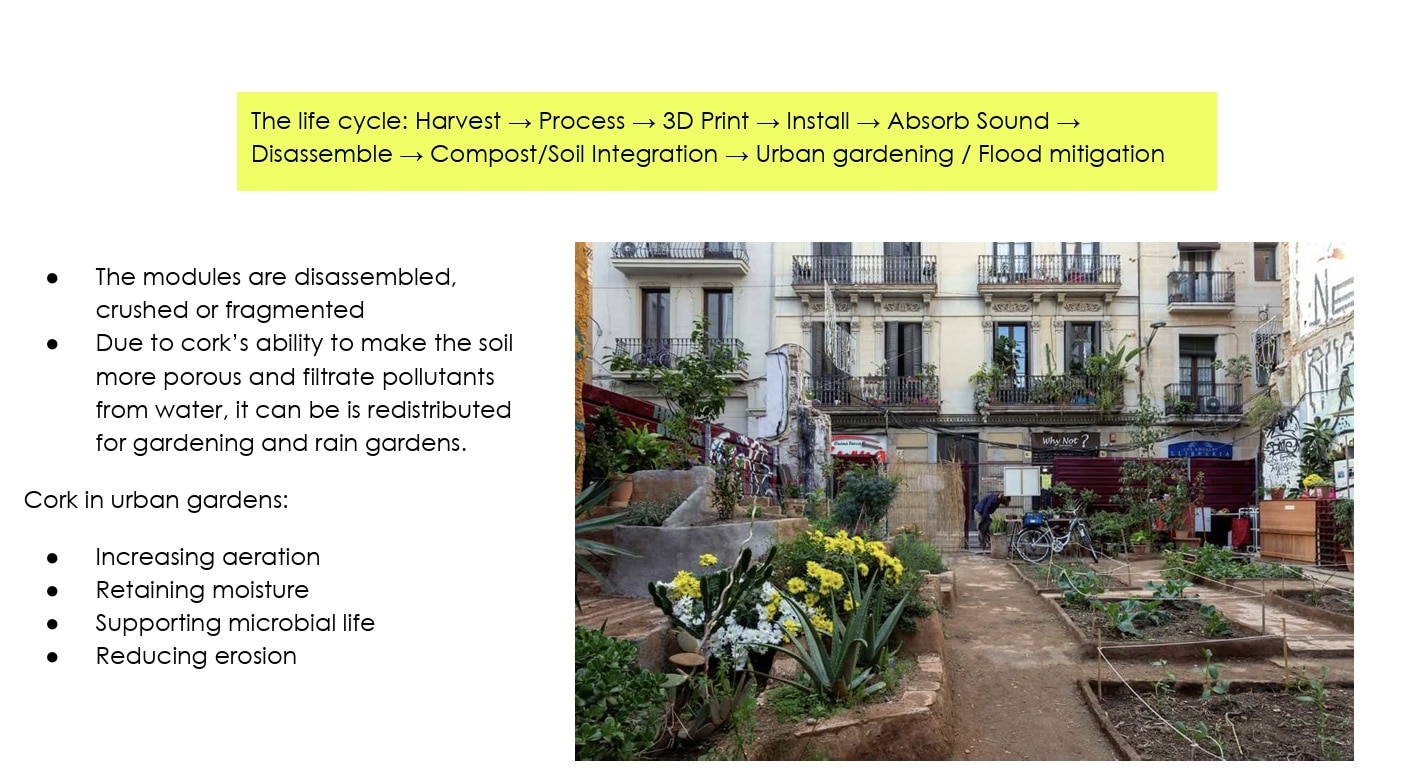
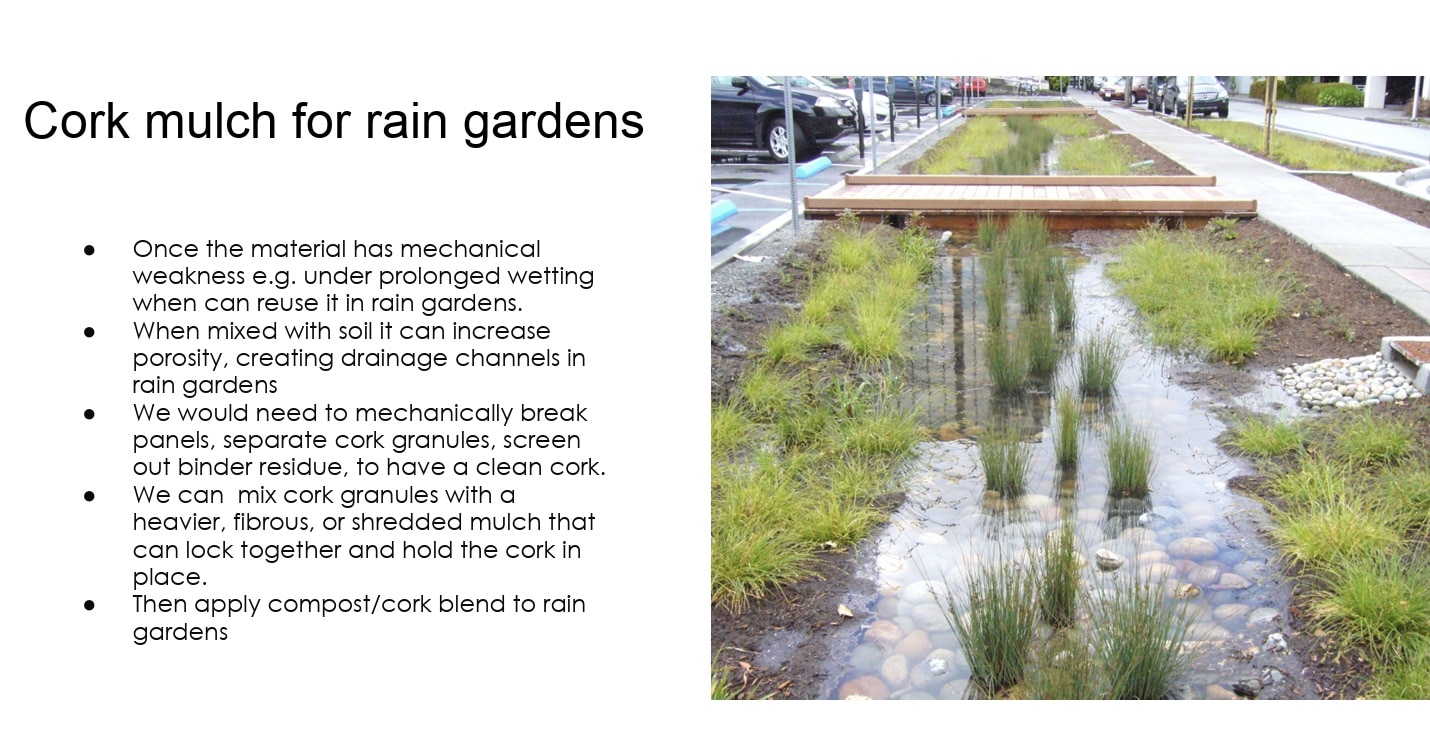
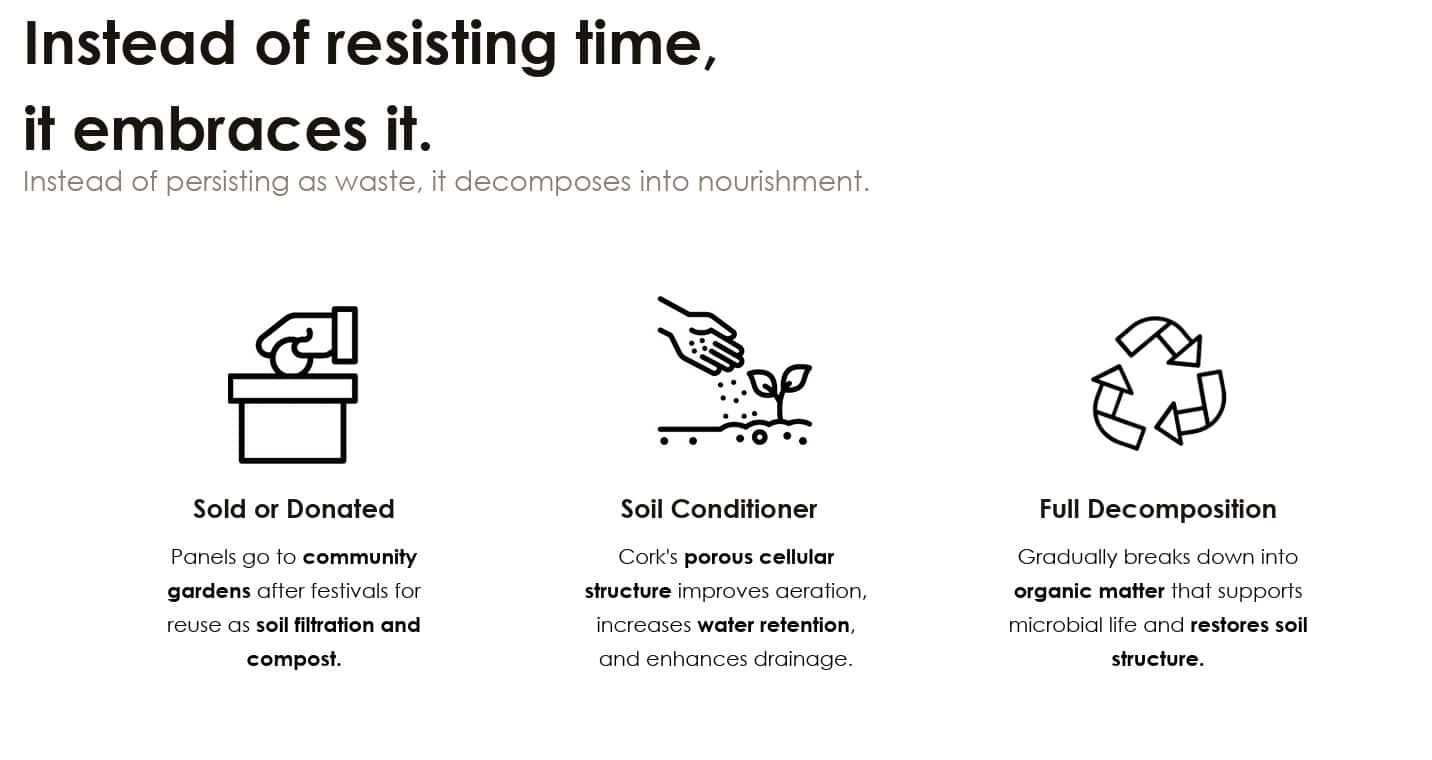
The afterlife of the panels is a key part of the design. Once the festival ends, the modules can be disassembled, crushed, or fragmented and redistributed for gardening, rain gardens, or soil improvement. Because cork can increase porosity, retain moisture, support microbial life, and help reduce erosion, the material has value beyond its initial architectural role. In this way, the project closes the loop between fabrication, performance, and environmental return.
This workshop taught us how large-scale 3D printing can expand beyond form-making and become a tool for environmental thinking. By combining biomaterials, digital fabrication, and a circular end-of-life strategy, we proposed a temporary architectural system that is designed not to persist, but to disappear responsibly.
