
” A Facade That Responds to Light “

concept:
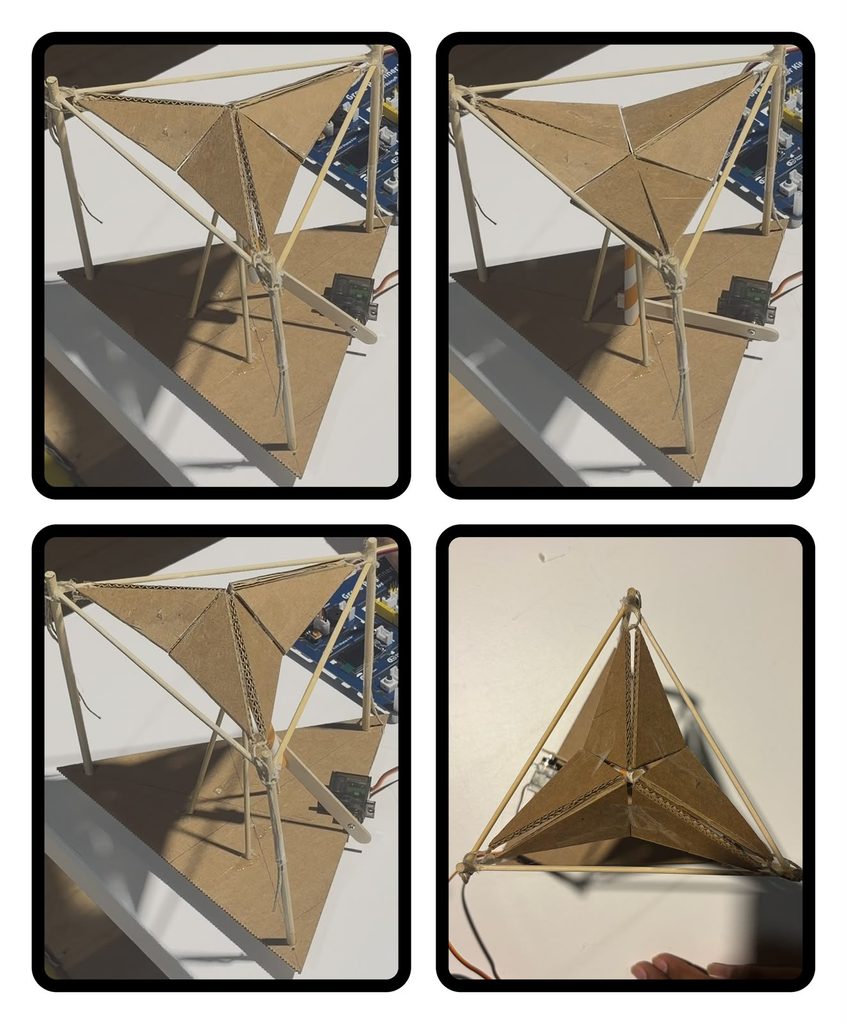
LumiBloom explores how a facade can respond to changing light through movement. Inspired by flower petals, it uses triangular panels connected to a central mechanism. The panels open in low light and move towards a flatter, closed position in brighter conditions to provide shading. A light sensor, programmed system and servo motor control the movement.
Inspired by responsive facade systems such as the Al Bahar Towers, LumiBloom explores how a simple combination of geometry, physical computing and mechanical movement can make an architectural element more adaptable to its surroundings.
How Does It Work?
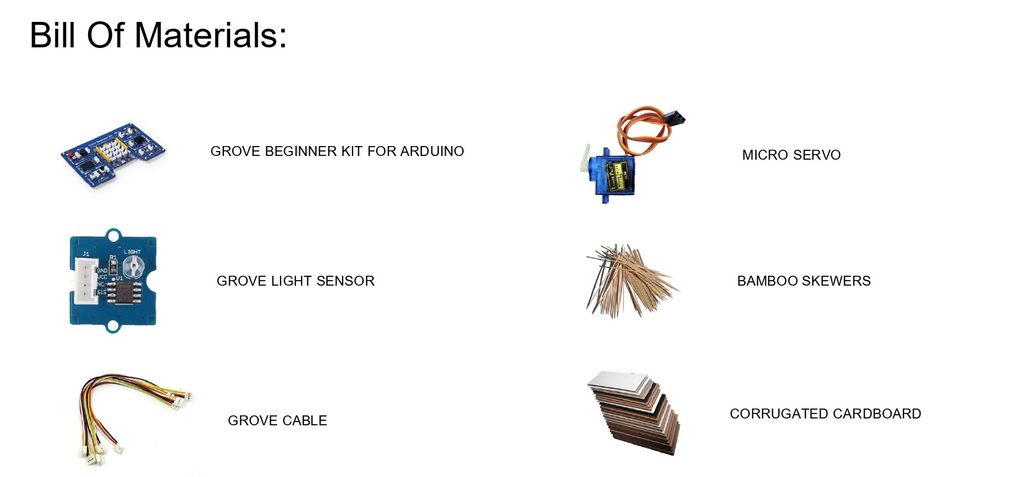
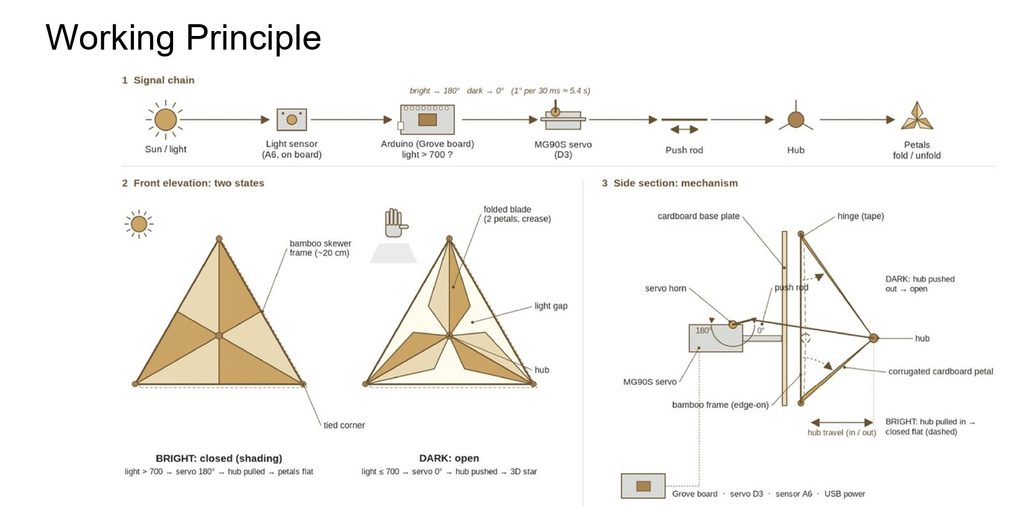
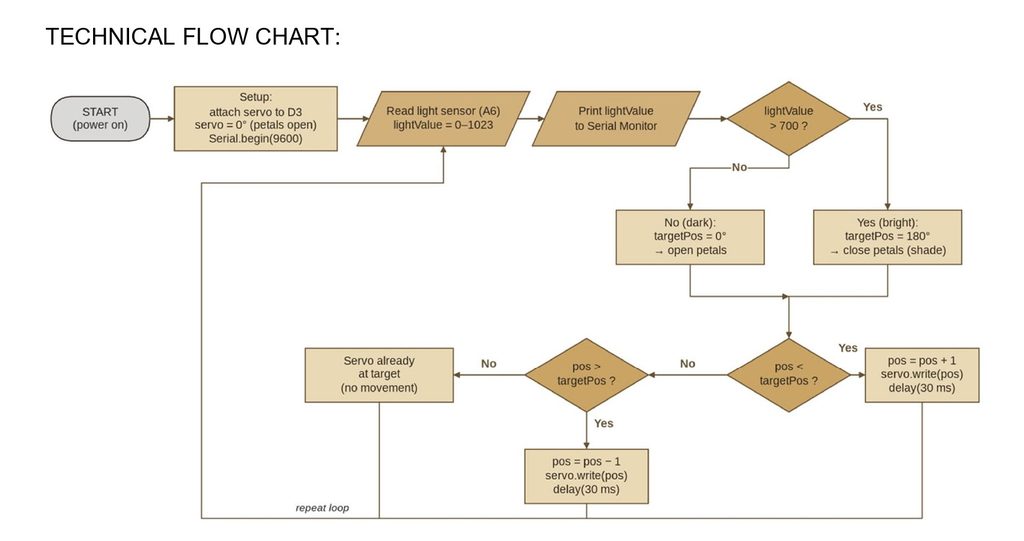
The system uses a Grove light sensor connected to an Arduino-compatible Grove Beginner Kit and a servo motor. The sensor detects the surrounding light level, and the code compares the reading with a threshold of 700. If the reading is above 700, the servo moves towards 50°. If it is 700 or below, it moves back towards 0°.
The servo moves in small steps and operates the central hub through a mechanical linkage, changing the position of the façade petals. In this way, the sensor detects the light and the code decides how the system should respond and the motor moves the mechanism accordingly.
Main Code:
#include <Servo.h>
#define LIGHT_SENSOR A6
#define SERVO_PIN 3
#define LIGHT_THRESHOLD 700
#define SERVO_SPEED 45
Servo myservo;
int lightValue = 0;
int pos = 0;
int targetPos = 0;
void setup() {
myservo.attach(SERVO_PIN);
myservo.write(0);
Serial.begin(9600);
}
void loop() {
lightValue = analogRead(LIGHT_SENSOR);
Serial.println(lightValue);
if (lightValue > LIGHT_THRESHOLD) {
targetPos = 50;
} else {
targetPos = 0;
}
if (pos < targetPos) {
pos++;
myservo.write(pos);
delay(SERVO_SPEED);
}
if (pos > targetPos) {
pos–;
myservo.write(pos);
delay(SERVO_SPEED);
}
}
Prototype
Demonstration Video
Future Developments:
Smoother, more reliable motion. To Add a second switch point so the panel stops twitching when the light hovers around one value. Then to tune the servo angle so the petals fold fully without straining the push rod.
Facade-scale materials. Replacing the cardboard and skewers with perforated aluminium or thin plywood petals, laser-cut hinges and a rigid frame. That would let the unit stand up to sun, wind and rain like the Al Bahar panels.
Smarter sensing Adding a temperature sensor and a clock so the panel reacts to heat and the sun’s position, not just brightness. Partial angles would also let it shade by degrees instead of only fully open or fully closed.
A connected facade. Link several units so they move as one responsive skin, each reacting to its own light. We could also log the data to compare indoor comfort and energy savings.
