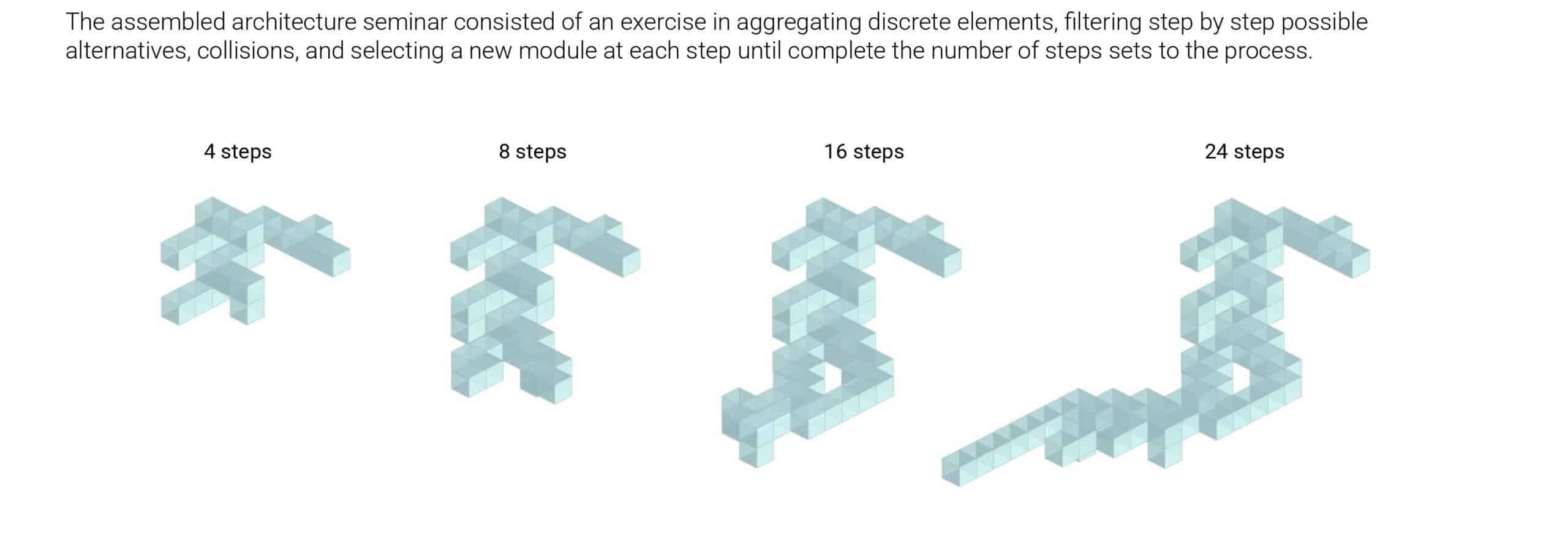
The objective of this project was to compare the effectiveness of different machine learning strategies applied into the exploration of a recursive model using the exercise worked on in the assembled architecture course as a proof of concept.
.
Recursive Processes in Architecture
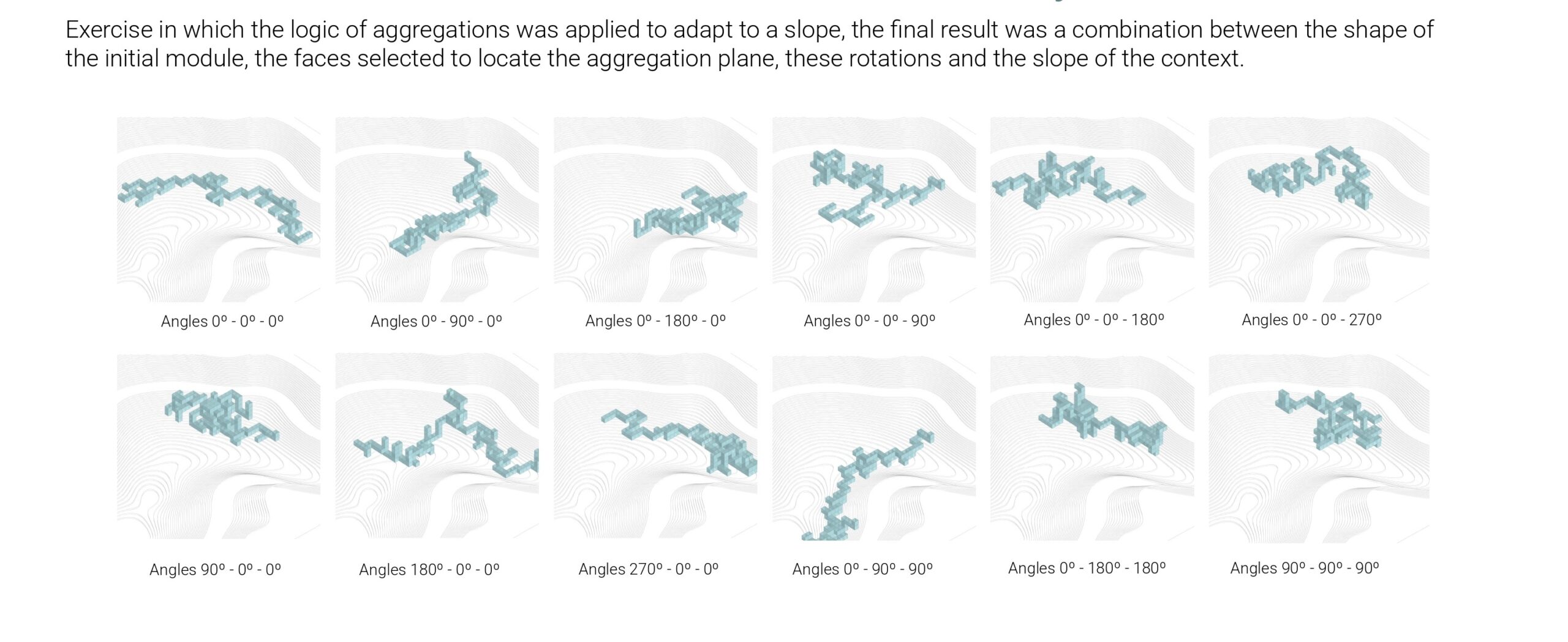
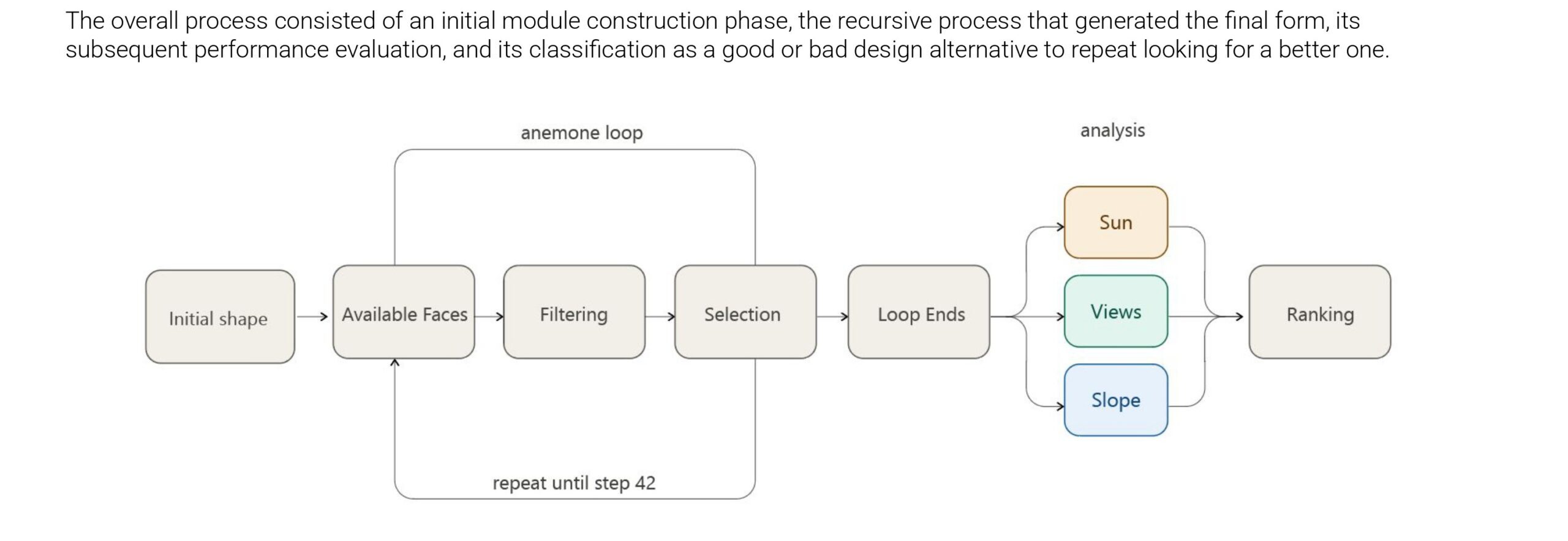
But this approach has left us with a question: is it possible to relate the performance of the whole to the input parameters when it was shaped by a series of local decisions instead of the performance analyses themselves? What would happen if each step of the loop were decided based on the analysis?
.
Step-by-step Performance evaluation Inside the Loop
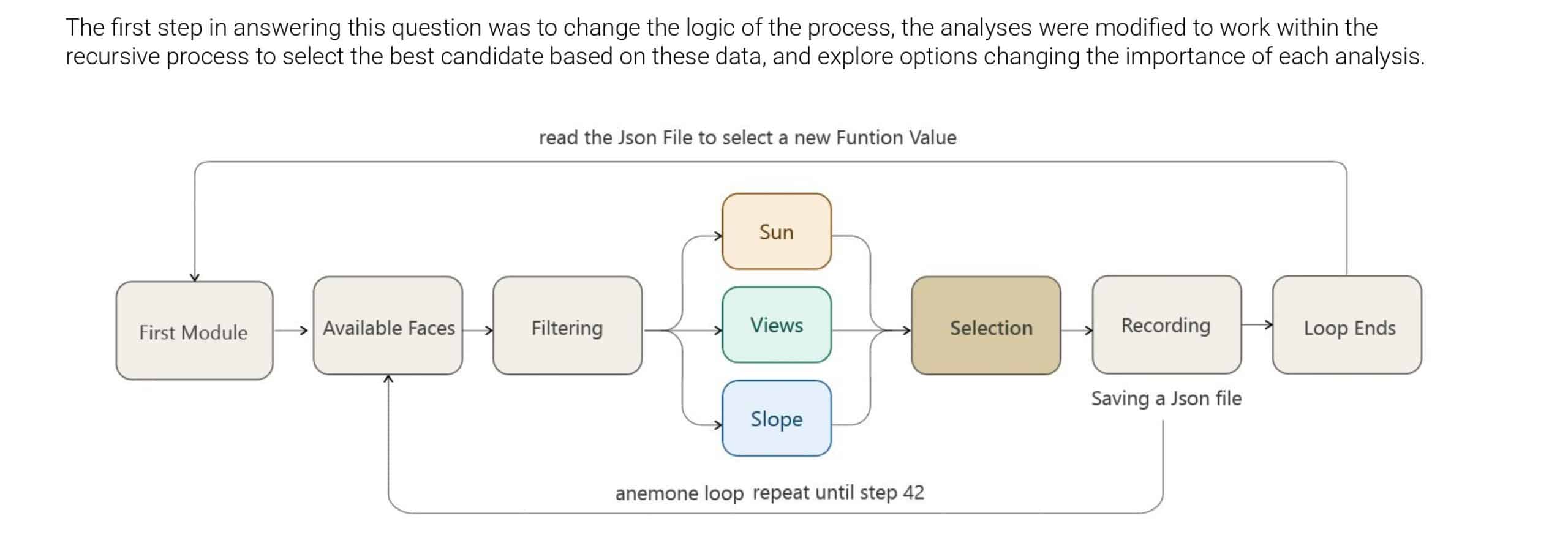
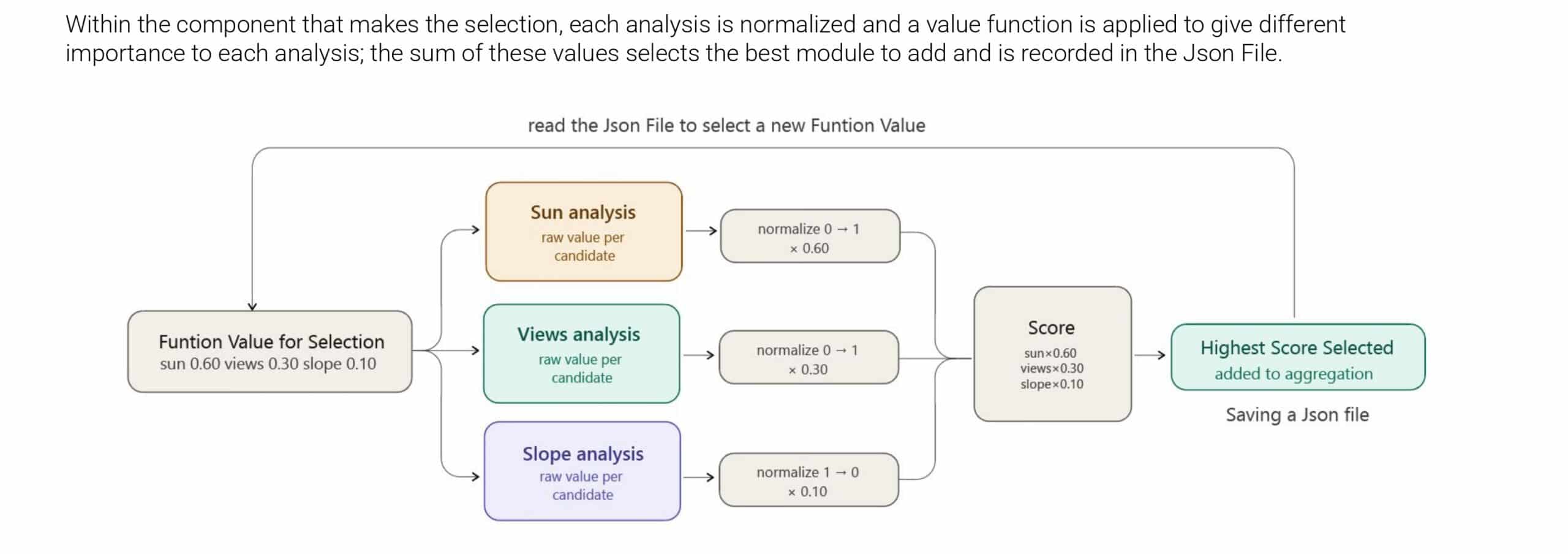
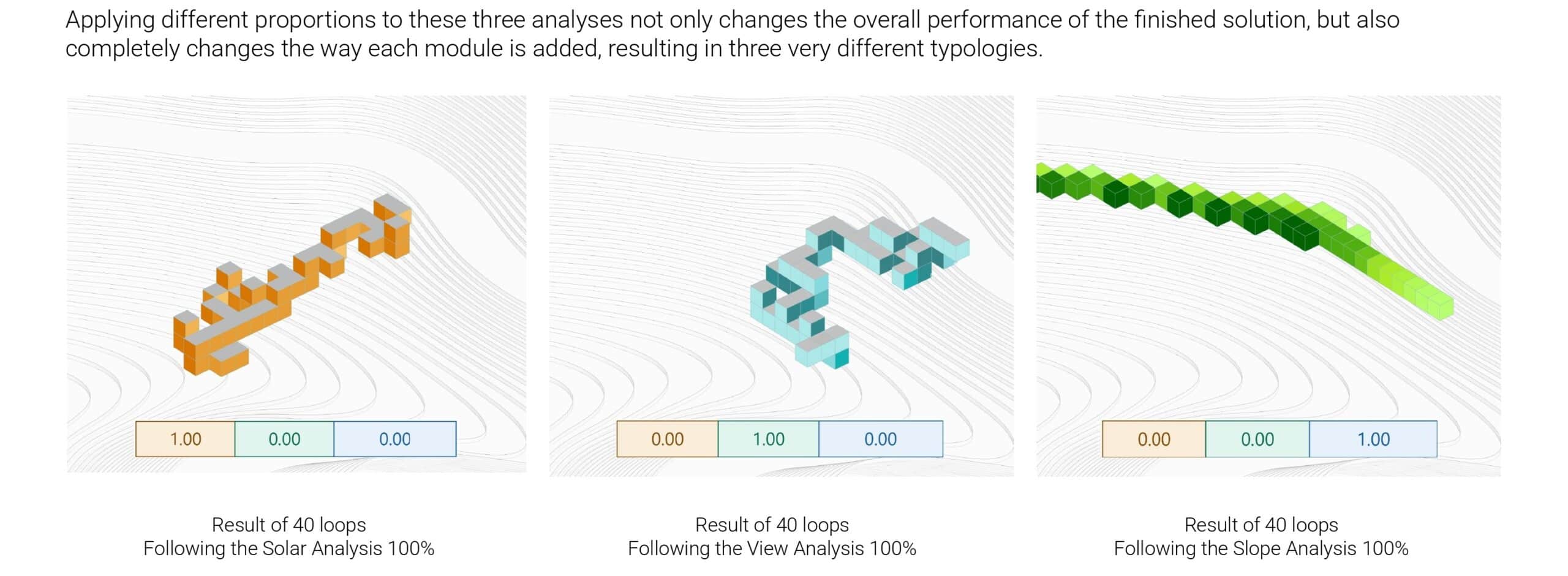
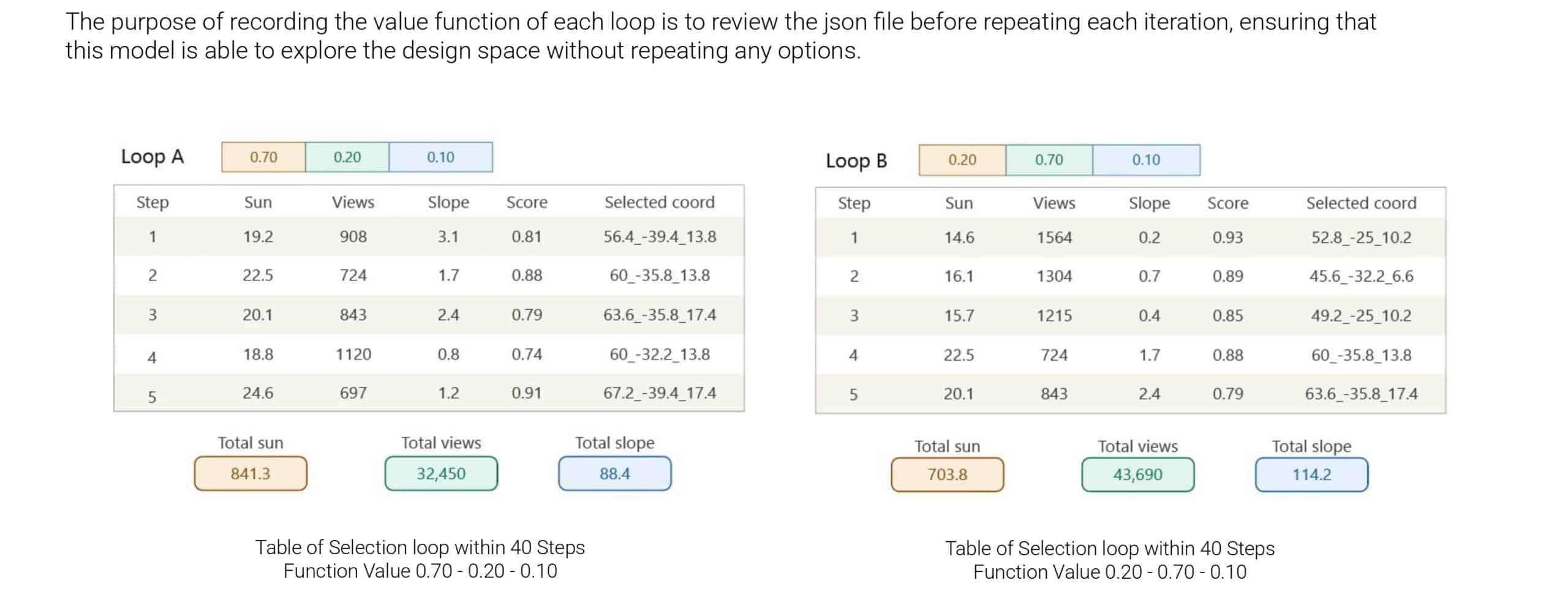
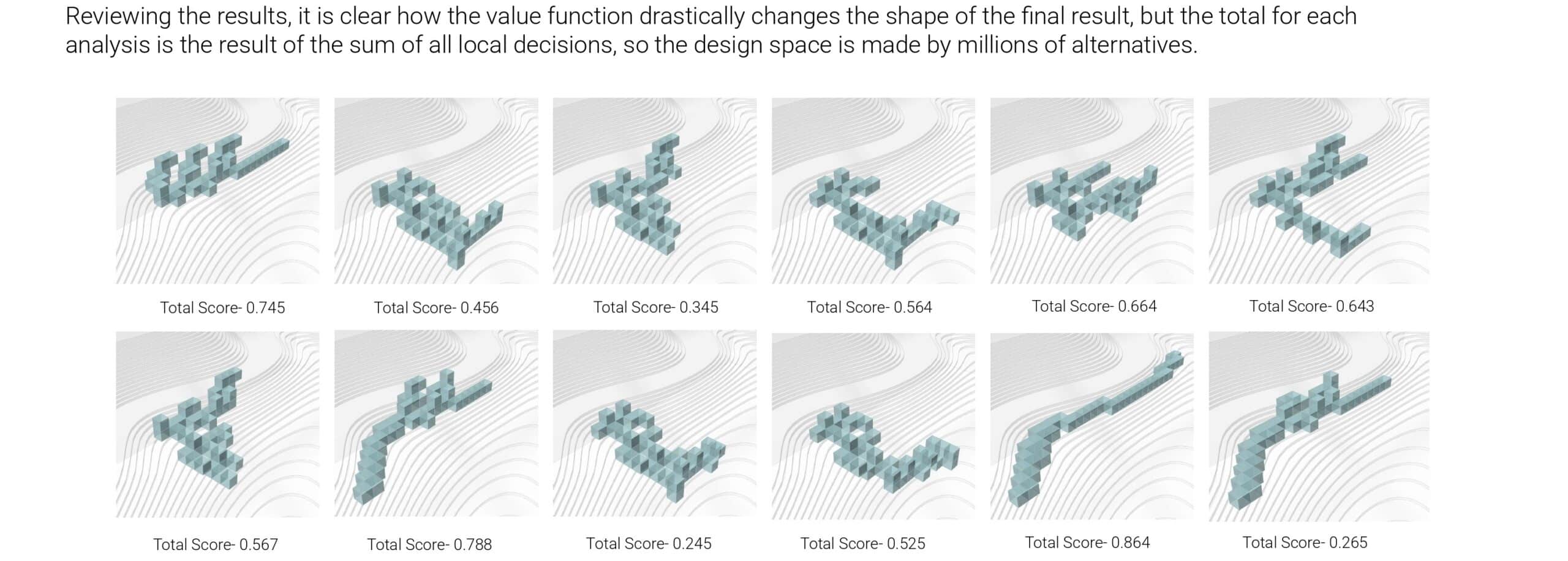
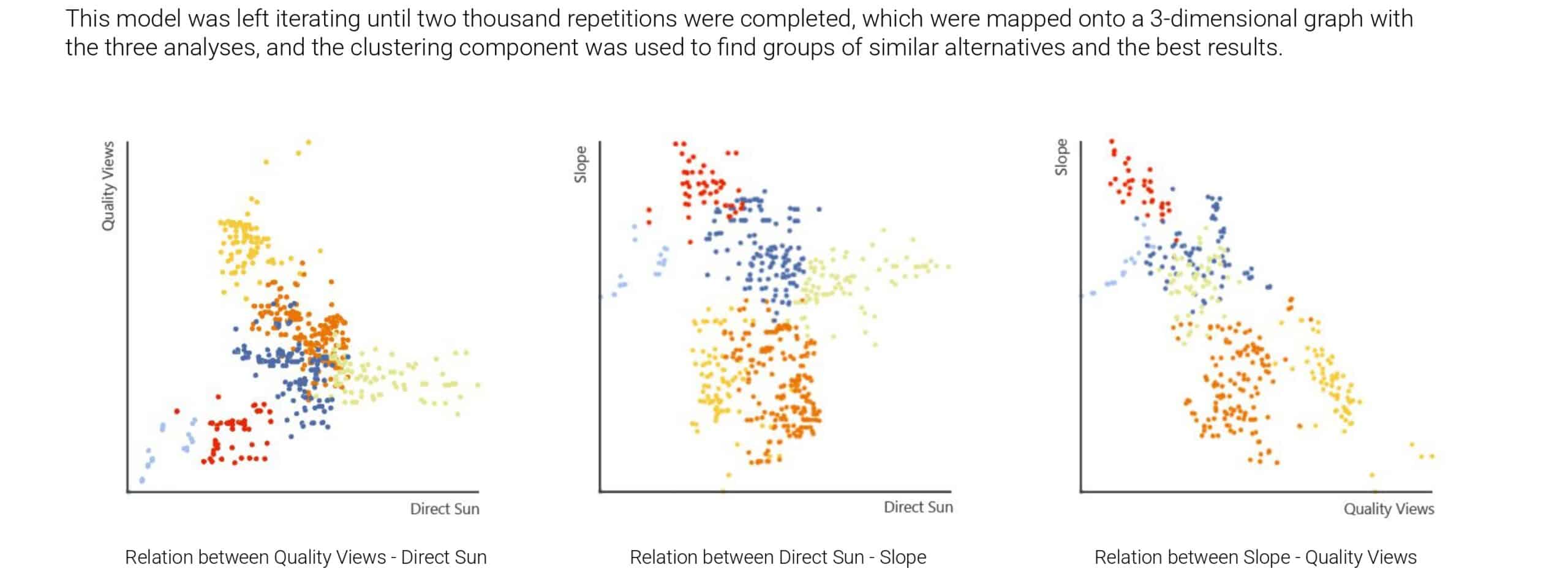
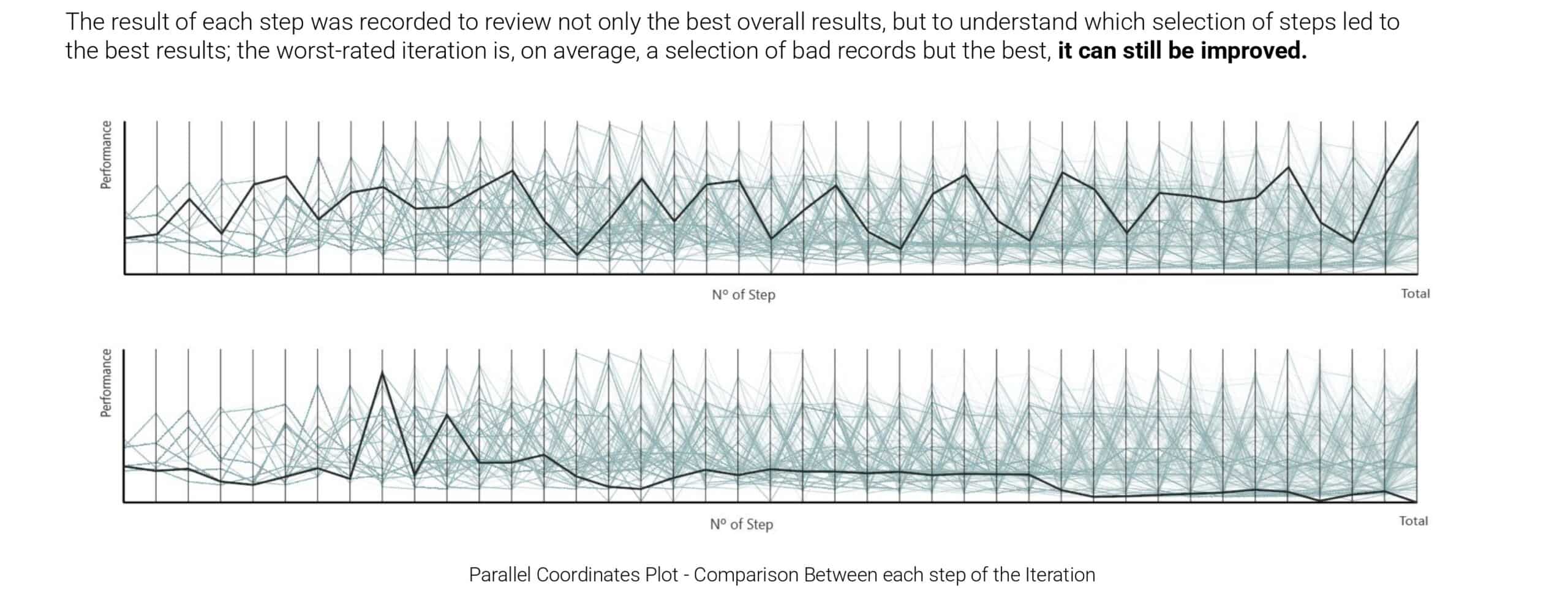
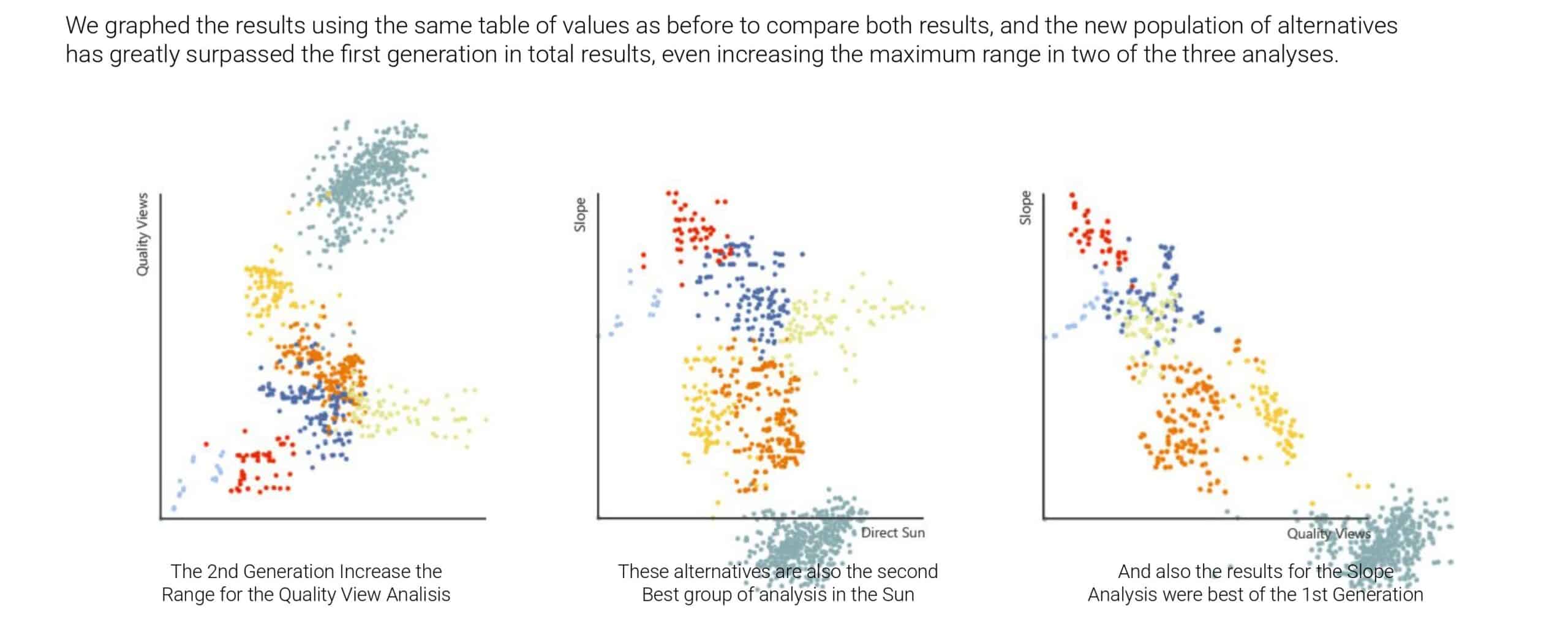
With a direct relationship between the coordinates selected in each step and the final performance of each alternative we can apply differents machine learning strategies and start to compare the results.
.
First Model – Random Forest Regressor
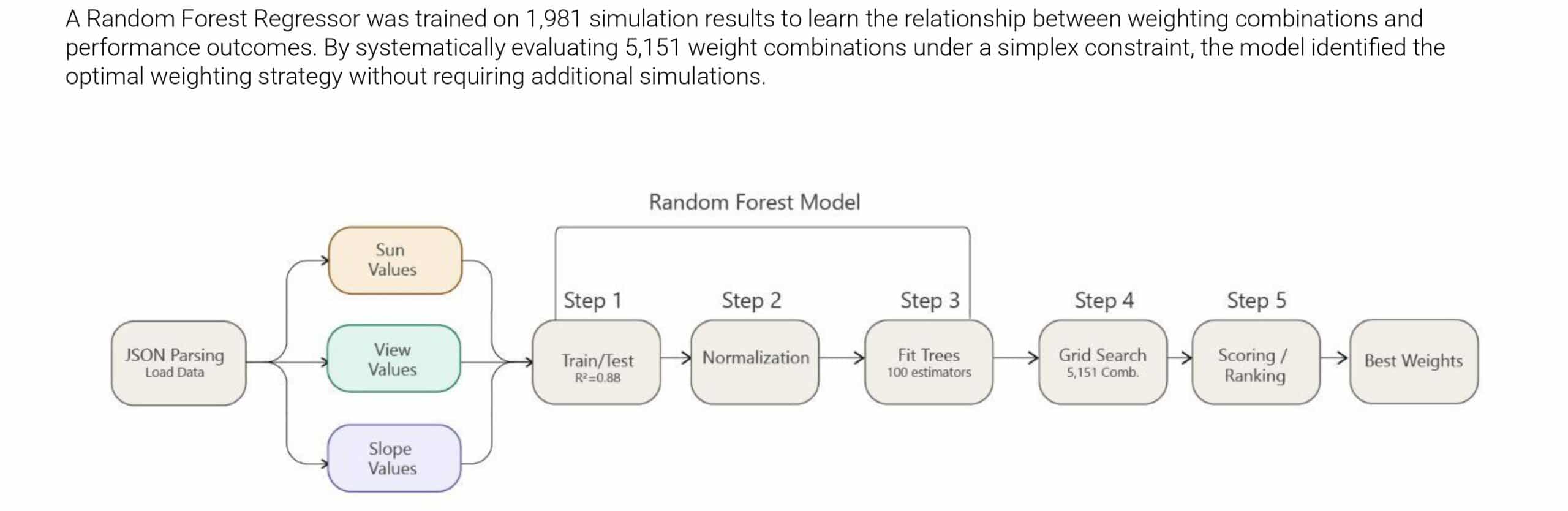
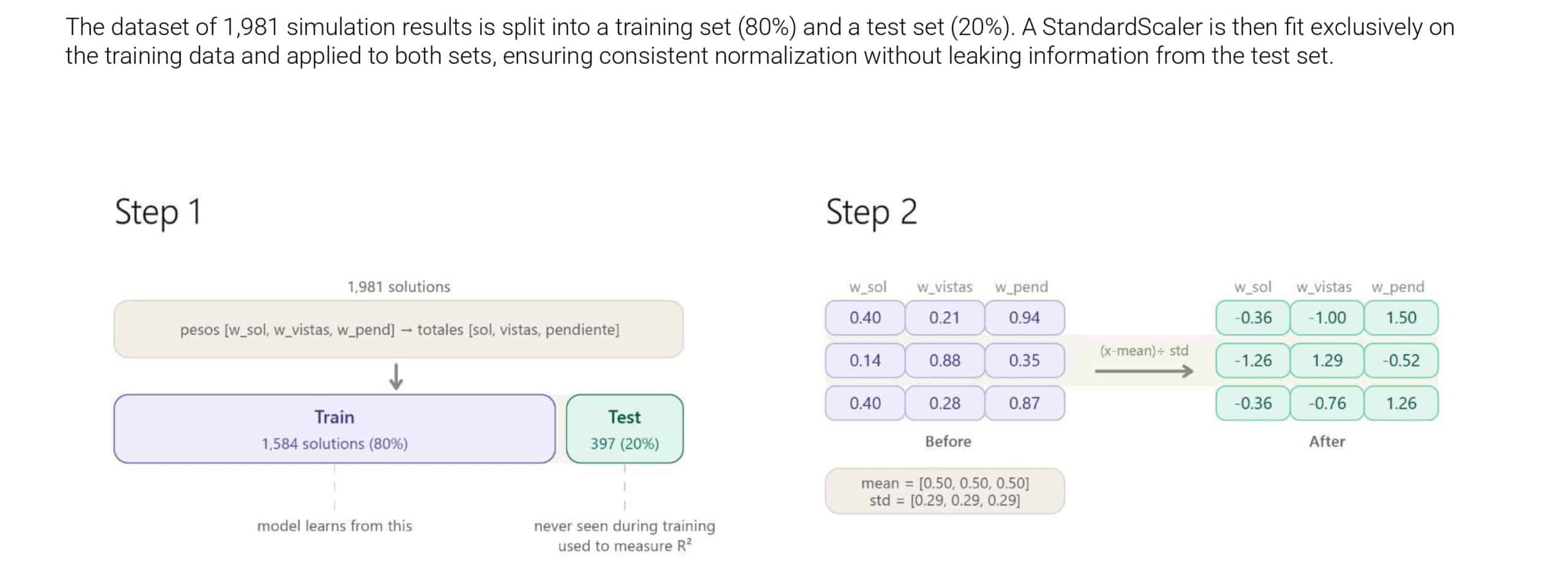
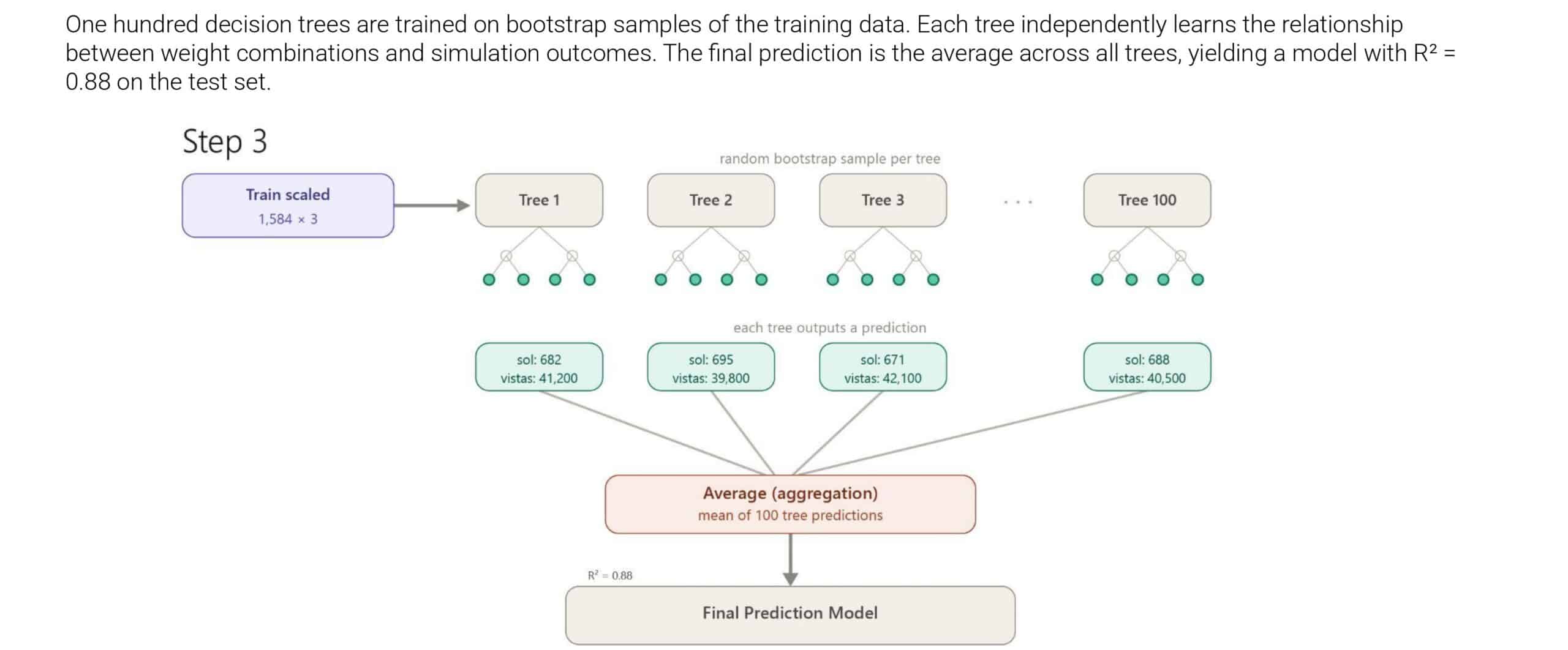
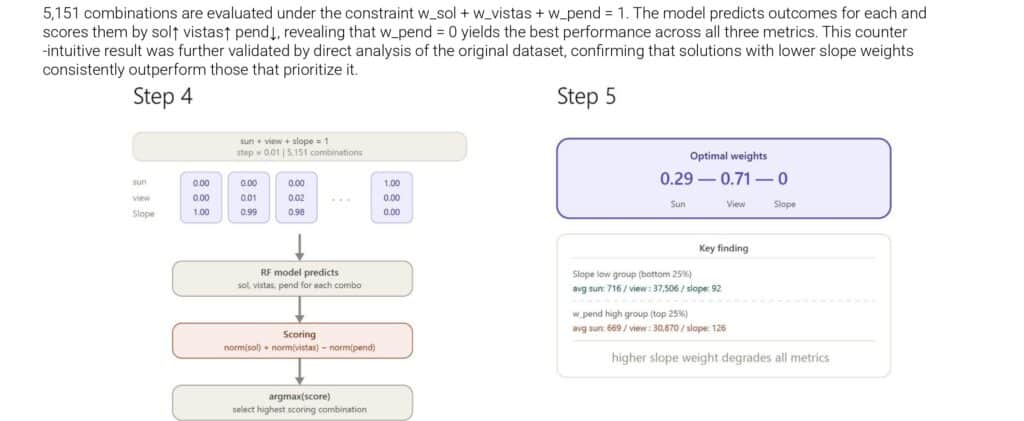
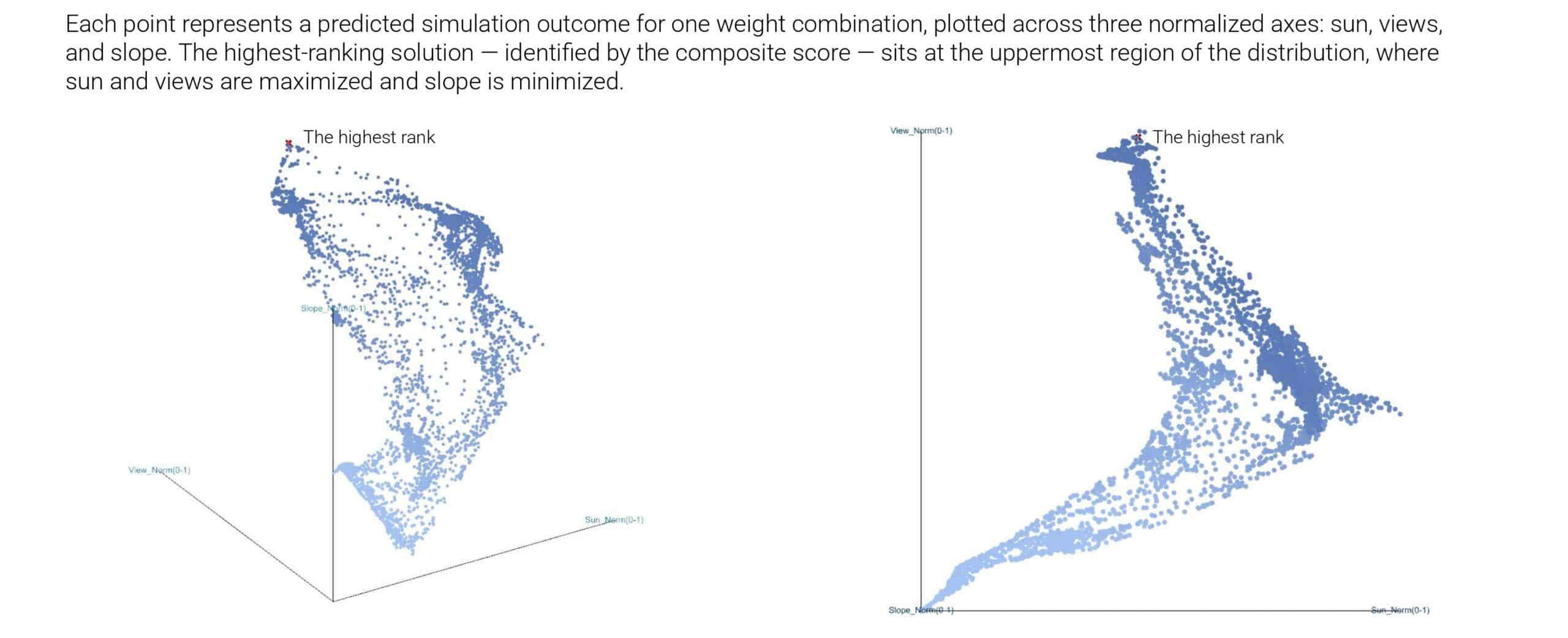
A Random Forest Regressor learns the relationship between weighting combinations and simulation outcomes, enabling optimal weight prediction without additional simulations.
.
Second Model – Reinforce Learning Strategy
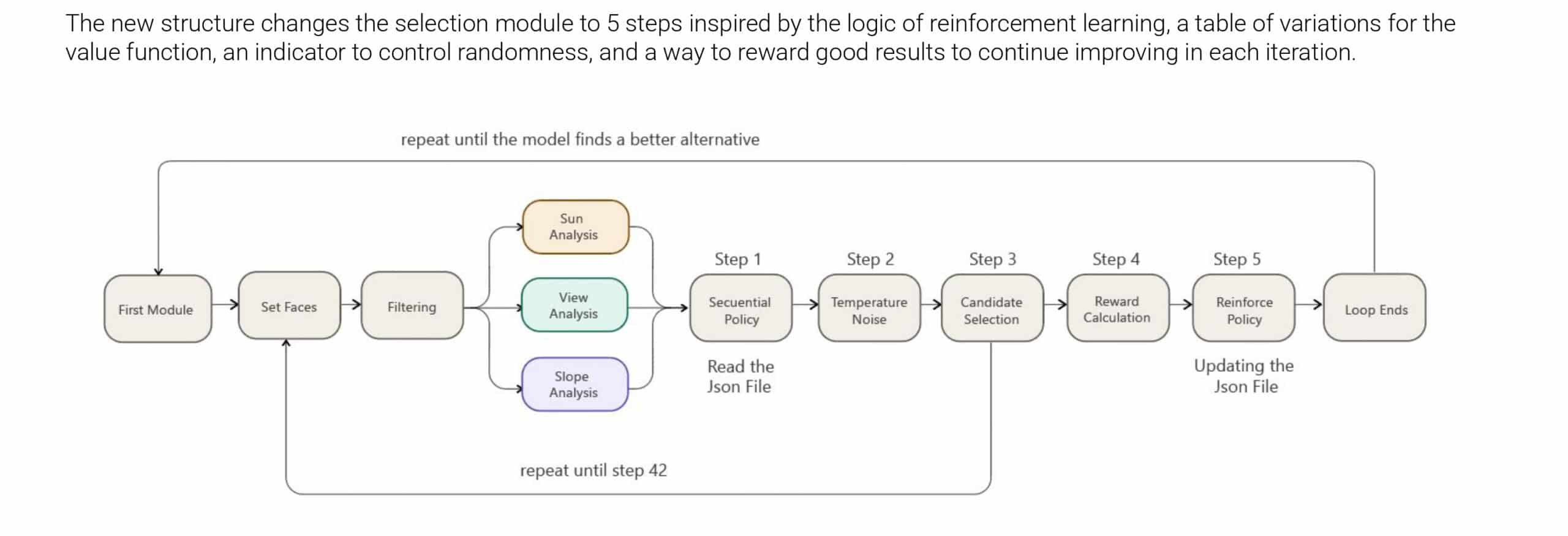
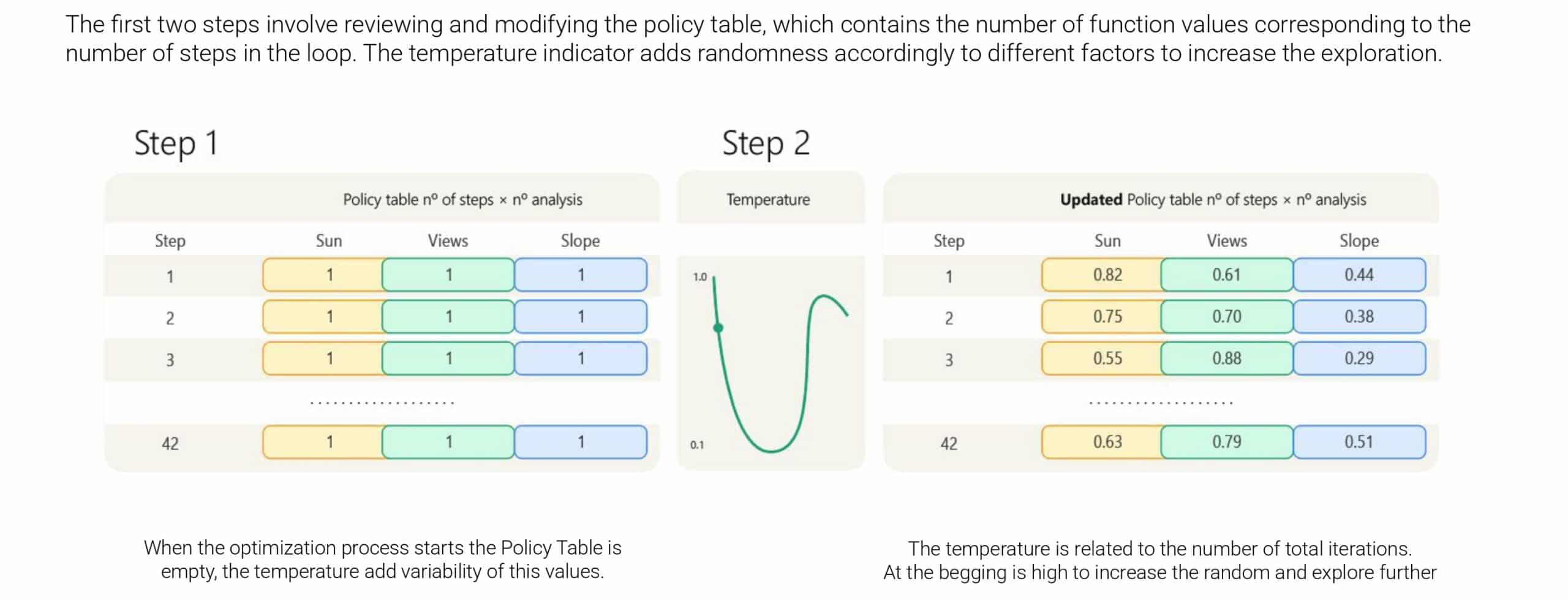
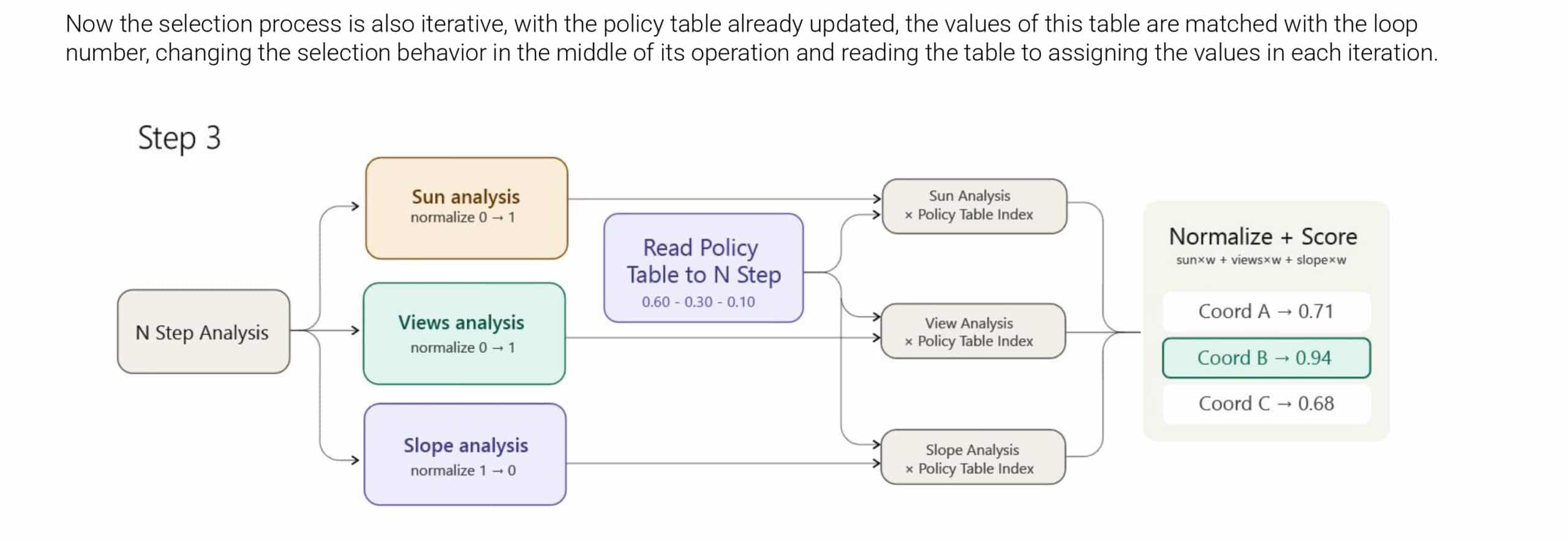
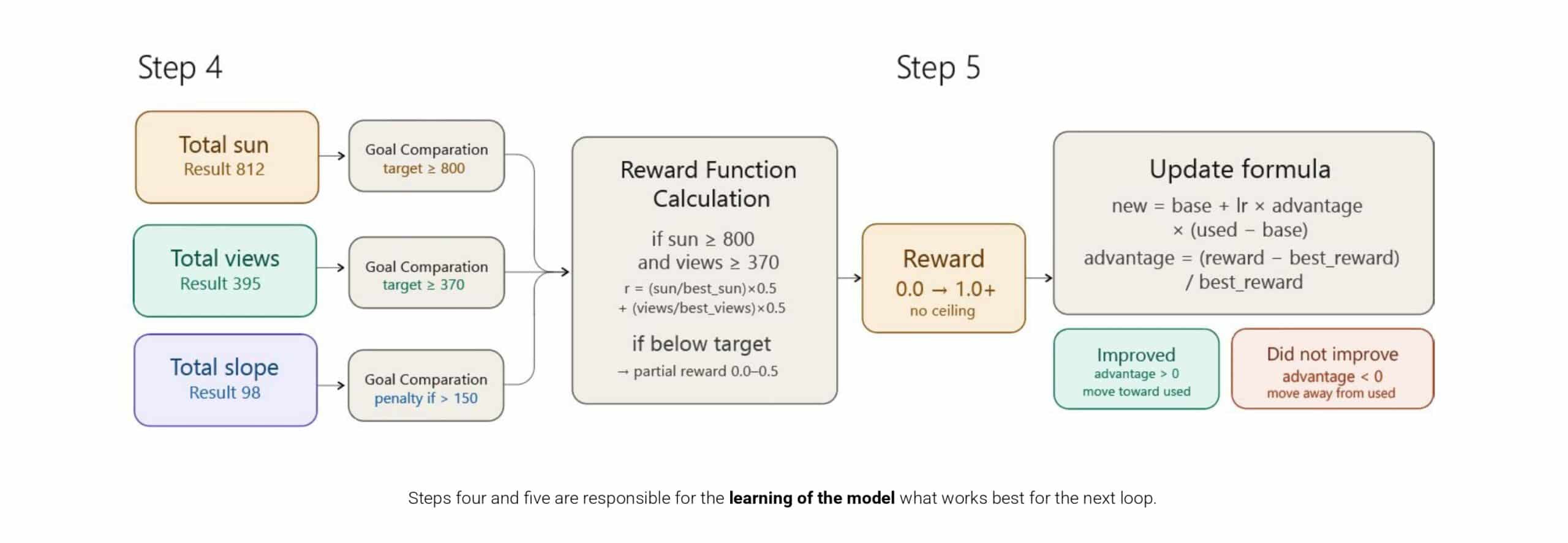
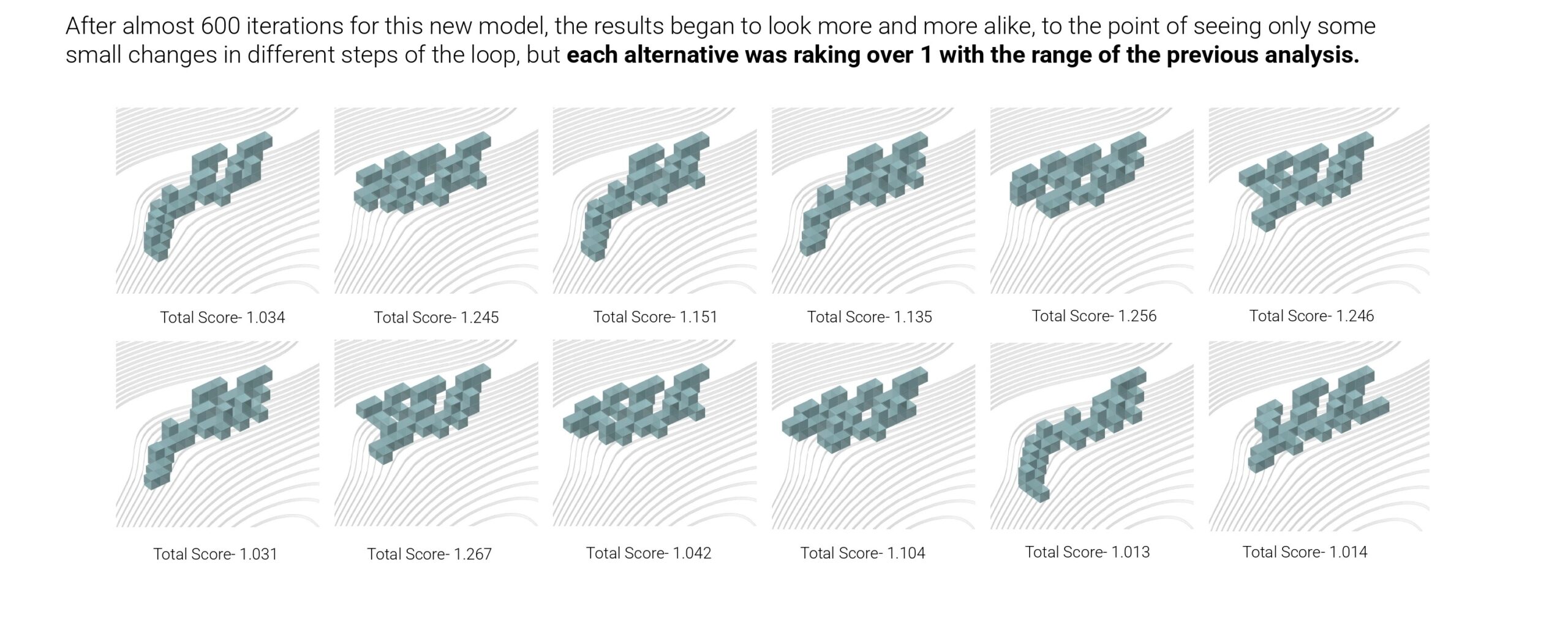
If now when each local decision within the loop is made based on the analysis
is it also possible to adjust the agent’s behavior based on its step-by-step results?
.