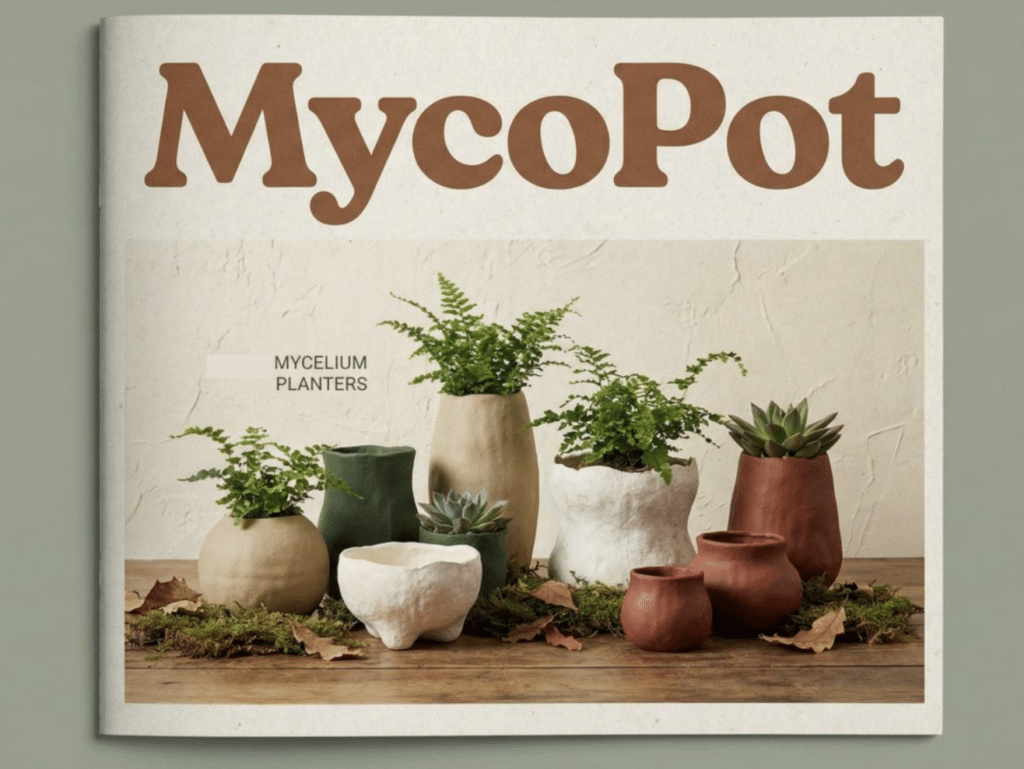
MycoPot is a biodegradable planter grown from mycelium and agricultural waste, designed to replace the millions of plastic pots discarded every year by nurseries and plant retailers. It offers a practical, scalable, and regenerative material solution for the horticulture industry—one of the most overlooked contributors to plastic waste.
Why We Started: The Problem
Across Europe, nurseries use hundreds of millions of plastic pots annually. Most of them:
- aren’t recyclable due to soil contamination,
- end up in landfills or being burned,
- contribute to microplastic pollution,
- and create increasing waste-management costs for nurseries.
At the same time, both professionals and consumers are demanding more sustainable materials—yet current alternatives (peat pots, coir pots, or bioplastics) don’t fully solve the environmental or performance gaps.
There is a clear unmet need: a functional, affordable, fully compostable pot that integrates seamlessly into nursery workflows.
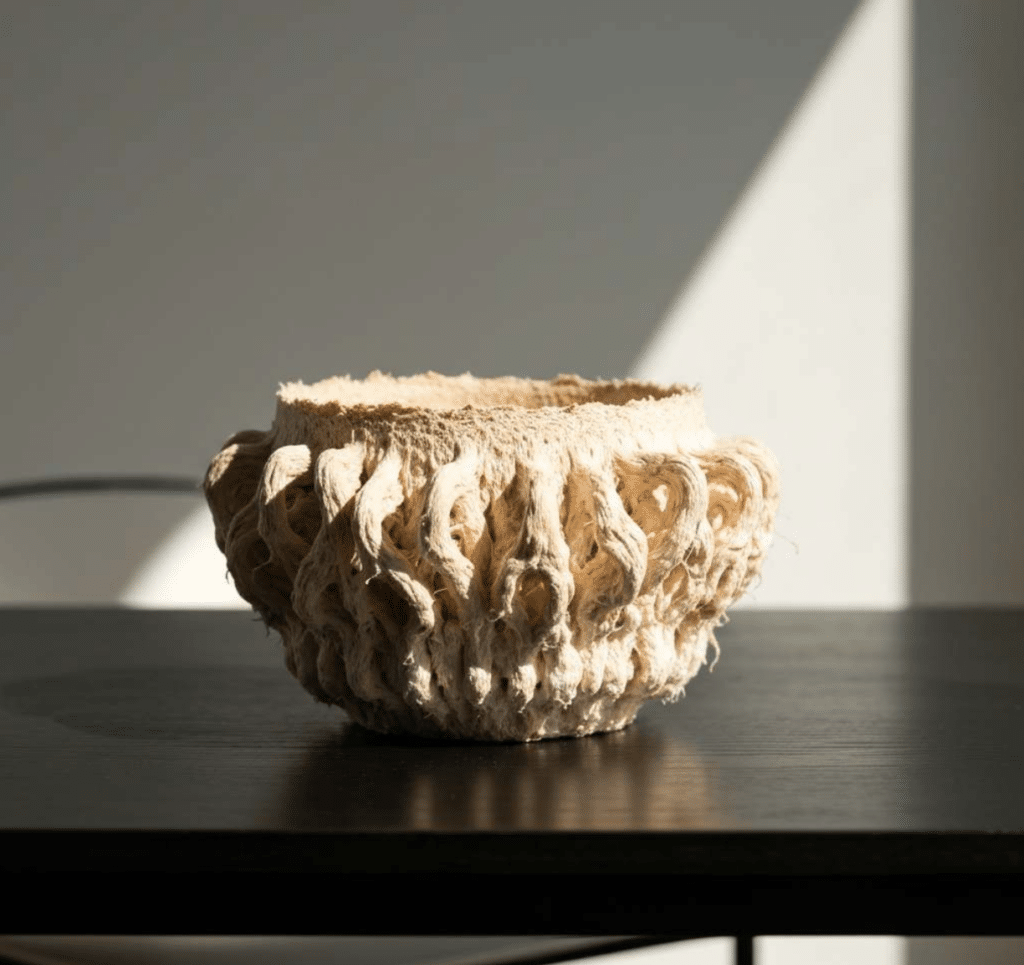
The Solution: MycoPot
MycoPot is a fully biodegradable planter grown using mycelium—the root-like structure of fungi—and locally sourced agricultural residues.
Key Benefits
- Plant-in-soil ready: can be planted directly into the ground.
- Zero microplastics: breaks down naturally in weeks to months.
- Better for plants: naturally breathable, improving root oxygenation.
- Local circularity: made using biological waste streams.
- Low-energy fabrication: grown, not manufactured.
The pot is heat-killed at the end of the growth process to stabilize its form while maintaining its compostable nature.
Why Now: Market Opportunity
In the Barcelona metropolitan area alone, nurseries and garden centers consume an estimated 8–12 million plastic pots every year.
Drivers accelerating demand for MycoPot include:
- EU regulations phasing out single-use plastics
- consumer awareness of sustainable plant products
- growth in urban gardening and green infrastructure
- emerging trust in bio-based materials
This timing creates a strong entry point for compostable alternatives that are functional and scalable.
Target Customers
Primary:
- Nurseries
- Garden centers
- Plant retailers
These customers buy pots in bulk and are actively looking for ways to reduce both plastic usage and disposal costs.
Secondary:
- Landscape designers
- Municipal urban greening programs
- Eco-conscious household gardeners
Early adopters tend to be those already committed to environmental responsibility or seeking brand differentiation through sustainable products.
Current Solutions & Competitive Landscape
Existing alternatives fall short:
- Recycled plastic pots: reduce cost but still end as waste.
- Paper, peat, or coir pots: often weak when wet and lack durability.
- Bioplastics (PLA): require industrial composting and offer no soil benefit.
MycoPot stands out by being:
- strong enough for nursery handling,
- naturally water-resistant,
- compostable in any home garden,
- low-energy and waste-positive.
Business Model
MycoPot follows a hybrid B2B + B2C model:
- B2B: bulk sales to nurseries with recurring orders.
- B2C: direct online sales for home gardeners and DIY grow-kits.
Revenue comes from pot sales, customization for nurseries, and future product expansion (seedling trays, plugs, decorative planters).
Main cost drivers include substrate materials, growth infrastructure, molds, and packaging—but costs decrease significantly as biological production scales.
Customer Discovery & Early Validation
Interviews with nurseries and plant shops in Barcelona revealed strong interest in:
- genuinely compostable pots,
- alternatives compatible with existing irrigation systems,
- options that can visually express sustainability to customers.
Most respondents expressed willingness to test MycoPot with small initial batches—highlighting early market readiness.
The Vision
MycoPot aims to become the standard compostable planter in nurseries across Spain and eventually Europe, replacing disposable plastics through local, regenerative production loops.
By turning agricultural waste into functional products that nourish soil, MycoPot promotes a future where materials are biological, circular, and deeply integrated into natural cycles.