Within the current global context of rapid change, integrated with the potentials of digital technologies, IAAC’s Master in Advanced Architecture (MAA) is committed to the generation of new ideas and applications for Urban Design, Self Sufficiency, Digital Manufacturing Techniques and Advanced Interaction.

In this context IAAC works with a multidisciplinary approach, facing the challenges posed by our environment and the future development of cities, architecture and buildings, through a virtuous combination of technology, biology, computational design, digital and robotic fabrication, pushing innovation beyond the boundaries of a more traditional architectural approach.

Filters
Course

Passadís d’ordinadors
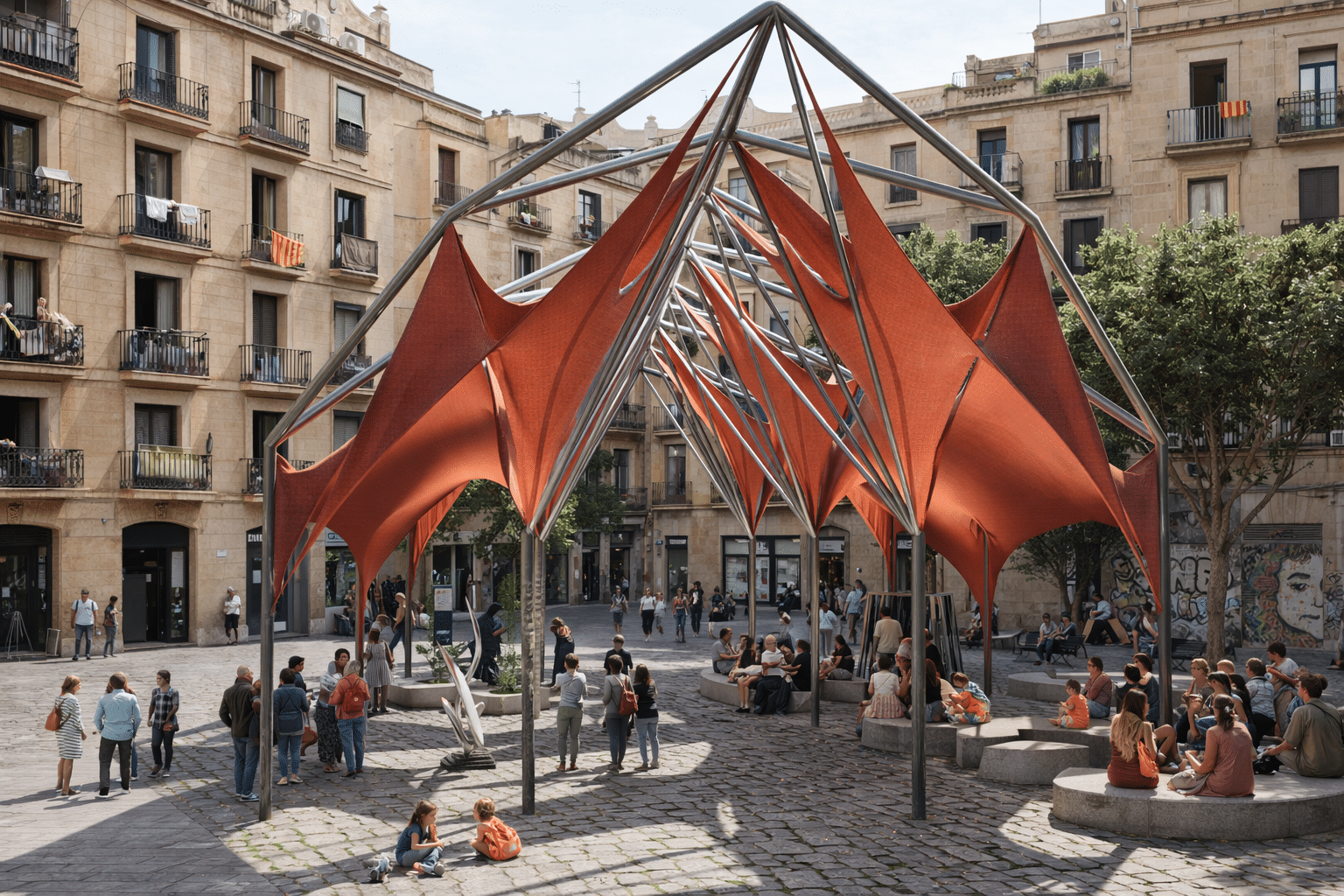
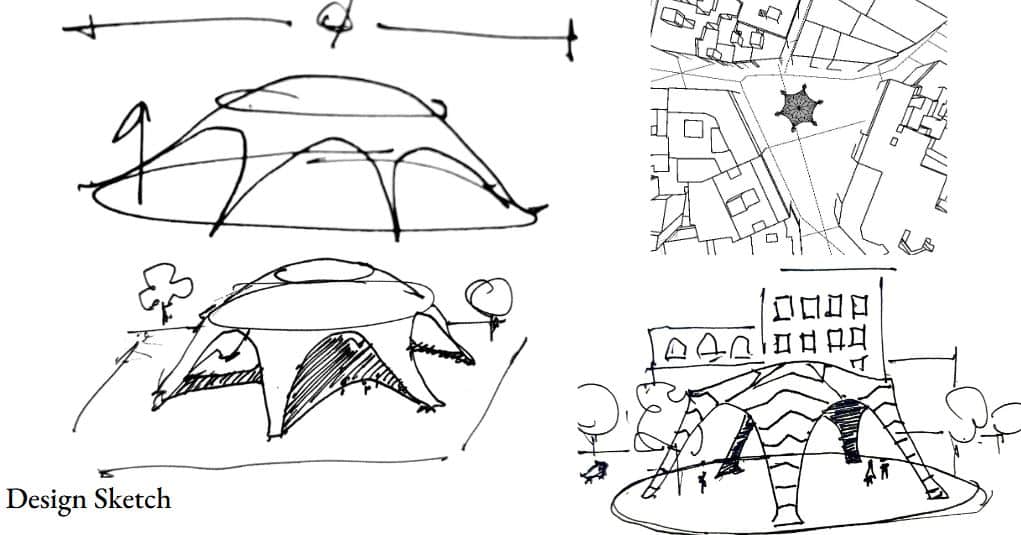
Concept Inspiration Creating a tensile pavilion structure based on Felix Candela‘s arch and aisle geometric logistics and diagrams. Iterative design approach based on ‘anchor points’ on a frame. Exploring scalable methodology for Kangaroo based computational design processes. ‘Iglesia de la Medalla Milagrosa‘ Felix Candela – photo by Lola Alvarez Bravo, 1954 Felix Candela Drawings and … Read more
The Cellular Dune

Project Brief Forces of Nature explores how architectural form can emerge from the interaction of natural forces rather than being predefined. Using computational simulations, the project allows tension, gravity, and equilibrium to shape spatial structures. The installation translates invisible physical behaviors into visible design, creating a form that is discovered through force-driven processes and realized … Read more

Computational Design Seminar II | Air-Cast Shell

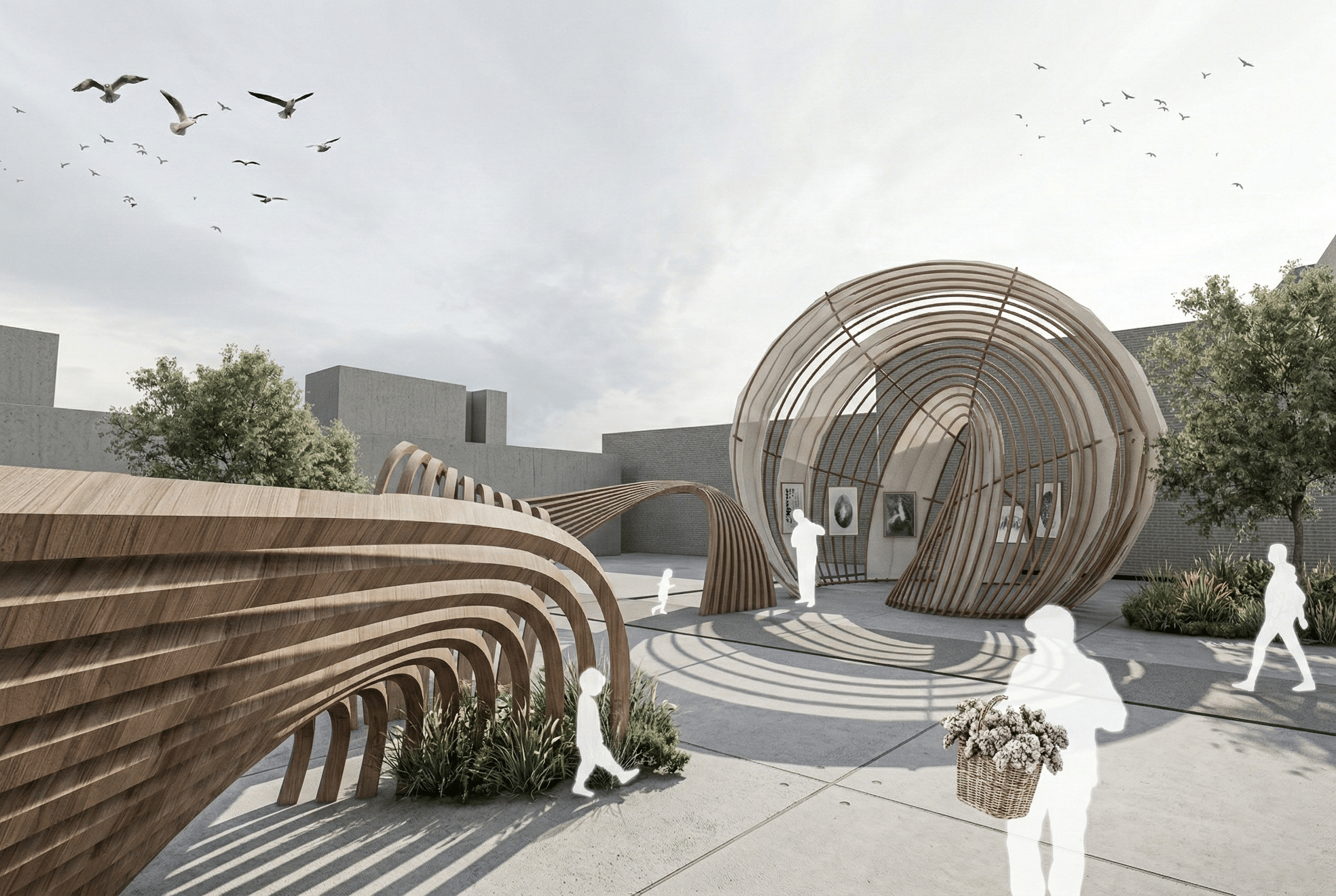
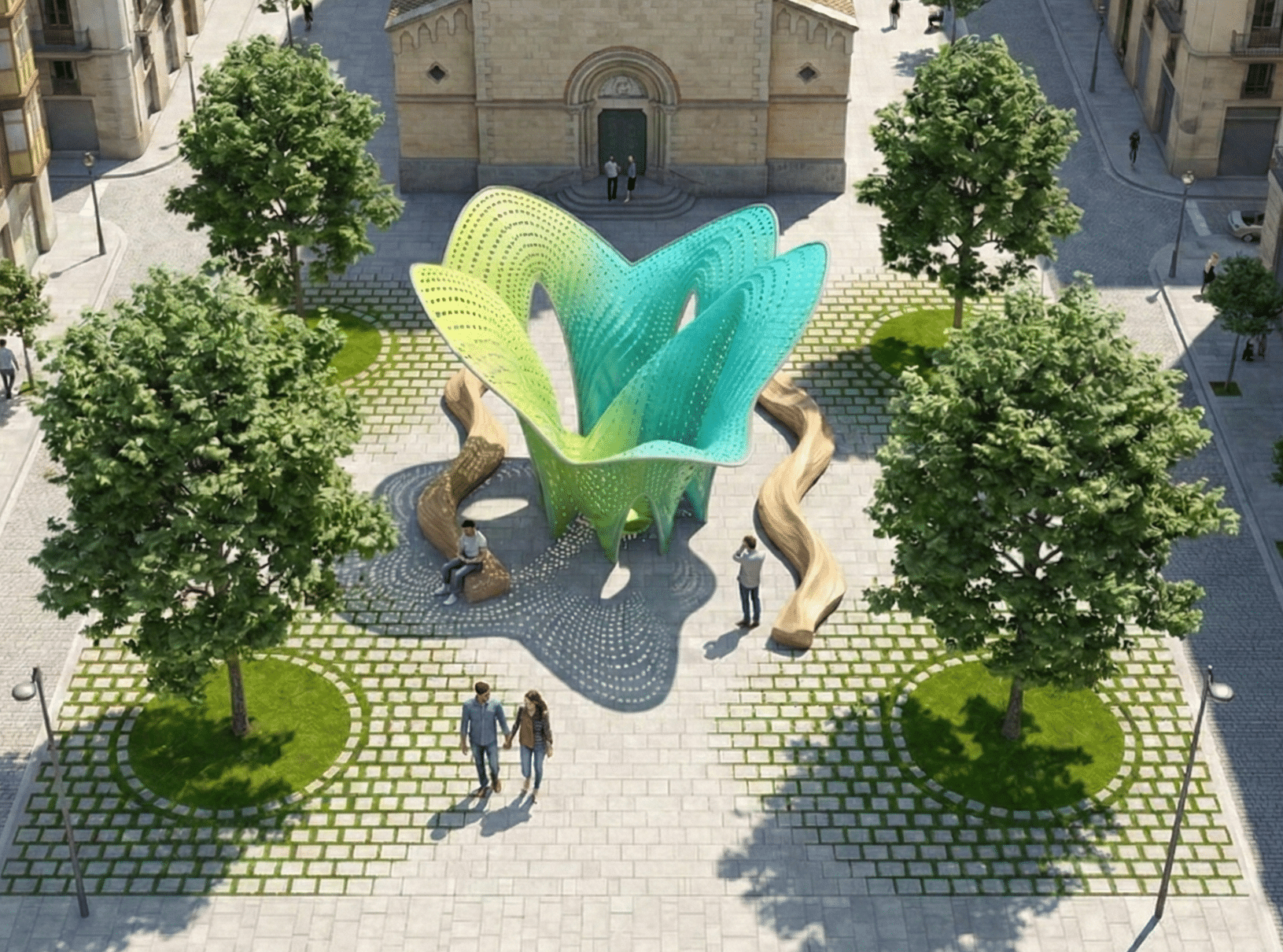
Site analysis The architectural intervention is situated within Plaça de la Virreina, a prominent public square in the Gràcia district. The initial analysis involved a comprehensive mapping of existing urban conditions, specifically focusing on the primary access points to the square and the location of existing trees. These environmental constraints were not viewed as obstacles … Read more

Reciprocal Canopy

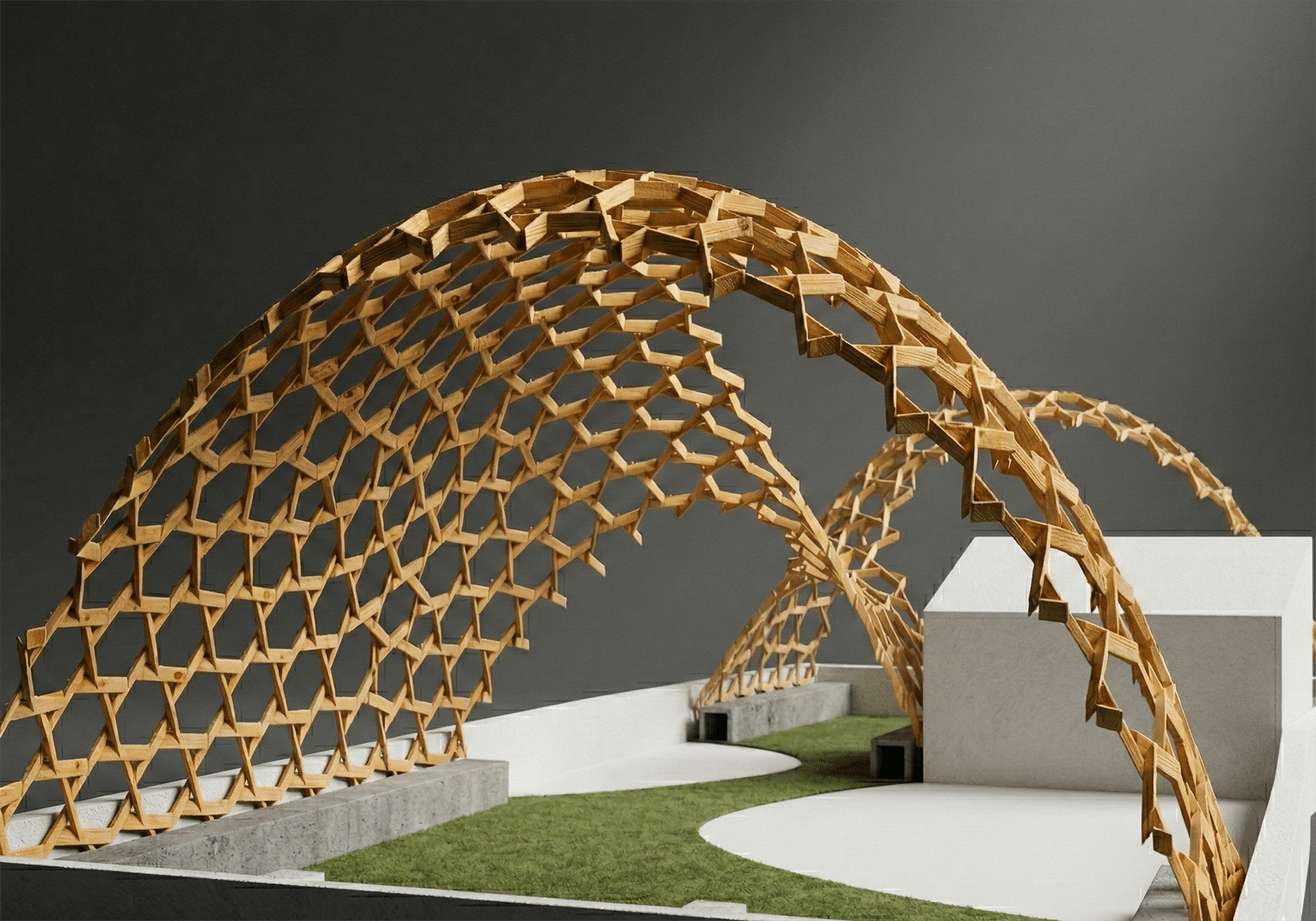
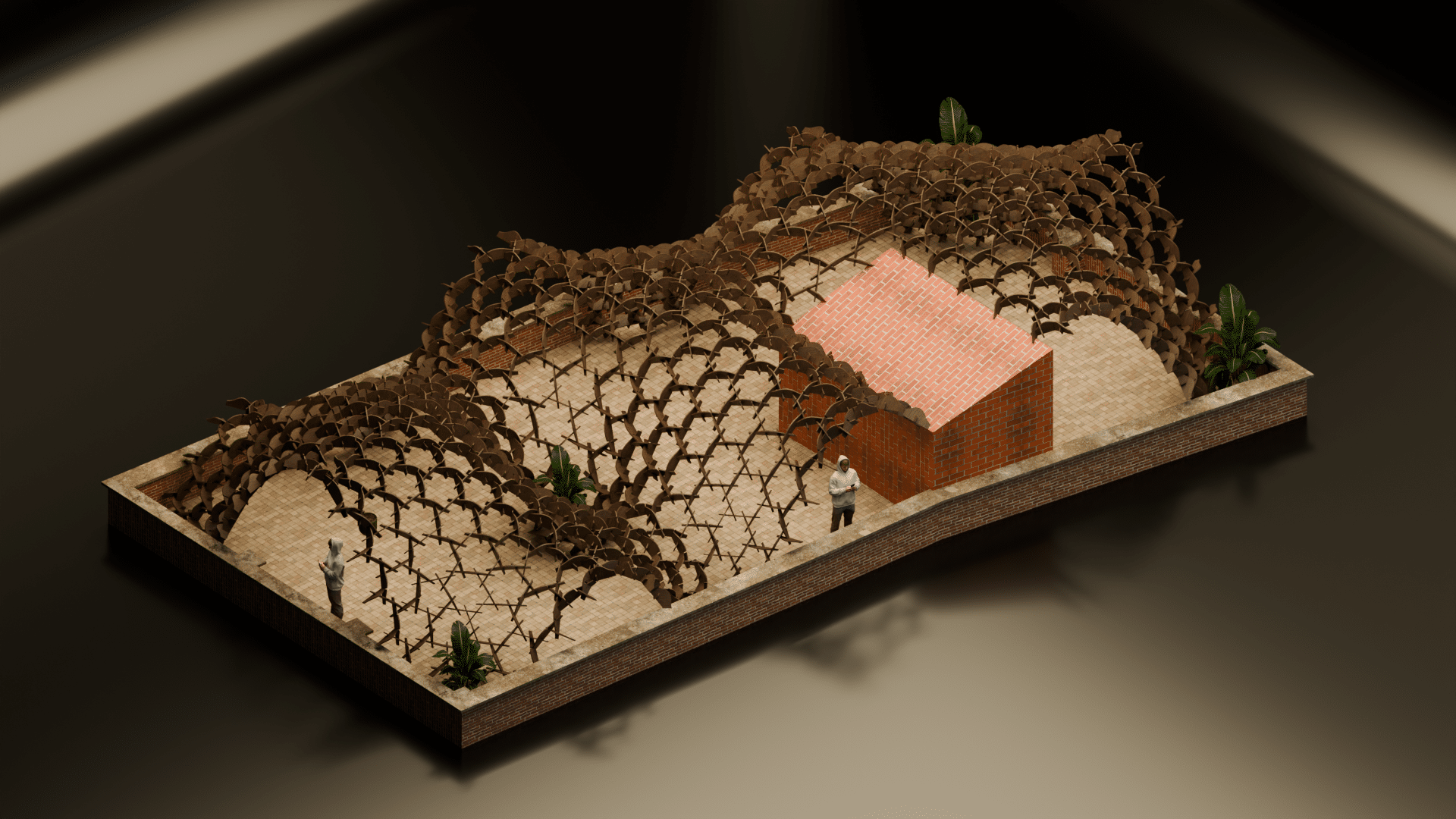
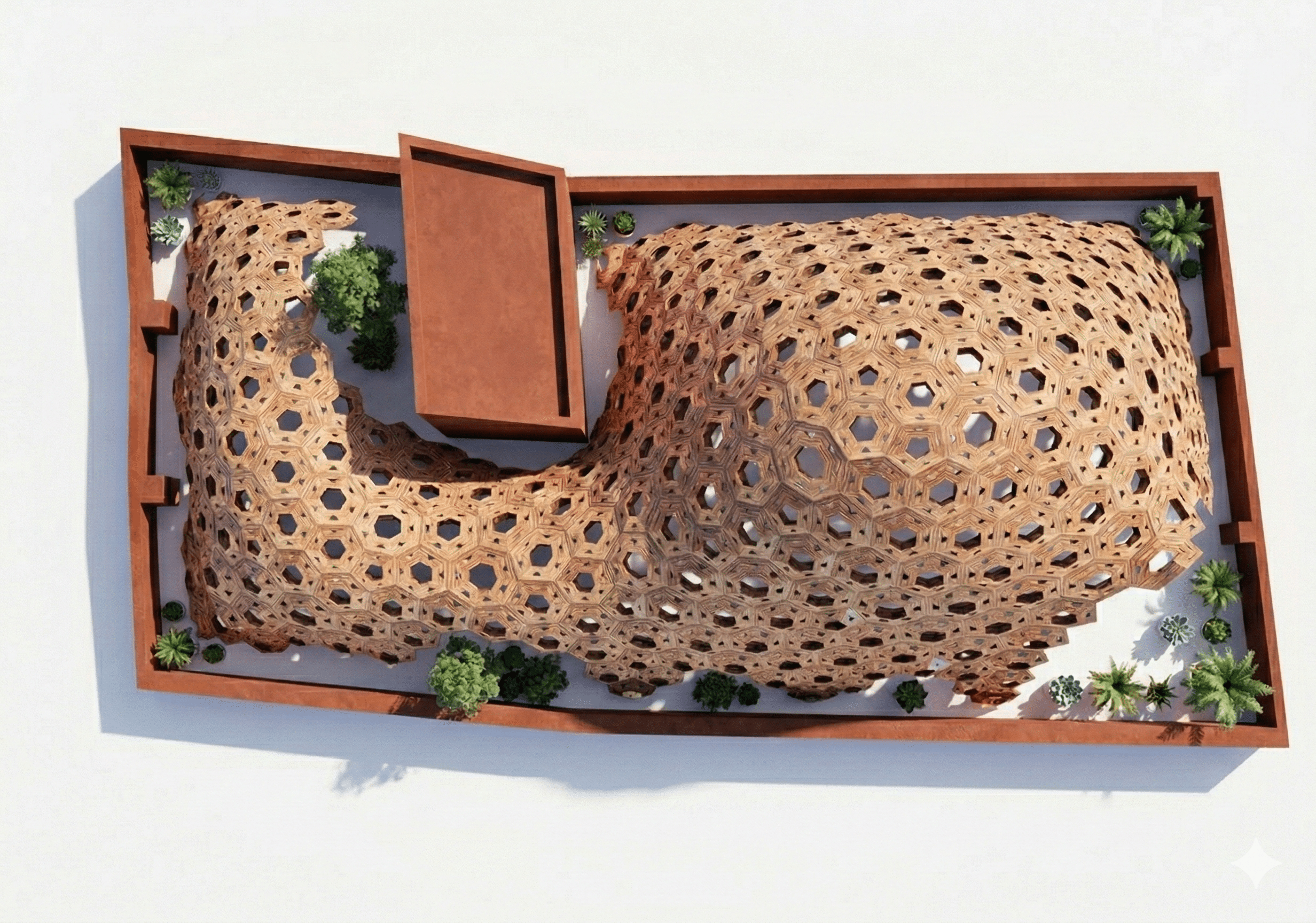
Designed for the IAAC rooftop, this pavilion merges computational design with advanced robotic fabrication. The geometry originates in Grasshopper, where a basic mesh is transformed into an optimized vault using Kangaroo’s physics-based dynamic relaxation. A reciprocal frame pattern is then applied, translating the continuous shell into short, mutually supporting timber pieces. Because every interlocking element … Read more

REPOSE

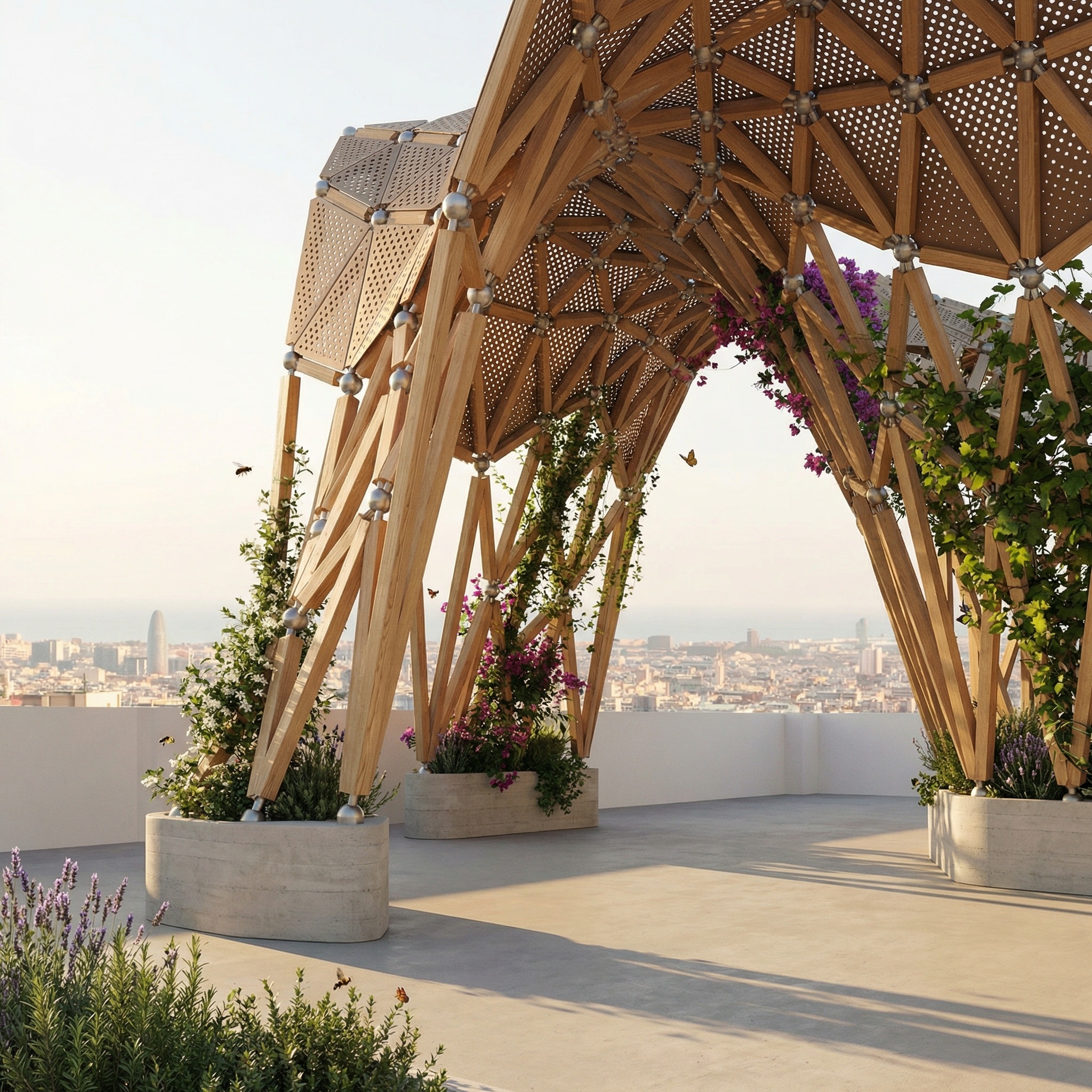
Computational Design II (Level 2) – Final Assignment This project proposes a computational timber pavilion for the IAAC rooftop in Barcelona, conceived as a Bio-Maker space that integrates digital fabrication, structural logic, and urban biodiversity. The structure is generated through a parametric space-frame system composed of American oak members connected through stainless steel bolt ball … Read more

Arcada Viva

The project situates the pavilion within the urban fabric of Plaça Reial, accompanied by initial conceptual sketches that explore a shell-like structure emerging from the geometry and atmosphere of the square. SITE INSPIRATION WORKFLOW PSEUDO CODE RENDERS

Relaxed tectonics

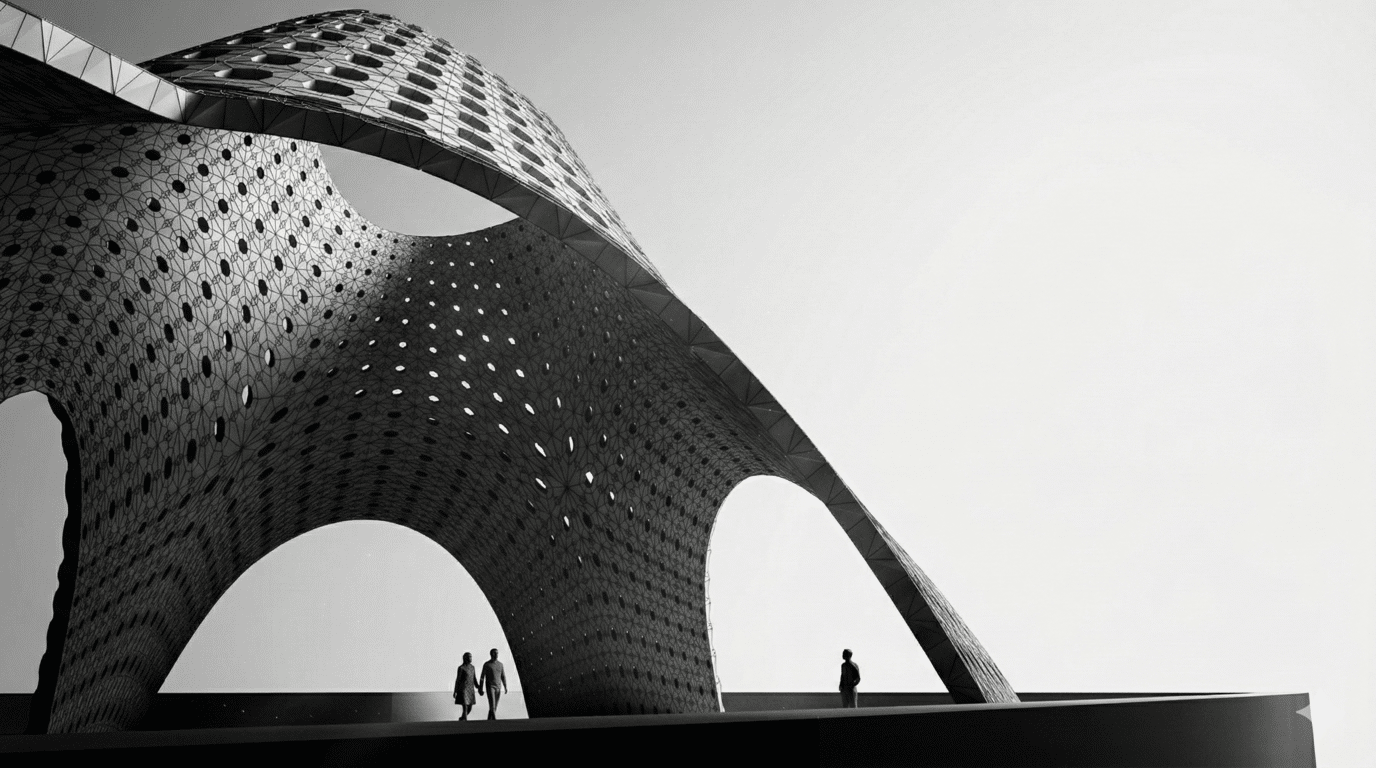
This research explores the intersection of physics-based form-finding and multi-objective evolutionary optimization to design a high-performance architectural pavilion. Utilizing Kangaroo2 for structural mesh relaxation and Wallacei for the genetic optimization of seating. The result is a topologically optimized structure where complex geometry is not merely aesthetic, but a direct manifestation of environmental data and structural … Read more

Syntactic Assemblage

This project explores the computational assembly of components to form a multi-functional complex. By translating configurations into graphs, we applied Space Syntax logic to evaluate three key values : Depth, Integration, and Choice. The optimal architecture was selected based on the balanced symmetry of these indices. Finally, these analytical values directly guided the spatial programming, … Read more

MIRADOR

After Gaudi Seminar2025 / 2026 Narrative El Mirador funciona como un instrumento espacial que marca tres referencias : el mar Mediterráneo, la Sagrada Familia y Montjuïc, estableciendo un diálogo entre estructura, geometría, expresión material y paisaje. Siguiendo la estrategia de encuadre de la Casa Milà, donde la Sagrada Familia se plasma mediante una abertura arquitectónica … Read more

After Gaudi Seminar I: Interpretation Center

Our project explores the After Gaudí vision through the lens of an Interpretation Center—not by simply copying forms, but by deeply understanding his geometry and structural logic. Project Framing: A 2026 Centenary Monument in the Born District. The Interpretation Center: Defining the Cultural Program An Interpretation Center is not just an exhibition space; it is … Read more

RESPIRA

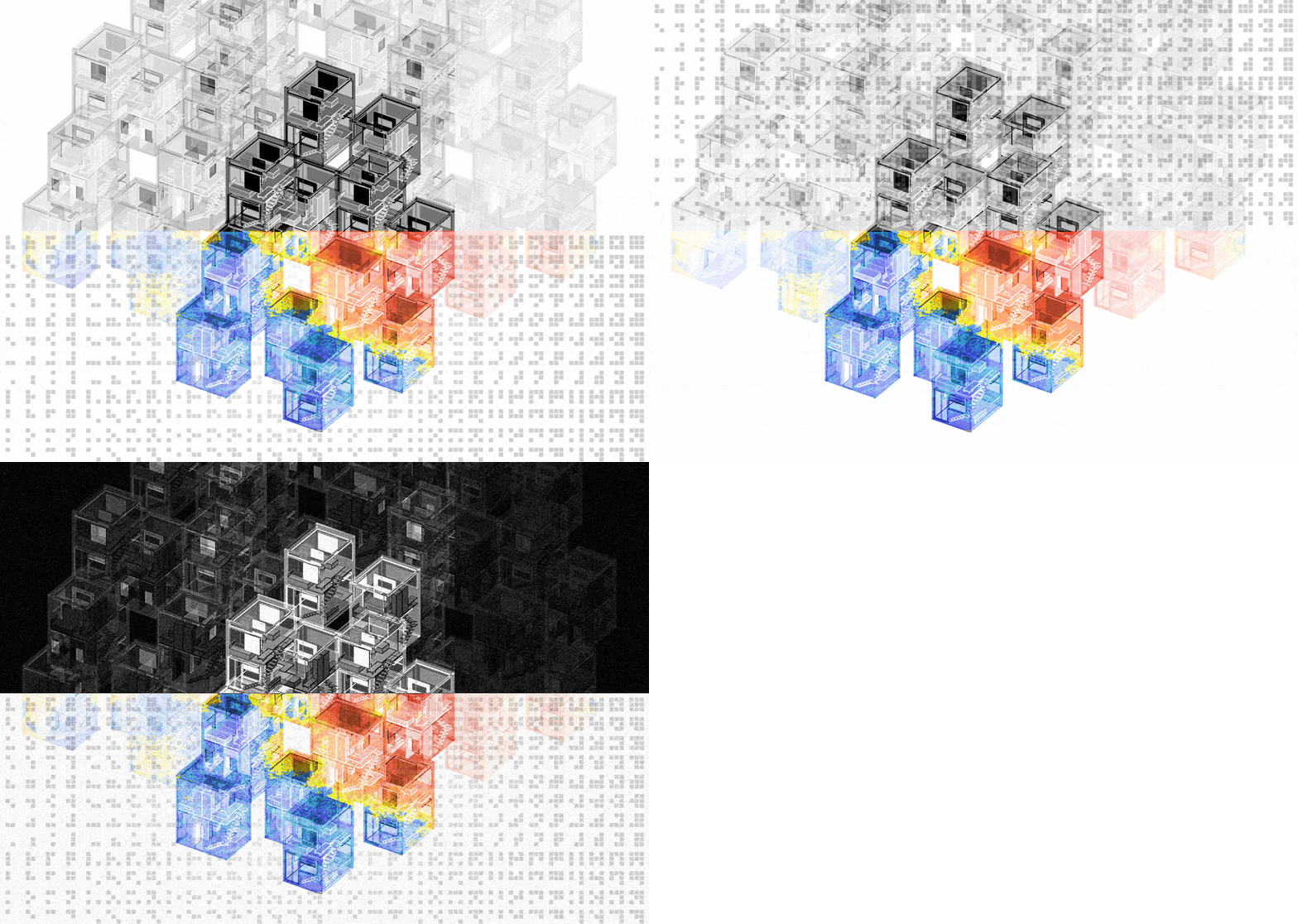
This project explores the climatic optimization of modular student housing units located in Barcelona, each with dimensions of 5m x 4m x 7.5m. The focus is on developing comfortable, energy-efficient living spaces by strategically analyzing and refining the positioning of openings, enabling effective cross ventilation, and incorporating humidity-absorbing esparto material as part of the building … Read more

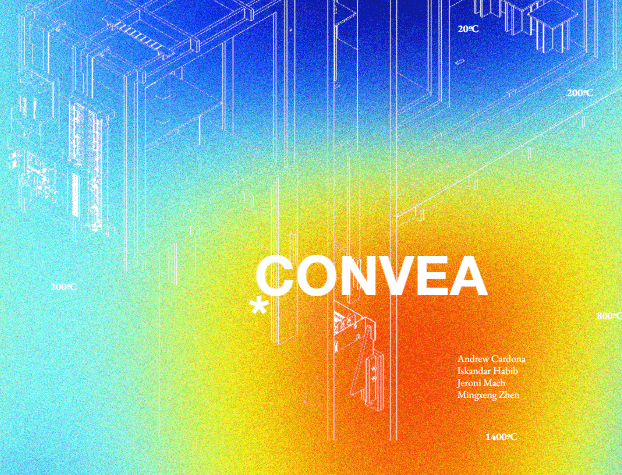
CONVEA

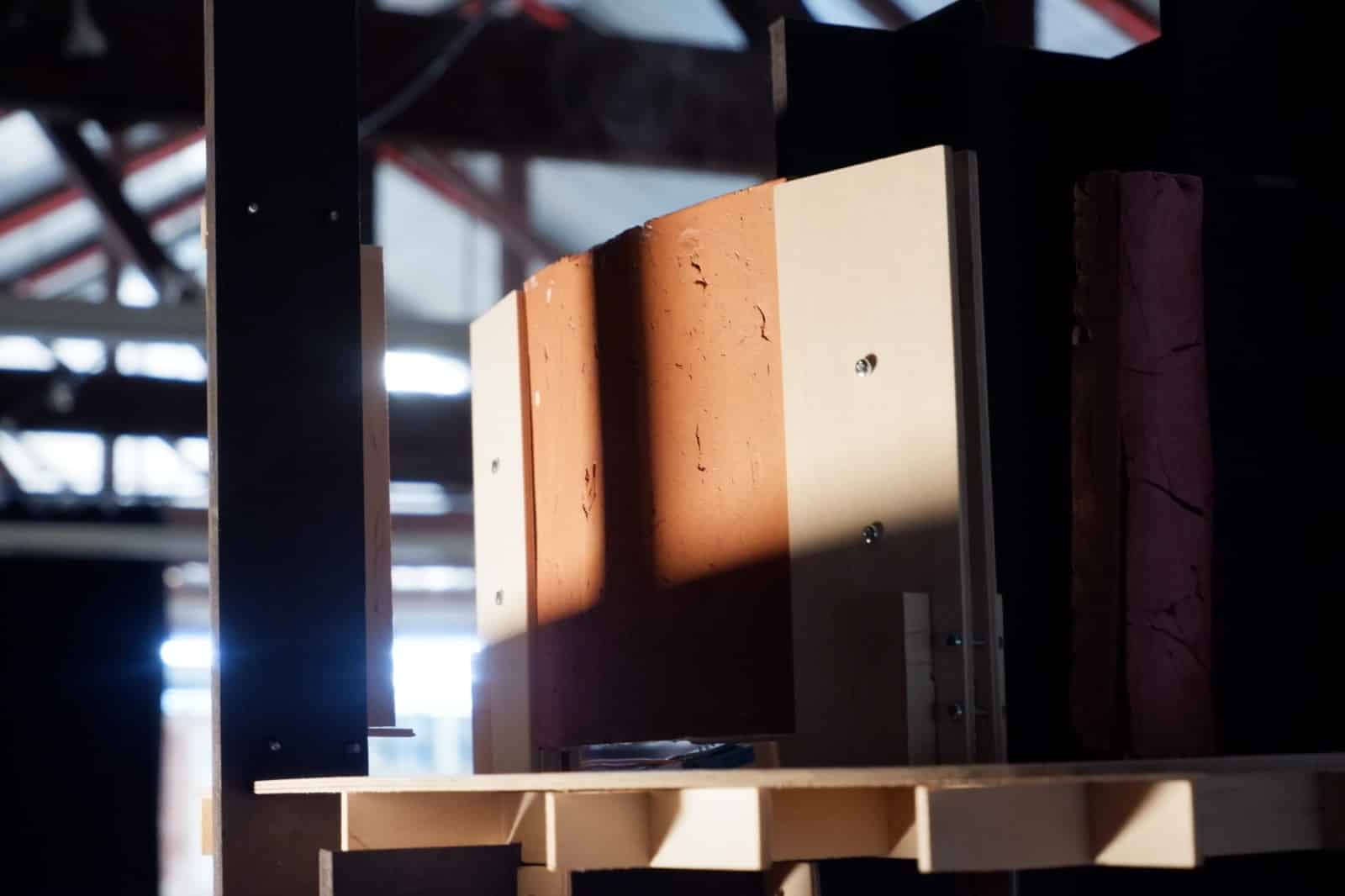
USING CORK AS A DELINEATOR OF INTERNAL CLIMATIC PROGRAMS a. initial machine phenomena studies b. first iteration of phenomena recreated c. second iteration of phenomena model on column site d. photographs of second iteration

Thermocrest – Heat as a spatial design tool

This Project explores how reflective, vernacular materials—such as ceramics—can be utilized in construction to manage infrared radiation and influence microclimates. By reflecting rather than absorbing heat, these materials contribute to passive cooling, reducing urban heat island effects and enhancing thermal comfort. We analyze the physical properties of ceramics, their historical applications in traditional architecture, and … Read more

Vaulted Canopy Pavilion of Pl. de Sant Pere

Project by Saad Khan and Gustavo Calderone The final task for the term was to design a 100-square-meter pavilion in Plaça de Sant Pere, Barcelona, using computational design logic through Grasshopper. This project explores generative design strategies to create an adaptable pavilion using parametric methodologies, ensuring a responsive and dynamic architectural intervention within the urban … Read more