Within the current global context of rapid change, integrated with the potentials of digital technologies, IAAC’s Master in Advanced Architecture (MAA) is committed to the generation of new ideas and applications for Urban Design, Self Sufficiency, Digital Manufacturing Techniques and Advanced Interaction.

In this context IAAC works with a multidisciplinary approach, facing the challenges posed by our environment and the future development of cities, architecture and buildings, through a virtuous combination of technology, biology, computational design, digital and robotic fabrication, pushing innovation beyond the boundaries of a more traditional architectural approach.

Filters
Course

Reciprocal Canopy

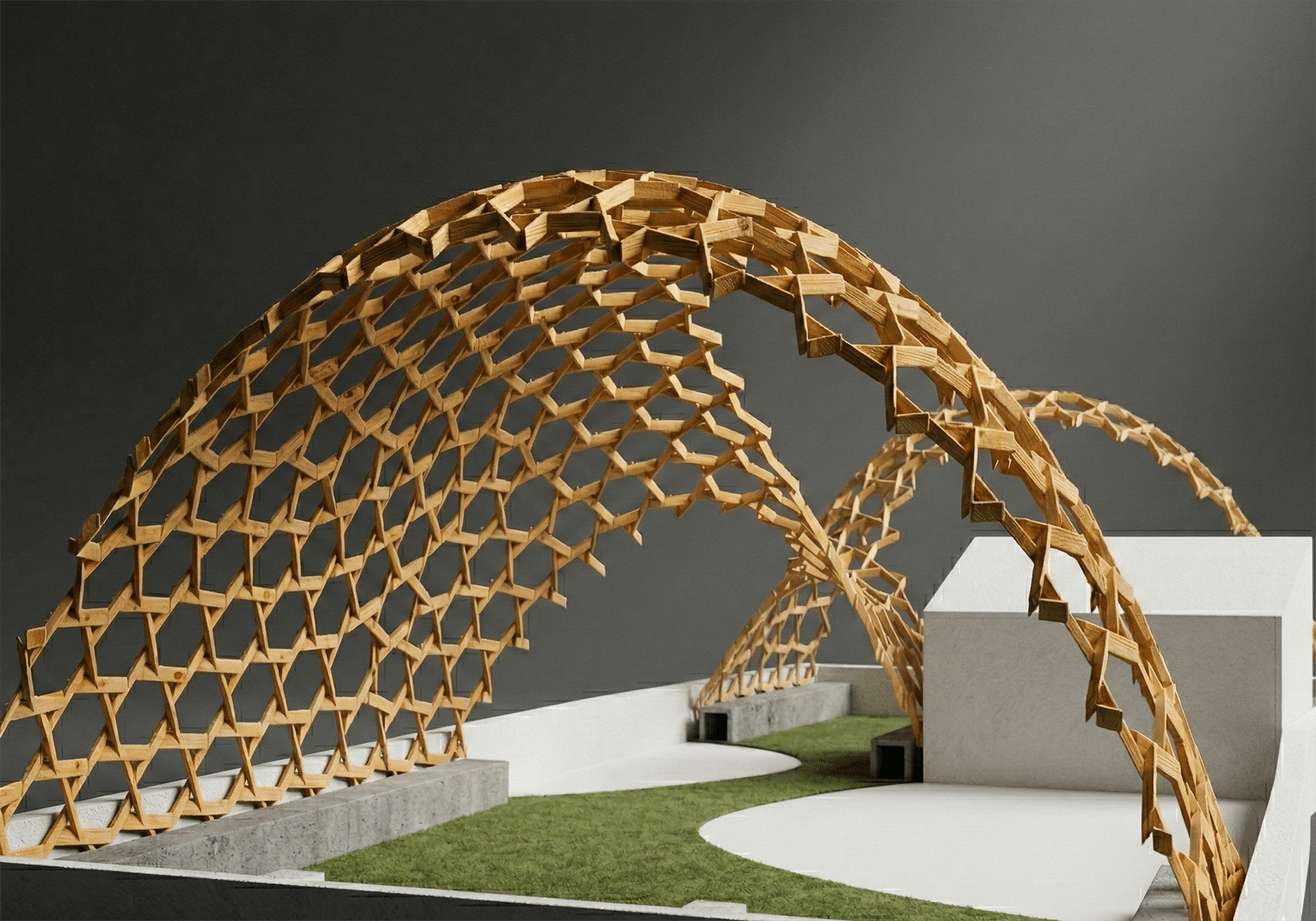
Designed for the IAAC rooftop, this pavilion merges computational design with advanced robotic fabrication. The geometry originates in Grasshopper, where a basic mesh is transformed into an optimized vault using Kangaroo’s physics-based dynamic relaxation. A reciprocal frame pattern is then applied, translating the continuous shell into short, mutually supporting timber pieces. Because every interlocking element … Read more

Recursive Shell

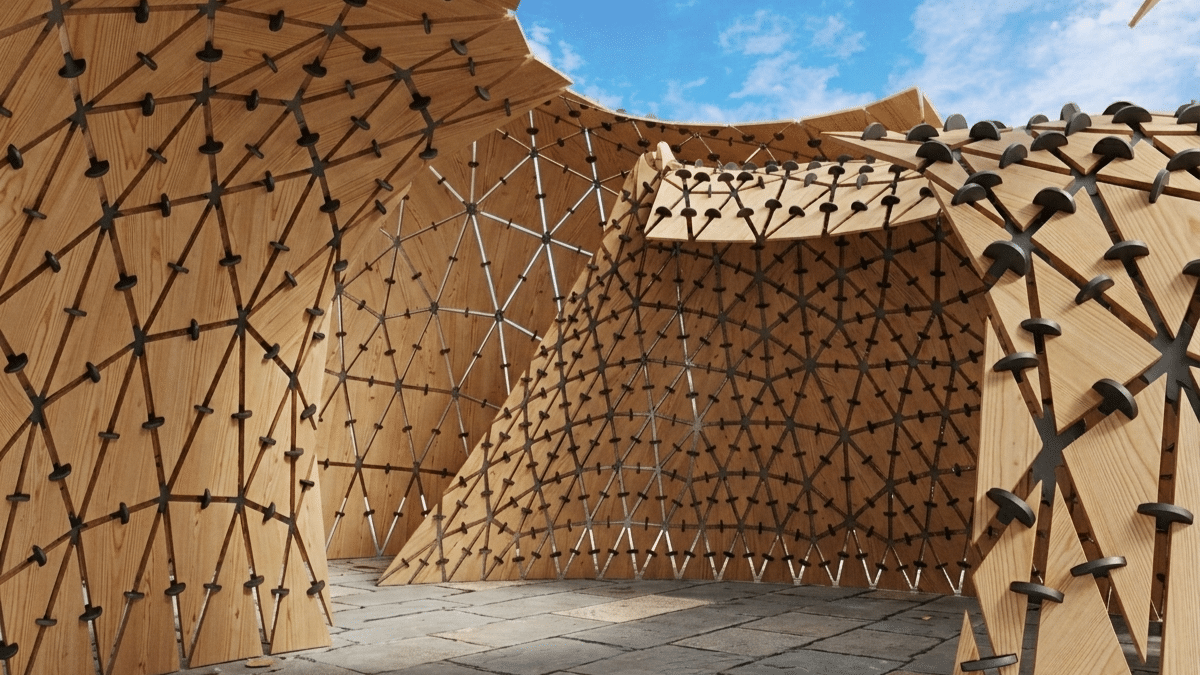
This project, titled Recursive Shell, is located at Plaça del Pi. The pavilion explores form-finding through inverted arch logic and modular timber shells. Using a Kangaroo Bouncy Solver, the design optimizes structural stability via parameters like pressure, edge lengths, and vertex loads. The system consists of interlocking triangular panels and joint discs extracted from a … Read more

SALVAGED WOOD

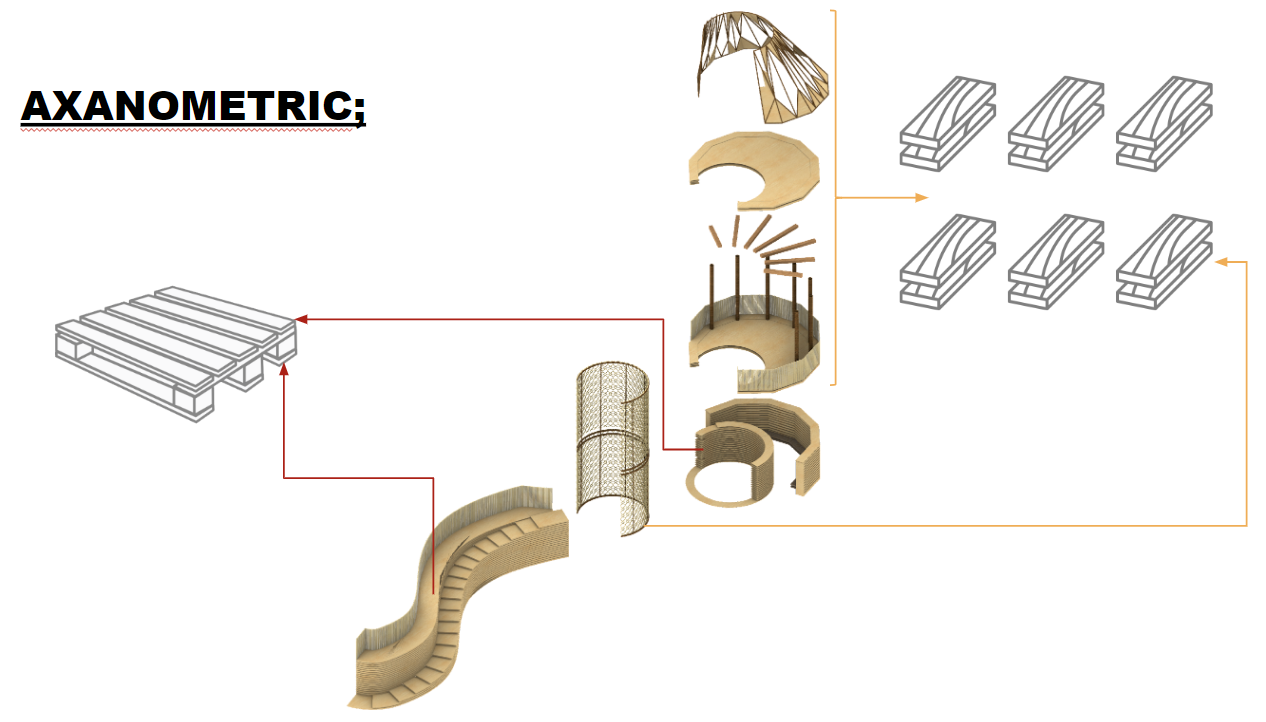
WHY USE RECLAIMED WOOD RESEARCH Reclaimed wood is a sustainable and unique material that can be used in almost any project. It offers strength, character, and originality that you cannot find with any other building material. It helps preserve the past while upcycling materials that would otherwise go to waste. TYPE – WOOD-PALLETS Mapping the … Read more

GAUDI’S CAT

GAUDI’S CAT pavilion is inspired by the geometry of Antonio Gaudi – famous Catenary arches. The structure of the pavilion consists of a central space under the canopy and an open part above. Catenary arches are located in three parts of the pavilion, serving as entrances to it, and elements of Catenary arches are also … Read more

Forces of Nature

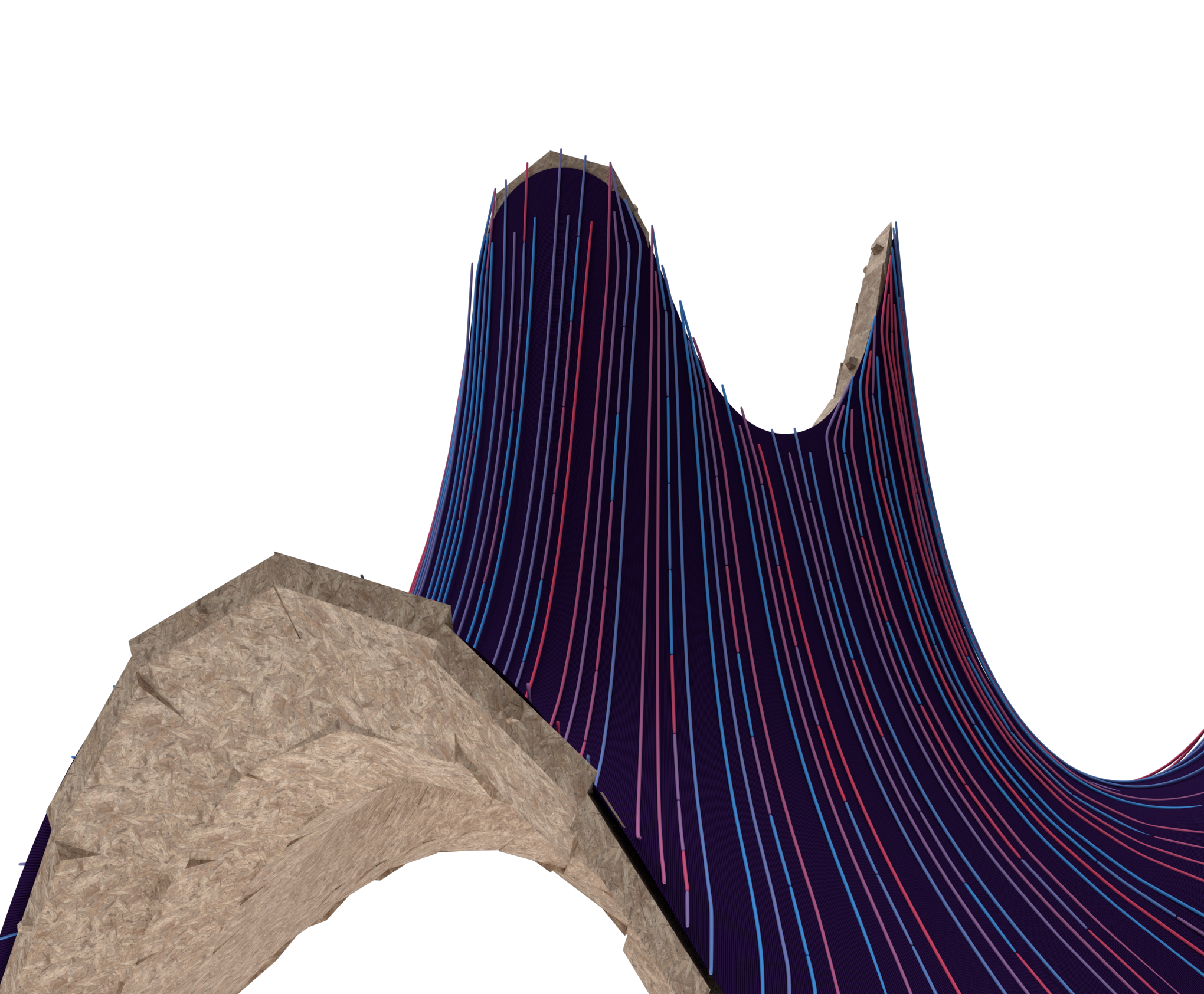
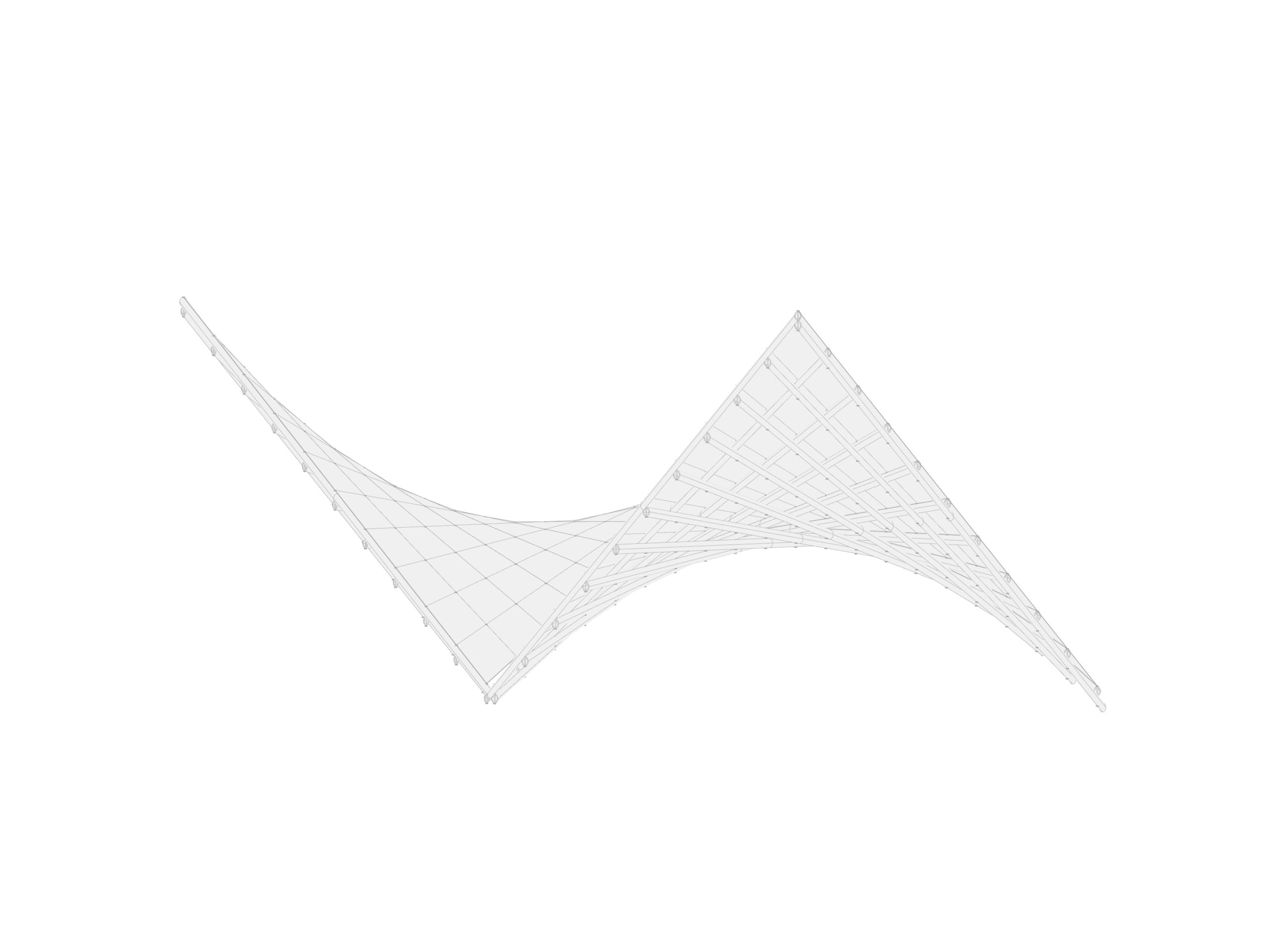
HYPERBOLIC PARABOLOID ROOF This research project in the field of architecture aims to investigate the application of physics simulations in the form-finding process of designing live-interactive installations using Kangaroo, located in IAAC’s rooftop. The design strategy is creating a simple geometry based on forces in compression and tension on different points. The pavilion’s sail-like plane … Read more