Within the current global context of rapid change, integrated with the potentials of digital technologies, IAAC’s Master in Advanced Architecture (MAA) is committed to the generation of new ideas and applications for Urban Design, Self Sufficiency, Digital Manufacturing Techniques and Advanced Interaction.

In this context IAAC works with a multidisciplinary approach, facing the challenges posed by our environment and the future development of cities, architecture and buildings, through a virtuous combination of technology, biology, computational design, digital and robotic fabrication, pushing innovation beyond the boundaries of a more traditional architectural approach.

Filters
Course

Robotics for Ecological Buildings

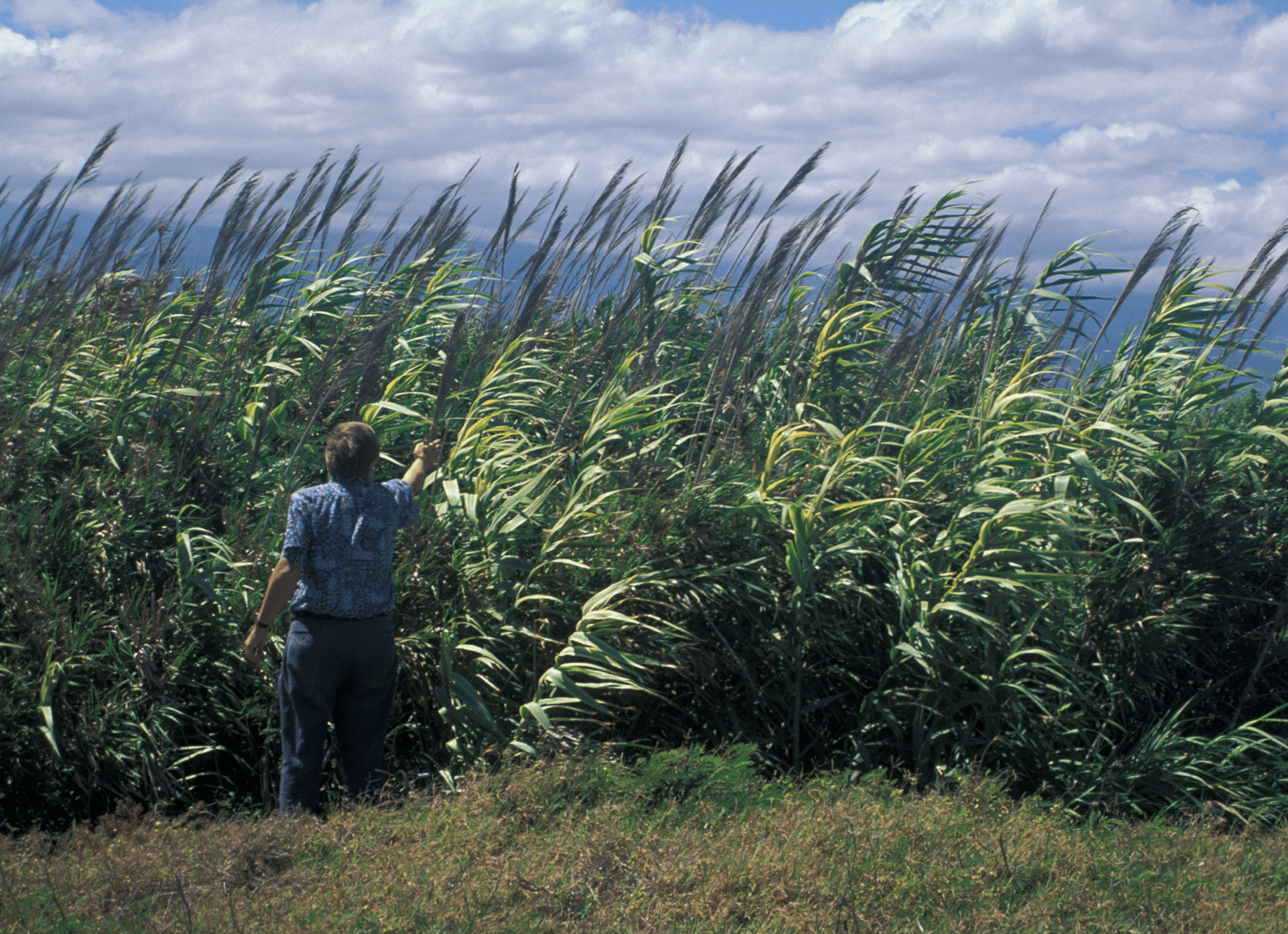
Studio: Term 2 – MRAC + MAA For our third term MRAC paired up with MAA students to investigate how vernacular materials and techniques of Catalonia could be modernised with robotic precision to create new typologies. Our group chose to work with Canya; more specifically Arundo Donax, Giant Reed. Two vernacular techniques we looked to … Read more

Robotics for Ecological Buildings

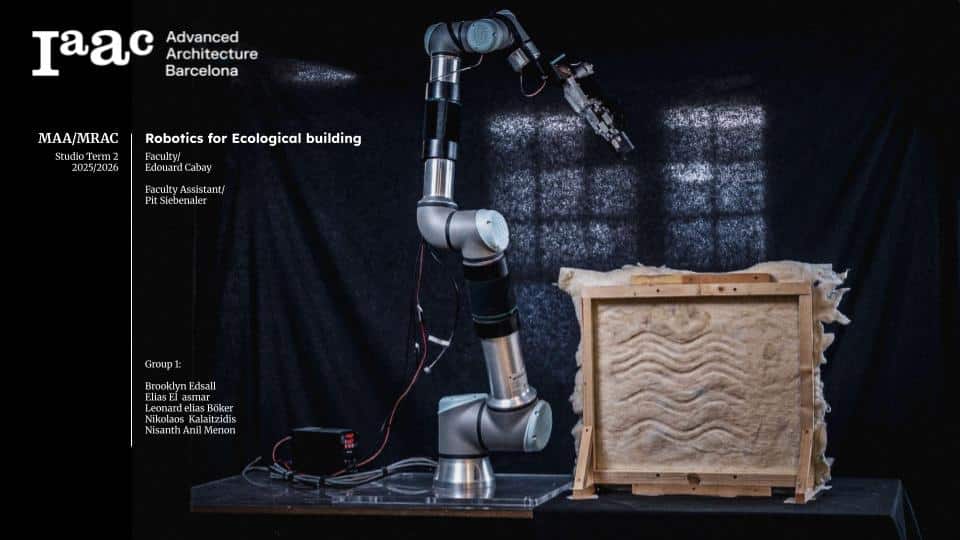
The Living Fibers MAA/MRAC, Studio Term 2, 2025/2026 Group 1: Brooklyn Edsall, Elias El  asmar, Leonard elias Böker, Nikolaos  Kalaitzidis, Nisanth Anil Menon Abstract:This project challenges the hyper-standardization of modern construction by investigating the architectural potential of raw, locally sourced Catalan wool. Our research elevates wool from a passive insulation material into an active, rigid, … Read more

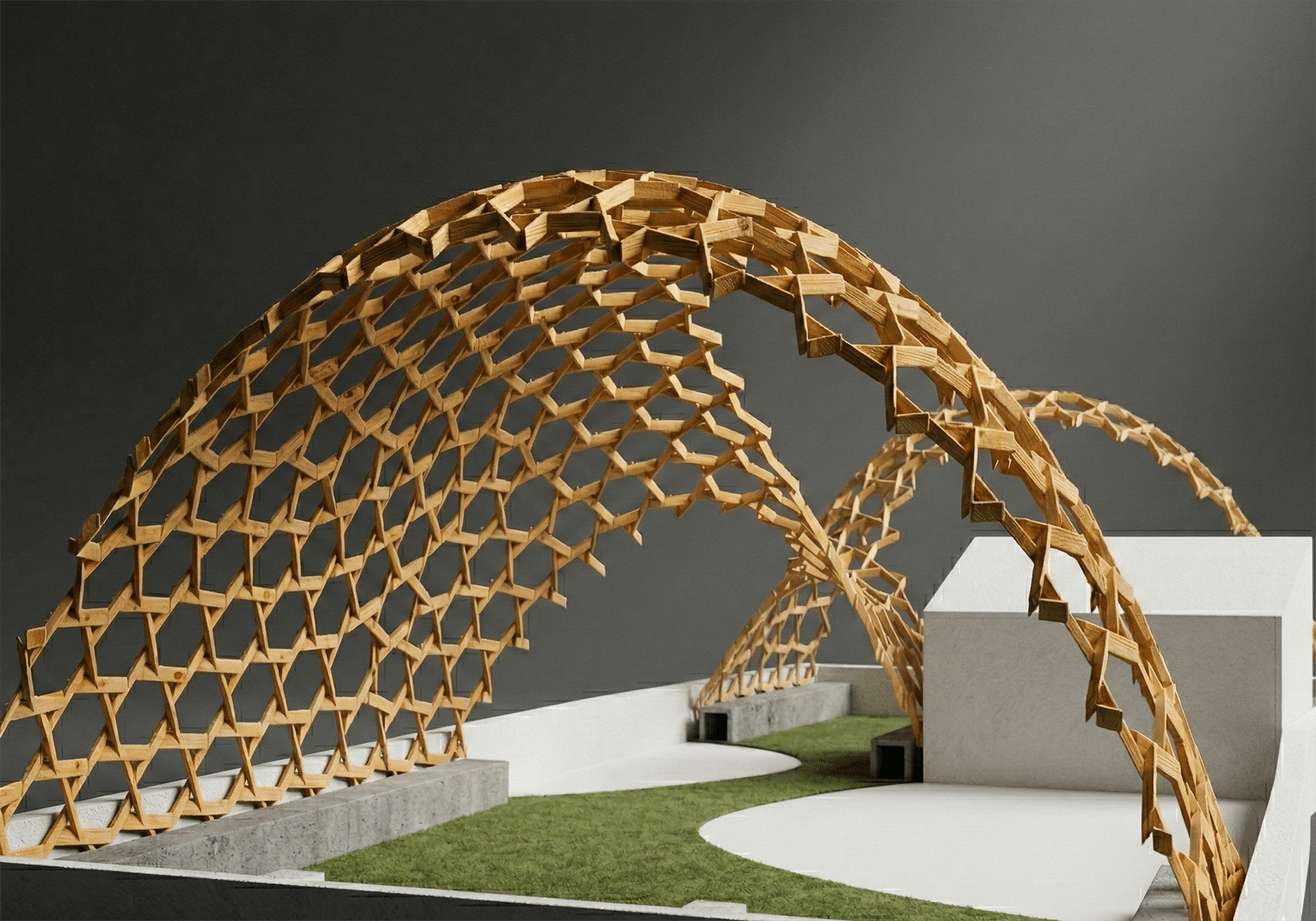
Reciprocal Canopy

Designed for the IAAC rooftop, this pavilion merges computational design with advanced robotic fabrication. The geometry originates in Grasshopper, where a basic mesh is transformed into an optimized vault using Kangaroo’s physics-based dynamic relaxation. A reciprocal frame pattern is then applied, translating the continuous shell into short, mutually supporting timber pieces. Because every interlocking element … Read more

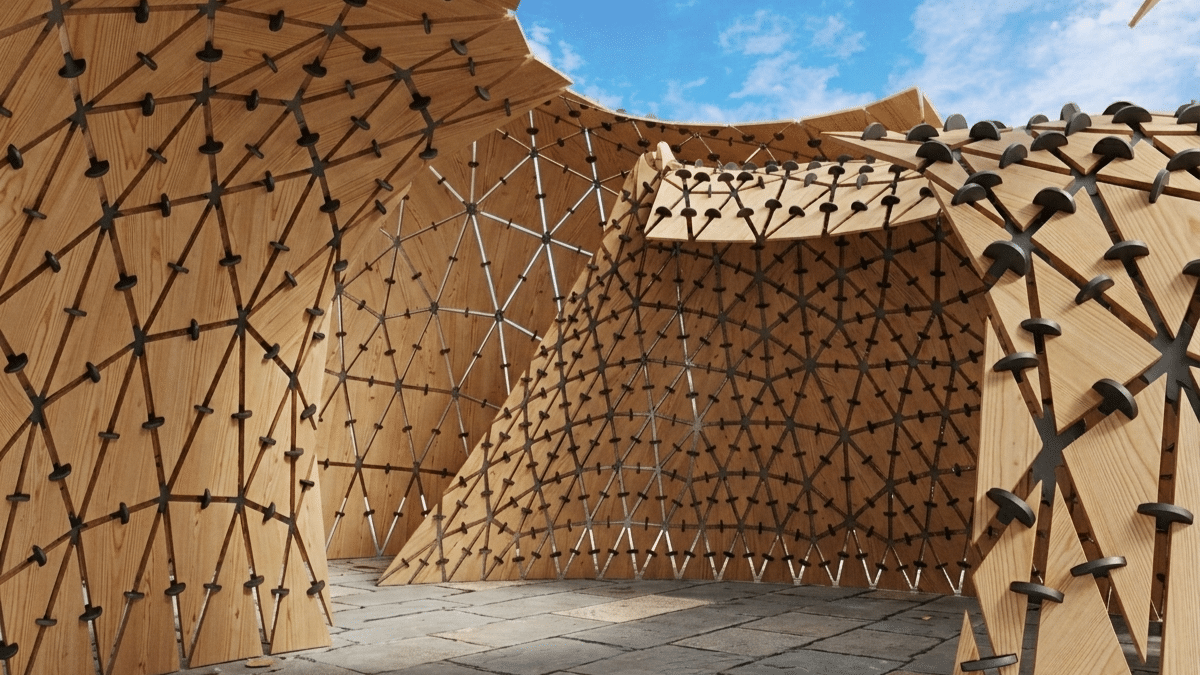
Recursive Shell

This project, titled Recursive Shell, is located at Plaça del Pi. The pavilion explores form-finding through inverted arch logic and modular timber shells. Using a Kangaroo Bouncy Solver, the design optimizes structural stability via parameters like pressure, edge lengths, and vertex loads. The system consists of interlocking triangular panels and joint discs extracted from a … Read more

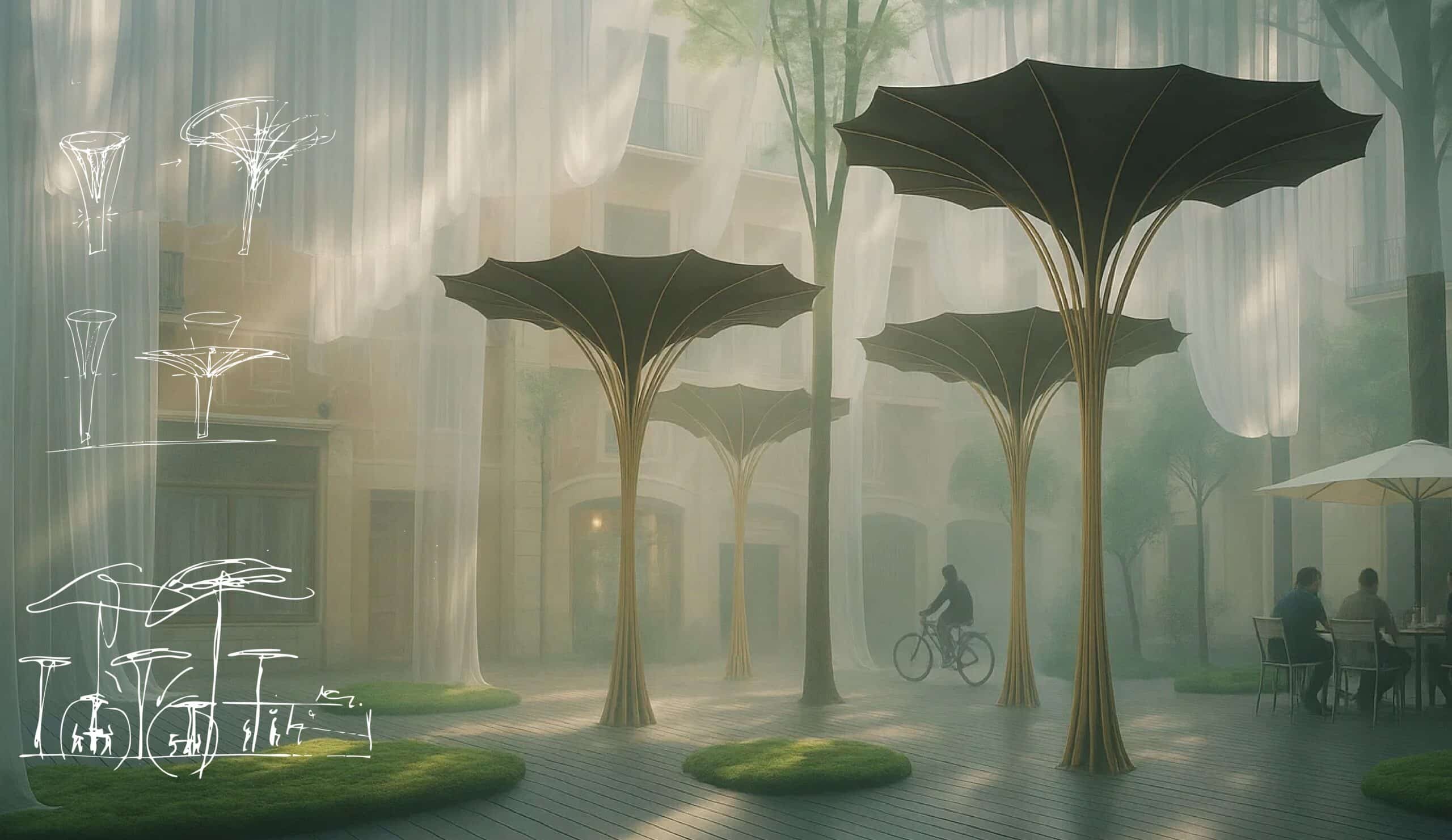
Cano(Pi)

A dynamic forest pavilion. Plaça del Pi, Barcelona, Spain Design Concept Form Finding Psuedo Code The script relies on the organic undulation of sine and catenary curves to reflect the organic nature of our inspiration as well as provide a real-life simulation of the suspended fabric forming the canopy reacting to gravitational logic in both … Read more