Within the current global context of rapid change, integrated with the potentials of digital technologies, IAAC’s Master in Advanced Architecture (MAA) is committed to the generation of new ideas and applications for Urban Design, Self Sufficiency, Digital Manufacturing Techniques and Advanced Interaction.

In this context IAAC works with a multidisciplinary approach, facing the challenges posed by our environment and the future development of cities, architecture and buildings, through a virtuous combination of technology, biology, computational design, digital and robotic fabrication, pushing innovation beyond the boundaries of a more traditional architectural approach.

Filters
Course

The Timber Wave

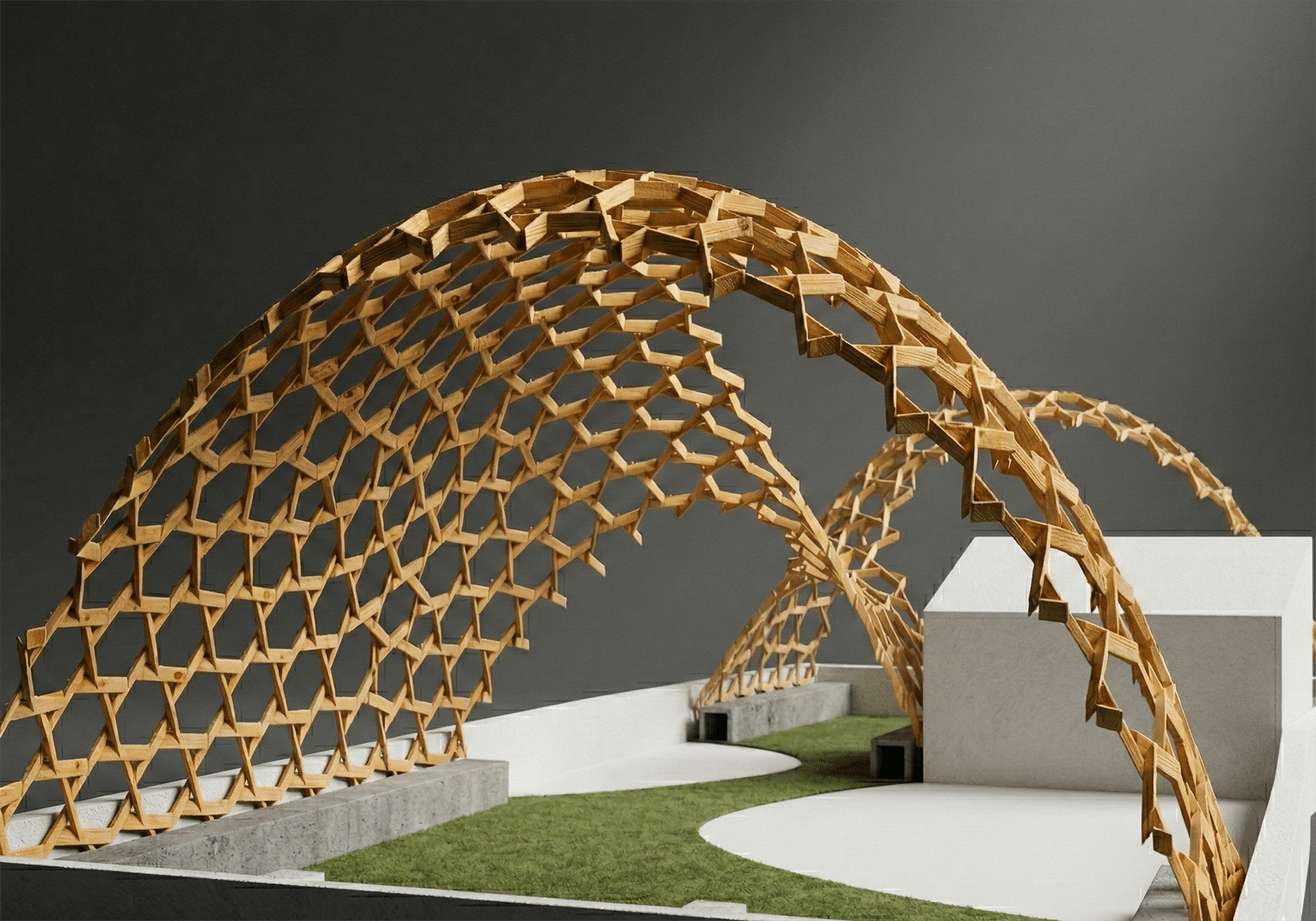
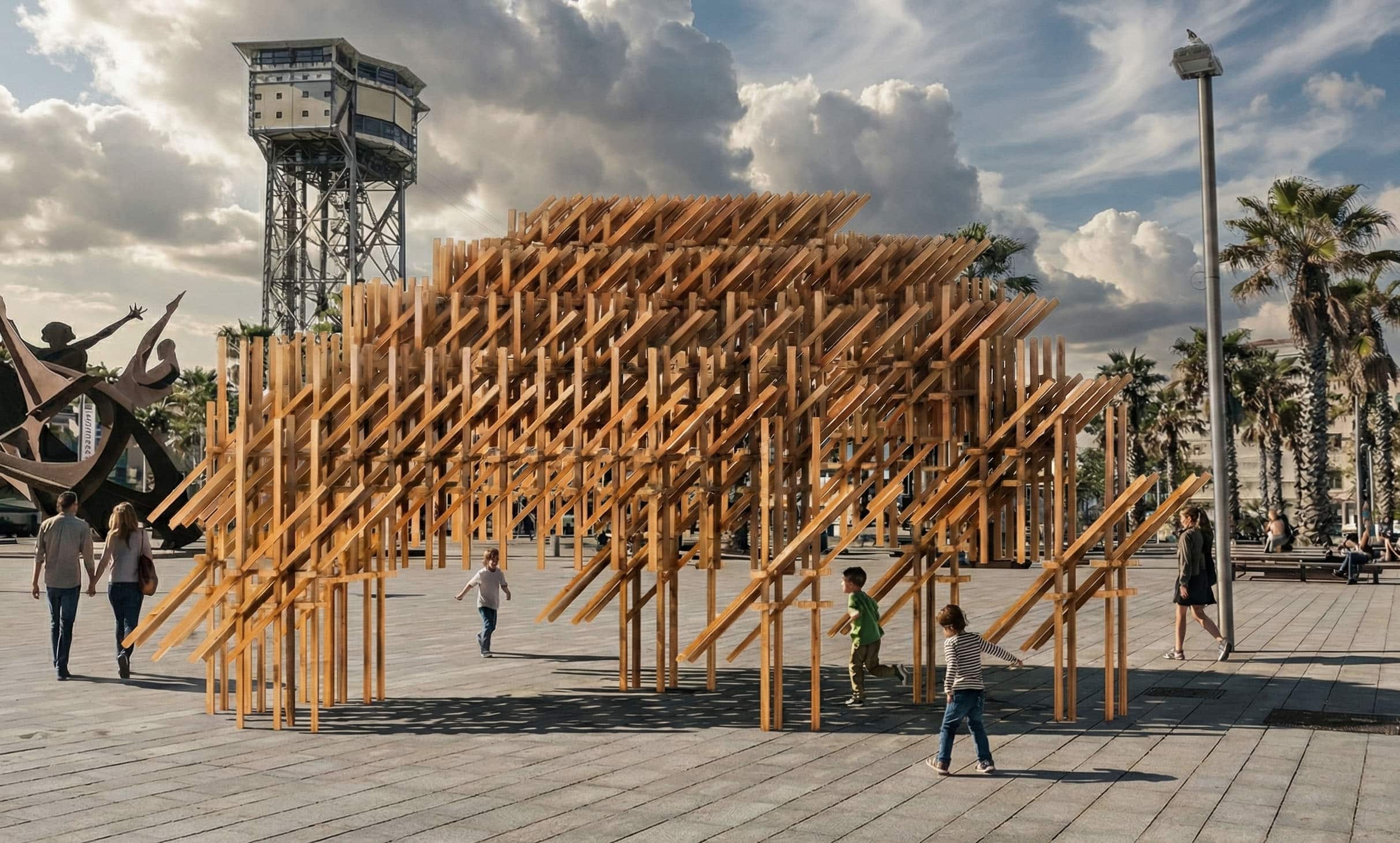
This pavilion explores the dialogue between wood and waves through a parametric system of assembled timber elements shaped by coastal forces. Inspired by the rhythm of tides and the grain of wood, its fluid geometry oscillates between structure and motion, shelter and openness. The project merges digital design with natural material intelligence, creating a lightweight … Read more

The Woven Contrast

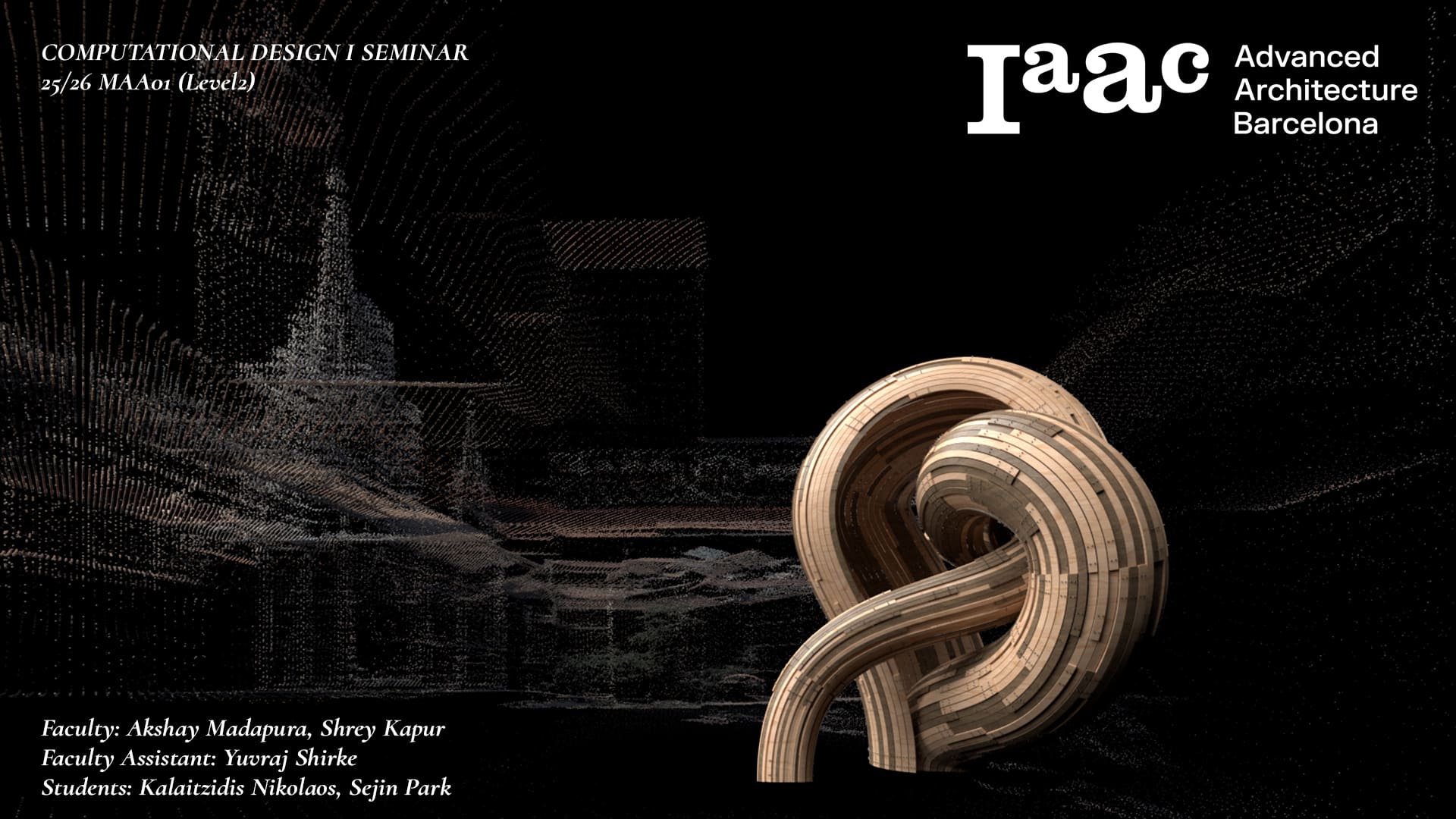
Cover page for the IAAC Computational Design I Seminar. The image features a parametric, twisted wooden structure in the foreground against a dark, point-cloud digital background. Text lists the Faculty as Akshay Madapura and Shrey Kapur, and Students as Kalaitzidis Nikolaos and Sejin Park.

COMPUTATIONAL DESIGN I SEMINAR25/26 MAA01 (Level2) Abstract: Computational Weaving. This project, developed for the Computational Design I Seminar, explores the algorithmic generation of complex, recursive geometries through the logic of “Digital Craft”. Inspired by the material constraints of steam-bent timber, the design creates a “volumetric weave” rather than a simple surface. The computational workflow is … Read more

Digital Fabrication Library

In today’s architectural landscape, digital fabrication has significantly expanded the way we design and construct building elements—offering unprecedented accuracy, efficiency, and formal freedom. Techniques such as laser cutting, CNC milling, 3D printing, and robotic manufacturing each bring distinct advantages in terms of material behavior, geometric complexity, and performance potential. RE:CELL Concept The Re:Cell is a … Read more

Morphologies of Making: Four Experiments in Digital Craft

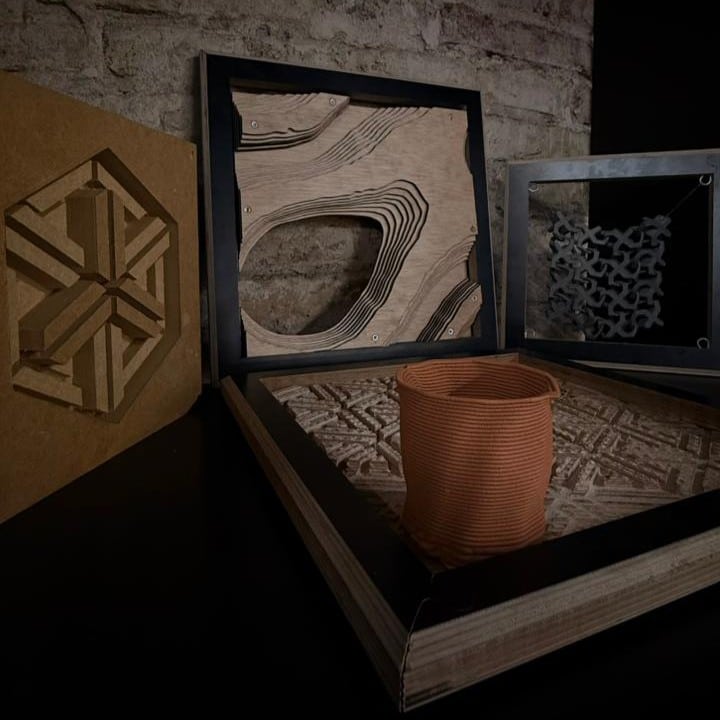
Our digital fabrication journey unfolds through four experiments that explore how material, geometry, and technology negotiate form. Each project challenges a different fabrication technique: laser cutting, CNC milling, 3D printing, and robotic manufacturing, while asking a deeper question: How does digital logic reshape the language of craft? Laser Cutting Tessellated Lightfield This project explores the … Read more

Tectonics of Digital Craft

Digital fabrication enables designers to explore geometries that go beyond traditional construction constraints. The exercise focuses on translating complex geometries into constructible systems that integrate material behaviour, joinery logic, and mass customisation. Each technique allows experimentation with unique fabrication constraints, informing the evolution of the vertical element design. The outputs serve as material and geometric … Read more

TriAxial Dynamics

3D Printing | Kinetic Facade | CONCEPT | The project draws its primary inspiration from the dynamic, sun-responsive mashrabiya system of the Al Bahr Towers in Abu Dhabi. What captivated me was the sharp visual contrast between conventional, static façade geometries often rectilinear or triangulated and the refined kinetic intelligence embedded in these triangular adaptive … Read more

THE TERRACOTTA LUNG – Breathing comfort through clay.

Introduction This project explores a double landscape approach, bridging a student accommodation in the city with an ecological extraction site in the Collserola foothills. It establishes a material and climatic dialogue between the two contexts: one as a site of inhabitation, the other as a site of making. At its core is a breathing terracotta … Read more

KINXA | The future built with tradition

Vernacular architecture has steadily lost relevance in contemporary practice. Industrialized construction methods, aesthetic shifts, and the pursuit of perceived reliability in materials like concrete and steel have overshadowed traditional techniques. However, these modern materials often come at a high environmental cost. Among the overlooked methods is quincha, a construction technique common in Latin America. It … Read more

Low CO2 Social Housing 

Project by Saad Khan , Sai Mohan Satwik and Baran Koc INTRODUCTION Our group was assigned to study the TMDC building, focusing on its material composition, spatial qualities, and potential for on-site material reuse. The goal is to explore how the existing structure can become a source for recycled construction materials, which we would then … Read more

KINXA | Frame Optimization with Karamba

Our goal for this Computational Design assignment was using Karamba along with Wallacei to optimize the mass and deformation of the timber frames of our construction system called KINXA. It is a modernized version of the vernacular technique used in Latin America called “Quincha” which consists of the use of a wood or cane frame, … Read more

DIGITAL WOODCRAFT

After spending some time learning about timber joinery last term, this term was all about implementing these logics onto a larger and more complex system: a small chunk of a bird observatory. We designed and made all of the beams that comprised the chunk, which were all unique to one another. Some were straight, others … Read more

CONVEA

USING CORK AS A DELINEATOR OF INTERNAL CLIMATIC PROGRAMS a. initial machine phenomena studies b. first iteration of phenomena recreated c. second iteration of phenomena model on column site d. photographs of second iteration

Thermocrest – Heat as a spatial design tool

This Project explores how reflective, vernacular materials—such as ceramics—can be utilized in construction to manage infrared radiation and influence microclimates. By reflecting rather than absorbing heat, these materials contribute to passive cooling, reducing urban heat island effects and enhancing thermal comfort. We analyze the physical properties of ceramics, their historical applications in traditional architecture, and … Read more

KINXA

KINXA aims to bring vernacular construction back into contemporary architecture by systemizing traditional “quincha”. At the same time, through a redesigned material system, KINXA seeks to take advantage of local resources and lower even more its precedent carbon footprint.  Quincha is a technique prevalent in Latin America which consists of the use of a wood … Read more

Constellation

Site: Pl. de Sant Jaume Plaça de Sant Jaume, located in Barcelona’s Gothic Quarter, is a historic and political hub, home to the City Hall and Palau de la Generalitat. As a central urban space, it offers a dynamic blend of civic activity, tourism, and cultural events. The square’s rectilinear layout, flanked by neoclassical façades, … Read more