The MAA is a visionary master program with an innovative and open structure, mixing diverse disciplines, shaping professionals capable of producing theoretical & practical solutions towards responsive cities, architecture & technology.


Filters
Course

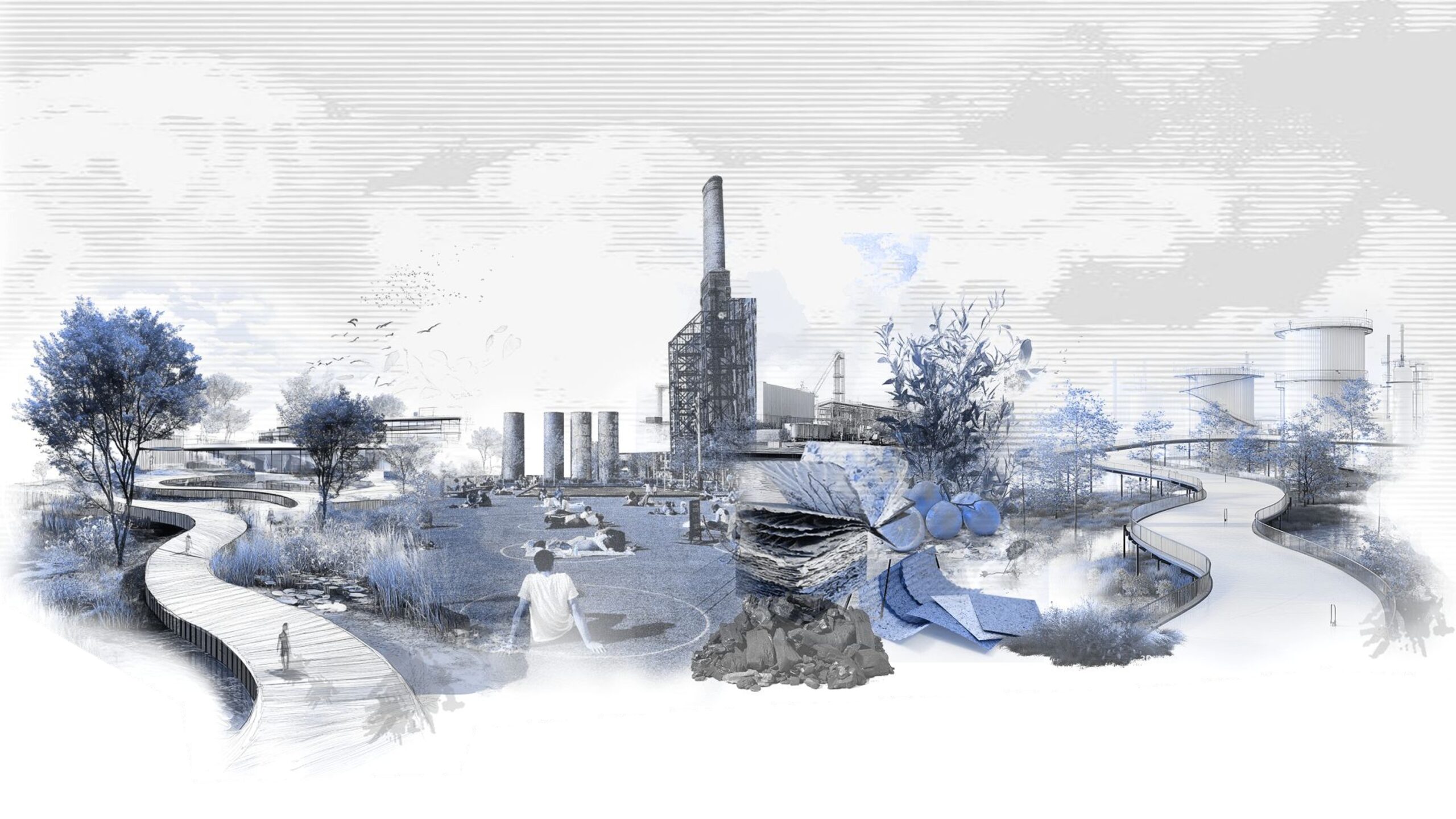
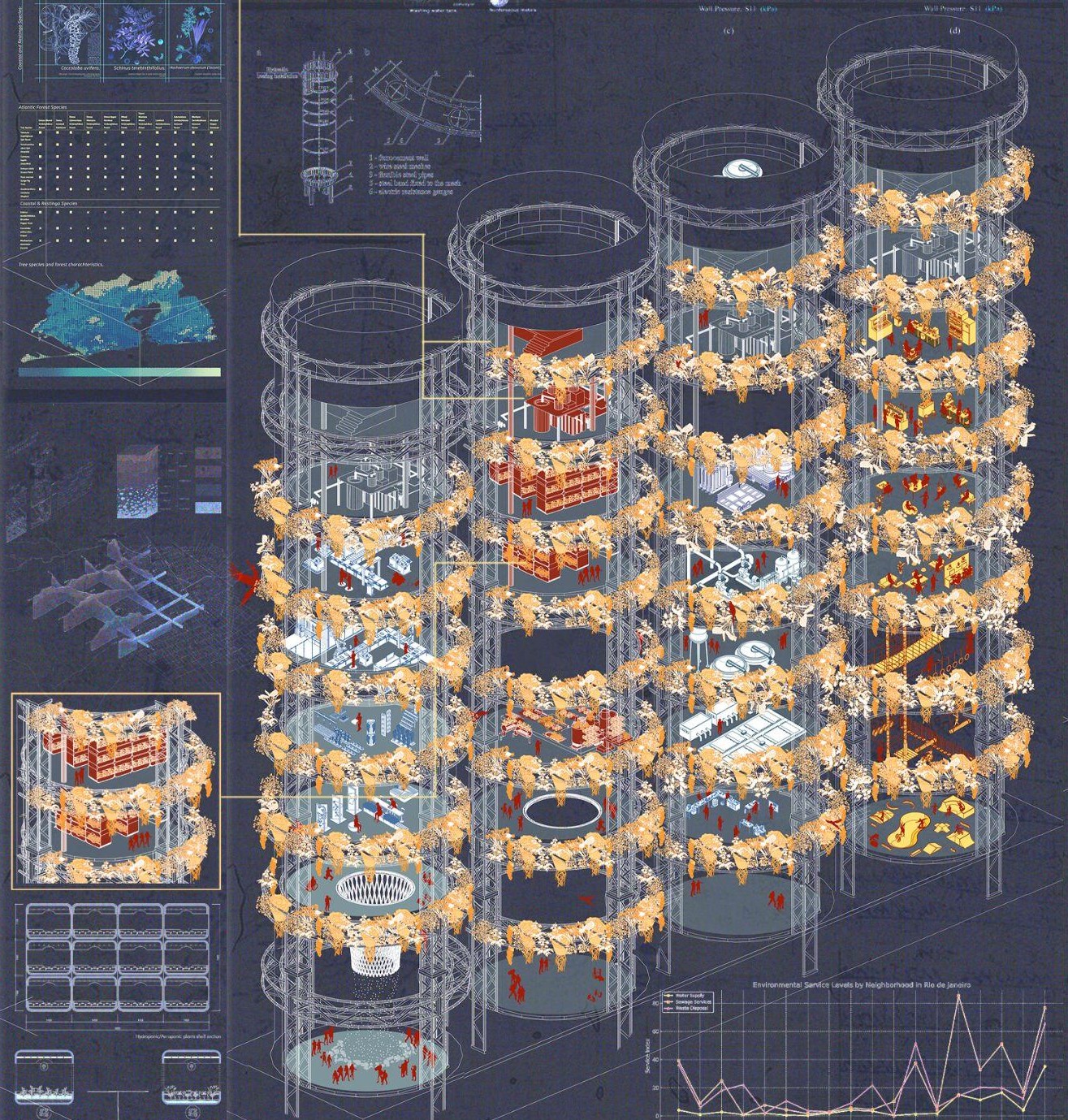
Re-Rio: Ecological Justice

This project explores ecological justice through the lens of waste inequality in Rio de Janeiro. Focusing on the Gamboa neighborhood and the repurposing of the historic Moinho Fluminense silos, we propose a decentralized recycling system connected to local waste streams. By integrating informal and formal actors—such as catadores and recycling industries—we aim to reduce landfill … Read more

BACK TO ZERO

NARRATIVE Back to Zero is a regenerative concept that targets oil refineries and other aging infrastructures that pollute our world. The narrative is inspired from the “skin in the game” concept, and calculates lifetime co2 emissions for high emitting “hosts”, which then becomes a target for that same “host” to sequester through the carbon sequestration … Read more

BIOGENESIS

TRANSFORMING WASTE INTO SUSTAINABLE MATERIAL RESOURCES The goal is to convert various types of waste into sustainable resources, establishing a circular economy that enhances environmental benefits by repurposing waste, promoting renewable energy, and encouraging innovation in bioproducts. This site, like many others around the world, holds the memories of a different time. What happens when … Read more

MORPHO RESIDENCES

DESIGN STRATEGY & TYPOLOGY The “Morpho” Residences originated from the a top down approach, this means that the algorithm behind it uses predefined sets of rules to create its geometry. The “Morpho” Residences originated from the a top down approach, this means that the algorithm behind it uses predefined sets of rules to create its … Read more

Bio-Receptive | Interfaces I

Designing Bio-Digital Hybrids for Environmental Intelligence The project aims to addresses 3 key problems, by creating a system that brings together anthropogenic mass and bio-mass, sequesters carbon and purifies the air within it’s immediate context. The project is envisioned as an adaptive system, that can be aligned towards solving different problems through biological and digitally … Read more

CORVERD

MANIFESTO CorVerd – Meaning “Green Heart” in Catalan, this name reflects both the agricultural focus and a commitment to sustaining the city’s green spaces and historical beauty.This project is a vibrant intervention near Montjuïc, blending sustainable hydroponic farming with green corridors to foster community and enhance biodiversity. The Hydroponic Treehouse concept reimagines urban farming as … Read more

Roots & Routes

BIODIVERSE PUBLIC SPACECollaborative Design with Humans and Non-humans The Besòs River in northeastern Spain flows through Catalonia from the Montseny mountains to the Mediterranean Sea near Barcelona, covering about 17 kilometers. Once heavily polluted by industrial waste and urban runoff, it has undergone significant environmental restoration, improving its water quality and accessibility for wildlife and … Read more

Pixel ecology

Succession Landscape Strategy of succession through the creation of ecological island Site ANALISIS PROJECT MATRIX CONCEPT Strategy of succession through the creation of ecological island MASTERPLAN THE COMPONENT THE ISLANDS Island 01 Island 02 Island 03 SUSSECCION STRATEGY HOW IT WORKS VIDEO MODEL

ROOTED ECO-SCAPES

An exploration of Root Architecture and Material Study By uniting Ecological Restoration techniques with an adaptable architectural system, this project envisions a scalable, self-sustaining model that harmonises with natural ecosystems. Although the approach is contextualised within specific urban challenges, it offers a flexible framework adaptable to various environmental conditions and site-specific needs, ensuring its broader … Read more

Reconnecting Urban Fragments

“Reimagining Urban Corridors: From Rigid Infrastructure to Inclusive Green Networks” “Urban environments today face critical challenges—population growth, rapid urbanization, and the fragmentation of ecological systems. As cities evolve, their rigid infrastructure often alienates natural systems and creates barriers to inclusivity and sustainability. This thesis focuses on reconceptualizing rigid urban environments by integrating transportation and ecological … Read more