The MAA is a visionary master program with an innovative and open structure, mixing diverse disciplines, shaping professionals capable of producing theoretical & practical solutions towards responsive cities, architecture & technology.


Filters
Course

Hoarder.data

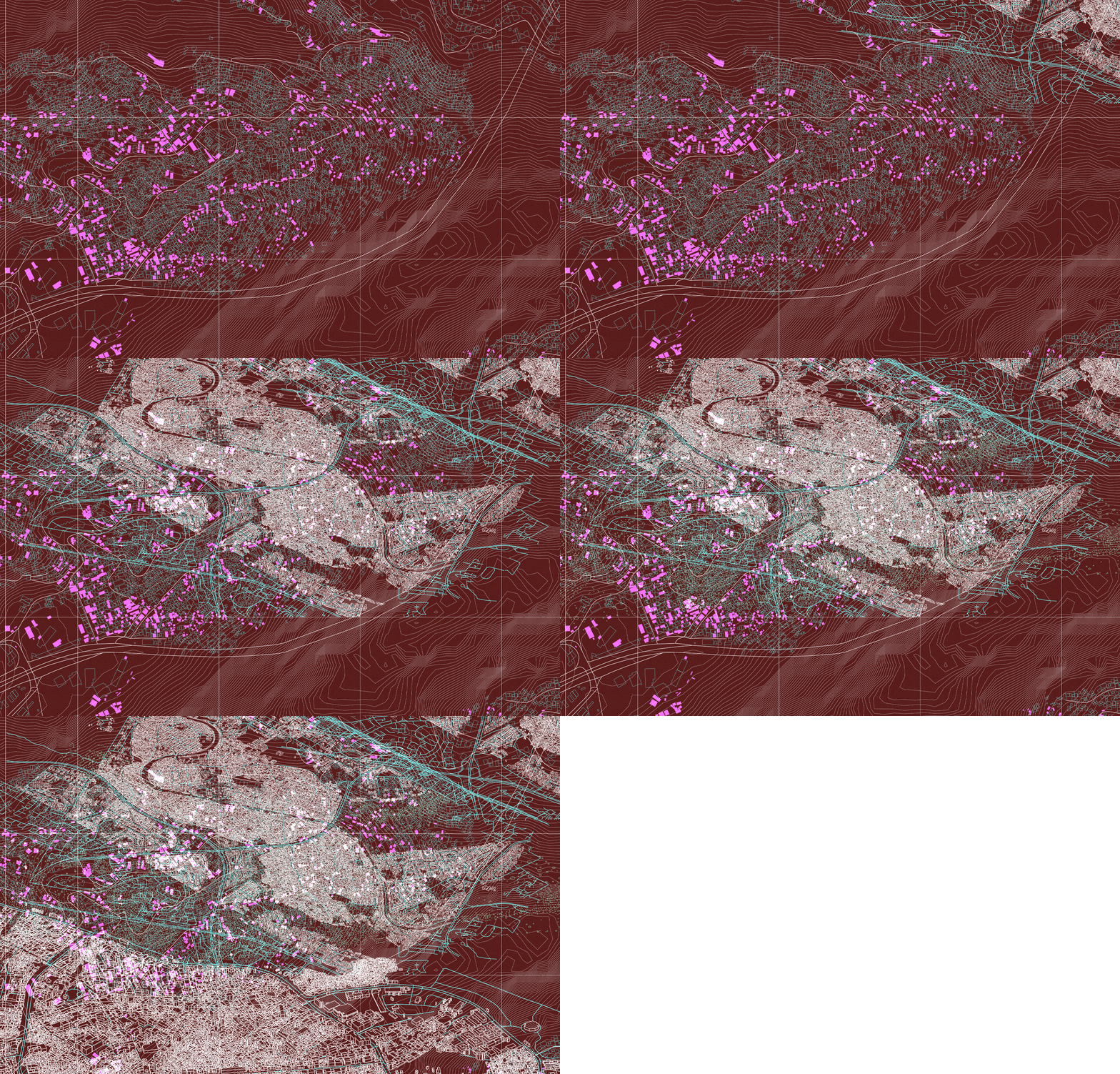
Problem Tersa is a public company that runs a waste incineration plant in Sant Adrià del Besòs, serving much of the Barcelona metropolitan area. Over the years, local associations and residents have raised concerns that the plant may exceed emissions limits of toxic substances and caused pollution. Despite all the concerns, the investigating judge archived … Read more

The ClimaColour Code

Abstract Environmental conditions are more often than not invisible and something that is felt rather than visually perceivable. The ClimaCode provides our spatial surroundings with their own language that enables them to better communicate with us as humans.  By translating climatic conditions, such as temperature and humidity, into light, the device communicates its climatic ‘mood’ … Read more

BreatheSmart

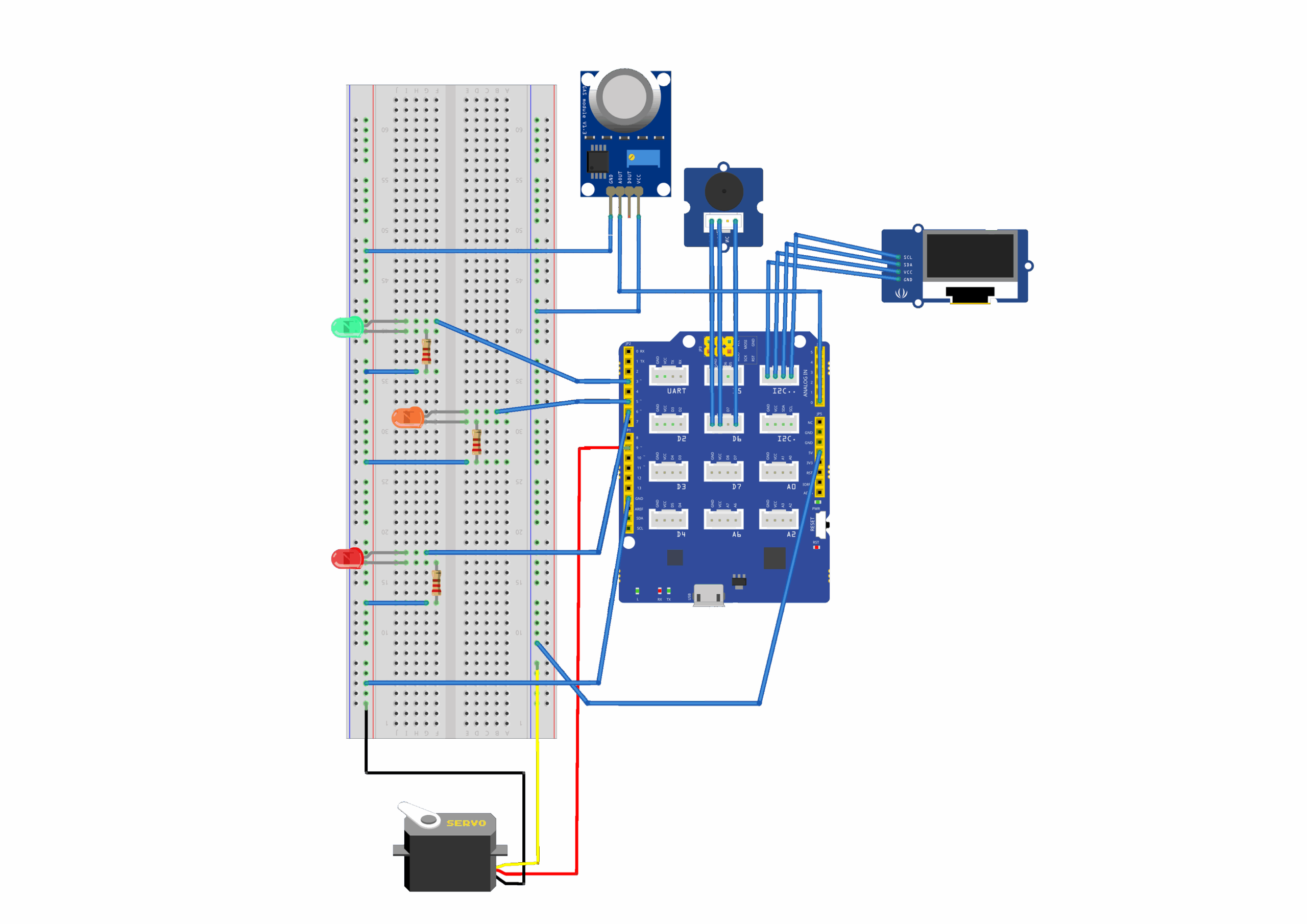
Introduction to Programming and Physical Computing Seminar This project focuses on developing a smart air quality monitoring system using a Seeed Lotus microcontroller, an MQ-135 air quality sensor, a 0.96” OLED display, a buzzer, a small motor or fan, and a panel with three LEDs to indicate air quality levels. The system continuously measures CO₂ … Read more

Rainwater Harvester The project proposes a regenerative infrastructure for runoff water collection, treatment, and reuse within the built environment. Conceived as a responsive system embedded in architecture, it seeks to transform excess rainwater often perceived as waste into an active resource within a closed ecological loop. During episodes of heavy rainfall, the system captures surface … Read more

Wildlife Integrating Landscape Design Artificial Intelligence – WILD.AI — Term_III

CONTEXT DYNAMICS METHODOLOGY ANALYSIS By subtracting different scenarios from one another: The differences start to become clear as to what areas are consisently lost vs what areas are inconsistently lost. The latter being the one where planners and ecologists should focus their efforts the most if aiming to potentialize action. The figure becomes even clearer … Read more

Rootscapes

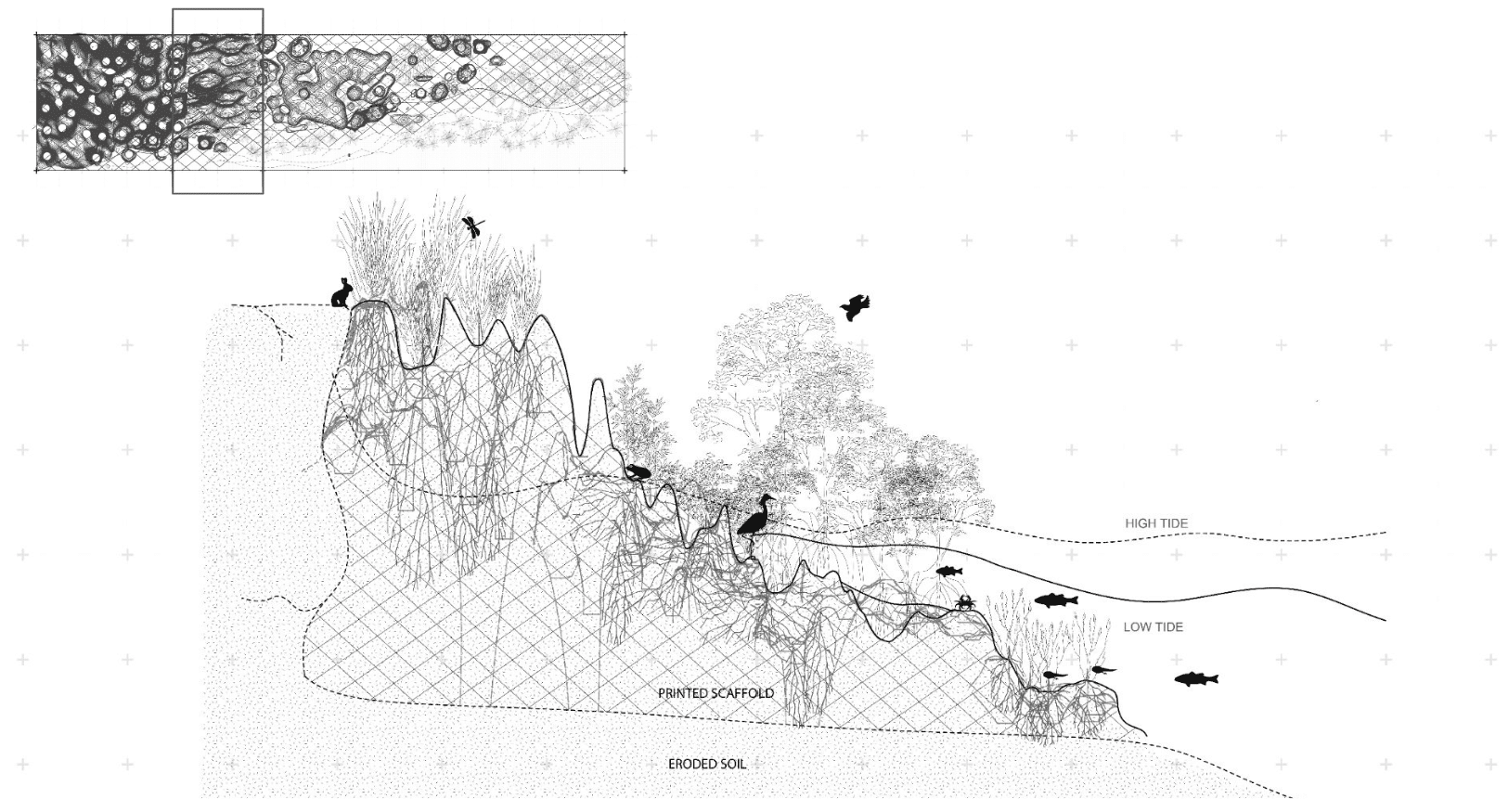
An exploration of root structures and material study 70% of the world’s population lives along coastlines and rivers, out of which, thousands of people get affected yearly due to erosion. However, our marine ecosystems such as mangroves and soils have the capability of storing large amounts of CO2 and provide a barrier amongst erosion.  CAUSES … Read more

EMI: Engine for Morphological Integration

An algorithmic roadmap that converts self-organized settlement morphology into clean-energy action: the Energy-Morphology Index mines open roof- and density data, ranks each building’s readiness, and matches “Ready / Promising / Not-Ready” clusters to modular solar toolkits—turning self-organized settlements into engines of energy justice

Go With The Flow

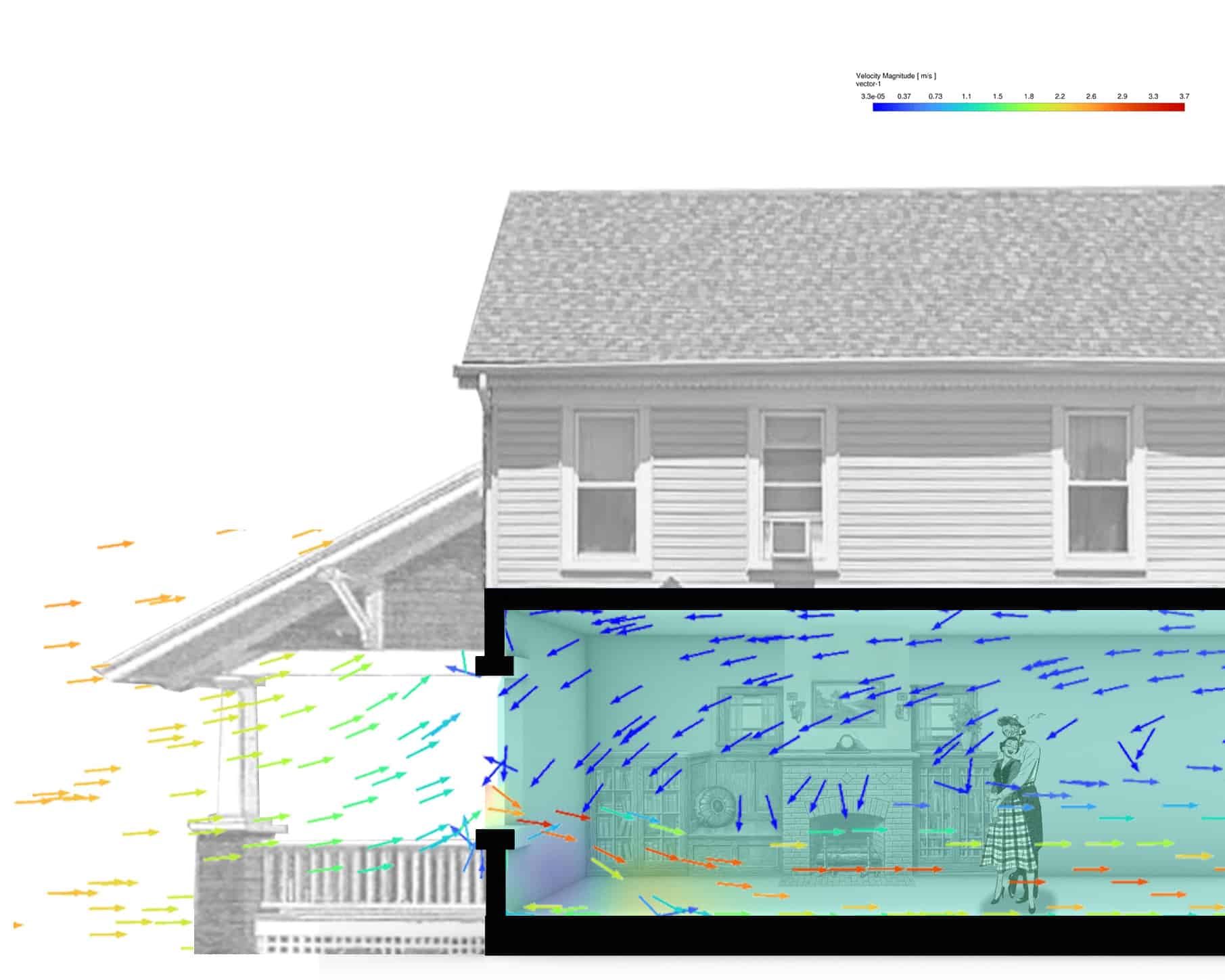
Computational Fluid Dynamics for Natural Ventilated Systems primarily located within the United States The Problem within Context: Sears Catalogue from 1930s to 1950s United States. The American Dream is a phrase that has taken meaning in the ownership of a home with a white picket fence. The phrase was popularized in the 1930s after WWI … Read more

TÀN 58

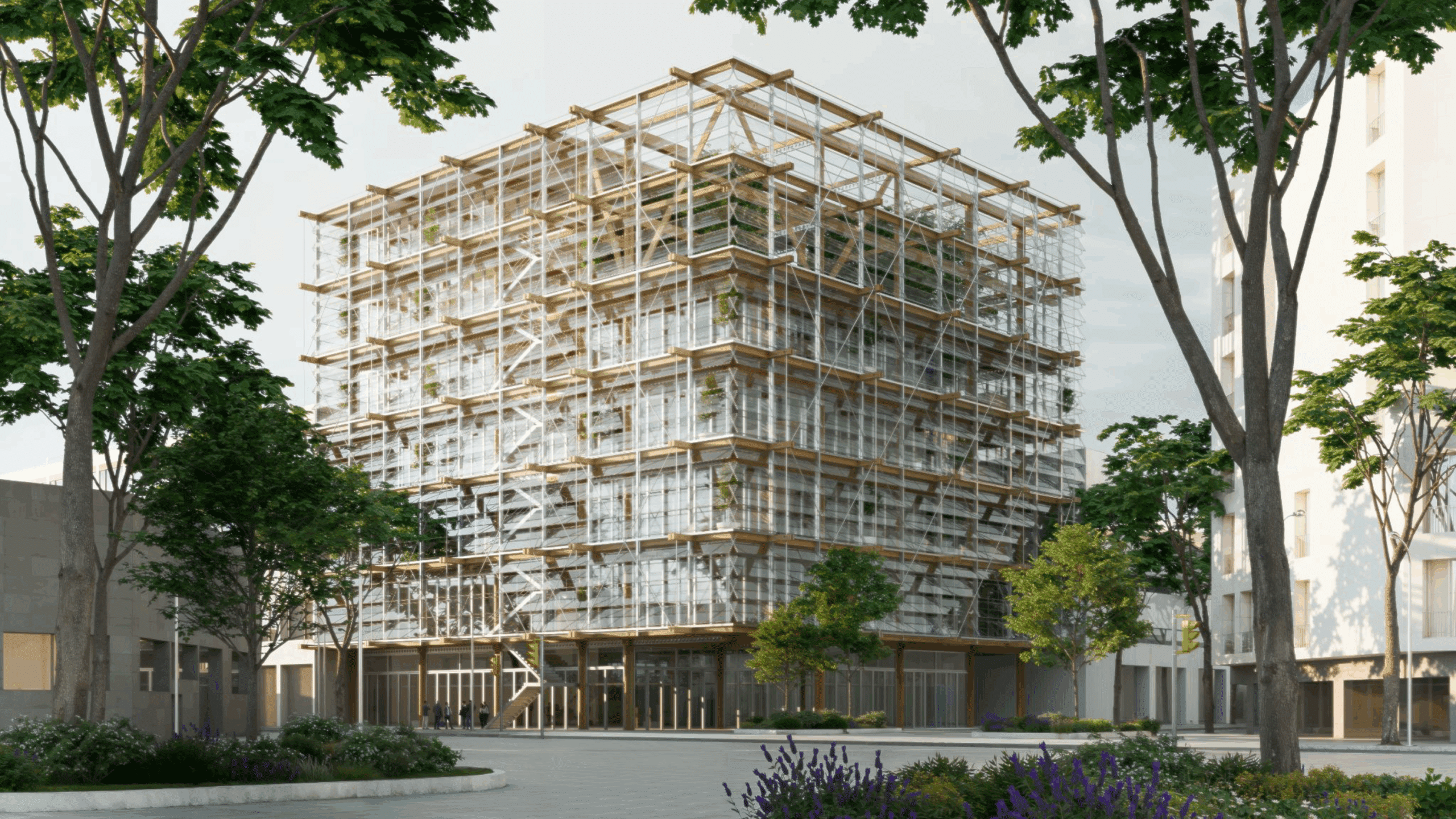
TÀN 58 is a seven-story student housing project located in Poblenou, an industrial district of Barcelona. The building’s form and orientation were shaped through computational studies that optimized daylight access and solar radiation across the site. This analysis led to the introduction of two central atriums, which act as vertical heat sources and organizational cores—spaces … Read more

Flow – SIGHT: De- coding urban mobility

Introduction Urban traffic congestion is more than just an inconvenience—it’s a global challenge tied to pollution, stress, and wasted time. While cities are turning to AI-driven systems to ease the gridlock, the question remains: Do these technologies actually perform better than traditional methods?Flow – SIGHT is a comparative research project that investigates traffic systems across … Read more

BARA

Carbon Envelopes Toward Carbon-Sequestering Architectural Systems through Biochar-Concrete and Hybrid Fabrication The construction industry is one of the biggest contributors to climate change.We’re facing a paradox: The materials we use and how the construction industry works today are destroying our chance of having a future. Besides the emissions, there are other problems that we need to … Read more

KINXA | The future built with tradition

Vernacular architecture has steadily lost relevance in contemporary practice. Industrialized construction methods, aesthetic shifts, and the pursuit of perceived reliability in materials like concrete and steel have overshadowed traditional techniques. However, these modern materials often come at a high environmental cost. Among the overlooked methods is quincha, a construction technique common in Latin America. It … Read more

Re- Rio Infrastructural Justice

Re-Rio is a vision to bring dignity, connection, and opportunity to the Gradim fishing community in Rio de Janeiro. Faced with poor infrastructure and social neglect, this project reimagines housing and public space through sustainable, affordable, and flexible design. It creates cool, breathable homes, shared learning spaces, and eco-tourism paths that celebrate local culture. By … Read more