Within the current global context of rapid change, integrated with the potentials of digital technologies, IAAC’s Master in AI for Architecture and the built environement (MaAI01) is committed to the generation of new ideas and pioneer novel AI-driven solutions applications for the fields of Urban Tech, Smart Construction and Natural Ecosystems. The three transversal objectives of the program are Regenerative Design, Carbon Neutrality and Co-Design Processes.
In this context IAAC and the MaAI works with a multidisciplinary approach, integrating computational design, rapid prototyping, machine learning, data science, and generative AI implementing sustainable practices at an unprecedented scale. Facing the challenges posed by our environment and the future development of cities, architecture and buildings, through a virtuous combination of technology, biology, computational design, digital and robotic fabrication, pushing innovation beyond the boundaries of a more traditional architectural approach.

Filters

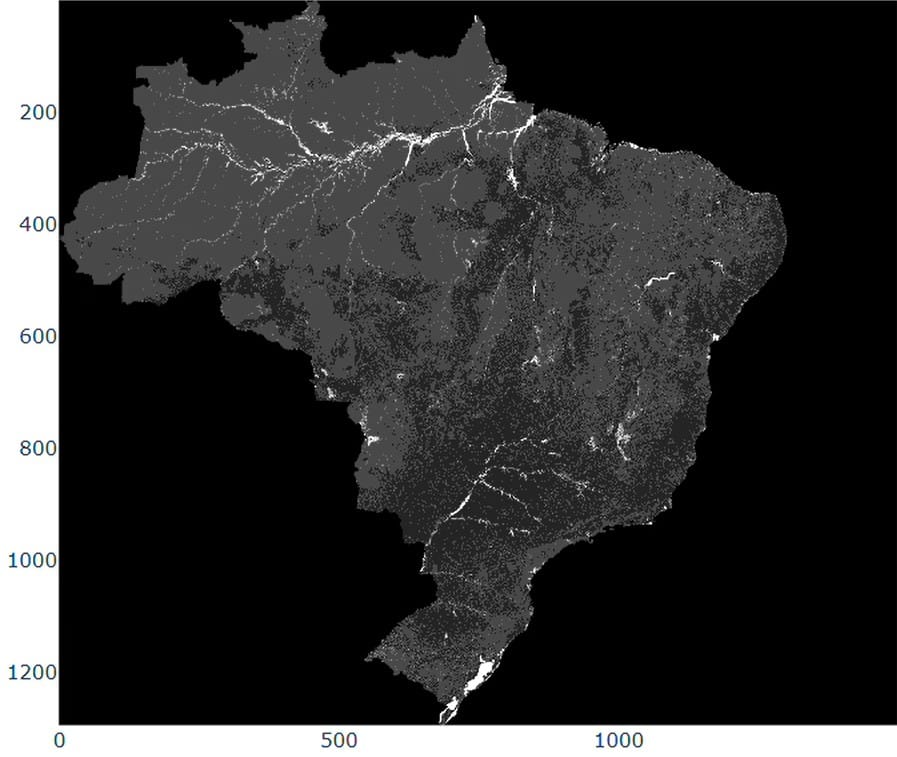
Deforestation, Land Cover, & Urbanization In Brasil – Dashboard

Deforestation Raster Map – 2024 The visualization depicts accumulated and annual deforestation patterns in Brazil from 1985 to 2024. The accumulated dataset shows a continuous rise in total deforested areas, reaching over 140 milllion hectares. Annual trends reveal strong fluctuations, with peaks in the late 1980’s and mid-2000’s, followed by decreases and renewed variability in … Read more

URBAN-Ai: AI based forecasting platform that predicts evolution of urban density and land-use.

The growth of cities on an urban level has been very random and often scattered due to several reasons, like; UNDPREDICTABLE URBAN GROWTH, DYNAMIC ZONING TRENDS and SHIFTING DEMANDS. This has led to the cities being have to be planned reactively rather than proactively. This has led to a problem of cities being inefficient, rising … Read more

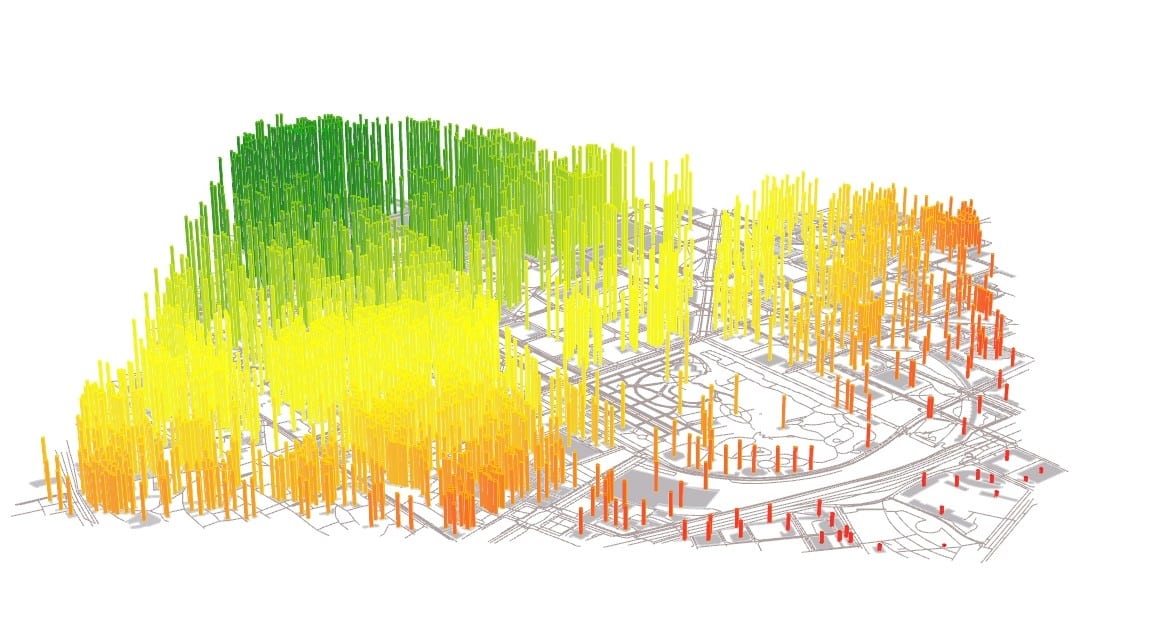
Urban Healthcare

Cities are complex systems where accessibility to essential services—such as healthcare—can directly affect quality of life and emergency response outcomes. Traditional urban maps often show where services are located, but they rarely communicate how accessible these services are in real, everyday conditions. The This project explores how computational design tools can be used to analyze … Read more

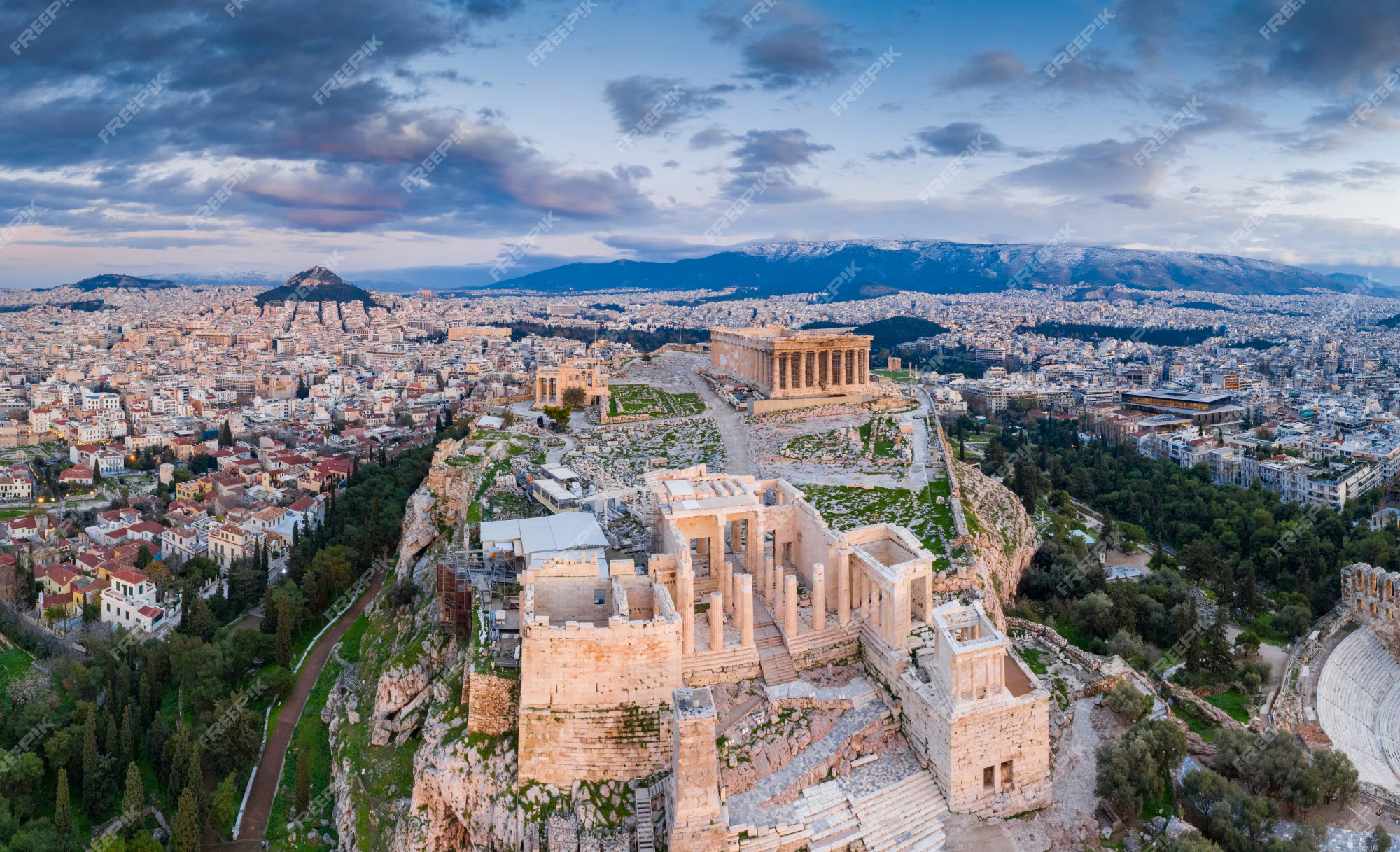
From Above the Acropolis: Satellite Analysis of Vegetation and Urban Heat in Athens

The project is situated in Athens, Greece, which overheats in the summer. We wanted to test a hypothesis: The overheating is the result of too much hardscaping (asphalt, concrete, brick) and not enough greenery. We wanted to compare the NDVI (a measure of greenery in a city) taken from Satellite images to Land Surface Temperature … Read more

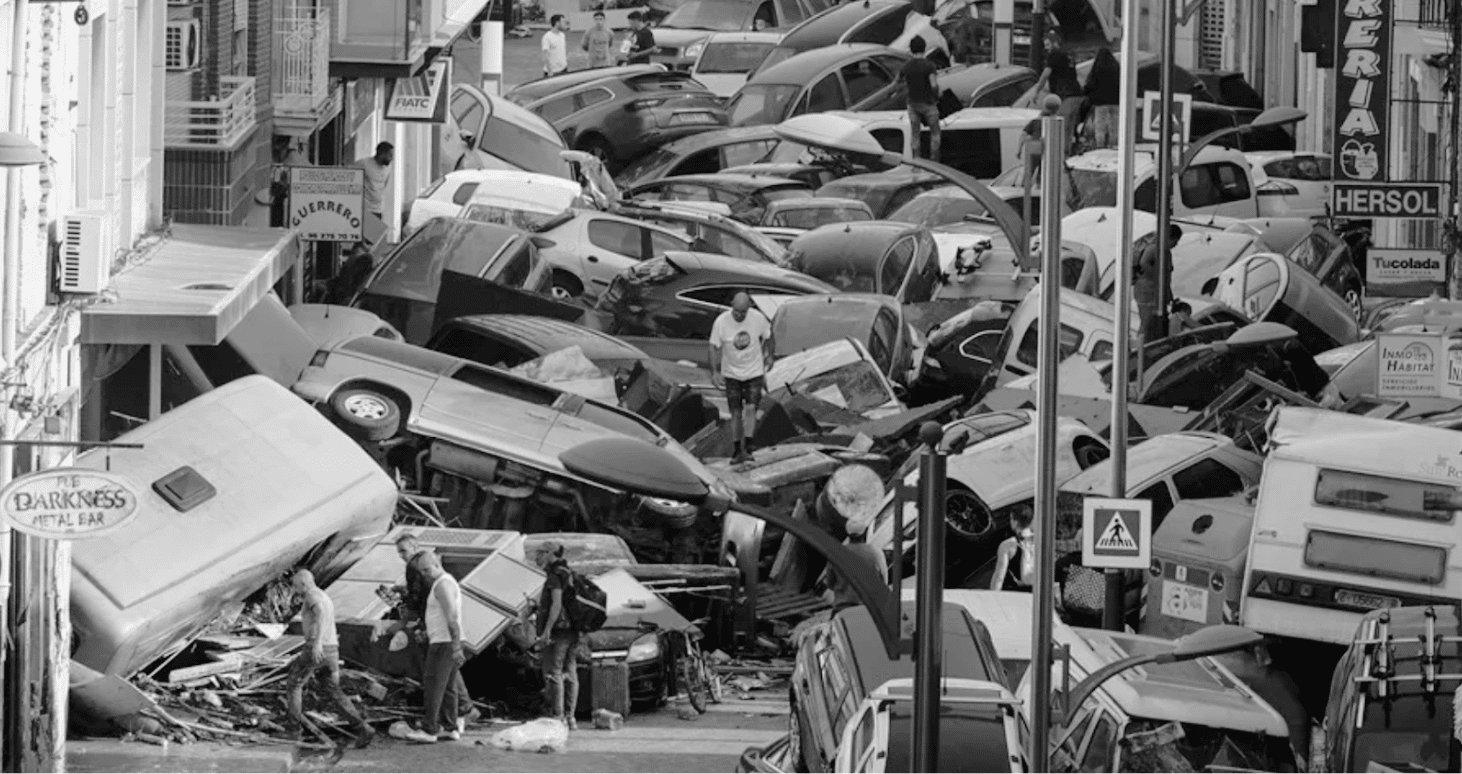
Flood Impact Mapping along the Turia River, València – Flood of 2024

When torrential rain dumped an entire year’s worth of water on Valencia in barely eight hours on 29 October 2024, the Turia spilled over its banks, submerging citrus groves, highways and whole neighbourhoods. More than 200 lives were lost, hundreds remained missing and Spain faced its worst flood disaster in recent history. Events like this … Read more

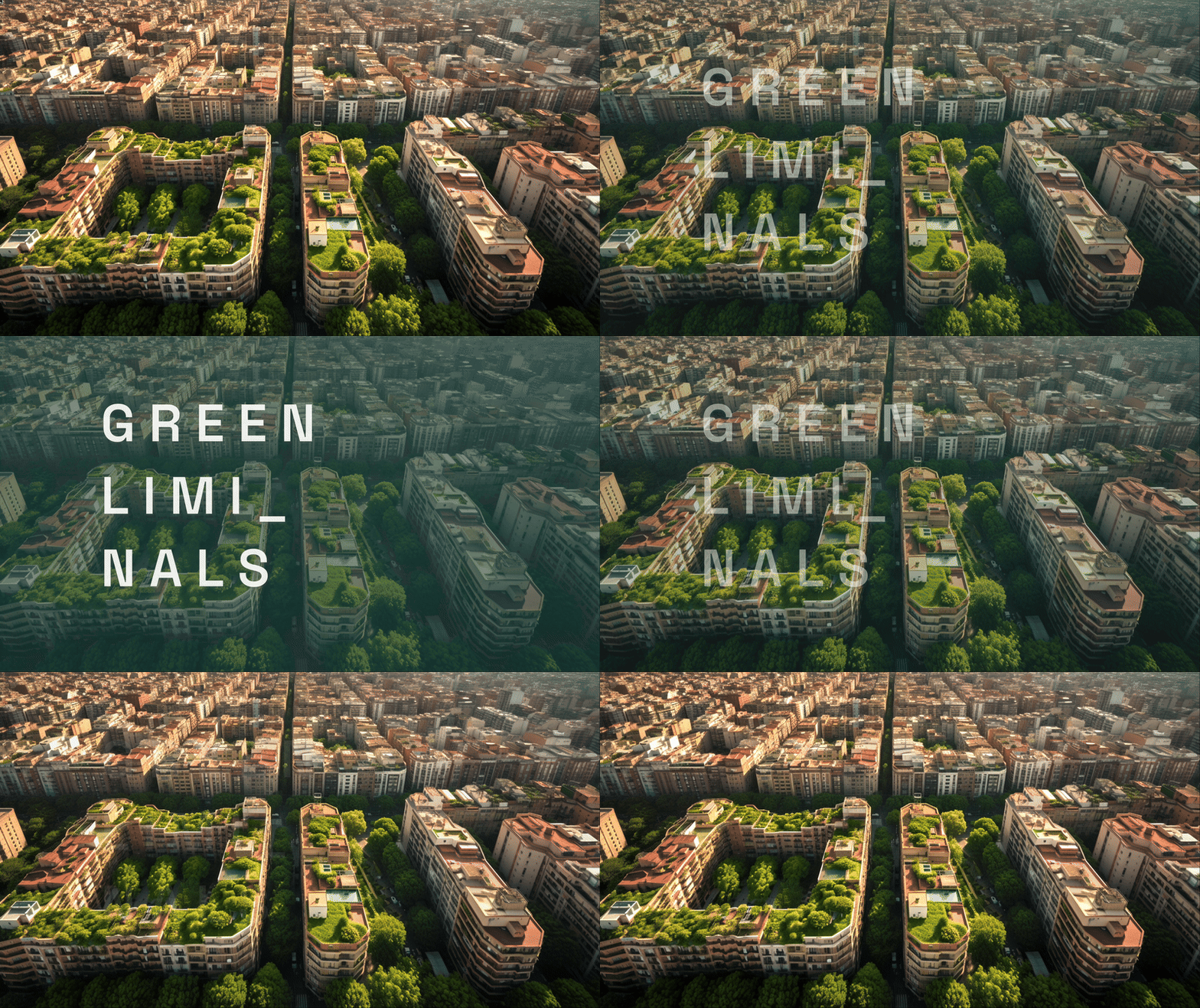
Green Liminals: Feasibility Study for AI-Driven Budget Optimization for Urban Sustainable Solutions

Abstract The project explores innovative ways to address Barcelona’s sustainability challenges, such as carbon emissions, air pollution, and energy inefficiency. By leveraging AI, IoT sensors, and Nature-Based Solutions (NBS), the project aims to optimize municipal budgets for interventions that transform underutilized urban spaces into productive assets. The study highlights solutions like urban farming, greenery, and … Read more