The MaCAD is a unique online programme training a new generation of architects, engineers and designers ready to develop skills into the latest softwares, computational tools, BIM technologies and AI towards innovation for the Architecture, Engineering and Construction (AEC) industry.

Filters
Course

The Likable Public

Intro This digital essay explores the growing trend of designing interior spaces for image consumption rather than functional use. This project investigates the consequences for public spaces when they are reshaped by the “economy of likes”. Drawing on Guy Debord’s Society of the Spectacle, the researchers argue that social relations are increasingly mediated through images, … Read more

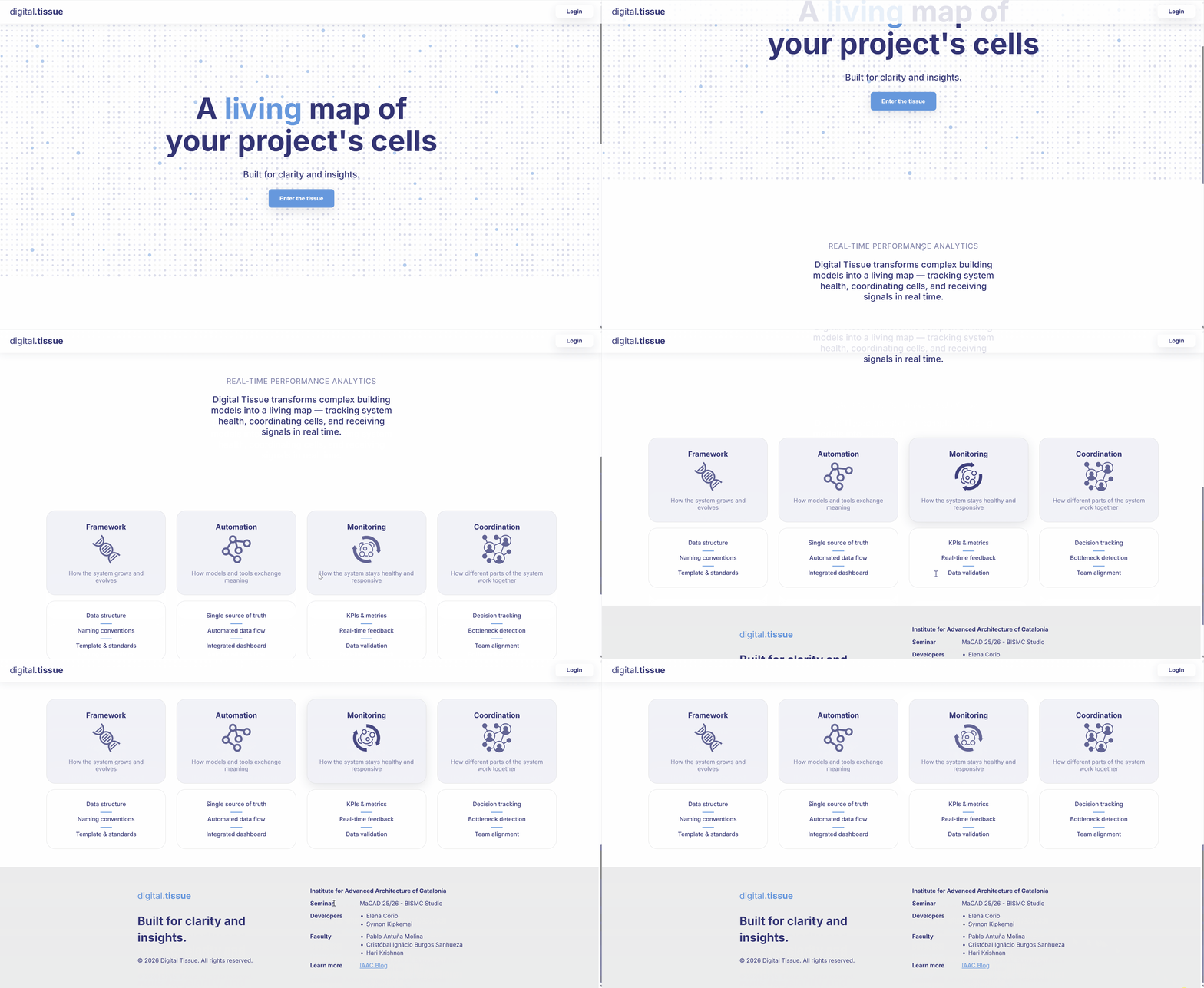
Digital Tissue: A Living Map of the Hyperbuilding Cells

Preliminary Study: Demography as Design Driver In Hyperbuilding 3, our focus was to understand how demographic data can actively inform architectural decisions. We started by analysing the Chilean census portal, which provides detailed information for the entire metropolitan region and specifically for the Providencia district. From this dataset, we looked at age distribution, household composition, … Read more

The Geometry of Intelligence: How Hyper-building One Turns Geometry into Meta-data

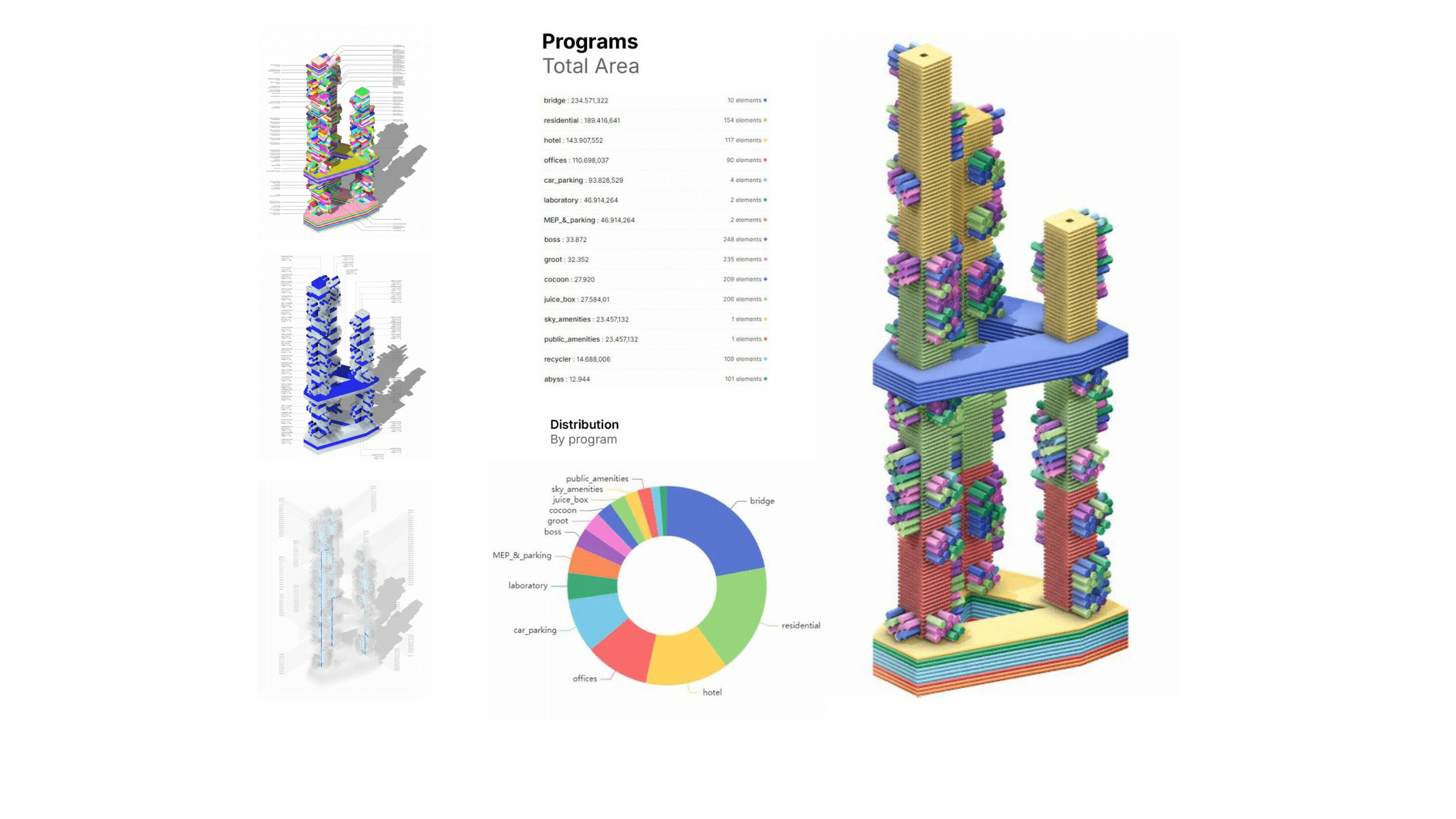
Hyperbuilding One is a data-driven ecosystem that achieves seamless connectivity between Static and Kinetic spaces through an optimized large-scale integrated environment. Architecture is No Longer Static: How Hyper Building One Turns Geometry into Code The traditional architectural blueprint is a corpse. It is a static snapshot of an idea that begins to age the moment … Read more

The Data Pipeline Behind NeuroSpace: From Sliders to Synapses

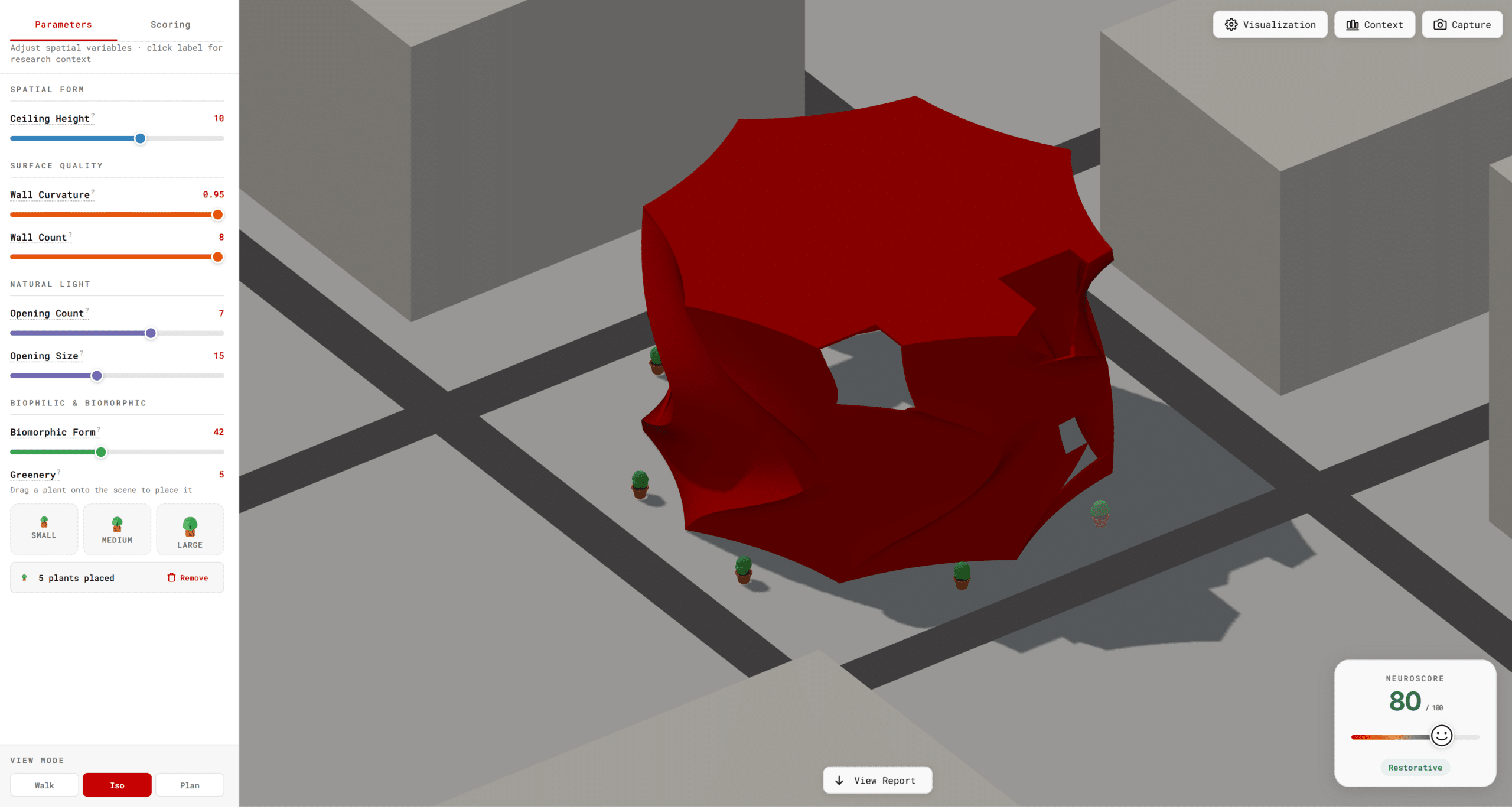
Abstract NeuroSpace is a browser-based parametric design tool that reframes Building Information Modeling as Behavior Information Modeling — encoding predicted neurophysiological outcomes into architectural geometry. This post traces the full data pipeline: from seven UI sliders through a dual-path architecture (server-side Rhino.Compute for 3D geometry, client-side JavaScript for real-time NeuroScore calculation), through reactive state management … Read more

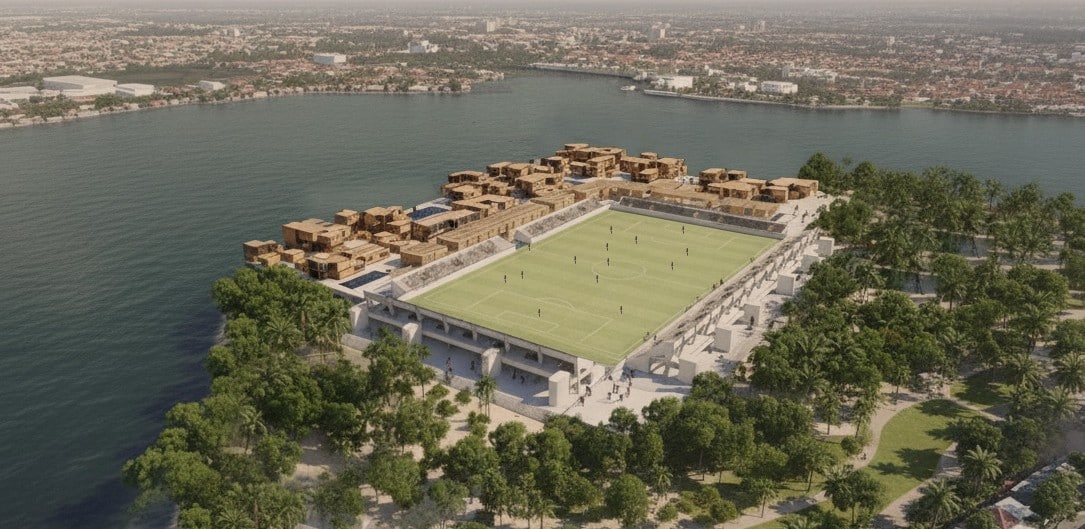
Floating Grounds-Rethinking Resilience in Jakarta

Introduction Floating Grounds proposes a flood-resilient urban model for Jakarta that merges housing, public programs, and a stadium into a single floating system. Instead of resisting water, the project accepts it as a permanent condition and uses it as an organizing element. The work explores how large-scale infrastructure can support community life while addressing land … Read more

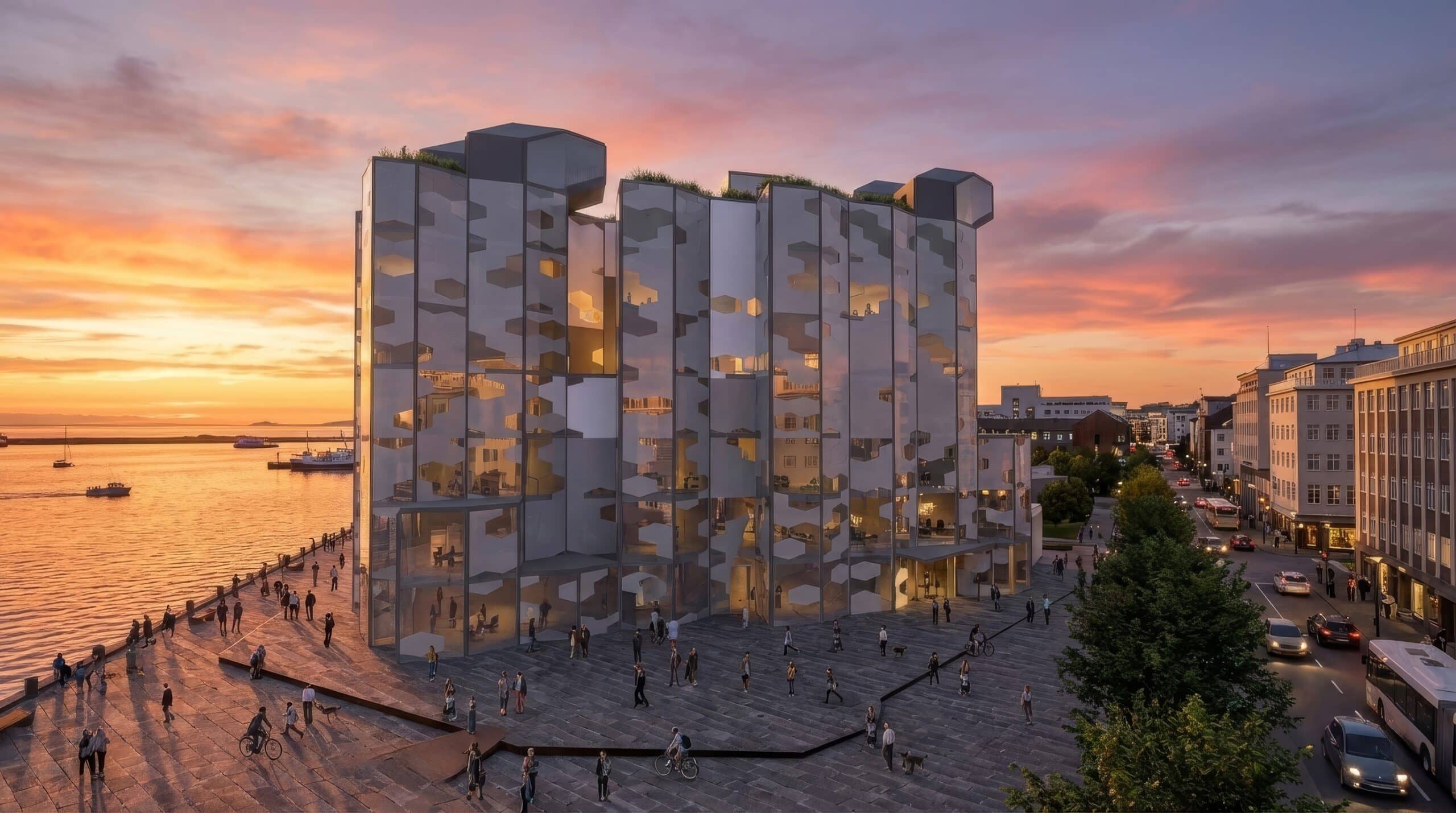
Tectonic Hub: Climate-Adaptive Recipe for Cultural Hubs in Reykjavik

Ingredients Climate Reykjavík’s climate shapes the entire project. The site is exposed to strong, multi-directional winds reaching 27 m/s, with a prevailing direction around 135°. Daylight conditions are equally extreme, shifting from long summer days to very short winter ones. The system therefore needs to adapt, protect, and still create comfortable public spaces. Form Our formal … Read more

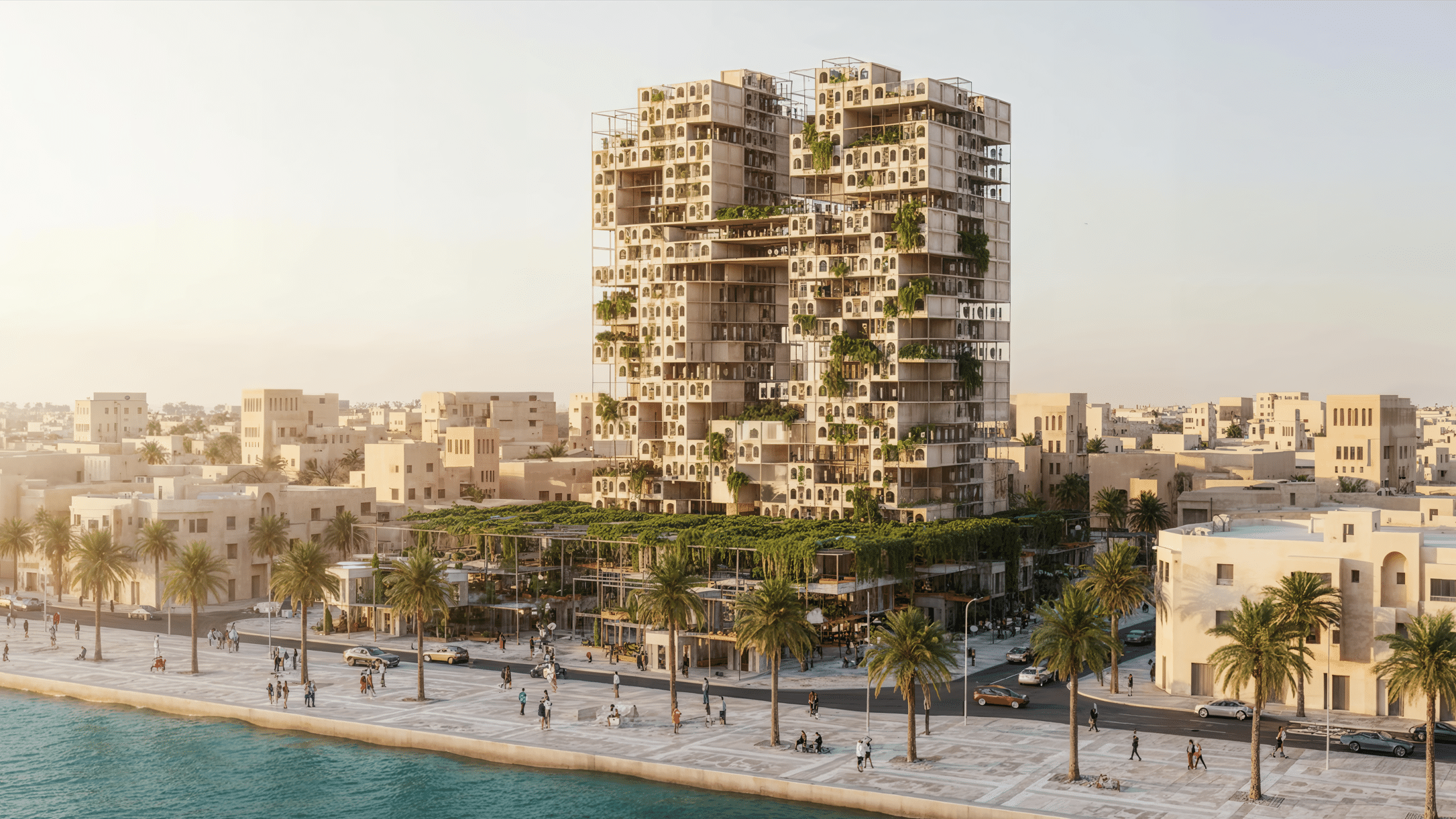
Morphing Sands

Morphing Sands is a climate-responsive mixed-use architectural system developed for Jeddah, Saudi Arabia, addressing urban densification in a hot–humid coastal environment. Inspired by the historic fabric of Al-Balad, the project reinterprets Hijazi principles—such as courtyards, shaded streets, and layered façades—through a modular and computational design approach. The project organizes commercial functions horizontally at the lower … Read more

Mind vs Machine: MENTOR

A Multi-Agent, Socratic, Cognitive-Preserving Tutoring System for Architectural Education The Silent Crisis Picture this: A design student faces a challenging architectural problem. They need to create a sustainable community center that harmonizes with its urban context while meeting complex programmatic requirements. In 2023, they would likely turn to ChatGPT, type their question, and receive a … Read more

ThinkSpaceAI

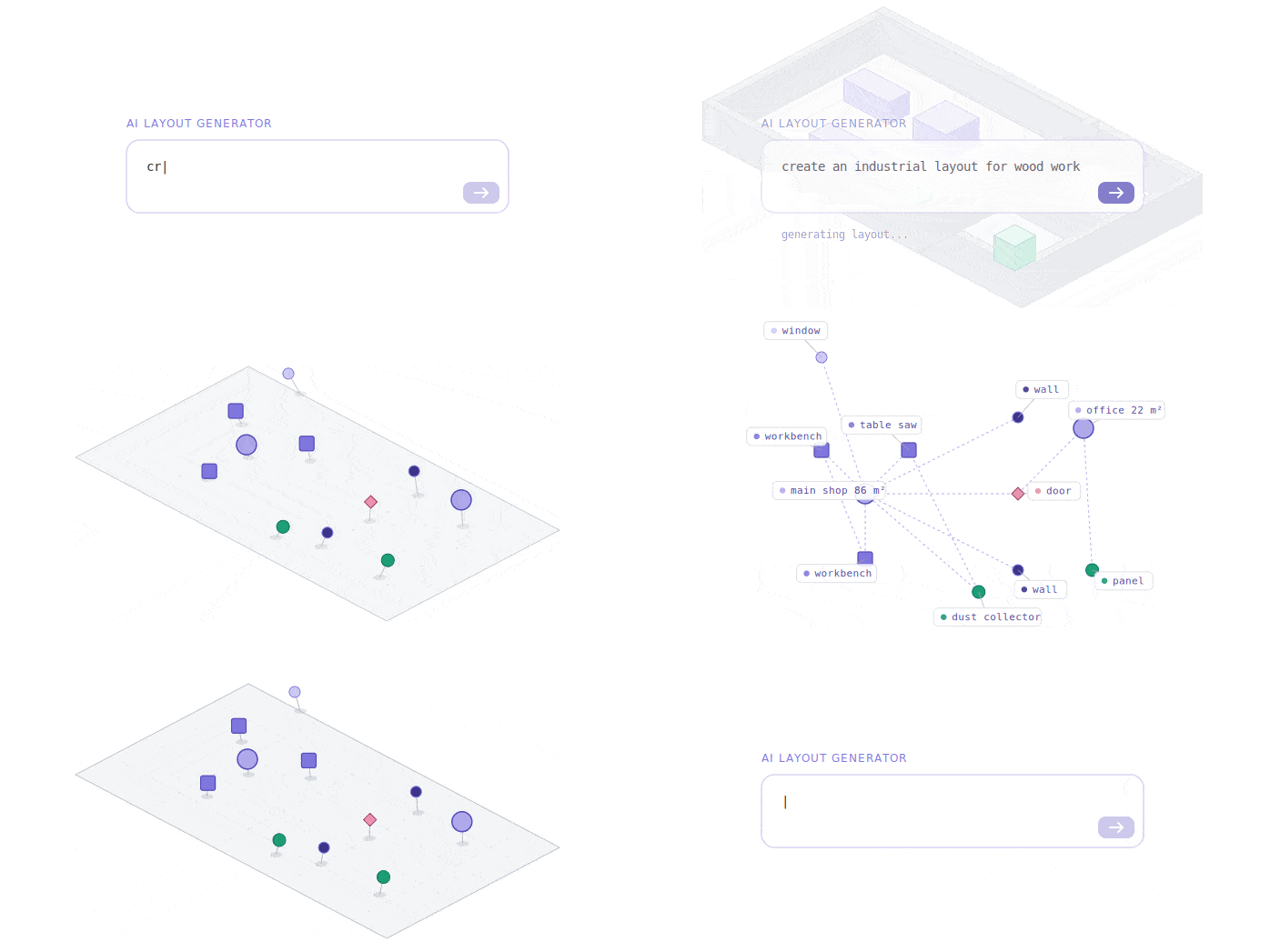
Turning Natural Language into Architecture Designing a house is never just about walls and windows—it’s about translating human stories into spaces that feel alive. Clients describe routines, aspirations, and cultural practices. Architects then face the challenge of turning those narratives into coherent layouts that also respond to site, climate, and context. Most computational tools fall … Read more

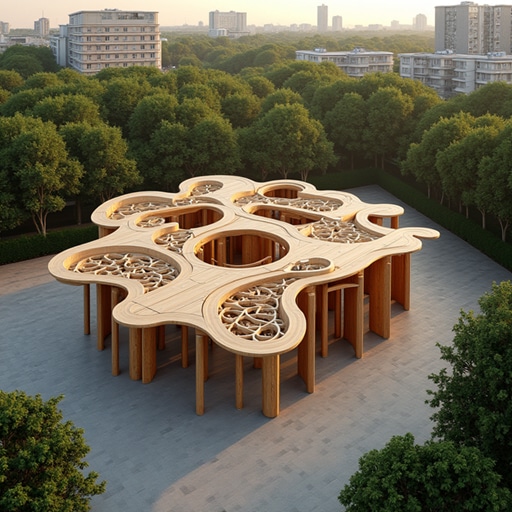
Pavilion 3D & 2D Generator

Problem statement Pavilion design is deceptively demanding. Even though these structures are small, the creative expectations are incredibly high. In most competitions or studio settings, we’re expected to deliver rich, meaningful concepts – drawing on cultural references, environmental context, and symbolic language – all within just a few days or even hours. At the same … Read more

The Vertical Machine: Reimagining Industrial Architecture for a Regenerative Urban Future

Node Level AI generation

_Architecture Inspired by Ensō: Unity Through Cycles At the heart of The Vertical Machine lies a philosophical foundation. Borrowing from the Zen concept of ensō, the circle that symbolizes the beauty of incompleteness and the continuity of cycles, the project embraces imperfection and transformation. Just as an ensō is drawn in a single fluid stroke, … Read more