The MaCAD is a unique online programme training a new generation of architects, engineers and designers ready to develop skills into the latest softwares, computational tools, BIM technologies and AI towards innovation for the Architecture, Engineering and Construction (AEC) industry.

Filters
Course

Title: A First-Person Parametric Exhibition: Bringing Architectural Design into the Browser

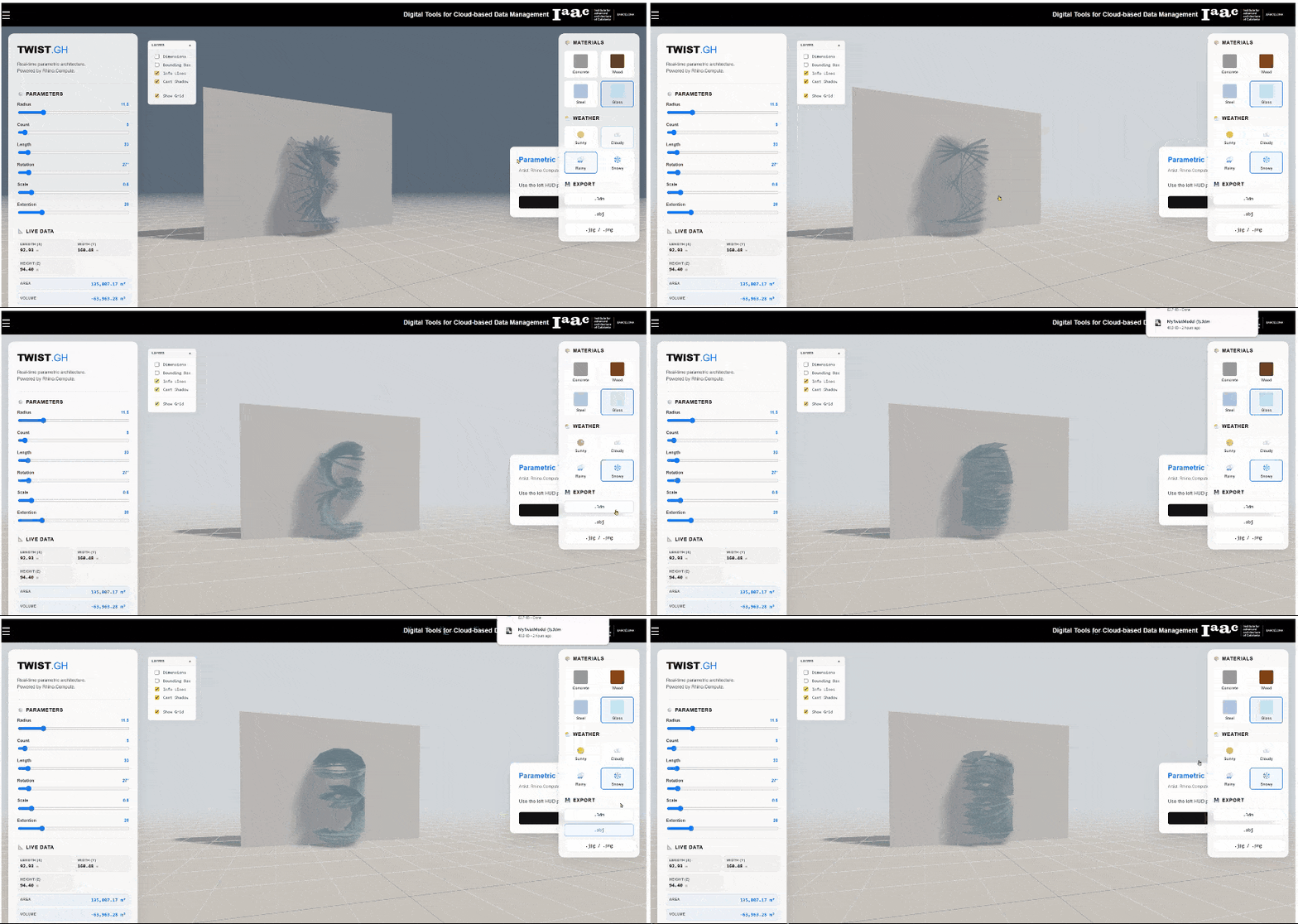
Shuai Zhang Have you ever felt that parametric architectural design is trapped behind a high barrier to entry? Traditionally, designers and clients must install heavy, complex software just to view or tweak a 3D model. For my final project in the Cloud-based Data Management module, I wanted to break down this barrier. The result is … Read more

Beyond Construction: BIM as a World-Building Tool for Real-Time Game Engines

Abstract This research investigates how Building Information Modeling (BIM) can be leveraged to generate structured and meaningful architectural environments for architectural visualization, video games, and animated films. It explores workflows between BIM tools and real-time game engines, focusing on the transfer and preservation of spatial logic and metadata. The study aims to demonstrate how BIM-based … Read more

Optimizing For The Mind: Integrating Generative AI and Game Engines into BIM

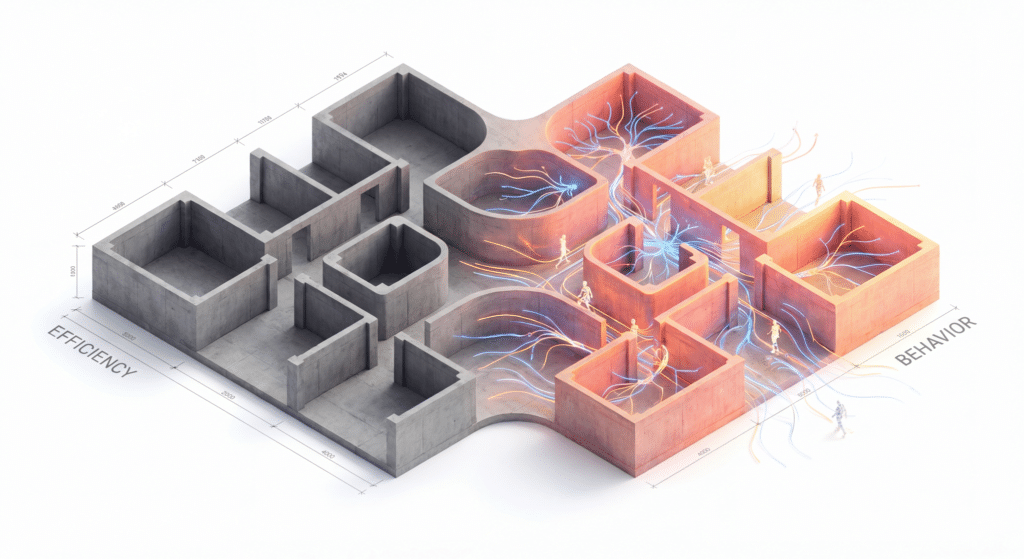
How architectural neuroimmunology is redefining the relationship between design and human health. The AEC industry optimizes for physical efficiency but neglects the neuro-physiological impact of built environments. This research investigates how Generative AI and Game Engine simulations, integrated into BIM workflows, can enable predictive cognitive performance analysis, transitioning the discipline from Building Information Modeling to … Read more

Monsoon Nest: Living Between Flood and Sky

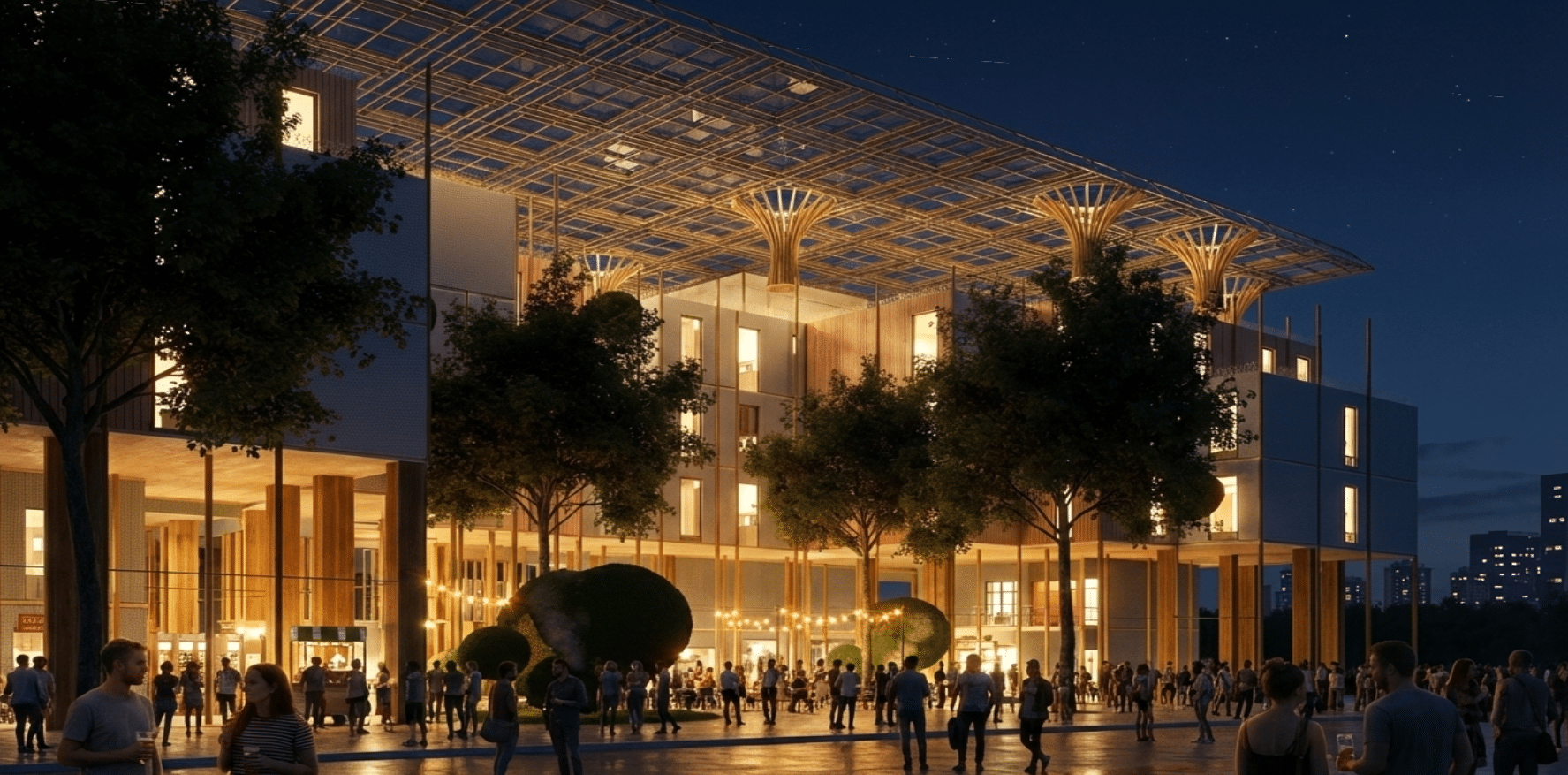
Monsoon Nest is a modular housing proposal for Bangkok that responds to monsoon rainfall, flooding, and high-density urban conditions. The project explores adaptable modules, elevated structures, and passive climate strategies to create resilient, community-oriented living environments in a tropical context. The design of Monsoon Nest is informed by four primary parameters: contextual environmental data, parametric … Read more

Pavilion 3D & 2D Generator

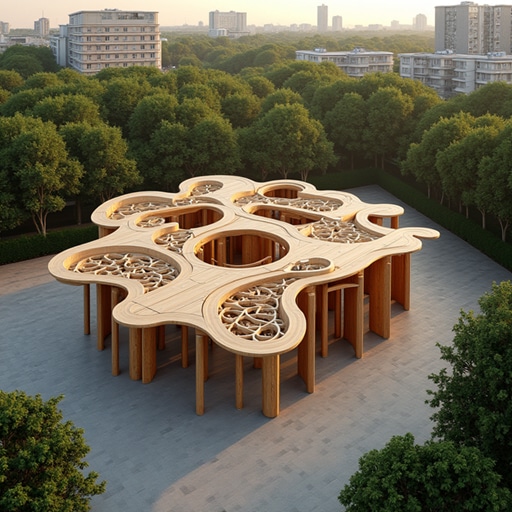
Problem statement Pavilion design is deceptively demanding. Even though these structures are small, the creative expectations are incredibly high. In most competitions or studio settings, we’re expected to deliver rich, meaningful concepts – drawing on cultural references, environmental context, and symbolic language – all within just a few days or even hours. At the same … Read more

HBIM and AI, a perspective on new technologies for Heritage architecture

Brief Heritage Building Information Modeling (HBIM) is a process for managing and conserving historical structures. Despite its potential and the European Directive 2014/24/EU, HBIM remains underutilized due to complex processes. AI-based technology can streamline HBIM processes at reduced costs, making heritage conservation more feasible. Technologies like LIDAR, TLS, photogrammetry (including UAVs), and SLAM, initially tested … Read more

Kaleidos

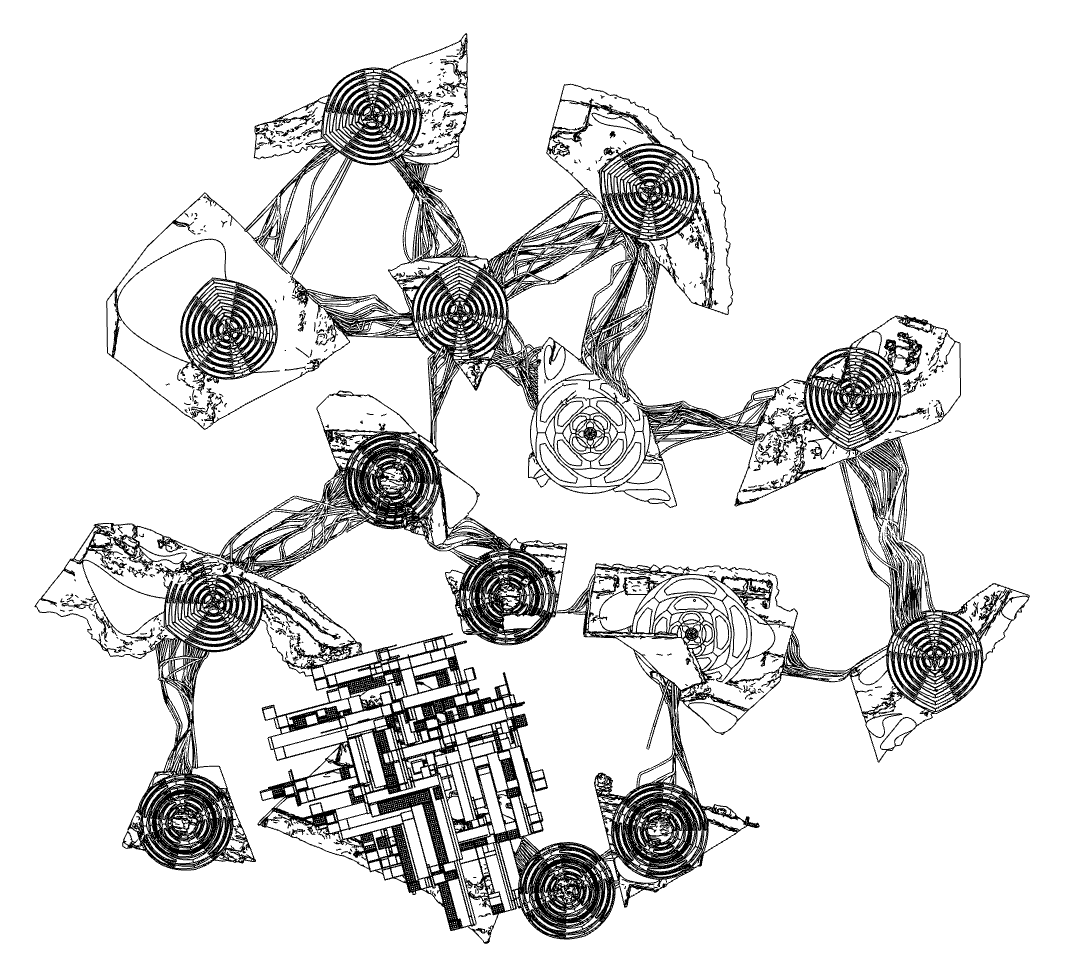
Abstract The project, Kaleidos, is the story of a transformative rehabilitation system that redefines the experience of incarceration. It targets individuals undergoing psychological recovery, creating a dynamic, non-linear journey of healing. This architecture does more than confine—it evolves, adapts, and interacts with its users, guiding them through stages of denial, anger, bargaining, depression, and acceptance. … Read more

Deconstructing Alcatraz

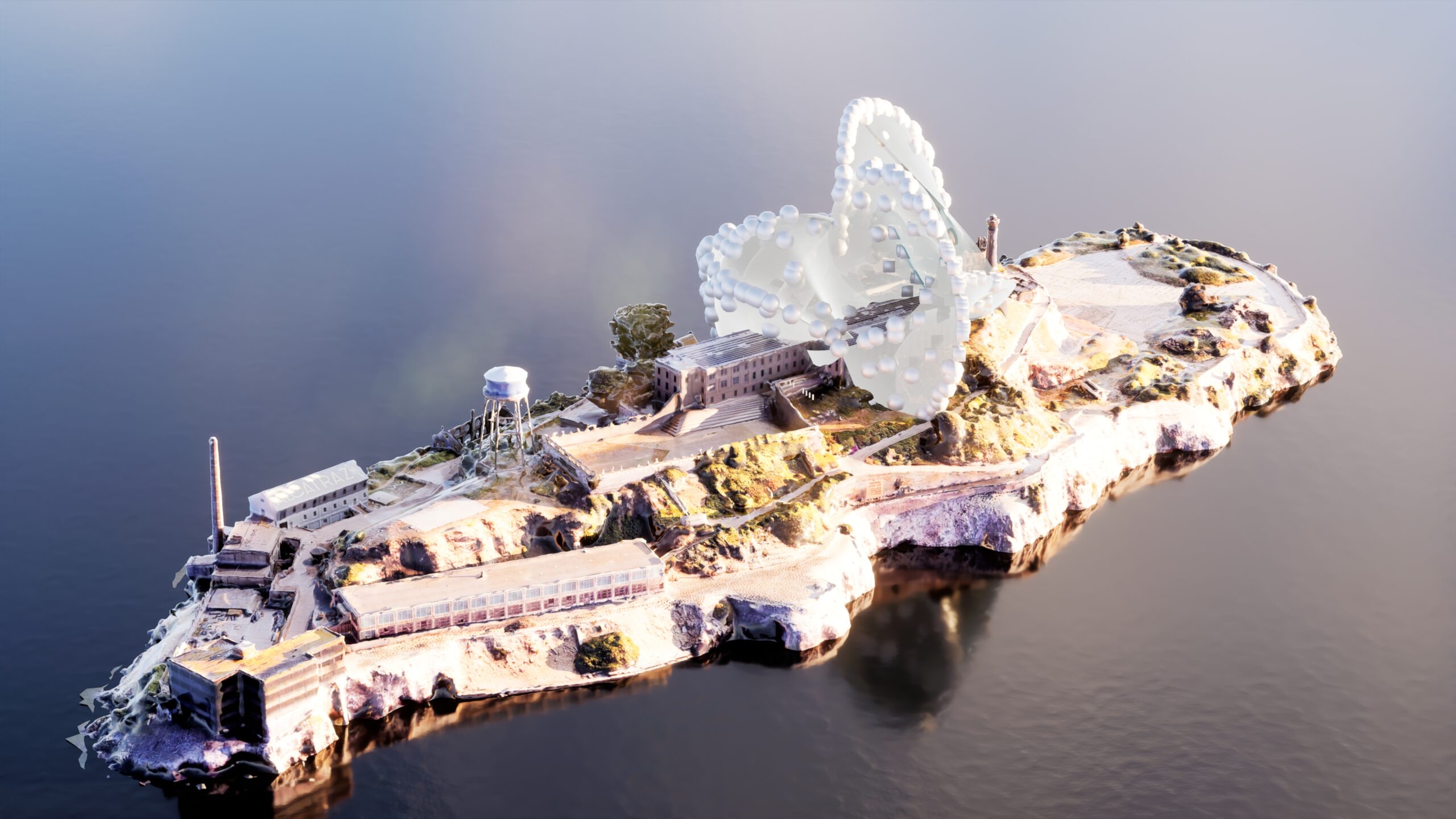
1. Design Concept and computational Design System Obsolete typology Interpretation Deconstruction    Understanding the current prisons as punitive institutions that fail to rehabilitate but imprison inmates without offering social inclusion solutions increases the risk of recidivism.     Deconstructing Alcatraz proposes an alternative to this typological lack through its own reconstruction. In a VR environment the proposal consists … Read more

Landscape of Consequence

Semi Aerial View

The Architecture of Second Chances Transforming Punishment into Progress Through Computational Design In the evolving discourse of criminal justice reform, the intersection of architecture, technology, and rehabilitation presents unprecedented opportunities to reimagine how we approach incarceration. Our project, “Landscape of Consequence,” proposes a radical reconceptualization of Alcatraz Island, transforming this symbol of isolation into a … Read more

άβυσσος avissos

What if punishment and rehabilitation could coexist in a fully immersive virtual environment? Can justice be achieved in the virtual realm? A Transformative Journey in Emotional Rehabilitation Avissos, named after the Greek word for the deepest part of the sea, reimagines emotional rehabilitation as a unique, multi-stage journey. This concept challenges individuals to confront empathy, … Read more

Memory Loop

 This is Memory Loop, a computational design project that reimagines the rehabilitation experience for prisoners on Alcatraz Island. Here, architecture becomes more than confinement. It becomes an adaptive, generative space for introspection and reflection. A system that emerges, evolves, and dissolves in response to its purpose. The concept is simple but powerful. Instead of static … Read more

Re (Form) Reality // ITERUM

The Context The prisoner’s journey is an emotional and psychological transformation. The spaces inhabited during this process are designed to mirror the evolving state of mind, fostering introspection and awareness.Architecture becomes a tools to reflect the prisoner’s internal experiences, guiding them through stages of self-realization: as the prisoners confront these emotions within the space, they … Read more

PRIZORB  – Complex Forming

Brief Create a concept for a virtual reality (VR) prison where inmates serve sentences within a modified VR simulation of Alcatraz Island, located in California. Your design reimagines the island prison typology, a longstanding method of separating prisoners into a distinct, isolated space. Although traditional prisons emphasized isolation from society, modern incarceration aims to foster … Read more

The 4 Seasons

The project While in prison, inmates often lose their sense of time and the natural rotation of the seasons. Their lives tend to become a continuous loop with little variation and few opportunities to start anew by learning new skills or pursuing higher education. Additionally, the social environment in these spaces is frequently governed by … Read more

Alcatraz under the Sea

Project Brief The Utopian submerged citySome submerged cities are envisioned as utopian societies, thriving under the sea with advanced technology and new ways of living, creating an ideal or harmonious civilization far removed from the troubles of the land-based world.In contrast, others are depicted as dystopian settings, where the survivors of a collapsed society are … Read more

whatisreality?

* whatisheterotopia? /ˌhɛtəroʊˈtoʊpiə/ noun “The cemetery, as a space of the living and the dead, is a classic example of a heterotopia.” 2.Architecture: A site or design that challenges traditional notions of spatial organization, inviting multiple interpretations and experiences. “The urban park became a heterotopia, a sanctuary from the city’s chaos yet deeply rooted within … Read more