
AI Theory – IAAC | Group Project by Jinesh, Rafik, Chun Chun, and Vimal
The construction industry is responsible for a massive chunk of global carbon emissions, material extraction, and waste. But here’s the thing: even as sustainability becomes more important, demolition is still the go-to solution for most projects, often without anyone really asking whether parts of the existing building could be saved and reused.
This project, which we developed for the AI Theory course at IAAC, looks at how AI could help us rethink demolition—turning it from a blunt, destructive process into something more selective and thoughtful. We’re proposing an AI-assisted framework that helps architects, engineers, and decision-makers figure out early on what’s worth keeping, before it’s too late to turn back.
The Problem: We Demolish Without Really Knowing
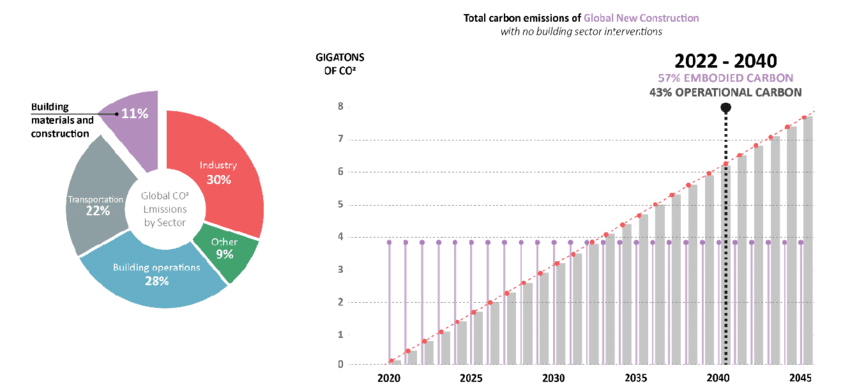
Right now, demolition decisions happen fast. There’s pressure from tight deadlines, incomplete records, and a lot of guesswork from experts who don’t always have all the facts. Buildings get torn down without anyone really understanding their condition, structural integrity, or whether they could be reused. The result?
- Mountains of wasted materials
- Huge carbon emissions
- Loss of buildings that carry cultural or architectural meaning
The problem is: most of a building’s carbon footprint is already locked into its structure. When we demolish it, we’re throwing away decades of embodied energy and materials, making the climate crisis worse, not better.
Why Reuse Matters
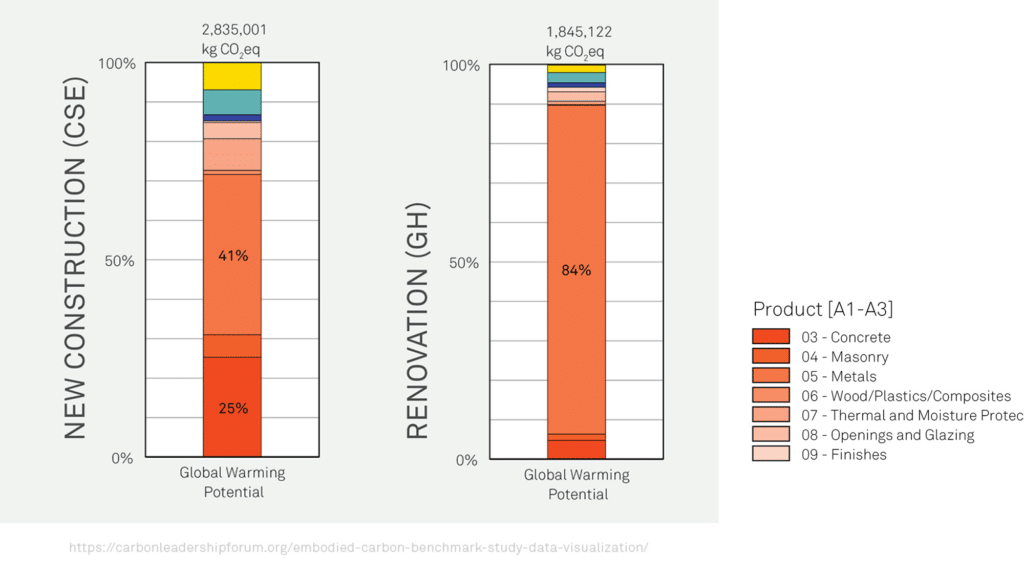
Even keeping part of a building can massively cut emissions and costs, while also preserving the character of a neighborhood. Retrofitting and adaptive reuse almost always beat new construction when it comes to carbon. Plus, they help maintain the social and cultural identity of a place.
But here’s the problem: we don’t have a quick, reliable, data-backed way to assess whether reuse is possible. When the evaluation process is slow or unclear, demolition ends up being the “easier” choice even when keeping the building would have been totally feasible.
The Gap in How We Work Today
Currently, reuse assessments depend on:
- What experts think based on experience
- Physical inspections that take time
- Scattered, incomplete records
This leads to assessments that are slow, inconsistent, and hard to compare. What we’re missing is a system that’s fast, objective, and scalable—one that can help people make decisions based on evidence, not assumptions.
Our Proposal: AI-Assisted Building Reuse Assessment
We’re proposing an AI system that takes photos, scans, and basic site info and turns them into a clear, quantified assessment of what can be reused. The goal isn’t to replace human expertise, it’s to give experts better tools and data to make smarter decisions.
The system identifies materials, spots damage, looks for structural clues, and assigns reuse scores to individual building parts, showing what can be kept, fixed, repurposed, or removed.
How the System Works
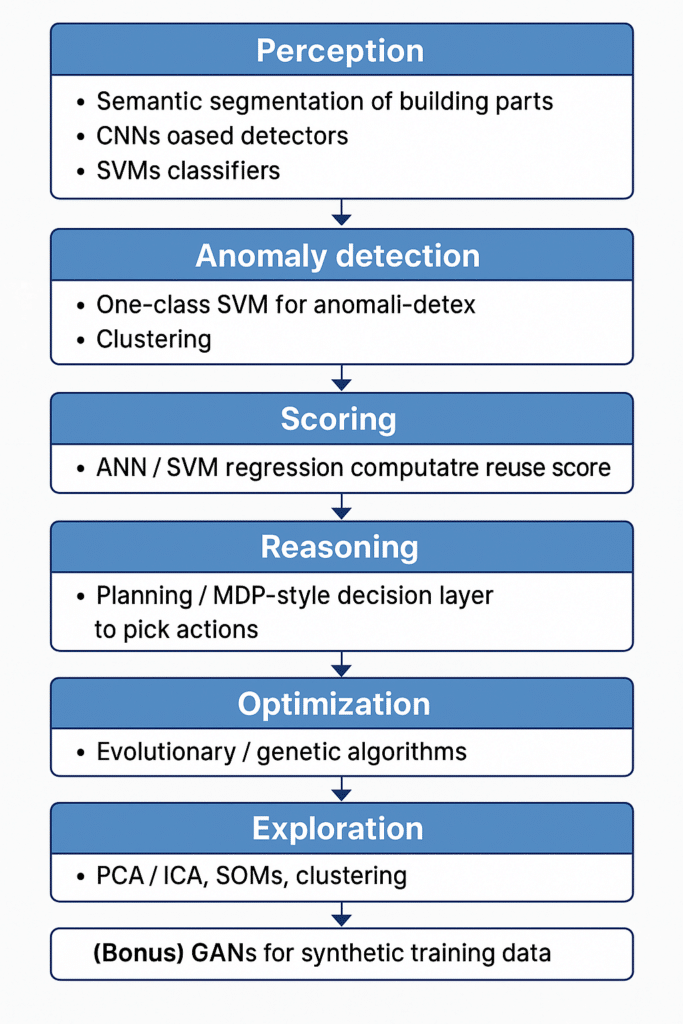
1. Perception: Understanding What’s There
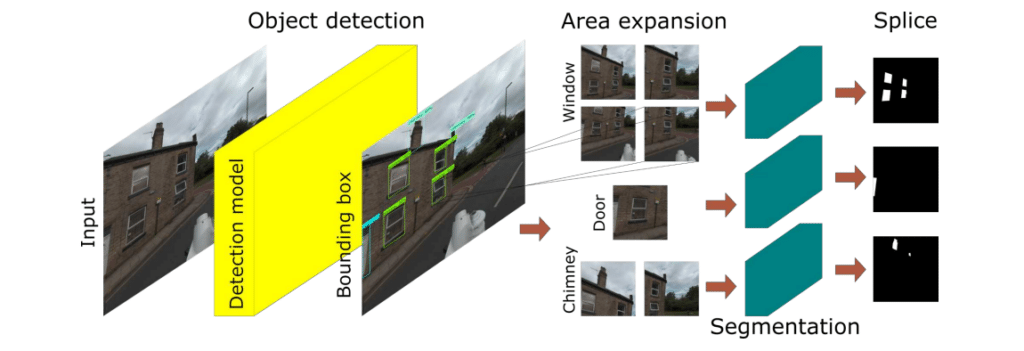
The first step is figuring out what exists and where it is:
- Semantic segmentation (using models like U-Net) labels things like walls, slabs, and beams at the pixel level.
- Object detection (using models like YOLO) spots specific features like cracks, openings, or defects.
- Material classification uses image recognition to tell the difference between concrete, brick, steel, and other materials.
Together, these tools turn raw photos into a structured understanding of the building.
2. Spotting Problems and Defects
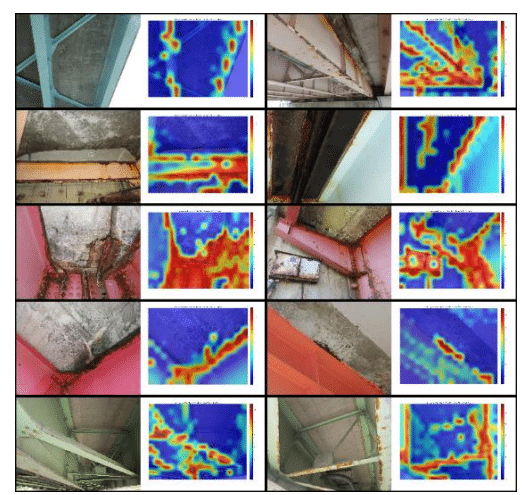
One big challenge is that we don’t have tons of labeled data on building defects. So we used unsupervised and semi-supervised methods to work around that:
- One-Class SVMs, which are trained only on “normal” conditions, so they can flag anything unusual.
- Clustering methods (like k-means and fuzzy c-means) to group similar surface conditions and defect patterns.
This combo lets the system both find suspicious areas and categorize different types of damage, even when we don’t have a lot of training data.
3. Scoring Reuse Potential
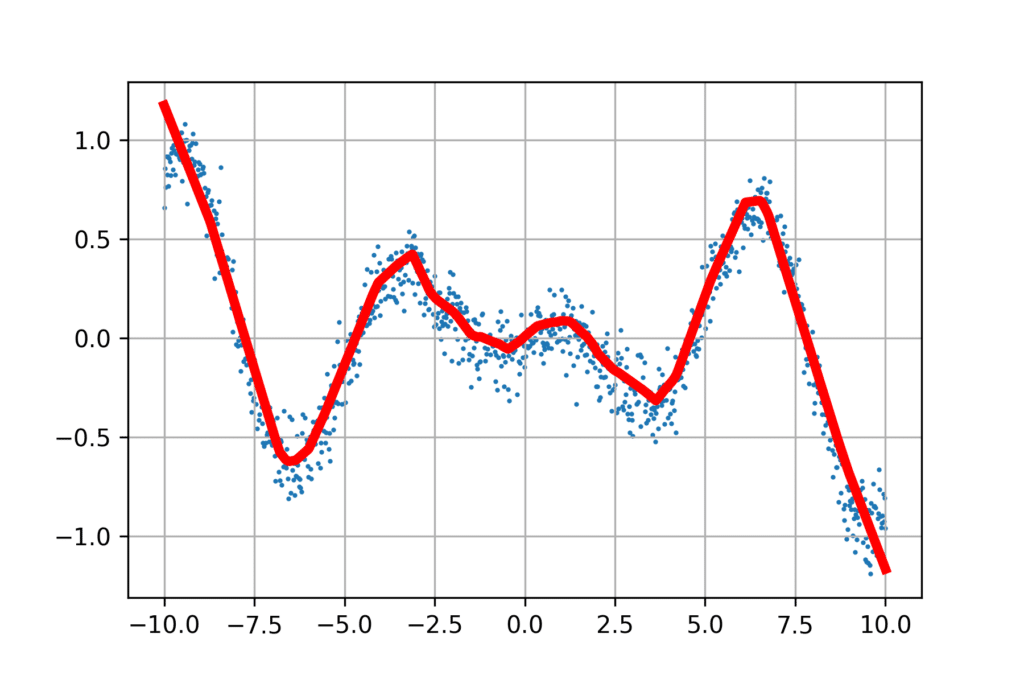
The system assigns reuse scores to each component using regression models:
- Artificial Neural Networks (ANNs) to capture complex relationships between material condition, geometry, and performance.
- Support Vector Regression (SVR) for more stable predictions, especially when data is limited or messy.
These scores turn inspection data into concrete, repeatable numbers that can directly inform decisions.
4. Making Decisions When Things Are Uncertain
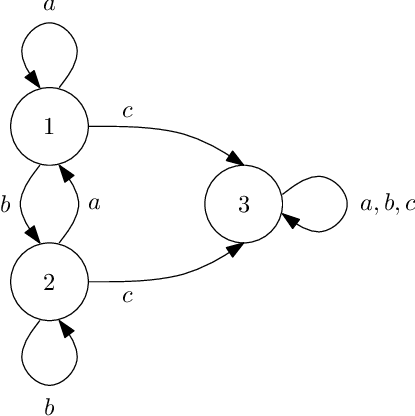
Reuse isn’t a yes-or-no question. For each component, you might keep it, repair it, repurpose it, replace it, or remove it— but often, you’re not 100% sure what will work best.
We modeled this uncertainty using:
- Graph search to explore different sequences of actions under real-world constraints.
- Markov Decision Processes (MDPs) to account for uncertain future performance, costs, and carbon impacts.
The result is a decision-making process that’s transparent and aligned with sustainability goals.
5. Optimizing the Whole Building
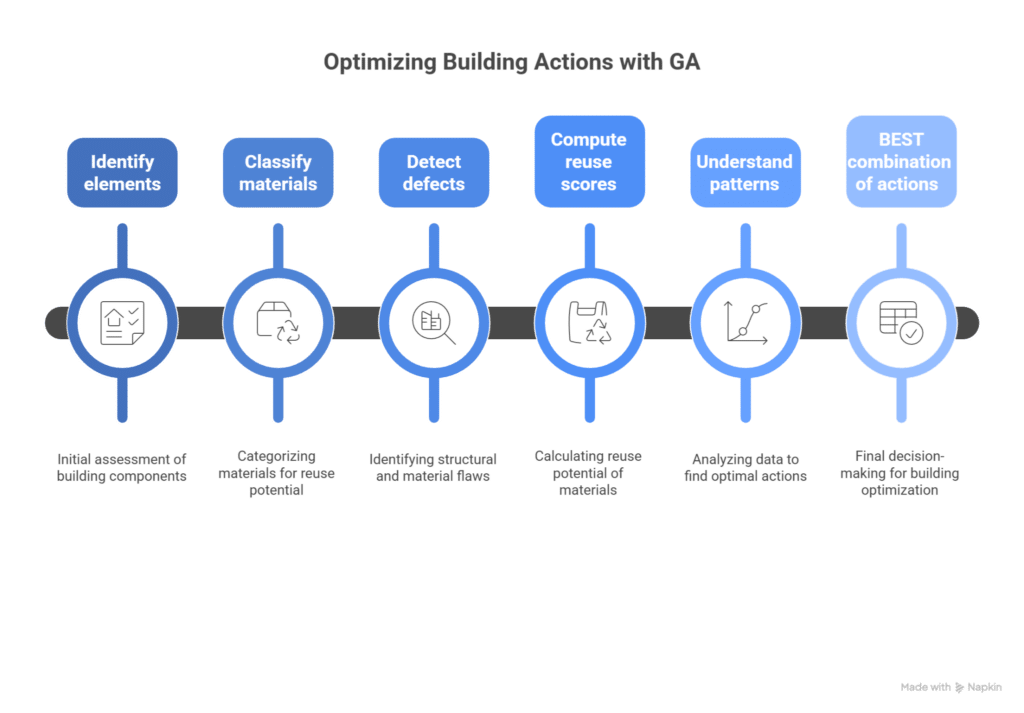
When you zoom out to the building scale, things are more complex. With hundreds of components and multiple options for each one, the number of possible strategies becomes astronomical.
To handle this, we used genetic algorithms, which efficiently search for optimal reuse strategies by evolving solutions that:
- Maximize what gets reused
- Minimize cost
- Reduce embodied carbon
This lets the system suggest strategies that work for the whole building, not just individual pieces.
What We Learned as a Group
This project wasn’t just about applying AI tools—it was about learning to think about complex problems in a holistic way.
Here’s what stuck with us:
- AI works best when it’s part of a clear decision-making process, not just a mysterious black box.
- Sustainability challenges need multi-objective optimization.
- Not having perfect data isn’t a dealbreaker—unsupervised and hybrid methods can still pull useful insights from messy or incomplete datasets.
- And maybe most importantly, design decisions aren’t just technical—they’re political and ethical too. AI should make decision-making more transparent and accountable, not hide it behind algorithms.
Working together as a group let us bring in perspectives from architecture, computation, and sustainability. It reinforced how important it is to think across disciplines when tackling climate-related challenges.
Conclusion: Toward Smarter, More Responsible Reuse
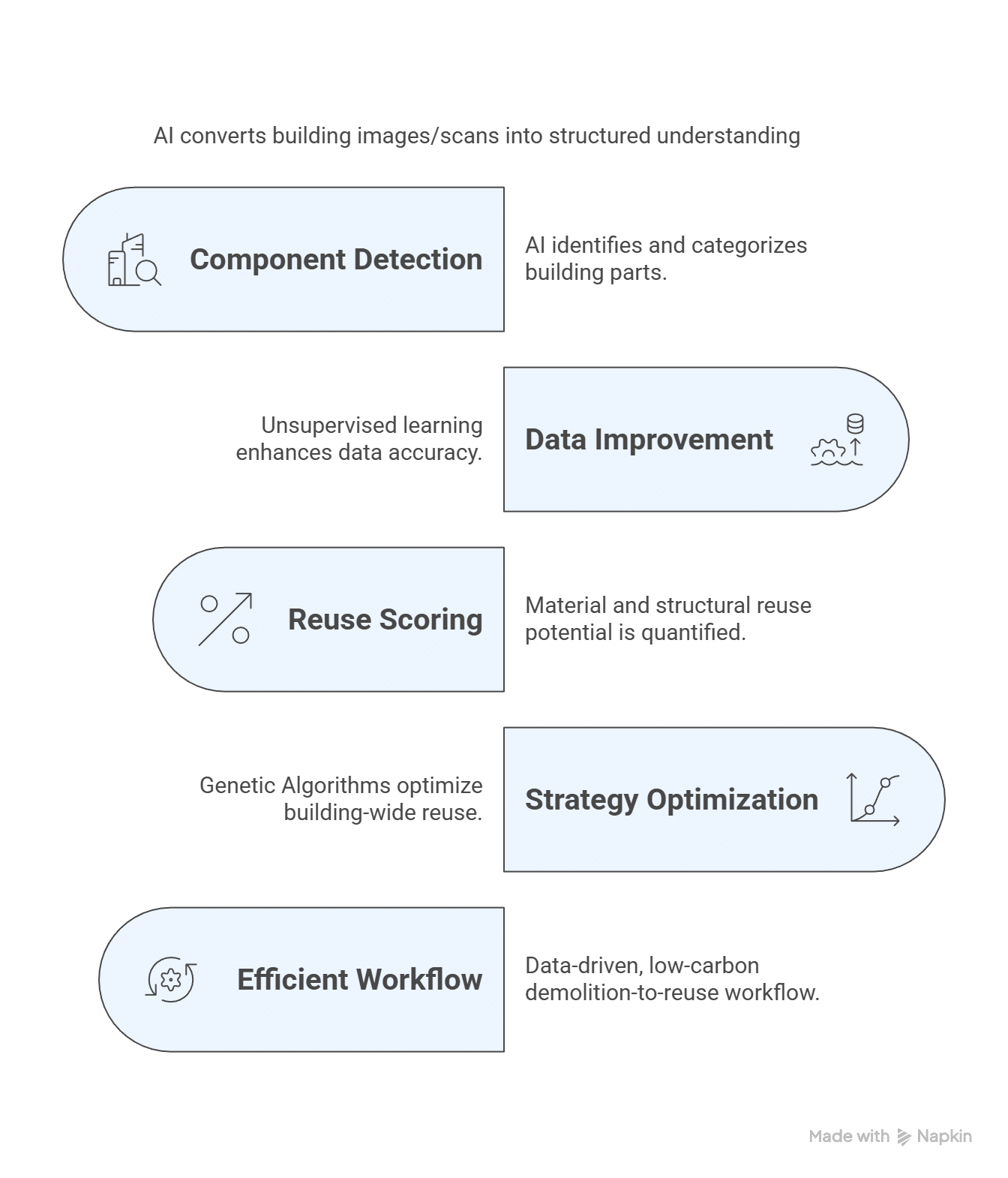
Our framework turns demolition into a strategic, informed, and selective process. By making existing buildings easier to understand and evaluate before we intervene, AI can help us make better decisions that align with circular economy principles and net-zero goals.
Instead of asking “What should we demolish?”, this approach pushes us to ask a better question:
“What can we intelligently keep?”
