Process Overview
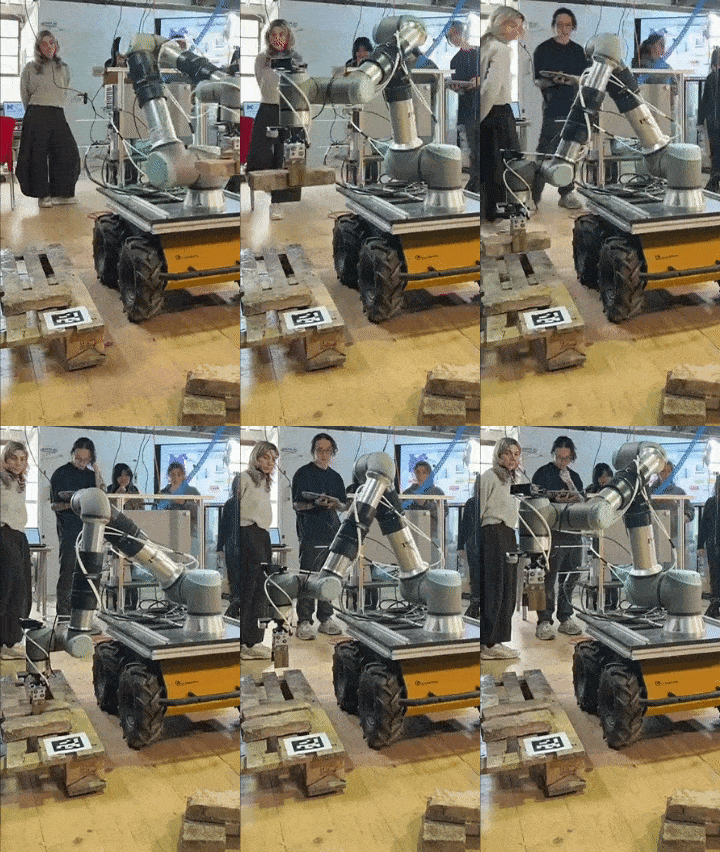
Material Disassembly
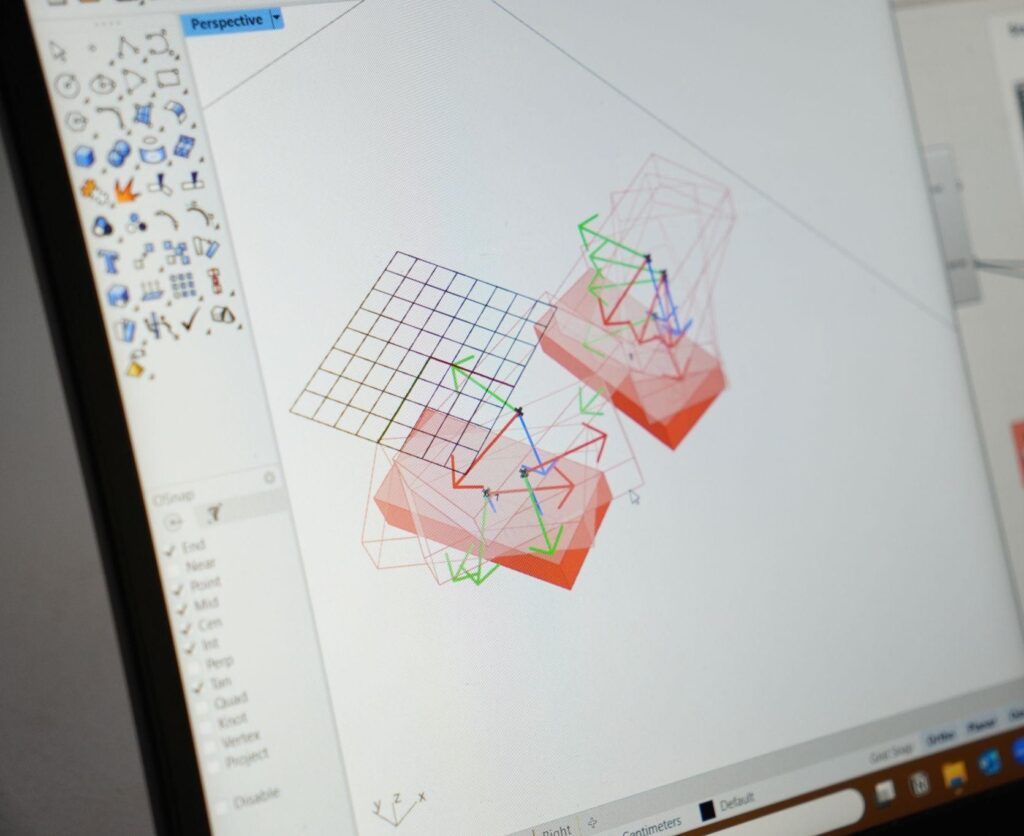
Material Evaluation & Design
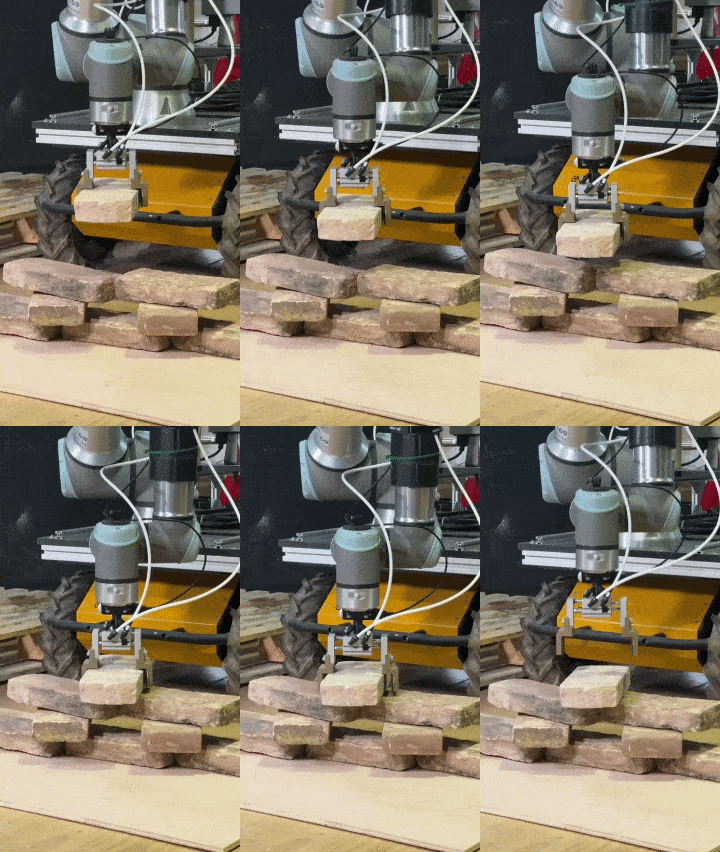
Generative Assembly
Human Visual Inspection
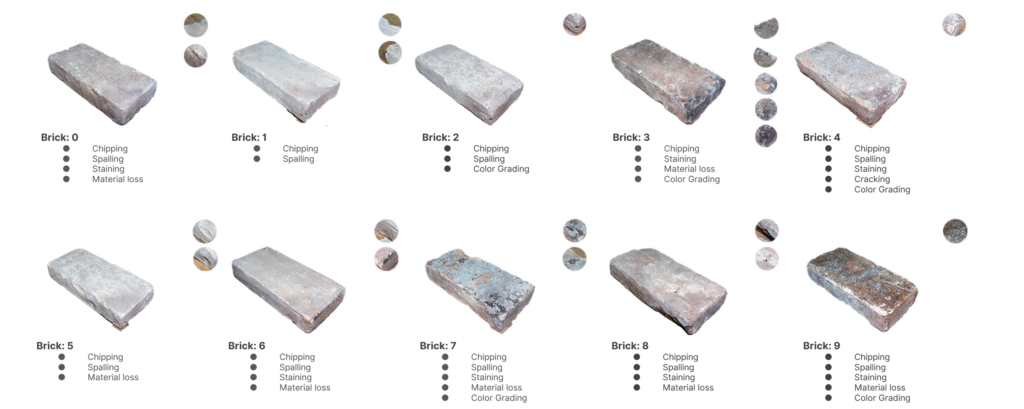
Manual Damage Categorization
First Steps
AI-Based Evaluation
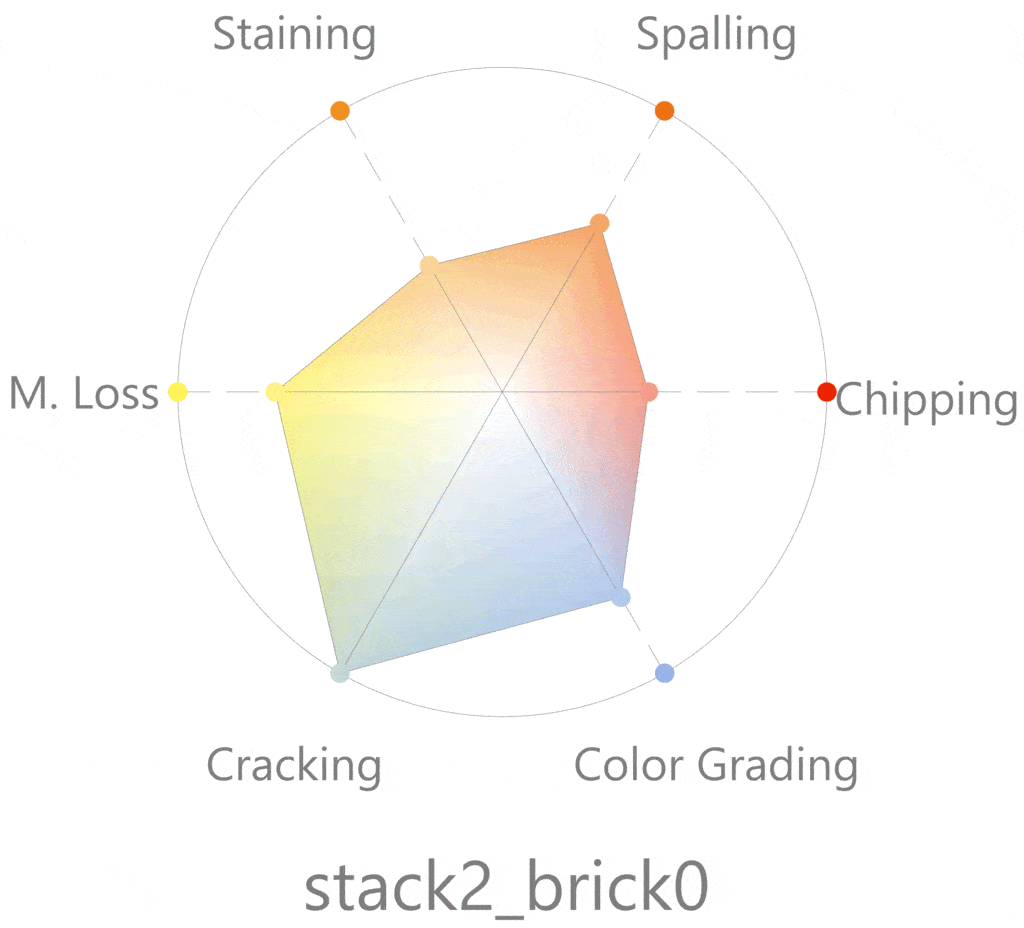
Stack 2_Brick 0
- Top surface exhibits widespread discoloration and surface degradation
- The front surface shows noticeable discoloration and surface roughness
- The left surface displays clear discoloration and material erosion
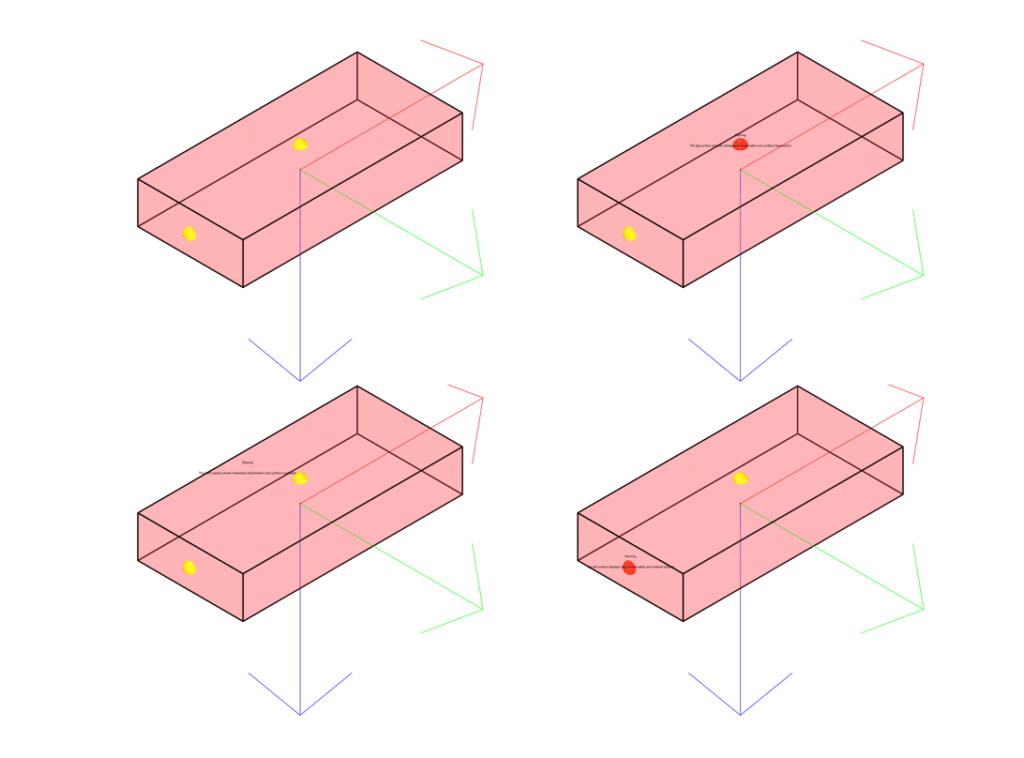
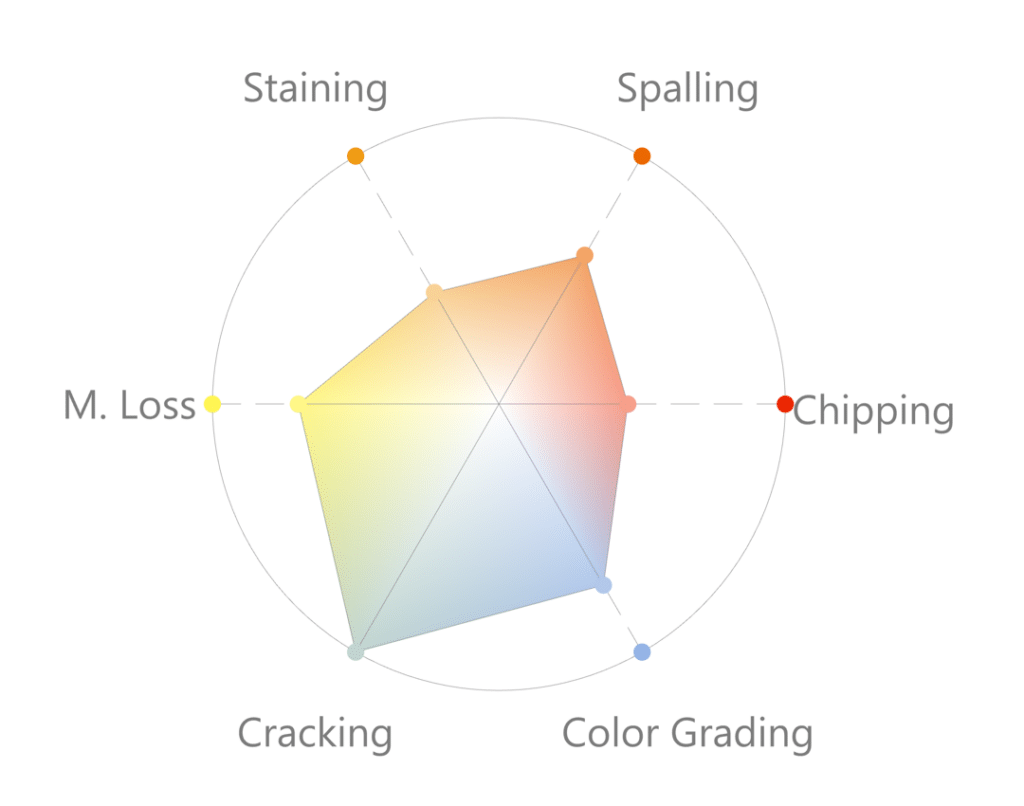
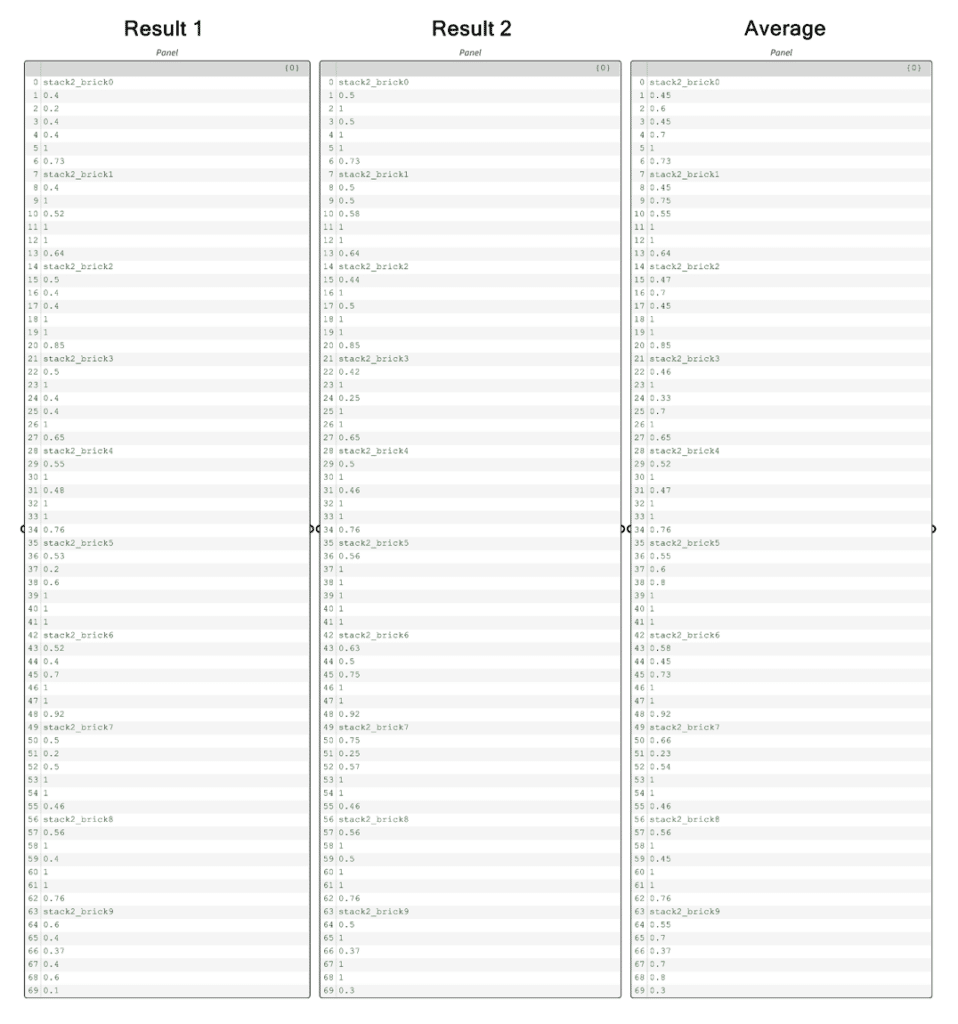
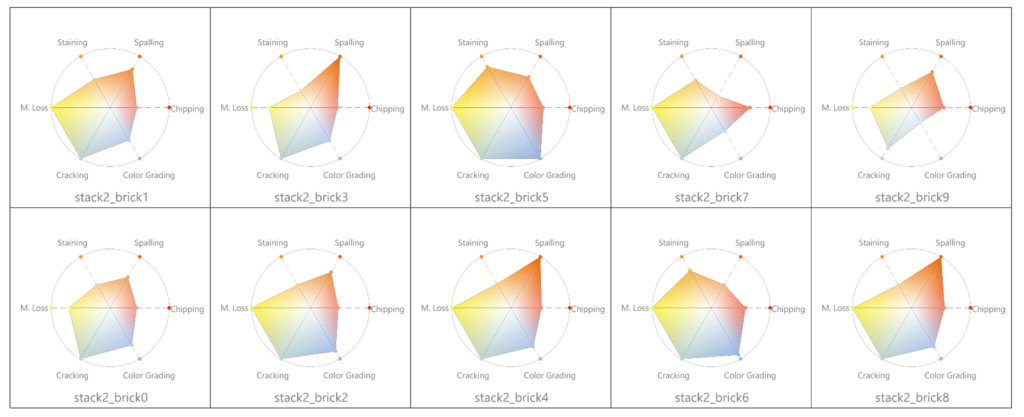
We noticed inconsistencies in the evaluation results. After finalizing the prompt, we ran the test twice for each brick, averaged the two values, and visualized the results using glyphs.
Second Step
Remapping Evaluation
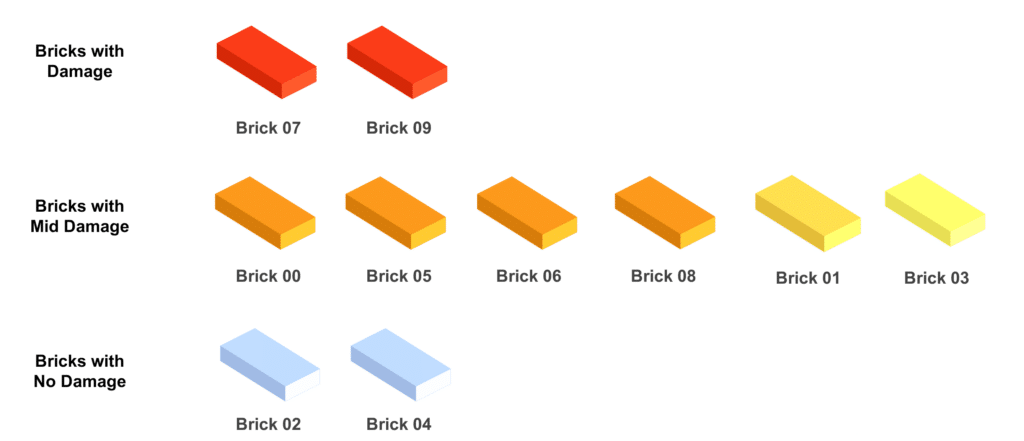
We count the quantity and value of each damage to the bricks to order them.
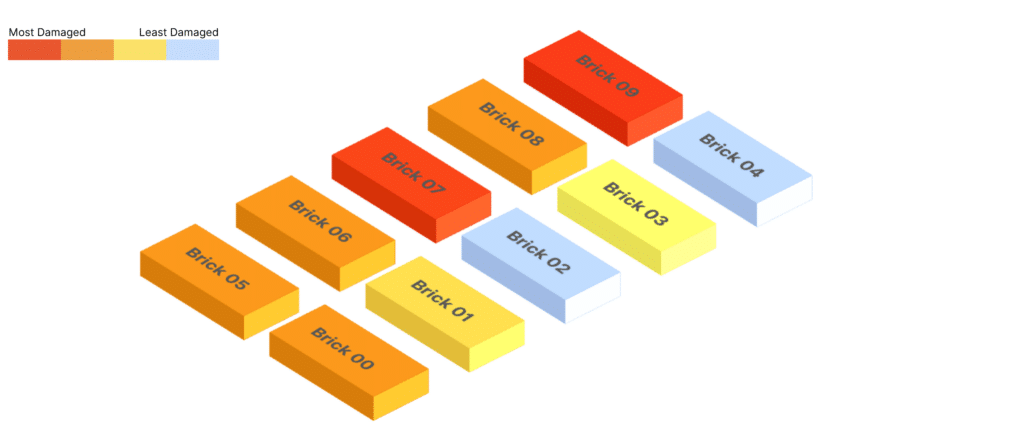
The less damaged bricks would be easier to hide, so the more damaged ones should be used first.
Assemblies Exploration
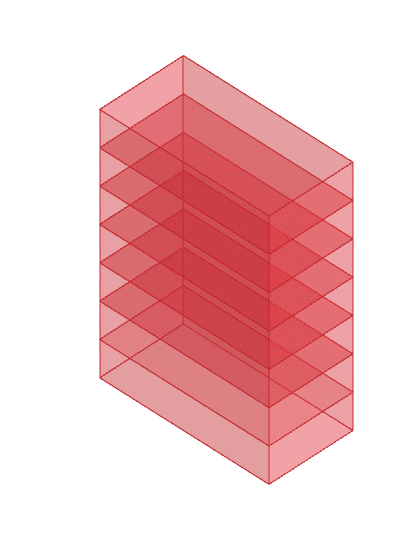
An iterative process of putting the bricks together in the order of the damage they have.
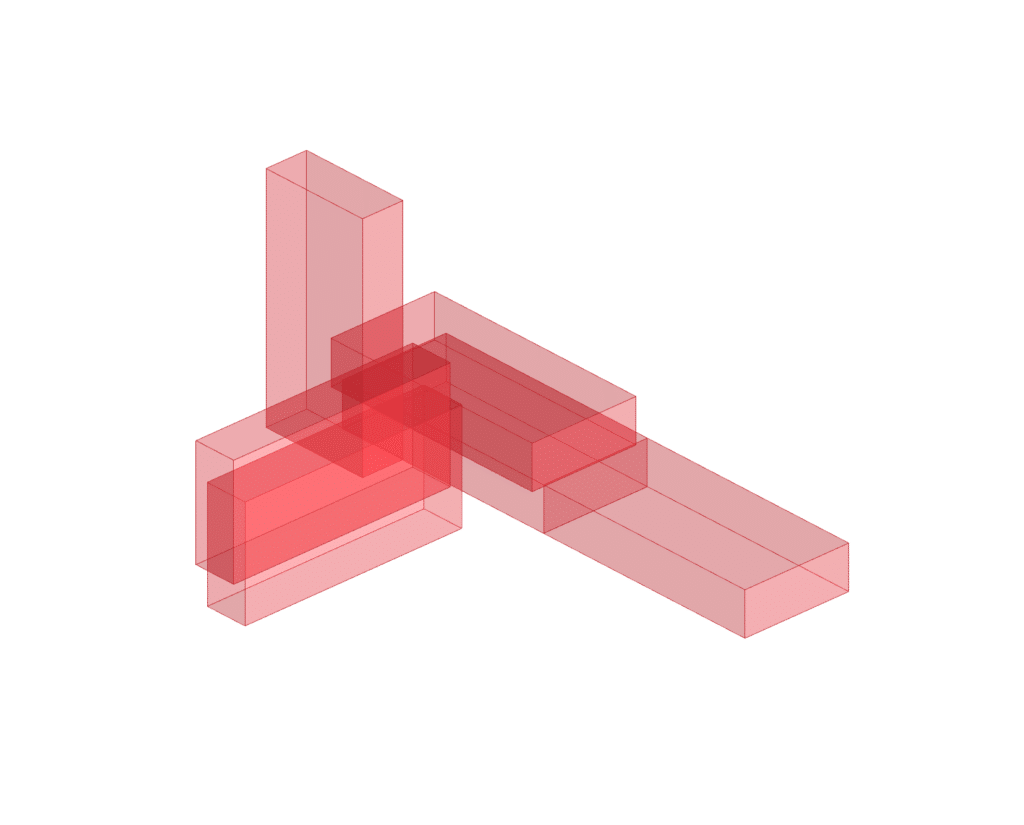
First Generation
By assigning distinct values to each type of damage, we can test multiple design iterations.
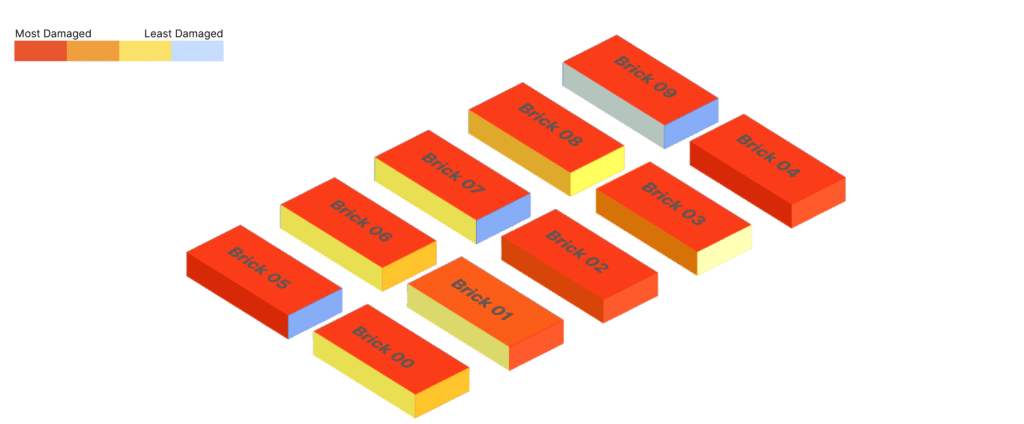
Remapping Faces Evaluation
We decided to assign a value to each face based on the damage present in corners or shared edges.
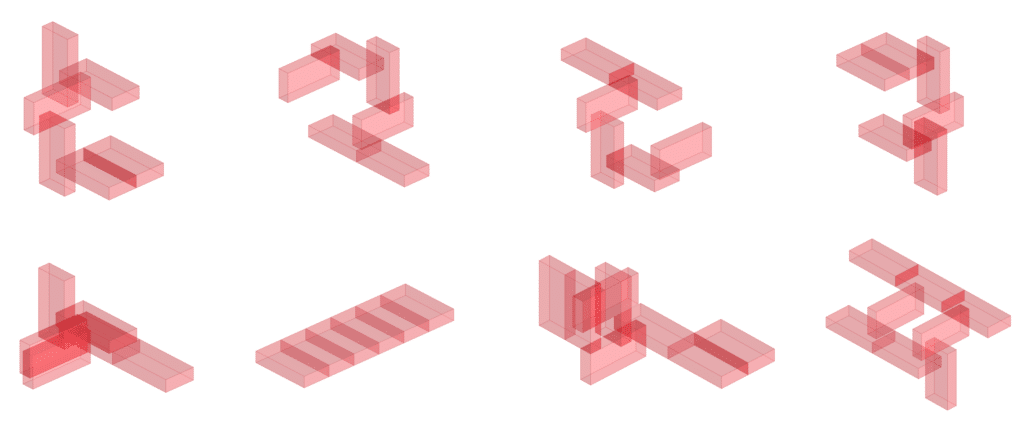
Assemblies Exploration
With the faces sorted we assign the assembly plane based on the most damaged face.
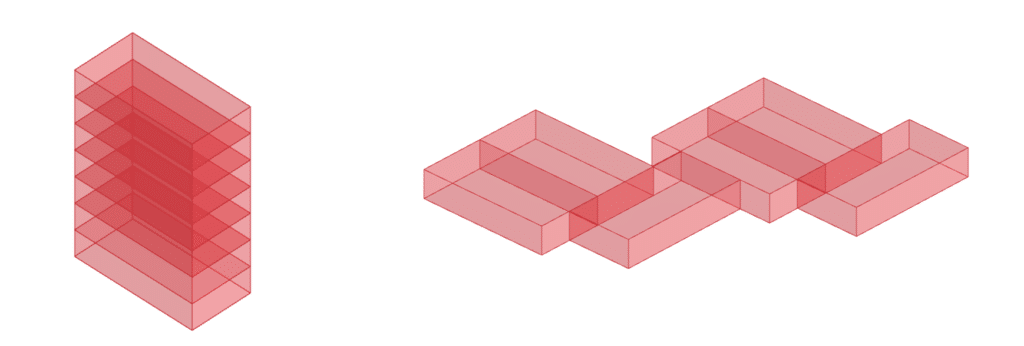
Assemblies the worst faces
Assemblies the worst similar faces
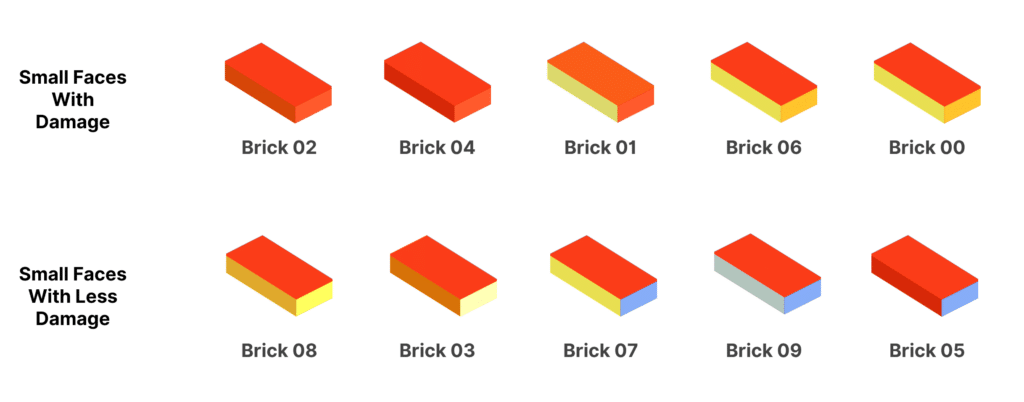
Second Generation
Aside from the top face, we categorized faces by damage severity and size to generate consistent planar reassembly patterns.
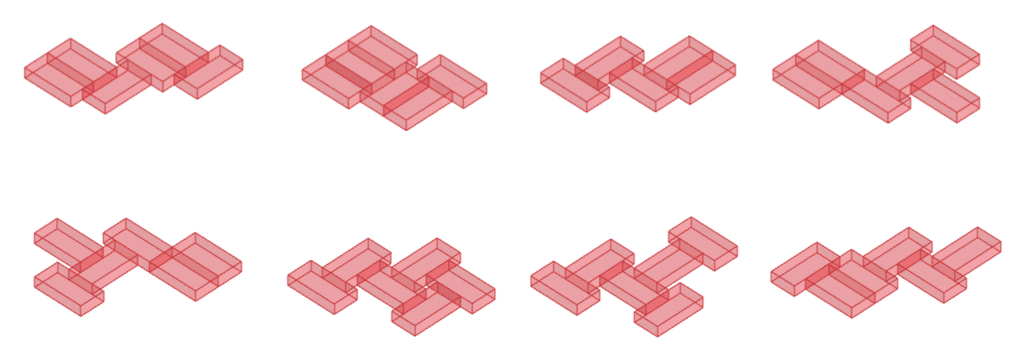
Design Inspiration


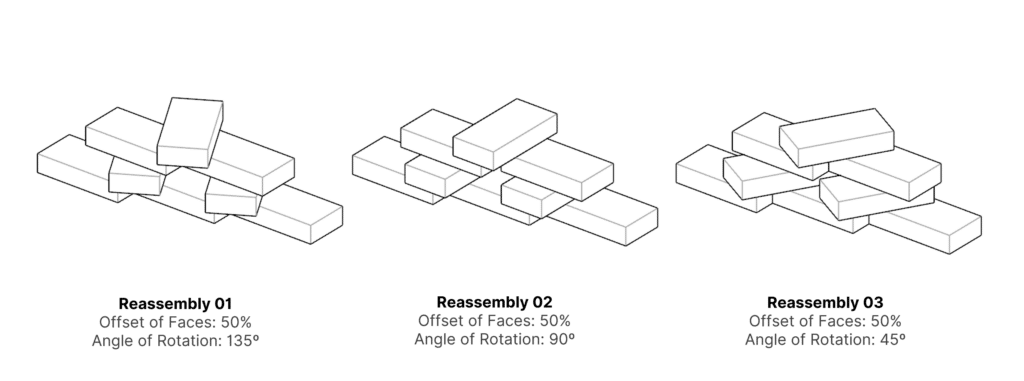
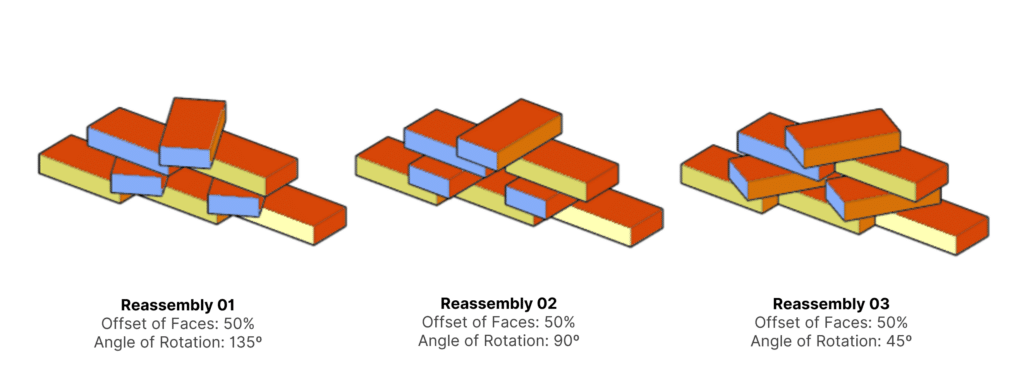
Reassembly Strategy
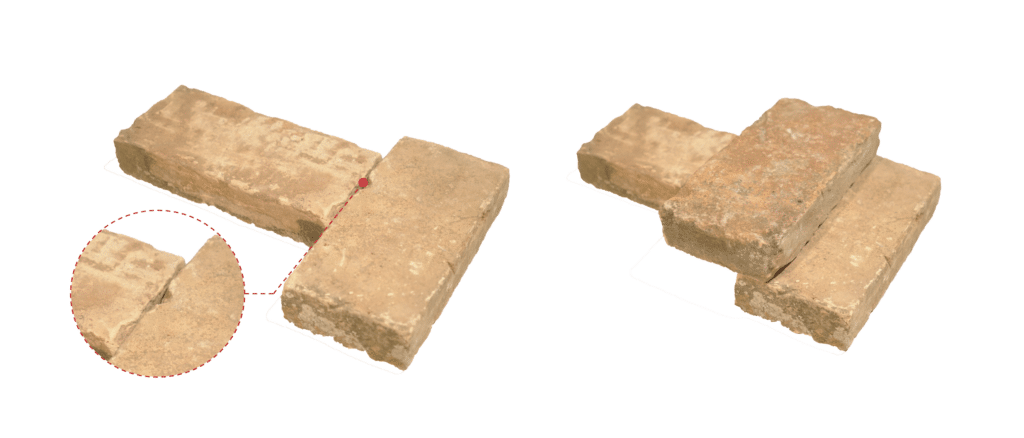
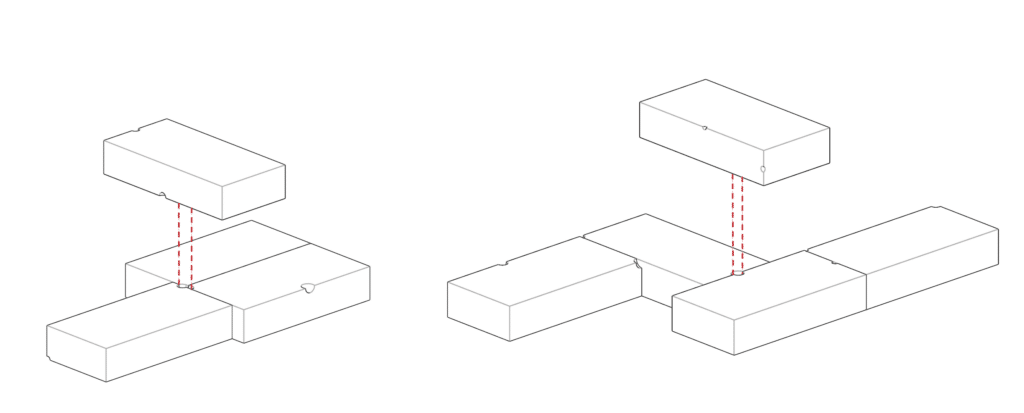
The logic conceals edge defects by overlapping/ pairing damaged corners.
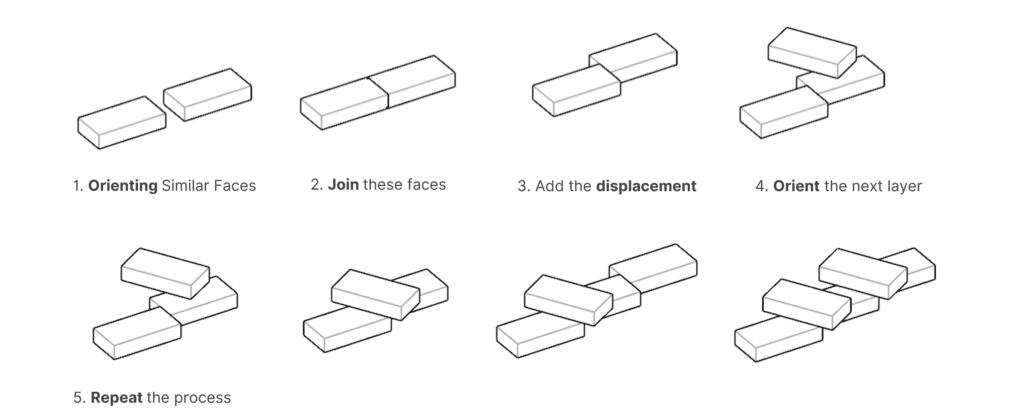
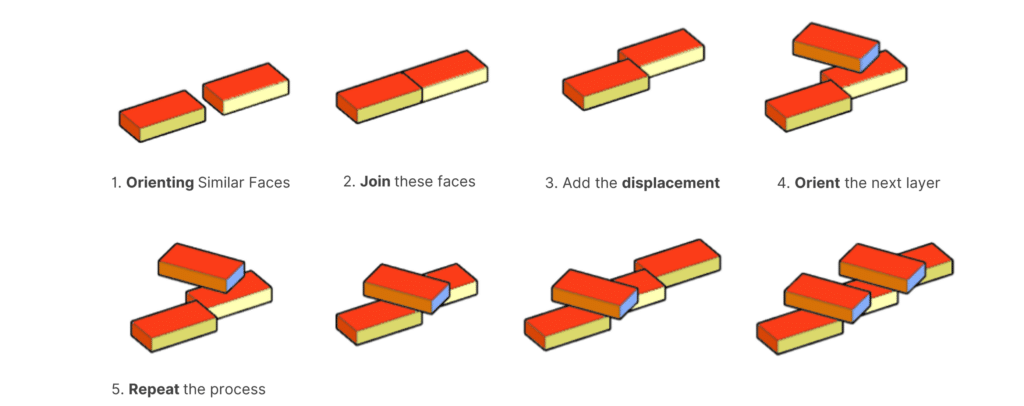
The orientation of the intermediate layers allows us to hide more or less damage to the bricks.