Beyond Construction: BIM as a World-Building Tool for Real-Time Game Engines

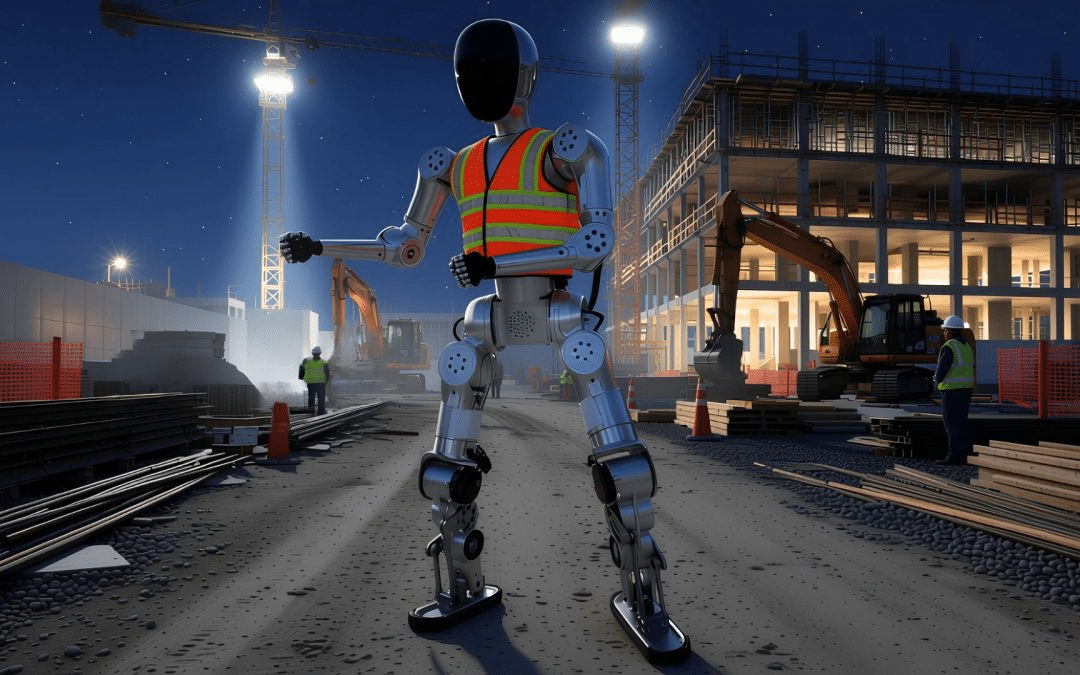
Abstract This research investigates how Building Information Modeling (BIM) can be leveraged to generate structured and meaningful architectural environments for architectural visualization, video games, and animated films. It explores workflows between BIM tools and real-time game engines, focusing on the transfer and preservation of spatial logic and metadata. The study aims to demonstrate how BIM-based … Read more


Design Beyond the Project: Reframing Practice Through Scalable Digital Services

A conversation with Jesper Wallgren Introduction In recent years, computational design and BIM workflows have become common tools in architectural practice. However, most of these tools remain confined to individual projects, often developed as internal scripts or one-off automation solutions to solve immediate design problems. While effective in improving efficiency within a project, these tools … Read more

Sand Mining – from Afar

DETECTING SAND MINING USING MULTI-TEMPORAL SATELLITE IMAGERY Introduction Sand is ubiquitous in the modern world. It is the second-most extracted material on Earth after water, driven principally by the global demand for concrete, infrastructure, and urban expansion. Estimates place global sand and gravel extraction at 40–50 billion tonnes per year, a scale that outstrips many … Read more

Renewable, but at Whose Cost?

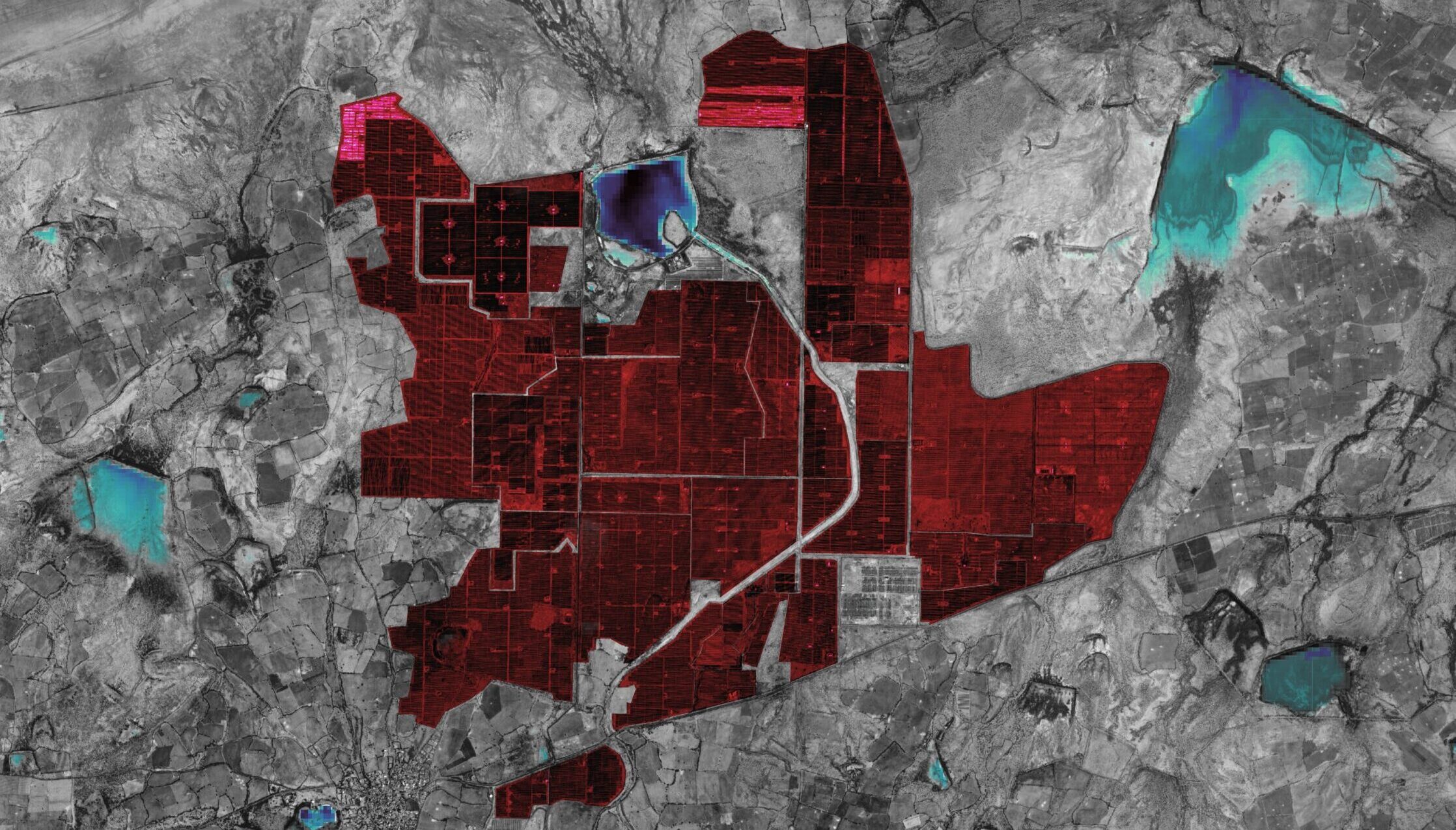
India’s solar ambition is written into its landscape. Since the launch of the Jawaharlal Nehru National Solar Mission in 2010, the country has pursued one of the most aggressive renewable energy expansions in history —targeting 500GW of solar capacity by 2030. But the geography of that expansion follows a troubling logic. The regions chosen for … Read more

The Wooded Circle

entrance image Started off in 1504 as a Renaissance-era fortification system, designed to resist cannon warfare. Over the years, it has undergone many reconstructions, with the latest turning it into a managed heritage park in the early 2000s (Planted rows of trees) . Ecology has played an important role in each of its eras, as … Read more

Beyond Efficiency

The Purpose of AI in the Age of Resource Scarcity Introduction: Redefining the Question The question “What is the purpose of AI in AEC?” often elicits a predictable response focused on speed. For years the industry has viewed Artificial Intelligence primarily as a mechanism for automation. It is seen as a faster way to produce … Read more

Beyond Speed: Redefining the Purpose of AI in the AEC Industry

Initial Perspective: AI as an Efficiency Tool At the beginning of the course, I viewed AI primarily as a means to enhance productivity. It appeared to be a practical instrument for automating routine tasks, such as refining designs or performing structural calculations. By minimizing errors, reducing time requirements, and lowering costs, AI could expedite project … Read more

Compl-AI: AI system for predicting building-code compliance in residential construction

Current construction projects lack a reliable early-warning system to predict building-code compliance issues, which leads to delays, rework, safety risks and higher project cost. Traditional inspections usually occur near the end of construction. This makes it difficult to correct issues efficiently and increases the risk of delays and safety concerns. Visual problems such as unsafe … Read more

Flap-alona – butterflies, pollinators and Barcelona’s gardens

Pollinators, bees, butterflies, moths, bumblebees, quietly keep our ecosystems alive. They enable flowering plants to reproduce, sustain wild biodiversity, and support much of our food supply. Yet many of these species are in decline worldwide, threatened by habitat loss, chemical use, urban sprawl and climate change. In cities like Barcelona, where green spaces, gardens, parks … Read more

 Land in the Physical World and the Metaverse

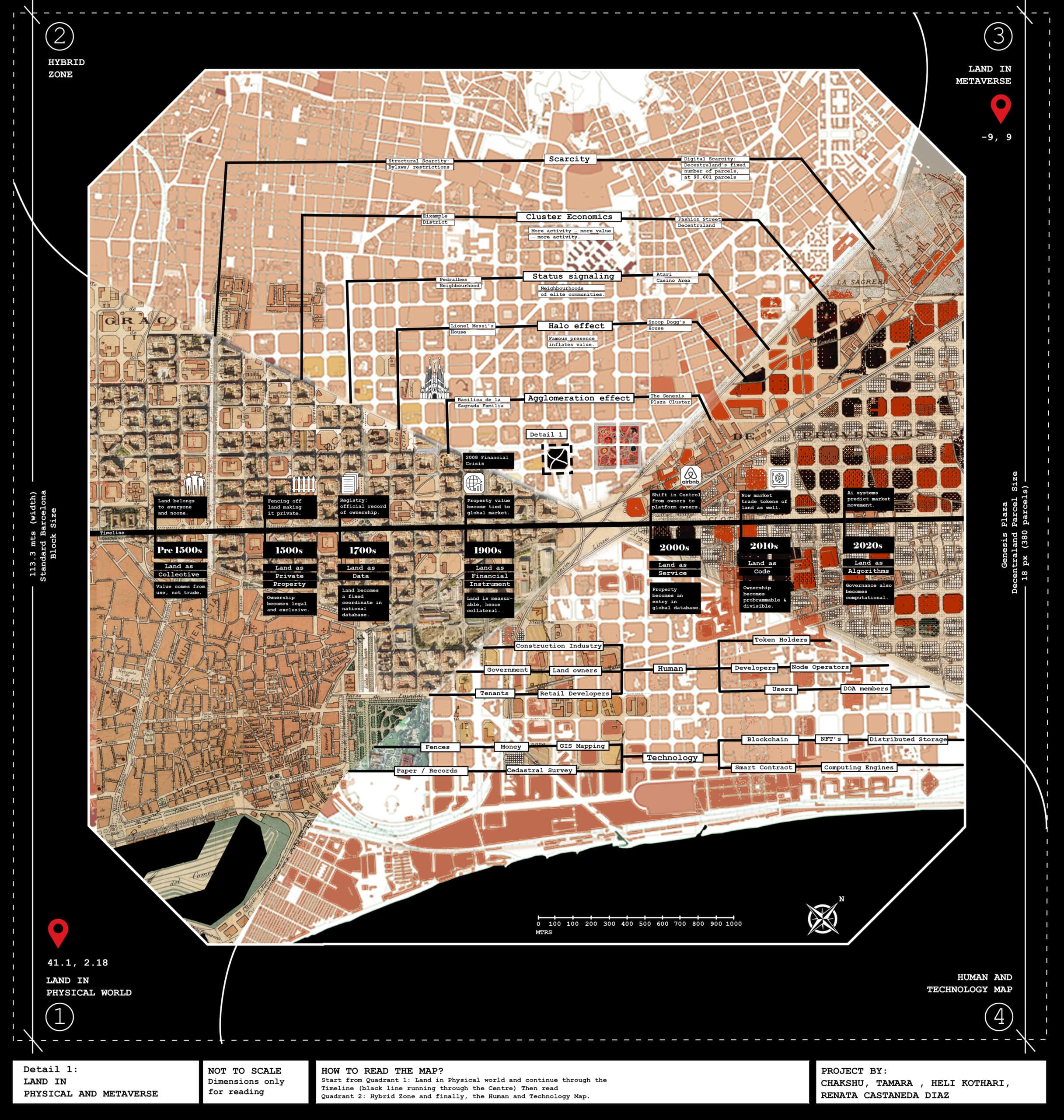
The research visualisation map shows the meaning, value, and governance of land shift as it transitions from the physical world into the metaverse. It treats land not as a static material object but as a socio-technical construct whose definition changes with different forms of infrastructure, ownership systems, and human–technology relationships. In the physical world, land … Read more

Cities in Pixels: Mapping, Moving, and Meaning in the Digital Era

In the age of digital urbanism, cities are no longer understood only through streets, buildings, or neighbourhoods—they are interpreted, navigated, and governed through layers of pixels, data points, and algorithmic models. Our visualization project, Cities in Pixels: Mapping, Moving and Meaning in the Digital Era, examines this transformation using Geographic Information Systems (GIS) as its … Read more

Ambient Public Mood Beacons-MRAC01

‘Urban Sensing Begins: The City Meets Its Beacons’ PLACEMENT — The Sensing GroundThe first beacons are placed along the park’s circulation spine silent observers that begin listening to the city’s rhythm. Sound, motion, and presence data start forming an invisible map of human interaction.At this stage, the system is not reactive, it’s learning.It introduces itself … Read more

ACTIVOS URBANOS EVOLUTIVOS

Sobre latencias y oportunidades del abordaje de la vacancia en la Ciudad de Mendoza RESUMEN La problemática de los pasivos urbanos, definidos como terrenos subutilizados o infraestructuras obsoletas dentro del tejido urbano, constituye un fenómeno global con implicaciones territoriales y socioeconómicas a escala local. La expansión urbana no planificada, caracterizada por patrones de crecimiento de … Read more

Democratizing Credit

Using Street View and Remote Sensing to Assess Risk and Empower Small Businesses Whos got my Credit? Access to credit is a fundamental driver of economic growth, especially for Micro, Small, and Medium Enterprises (MSMEs) in the Food & Beverage (F&B) sector. Yet, traditional lending models—rooted in asset-based evaluations—often exclude countless small business owners, particularly … Read more