SYNFORM I

Non Planar Strategies for Robotic Polymer 3D Printing: Translating Digital Realms into Large-Scale Architectural Elements to Reimagine Ornament and Material Expression.

Non Planar Strategies for Robotic Polymer 3D Printing: Translating Digital Realms into Large-Scale Architectural Elements to Reimagine Ornament and Material Expression.

Oriol Carrasco – Anomaly.Build Oriol Carrasco is a PhD architect from Barcelona. He is a senior fabrication expert at IAAC with extensive expertise in composite manufacturing. Oriol currently teaches in MAA and 3DpA programs. He has been co-leading the Design with Nature research line since 2013, teaching now in the metabolic introductory studio. He has … Read more
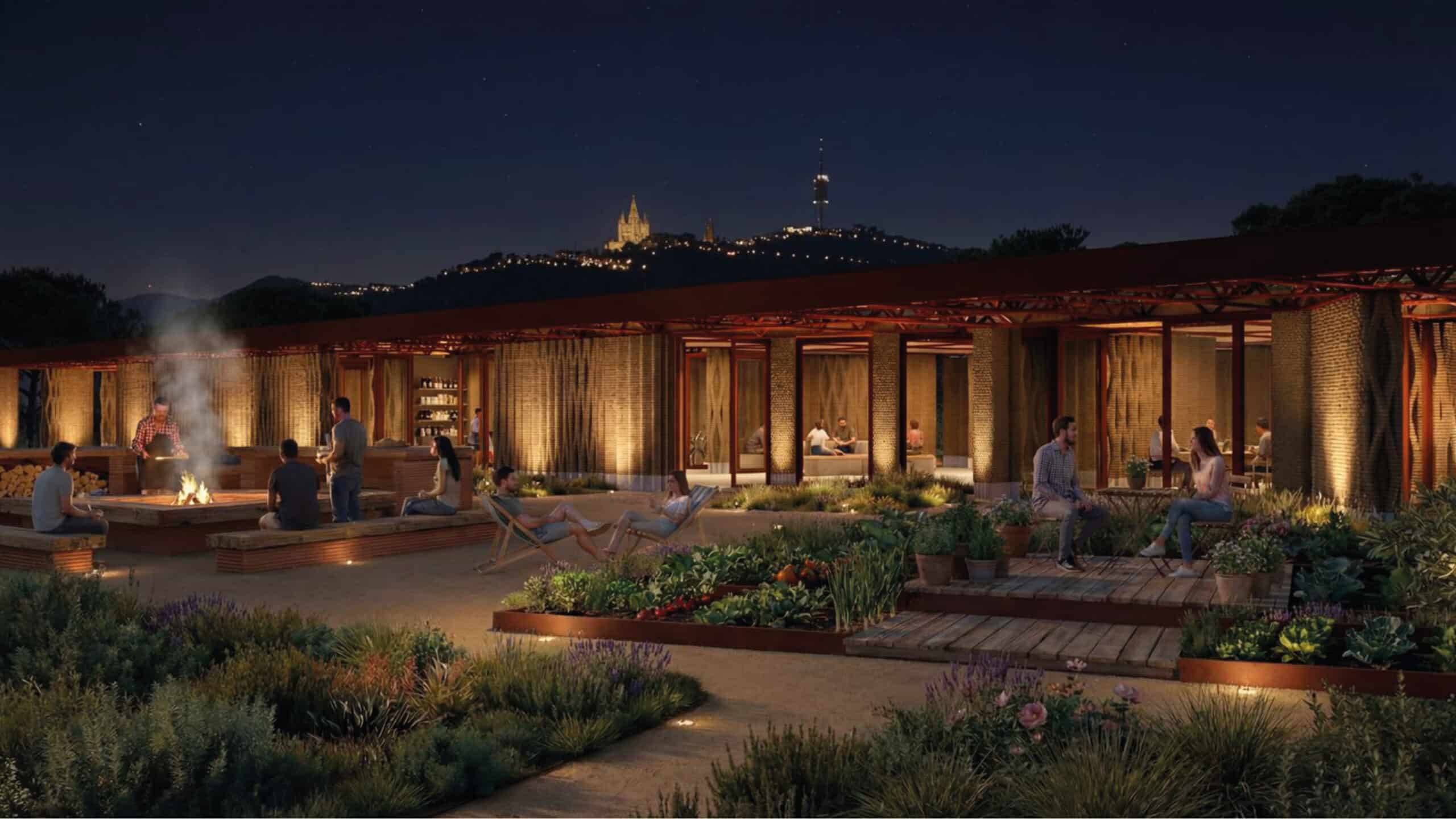
Rooted in earth, bound by flavor “This co-living brings together four user profiles whose needs and daily rhythms shape the architecture of the project. A married couple with a child requires stability, clear routines, and functional domestic spaces; a young couple with cats needs calm and flexible environments that support living with pets; a divorced … Read more
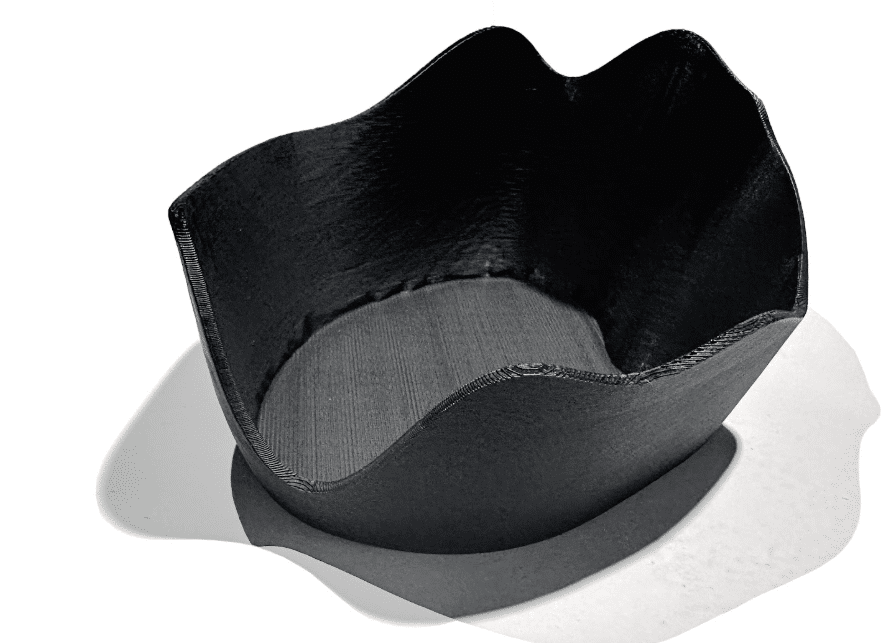
This article presents our Workshop 1.2 project, which focuses on analyzing data and translating it into robotic movements to control an ABB IRB 6700-150/3.20 industrial robot equipped with a plastic pellet extruder for additive manufacturing. The core concept of the project involved studying the tsunami-related terrain and displacement data, extracting spatial and intensity-based information to … Read more
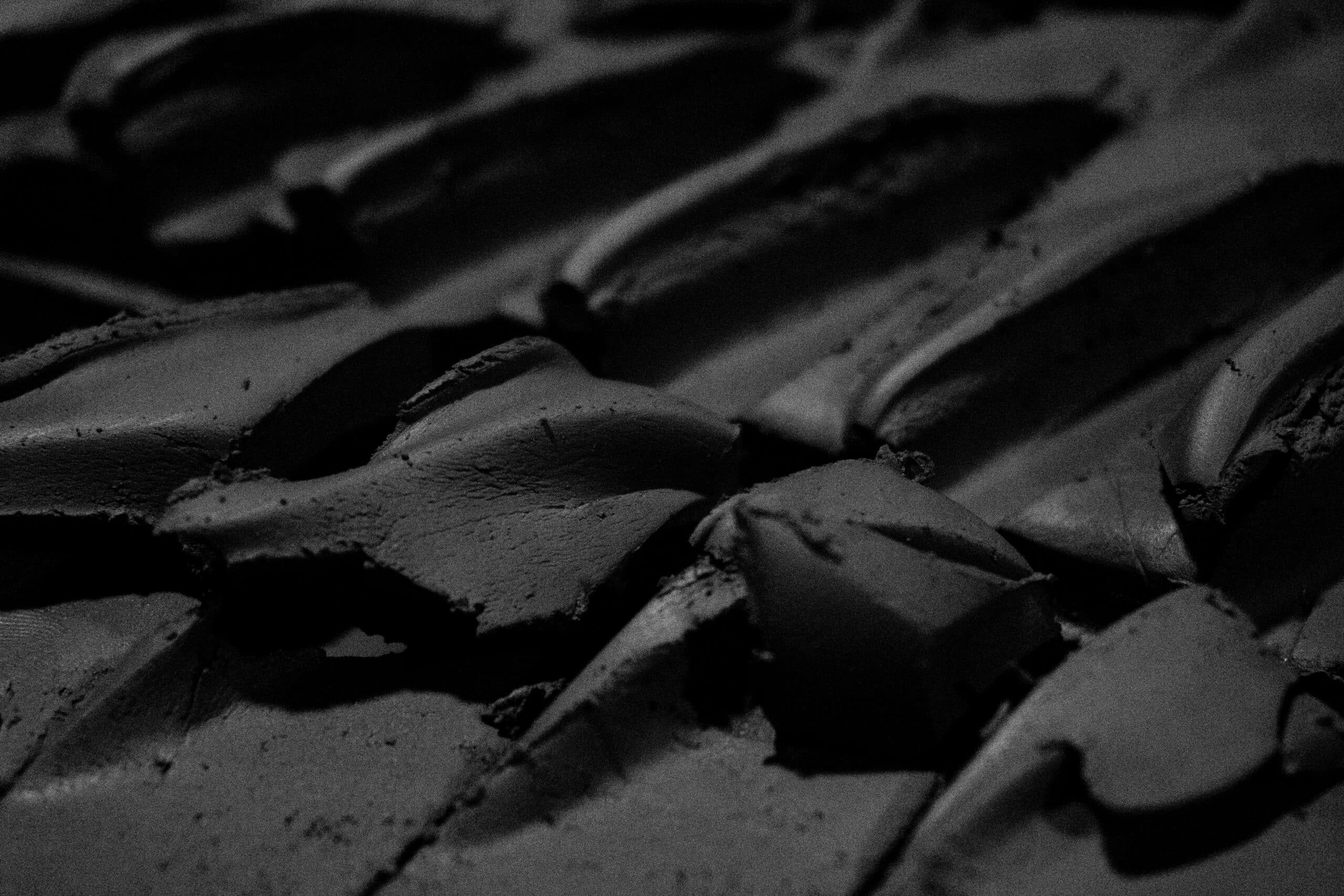
Context This exercise explores robotic fabrication processes through the direct manipulation of malleable materials. The assignment consisted of producing a 2.5D clay piece, measuring 40 × 40 cm with a maximum height of 5 cm, understood as a physical result of a robotically applied force on soft matter.Rather than designing a predefined form, the goal … Read more
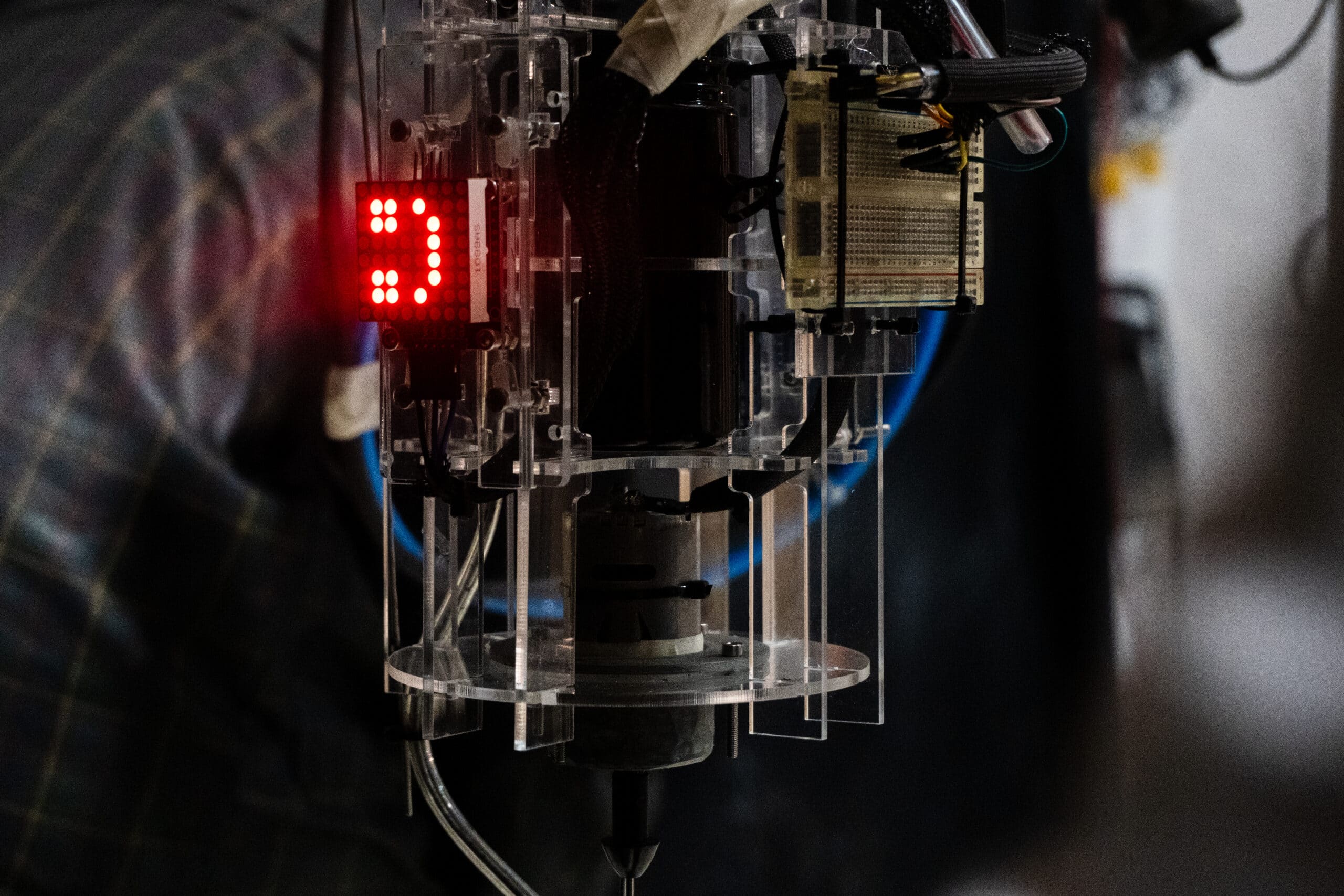
Introduction In Anatomy of a Machine: Spill, we designed and built our own paint-spilling tools and worked with large robotic arms to create expressive, A0-scale paintings. Over the weeks, we tested movements with our hands, translated them into robotic trajectories, and refined both the tools and the resulting spill patterns. Using Arduino and laser-cut acrylic … Read more
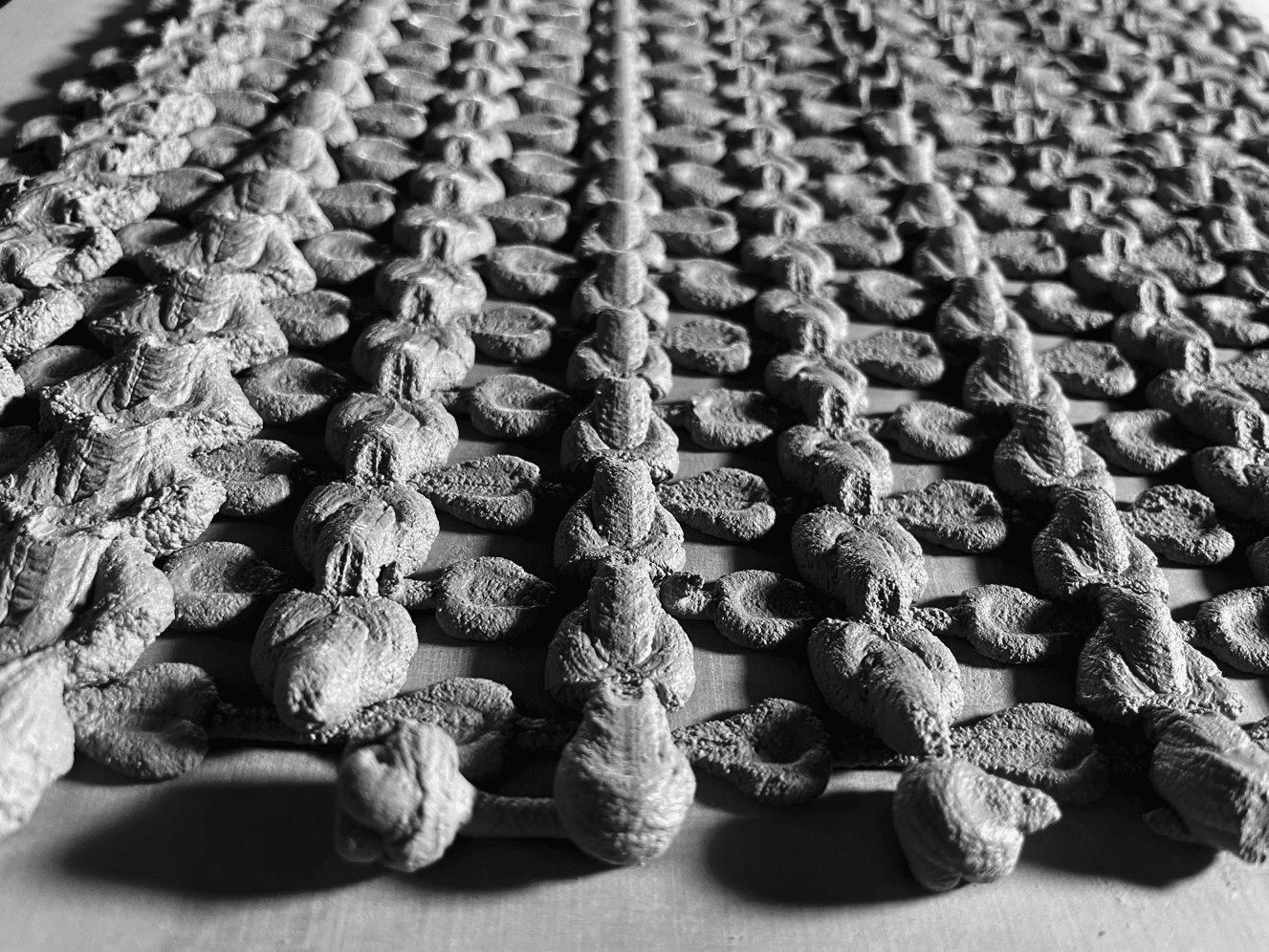
Exploring Clay 3D Printing Through Viscosity, Speed, and Time For the Shape exercise within Anatomy of the Machine, we worked with clay as a material, specifically focusing on robotic 3D printing using clay extrusion. The objective was to understand how material behavior, robotic parameters, and geometry interact, and how form emerges from the machine–material relationship. … Read more
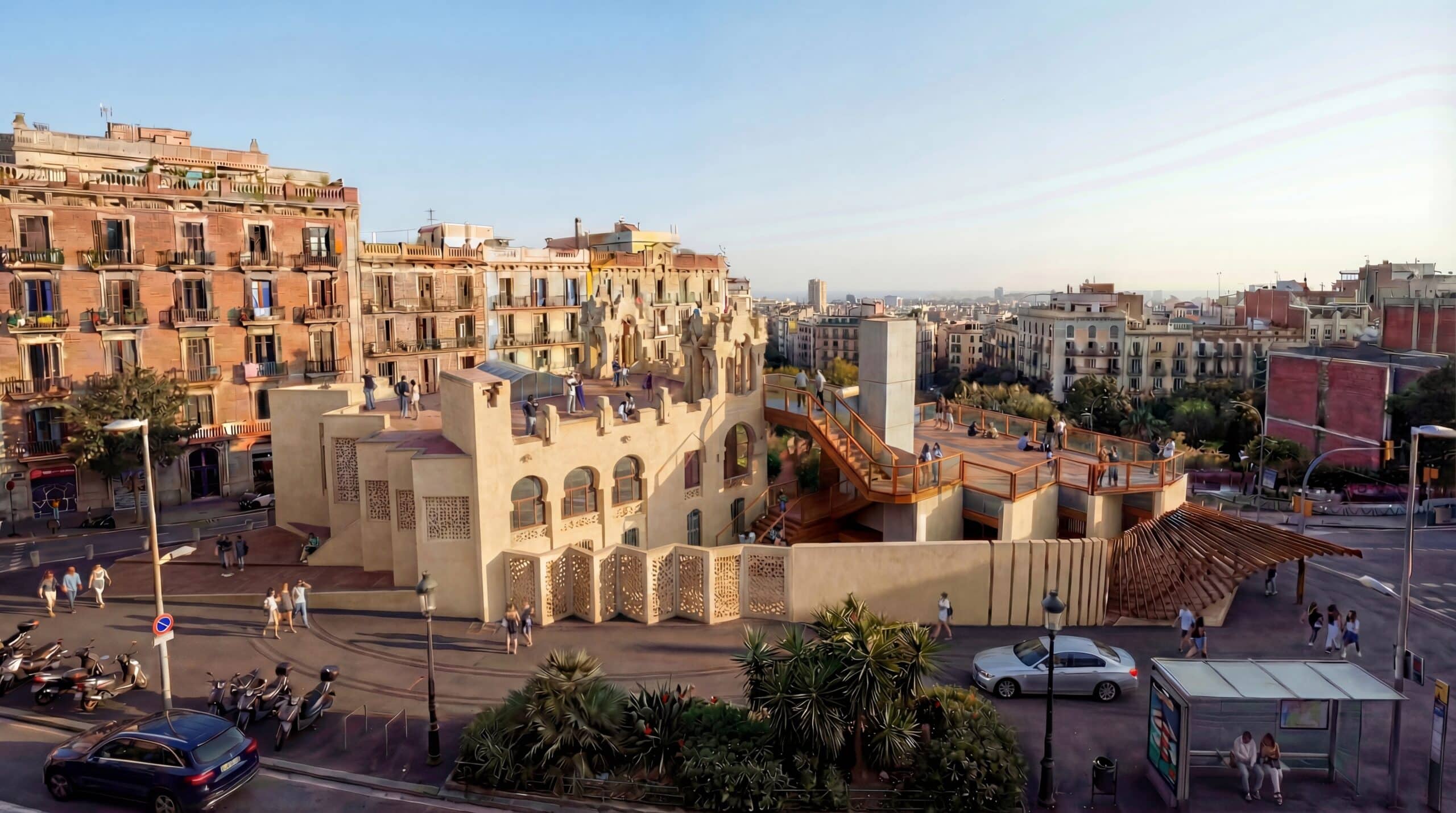
Heritage is not memoryHeritage is Production + Community In the dense urban fabric of Sant Gervasi, Casa Tosquella sleeps a Modernista jewel originally conceived as a summer retreat, now stranded in a city grappling with permanent heat. This project explores the tension between heritage preservation and climatic urgency. The proposal views the building not as … Read more
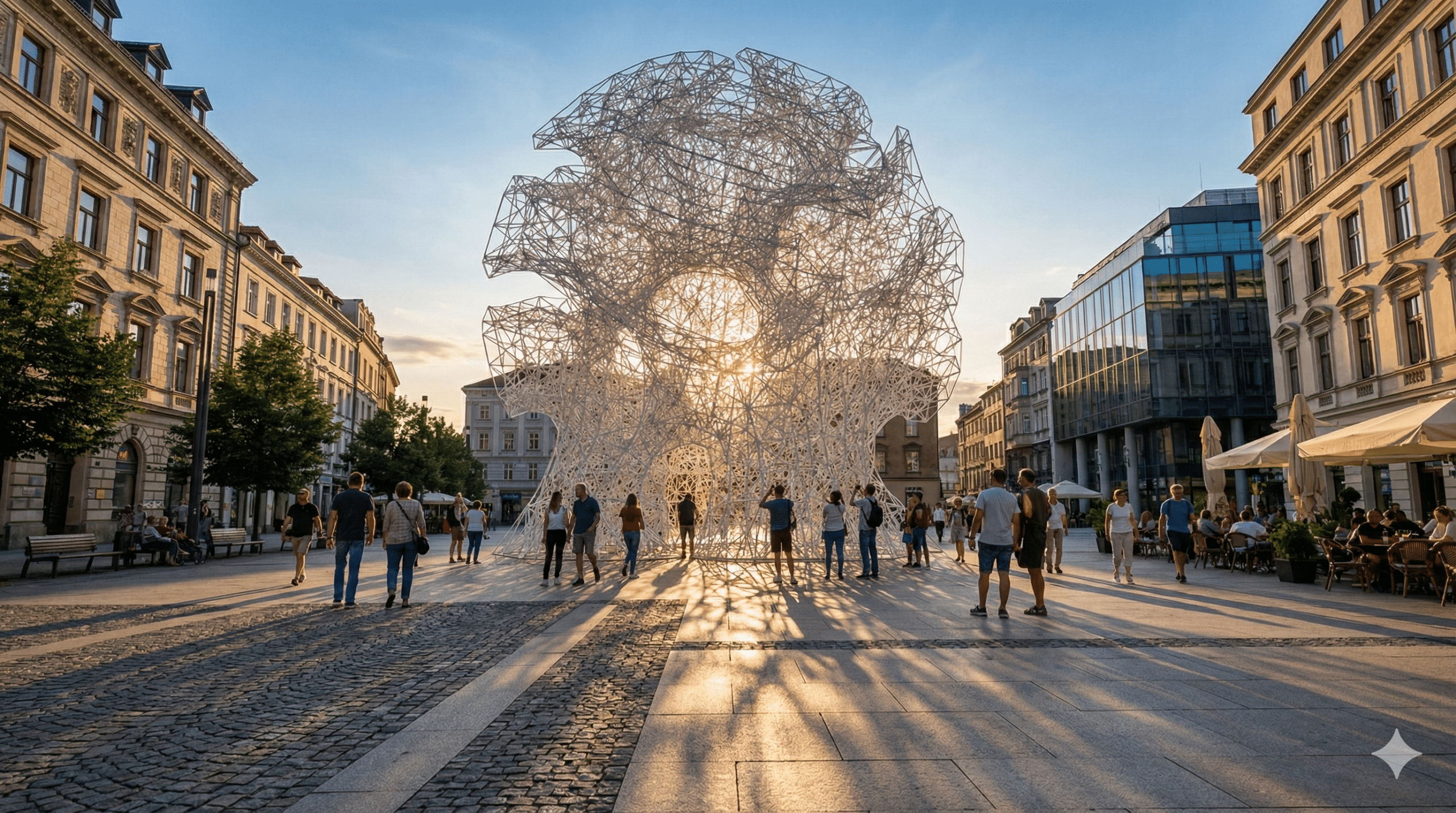
This technical report details the computational workflow developed for our final structural optimization assignment. The project methodology follows a rigorous sequence: initial form-finding, stress-line analysis, lattice topology selection, and cross-section optimization, culminating in a robotic fabrication strategy. General Workflow Overview The design process is structured around a linear algorithmic pipeline. It begins with form-finding utilizing … Read more
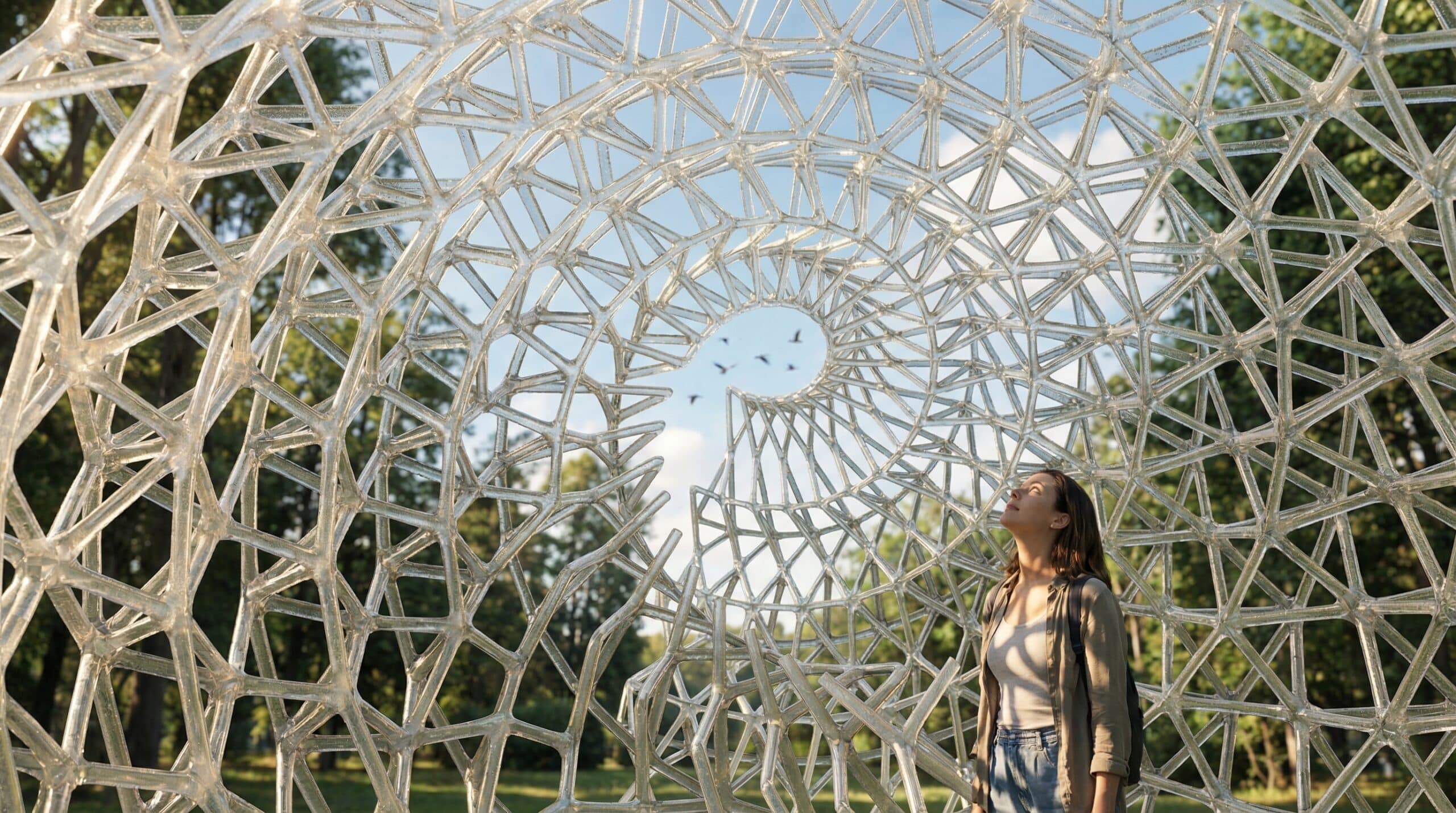
For the Love of Pasta Introduction: From Your Dinner Plate to Architectural Design Look closely at a piece of pasta. The curves, ridges, and hollows aren’t just for holding sauce; they are feats of structural engineering in miniature. But could the mathematical logic behind a common pasta shape be scaled up to create a full-sized, … Read more
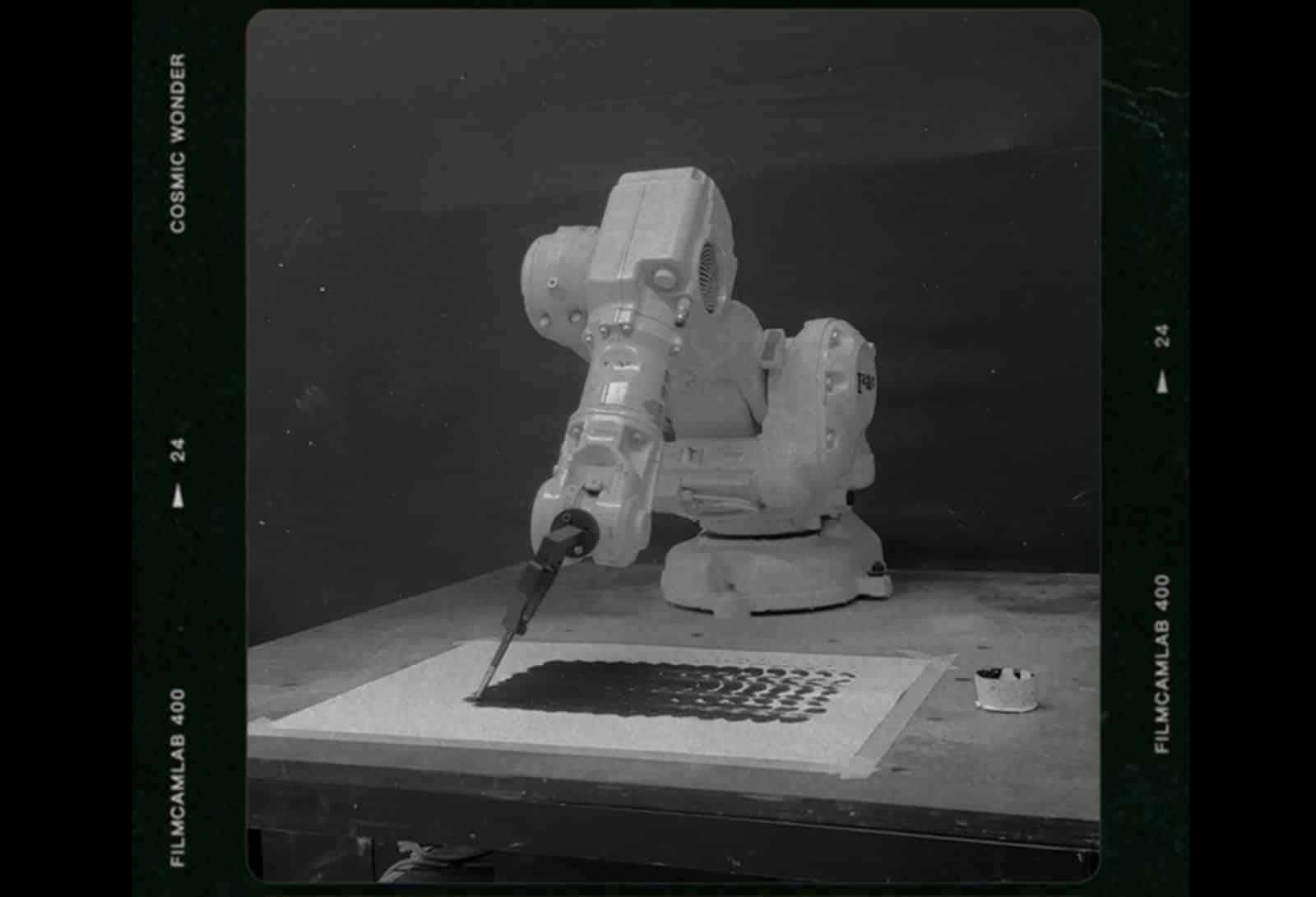
INTRODUCTION The first assignment of Anatomy of a Machine investigates how a robotic system can produce a brushstroke, an action typically associated with human intuition, variability, and continuous motion. Rather than beginning with predefined toolpaths or digital control, the project starts by reframing the human hand as a machine. Through a series of analog drawing … Read more
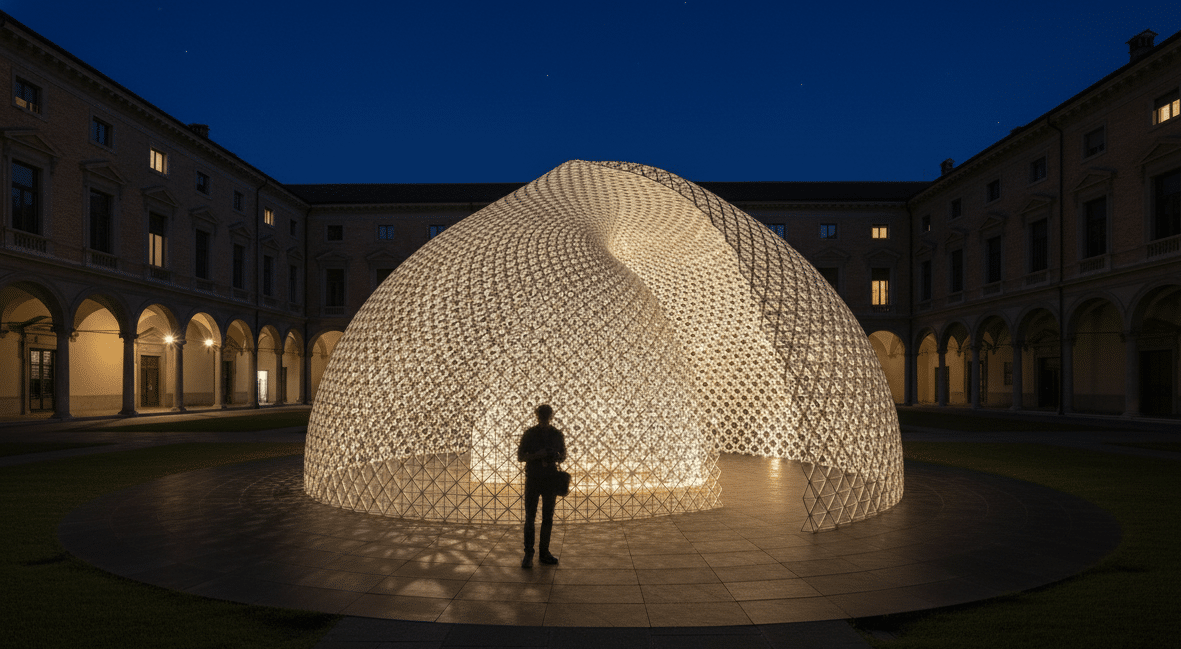
Introduction Intentions The pavilion was conceived as a flowing spiral, a path where visitors enter without seeing the exit, guided like a wave through the form — much like a shell in the ocean. Our aim was to create a geometry that is neat yet non‑banal: generated by simply rotating a curve, but enriched with … Read more
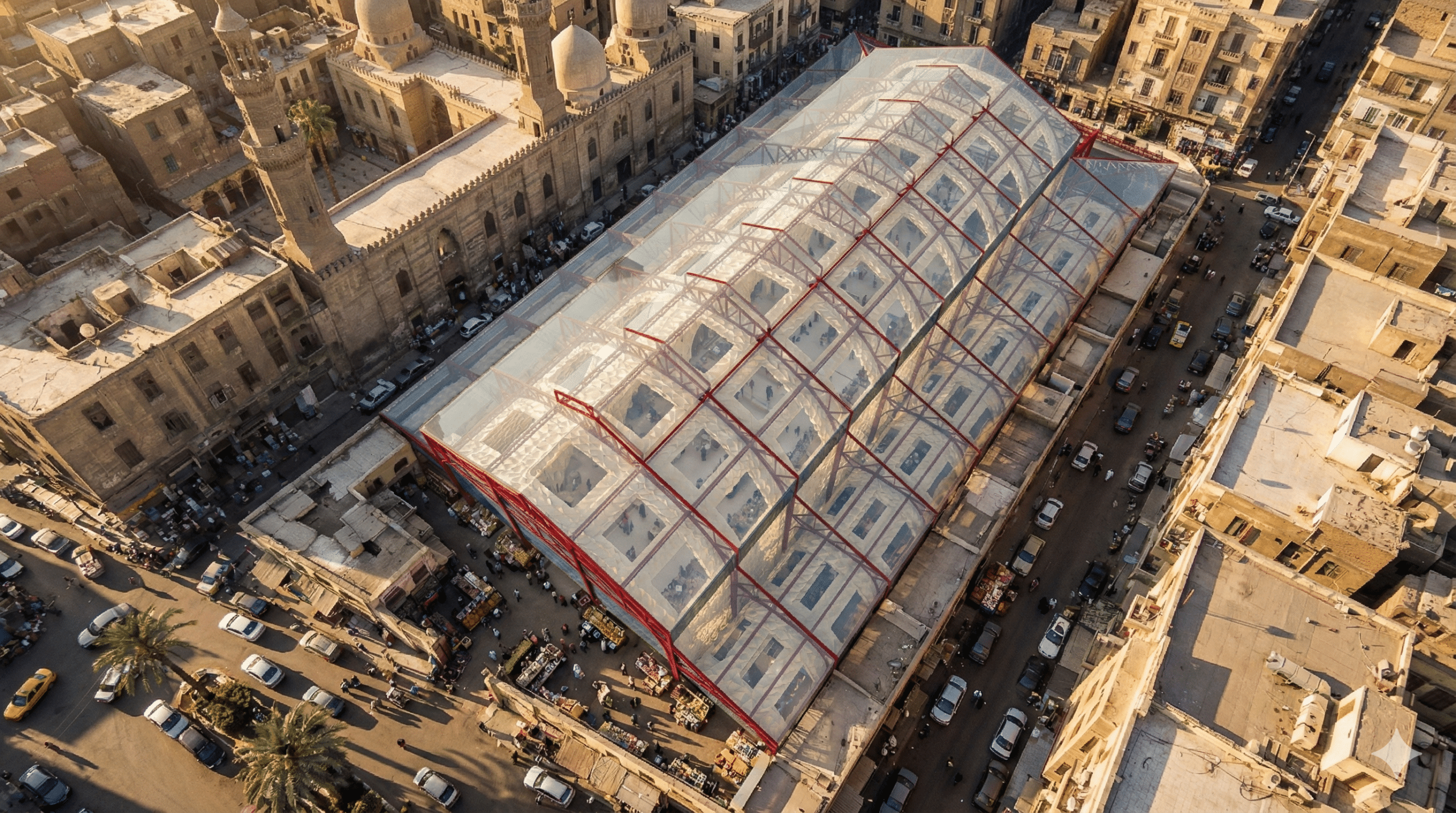
Bab al-Luq Market – Cairo, Egypt The ‘Diffused Skin Market’ project aims to cool down the market space without closing it off. The goal was to create a ‘diffusion filter” skin, that drops the temperature but keeps that vibrant natural light that vendors need to sell their products. The challenge when analyzing the place, wasn’t … Read more
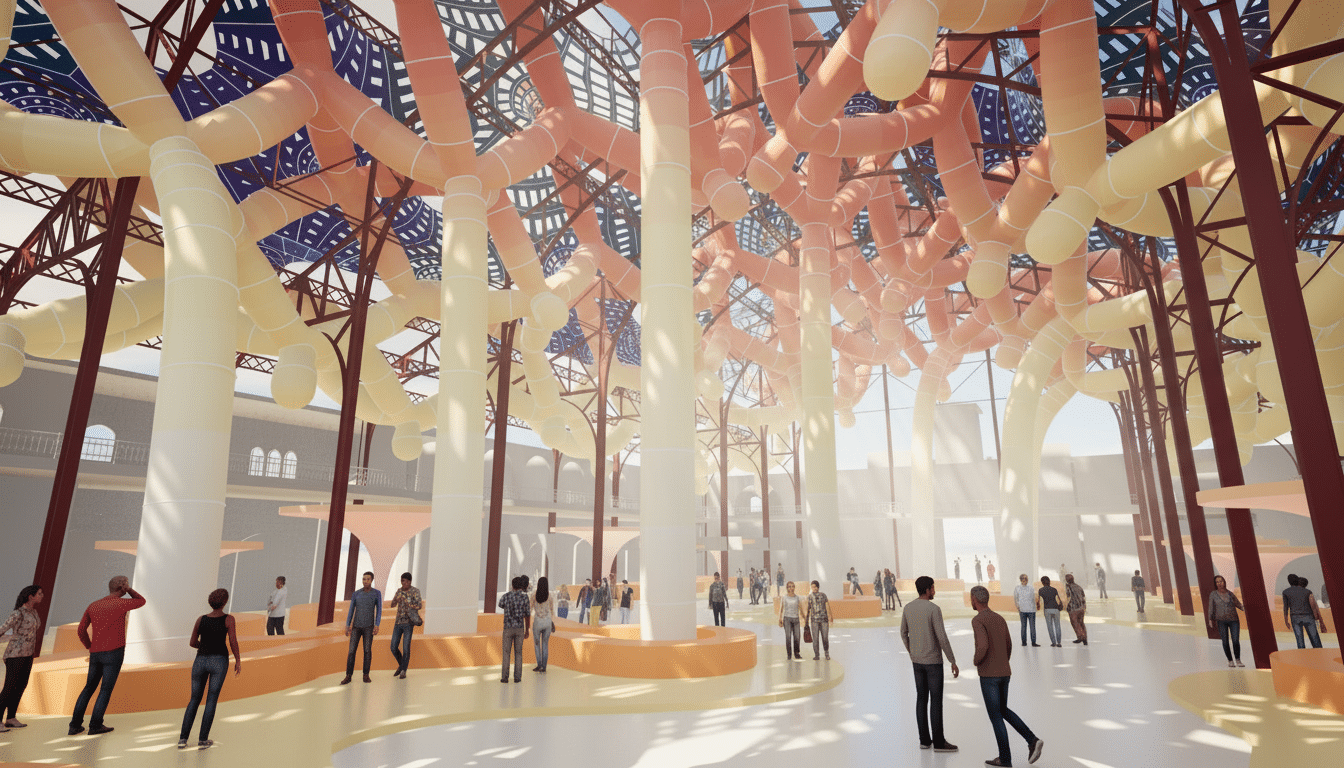
Conceptual Framework The Project explores a contemporary dialogue between past and present by enveloping a historic steel truss within a soft, inflated architectural skin. Inspired by the playful curves and buoyancy of balloon art, the installation introduces a layer of translucent, geometric “bubble wrap” forms that gently overgrow the rigid industrial structure beneath. Rather than … Read more
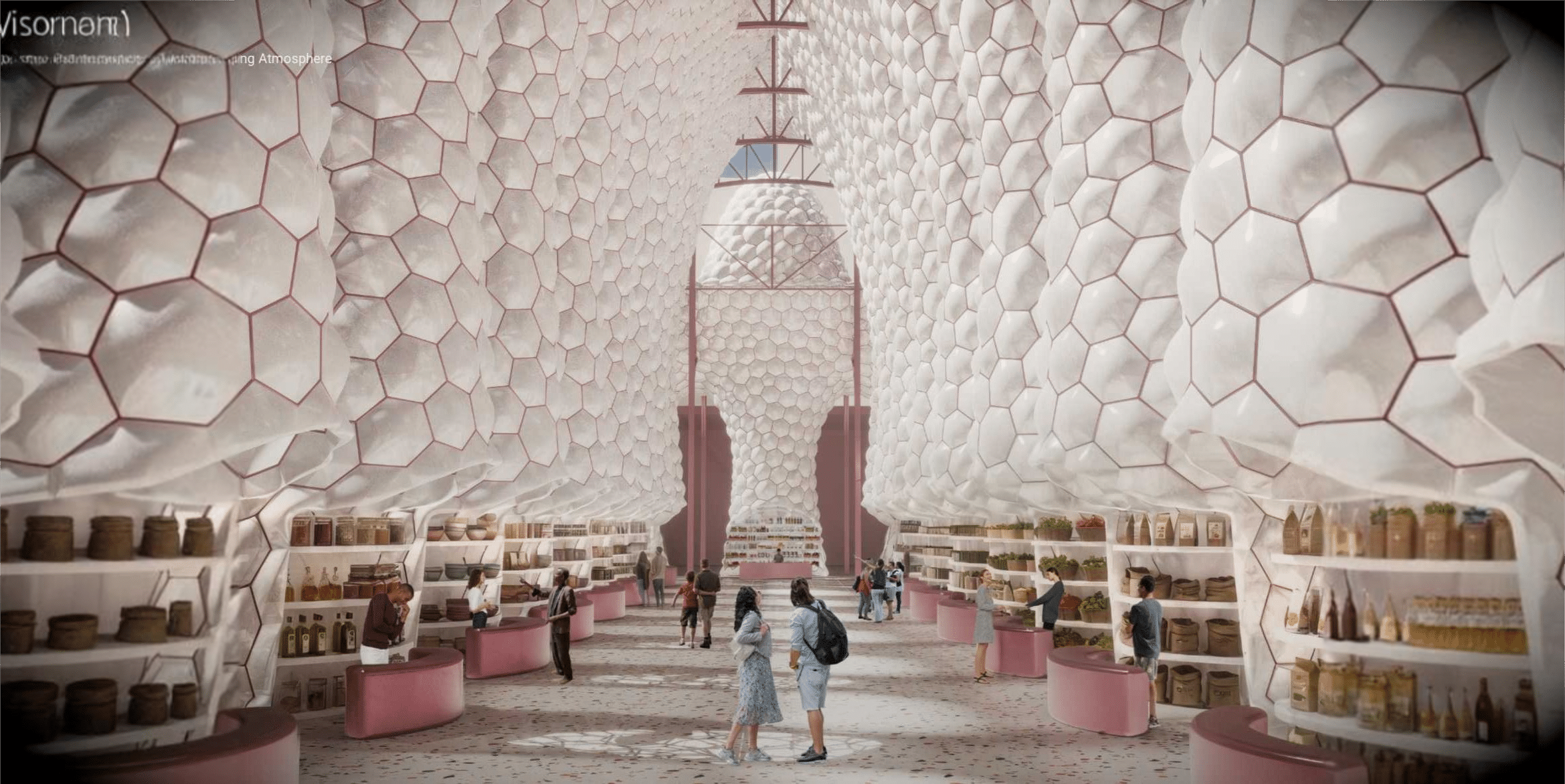
Solid vs. Soft How can an object low in inherent solidity still be structurally present and define architectural space? This question lies at the heart of The Pneumatical Incrustation. Developed for the Complex Forming Seminar, this project explores the fundamental contrast between the solid and the soft. The goal was to investigate how “soft” forms … Read more
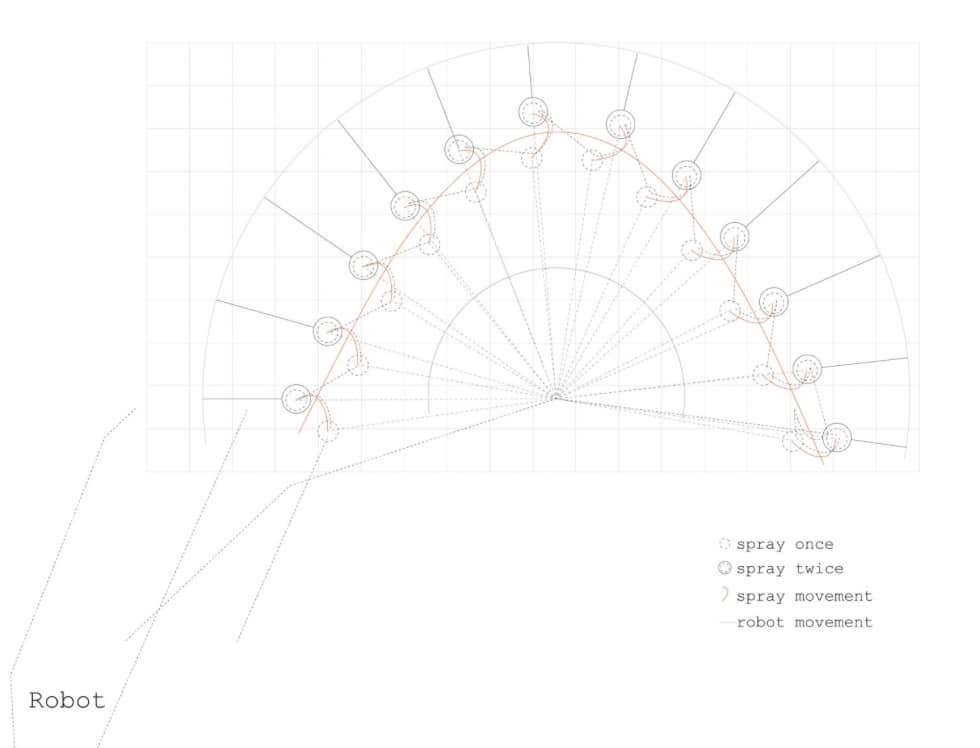
In the second exercise of Anatomy of a Machine, our goal was to understand how a robot expresses itself through material behavior. Instead of carving or shaping solids, we explored how liquid material behaves when actuated, accelerated, and released through a controlled spraying mechanism. “Spill” became a study of force, viscosity, height, angle, and timing … Read more
