Intelligent Prototyping: Robotics and Micro-controllers

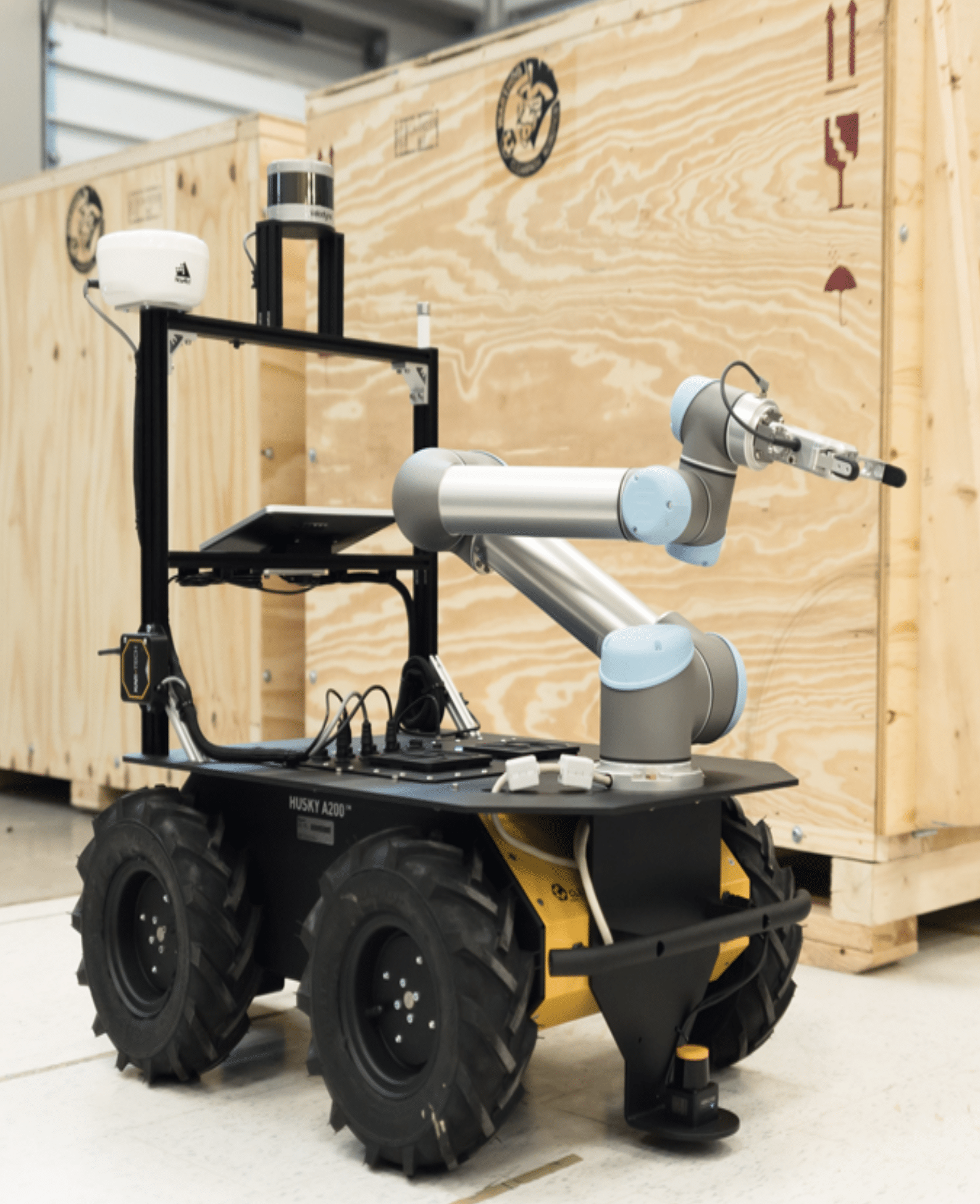
The work presented in this blog post is an approach combining Robotics and Microcontrollers as preparation for a main Research Studio project focused on sustainable facades and environmental guidelines. This represents our first steps in exploring these fields and their connections with Artificial Intelligence in Architecture and the Built Environment. In the Robotics domain, the … Read more

Deconstructing Alcatraz

1. Design Concept and computational Design System Obsolete typology Interpretation Deconstruction    Understanding the current prisons as punitive institutions that fail to rehabilitate but imprison inmates without offering social inclusion solutions increases the risk of recidivism.     Deconstructing Alcatraz proposes an alternative to this typological lack through its own reconstruction. In a VR environment the proposal consists … Read more

Landscape of Consequence

Semi Aerial View

The Architecture of Second Chances Transforming Punishment into Progress Through Computational Design In the evolving discourse of criminal justice reform, the intersection of architecture, technology, and rehabilitation presents unprecedented opportunities to reimagine how we approach incarceration. Our project, “Landscape of Consequence,” proposes a radical reconceptualization of Alcatraz Island, transforming this symbol of isolation into a … Read more

άβυσσος avissos

What if punishment and rehabilitation could coexist in a fully immersive virtual environment? Can justice be achieved in the virtual realm? A Transformative Journey in Emotional Rehabilitation Avissos, named after the Greek word for the deepest part of the sea, reimagines emotional rehabilitation as a unique, multi-stage journey. This concept challenges individuals to confront empathy, … Read more

Re (Form) Reality // ITERUM

The Context The prisoner’s journey is an emotional and psychological transformation. The spaces inhabited during this process are designed to mirror the evolving state of mind, fostering introspection and awareness.Architecture becomes a tools to reflect the prisoner’s internal experiences, guiding them through stages of self-realization: as the prisoners confront these emotions within the space, they … Read more

The Re-iterating Maze

The Re-Iterating Maze helps inmates at Alcatraz develop meditative practices through rehabilitation, using their sentence to make a more peaceful existence possible. Our concept allows prisoners a mindful form of exercise, allowing them to use their time outdoors exploring multidimensional pathways. Mindful walking encourages the brain to focus on the activity of traversing a determined path. By … Read more

RE:HABITAT

Abstract Prisons are constrained by tangible realities – static physical forms, high-density layouts, lack of amenity and limited access to natural spaces. These constraints are typically a result of inflexible systems and rigid hierarchies with high oversight to keep prisoner behaviour in check, but result in the need for efficient use of space and cost-effectiveness. … Read more

‘COMPound’ – Revolutionizing Access to Credit

‘The project envisions the use of novel data collection strategies for the purpose of increasing access to formal credit for MSMEs in the F&B Space. Across the globe, cities face a pivotal challenge: unlocking the potential of their micro, small, and medium enterprises (MSMEs) to drive both urban transformation and national economic growth. These enterprises, … Read more

AI theory: Using NLP – Graph Rag for AI Suggestions in Facades, based on Environmental Guidelines

This project leverages Graph Retrieval-Augmented Generation (Graph RAG) to provide intelligent facades configuration recommendations aligned with the New European Bauhaus (NEB) principles. This post presents how we apply AI theory approaches for reaching the stablished target. The project correlates quantitative data and qualitative guidelines, by integrating 17% of the assessed metrics in this guidelines and creating … Read more

adopy

What if a structure could adapt its shape in response to environmental inputs? inputs    : light value . water value outputs : movement of the canopy/roof adopy [noun]:  an adaptive architectural structure that dynamically responds to environmental conditions using sensor-driven inputs. The canopy system uses light and water sensors to adjust its shape for … Read more

Urban Wind Flow Modeling with PINNs

Overview PaperLink WIP – This study specifically explores Physics-Informed Neural Networks (PINNs) and Computational Fluid Dynamics (CFD) to analyze pedestrian wind comfort. It aims to integrate these neural network models into a web application using Three.js and other tools. By utilizing data from OpenWeatherMap, and OpenStreetMap, the project aims to support real-time simulations and visualizations … Read more

Climate Sensitive Facade Intervention for Urban Heat Island Mitigation

Research Questions: Can climate sensitive facade interventions reduce the intensity of the Urban Heat Island effect within urban blocks in arid climates?“ Research Goal: The goal is to propose simplified, climate-sensitive facade interventions in highly urbanized cities that reduce energy loads by mitigating Urban Heat Island (UHI) effects, while complying with climate-resilient regulations. These interventions … Read more

Urban Insights: Leveraging Open Data for Smart Property Rate Predictions

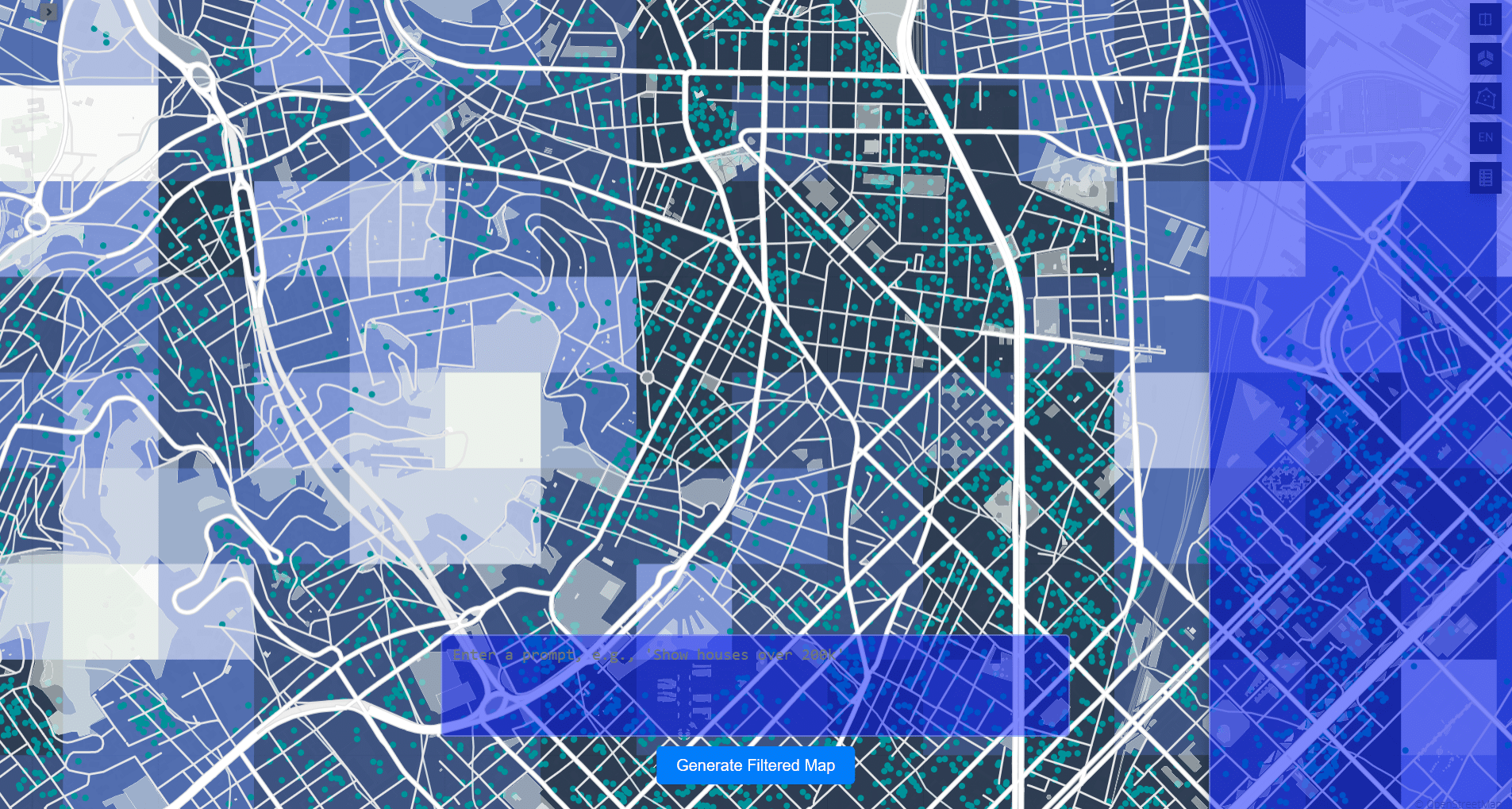
1.0 Concept In the evolving landscape of urban development, property rates are influenced by numerous factors, including geographical, socio-economic, and infrastructural elements. Our project, “Urban Insights: Leveraging Open Data for Smart Property Rate Predictions,” aims to create an intelligent, data-driven model to forecast property rates. This model utilizes features such as wards, property types, and … Read more

From image to graph to bim

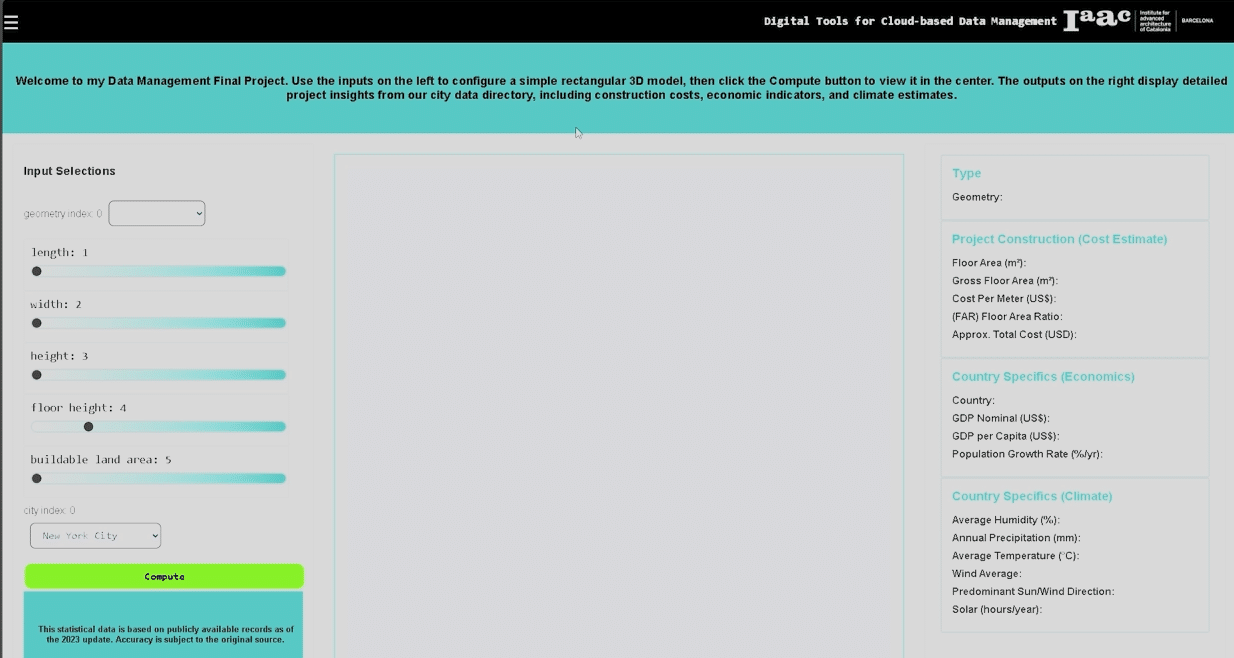
A road map using Ai & computational design   # 01 the road map To convert a 2D raster plan into a BIM model, we first need to recognize the image contents and convert them into vectors, attaching relevant data. So , Our process focuses on three stages: image-to-vector, vector-to-graph , and finally graph-to-BIM During our … Read more