Bab al-Luq Market: A Shell That Finds Light and Guides People

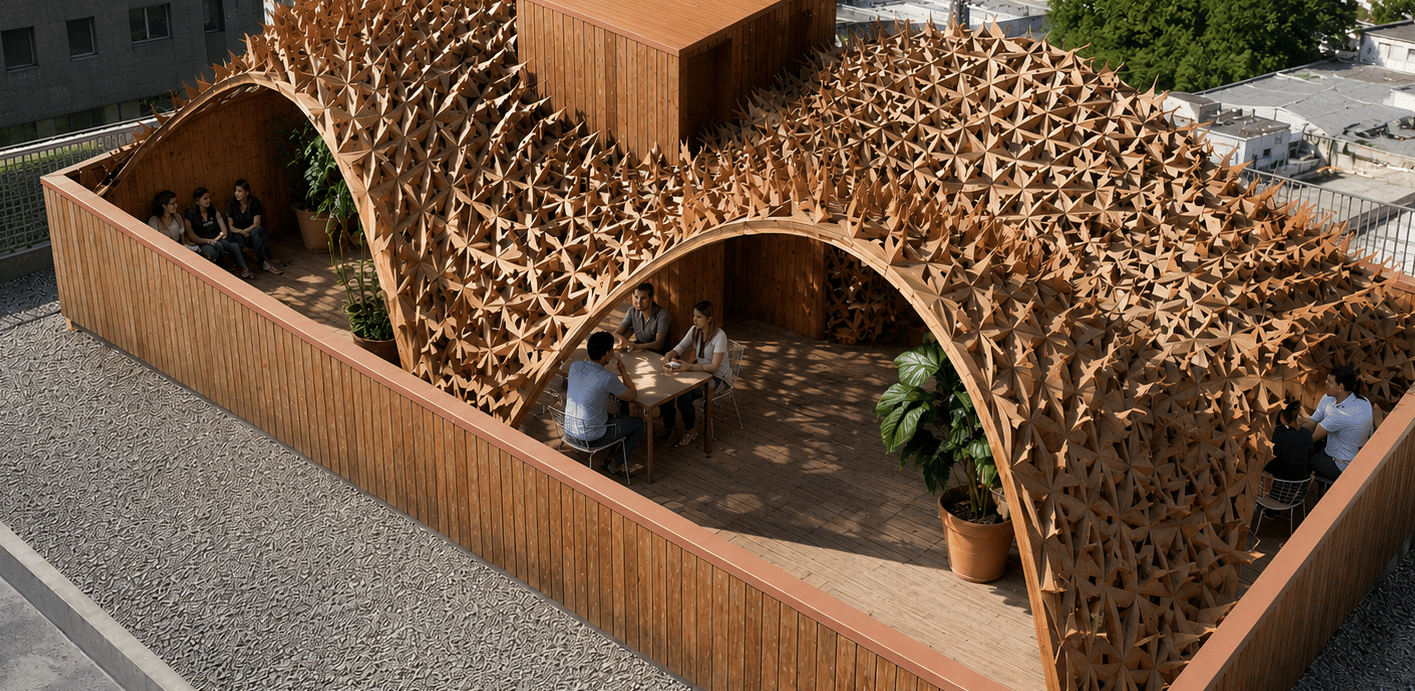
Bab al-Luq Market in Cairo was designed to be bright, legible, and hygienic—then decades of add-ons and wear turned it into a dim, confusing interior. This proposal makes one clear move: a parametric double-skin roof that diffuses daylight and defines a readable circulation spine. Location: Cairo, Egypt Climate: Hot, dry, sunny Typology: Historic market hall … Read more

FLOATING GROUNDS: Rethinking Resilience in Jakarta

4 Main Ingredients Initial Design Strategy Reference Definition of the modules Topological Map Grasshopper Workflow Morphological Step by Step Stadium Buffer Zone Residential Material Choice Three structural materials—concrete, steel, and timber—were evaluated based on mass and carbon emissions. Timber emerged as the optimal choice: Structural and Buoyancy Analysis For the floating components, floating pontoons were selected as the primary … Read more

Tectonic Hub: Climate-Adaptive Recipe for Cultural Hubs in Reykjavik

Ingredients Climate Reykjavík’s climate shapes the entire project. The site is exposed to strong, multi-directional winds reaching 27 m/s, with a prevailing direction around 135°. Daylight conditions are equally extreme, shifting from long summer days to very short winter ones. The system therefore needs to adapt, protect, and still create comfortable public spaces. Form Our formal … Read more

Monsoon Nest: Living Between Flood and Sky

Monsoon Nest is a modular housing proposal for Bangkok that responds to monsoon rainfall, flooding, and high-density urban conditions. The project explores adaptable modules, elevated structures, and passive climate strategies to create resilient, community-oriented living environments in a tropical context. The design of Monsoon Nest is informed by four primary parameters: contextual environmental data, parametric … Read more

Mining The City

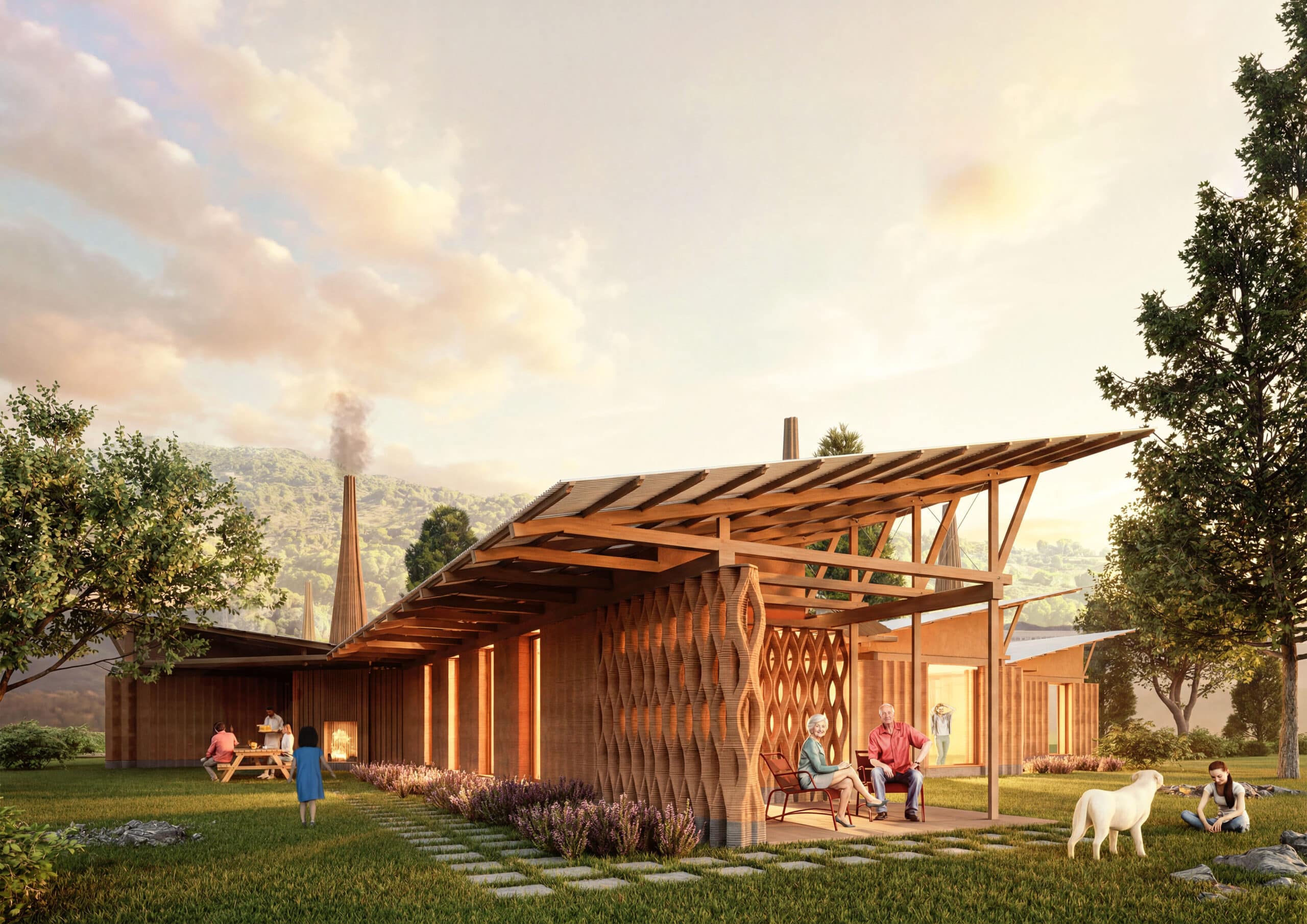
“Metabolising waste into habitat in a resource-scarce future” “Mining the City” reconceives legacy industrial infrastructure as an active force for urban regeneration and material resilience. Rather than treating waste as a problem to be discarded, this project positions Barcelona’s material flows from household refuse to industrial by-products as the resource base for a new metabolic … Read more

Catenary Field

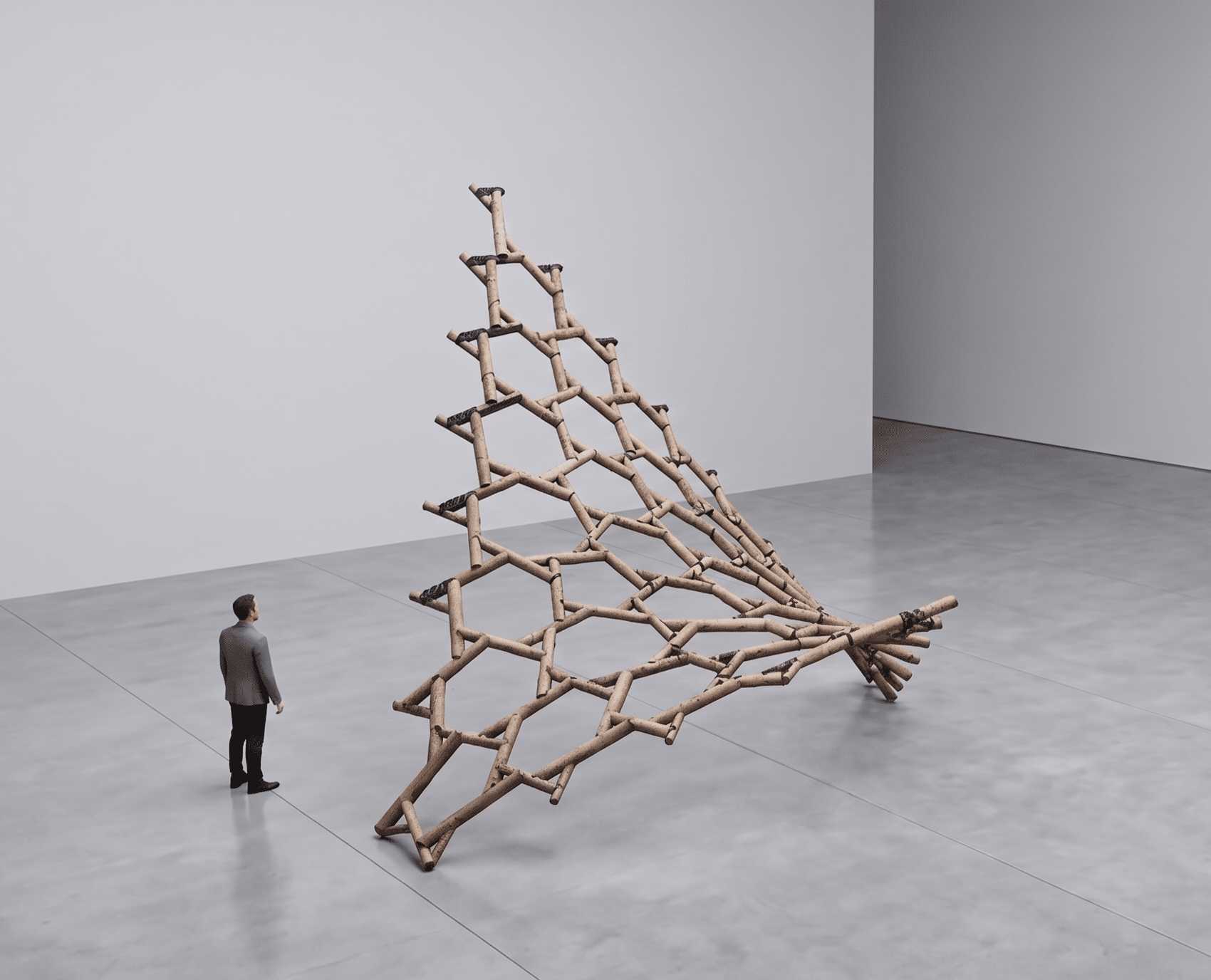
Glass fibre 3D printed temporary pavilion A structural and topological investigation into voxelised lattice systems, combining catenary form-finding with performance-driven optimisation to explore emergent spatial order and material efficiency. The Idea This project explores how a rigid, modular voxel system can define and enclose a pavilion, while an internally generated catenary geometry shapes circulation and … Read more

Temporary Pavilion

Pavillion Lattice Structure Render

From Dense Lattice to Optimized 3D-Printed Structure 1. Project Overview This project explores the design and structural optimization of a temporary pavilion using computational design tools and lattice-based construction logic. The pavilion is conceived as a porous, walkable structure designed for large-scale 3D printing using glass-fiber reinforced recycled PET. The main objective is to investigate … Read more

Algorithmic Optimization and Fabrication of a Lattice Coral Pavilion

This technical report details the computational workflow developed for our final structural optimization assignment. The project methodology follows a rigorous sequence: initial form-finding, stress-line analysis, lattice topology selection, and cross-section optimization, culminating in a robotic fabrication strategy. General Workflow Overview The design process is structured around a linear algorithmic pipeline. It begins with form-finding utilizing … Read more

The Clebsch Pavilion

The Concept The pavilion’s striking, organic form isn’t just aesthetic; it is rooted in the Clebsch diagonal cubic, a cubic algebraic surface defined by the equation: x03+x13+x23+x33+x43=0x sub 0 cubed plus x sub 1 cubed plus x sub 2 cubed plus x sub 3 cubed plus x sub 4 cubed equals 0 subject to the … Read more

Analyzing The Sine Tide

The Sine Tide aims to analyse the design of a PET pavilion from a lattice structure that fits within an 8x8x6m bounding box. The pavilion was designed using the sine function. Later on, the lattice structure was formed using Crystallon. After the design, the loads and materials were defined using Alpaca4d. Finally, it was optimised … Read more

Cloud Transparent Pavilion

Group includes: Nguyen Vu Tue Minh (Chloe) & Eduardo Martinez Toribio //OVERALL DESIGN OBJECTIVE //PRECEDENT: TEMPORARY PARAMETRIC PAVILION //COMPUTATIONAL DESIGN SYSTEM USING CRYSTALLON //MATERIAL RESEARCH: GLASS-REINFORCED RECYCLED PET (GR-RPET) //ANALYSIS Total Mass: 191.8 (kg) Natural Vibration Analysis Frequency: 9.45 (Hz) Max Displacement: 0.125 (m) //OPTIMISATION: GOALS & TARGET //OPTIMISATION: RESULTS //OPTIMISATION: LIGHTNESS VS STIFFNESS Baseline: … Read more

LATTICE CONTINUUM

Structural Optimization Process This project investigates the structural optimization and fabrication-aware design of a temporary lattice pavilion. The study focuses on the relationship between architectural form, structural performance, and robotic fabrication constraints, with particular attention to displacement control, material efficiency, and buildability. The pavilion occupies an 8 × 8 m footprint with a total height … Read more

Lightweave Pavilion

Lightweave pavilion uses a Octa thet lattice structure , where share the idea is to create a spatial experience from a repeated structural module. the structure itself becomes the envelope, and variation in height and density guides circulation. Workflow Workflow – Wind Load Circulation Scheme Structural System Why a twisting surface?● Good load redistribution● Short … Read more