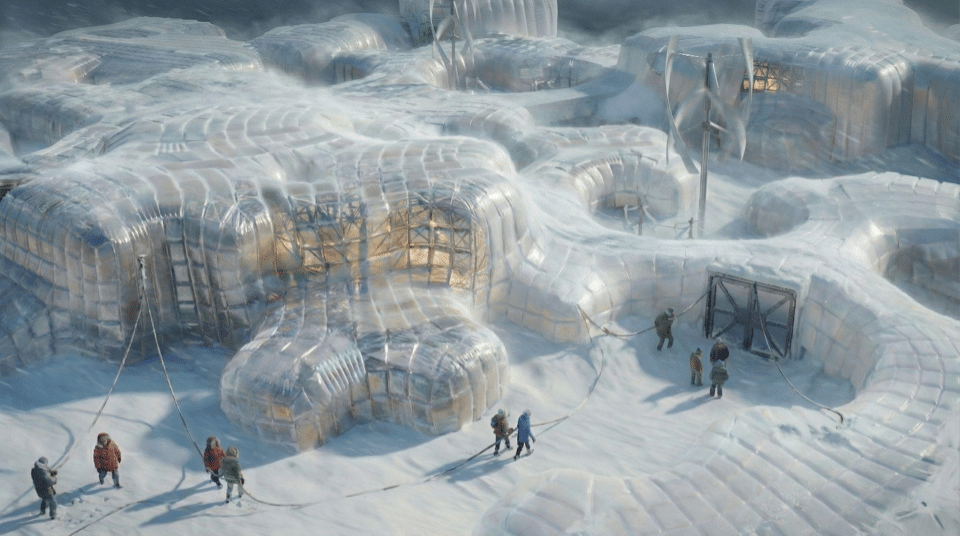
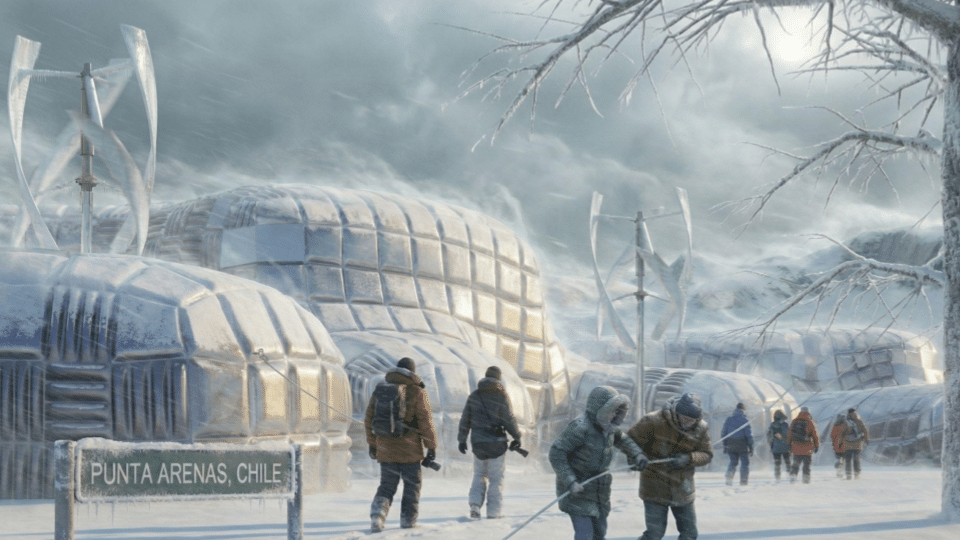
We explored a wind-adaptive research & education hub with expedition basecamp using WASP in Punta Arenas, Chile, one of the southernmost cities in the world; defined by a cold, humid, and relentlessly windy subpolar climate.
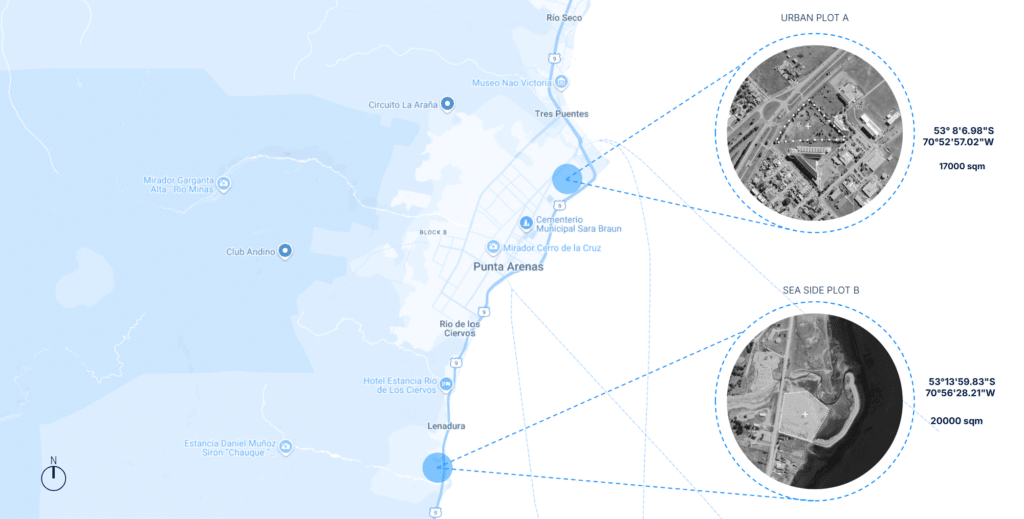
Plots
Its position provides immediate access to navigation routes, making it an ideal departure point for expeditions toward nearby islands or the arctic South. Exposure and visibility define this setting: it is less about shelter and more about endurance, demanding materials and forms that can stand up to the changing climate and the force of the coast.
Located along the Magellan Strait, the seafront plot is open, windy, and constantly shaped by salt and moisture. It presents harsher conditions but a direct relationship with the sea and its ecosystems.
Context
Rather than resisting these conditions, the project begins by accepting wind as an omnipresent force. Inspired by vernacular geometries and the idea of wind as an envelope rather than an adversary, the proposal imagines a building that is shaped, organized, and activated by its environment. Programmatically, the hub is conceived as a research laboratory linked to the local university, reinforcing Punta Arenas’ role as a strategic outpost to Antarctica and Patagonia while contributing to the city’s social and academic infrastructure.
Vernacular Inspiration & Homage
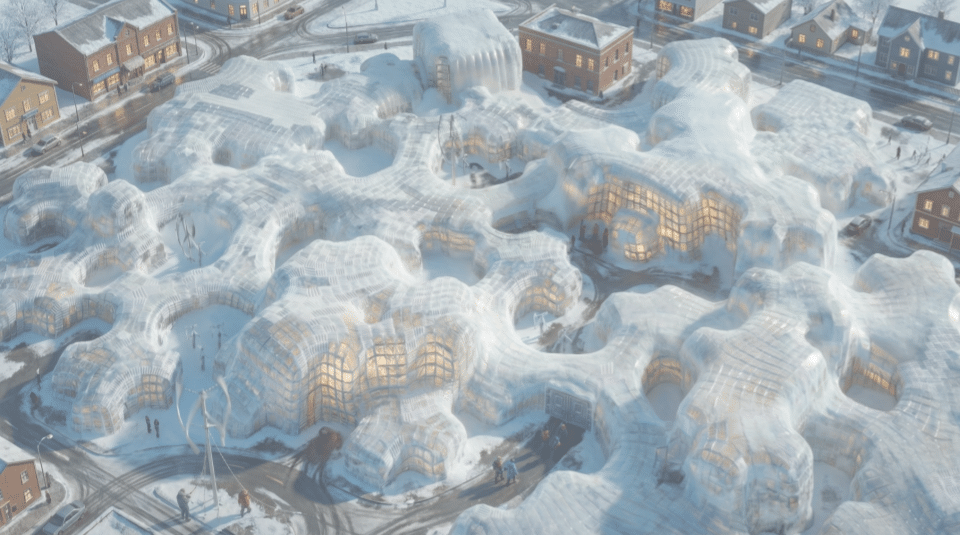
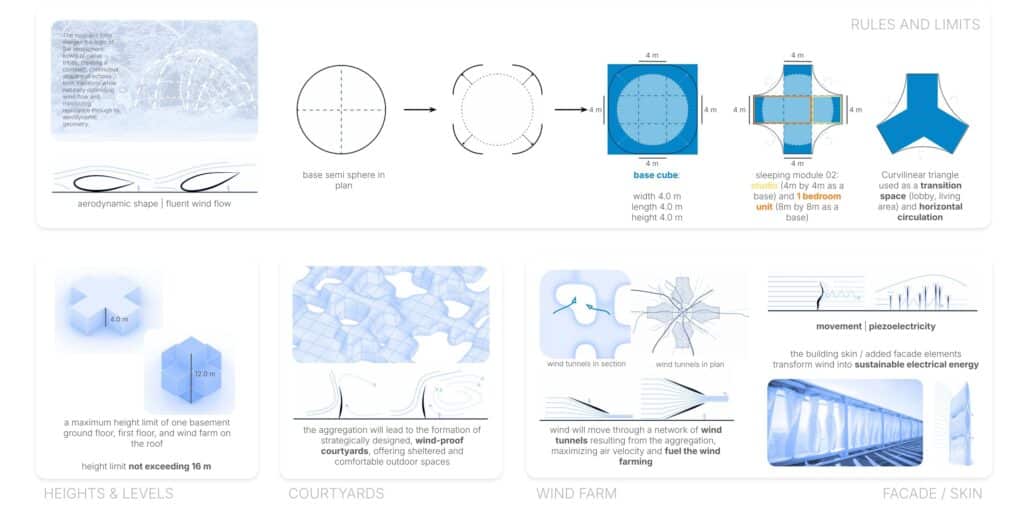
The project’s core typology draws from the kawis—the huts of native tribes in the region—whose aerodynamic forms are naturally adapted to extreme winds. This geometry is reinterpreted and simplified into a modular system of 4×4×4-meter units, enabling seamless interconnection while minimizing wind resistance. The aggregation respects a strict height limit of 16 meters, generates wind-protected courtyards within the massing, and creates tunnel effects that accelerate airflow—an opportunity later exploited for energy production.
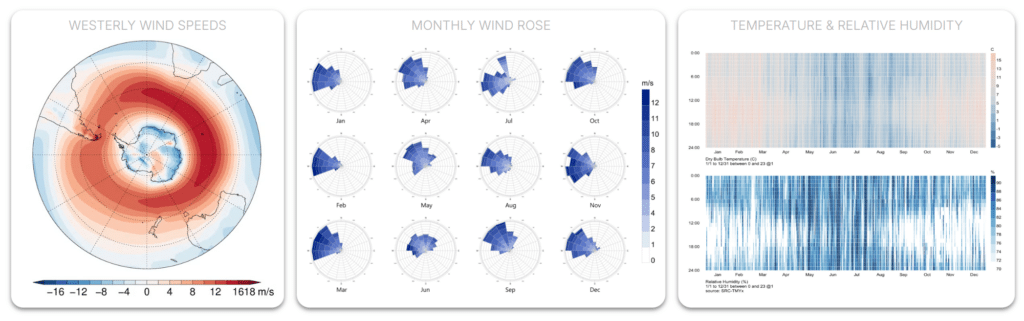
Climate in Punta Arenas
Climatic analysis quickly confirmed the severity of the site: persistent low temperatures, high humidity, and strong winds throughout the year. These findings pushed the design toward erratic, non-linear, wind-responsive forms, leading to the adoption of WASP as the core aggregation system. Its rule-based logic allowed the architecture to grow as a system rather than a fixed object.
Computational Logic
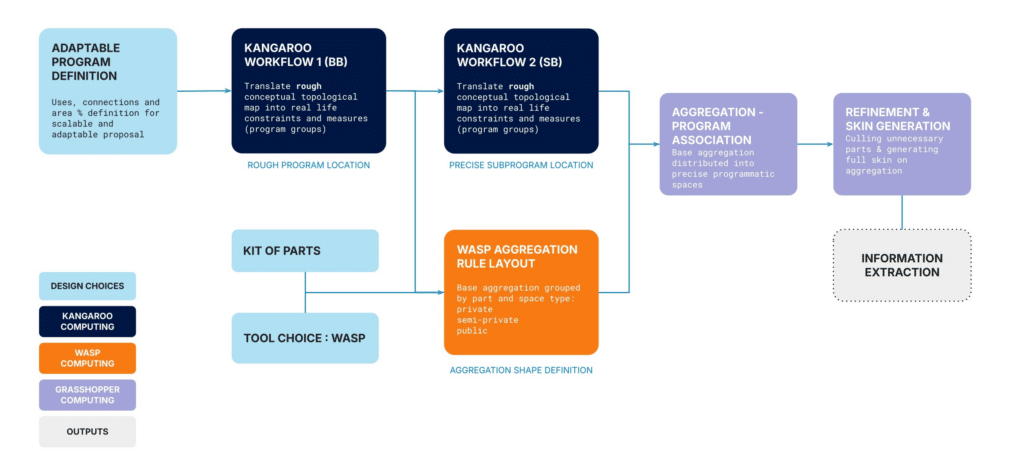
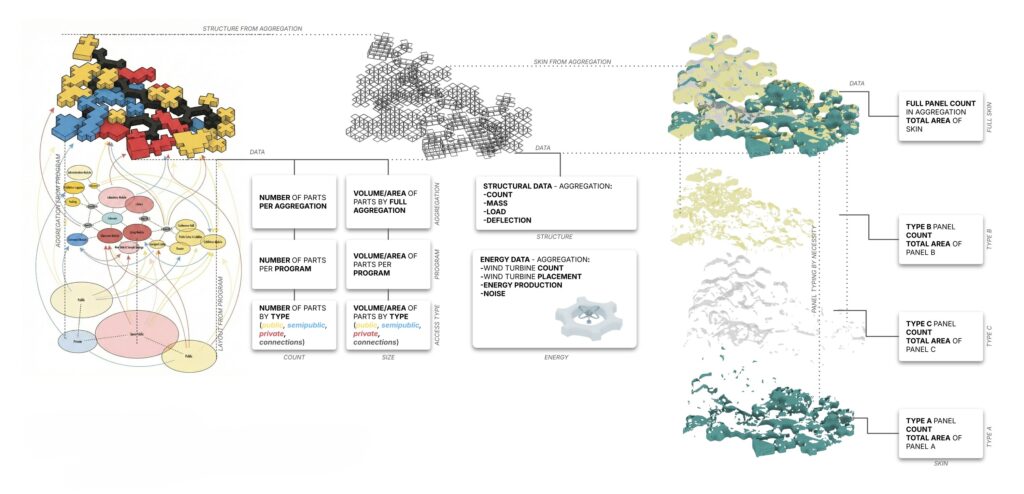
At the heart of the project lies a continuous computational workflow. An adaptable program definition is first processed through two sequential Kangaroo solvers. The first organizes programmatic relationships through physics-based logic, while the second refines them into precise spatial arrangements. These results are then fed into WASP for aggregation, and finally wrapped in a responsive skin informed by environmental performance. The process operates as a feedback loop—evaluation and optimization informing every step.
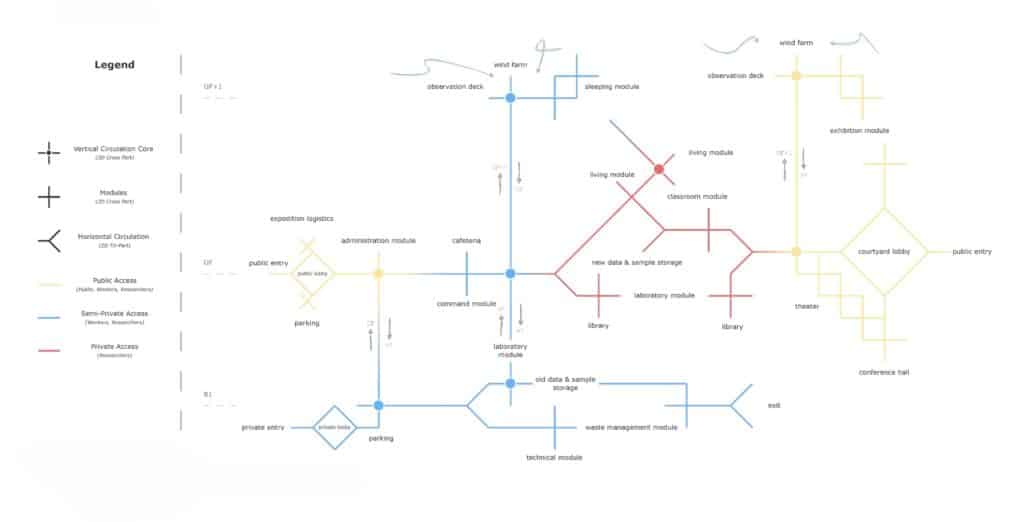
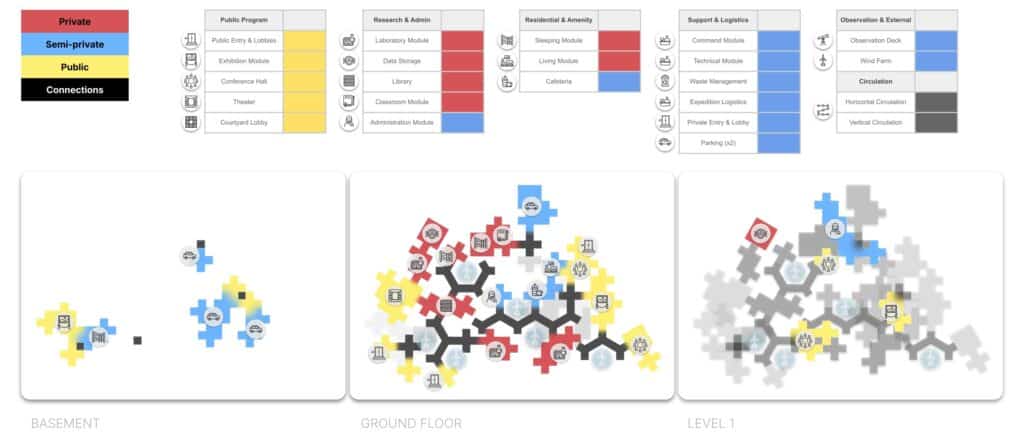
Managing programmatic complexity was critical. The system distinguishes between public spaces, researcher-only areas, and sensitive laboratory environments, defining adjacency rules that ensure both accessibility and protection. Fixed elements such as vertical circulation cores anchor the system, while flexible modules—libraries, dormitories, and shared spaces—can shift and scale depending on user demand. Whether the building hosts 50 users or 1,000, the logic remains consistent.
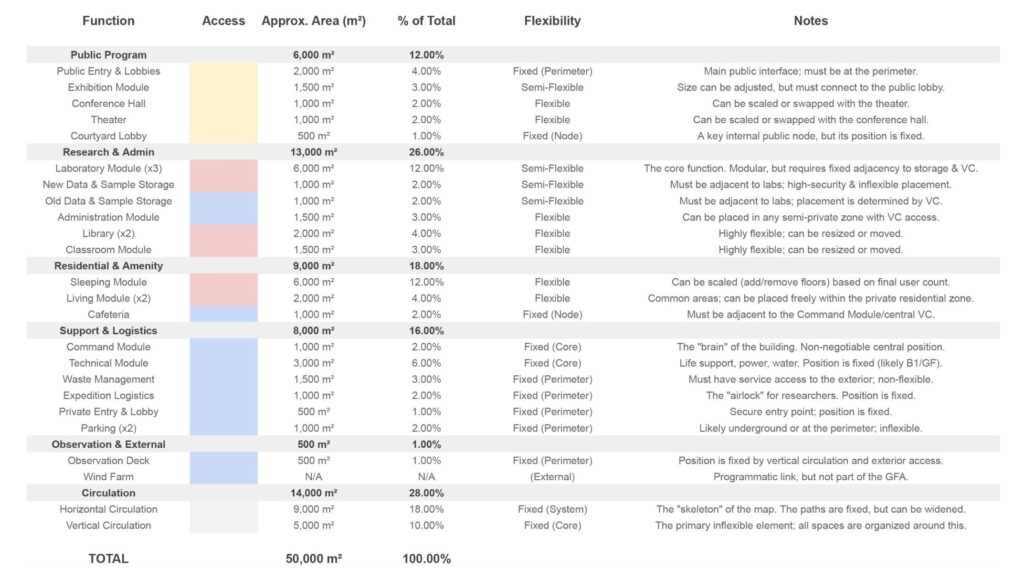
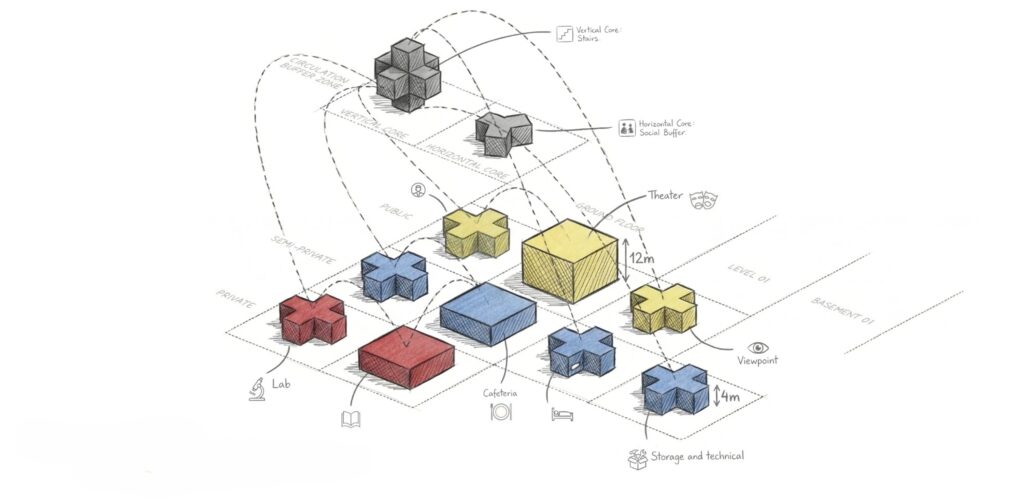
This logic is translated into a family of geometric parts: cross-shaped modules for general functions, reinforced cores for vertical circulation, triangular elements as buffers and connectors, and larger volumes for theaters and laboratories. The relationships between these parts are carefully scripted within WASP, allowing controlled yet adaptable growth.


Aggregation & Iteration
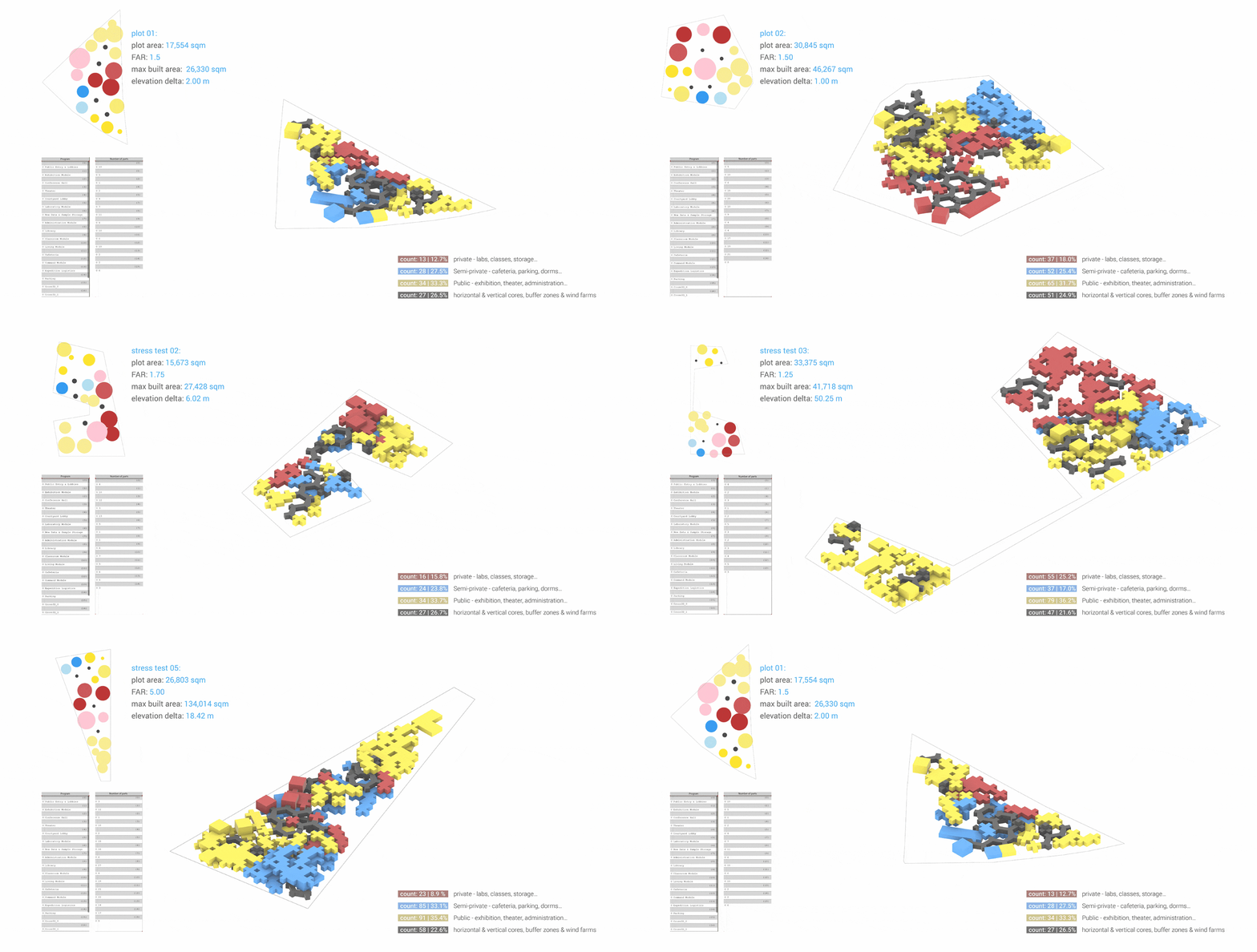
Aggregation begins with wind analysis, which defines the dominant environmental field. Height restrictions are applied to improve structural stability, and the dual “big bubble / small bubble” logic ensures that programmatic intent survives the transition from abstract topology to physical form. One of the strengths of this system is its transparency: at any moment, the exact number of parts is known. For example, a given iteration may contain 23 private laboratory modules and 28 public modules, automatically balanced by the system.

The workflow was stress-tested across multiple site configurations. Changes in plot geometry or density requirements did not break the logic; instead, they produced consistent distributions of public, semi-private, and private spaces, demonstrating the robustness of the approach.
Structural Behavior
Structurally, the building is grounded in local timber, reducing environmental impact while reinforcing ties to regional vernacular architecture. Lateral loads from wind are resisted through shear walls and diagonal bracing that anchor the building from foundation to roof. Given the site’s seismic risk, horizontal movement is carefully managed through seismic isolators. A secondary structural layer—the skin—adds cushioning and insulation, enhancing both comfort and performance.
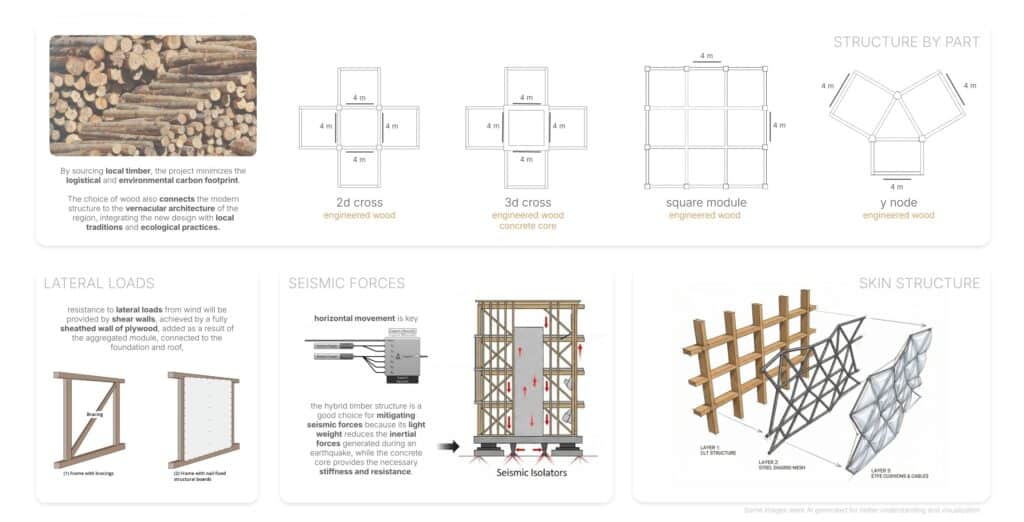
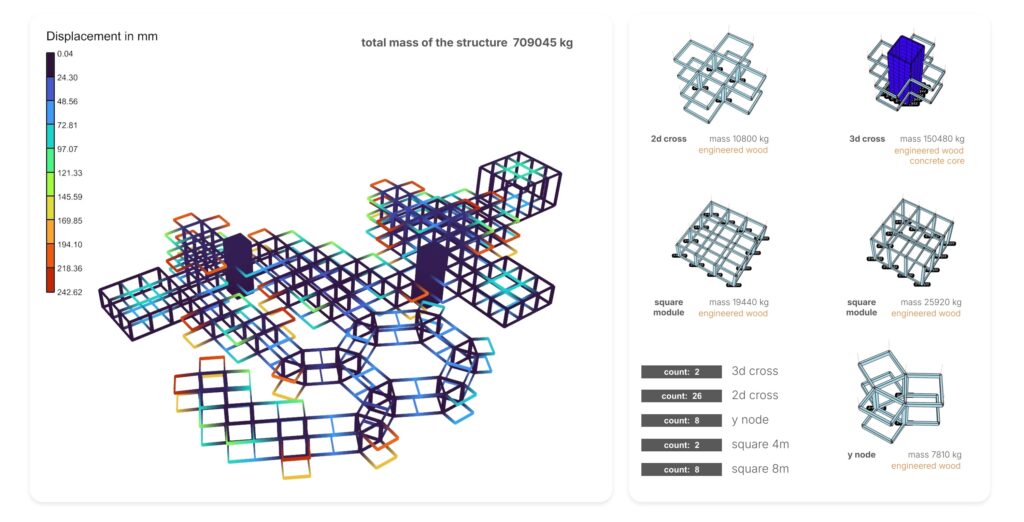
Structural behavior was analyzed using Alpaca4D, with displacement heat maps confirming stable performance under load. The hybrid system combines engineered wood for two-dimensional cross modules with concrete composites for three-dimensional cores, resulting in an overall mass of approximately 709 tons.
Environmental Performance
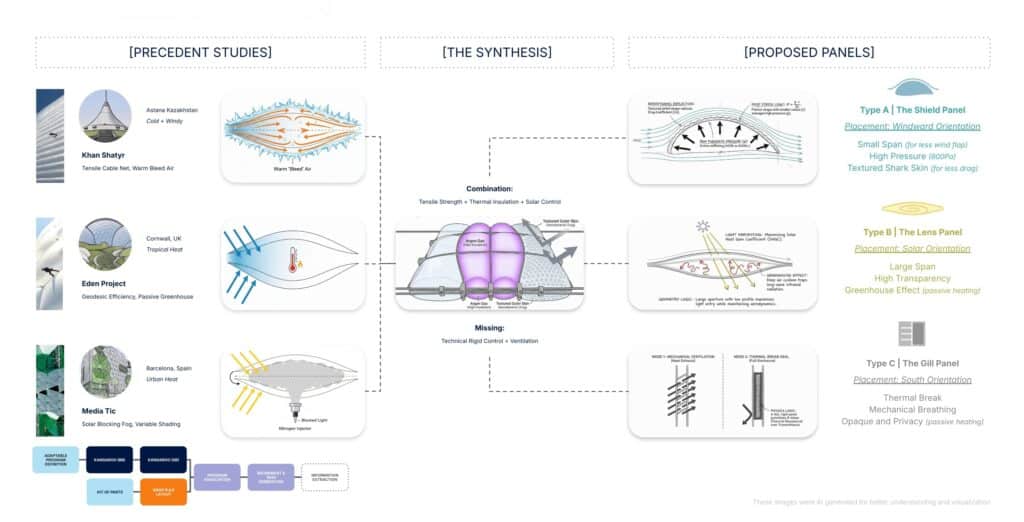
Environmental performance is further refined through a three-part “kit of panels” applied across the facade. Type A panels, or Shields, respond to high wind pressure using hoop-stress logic to minimize flapping. Type B panels, or Lenses, appear in calmer zones, maximizing solar gain through argon-filled cushions that act as passive heaters. Type C panels, or Gills, serve mechanical zones, allowing the building envelope to breathe. Notably, this system is reversible: swapping argon for nitrogen fog could instantly shift performance from passive heating to passive cooling.
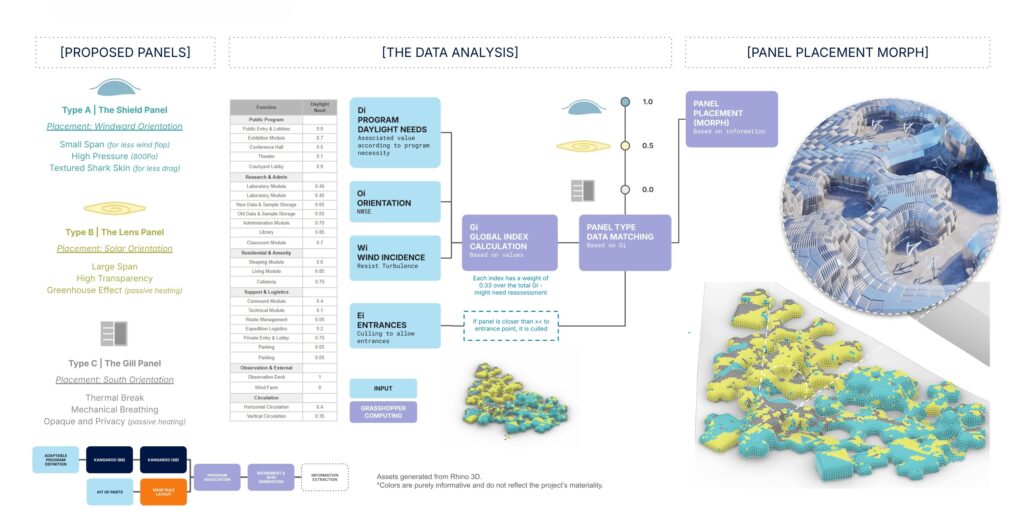
Panel distribution is handled by another computational layer—a Global Index algorithm that evaluates wind incidence, solar orientation, and daylight requirements. High wind triggers Shield panels, strong solar exposure generates Lenses, and entrances automatically carve openings in the skin. The facade becomes a direct, readable map of climatic forces.
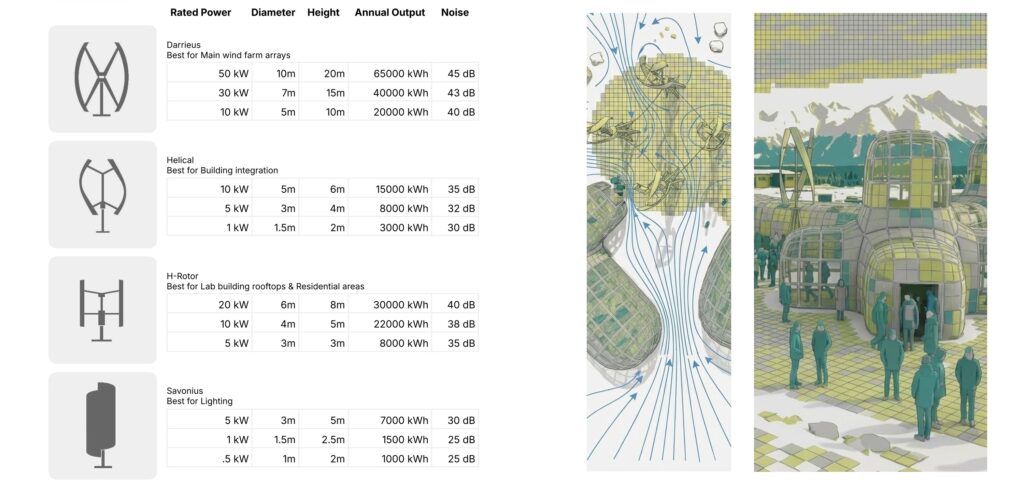
Wind, once a problem, ultimately becomes a resource. The aggregation naturally creates wind tunnels that accelerate airflow, and vertical turbines placed within these zones harvest energy from the site’s most abundant force.
Data Output
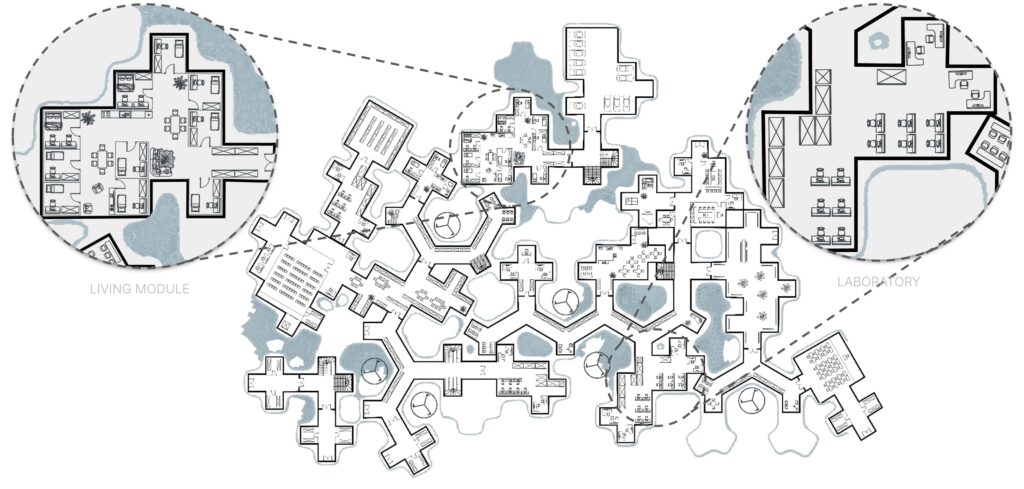
Throughout the project, information is continuously extracted and evaluated—from panel counts to energy production and massing data. This results in a highly legible spatial layout: public programs wrap around and shield sensitive research and residential areas, while a clear circulation spine connects all functions efficiently. At a finer scale, the aggregated “pixels” become fully inhabitable spaces, forming protected courtyards that offer rare outdoor refuge in a harsh climate.
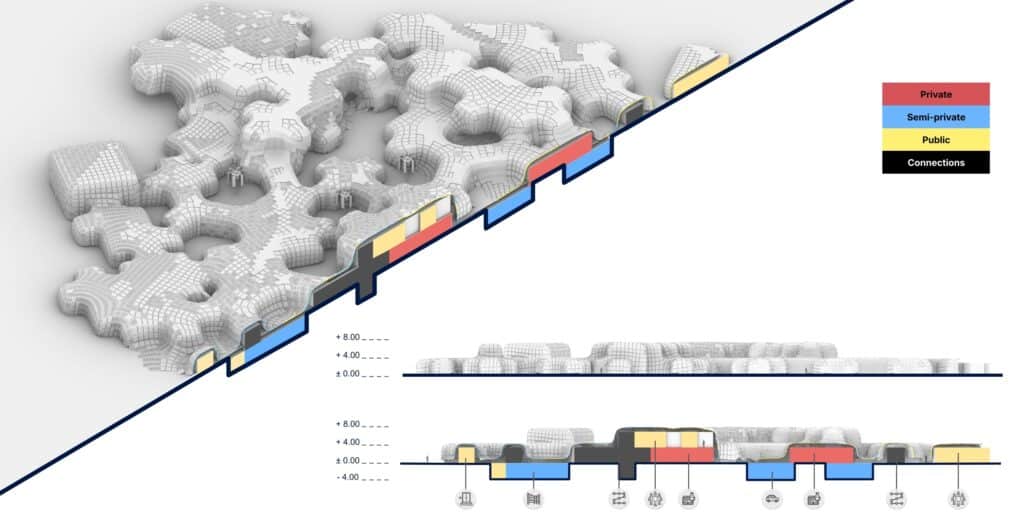
In section, the building remains grounded and compact, respecting height limits while using the skin as a buffer against cold winds. The final result is a research hub wrapped in an adaptive ETFE envelope, responsive to wind pressure and solar orientation.
Conclusion
Ultimately, this proposal for Punta Arenas is about embracing extremes. By combining computational logic, fluid dynamics, local materials, and adaptive skins, the project offers an architecture that does not merely survive its environment—but actively learns from and responds to one of the most challenging climates on Earth.