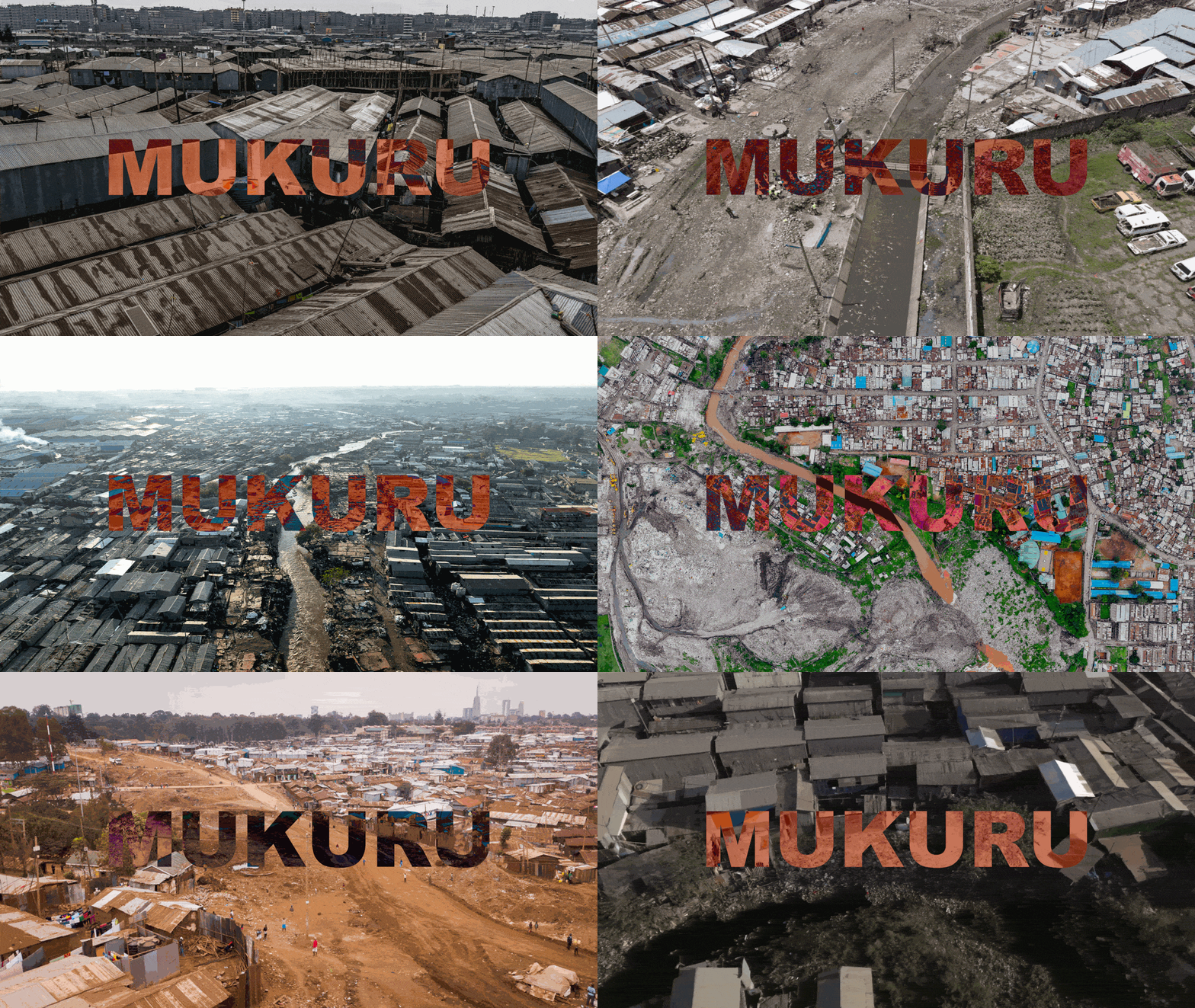
Mukuru, one of Nairobi’s largest informal settlements, is home to 400,000 residents drawn by industrial employment rather than choice of place. This transience produces a paradox: extraordinary urban density alongside persistent spatial neglect and displacement risk. The Right to Belong constructs a six-layer vulnerability framework — combining satellite data, street-level computer vision, mobility mapping, and sentiment analysis, to identify where environmental, infrastructural, and social failures converge most critically. From this analysis, a multiscalar design framework of nodes and connectors proposes adaptive interventions that are participatory, anti-displacement, and replicable.
Belonging, we argue, is not a sentiment — it is a spatial condition.
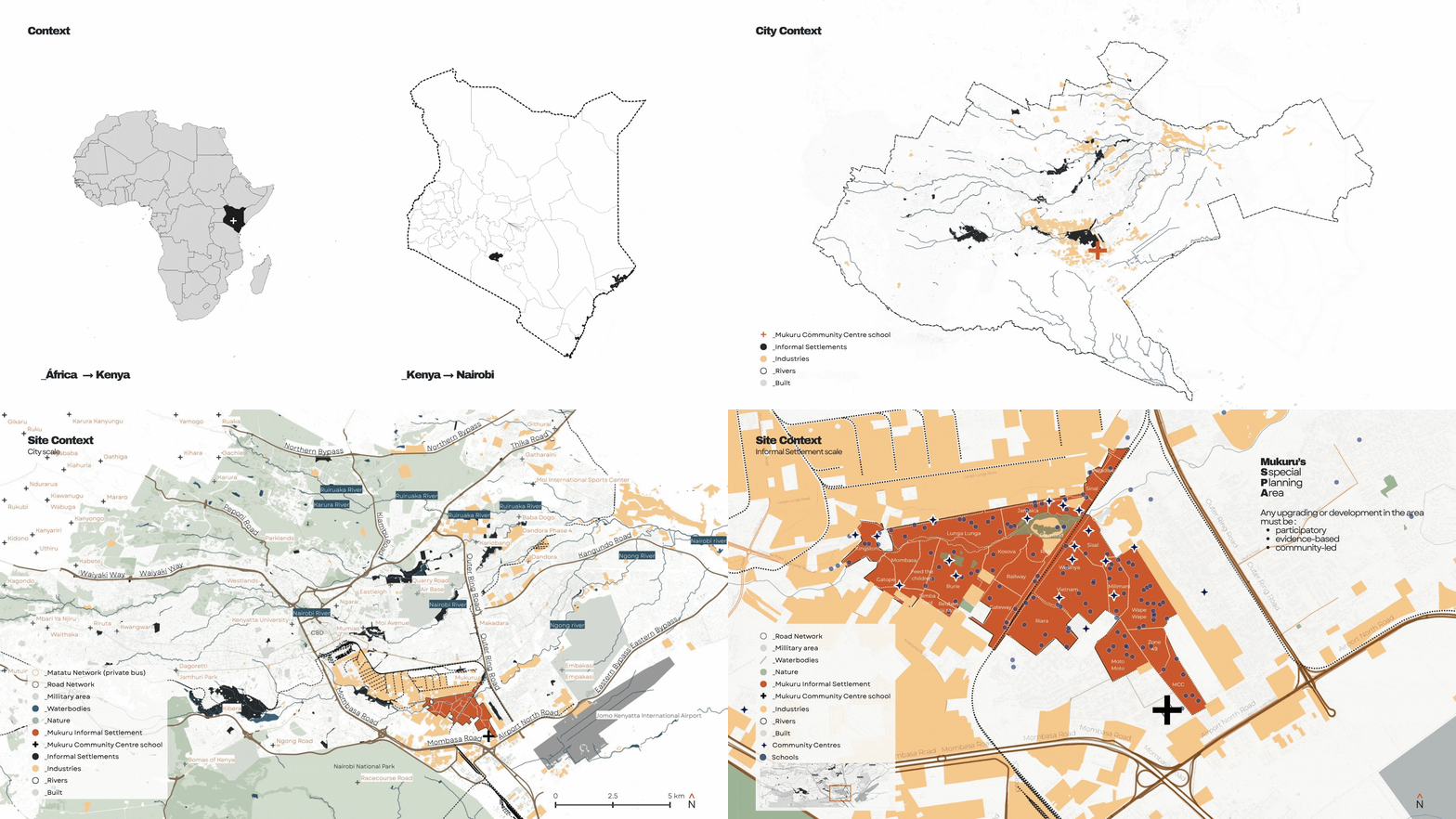
The Site
Located in the southeastern industrial corridor of Nairobi, Mukuru is one of the city’s most densely populated informal settlements, a landscape shaped by proximity to work, but defined by infrastructural absence.
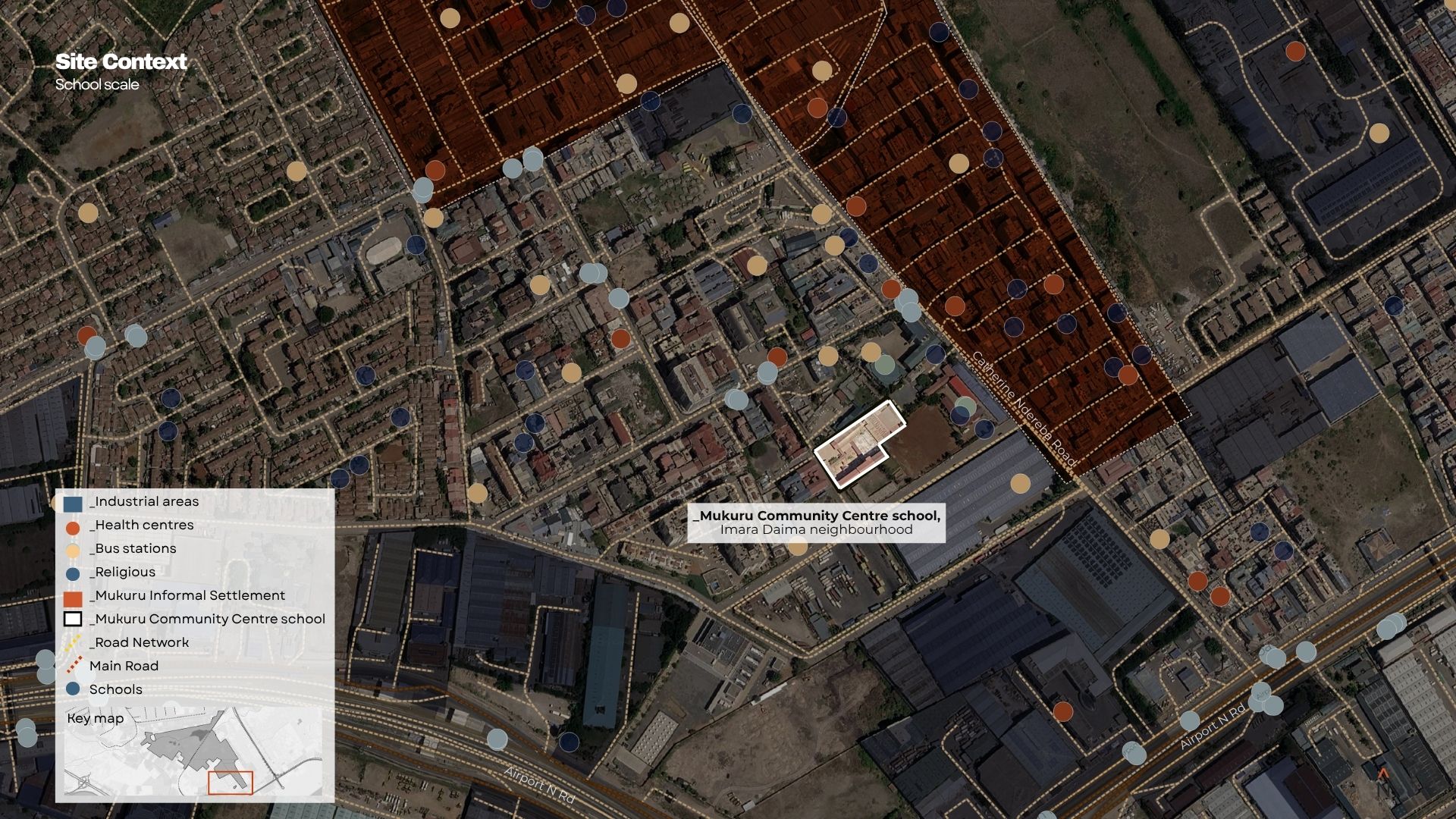
Within this context, the Mukuru Community Centre School sits at the edge of the settlement, positioned between formal road networks and the dense informal fabric. More than an educational facility, it operates as a critical social anchor — a place where learning, community life, and everyday negotiation of space intersect.
Its location reveals both opportunity and tension: accessibility to the city, yet deep disconnection from essential services and safe public space.
The People
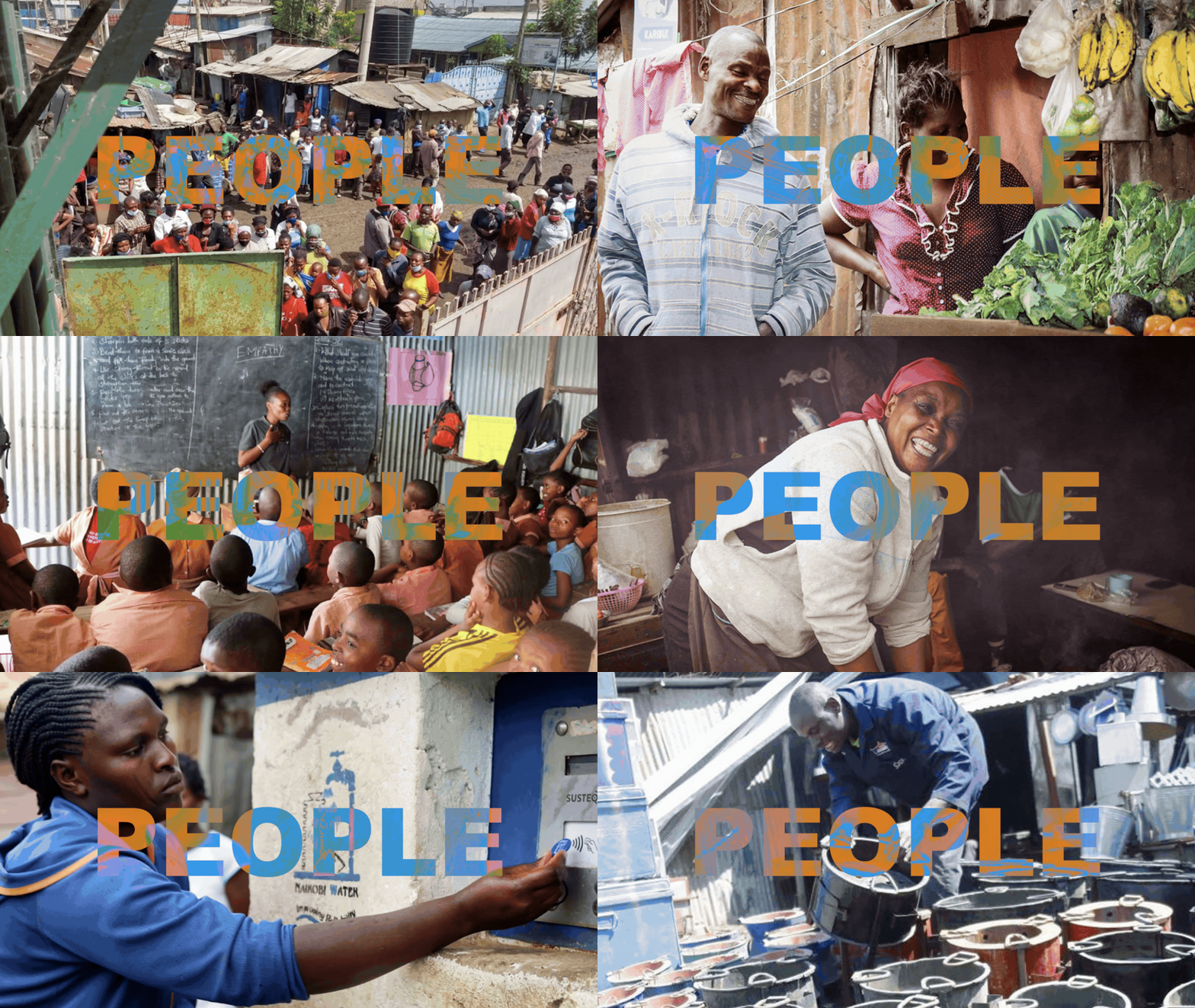
This brings us to the people of Mukuru, a community shaped not by permanence, but by movement.
Residents come in search of work and opportunity, forming a population that is constantly shifting, yet deeply embedded in the everyday life of the settlement.
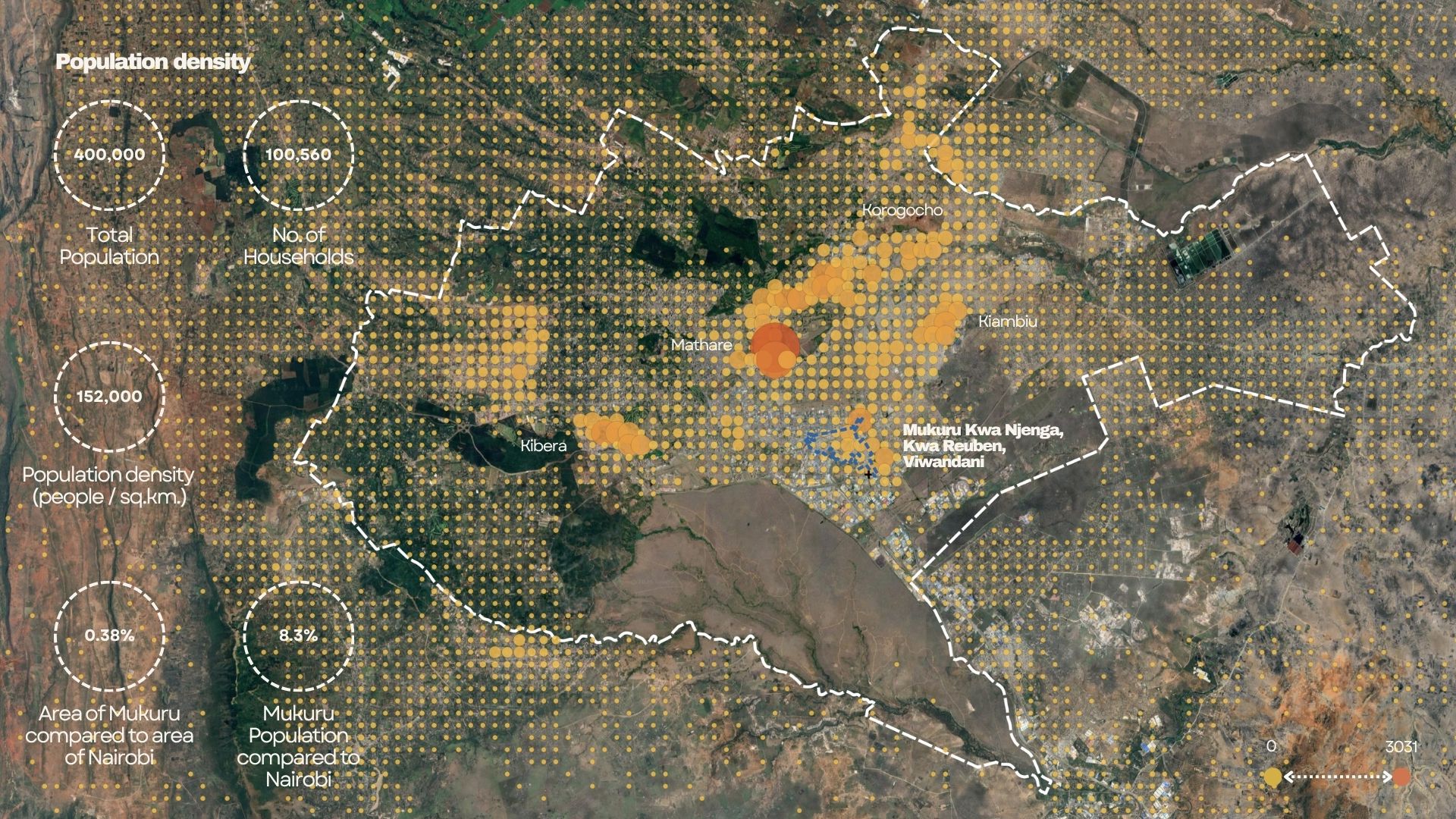
Mukuru is one of the most densely populated areas in Nairobi. It is also a remarkably young community, with an average age of 27. Around 67% of residents are working-age adults, 30% are children, and only a small percentage are elderly.
This demographic structure reflects a settlement driven by labour, mobility, and economic survival, rather than long-term stability.
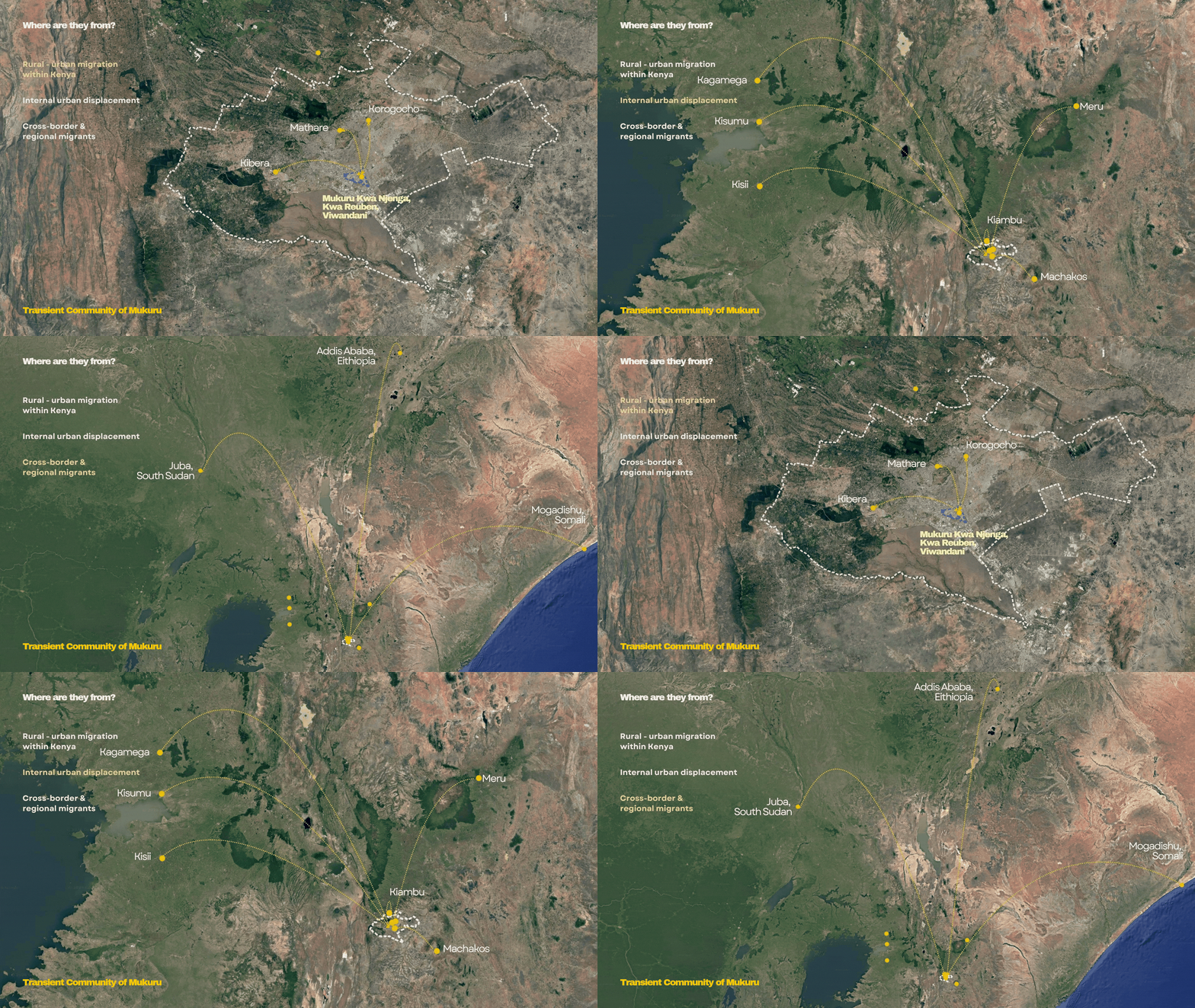
Mukuru was built by workers drawn to nearby industrial employment. Over time, temporary settlement became long-term residence yet without ownership, security, or formal recognition. Most residents are tenants, and despite living here for decades, remain without legal claim to land.
This condition of transience limits the formation of stable community systems and long-term investment in place.
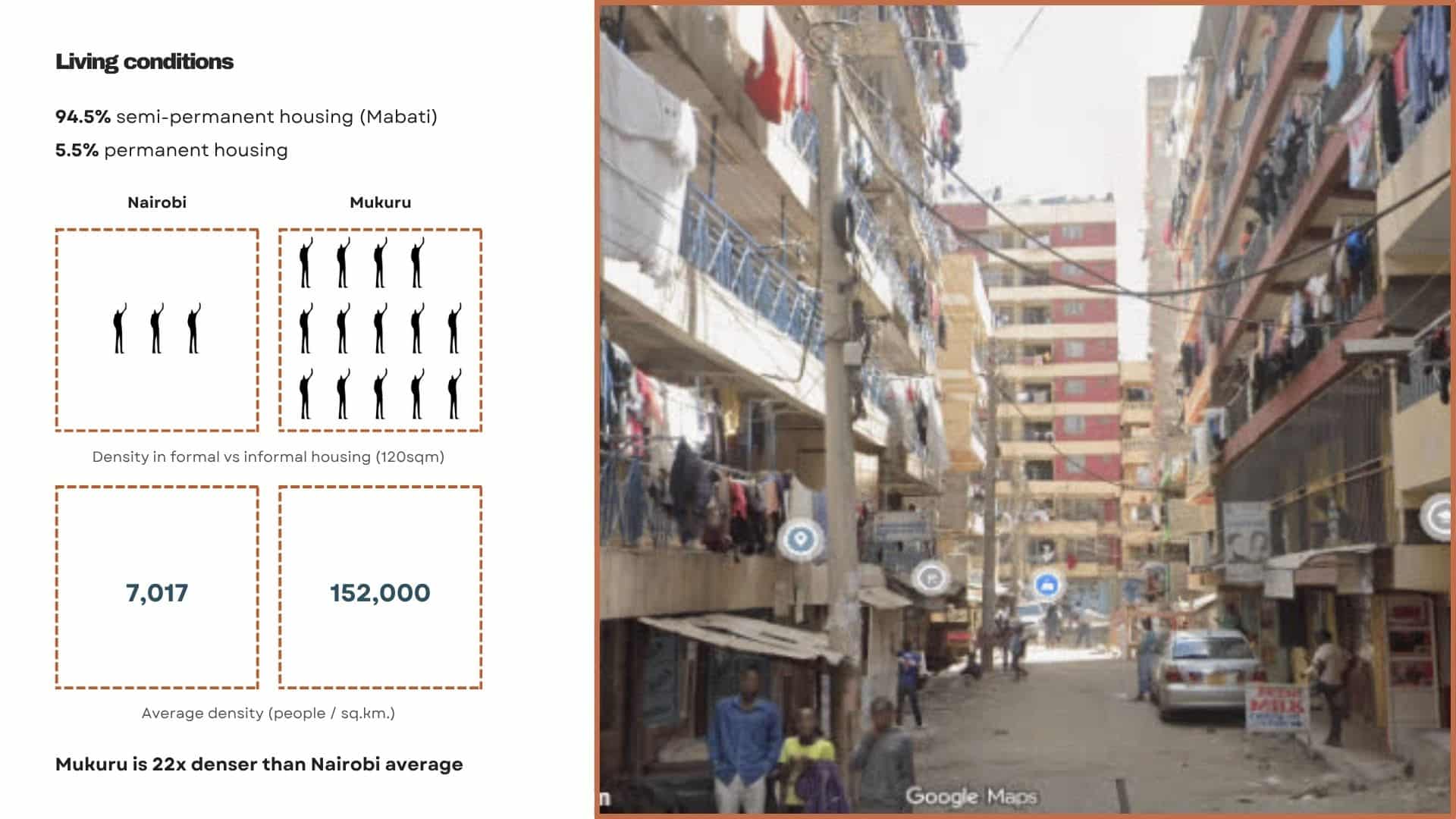
The contrast in living conditions reveals the intensity of spatial pressure in Mukuru. Compared to formal housing in Nairobi, the same area accommodates significantly more people, making the neighborhood nearly 22 times denser than the city average. With 94.5% of residents living in semi-permanent structures, the built environment reflects both adaptability and precarity.
The Tensions
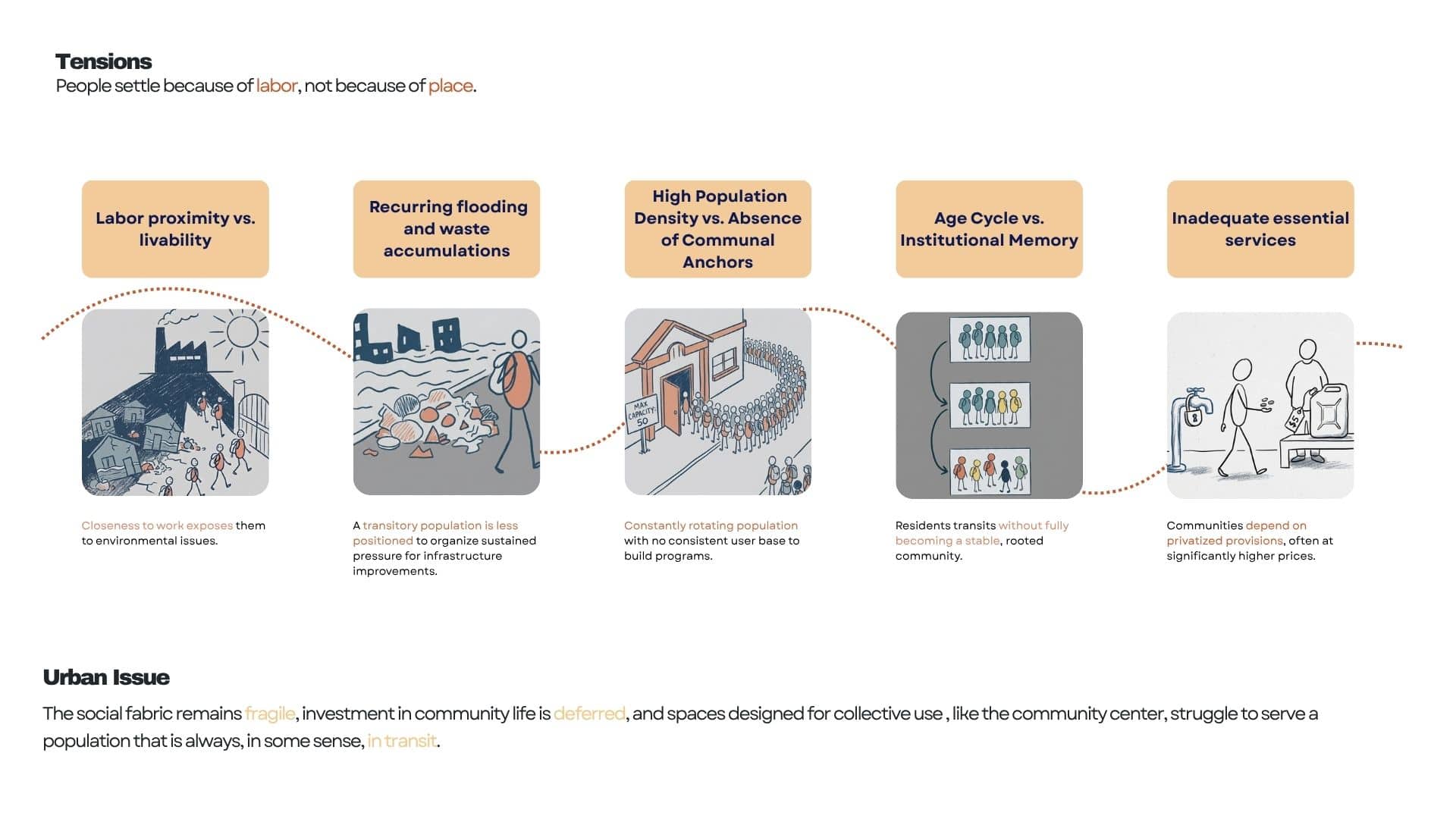
To understand Mukuru, it is essential to recognise the structural contradictions that define everyday life. Residents settle here due to proximity to industrial employment, yet this same proximity exposes them to pollution, noise, and flood-prone land. High population density exists alongside a lack of shared infrastructure, while limited access to essential services forces reliance on expensive informal systems.
These overlapping tensions weaken the social fabric and restrict the ability of communities to organise, invest, and sustain collective spaces.
The Research
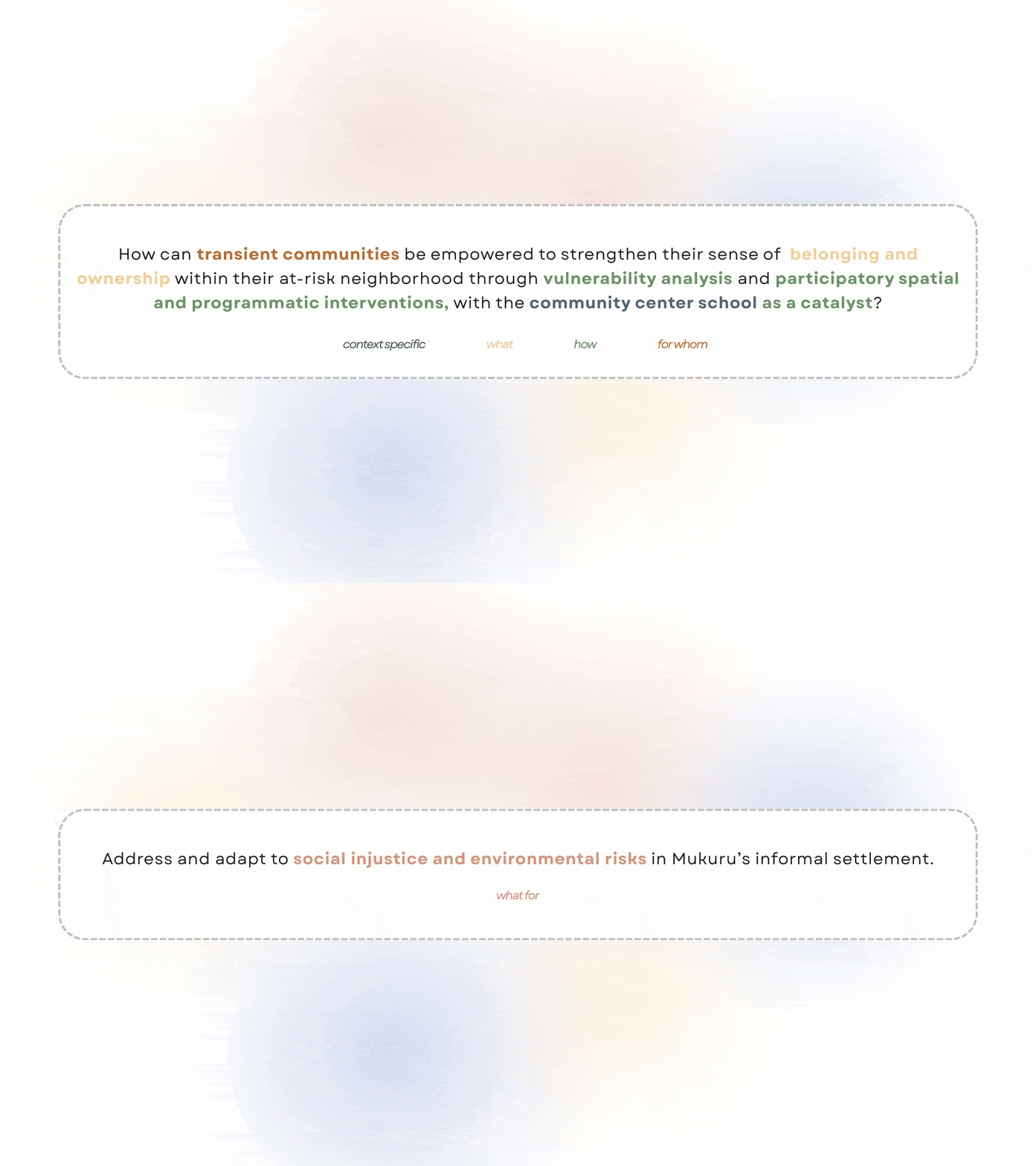
These conditions lead to our central question: How can transient communities be empowered to build a sense of belonging and ownership within at-risk environments?
The objective of this project is to address both social and environmental vulnerabilities in Mukuru through data-driven analysis and participatory spatial interventions, using the community center school as a catalyst for change.
The Research Methodology
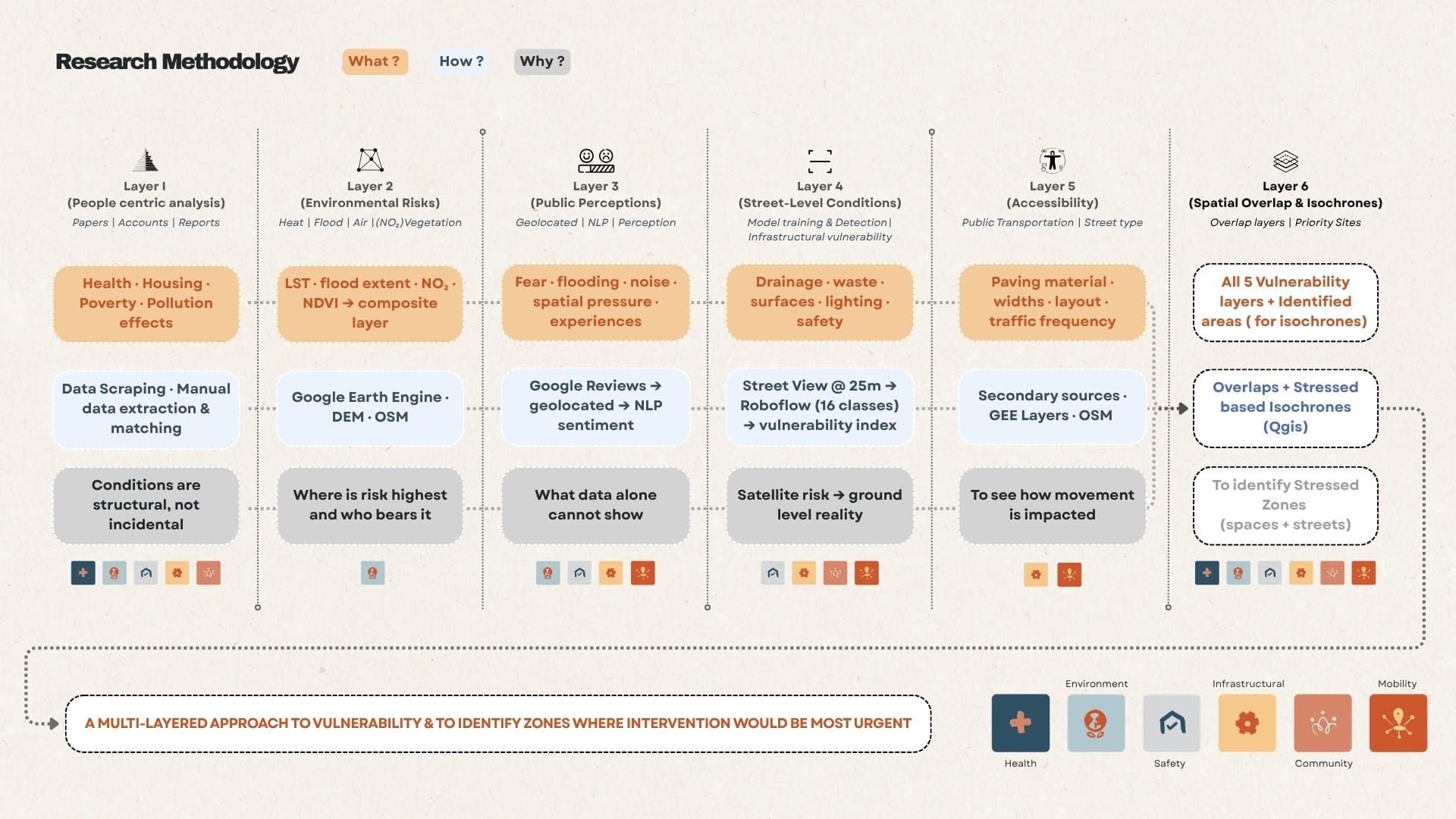
Our analysis is built through a multi-layered methodology, where each layer captures a different dimension of vulnerability. We begin with social conditions, identifying access to basic services and recognising that these inequalities are structural rather than accidental. Environmental layers map heat, flooding, air pollution, and vegetation loss using satellite data. At the street level, image-based analysis translates these risks into everyday spatial conditions. We then incorporate public perception through geolocated reviews and sentiment analysis, revealing experiences of fear, noise, and spatial pressure that data alone cannot capture.
Finally, all layers are combined into a spatial overlap, identifying areas where multiple vulnerabilities converge and where intervention becomes most urgent.
The Vulnerability Analysis Layers
Social + Environmental + Accessibility Analysis
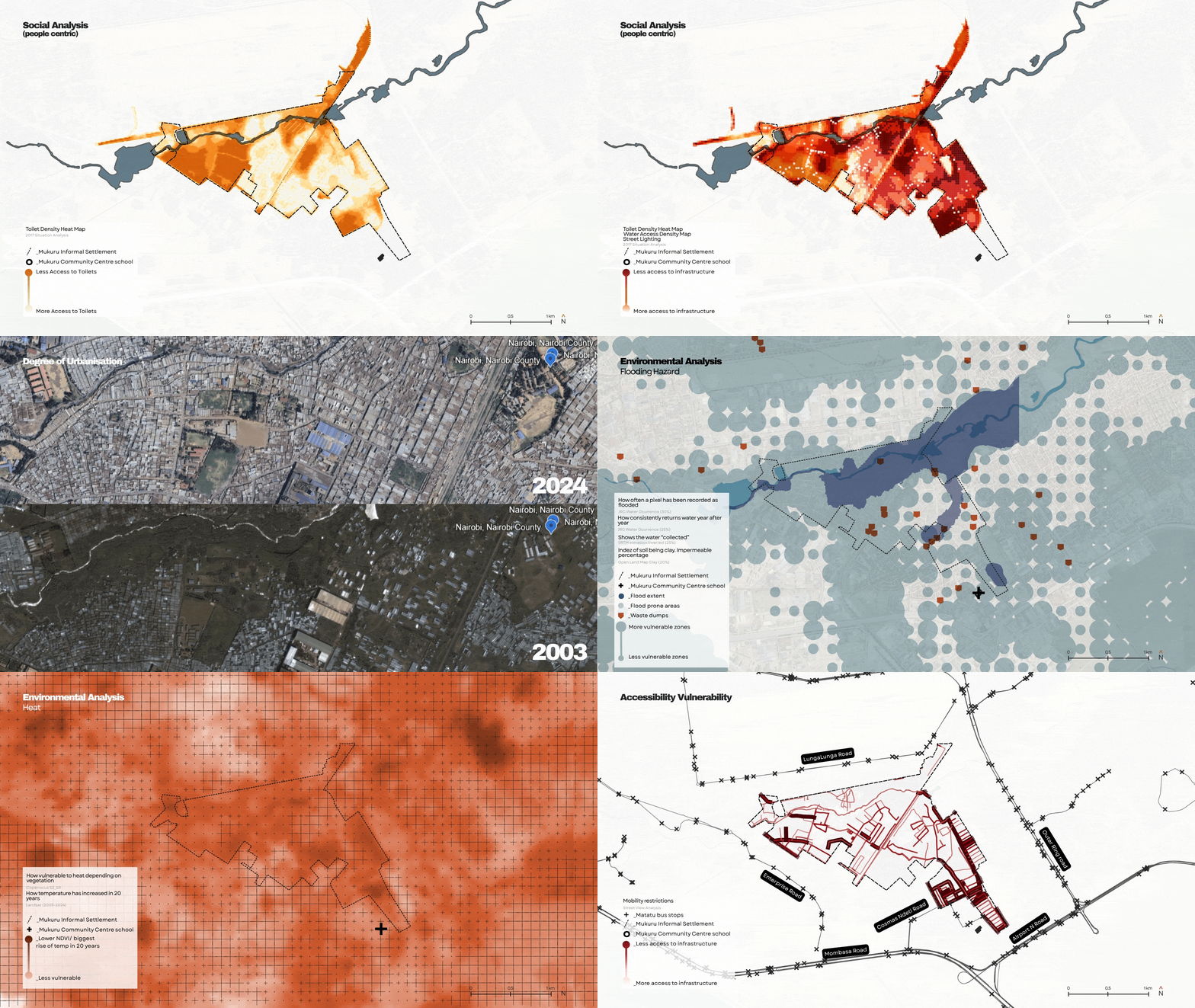
The social layer maps access to shared toilets, drinking water points, and street lighting infrastructure, revealing significant gaps in basic service provision across the settlement. The environmental layer integrates NO₂ concentration, flood risk modelling, and NDVI-based vegetation analysis, highlighting areas where industrial exposure, low-lying terrain, and lack of green cover intensify risk. Accessibility examines the relationship between street networks, transport systems, and movement constraints, identifying how limited internal connectivity and peripheral public transport networks restrict mobility.
Together, these layers demonstrate that vulnerability is spatially cumulative, where environmental exposure, infrastructural deficits, and mobility limitations overlap to produce concentrated zones of risk.
Public Perceptions Analysis
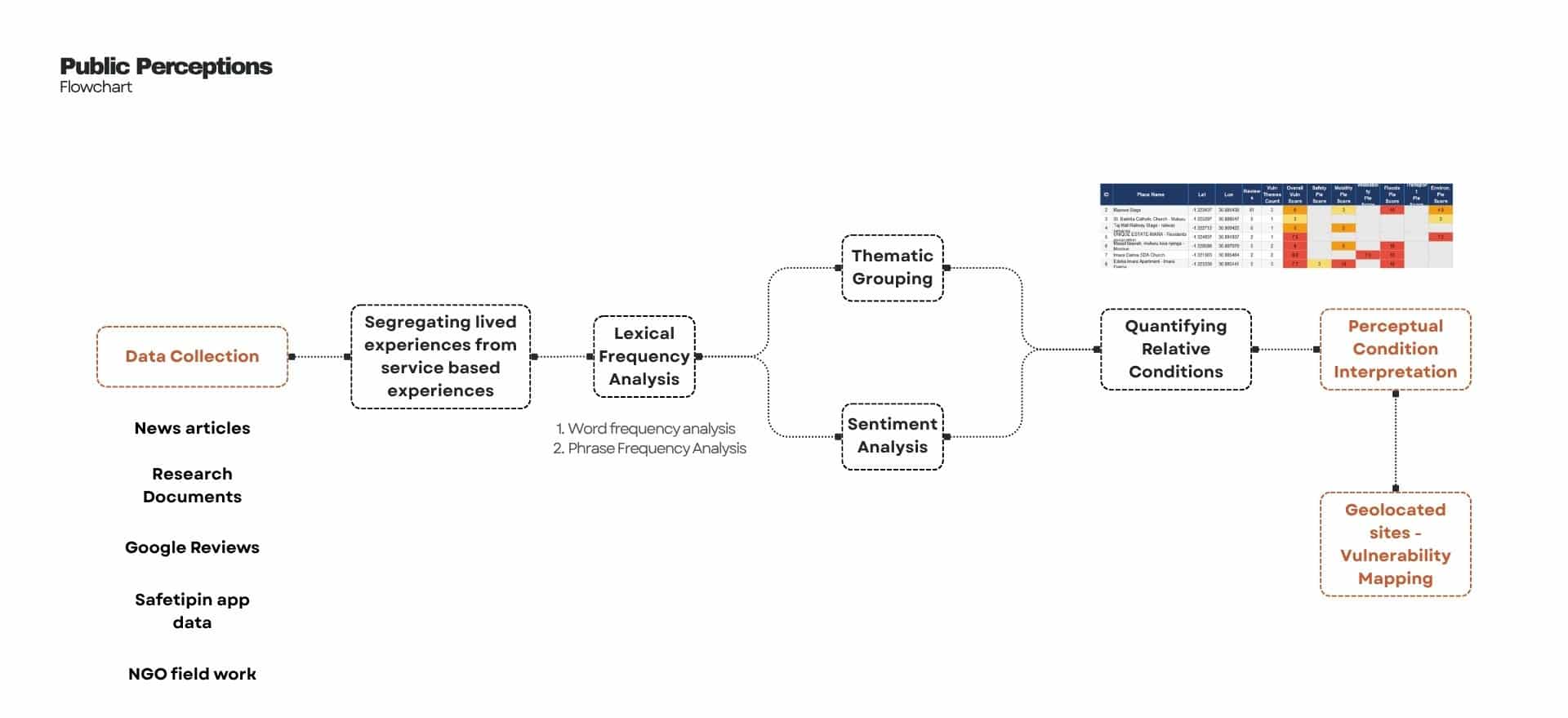
User-generated data was filtered to isolate lived experiences from service-based reviews, ensuring the analysis focused on spatial conditions rather than commercial feedback. Using sentiment analysis and lexical frequency extraction, recurring words and phrases were identified, quantified, and spatially mapped, translating qualitative perceptions into measurable indicators of vulnerability.
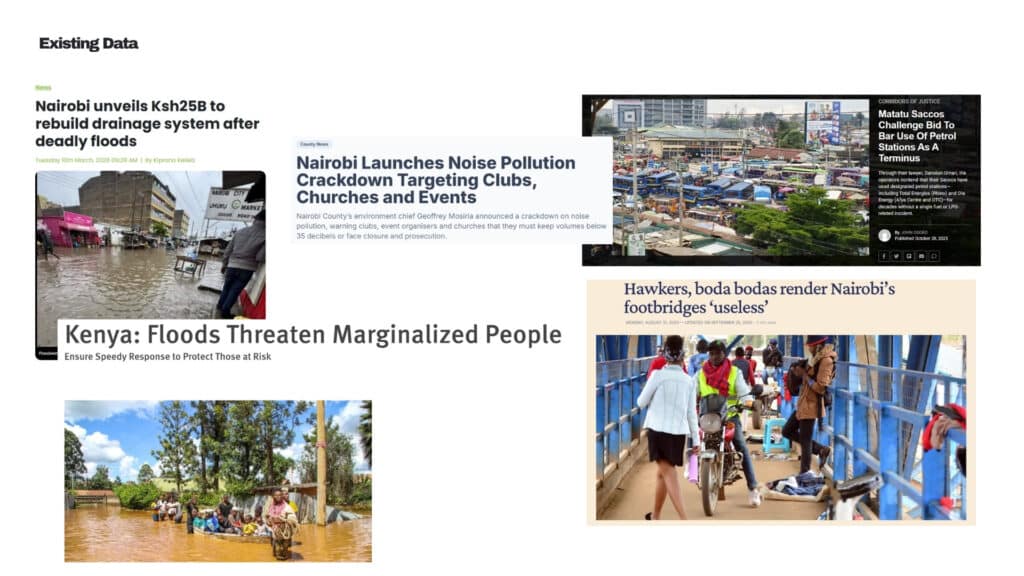
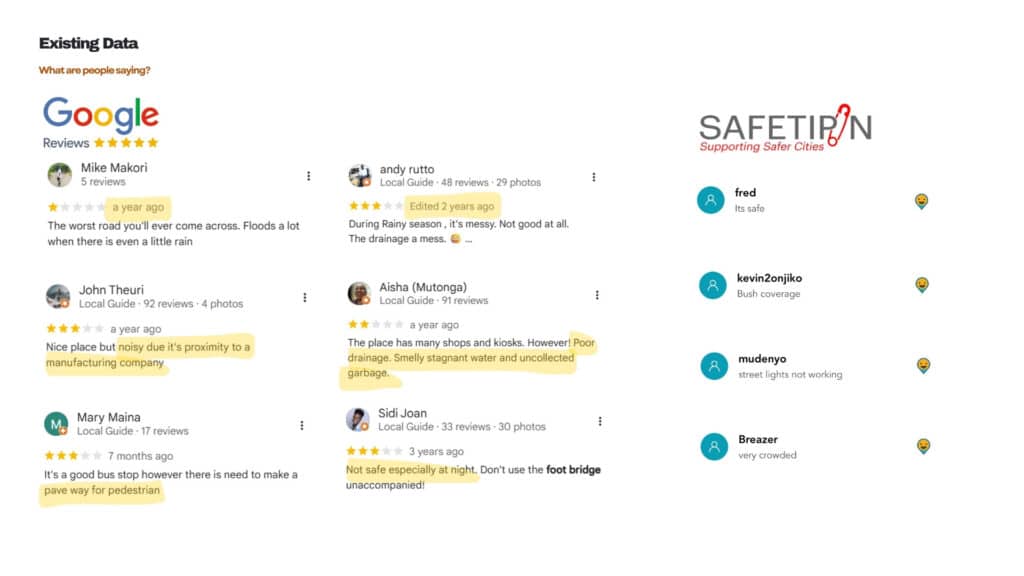
To complement spatial analysis, we incorporated secondary data sources including news reports, research documents, NGO fieldwork, and geolocated user-generated content. These sources highlight recurring urban challenges such as flooding, noise pollution, unsafe pedestrian conditions, and inadequate drainage — providing qualitative context to the mapped environmental and infrastructural risks.
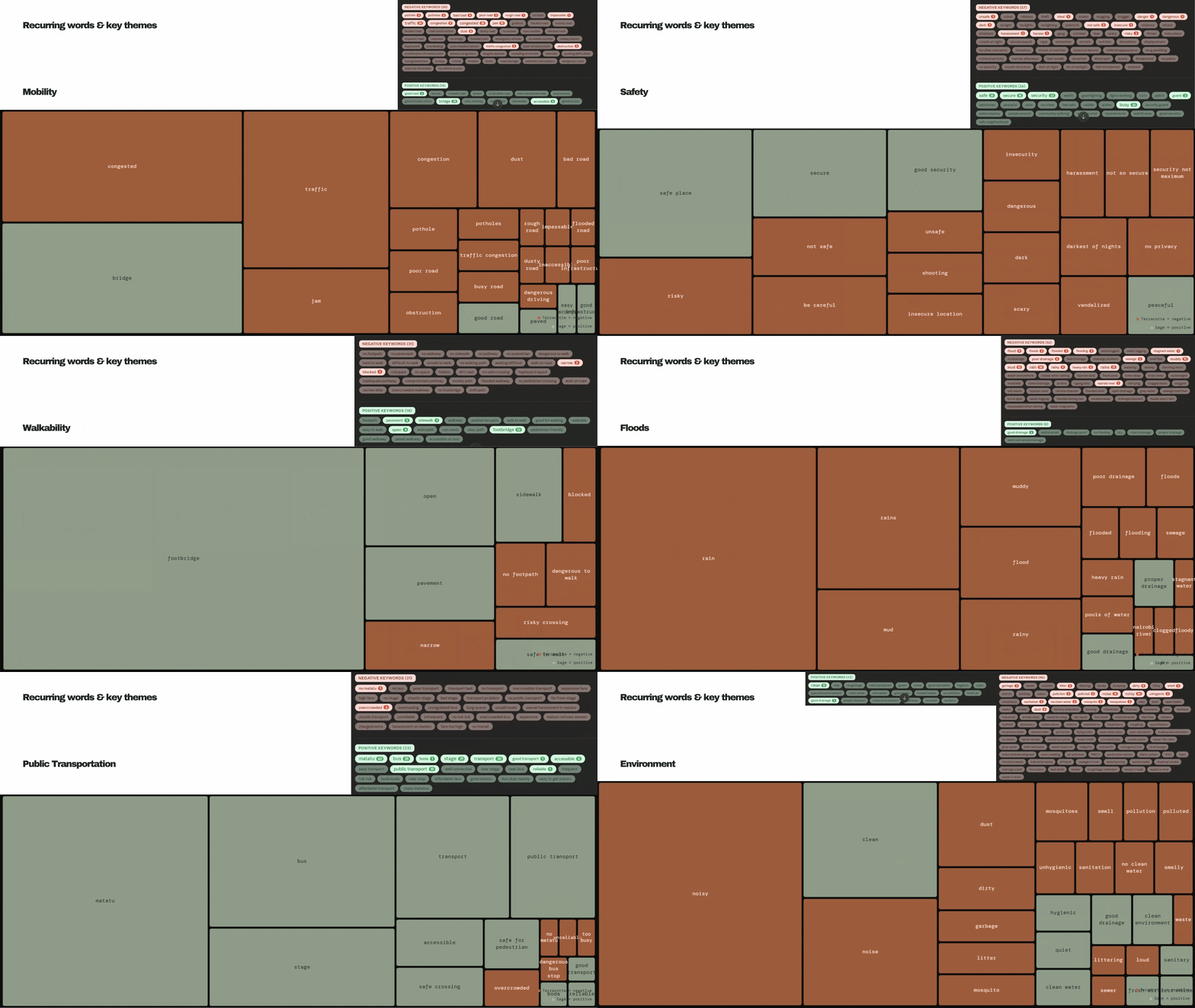
The thematic analysis reveals six dominant experiential dimensions: mobility, safety, walkability, flooding, public transport, and environmental conditions. Flooding emerges as the most persistent and negatively perceived issue, followed by noise, poor sanitation, and unsafe pedestrian environments.
While transport access is widely available, it is often described as overcrowded and unreliable, and walkability remains constrained by narrow, obstructed, and poorly maintained pathways.
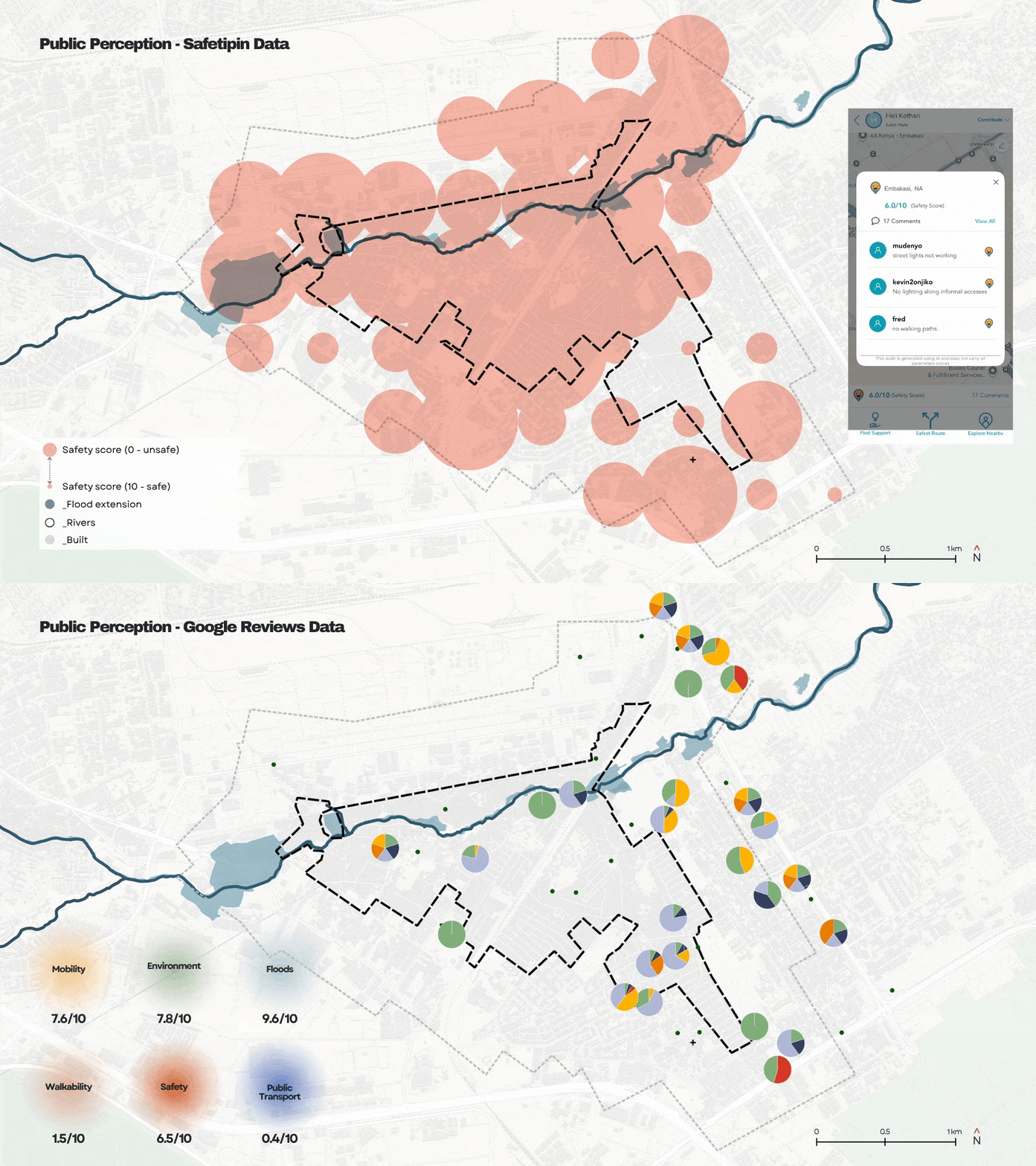
Geolocated perception data from Safetipin and Google Reviews was spatially mapped to identify areas of perceived insecurity and environmental stress. Consistently low safety scores and negative sentiment clusters correspond with poorly lit areas, flood-prone zones, and streets lacking basic infrastructure, reinforcing the spatial patterns identified in previous layers.

Synthesising this analysis, six recurring urban concerns define everyday life in Mukuru: safety, mobility, walkability, flooding and drainage, access to public transport, and environmental quality. These themes form a critical perceptual layer, capturing how residents experience and navigate vulnerability on a daily basis.
Street view conditions Analysis
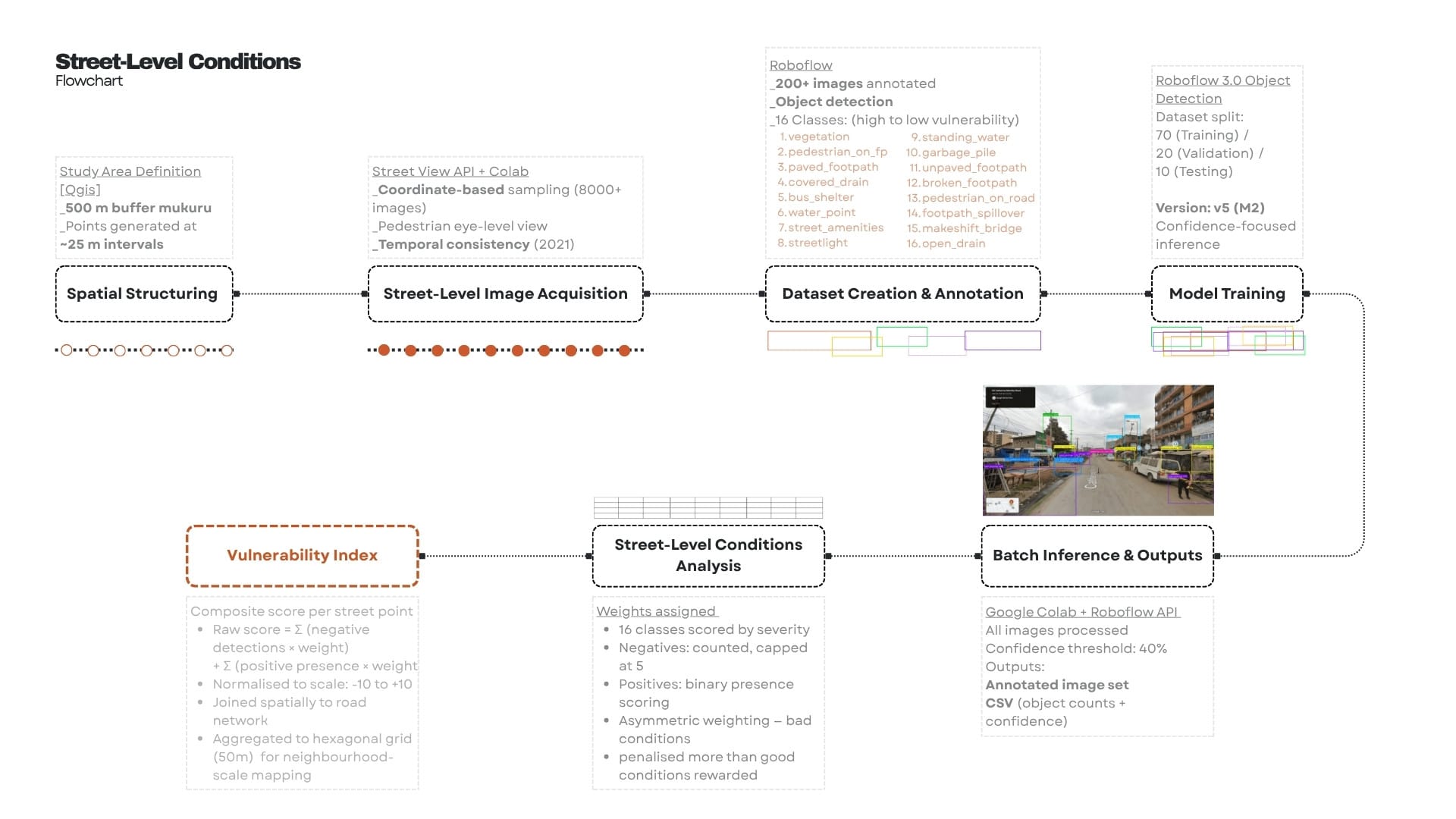
The street-level analysis follows a structured pipeline, beginning with spatial sampling across the study area and extraction of geolocated street view imagery at regular intervals. These images were annotated and used to train a computer vision model capable of detecting 16 indicators related to infrastructural and environmental vulnerability.
This process enables the translation of large-scale spatial data into fine-grained, ground-level insights.
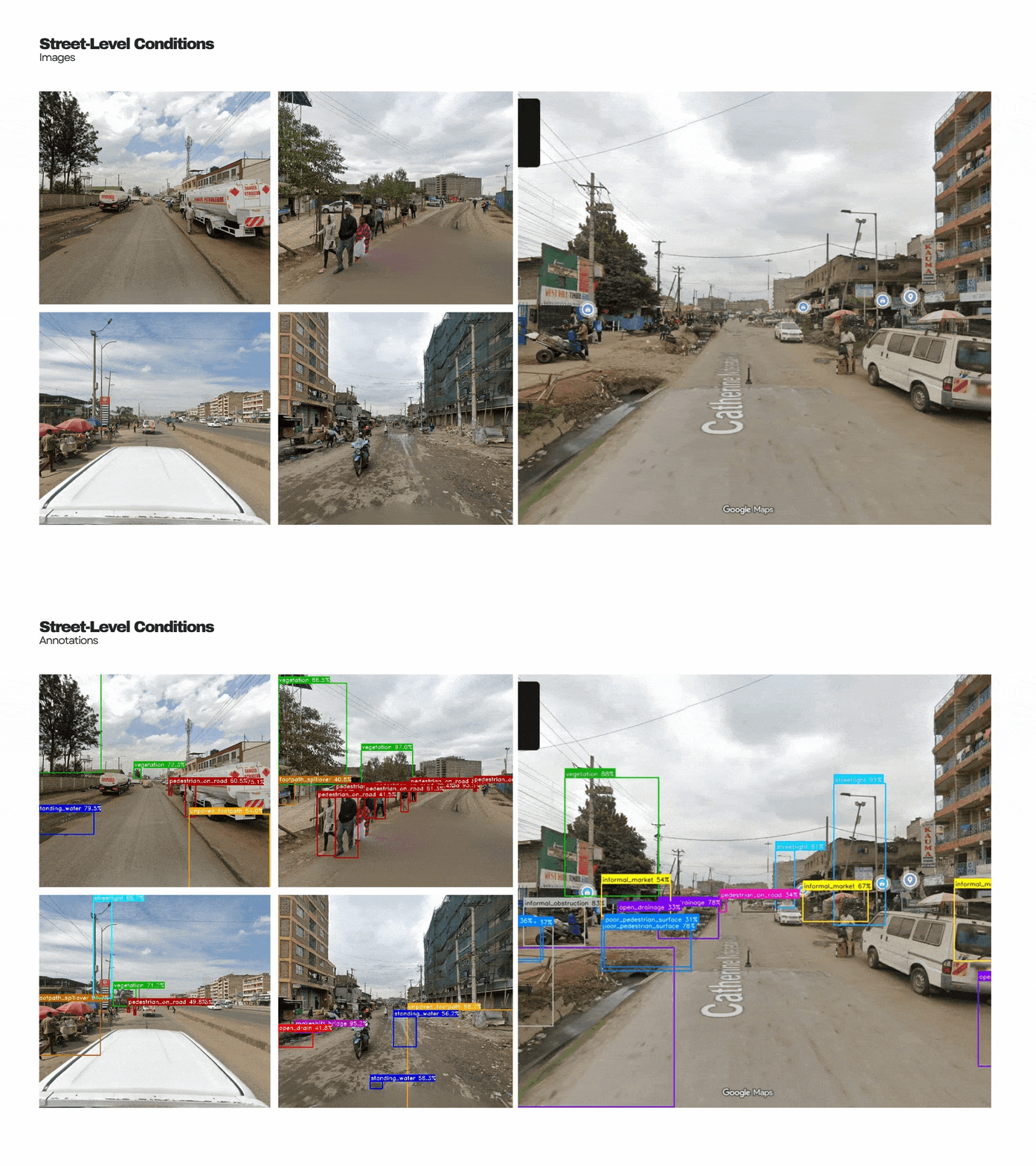
Street view images were systematically annotated to identify key elements such as footpaths, drainage conditions, waste accumulation, lighting, and pedestrian movement.
The annotated dataset forms the basis for model training, allowing consistent detection of both positive and negative infrastructural indicators across the settlement.
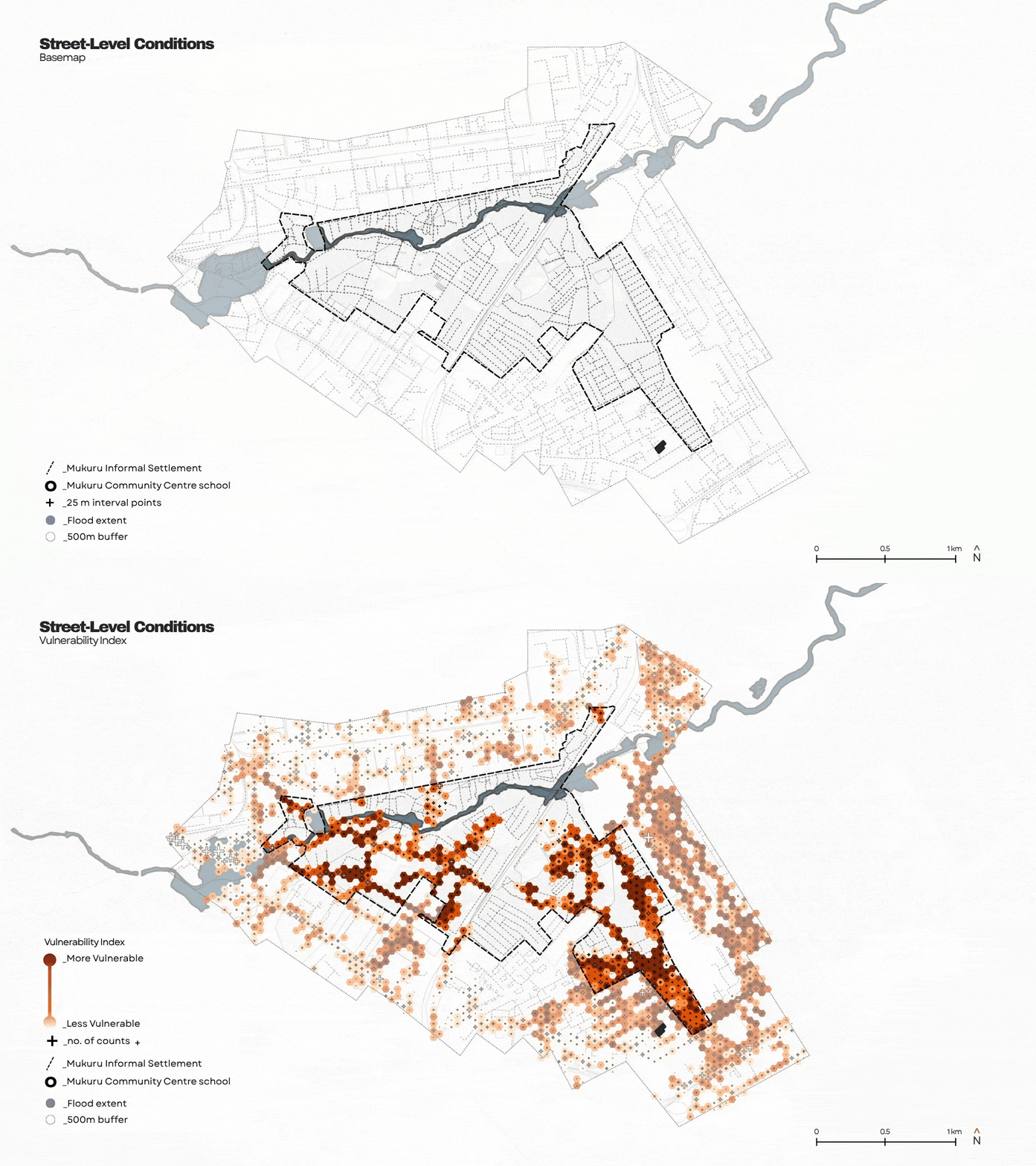
A network of sampling points was generated at regular intervals along pedestrian routes, enabling comprehensive coverage of both the settlement and its surrounding buffer. Model outputs were aggregated into a vulnerability index for each location, combining weighted indicators to represent the quality of street-level infrastructure.
The resulting map reveals spatial variation in conditions, identifying corridors where vulnerability is concentrated rather than uniformly distributed.
Public Perceptions + Street view conditions Analysis
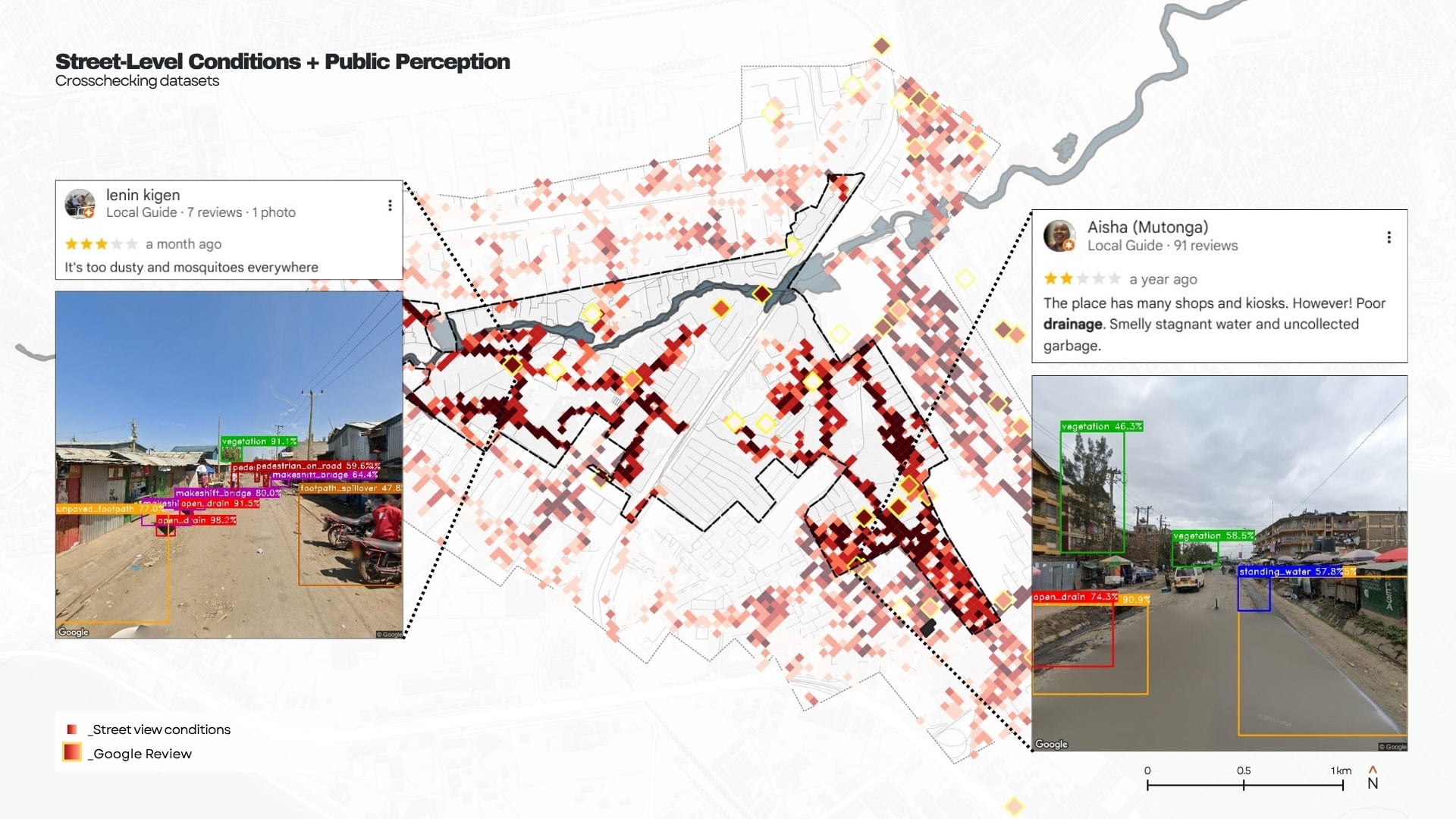
Street-level conditions were cross-referenced with perception data to validate observed patterns.
Areas identified as physically vulnerable frequently align with locations of negative sentiment, confirming the relationship between infrastructural conditions and lived experience.
The Overlapped Vulnerability Layers
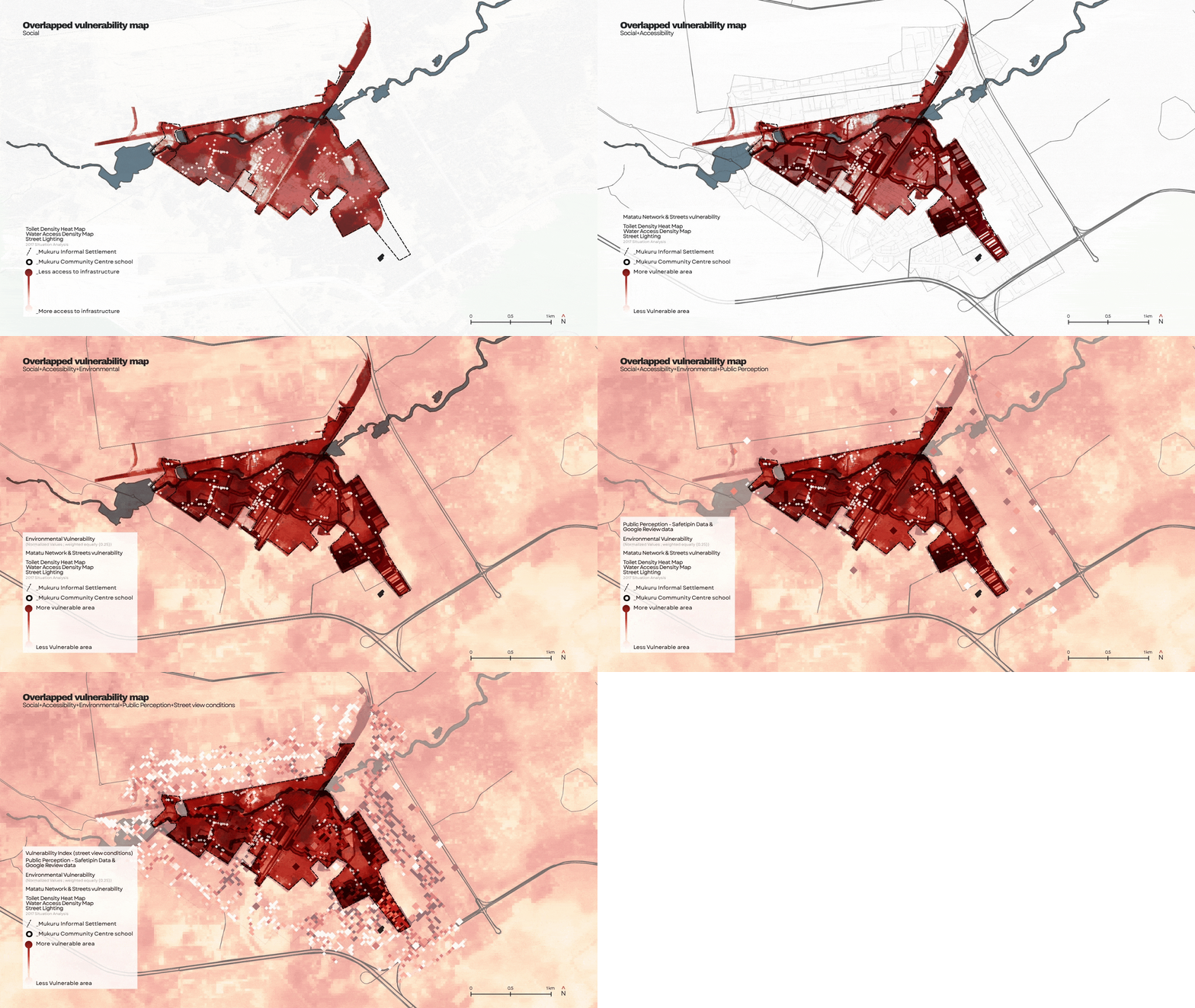
The five analytical layers — social, environmental, accessibility, perception, and street-level conditions are normalised and overlaid to produce a composite vulnerability map. This synthesis reveals spatial clusters where multiple forms of risk converge simultaneously.
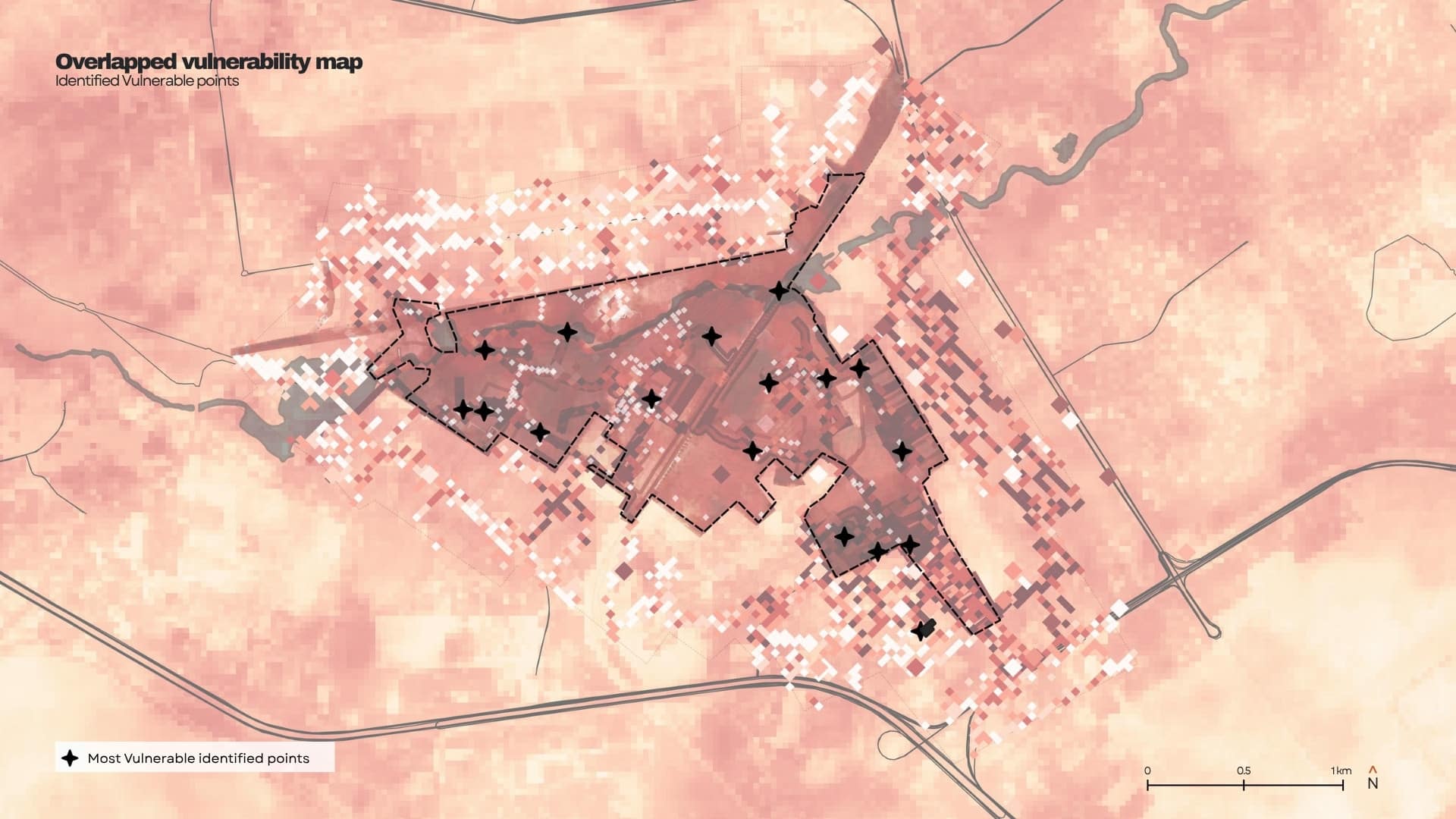
From this, the highest overlap zones are identified as critical points, representing locations where environmental exposure, infrastructural deficits, and negative lived experiences intersect most intensely.
The Stressed based Isochrones
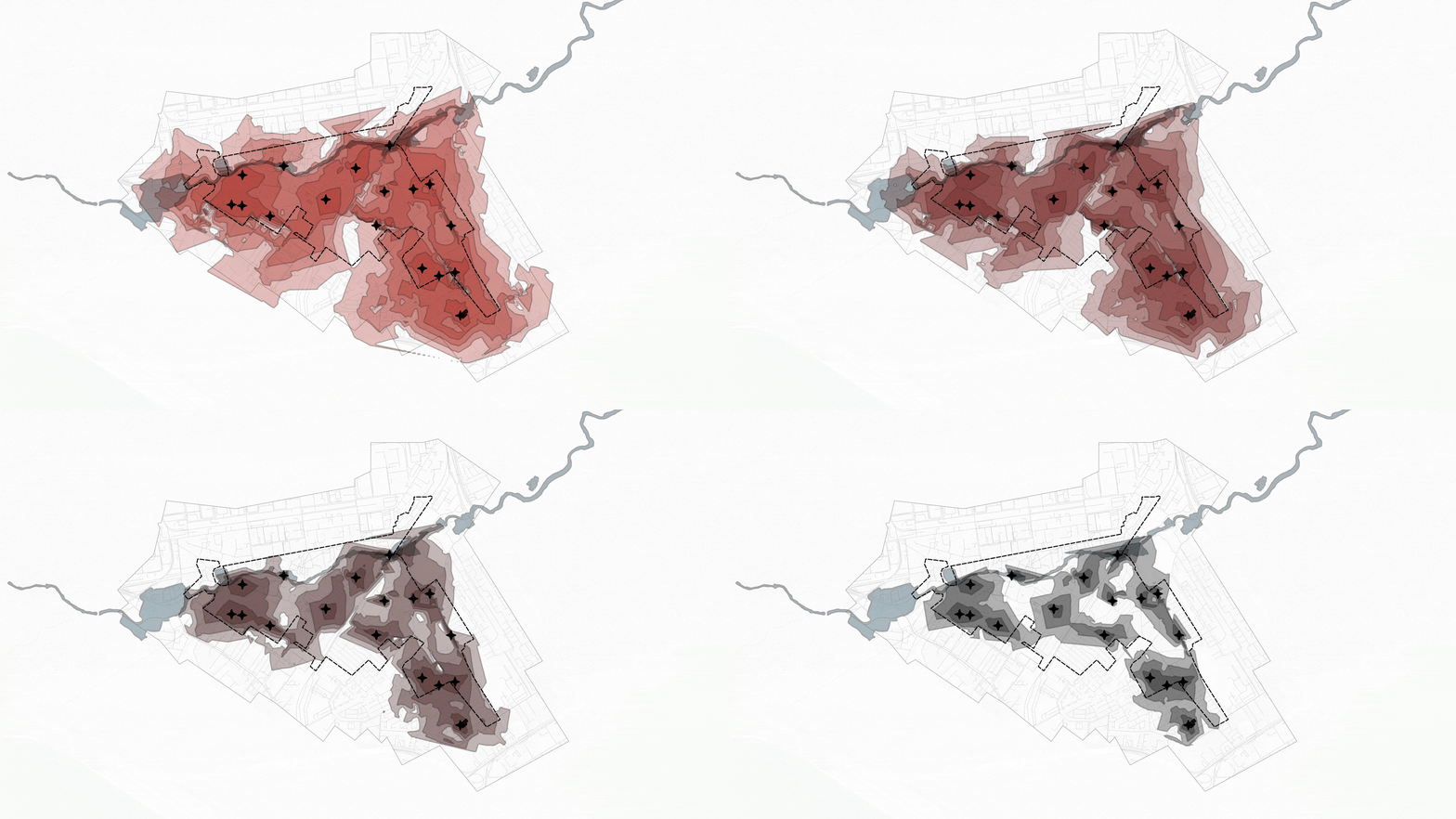
To understand the spatial impact of these vulnerabilities on movement, 15-minute isochrones were generated under varying environmental conditions.
These scenarios simulate how factors such as flooding and poor infrastructure reduce effective mobility, revealing significant variations in accessible areas across different conditions.
The Priority Intervention Zones
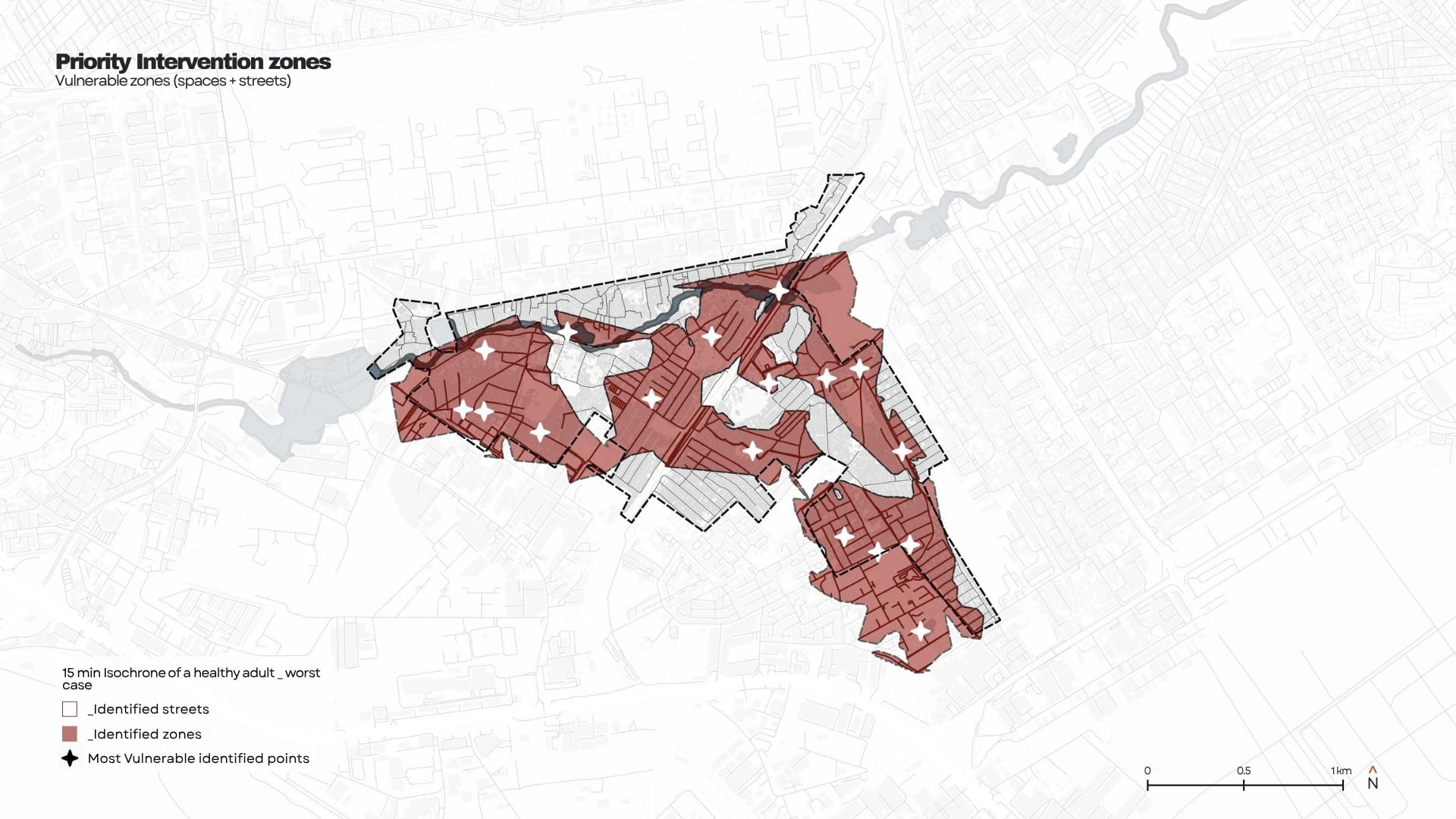
Building on the identified vulnerable points, isochrone analysis defines priority intervention zones and connecting corridors.
These areas represent locations where targeted spatial interventions can improve not only local conditions but also broader connectivity across the settlement, avoiding isolated improvements and enabling network-level impact.
The Conclusions
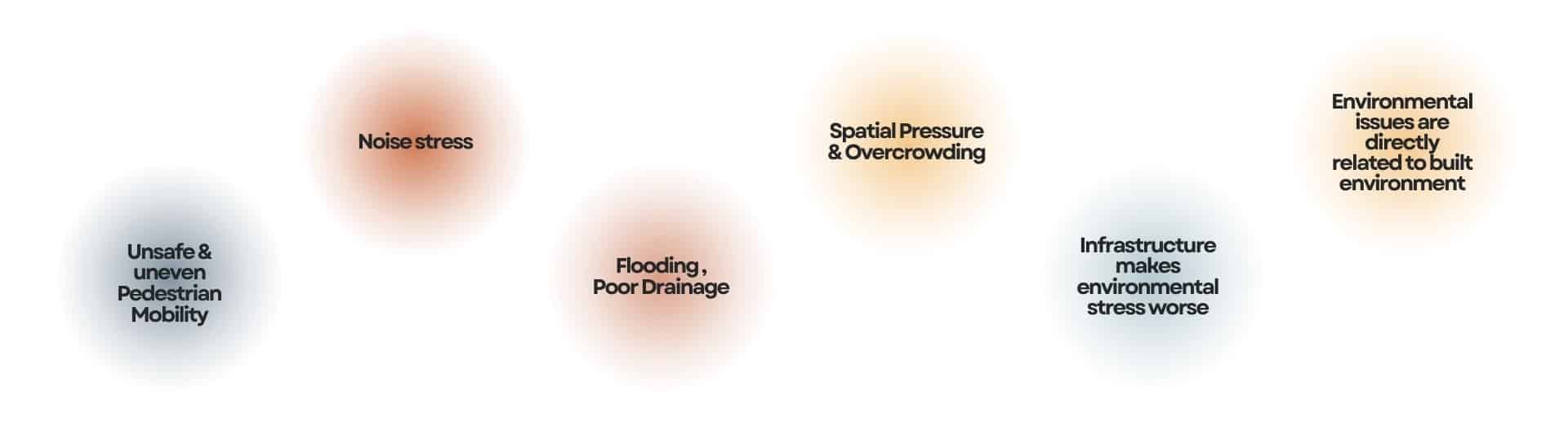
The analysis converges on a single critical insight: vulnerability in Mukuru is not fragmented, but systemic. Flooding, inadequate drainage, poor infrastructure, and unsafe pedestrian conditions are interdependent each reinforcing the other across space.
Rather than addressing isolated issues, interventions must operate at a systems level, responding to the cascading nature of risk embedded within the settlement.
The Design Goals

The project is guided by four interconnected goals.
To adapt infrastructure to environmental risks without displacement, to create safe and inclusive public spaces, to enable community ownership through participation and capacity building, and to address systemic gaps in services and policy.
Together, these goals position belonging not as an abstract idea, but as a condition enabled through spatial, social, and institutional systems.
The Stakeholders
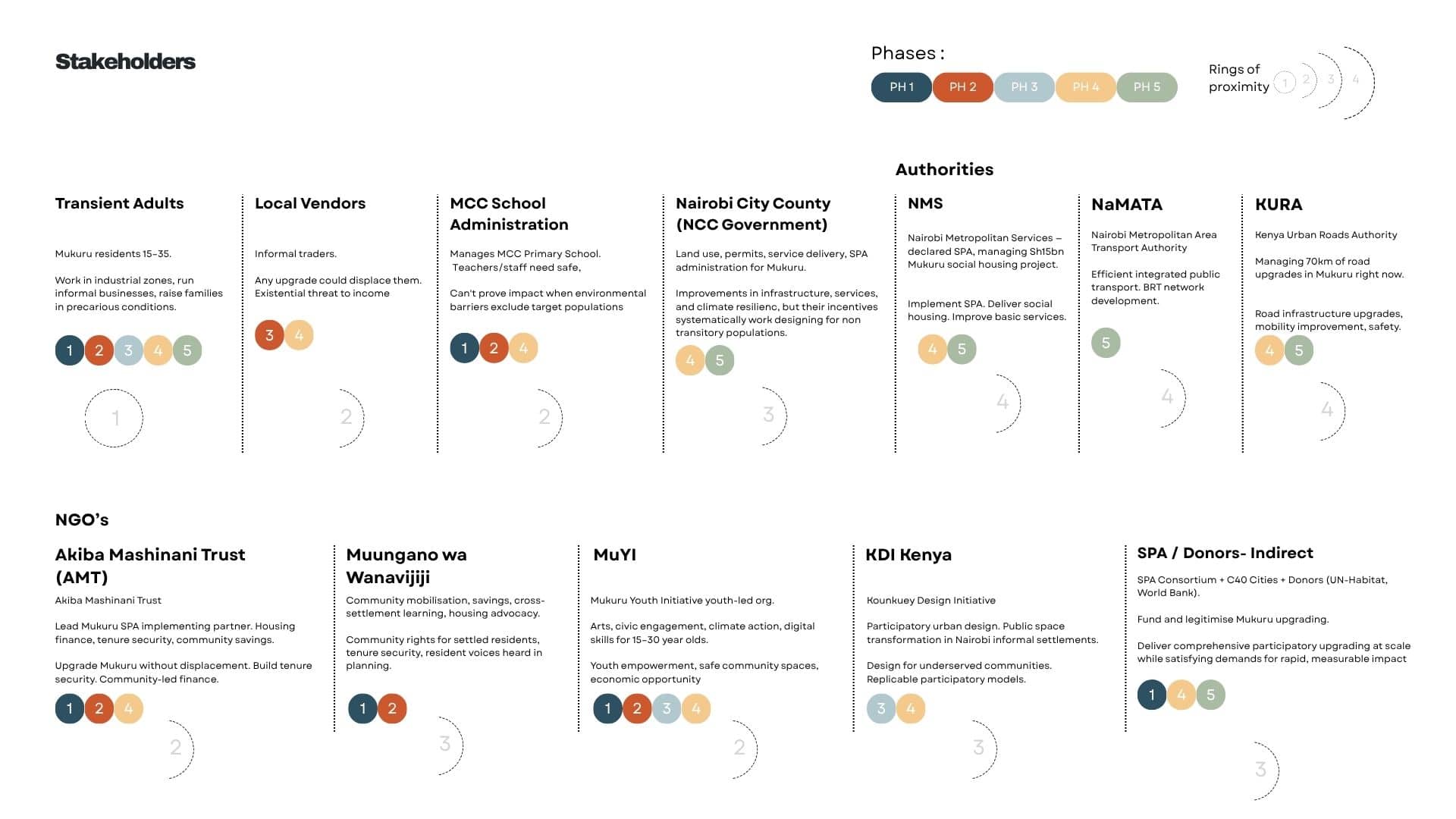
The project operates within a multi-scalar stakeholder ecosystem, structured through varying degrees of proximity to the community and stages of engagement. At the core are residents, particularly transient adults and informal vendors, whose livelihoods and daily practices shape the spatial reality of Mukuru. This is supported by institutional anchors such as the community centre school, alongside NGOs and community organisations that facilitate mobilisation, design participation, and implementation. At the outer scale, government bodies and metropolitan agencies enable policy alignment, infrastructure delivery, and long-term scalability.
This layered structure ensures that interventions remain grounded in lived experience while being supported by institutional frameworks.
The Design Methodologies
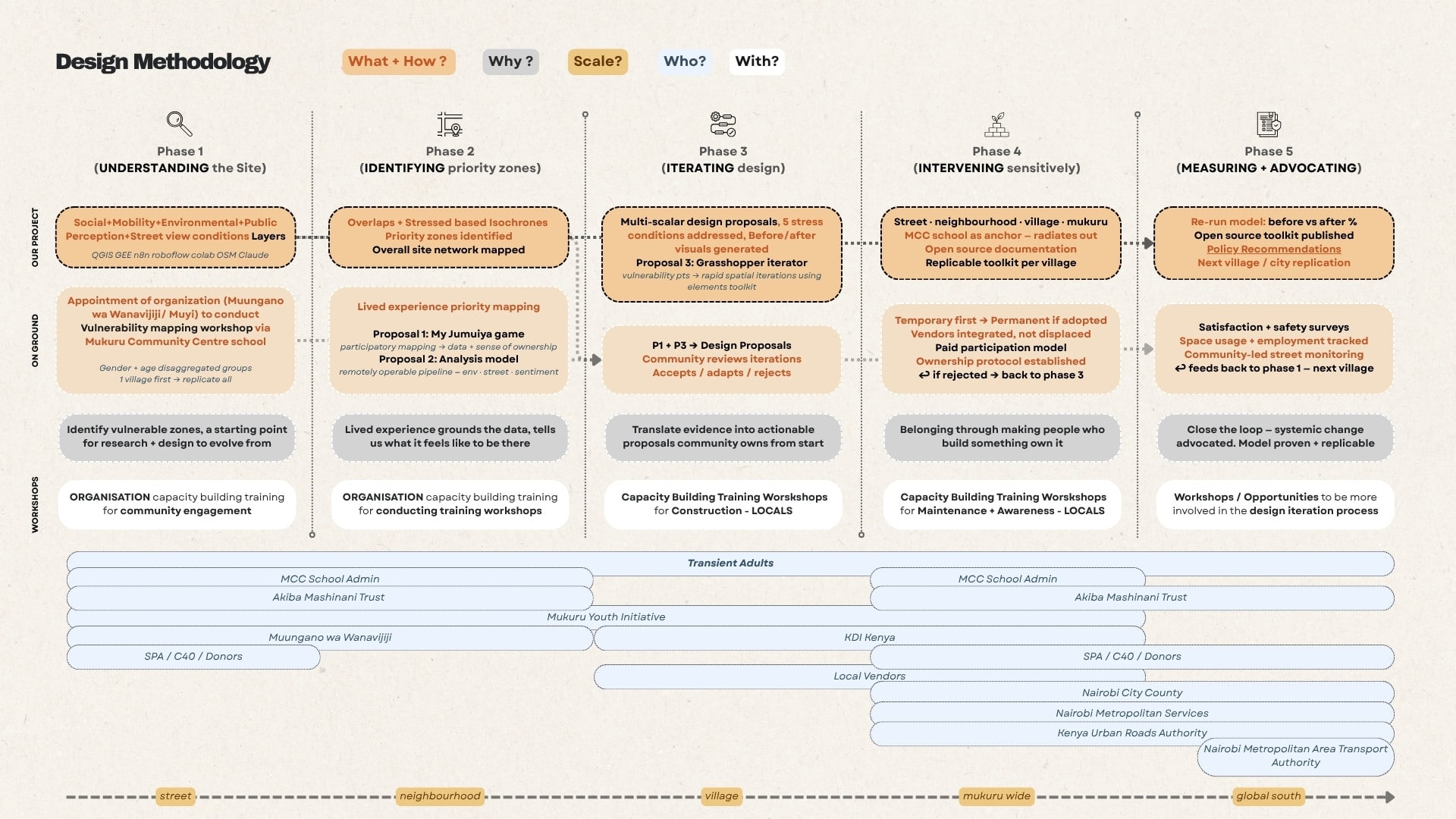
The methodology unfolds across five phases, integrating data-driven analysis with on-ground participation. It begins with understanding, where multi-layered vulnerability mapping is developed and complemented by community-led data collection. This is followed by identifying priority zones through spatial overlap and isochrone analysis, grounding intervention areas in both data and lived experience. Design then emerges through iterative processes, where proposals are generated, reviewed, and adapted collaboratively with the community. Implementation prioritises temporary and adaptable interventions, allowing solutions to evolve before becoming permanent.
Finally, the process closes with evaluation and scaling, where outcomes are measured, shared, and replicated across the settlement and beyond.
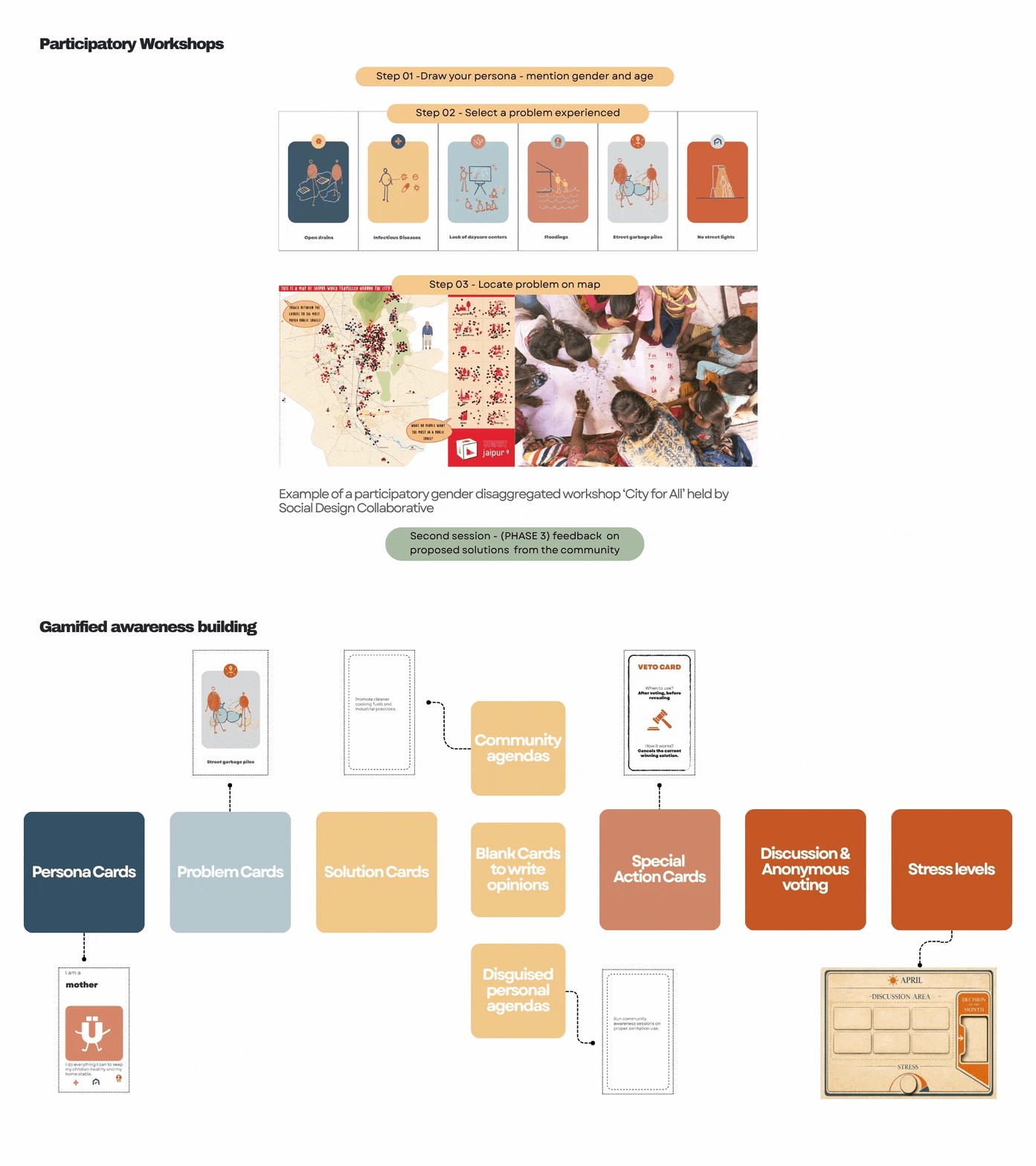
Participation is embedded as a core design tool through My Jumuiya, a game-based framework that captures lived experience, builds empathy, and enables collective decision-making.
By engaging residents in identifying problems, negotiating priorities, and proposing solutions, the process shifts from consultation to co-production, strengthening ownership and long-term sustainability of interventions.
The Design Concepts
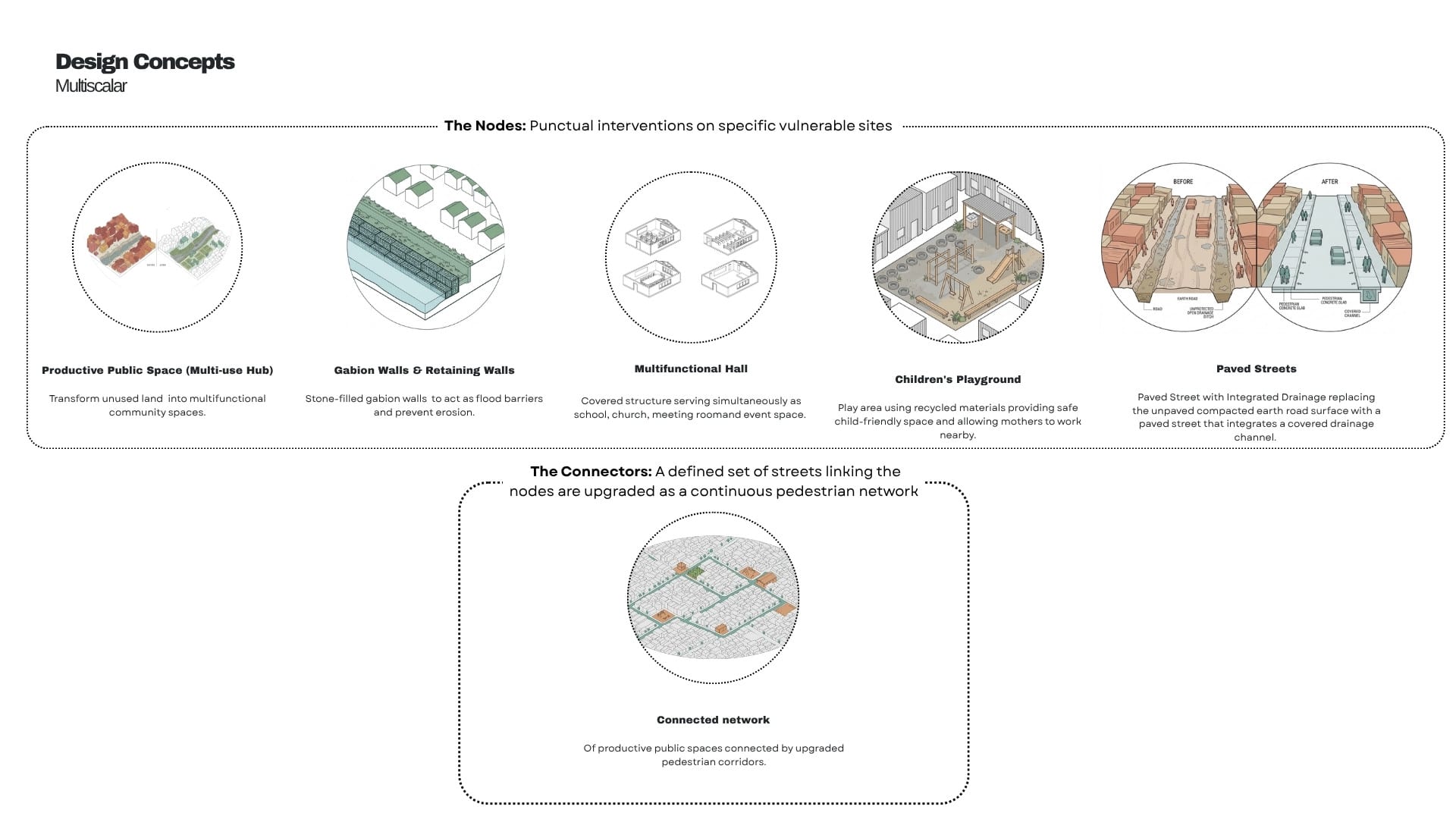
The spatial strategy is structured through a system of nodes and connectors. Nodes introduce targeted interventions such as community hubs, flood mitigation elements, multifunctional spaces, and improved street infrastructure. Connectors form a network of upgraded pedestrian corridors, linking these interventions into a continuous and accessible urban system. Rather than isolated improvements, this approach creates a distributed network of public spaces that supports mobility, social interaction, and local economies.
In this way, the project frames belonging as a spatial and infrastructural condition, enabling residents to adapt to risk without being displaced by the very interventions designed to support them.