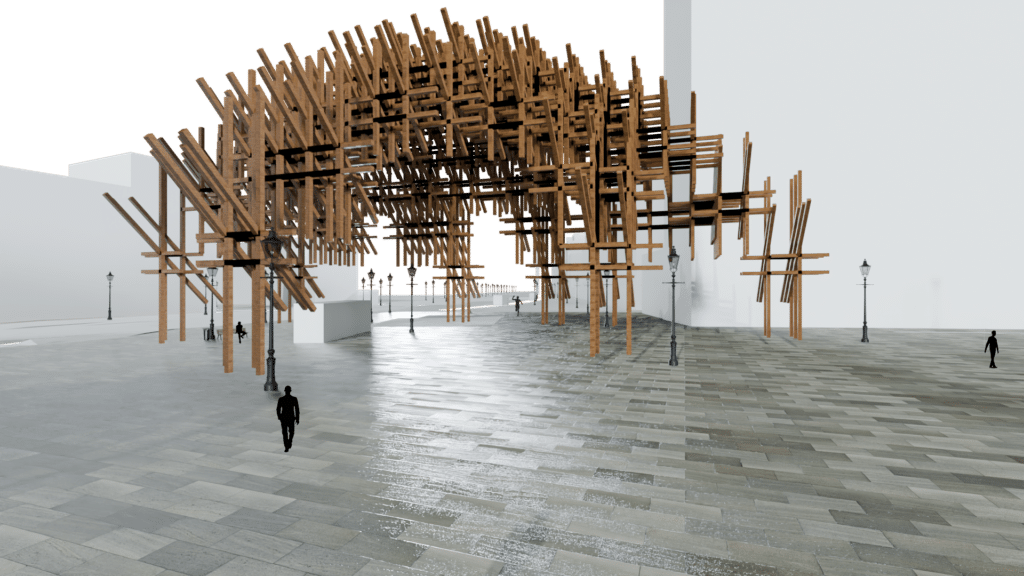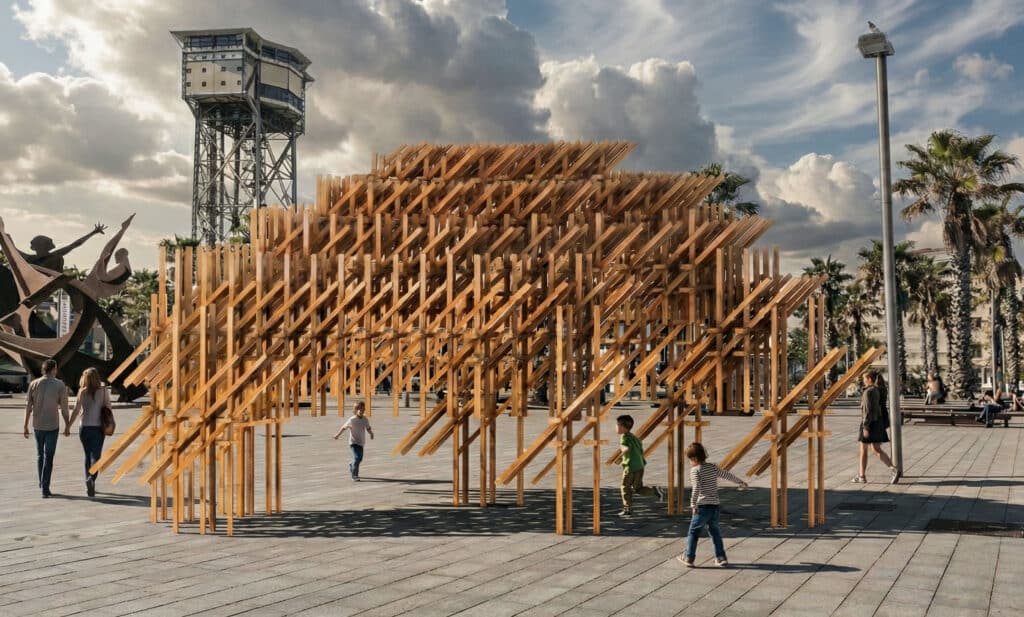
This pavilion explores the dialogue between wood and waves through a parametric system of assembled timber elements shaped by coastal forces. Inspired by the rhythm of tides and the grain of wood, its fluid geometry oscillates between structure and motion, shelter and openness. The project merges digital design with natural material intelligence, creating a lightweight canopy that filters light, wind, and views of the sea. It stands as an inhabitable threshold where crafted timber echoes the dynamic language of water.
Form Finding Process
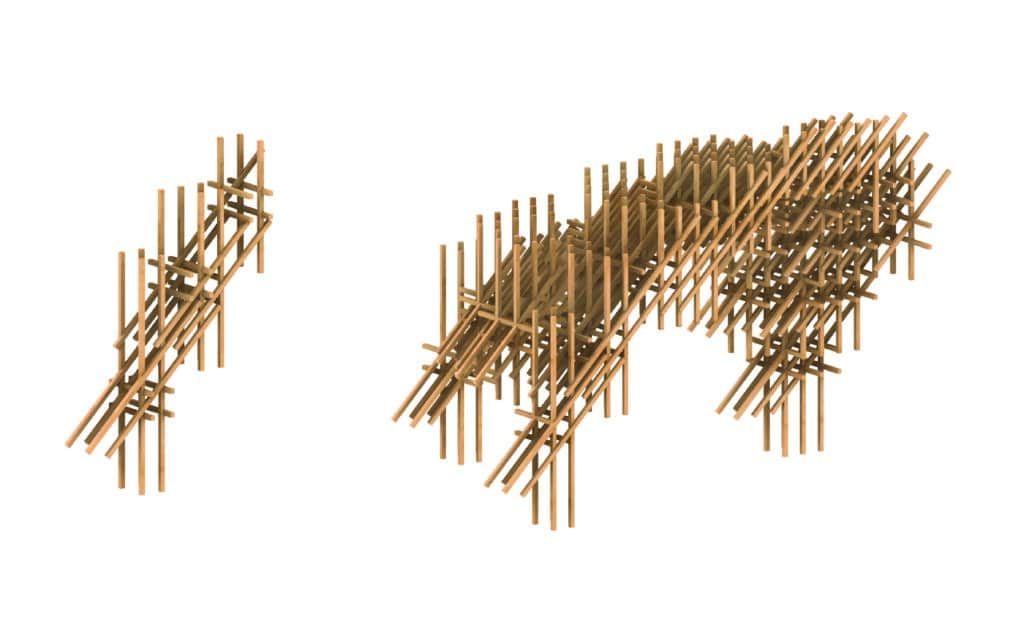
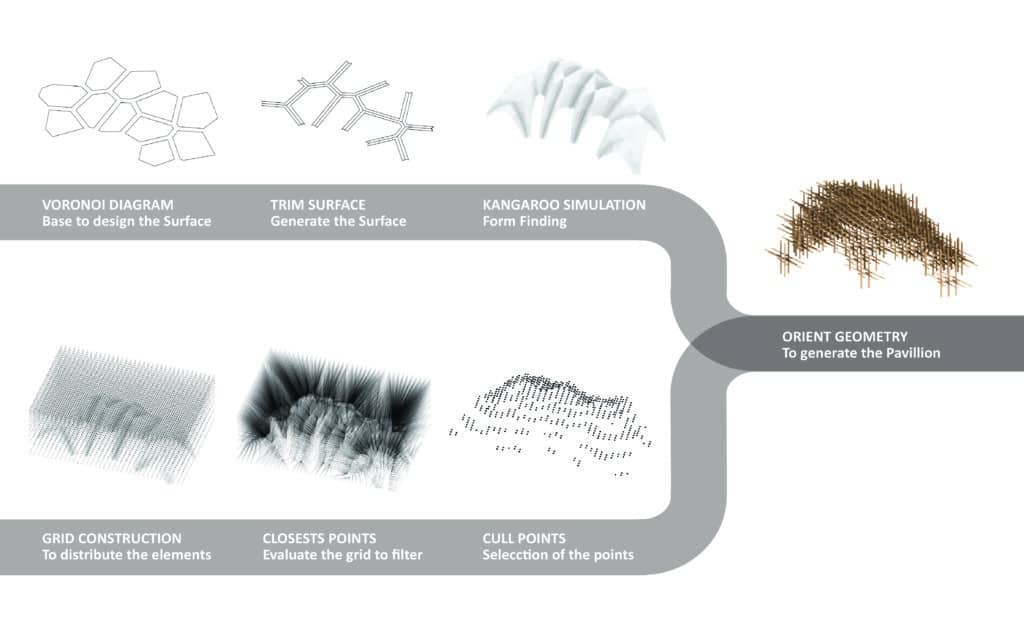
The process of searching for shapes begins with a series of points distributed on the ground, from which a Voronoi triangulation is drawn to obtain a tree-like figure necessary for textile simulations such as those of Kangaroo. At the same time, a regular grid of points was constructed to filter those closest to this surface, and with this filter, the discrete wooden elements were distributed to generate this self-supporting structure from the simulation.
Formal Exploration of the Pavilion
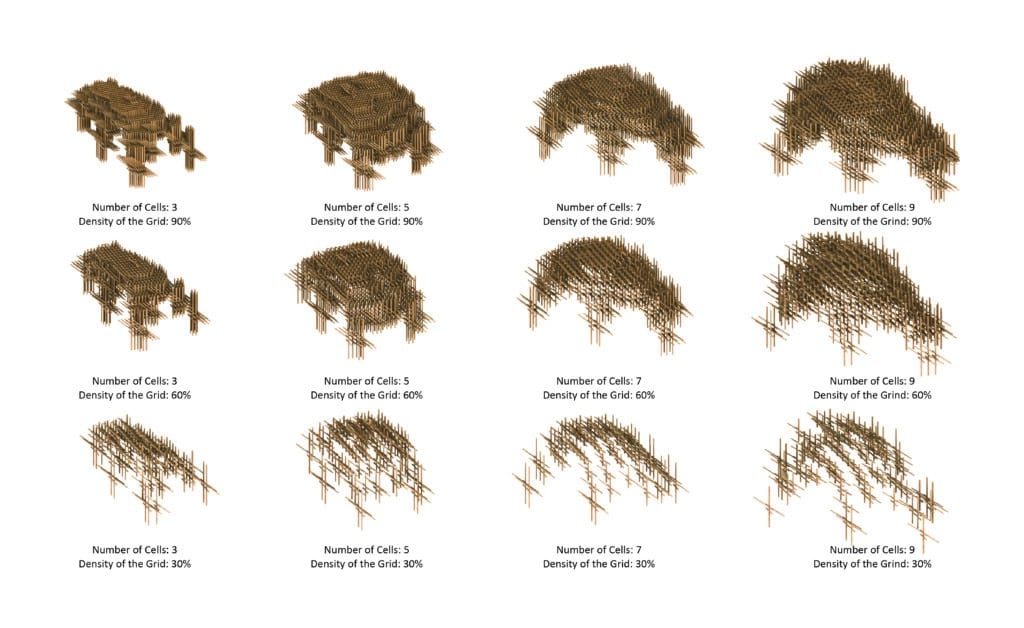
The algorithm allows control over the number of modules considered for the simulation, and therefore the final size of the pavilion. This grid of variations shows a series of explorations that were carried out to find the best relationship between the size of the pavilion and the density of the grid where the discrete elements are distributed.