
- Areti Markopoulou – Academic Director at IAAC
- Circular Matter
- 12/NOV/2025

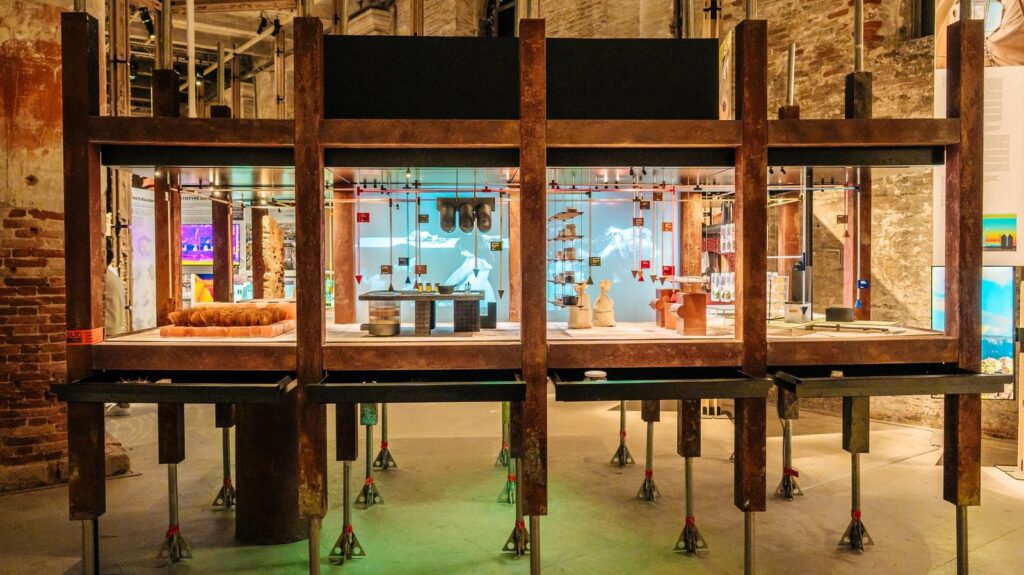
In her lecture titled Circular Matter, Areti Markopoulou examined the urgent transition from a linear to a circular paradigm within the built environment. She began by outlining the structural problems embedded in today’s construction industry, which relies heavily on resource-intensive, difficult-to-recover materials. As cities continue to expand, this linear “extract–manufacture–use–discard” model has become environmentally unsustainable. Markopoulou argued that architects and designers must rethink the material life cycle and develop regenerative systems capable of reducing carbon impact while extending material utility over time.
A central premise of the lecture is that circularity is not limited to recycling; rather, it involves reframing materials as continuously evolving repositories of value. Materials should be designed for disassembly, reconfiguration, and reactivation across multiple lifespans. Through a series of research projects, Markopoulou demonstrated how emerging material ecologies—such as bio-composites, mycelium-based structures, agricultural waste derivatives, and programmable matter—can generate new architectural possibilities. These experiments challenge the notion of buildings as static objects and instead propose dynamic, adaptive material systems with the capacity to repair, regrow, or transform in response to environmental conditions.
Digital tools play a decisive role in enabling circular design strategies. Markopoulou highlighted how computational design, robotic fabrication, and data-driven material analysis can optimize form, performance, and assembly for low-carbon or reclaimed materials. Parametric modelling allows designers to align geometry with specific material behaviours, while digital fabrication—robotic arms, additive manufacturing, CNC milling—ensures precision with non-standard or variable materials. Furthermore, she emphasized the emerging importance of material passports, which digitally track a material’s origin, properties, and potential future uses, ensuring that components remain integrable within future cycles of construction.
Beyond technical innovation, Markopoulou framed circularity as a cultural and systemic shift. Cities should be understood as urban mines, where the demolition of existing buildings produces not waste but resources for the next generation of construction. This reconceptualization demands new forms of collaboration among architects, engineers, manufacturers, policymakers, and local communities. It also requires a transformation in architectural education—from form-driven practice to process-driven methodologies grounded in material ethics, environmental accountability, and long-term resilience.
Toward the end of the lecture, she called for a broader adoption of regenerative thinking, encouraging designers not only to minimize environmental harm but to generate positive ecological and social impacts through material decisions. This mindset positions architects as mediators between natural systems, technological innovation, and urban development. In this view, the future architect becomes not merely a creator of objects but a curator of flows—of materials, energies, and resources circulating across multiple scales and timeframes.
Markopoulou concluded that Circular Matter is more than a design framework; it is a strategic roadmap for reimagining the built environment under conditions of planetary limitation. By integrating biological intelligence, digital technologies, and circular economic models, the field of architecture can move toward a more adaptable, resilient, and ecologically aligned future.
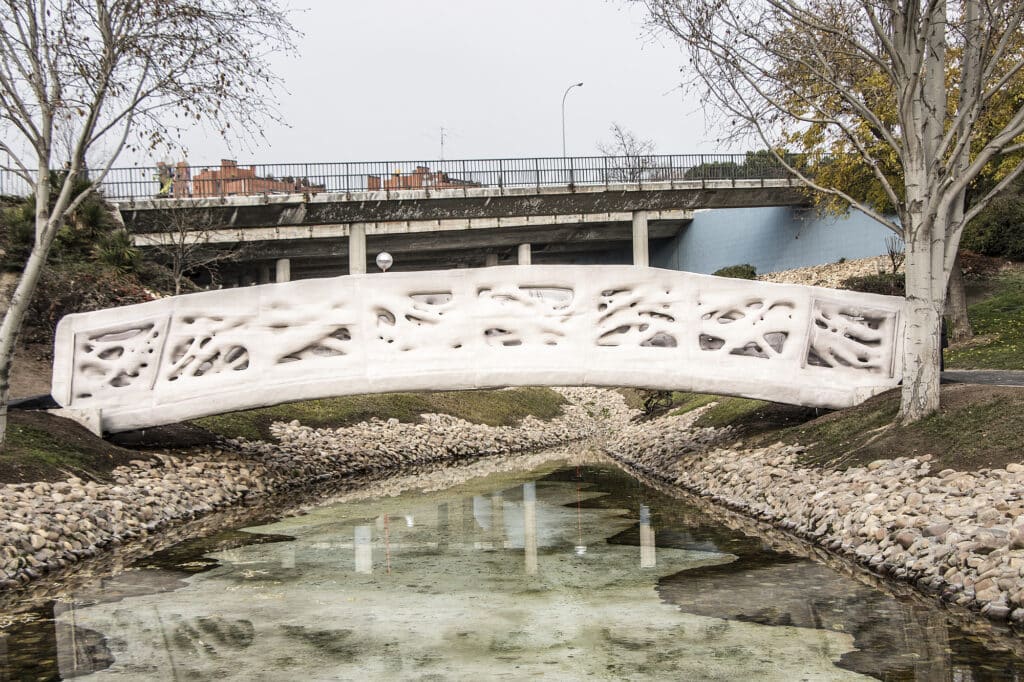
- You mentioned that biocharred concrete is carbon negative , Is it an active material if yes is it a photocalystic material, If i need 24/7 continuous pollutant removal or treatment, woukld i typically need either to combine biochar with other non-light-dependent methods, or use it in conjunction with other treatment technologies that don’t rely on photocatalysis ?/// Are there possibilities to print with biocharred concrete to make or its mnore logical to use it as a filling, and if so does it act as a good insulator ? do u think if law makers or stakeholders create laws that would oblige builders to use on site material would that push governments to invest more into their cities ecological needs or would that make people find a way to make business profit off this law model ?
Biocharred concrete is carbon-negative but not photocatalytic, so continuous pollutant removal would require pairing it with non-light-dependent systems. Biochar can be 3D-printed, though it is often more effective as a porous insulating filler. Policies obliging on-site materials could strengthen local ecological investment, but without careful regulation they may also create new profit-driven markets. The impact depends on governance rather than the material itself.
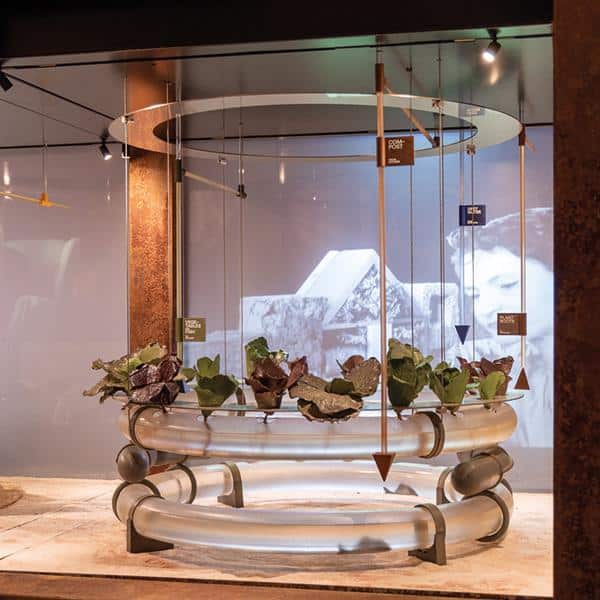
- In metabolism of a dwelling do u think a family of 2 can mange such a life style and do u think robotic optimization can play a role in this life style ?
A household of two can absolutely manage a metabolic dwelling, as long as the system is designed to be intuitive. The goal is not to increase labour, but to make resource flows visible and easier to regulate. Robotics and automation can play a crucial role here—optimizing energy cycles, monitoring material use, and supporting daily regenerative tasks. When technology becomes a silent partner rather than an additional burden, a metabolic lifestyle becomes not only manageable but empowering.
- How can we make people care about the enviroment as much as they care about their benift, especially when sustainable materials and manufacturing are still expensive?
We cannot wait for sustainable materials to become cheap before people start caring. The key is to show that environmental responsibility creates long-term value—economic, social, and cultural. When people understand that circular materials reduce future risks, increase resilience, and open new forms of design innovation, sustainability stops being a cost and becomes an opportunity. Education, transparency in material lifecycles, and policies that reward regenerative choices are essential to shift mindsets beyond short-term personal benefit.
