
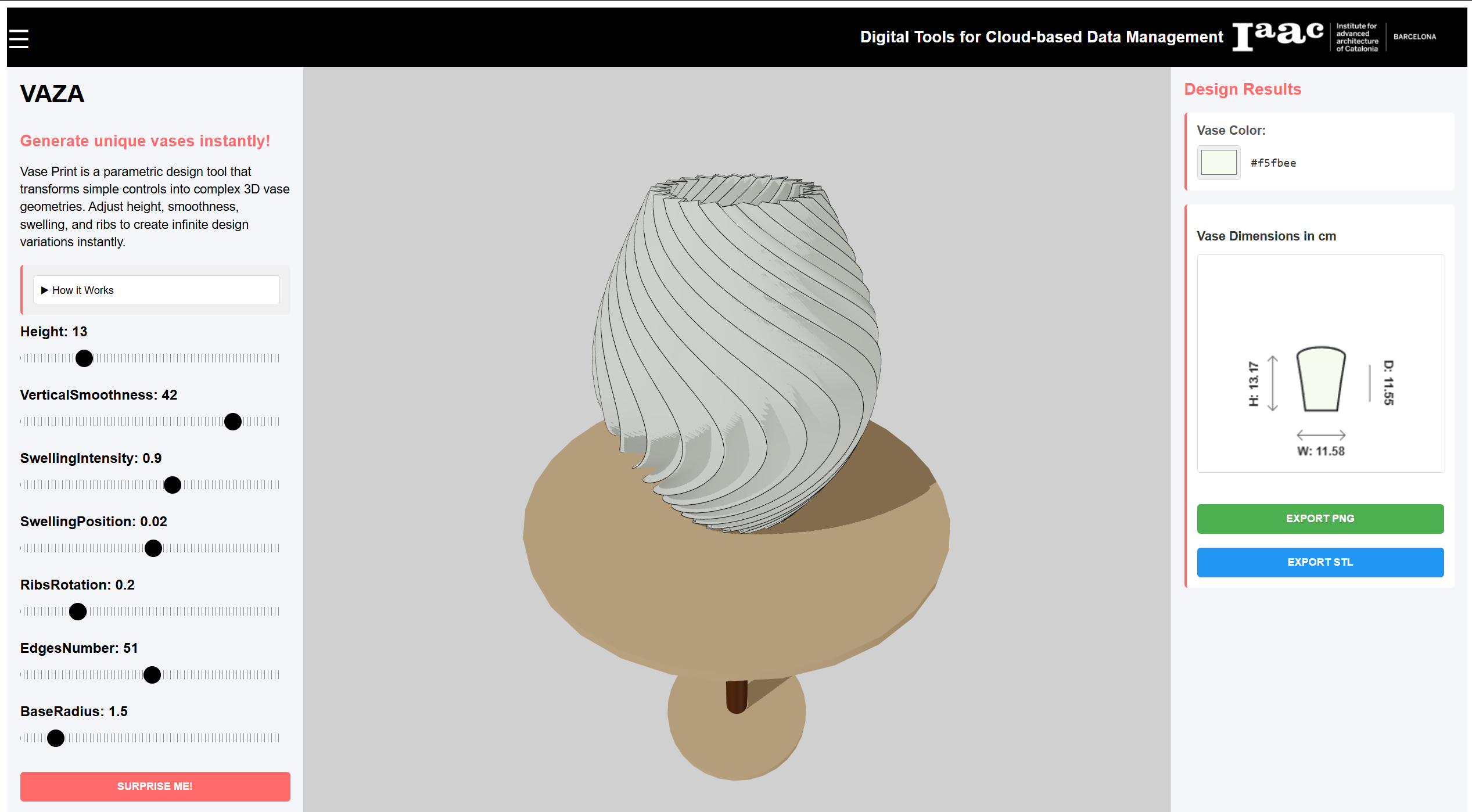
VAZA is an interactive web application developed for 3D-printing enthusiasts interested in creating unique vase designs. It functions as a parametric design tool that transforms simple user inputs into complex 3D geometries, making advanced form generation accessible through an intuitive interface.
From Simple Inputs to Parametric Form Generation
VAZA demonstrates how intricate shapes can emerge from a few simple controls. Users manipulate sliders to adjust parameters like height, vertical smoothness, swell intensity, swell position, rib rotation, edge count, and base radius. Each parameter influences the underlying mathematical logic of the model, allowing the vase to update instantly in real time. A “How it Works” dropdown guides new users, explaining how each slider affects the design. This combination of simplicity and parametric power enables endless creative possibilities.
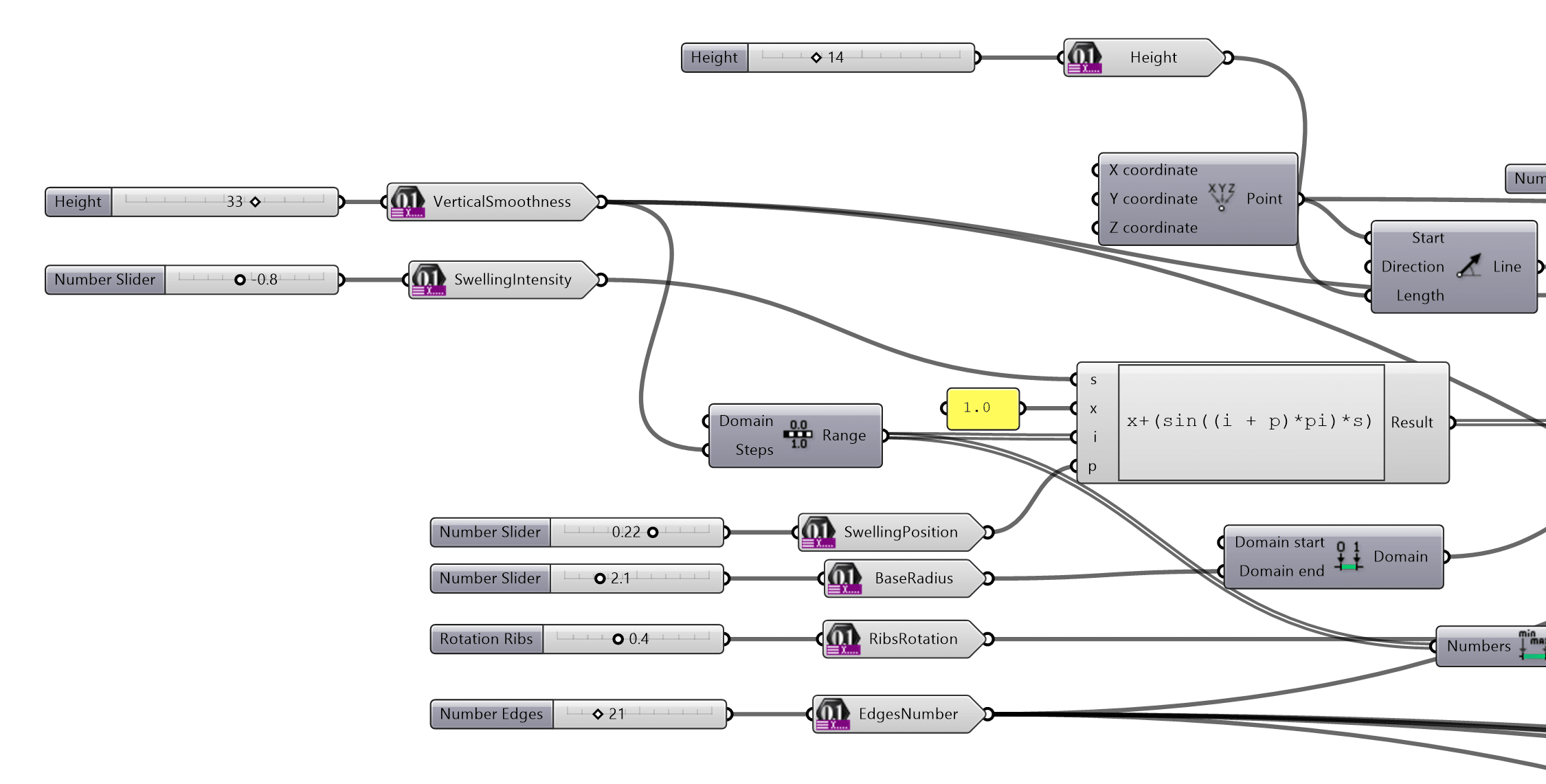
Instead of using a Bézier graph to control the swelling points with sliders, I chose to implement a formula to achieve the same effect, allowing the swelling to be adjusted just like the other parameters.
x+( sin ( ( i + p ) pi ) s )
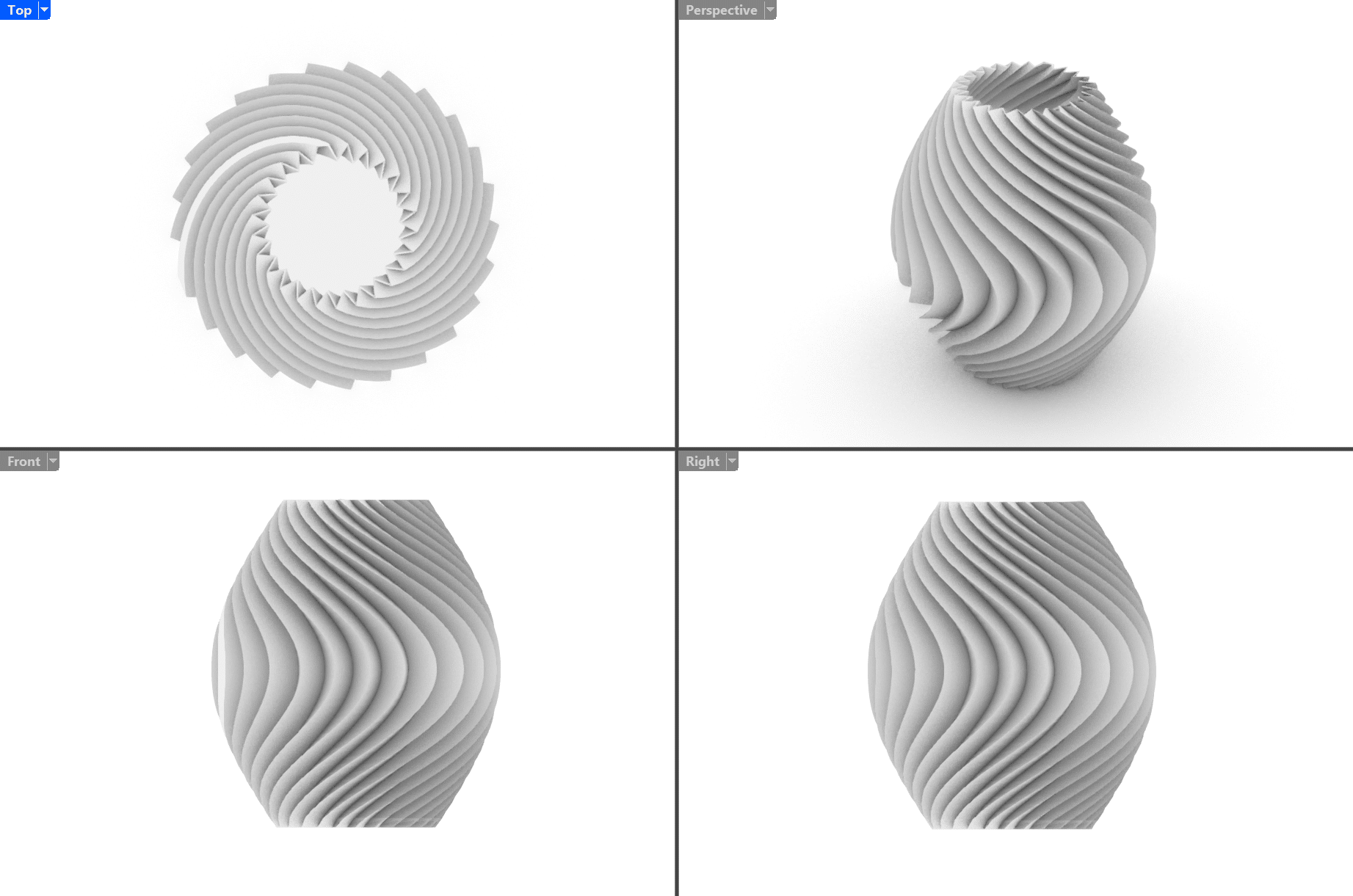
Designed for 3D Printing
Every vase generated in VAZA is optimized for fabrication. The interface displays the vase dimensions in centimeters, helping users ensure their designs fit within the build volume of a 3D printer. Once satisfied with a design, users can export an STL file for immediate 3D printing or a PNG image to capture and share the design along with its dimensions.
Fun Features
VAZA includes playful options like the “Surprise Me” button, which randomizes all sliders to create unexpected vase designs. Users can then refine or export these new designs, encouraging experimentation and creativity.
