
Reading My Thesis as Applied Research
A design change is made for one reason and felt for many. My MaCAD thesis builds a way to trace those other reasons before the building exists. This post is about what the Applied Research Technologies seminar asked of that thesis: who it is for, what it could change, and whether any of it could leave the university.
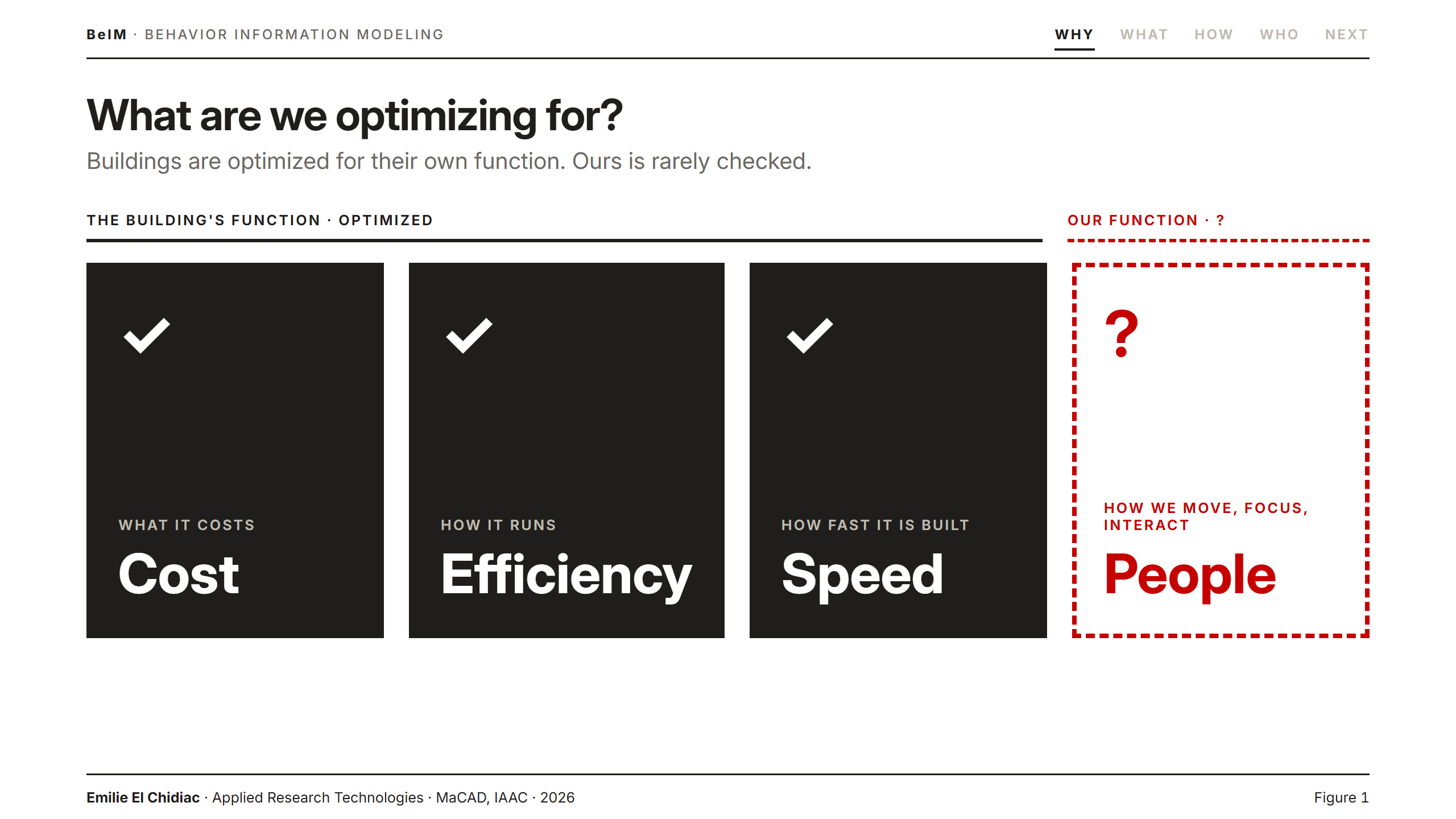
Figure 1: Buildings are checked against cost, efficiency and speed. The people inside are rarely on the list.
1. Introduction: A Thesis Is Not Yet an Innovation
Buildings are very good at their own function. We model what they cost, how they run, how fast they go up: every beam, every duct, every clash. What we rarely check before anything is built is ours: how we move, focus and talk to each other inside them. Mostly we build for the building, which is a strange thing to optimize for, isn’t it?
The seminar opened with a definition I kept coming back to. Applied research is research that sets out to solve a real problem or improve an existing practice, and that creates impact you can show. It sits between three things: knowledge creation, innovation and implementation. A thesis lives comfortably in the first. The seminar’s question was whether mine could reach the other two, and if not, whether I could at least say what it would take.
The honest version of the answer is small. My thesis produces a method, tested on one office. That is knowledge. Whether it becomes an innovation depends on people I have not met yet. So this post reads the thesis through the seminar’s frames, one at a time, and admits where each one runs out.
2. The Problem: We Already Know, and It Still Does Not Reach the Design
The first assignment was a problem canvas: context, problem, current solutions, who is affected. Writing it forced a distinction I had been blurring. The context is that buildings affect people. The problem is that what we know about it does not reach the drawing board.
The context part is not in doubt. In a population study of 15,010 adults, depression and anxiety were twice as common where noise annoyance was strong. That is a correlation, a snapshot at one point in time, not proof that noise causes either. But it is the kind of finding that should make anyone drawing a wall think twice about what the wall does for the ears behind it.
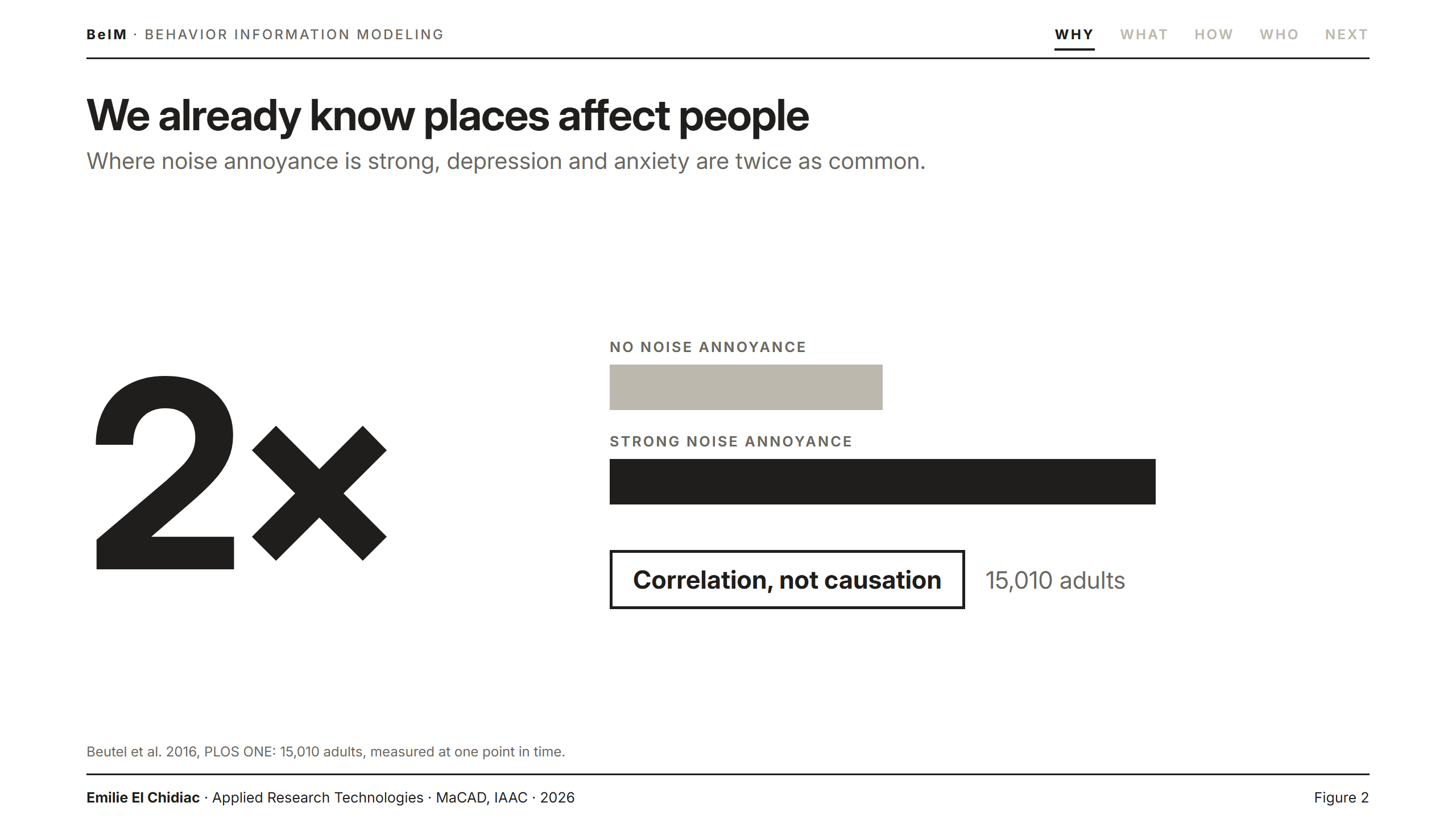
Figure 2: Where noise annoyance is strong, depression and anxiety are twice as common. Beutel et al. 2016, PLOS ONE: 15,010 adults, at one point in time.
The problem part is the gap. When I mapped the papers that join computing and design to research on people and the senses, between 2024 and 2026, I found fifteen. Two busy fields, a thin bridge. I read five barriers in that gap: scientific literacy, effort, timing, authority, and cost against benefit. They are a working hypothesis, not a finding. This thesis works on the first two only: a designer should not need to read a neuroscience paper to use what it found, and should not need a week to do it.
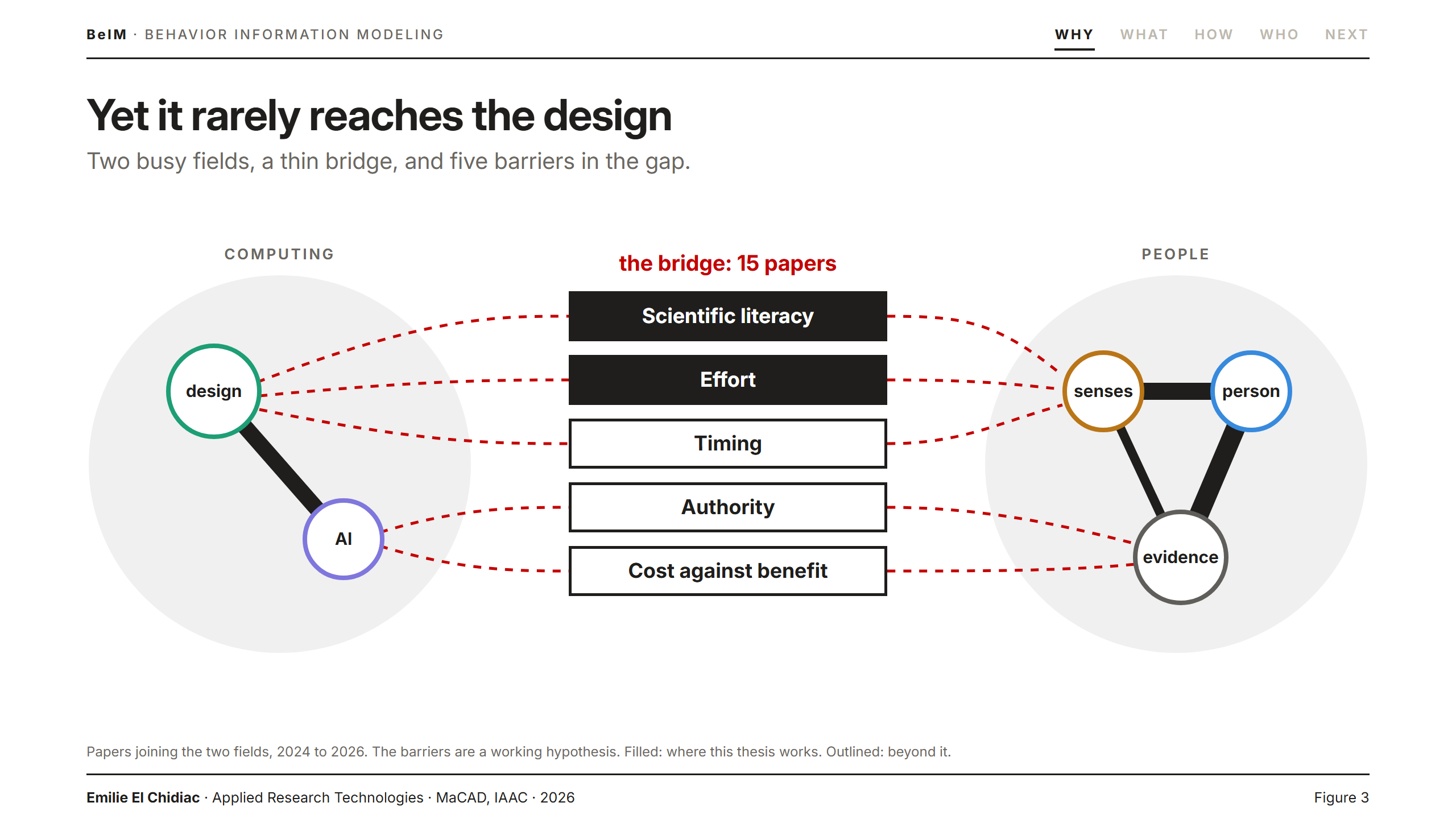
Figure 3: Two busy fields, a thin bridge, five barriers. Filled: where this thesis works. Outlined: beyond it.
In the pitch, this diagram and its key number shared one slide and fought for it. Fiona was right; they get one figure each here. The number: of 121 studies of immersive spatial cognition reviewed by Yılmaz, Akkam and Sedes, one brings its evidence into a design workflow. One.
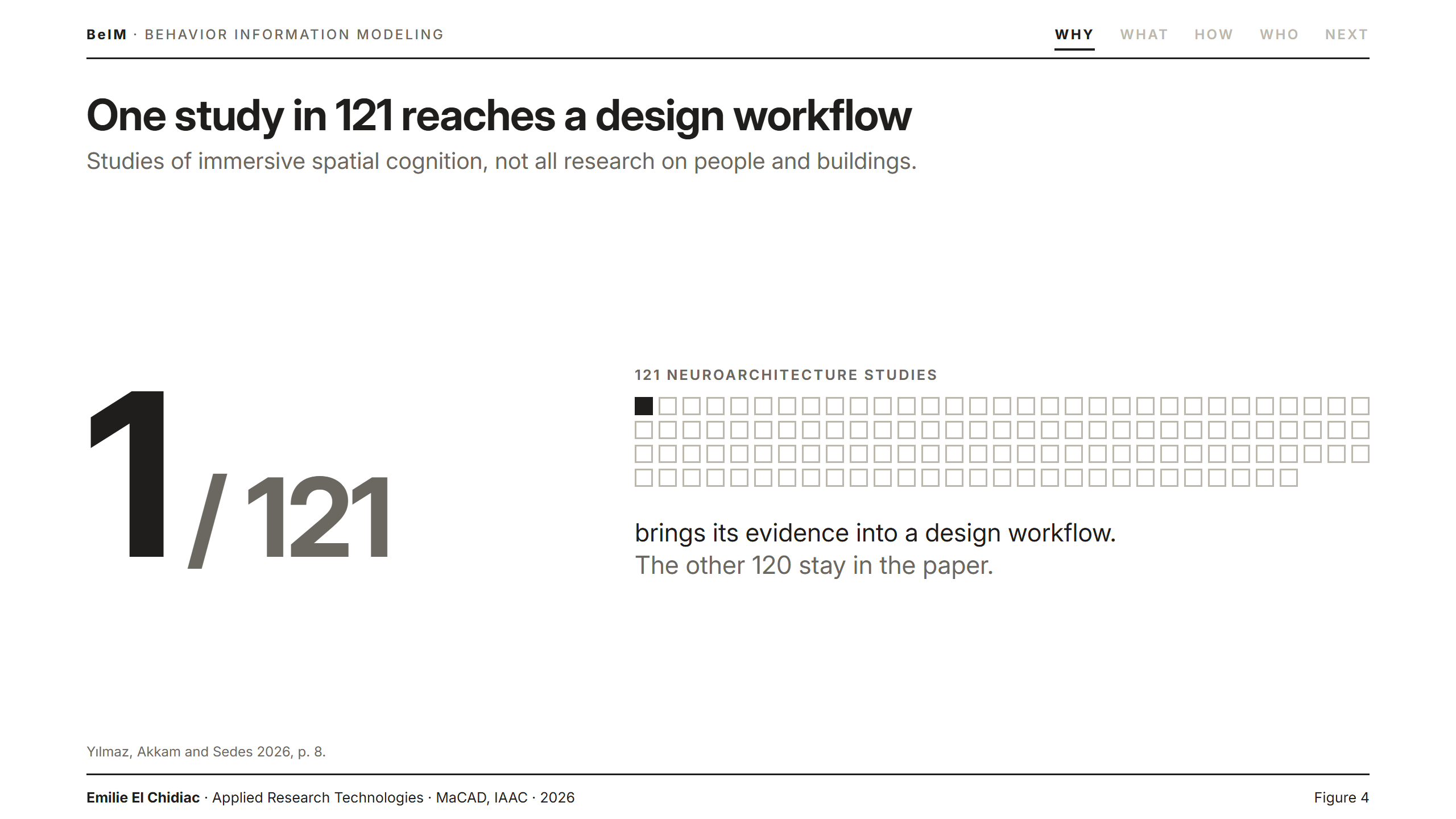
Figure 4: One study in 121 brings its evidence into a design workflow. Yılmaz, Akkam and Sedes 2026, p. 8.
The seminar’s problem statement template made this personal, which I resisted at first and then liked. I am an architect on an office fit-out. I try to make the floor feel more spacious. But I have no way to see, before it is built, what else the partitions were doing for the people at their desks.
3. What Kind of Innovation Is This?
The seminar used the Oslo Manual’s five types: product, process, social, marketing, organizational. Mine is a process innovation. It does not add a new object to the world. It adds a step to how a design decision gets made.
The step is a layer. BIM holds what the building is: geometry, structure, energy, cost. The layer I am building holds what the building does to the people in it. I call it Behavior Information Modeling, BeIM. It is one more layer of design information, not a replacement for any of the others.
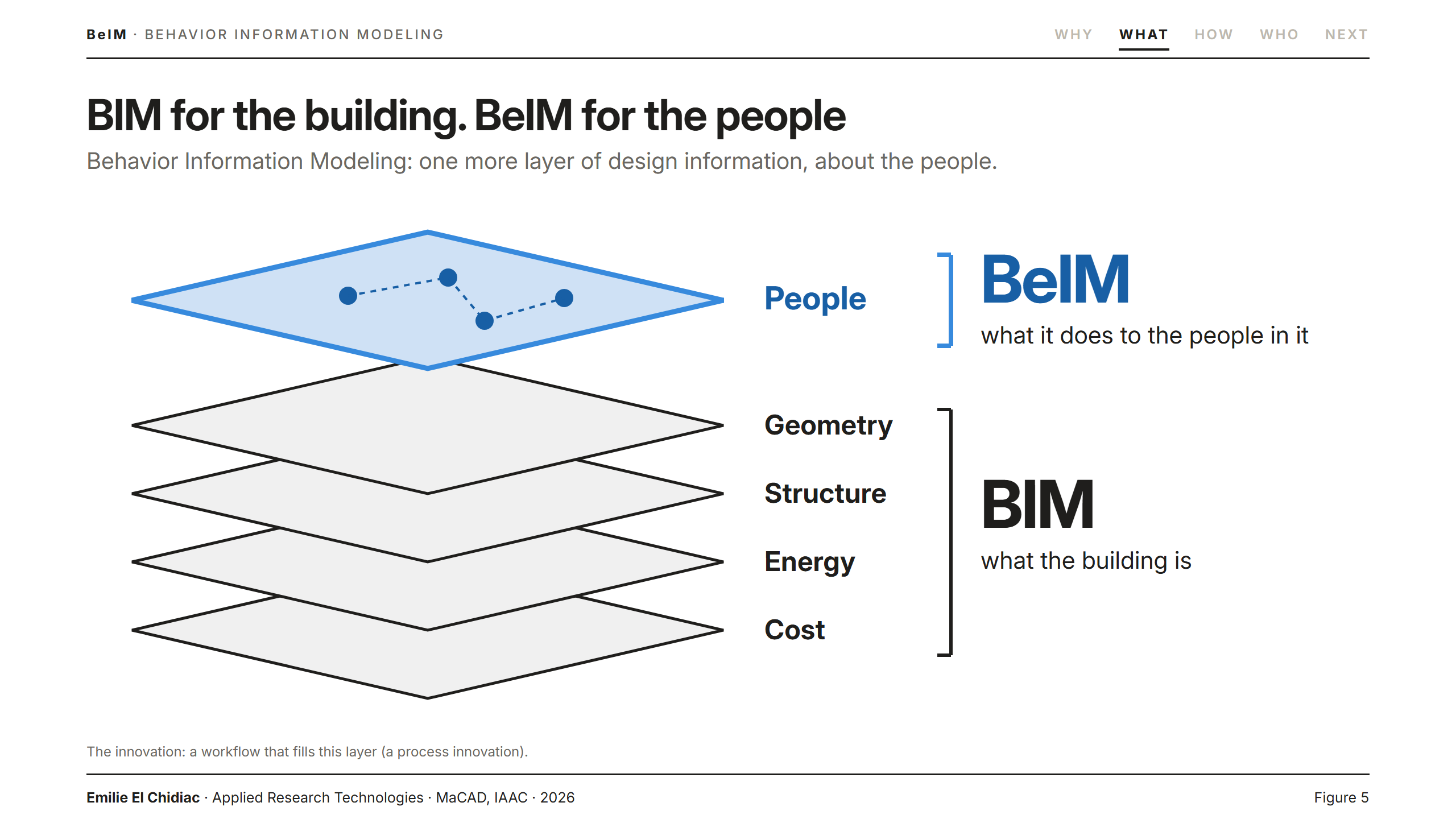
Figure 5: BIM for the building, BeIM for the people. One more layer of design information.
In the seminar’s list of actionable knowledge (a digital tool, a computational workflow, a design methodology, a software platform), BeIM is the second and the third: a workflow that runs, and a method that says how each of its answers is known. It is not yet a platform. It may never be, and the seminar was clear that this is fine. Leonardo drew a flying machine; Boeing flew one. Not all research becomes an innovation.
4. The Aim, Rewritten
Fiona’s sharpest comment was about my aim and objectives, and she was right. In the pitch my aim was a noun phrase: a method that traces a design change… An aim starts with an action. And my two objectives were questions, not steps; you could not tell from reading them when either would be done.
Between the pitch and this post, I rebuilt the whole tree. The aim now starts with a verb, and it is the version I signed on my thesis board:
Develop and test a framework that traces the ripple effects of one design change against its stated intent, setting what can be computed from the model beside what is known from people, towards behaviour.
It answers one research question:
To what extent does an AI-filled trace of how a design change propagates from space to person align with human appraisal?
And the objectives went from two to four. Each is a step I commit to finishing, each answers one part of the question, and each hands its output to the next:
- Define the framework: the layers a ripple passes through, how each link is known (computed, known from people, inferred, or a gap), and the shape of the question it takes.
- Test whether language-model agents can fill the framework for one question, and from which knowledge: given, searched, or none.
- Trace the ripple effects of three design changes in one office against their stated intent, from a lab’s given knowledge and the model’s own computation; check the trace against the study’s numbers and people’s ratings; mark where it stops.
- Pilot: test whether agents that read the before and after images answer as the people did, with and without the trace, as a first step towards a feedback loop that needs no new participants.
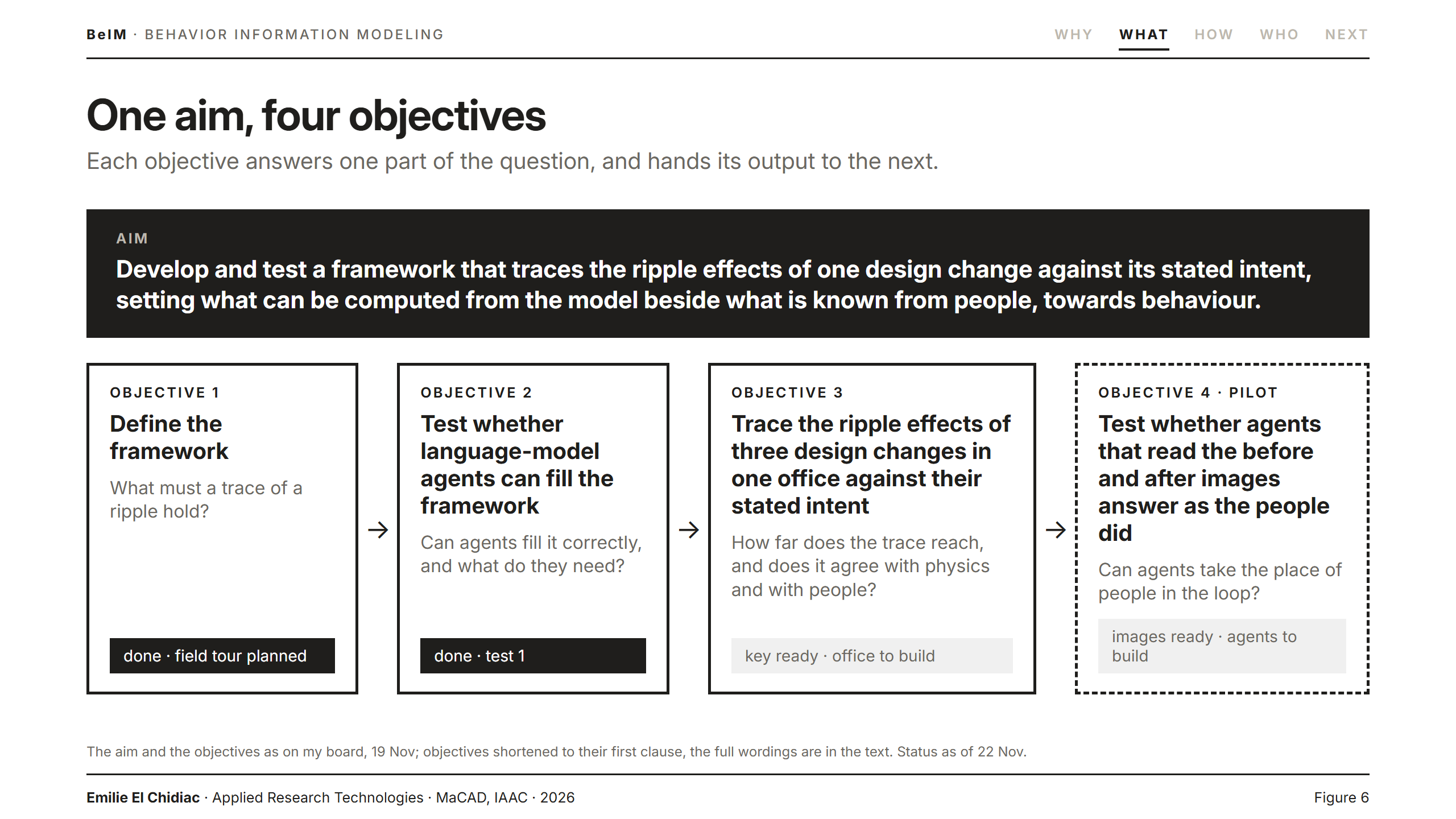
Figure 6: One aim, four objectives. The first two are done; the third has its key ready and its office to build; the fourth is a pilot.
There is also a bet I could lose, written down before the next run: A language model working inside the BeIM framework traces the ripple effects of one design change towards behaviour more completely and more checkably than a language model alone. What would prove me wrong: the language model alone finds as many of the known effects, with its sources found where it says they are.
5. Evidence-Based and Feasible: One Office, One Decision
The seminar asked for two things of any applied idea: that it be backed by evidence, and that it could actually be built. So here is one decision, in one office.
The office is 20 by 12 metres. The decision is to take the partitions out, for a more spacious floor. From one seat, the area you can see grows from 43 to 233 square metres. BeIM computes that from the plan. That part is physics, and it is the easy part.
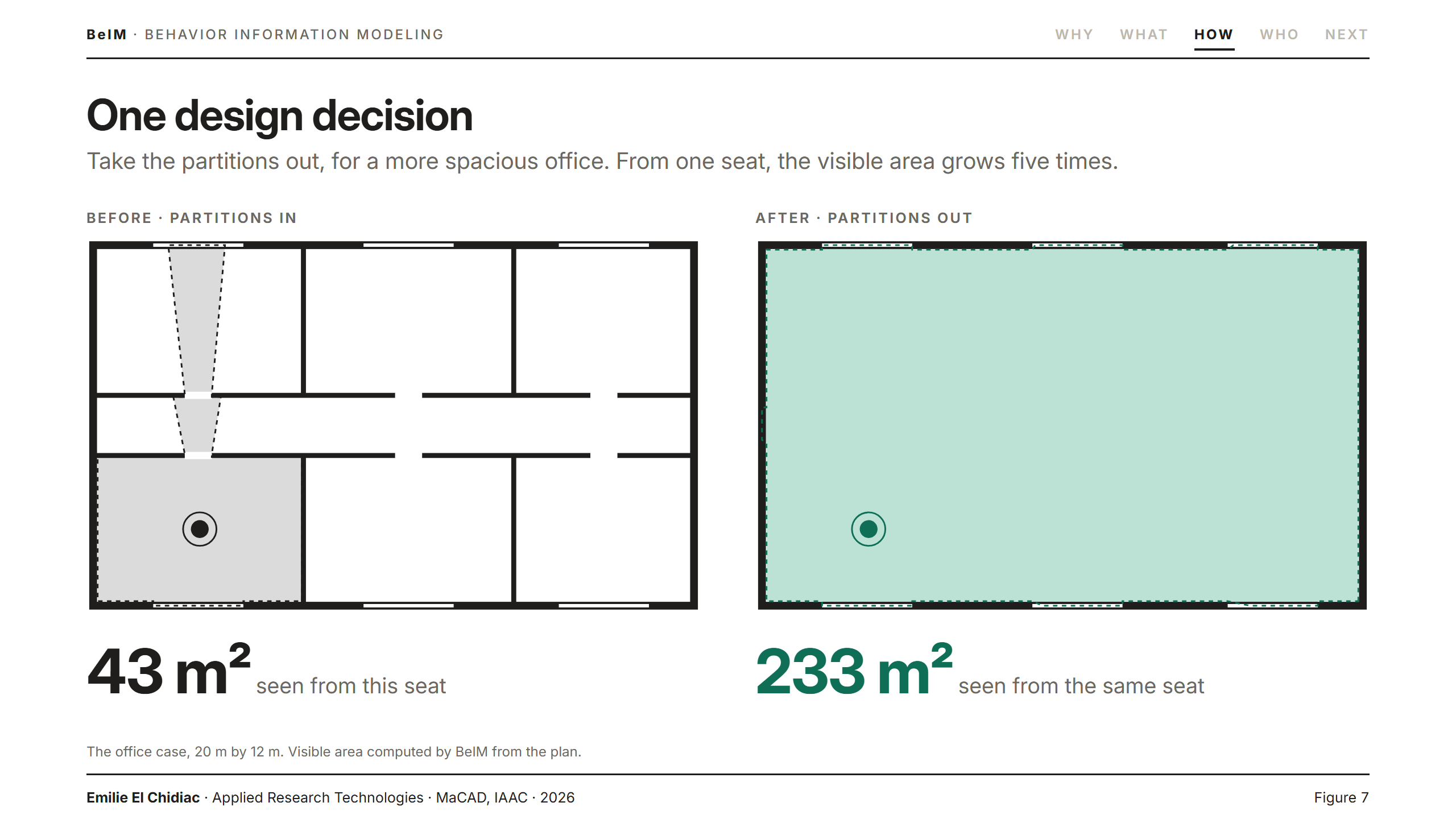
Figure 7: Partitions out, for a more spacious office. From one seat, the visible area grows five times. Computed by BeIM from the plan.
Now the people. In a study of offices like this one, 602 people rated images of the same space with and without partitions, on a scale of 1 to 6. The intent was “more spacious”. That was not in the published results. What was: the office became less private (4.46 to 3.58), more distracting (2.66 to 3.30), and easier to talk in (3.76 to 4.61). One intent, three effects nobody listed, two of them worse for the person.
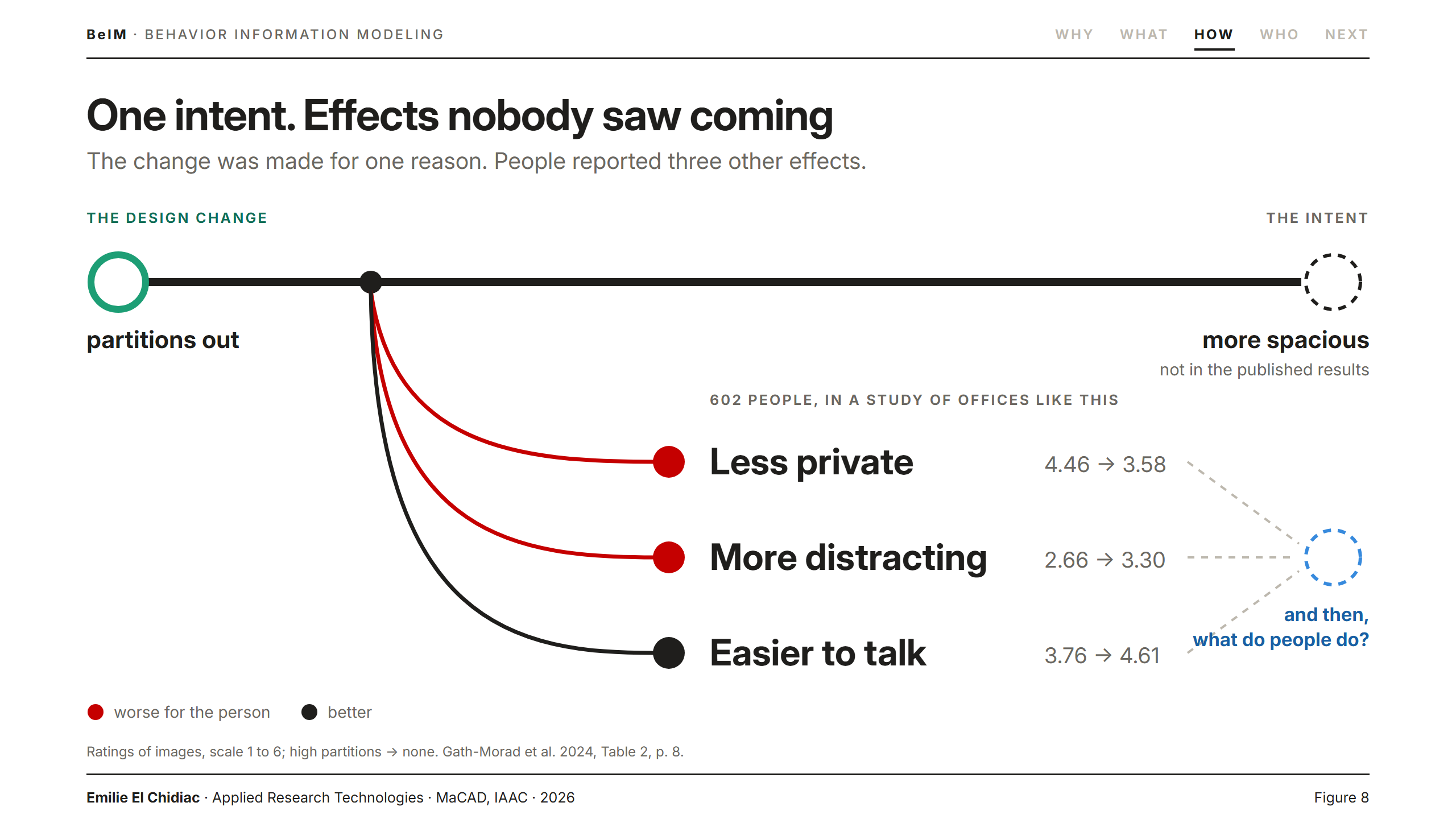
Figure 8: The change was made for one reason. People reported three other effects. Gath-Morad et al. 2024, Table 2, p. 8; ratings of images, scale 1 to 6.
That is what I mean by a ripple: effects spreading in several directions at once, including ones nobody intended. BeIM’s job is to trace it. On the same office, one change runs through eight measures computed from the plan, three senses inferred by stated rules, and sixteen effects found in papers, each with its paper, page and quote. One effect reaches behaviour: coping. And one link has no study behind it at all, so it is drawn as a gap, in red, instead of being quietly filled in.
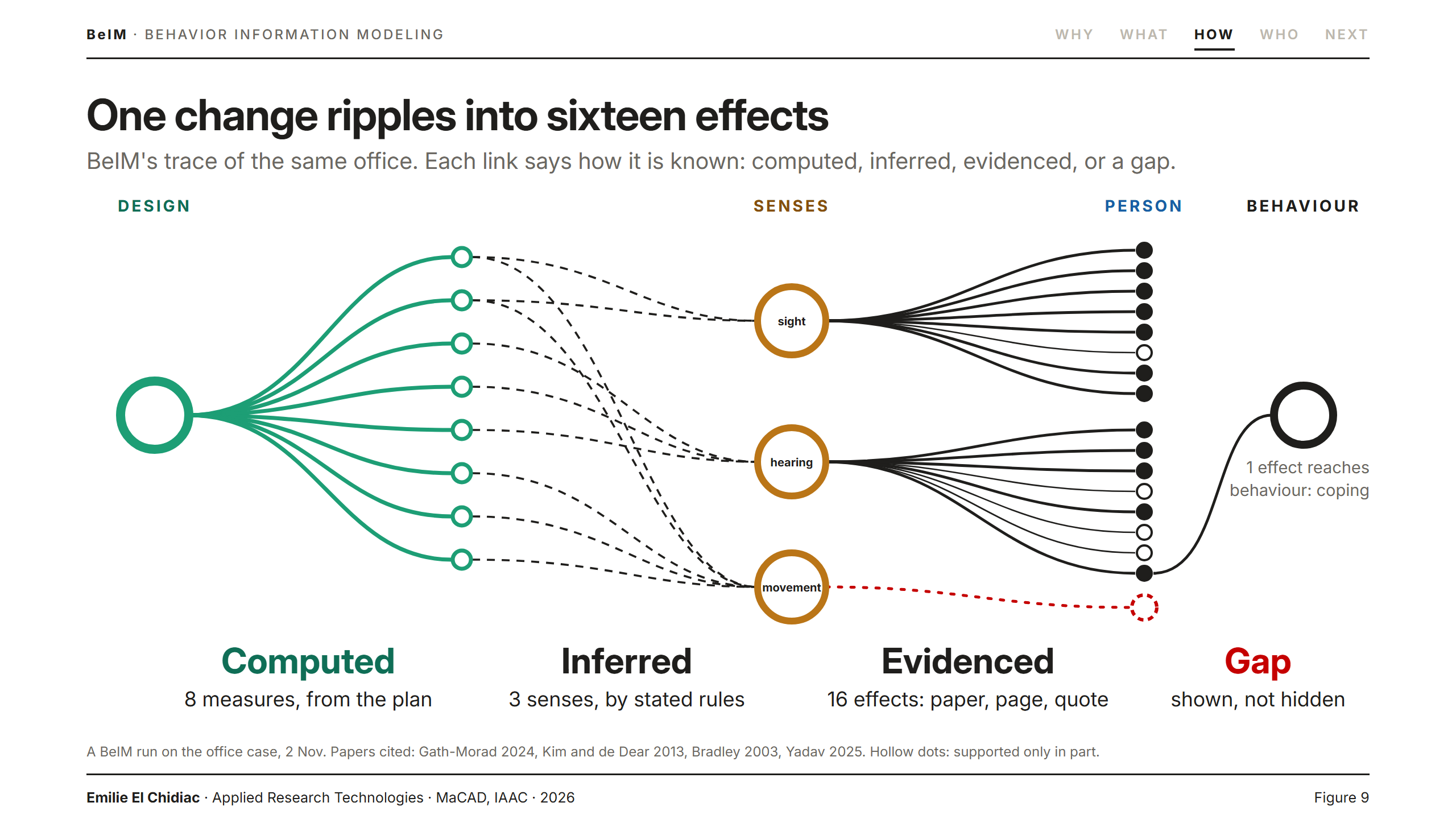
Figure 9: One change ripples into sixteen effects. Each link says how it is known: computed, inferred, evidenced, or a gap.
Does it work? A first test compared three ways of answering the same question on this office, three runs each, against a key frozen before any run. With the knowledge given, BeIM found 70% of the known effects; a general AI model given only a prompt found 42%. BeIM gave the same answer run after run 90% of the time, against 71%. Every quote BeIM cited was on the page it named. When BeIM searched on its own, without the knowledge given, it found 14%. That route is not there yet.
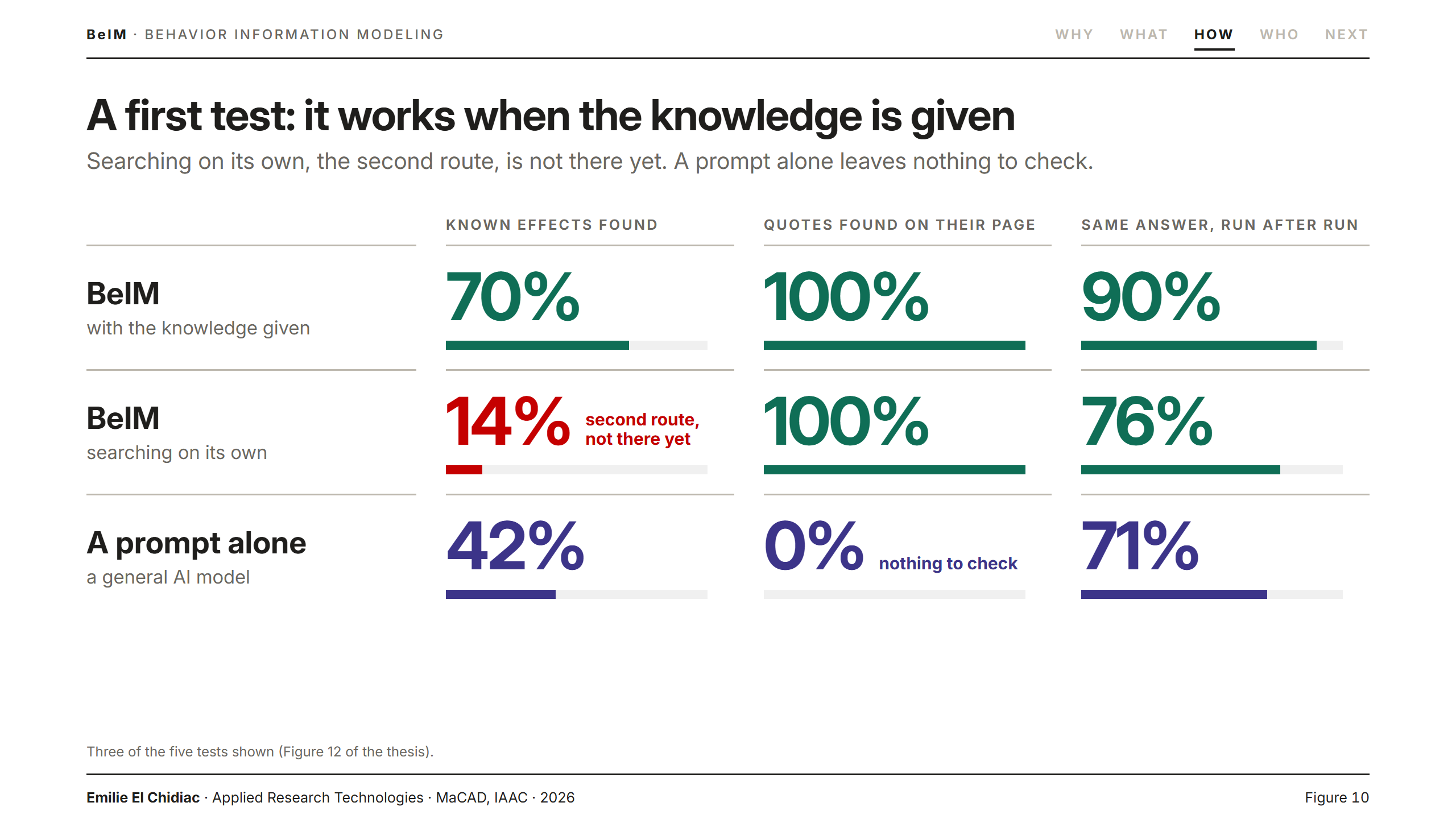
Figure 10: A first test. It works when the knowledge is given; searching on its own is not there yet.
Two honest limits. The prompt’s 0% for quotes is not a result: its quotes were never checked against their pages, the grading set them to zero. So I cannot claim BeIM is “more checkable” until they are. And “more completely” still needs a definition before the next run. In the seminar’s terms: the claim is narrow, the evidence is one office, and the reasoning is written down where anyone can break it.
6. Who It Is For, and Who It Needs
The second class was about actors: anyone who can influence, contribute to, enable, adopt, regulate, fund, challenge or be affected by the research. Mapping mine changed how I describe the thesis. It is not a tool for designers alone.
It needs labs, who hold the knowledge: the studies, the ratings, the data. It needs funders and practices willing to pay for a pilot. It needs codes and standards, who set the rules a trace would answer to. And it needs software makers, who are the route into everyday practice. In return it gives designers a trace for each decision, gives labs a map of the links nobody has studied yet, and gives occupants something they rarely get: a seat at a decision they will live with every day. They are the stakeholders in the strict sense. Everyone else is an actor.
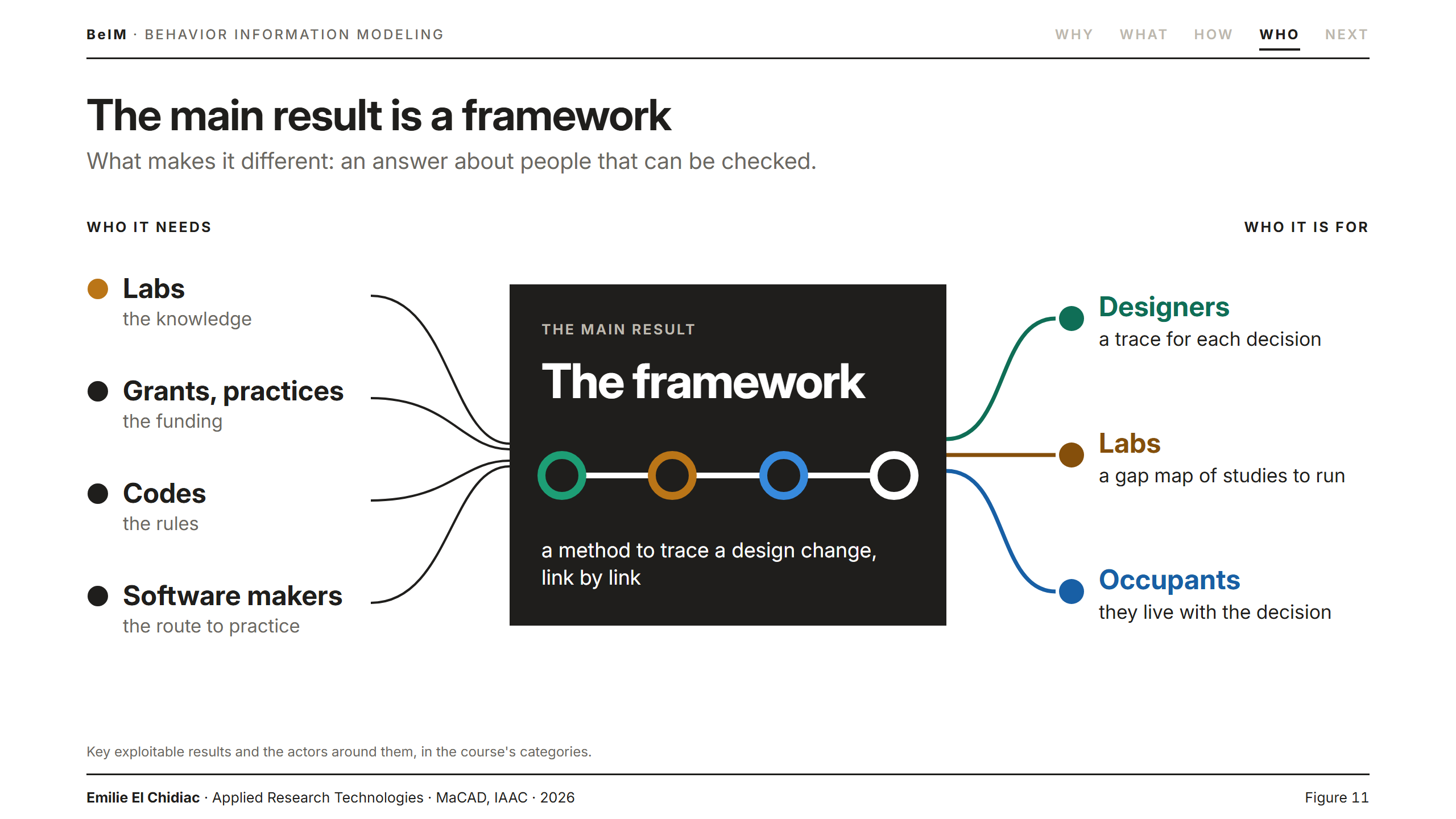
Figure 11: The main result is a framework. Who it needs on the left, who it is for on the right.
The seminar’s formula for a unique selling point is problem, plus the difference from what exists, plus the benefit. Mine: designers cannot see what a change does to people before it is built; the tools I reviewed score comfort or simulate energy, but do not show how their answer about people is known; BeIM gives an answer about people that can be checked, link by link. The difference is not that it knows more. It is that it shows its working, gaps included.
7. Impact: Short Term, Long Term
This was the other part Fiona found missing, and she was right again. “Improve how spaces feel” is a direction, not an impact. The seminar’s vocabulary helped: a result is what the project produces, an outcome is the effect over the medium term, an impact is the wider change, usually long after the project ends. And an impact you cannot yet see can still be expected, if there is a reasoned pathway towards it, or merely potential, if it depends on conditions you do not control.
So I drew a theory of change.
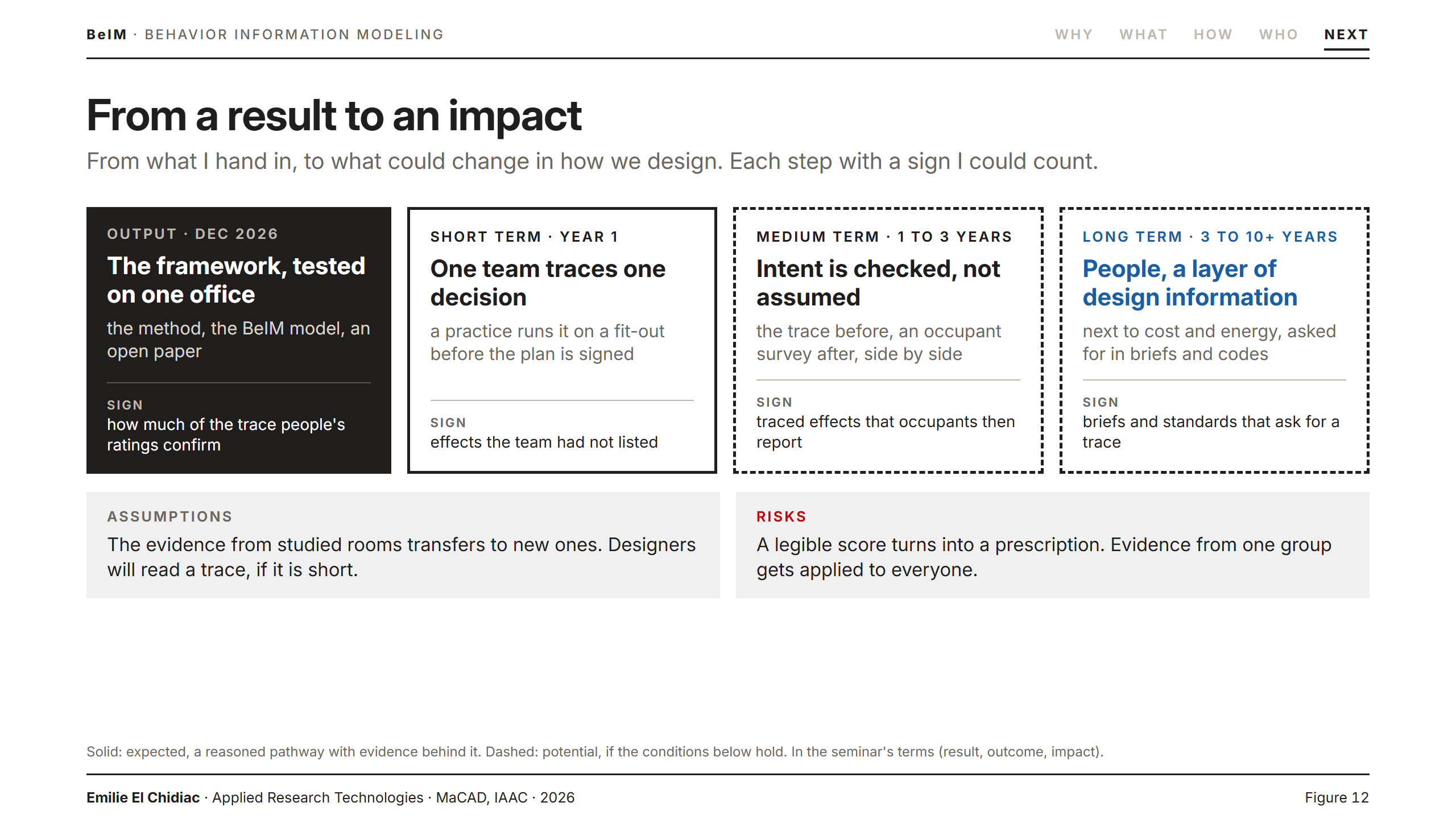
Figure 12: From a result to an impact. Solid: expected. Dashed: potential, if the assumptions hold.
The output, in December, is the framework tested on one office; the sign is how much of the trace people’s ratings confirm. In the first year, the short-term outcome is adoption at its smallest: one team traces one decision on a real fit-out before the plan is signed. The sign is simple to count: effects on the trace that the team had not listed themselves.
The medium term is where design itself changes. If teams trace decisions before, and occupants are surveyed after, the two can sit side by side: a before and after, in the seminar’s words ex-ante and ex-post. Intent stops being assumed and starts being checked. The long term, three to ten years out, is the one I actually care about: people as a layer of design information, next to cost and energy, asked for in briefs and codes. The New European Bauhaus already lists “quality of experience” beyond functionality as a value. A brief that asks for a trace would be one way to hold a project to it.
Two assumptions carry all of this: that evidence from studied rooms transfers to new ones, and that designers will read a trace, if it is short. And two risks I take seriously, both carried over from Sensi, an earlier project of ours. A legible score can turn into a prescription. And evidence from one group of people gets applied to everyone, which is how averages end up designing rooms for nobody.
8. Could I Sell It?
Fiona asked this directly: is it something I would share with offices, or a tool I could sell? The seminar’s answer to that kind of question is to name the key exploitable results first, then a route for each. I have four, and they do not all go the same way.
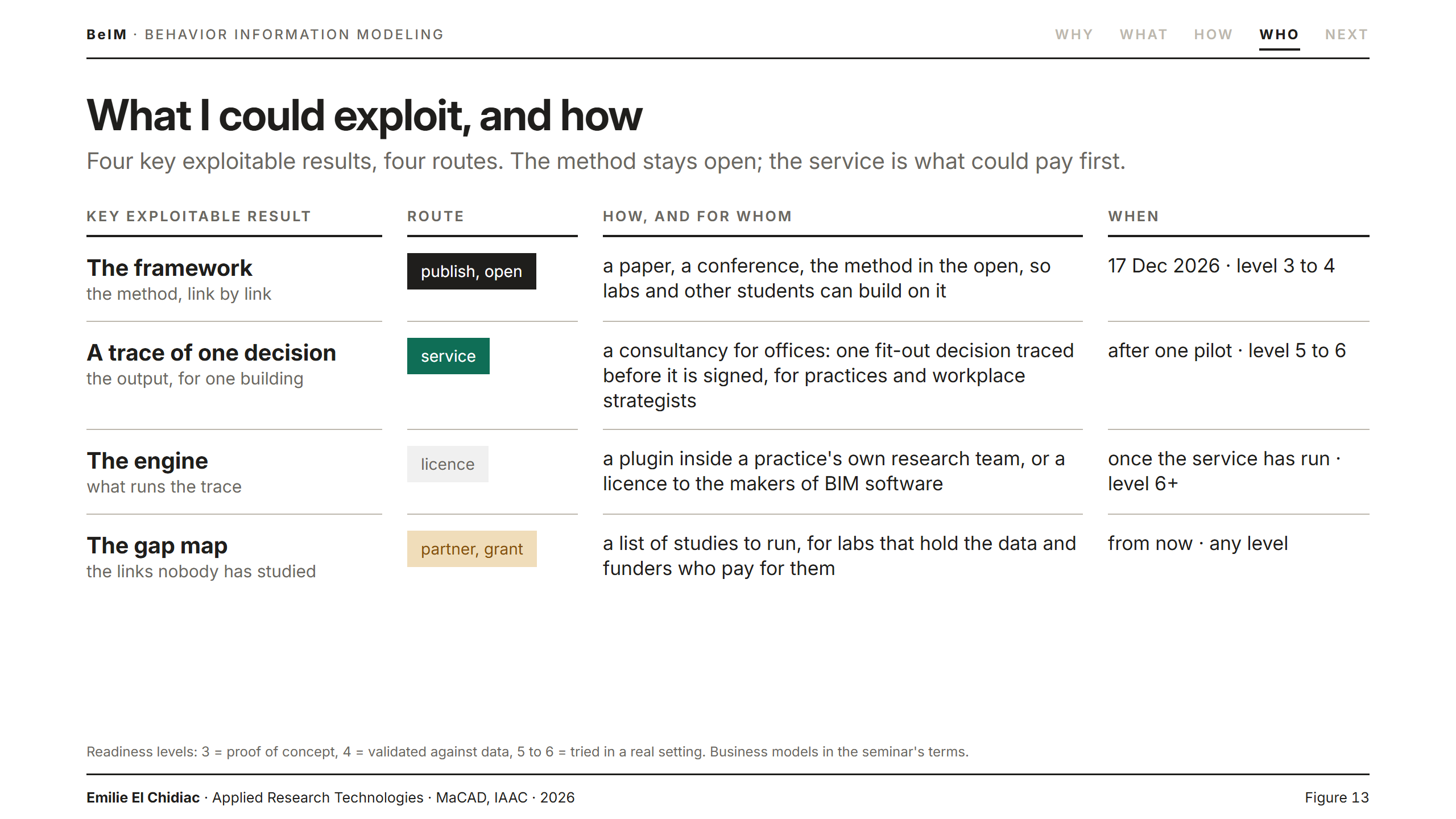
Figure 13: Four key exploitable results, four routes. The method stays open; the service is what could pay first.
The framework goes open. A paper, a conference, the method public, so that labs and other students can build on it and, more usefully, break it. A method about checkable answers that is itself closed would be a strange thing to defend.
A trace of one decision is the part that could pay, and first as a service, not a product. A consultancy for offices: one fit-out decision traced before it is signed, for a practice or a workplace strategist. The seminar’s business model types put this under service-based: selling expertise and time. It is also the cheapest way to get the pilot that the readiness levels ask for.
The engine is licensable, later. Either as a plugin inside a practice’s own research team, which the seminar called intrapreneurship (ARUP Ventures was the example), or as a licence to the makers of BIM software, who are the route to scale. Not before the service has run on real decisions.
The gap map is the quiet one. Every trace ends in a list of links nobody has studied. That list is a research agenda, and research agendas are what labs and funders, from a city grant up to Horizon Europe, exist to pay for. It can be exploited from today, at any level of readiness.
Replication matters for all four. The seminar was clear that one case study is a proof, not a product. The next case is not another building I draw myself: it is the same sheet run on another lab’s data, in another kind of room.
9. How Ready Is It?
The seminar gave me a ruler I did not have before: technology readiness levels. Level 3 is a proof of concept, 4 is validated against data, 5 to 6 is tried in a real setting. BeIM is at level 3 today: a prototype, five tests, one office. On 17 December it should reach level 4, if it agrees with the ratings of the 715 people in that study’s open data. After that, the test is not mine to run: a team decides with it.
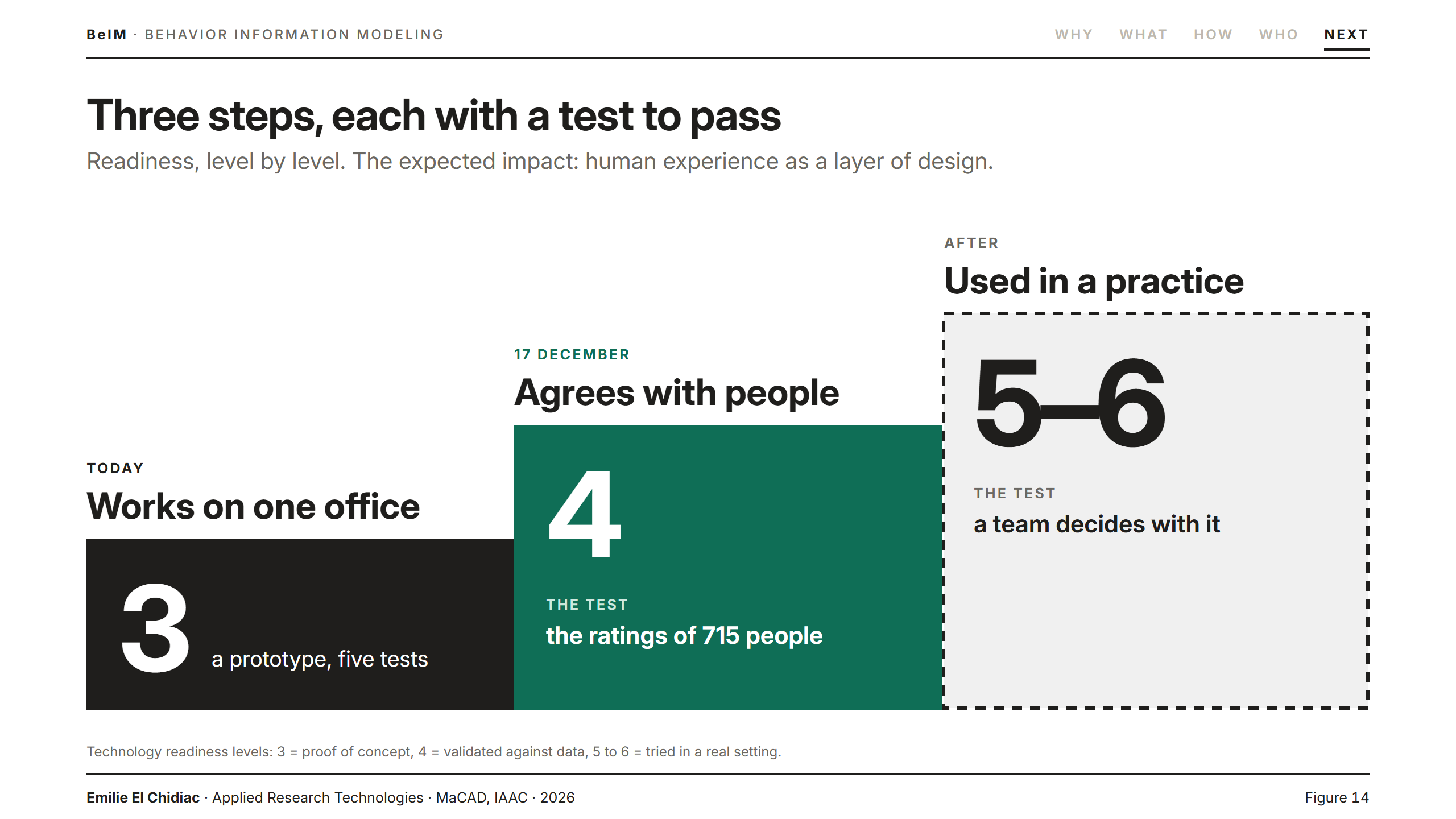
Figure 14: Three steps, each with a test to pass. Level 3 today, level 4 on 17 December, levels 5 to 6 when a practice uses it.
The societal readiness level is the one I find harder to place. Do designers want this? I think so, but thinking so is not validation. That is the next thing to test, and it is a problem-space question, not a solution-space one.
10. What We Are Optimizing For
The Pecha Kucha closed on two asks, and they still stand. To labs: share your data, in a shape a trace can read. To designers: try it on one decision. Not a building. One decision.
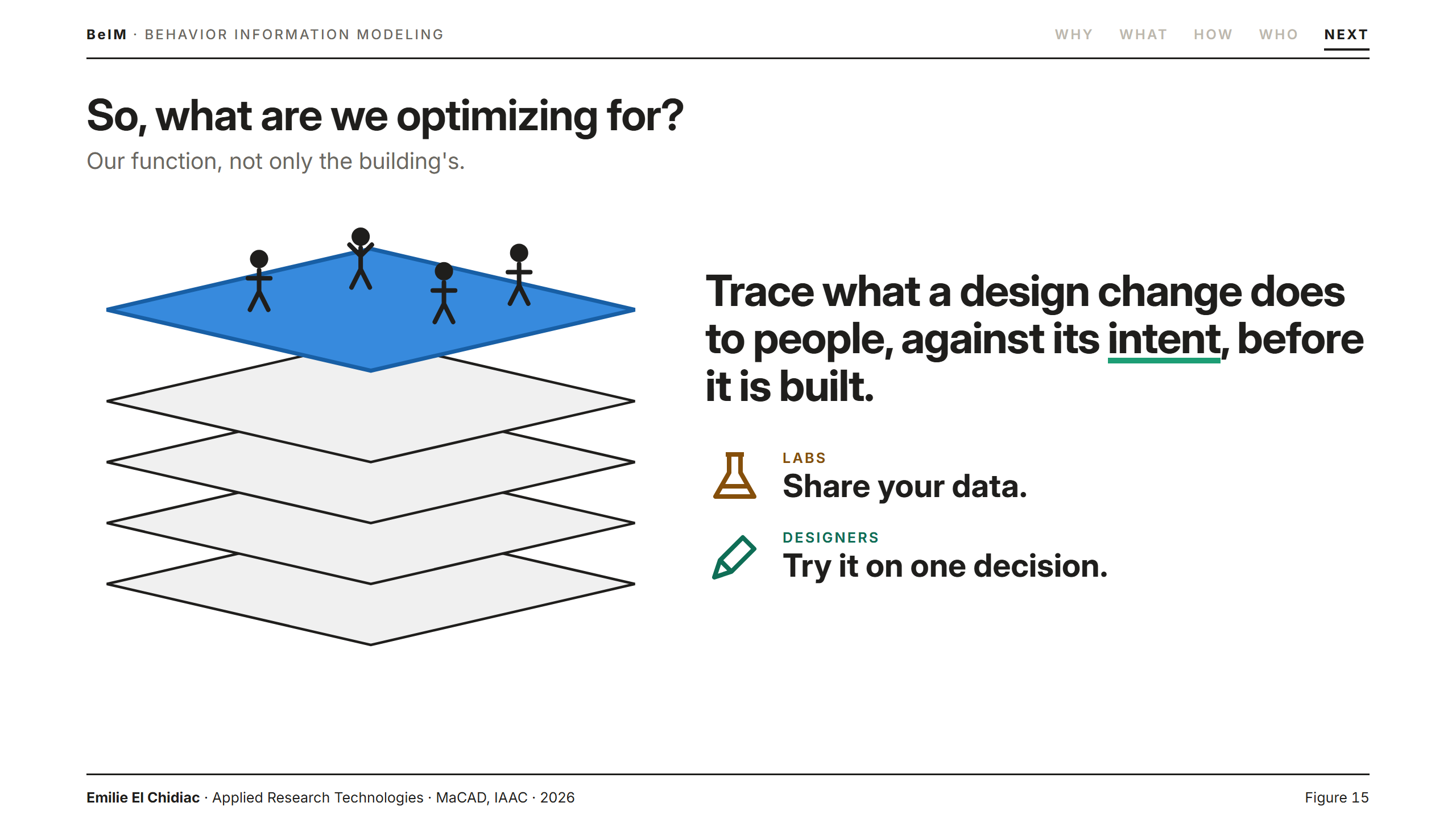
Figure 15: Trace what a design change does to people, against its intent, before it is built.
The seminar made me say who the thesis is for, what it would change, and who would pay. I could answer the first two before. The third I can now answer with a route, not a guess. What I still cannot answer is the question the whole thing started from, the one on the first slide. Cost, efficiency, speed, and then what are we optimizing for?
Applied Research Technologies is a seminar of the Master in Advanced Computation for Architecture and Design (MaCAD) 2025/26 at IAAC, Institute for Advanced Architecture of Catalonia. Student: Emilie El Chidiac. Faculty: Fiona Demeur. Thesis supervisor: João M. Silva.
Sources cited in the figures: Beutel et al. 2016, PLOS ONE; Yılmaz, Akkam and Sedes 2026; Gath-Morad et al. 2024; Kim and de Dear 2013; Bradley 2003; Yadav 2025.
