IAAC is a school built on collaboration. The energy of shared spaces, the visibility between disciplines, and the flow of natural light are all part of what makes it work. But as students, we know the other side of that coin, finding a quiet corner for deep focus can be a real challenge. The school’s new spatial proposal opens up an opportunity: what if we could introduce more enclosed, dedicated areas without sacrificing the openness that defines IAAC? No solid walls cutting off light or connection. Instead, a system that offers enclosure and porosity at the same time.
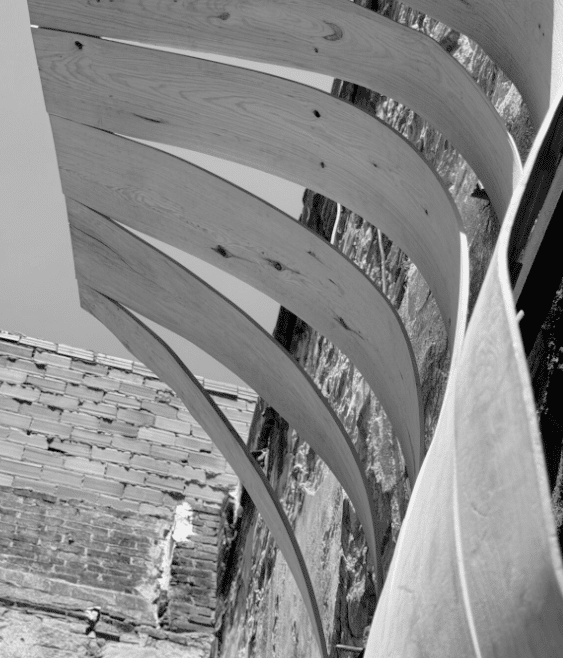
That’s the question Woodscreen sets out to answer. By combining the vernacular tradition of active bending with robotic fabrication, we developed a modular timber partition system where gradients of porosity are embedded directly into the structure. The result is a wall that breathes, one that creates focus zones while keeping the school’s key spatial qualities alive: visibility, daylight, and the sense of community that makes this place what it is.
Making Before Manufacturing
Woodscreen didn’t start with software. It started with references, three vernacular traditions that have been solving the same problems for centuries, each in their own way.

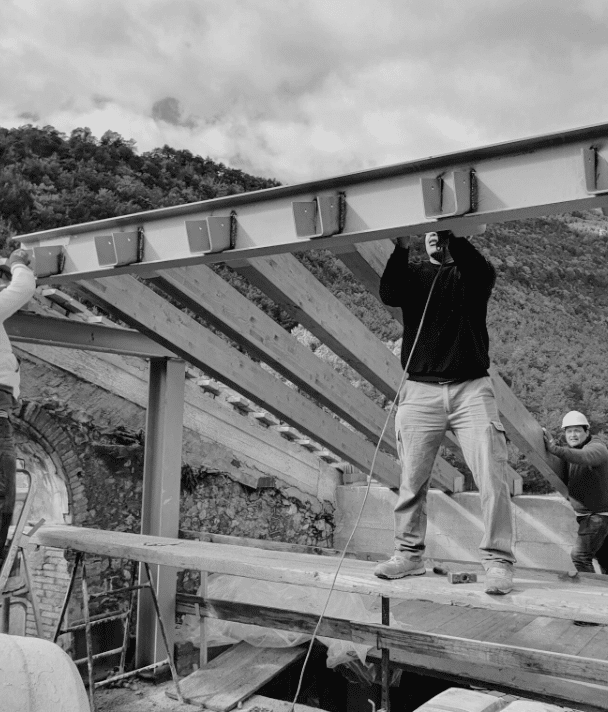
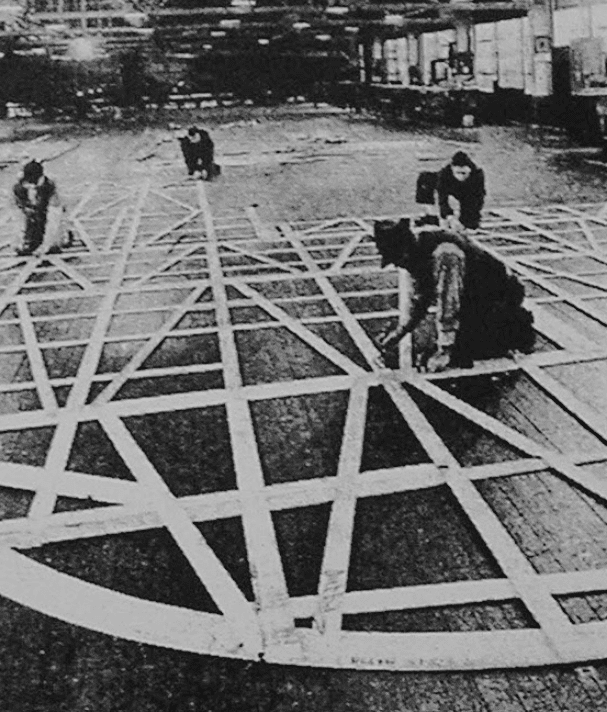
The mashrabiya of Islamic architecture mediates between private and collective space through calibrated porosity. It doesn’t close a room, it filters it. The masia catalana treats wood as a structural backbone: exposed beams carrying loads across generations, not as decoration, but as the material that makes the building possible. And lofting, the traditional naval construction technique, bends timber at full scale by drawing geometry directly on the floor. These three traditions share one logic: making comes before manufacturing.
Wood as a Territorial Material
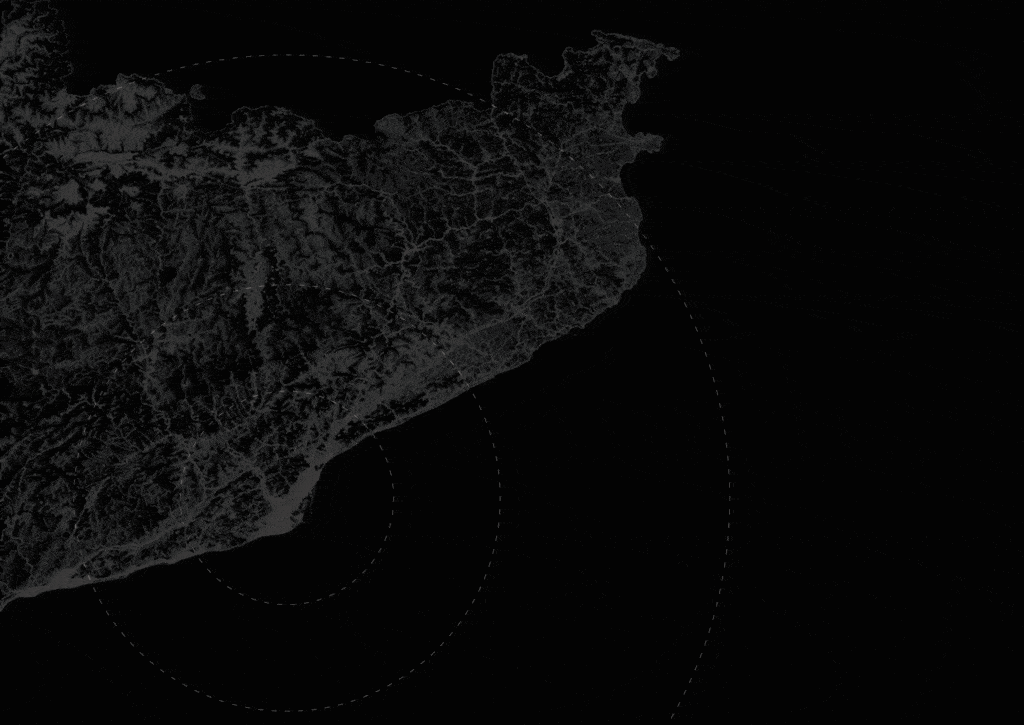
Catalonia’s forests cover over 1.3 million hectares, actively managed under PEFC sustainable forestry certification, with most of that resource concentrated in the Pyrenees, less than 200 km from Barcelona. And yet, despite the region’s productive capacity, more than 80% of the wood consumed by Spain’s construction industry is still imported. The material is here, it’s just underused.
European beech (Fagus sylvatica) became our material of investigation. Not the conventional choice for active bending, but one with sufficient mechanical basis to justify the exploration, and the territorial availability to make it meaningful.
As a hardwood, beech is anisotropic: its mechanical properties vary significantly along and across the grain direction, which directly influences bending behavior and springback response. Once dried, it exceeds oak in bending strength, stiffness, and shear capacity by approximately 20%, and shows considerably higher resistance to impact loads. Its elastic behavior under bending loads, combined with resistance to both compression and tension, makes it structurally suitable for a system where strips are permanently deformed and held under stress. Critically, beech responds well to steam bending, above its glass transition temperature, the lignin matrix softens, allowing plastic deformation before cooling fixes the new geometry. These properties defined both the opportunities and the constraints of the fabrication process.
State of the Art
Robotic active bending is not an emerging idea, it has a documented trajectory, and Woodscreen positions itself within a line of research that IAAC’s MRAC program has been actively developing across successive cohorts.
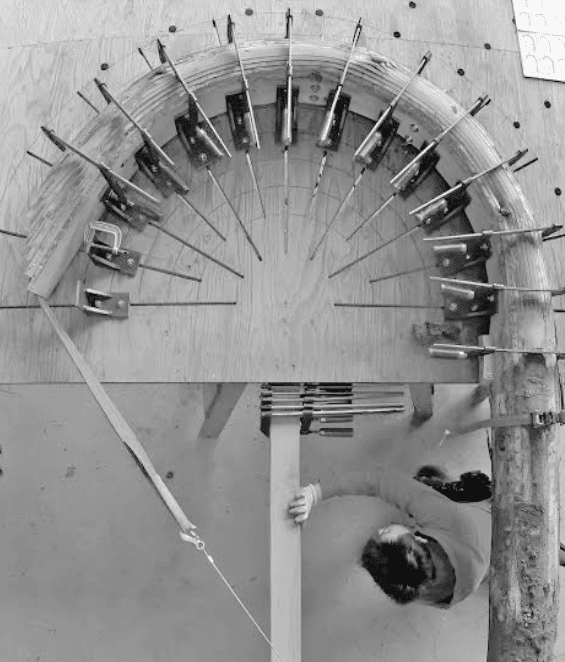

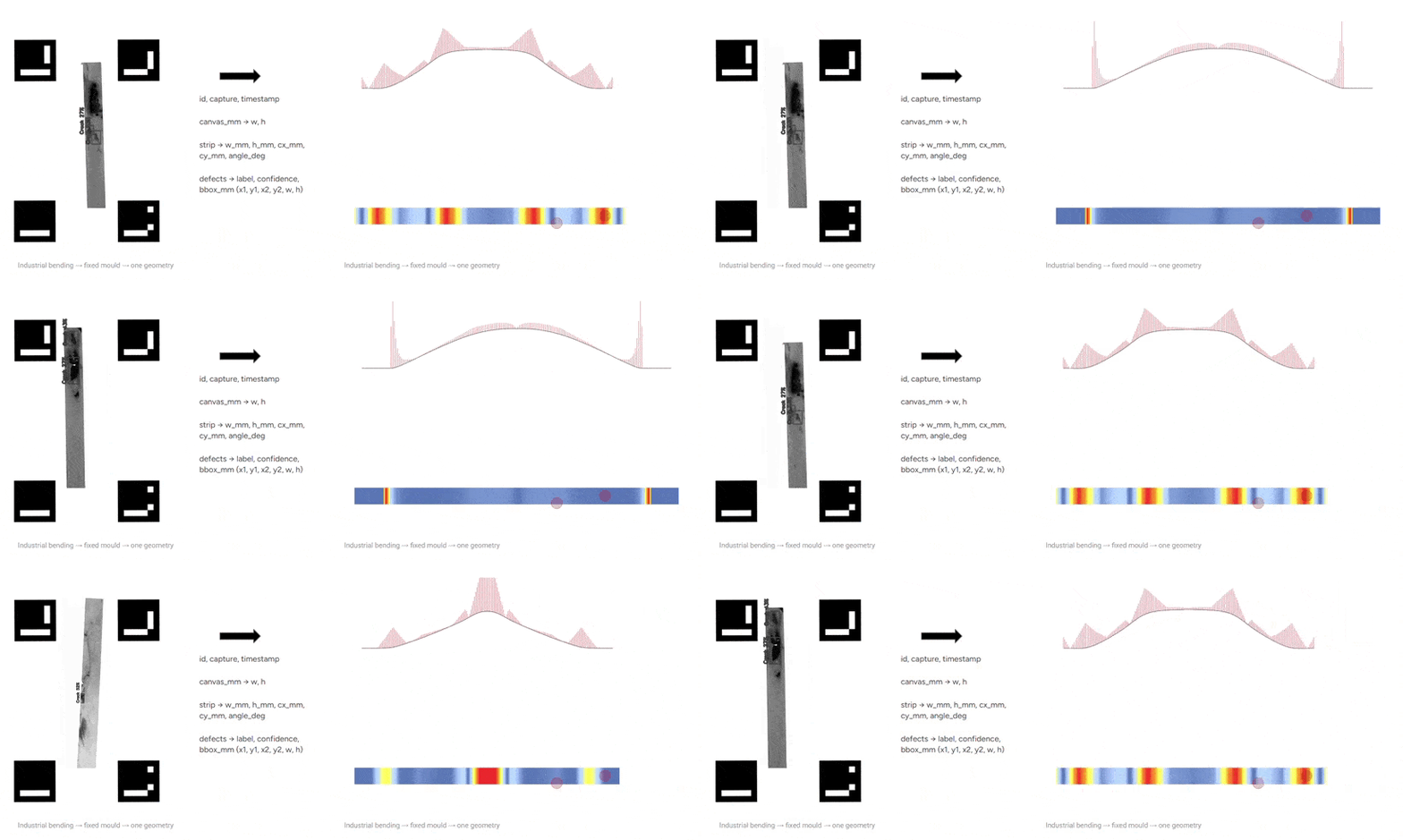
Industrial bending established the baseline and its limitation: one mould produces one geometry. Scale is achieved through repetition, not variation. Every new curvature requires new tooling — time, cost, and rigidity built into the process from the start.
RAWB (MRAC01, 2019) broke that constraint by introducing steam softening. Heating the wood above its glass transition temperature enables tight bending radii that cold bending cannot achieve. More significantly, by removing the fixed mould from the equation, the robot itself becomes the geometry — its end-effector trajectory defines the curve, not a physical template. Fabrication logic shifts from tooling to programming.
BENDATA (MRAC02, 2024) pushed the question further by reframing material irregularity. Rather than correcting for natural variation in the wood, the system measures it. Each lath informs its own bending behavior through real-time material feedback, turning what industrial bending treats as defects into design inputs.
Woodscreen continues this trajectory, contributing a new project to MRAC’s growing body of work on robotic wood bending.
Methodology




The fabrication process follows a six-step sequence governed by THM — Thermo-Hydro-Mechanical — parameter control, a method documented by Navi & Sandberg (2011) for the precise manipulation of wood through combined temperature, moisture, and mechanical force.
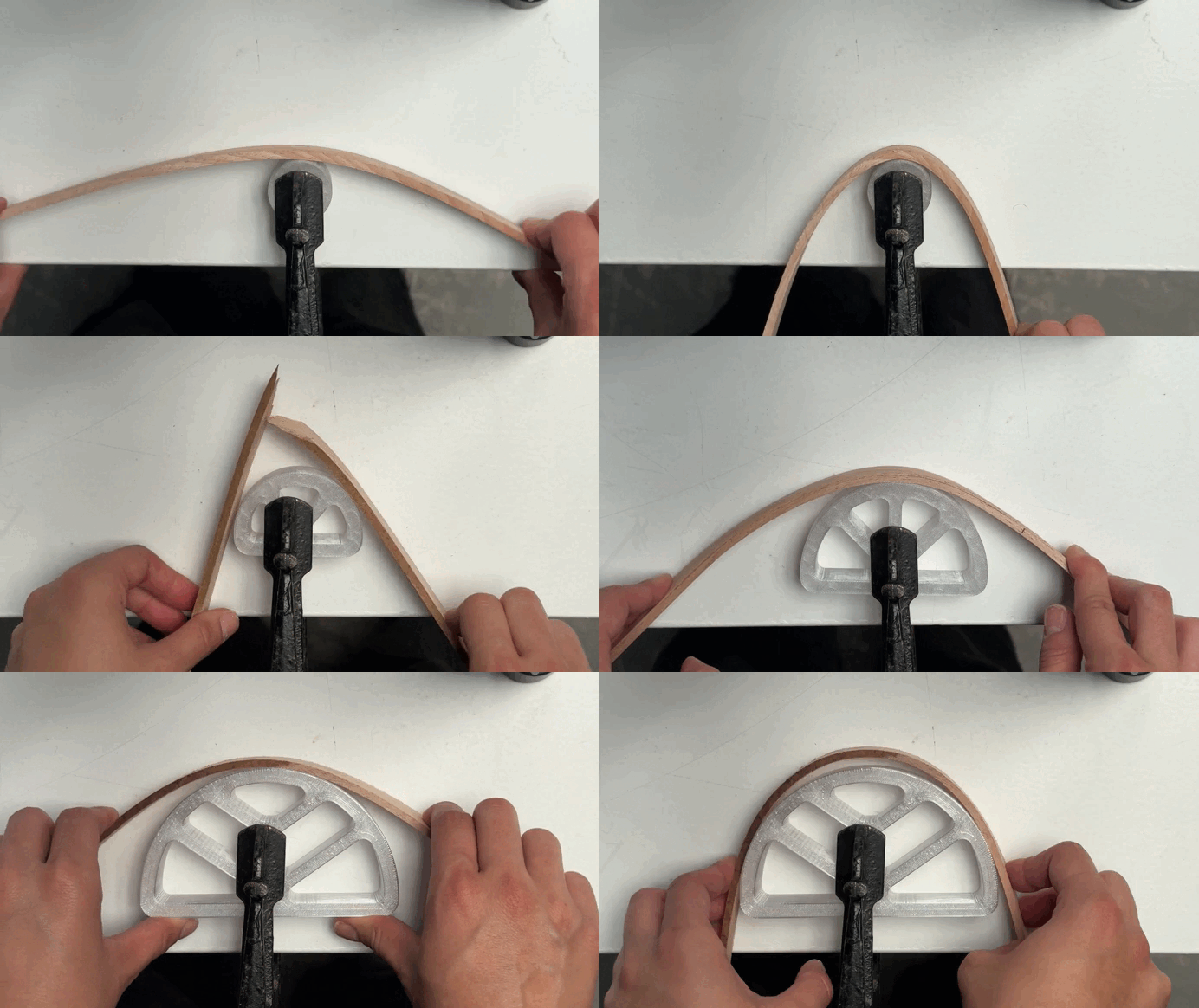
Local beechwood is cut into 4mm laths, with thickness directly controlling bending radius and final element stiffness, the first design variable. The laths undergo steam conditioning above 100°C for 20 minutes, with moisture content held between 29–32%. At these conditions, the lignin matrix plasticizes, allowing the fibers to deform without fracturing. The softened lath is then formed over parametric 3D-printed stoppers that define the target curvature. Because the jig is reconfigurable, each strip can follow a unique trajectory, geometry is defined by a parameter, not a physical template. The strip is held in position through fixing and cooling, locking the deformed lignin into permanent form. In assembly, the residual active bending forces stored in each element become a structural contribution to the whole system.
Material Constraints
MANUAL EXPLORATION
DIGITAL TRANSLATION
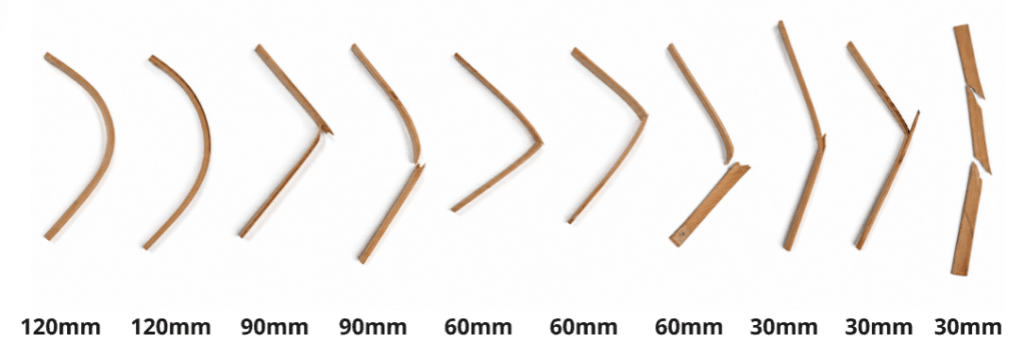
Before designing with the material, we needed to understand its limits. Bending radius exploration was conducted manually, physical tests ranging from 120mm down to 30mm, to establish where beechwood holds and where it fails. The outer face of each bent strip works in tension, the inner in compression. Below a 90mm radius, tensile stress exceeds fibre resistance and fracture occurs. That threshold became the working limit of the system.
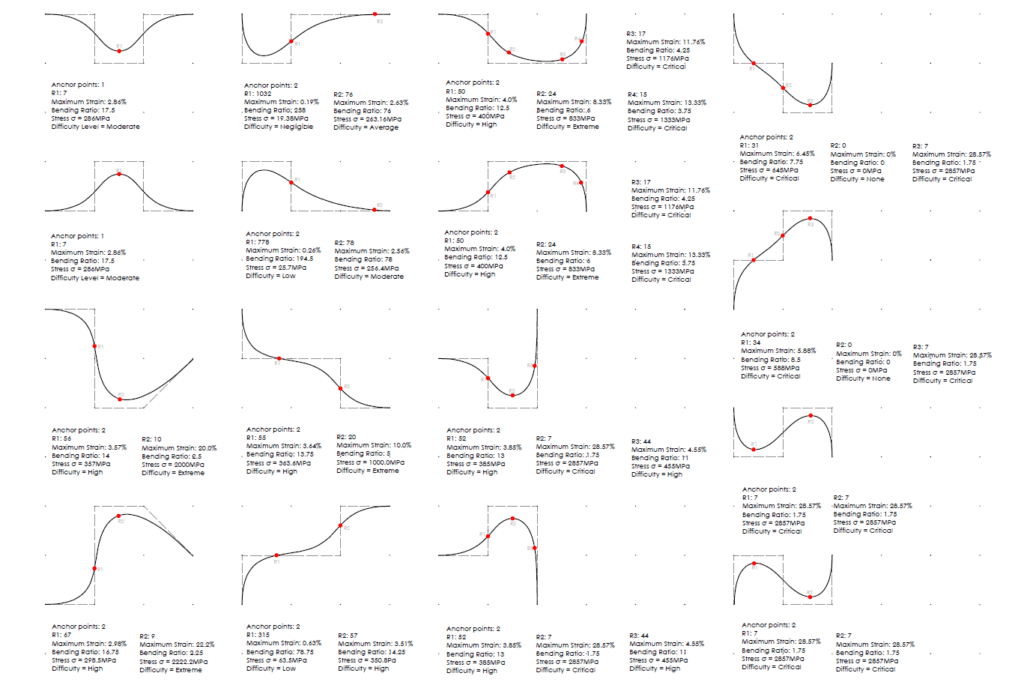
Those physical limits were then translated into digital geometry. Bezier splines with parametric control points were mapped against the validated bending range, producing a catalogue that distinguishes achievable curves from those that would exceed material capacity. Design decisions are made within that boundary, the catalogue doesn’t define what the system will do, it defines what it can’t.
Robotic preparation
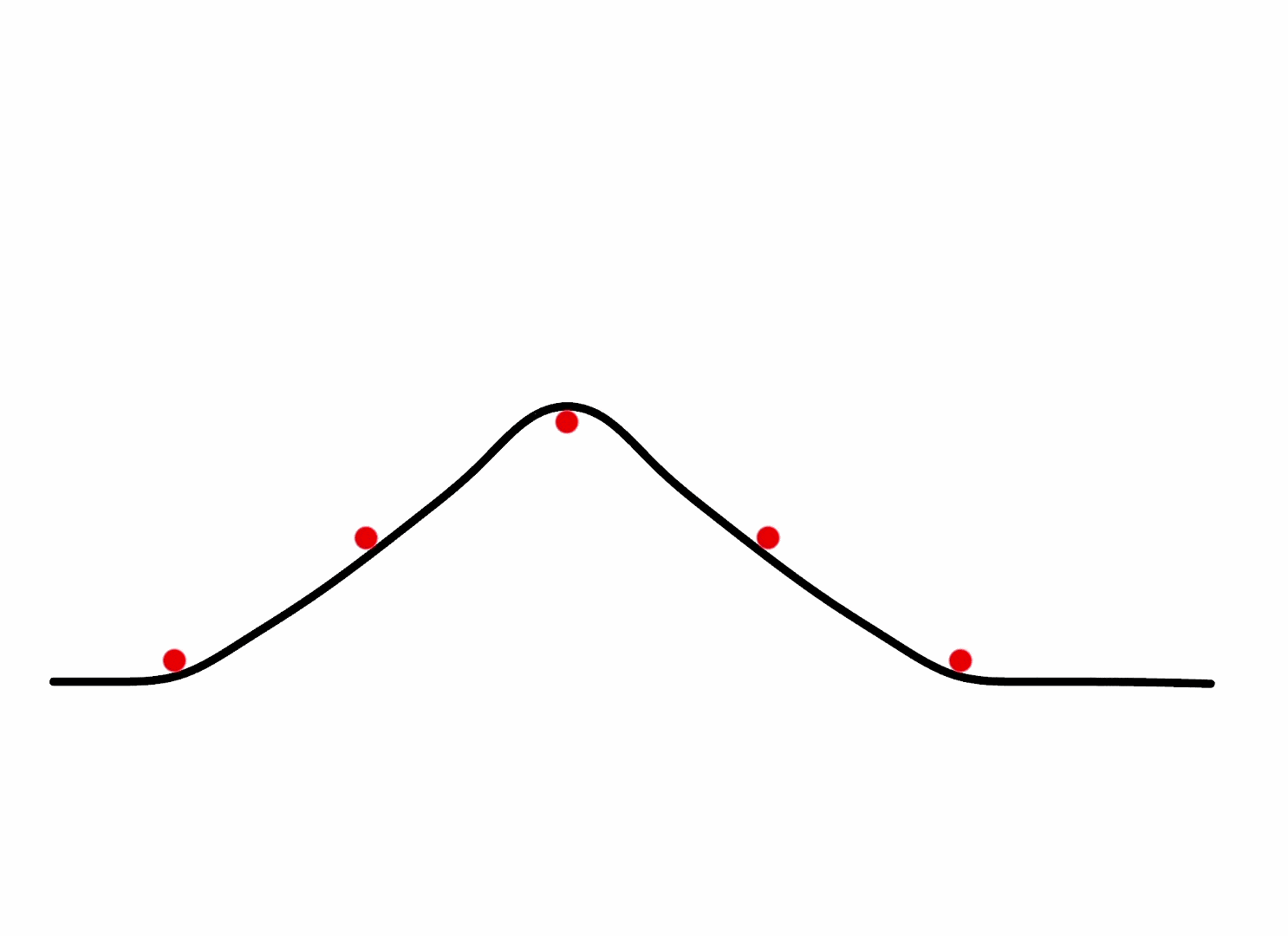
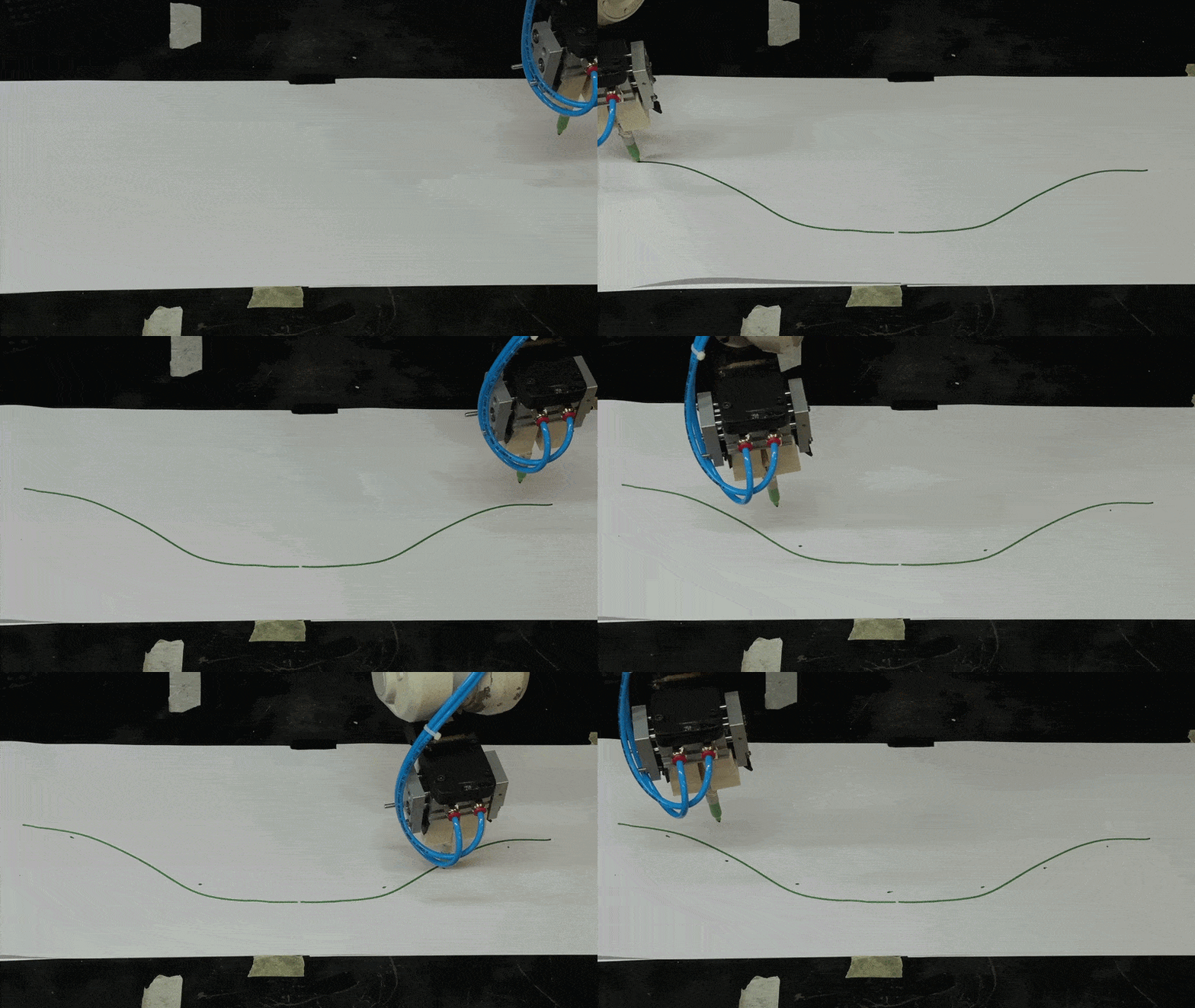
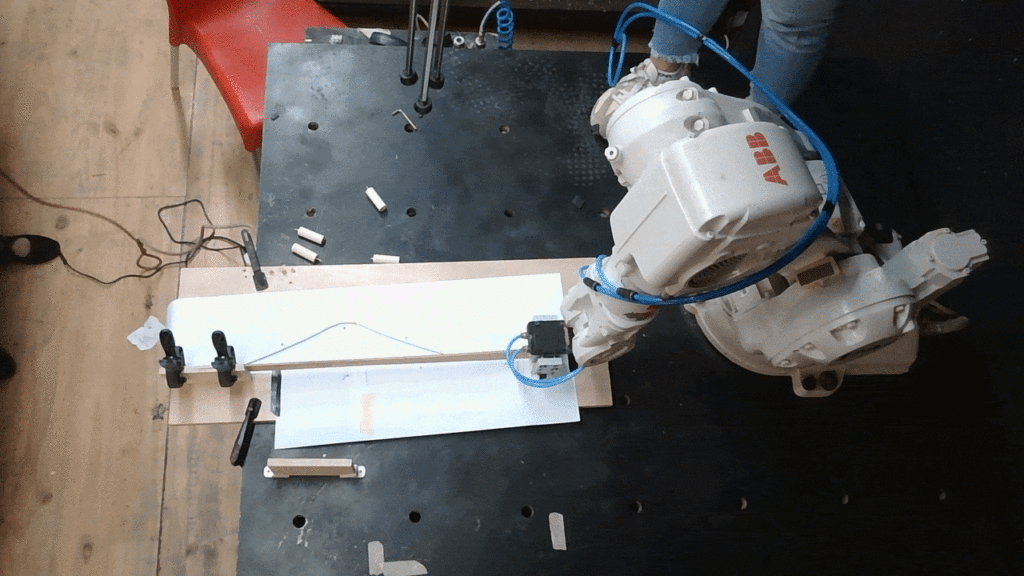
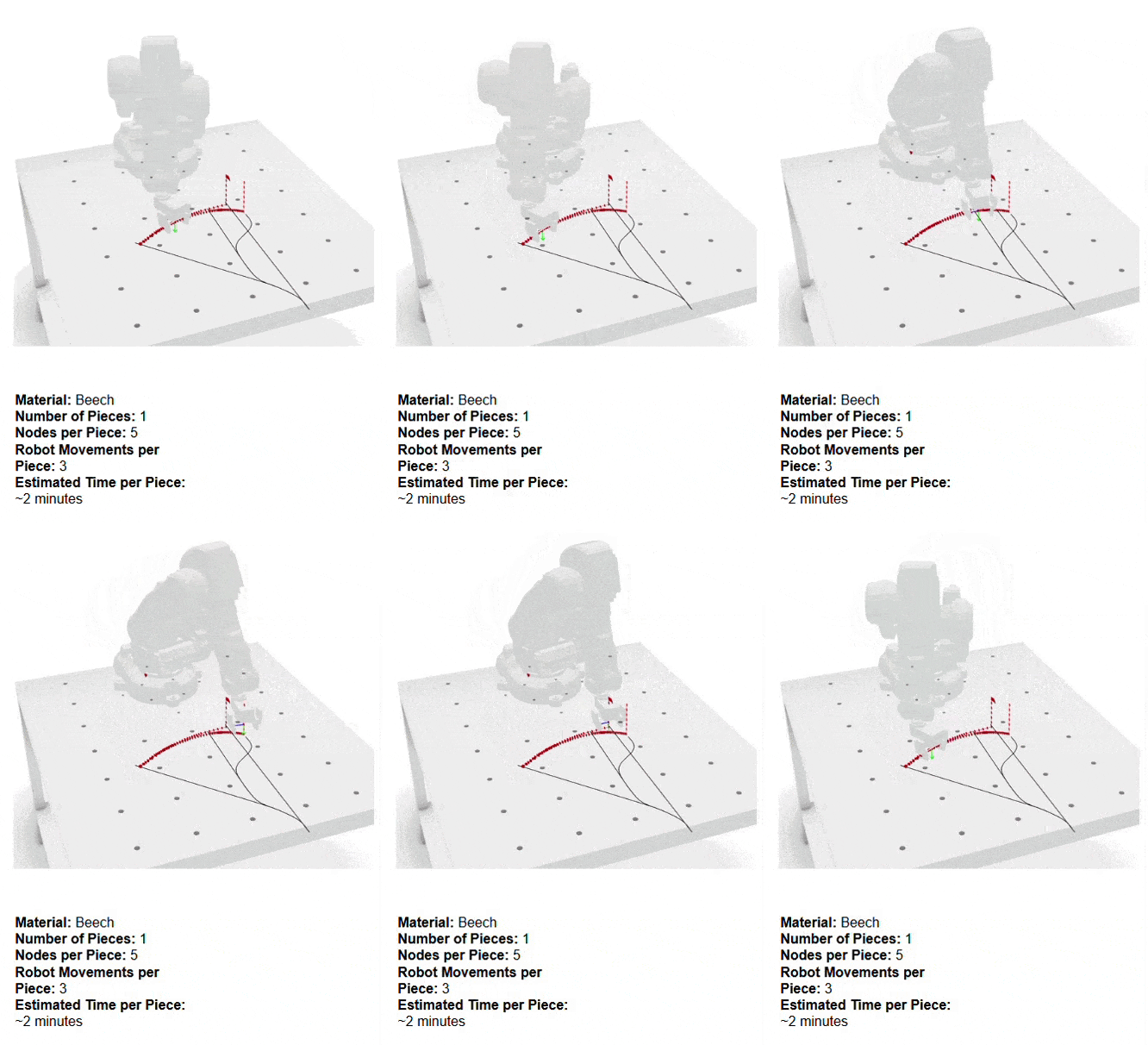
Before any bending takes place, the robot performs a preparatory step that is easy to overlook but critical to the process. Using the same pneumatic gripper fitted with a small marker, the robot draws a full-scale template directly onto the work surface, tracing both the target bending curve and the stopper positions for each individual piece. Since every strip follows a unique geometry, this template ensures that the physical setup is accurate before the wood is touched. It is, in a sense, a modern version of lofting — the same logic as drawing full-scale geometry on the floor, now executed by a robot.
Bending Workflow
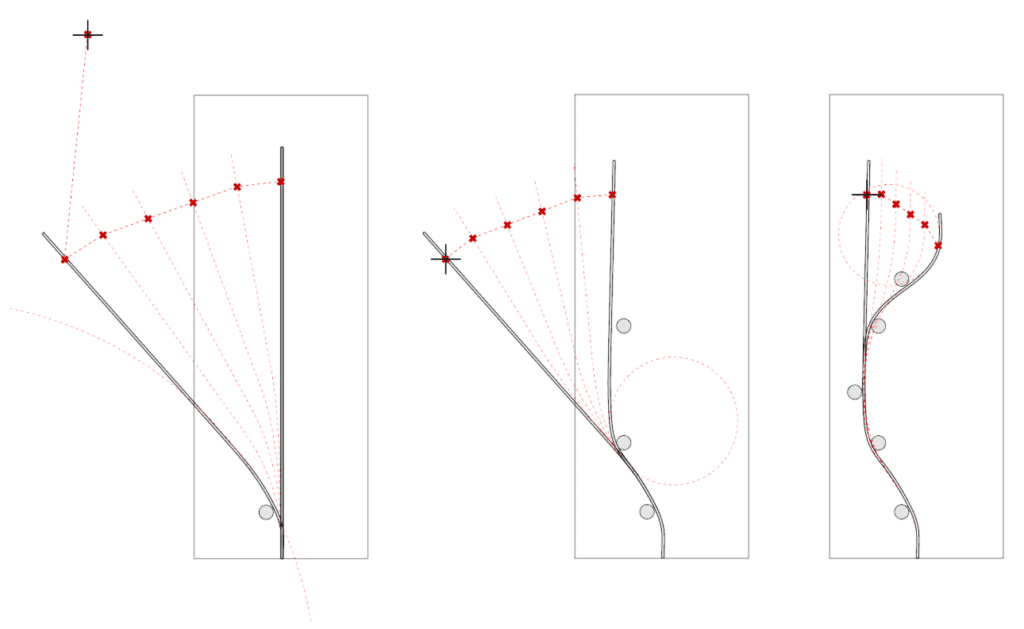
The bending process is human-robot collaborative. The robot performs the bending movements and pauses at specific moments so the operator can place the stoppers manually, allowing the process to continue. Each piece follows a sequence of three bending steps, with 5 nodes per piece and an estimated cycle time of approximately 2 minutes per element.
This division of tasks is deliberate — the robot handles precision and repeatability, while the human operator responds to what the material is actually doing in the moment. Neither replaces the other.
.
.
.
.
.
.
.
.
.
.
.
.
.
Feedback Loop
During fabrication, natural wood defects — cracks, knots, grain deviations — introduced unpredictable weak points that could cause breakage or unwanted deformation. Rather than discarding affected pieces or correcting by eye, we developed a sensing pipeline to make that information legible and actionable.
A computer vision script scans each strip and captures geometric and defect data: strip dimensions, centroid position, angle, and defect classification with bounding box coordinates. That data is sent directly to Grasshopper, where each piece is evaluated against its target deformation angle and the location of potential failure zones — determining whether it is viable for fabrication or not.
Material irregularity becomes an input to the system, not an obstacle to it.
Connection System


.
.
Finding the right joint was not straightforward. We tested three families of connections — Overlapping, Aligned, and Non-Planar — across a range of methods including 3D-printed connectors, naked bolts, bolts with washers, metal plates, screws, and glue. The goal was to find the balance between structural performance, fabrication cost, and assembly time.
The final choice was face-to-face planar contact with a 65mm offset, fixed with bolts, lock nuts, and washers. The geometry interlocks — the hardware fixes it. No additional connector needed.
Twist Methodology
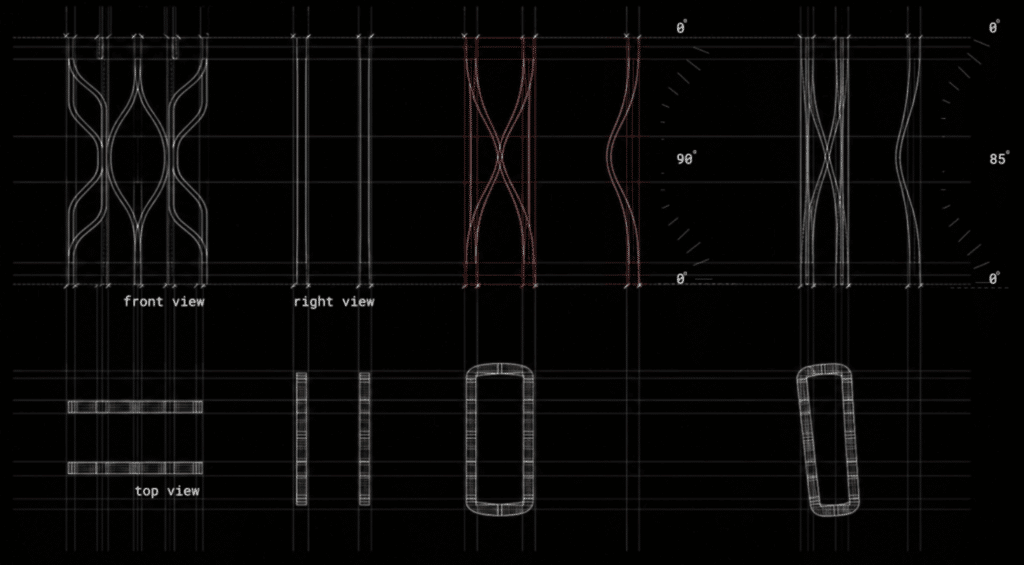
One of the key formal moves in Woodscreen is the twist, a controlled rotation of the strip along its length that shifts the cross-section from flat to edge-on as it travels vertically. This is what produces the characteristic visual effect of the system: a wall that appears denser or more open depending on the angle from which it is viewed.
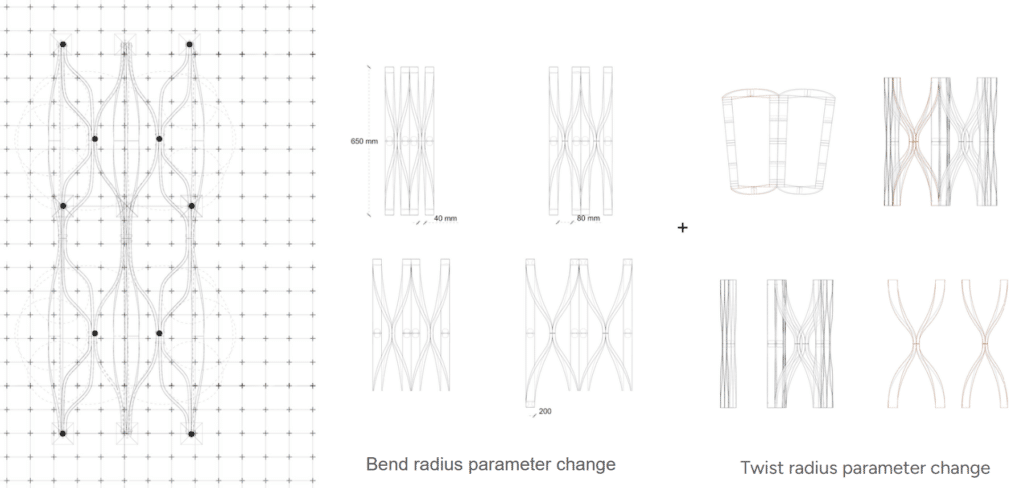
The twist is not applied independently from the bend, both are embedded into the same parametric logic. By controlling the rotation angle along the strip’s path, the degree of twist can be calibrated precisely, with the tested range reaching up to 90° in one direction and 85° in the other before material resistance becomes a limiting factor.
Module Methodology
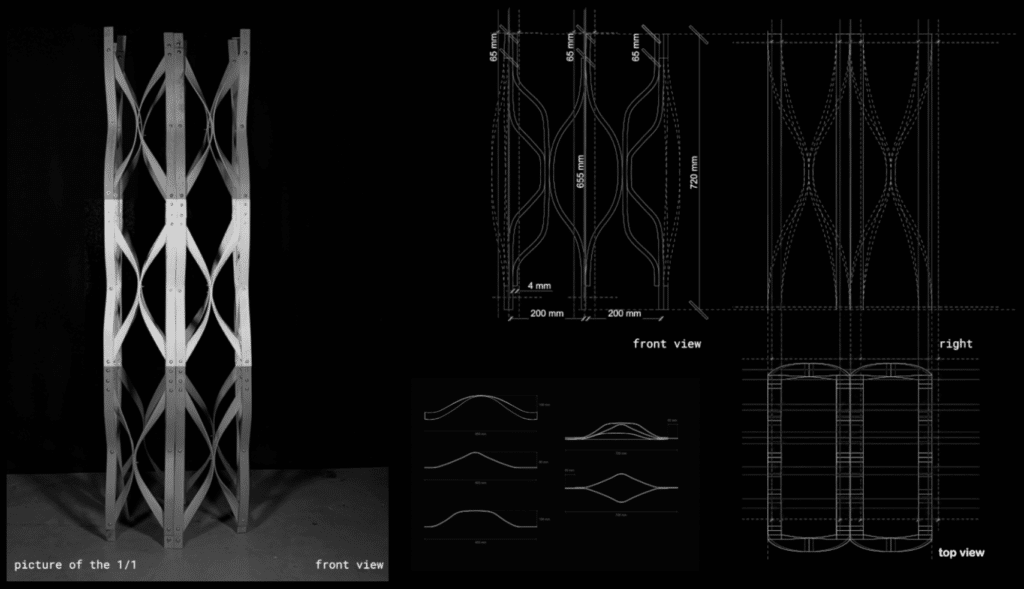
The module is the base unit of the system. Each module consists of a set of bent and twisted strips assembled into a self-standing column-like element, 720mm tall and 200mm wide, with strips offset at 65mm intervals. The 4mm thickness of each lath, combined with the active bending forces held within the assembly, gives the module its structural integrity — no additional framework required.
The module is designed to be repeated and combined. Varying the bend radius and twist angle between modules generates formal differentiation across the wall without changing the fabrication workflow. The same assembly logic, different geometry each time.
Manipulation
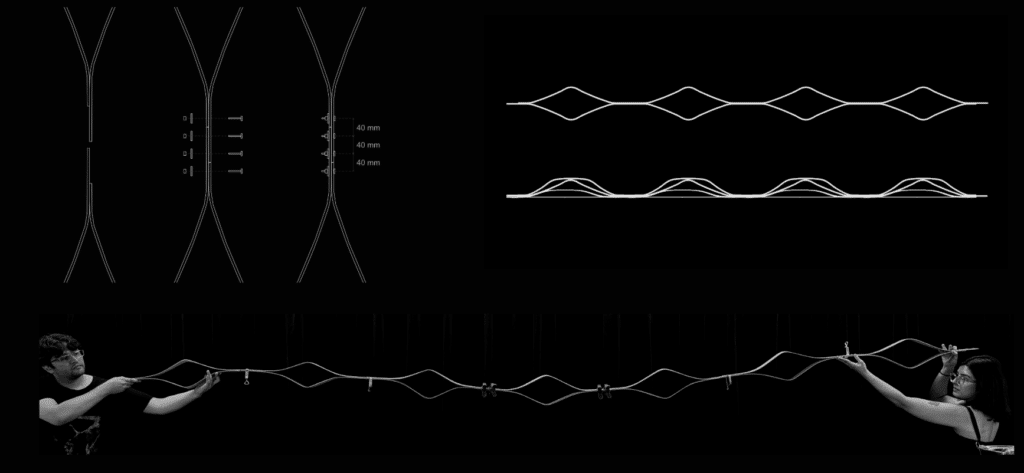
Two strip typologies make up each module: a vertical element defining the structural spine, and a crossing element weaving between them at 40mm intervals. The strips are long enough that handling them requires two people — one at each end — to maintain control before assembly.
Microform
At the module level, geometry is controlled through two independent parameters: bend radius and twist angle. Varying the bend radius changes how tightly the strip curves within the module — from wider, more open diamond shapes to narrower, denser ones. Varying the twist radius controls the rotation of the cross-section along the strip’s path, directly affecting how porosity is perceived from different viewing angles. These two parameters operate independently but combine to define the full formal and spatial character of each module.
Macroform
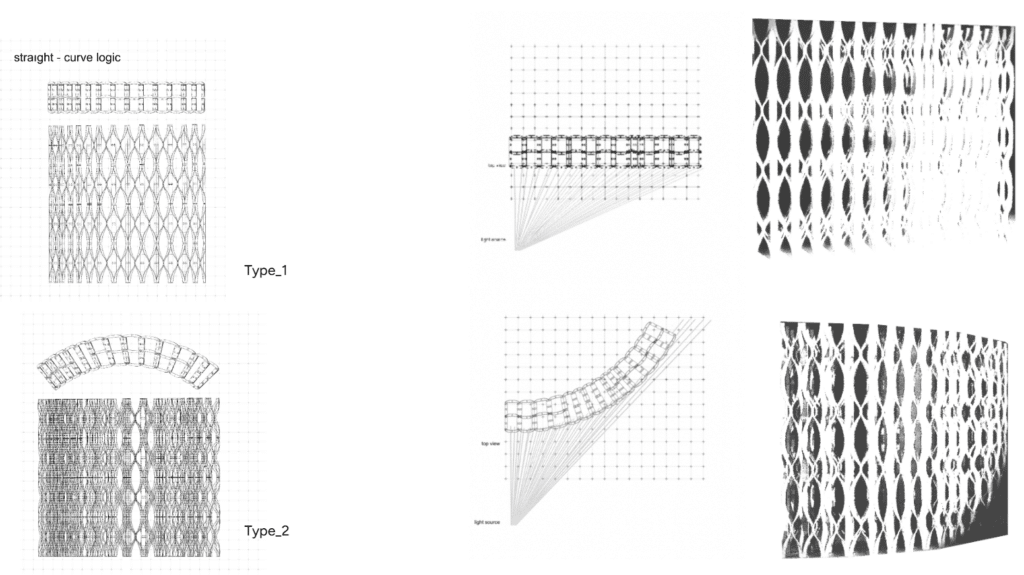
At wall scale, modules are arranged according to two layout logics: Type 1, a straight configuration, and Type 2, a curved one. Both use the same module and fabrication system — what changes is the arrangement. Light simulation studies informed both configurations, revealing how shadow patterns and visibility shift across the wall surface depending on module density and orientation. The wall is never visually uniform — light and shadow redistribute continuously as the viewer moves.
Visibility Index
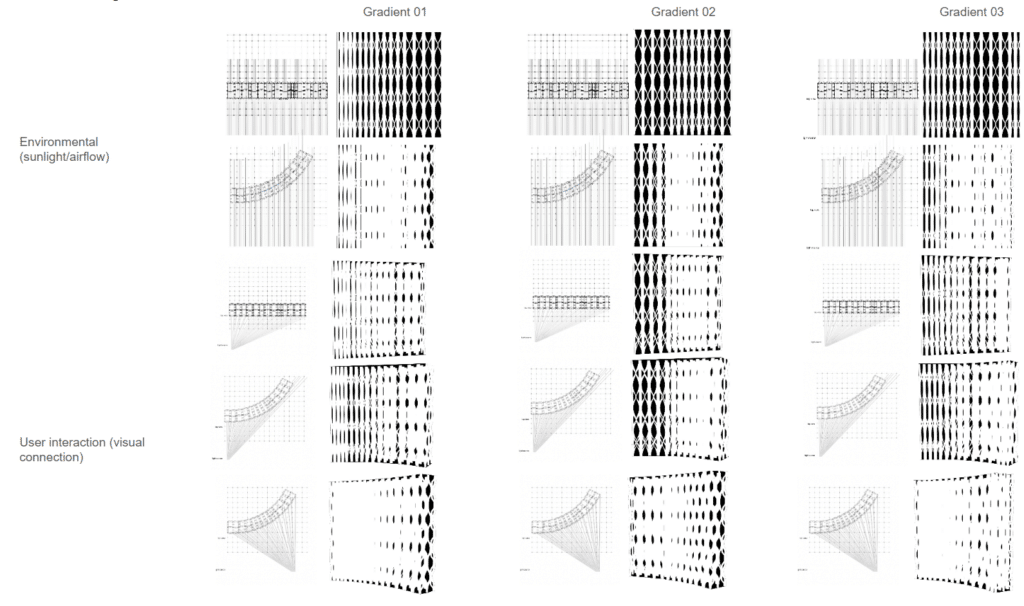
Porosity across the wall
Performance Evaluation
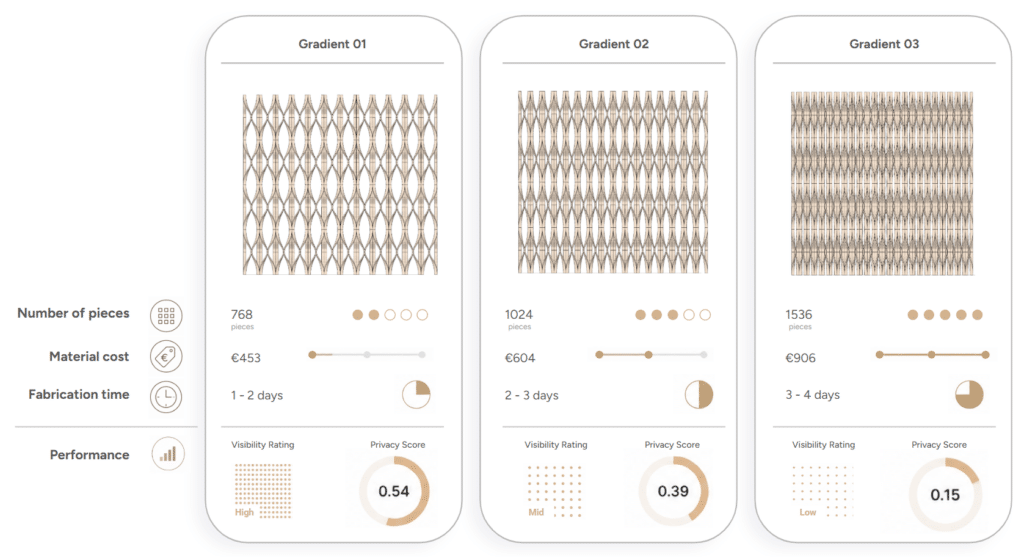
What the numbers reveal is straightforward: a more porous gradient is cheaper, faster, and more visually connected — suited for collaborative zones. A denser one takes more time and material, but delivers the enclosure needed for focused work. The same fabrication system produces both. Only the density of the gradient changes.
Architectural Programme
Woodscreen is proposed for Level 01 of IAAC’s new headquarters — a 5,617m² educational and research building designed around an open-plan learning environment. The challenge is not simply to add space, but to introduce spatial hierarchy within a continuous floor: a range of conditions that allow students to choose how they work, rather than being assigned to a fixed room type.
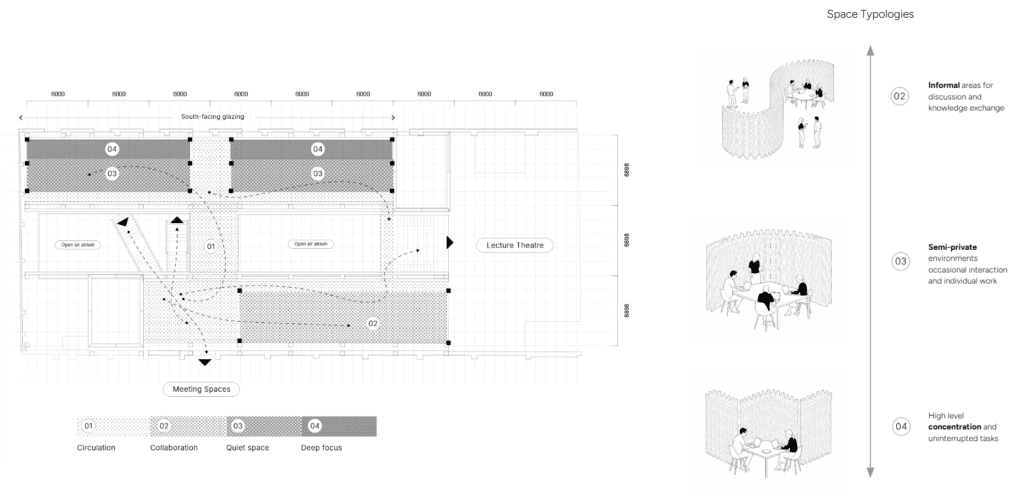
Arriving at Level 01, students naturally make a choice. Those who stay near the atrium in Zone 2 remain exposed to movement and conversation — meeting opportunities, spontaneous exchange. Those who cross toward Zone 3 find a quieter edge, and can push deeper into Zone 4, toward the south-facing daylight, where distraction drops and focus becomes possible.
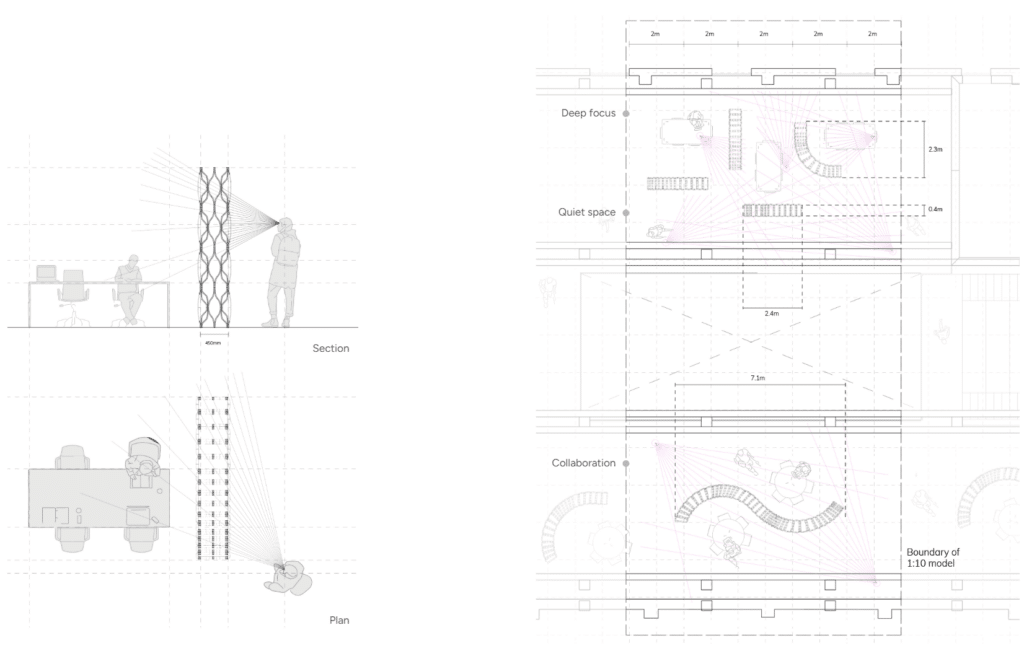
Woodscreen operates across this gradient. Rather than creating a binary of open or closed, it produces a spectrum — from informal discussion areas to semi-private environments to spaces of high concentration — all within the same open floor, using the same partition system.
Architectural Scalability
The key condition across all scales remains the same: strip geometry must always respect the material limits of the timber relative to its size. The fabrication logic doesn’t change — only the infrastructure around it grows.
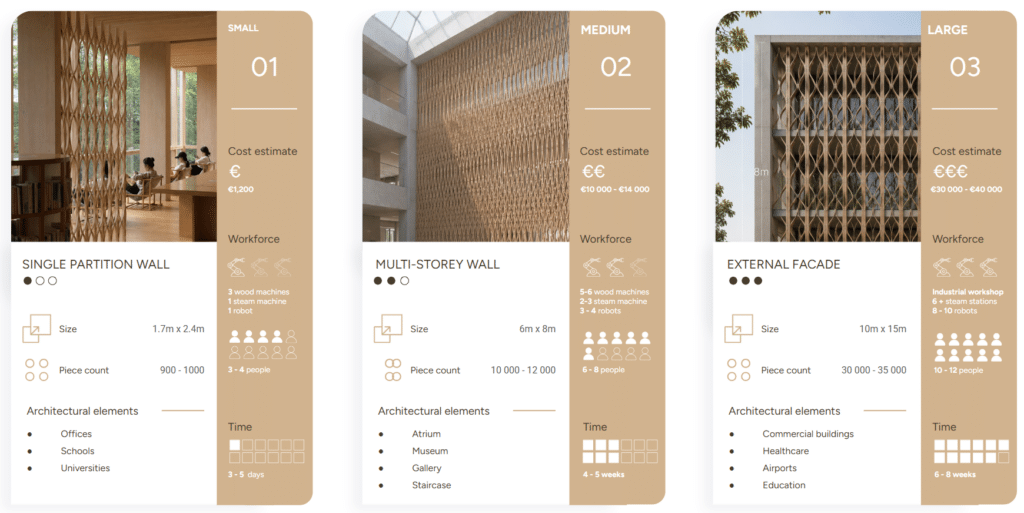
Comparative Evaluation
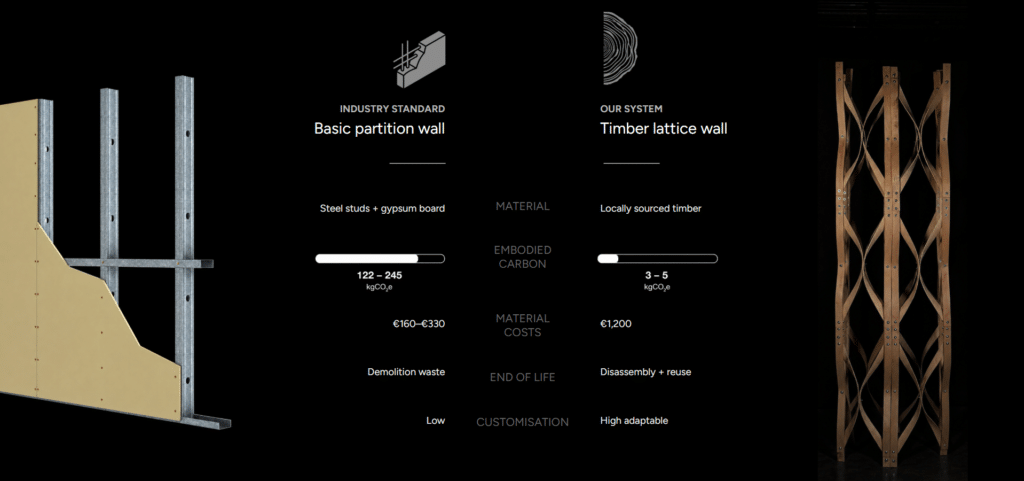
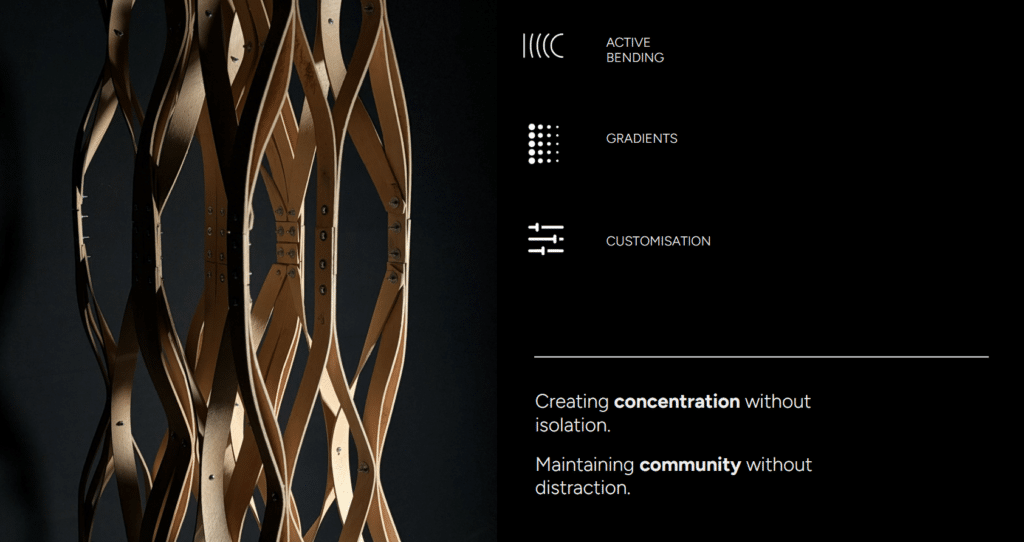
Woodscreen set out to answer one question: how do you achieve enclosure without sacrificing the spatial qualities that make a place worth being in? The answer was not a wall in the conventional sense — it was a system. By combining the vernacular logic of active bending with robotic fabrication, we developed a partition that filters space rather than dividing it. Porosity is not a byproduct, it is the design variable. Light, visibility, and community are not compromised by enclosure; they are calibrated alongside it.
The physical prototype demonstrates that this is buildable, measurable, and scalable. One fabrication workflow, one material, one assembly logic, capable of producing a spectrum of spatial conditions that no fixed catalogue could offer. Creating concentration without isolation. Maintaining community without distraction.