
What modes of activism do the ends of a world trigger?
Introduction
This project was developed as part of the Advanced Theory Seminar: The Earthly Convivium – Conversational Narratives. The seminar invites students to work with theory not as a distant academic exercise, but as a tool to build fictional situations where different worldviews collide. The task was to construct a short narrative in which several characters, each grounded in the bibliography, debate a contemporary issue and reveal their positions through conversation.
Our group chose to situate our narrative in Rondônia, Brazil, an area where the consequences of deforestation unfold with extreme clarity. The Amazon offered a setting where abstraction becomes tangible, where political, ecological, and ethical tensions intersect directly. From this context emerged our script, Act at Dawn.
Process and Approach
Research Phase
We began with an extensive reading of the texts provided in the seminar, focusing on works by Peter Sutoris, Danowski & De Castro, Maria Puig de la Bellacasa, Patricia MacCormack, and The Care Manifesto, among others. These texts opened a wide field of perspectives: post-anthropocentrism, multispecies ethics, care as political infrastructure, world-ending as both metaphor and lived reality, and the limits of human-centric activism. Rather than choosing one theoretical position, we became interested in the frictions between them.
Choosing the Site: Rondônia
During group discussions, the Amazon repeatedly surfaced as a place where many of these theoretical tensions are not speculative, they are lived. The accelerated clearing of land, the clash between “progress” narratives and Indigenous lifeways, and the global scale of the problem made Rondônia an appropriate site for our story. It allowed us to position the characters inside an unfolding crisis, rather than speaking about one from afar.
Building the Characters
In response to the seminar brief, which emphasizes constructing a conversation between different postures, we shaped a group of characters that each represent a distinct mode of activism or anti-activism:
- a student who insists on direct action,
- an Indigenous mother whose activism is grounded in care and long-term presence,
- a science-fiction writer aligned with ahuman theory,
- a university theorist attached to analytic frameworks,
- a lawyer who believes in institutional paths,
- an influencer whose activism is tied to visibility,
- and a politician defending extractivist development.
Writing the Narrative
The script unfolds over one evening and one morning, just before machinery arrives to clear a new section of the forest.
Throughout the dialogue, we integrated direct quotations from the authors we studied. These appear as lived thoughts, as arguments spoken in the heat of conflict, or as questions that characters themselves struggle to answer.
We wanted the narrative to show that activism is not a single movement but a constellation of gestures: some spectacular, some quiet, some contradictory. Some forms of activism appear immediately visible; others are only recognized after listening more deeply.
What We Wanted to Explore
A central question guided our work:
What forms of activism are triggered when a world is ending?
Rondônia became the stage where different worlds: academic, Indigenous, bureaucratic, digital, literary meet the material end of a forest. The script explores what happens when these different forms of “activism” try to coexist, or fail to.
Act at Dawn: Script
PRELUDE:
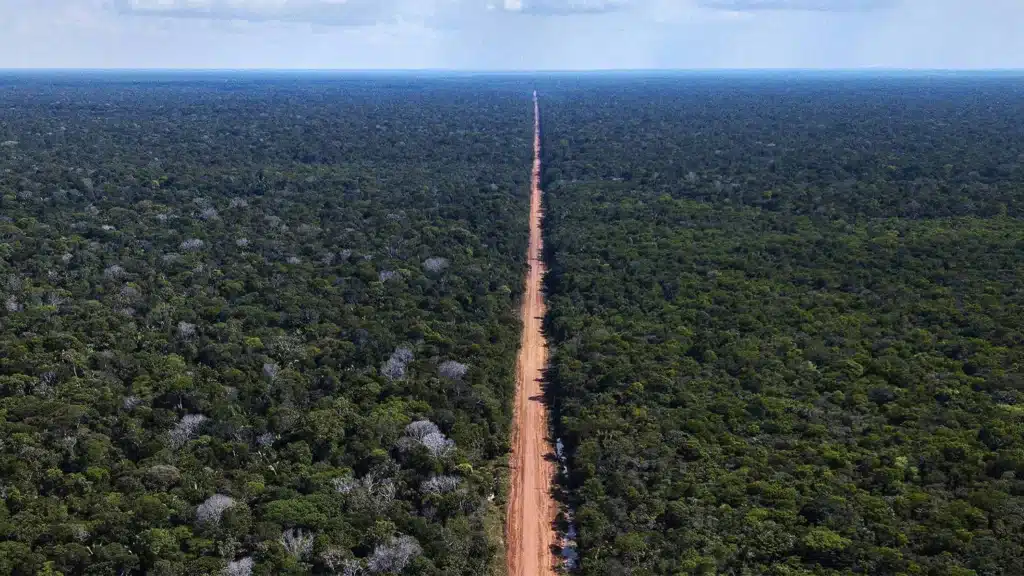
Narrator: Roads like BR-3XX mark deforestation in the state of Rondônia in Brazil. Tomorrow morning, the machines arrive to clear another section. A social media influencer is visiting Brazil for three weeks. She is livestreaming to her large following base.
Influencer: I am reporting live from Rondônia. We’re here with a politician who is going to speak about his approach to creating a better life. I’ve heard there are some big changes coming tomorrow.
Politician: My vision is for a more prosperous future. One where we can fund better schools and hospitals.
Lawyer: Or a vision to fund your own wallet? Are you not cutting down the Amazon to fund your empty promises? How can the people trust you with this plan when you’ve been in office for years and everything has gotten worse?
Politician: I think this is all a big misunderstanding. This project is a hero of progress. We are going to build infrastructure, create jobs. We have permits. This plan will generate so much money and opportunity, more than Rondônia has ever seen.
Lawyer: “The Anthropocene represents people’s desire to control nature” and you are a glaring example (Peter Sutoris, Educating for the Anthropocene). We’re going to take you to court.
Politician: Vote to reelect me in October!
Influencer: Thank you for watching, see you next time on my channel!
FIRST ACT
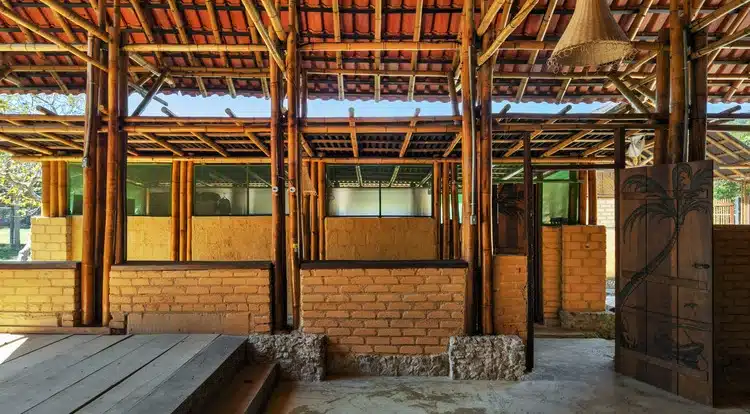
Narrator: The machines are set to start clearing a section of the Amazon tomorrow. A college student, mother, science fiction writer, local university professor, and social media influencer meet at a Centro da Juventudo on the outskirts of the Amazon in the late afternoon. The student is watching the recording of the politician speaking earlier in the morning and says aloud…
Student: The politician is totally capitalizing on this opportunity. Okay, we need to finalize the plan. The machinery arrives tomorrow morning. The company is “increasingly accelerating” and clearing this section at dawn in an “irreversible process” (Danowski and De Castro, The End of the World, 2).
Writer: You keep talking about a plan. But… maybe that’s the problem. Humans “are the plague” (Maccormack). Maybe the Amazon would be better off if we did nothing.
Influencer: Are you saying we need to cancel humans? I don’t know if my 100,000 followers would agree with you.
Theorist: Before we discuss tactics, we need theoretical grounding. This isn’t just about stopping one project. “It signifies both the ability of humankind to become a force of stupendous magnitude and its fundamental fragility” (Sutoris, Educating for the Anthropocene). We’re confronting the systematic destruction of lifeways under racial capitalism.
Writer: “I call for an end to the human both conceptually as exceptionalized and actually as a species” (Maccormack, The Ahuman Manifesto, 21).
Mother: I promise you the trees do not care about theory and human stewardship is necessary. The chainsaws come at 6 AM. “It will hit us all in one way or another” (Danowski and De Castro, The Ends of the World, 2).
Influencer: I can totally get us trending by 7 if we go live.
Mother: This is not your land to save. We have been defending it for generations. “We exist alongside and in connection with all other human and non-human beings” (Chatzidakis, Hakim, Jo Littler, Rottenberg, and Segal, The Care Manifesto, 42). The question is not whether you will protest. The question is: will you listen first?
Influencer: Of course! That’s why I’m here. I want to help…
Mother: Help? Or perform? “Visibility is not liberation” (Maccormack, The Ahuman Manifesto, 47). I have watched the cameras come and go. We stayed and stay. We continue to face the consequences.
Theorist: That’s precisely why we need analysis! “The Anthropocene, the new geological era in which people are the primary force shaping our planet in ways that only geological, deep time can undo, is the ultimate manifestation of this fixation… unaware that what we are really building is our own gravestones” (Peter Sutoris, Educating for the Anthropocene, 5). Without understanding the structural and “slow violence,” we’re putting band-aids on (Peter Sutoris, Educating for the Anthropocene, 8). I think I have a syllabus somewhere for us…
Student: What does your theory do at 6 AM? I’ve read the books. I’ve been to the workshops. But tomorrow morning, there will be machines.
Influencer: Actually, if we position ourselves at 5:45, golden hour lighting: the footage will be incredible.
Mother: Your protest is one day. Our life is every day. Care is not a performance. It is reciprocity that requires “long-term commitment” (Chatzidakis, Hakim, Jo Littler, Rottenberg, and Segal, The Care Manifesto, 55).
Theorist: What is care? “Is it affection? A moral obligation? Work? A burden? A joy? Something we can practice or learn?” (Bellacasa, Matters of Care, 1).
Lawyer: The legal framework is promising. We need to work within the system to fight it. We could sue the machines.
Student: I hear what you’re saying, and I feel “[w]e can’t save the world by playing by the rules, because the rules have to be changed” (Thunberg).
Theorist: Which is why we need to challenge the epistemological foundations! The court operates within a colonial logic that commodifies nature. Let us understand this ontology. “Humans use; whether in theory or practice” (Maccormack, The Ahuman Manifesto, 47). “It is time to demanifest anthropocentrism” (Maccormack, The Ahuman Manifesto, 105).
Mother: My daughter is eight. She asks me why the birds are leaving. What ontology do I give her?
Influencer: Okay, that. That right there. That’s the story. Can I record you saying that?
Student: We need to work together, people. Theorist people want frameworks. Lawyer people want precedent. Media people want optics. Meanwhile, the machine keeps moving. “The last few decades have seen the radical transformation of our relations to the world and nature… and knowledge and power” (Serres, Times of Crisis, 5).
Writer: Well, “[w]e are always parasites, never hosts. There is no consent asked of the natural” (Patricia MacCormack, Ahuman Abolition: Unthinking the ‘Animal’ in the Anthropocene).
Mother: But I believe a “symbiotic relationship” is possible (Peter Sutoris, Educating for the Anthropocene, 90). In our way, knowing and doing are not separate. I need you to understand: this is not just a protest. This is our home. The “systems have abandoned their responsibility” (Chatzidakis, Hakim, Jo Littler, Rottenberg, and Segal, The Care Manifesto, 42). When we defend Amazonia tomorrow, we are not its savior. We are activists in solidarity with it. Can you hold that responsibility?
Student: I think she…
Narrator: The student gestures to the mother.
Student: …is right. We’re not here to save the Amazon. We’re here to stand against “the slow violence of dispossession and displacement” (Sutoris, Educating for the Anthropocene, 162). To be in relation with it.
Lawyer: I believe we need to take them to court!
Influencer: What if I don’t livestream? What if I just… document for the community? So you have a record of what happened?
Lawyer: That would help for documentation in the legal proceedings. “The most ignorant among us now have fairly easy access to more knowledge than yesterday’s greatest scholar” (Serres, Times of Crisis, 11). We need to collect all the evidence we can get.
Theorist: Then we have tonight, to prepare.
Writer: Or we could un-do instead of do. Step back. Un-center ourselves. Let the forest speak first.
Mother: My community is making food. You should eat with us. Meet the people you’re standing with. Listen to their stories. This is how we survive. Not through peer-reviewed papers or spectacles. We survive through “care, caring, [being a] carer…a thick mesh of relational obligation” (Chatzidakis, Hakim, Jo Littler, Rottenberg, and Segal, The Care Manifesto, 10). Through reciprocity. Through remembering we are not separate from what we protect.
Theorist: “To put care at the center means recognizing our interdependencies,” I think I read that somewhere (Chatzidakis, Hakim, Jo Littler, Rottenberg, and Segal, The Care Manifesto, 10).
Mother: This conversation? This struggle? This is activism. Theory meeting praxis. Thought becoming action. The work of tomorrow begins with the care of tonight. Let’s eat.
SECOND ACT
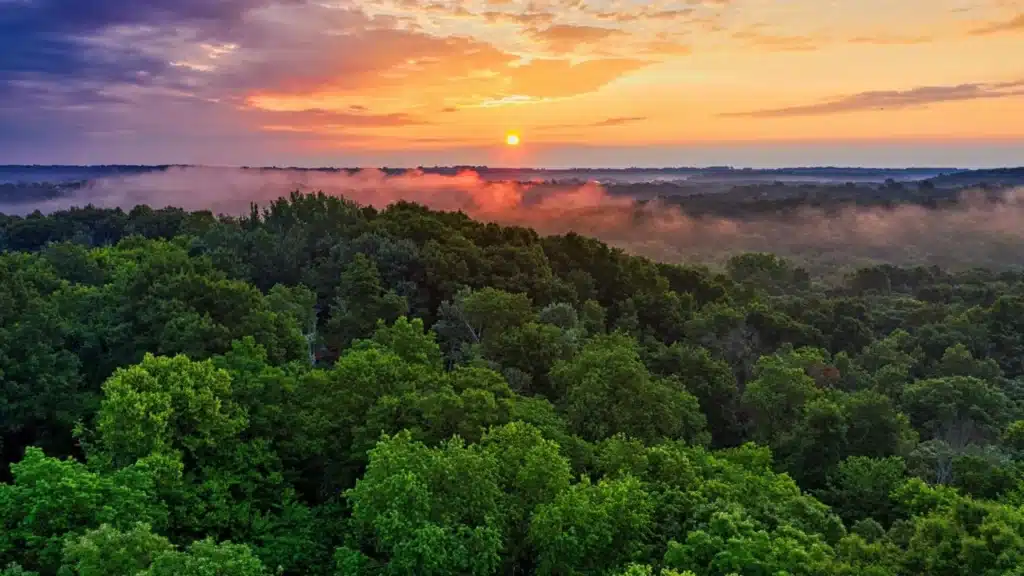
Narrator: “The multiple environmental crises we are facing have brought us to a crossroads unlike any before—we are in the process of deciding whether we sacrifice both our history and our future for the sake of the present” (Peter Sutoris, Educating for the Anthropocene) It is a humid morning in Rondônia. The sounds of birds greet the horizon of a new day, as the sun paints the tips of the trees in a warm, golden light. The group gathers at the border of the planned construction site on the outskirts of the Amazon. The machines are arriving at dawn to begin destruction. The rumbles of them approaching in the distance begin to drown out the sound of the birds.
Theorist: I spent so many years reading about resistance. But this, standing here with you all, I’m finally understanding what praxis means. This work “is not a metaphor” (Tuck and Yang, 1).
Lawyer: The courts open at 9. But whatever happens in the next three hours, that’s on us.
Writer: You talk as if these next hours rest on our shoulders alone. But the danger hasn’t been waiting for us to act; it has already been here, for everything that isn’t human.
Influencer: Shhh… We’re live. Here they come in their fancy cars.
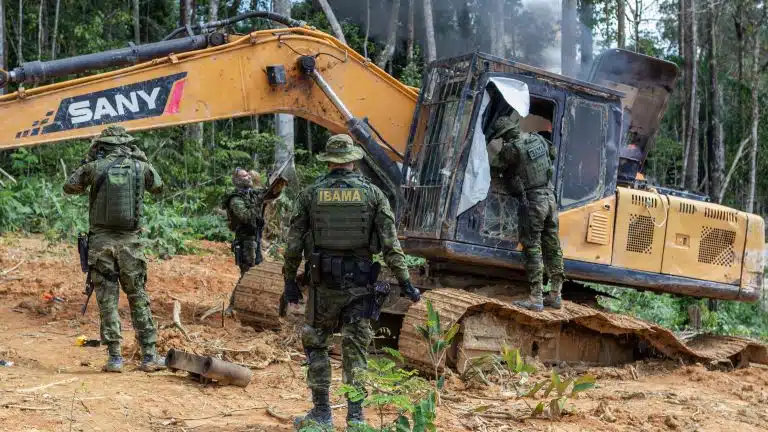
Narrator: The politician steps out of a black car, alongside police with handcuffs and company workers in hard hats. He carries a megaphone.
Politician: This is illegal assembly. You are blocking permitted commercial activity on authorized development land. I am giving you five minutes to disperse or face the consequences.
THIRD ACT
Mother: We have been here for hundreds of years. We will continue to stand.
Politician: This is progress! Jobs! Revenue! You’re standing in the way of Rondônia’s future! “There is no reason to believe that we are approaching the limits of our capacity to feed people or to provide energy. Human ingenuity will solve environmental problems” (Julian Simon, The State of Humanity).
Mother: Whose future? My daughter’s, who will inherit bare soil? “And those who do not yet exist are the ones who will inherit the consequences of the worlds that end and the worlds that survive” (Danowski and De Castro, The End of the World).
Student: “No technological project can save a world that has forgotten it coexists with other worlds” (Danowski and De Castro, The End of the World).
Influencer: This is intense…(to the followers) this brings us to the end of our live stream. Thank you for joining us today in Rondônia. Please share this cause with everyone you know, include it in your everyday conversations. Stay tuned for updates. Don’t forget to follow!
Narrator: The influencer logs off the livestream and says to everyone…
Influencer: I think we all need a break. I heard there is a good brunch spot nearby.
Mother: We made food. There is enough for everyone.
Narrator: The Mother looks at the politician.
Mother: Even you. In our way, we feed even those who come to harm us. Because we remember: harm is what the system teaches. Care is what we choose: “through communities, mutual aid, and the everyday work of looking after one another” (Chatzidakis, Hakim, Jo Littler, Rottenberg, and Segal, The Care Manifesto, 46).
Narrators: The student arrives on scene with classmates beside her. The machines begin to roll in and the students stand in its way.
Student: “If hope is the action of activism without a rulebook, then faith is the commitment to action being better than apathy or atrophy” (Maccormack, The Ahuman Manifesto, 67).
Narrators: The mother joins the students, standing next to her and blocking the machines.
Mother and Student: Will you stand beside us?
