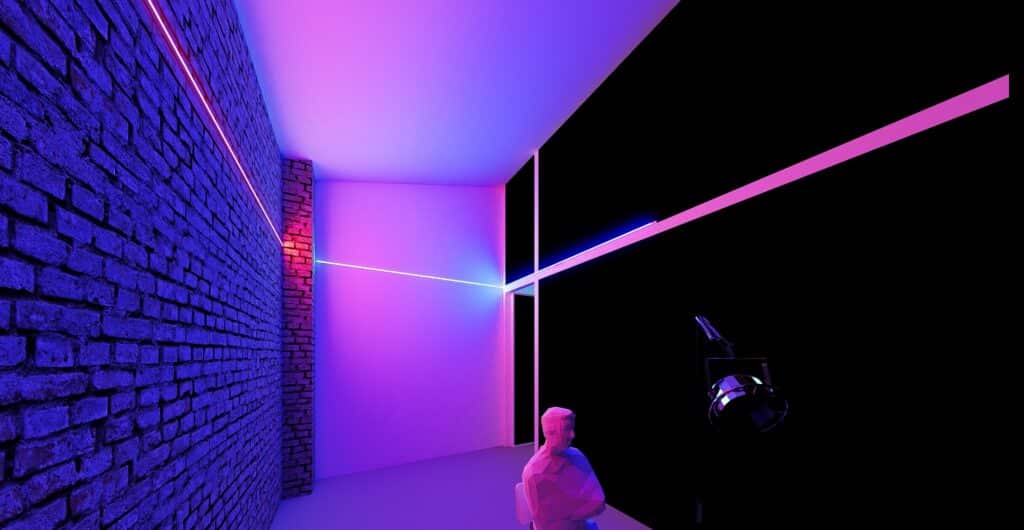
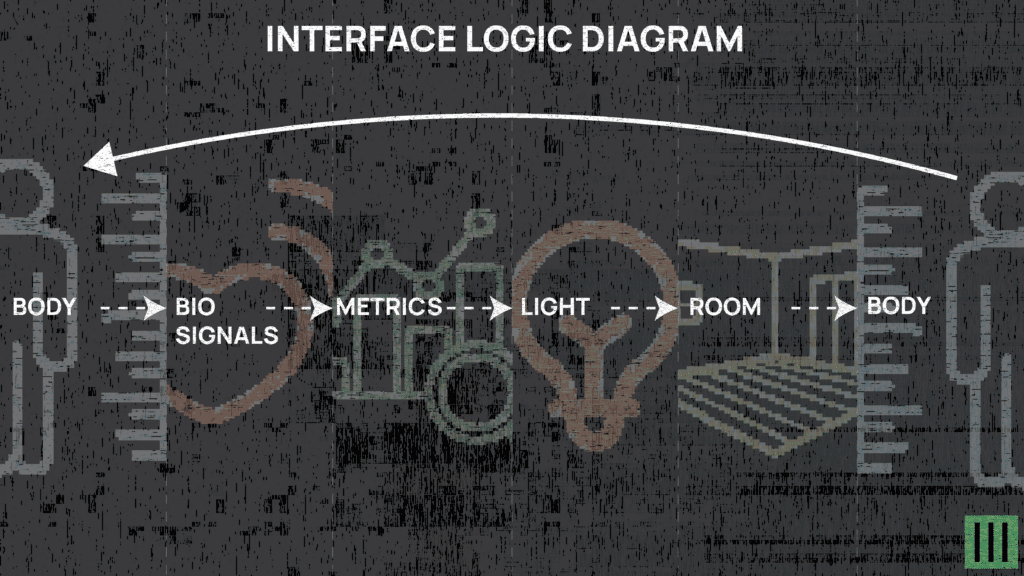
This thesis explores light as a neuro-adaptive architectural interface that responds to human physiological and emotional states. By translating biosignals such as GSR, EEG, and ECG into dynamic lighting behaviors, the research proposes a shift from static light control systems to empathic, responsive environments. The project combines physical prototypes and spatial experiments to investigate how illumination can actively mediate the relationship between the human body and architectural space.
LIGHT & EFFECTS
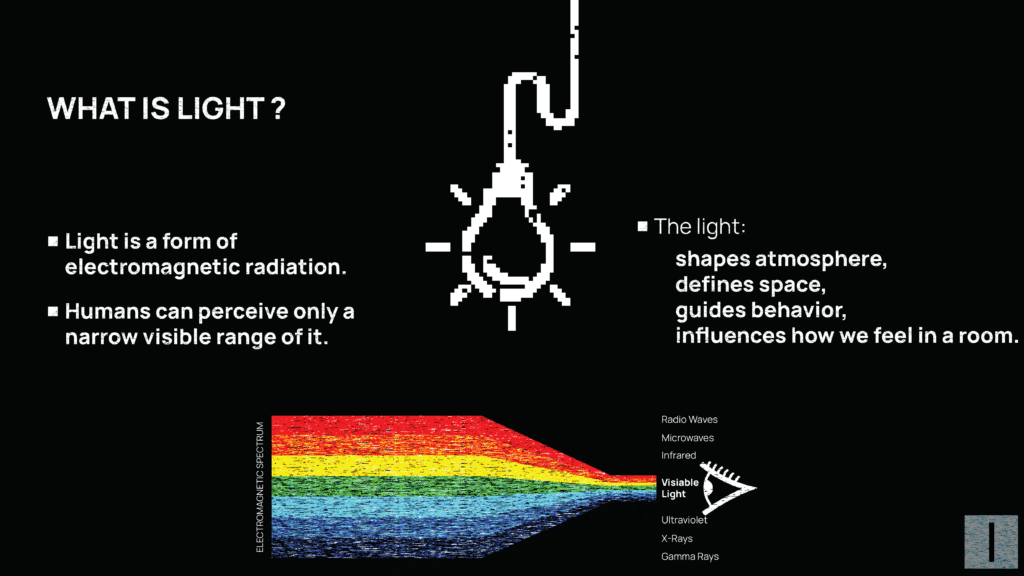
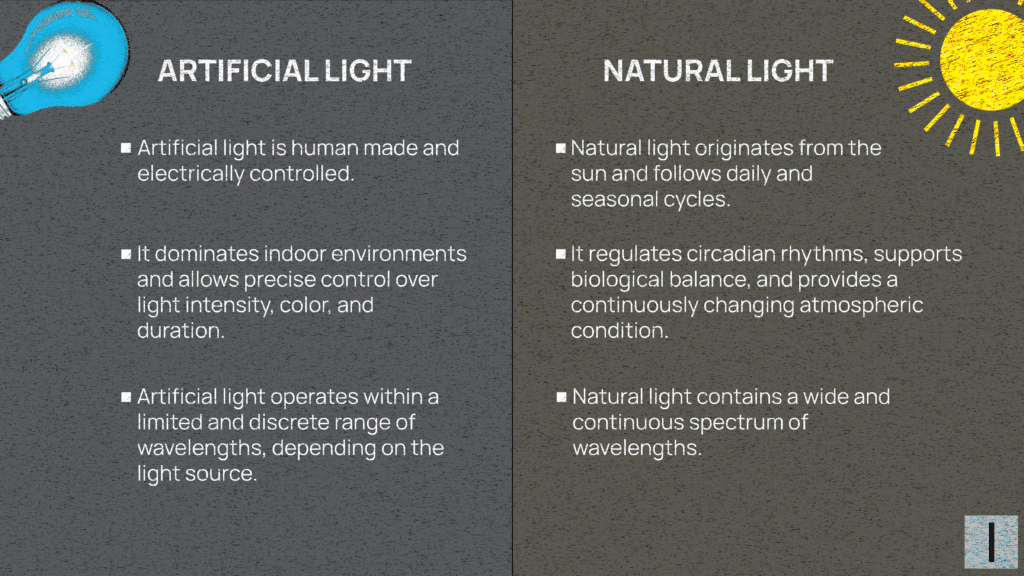
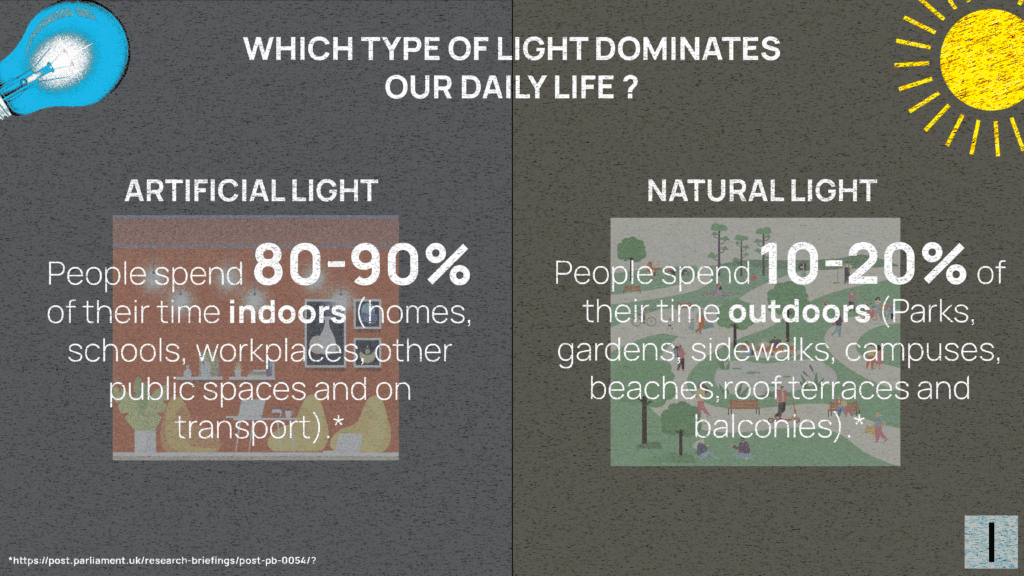
I researched the effects of artificial light and these are; Bioloical, Psychological, Cognitive and Behavioral effects. For example: If you are changing your light to warm color, your stress level is decreased.
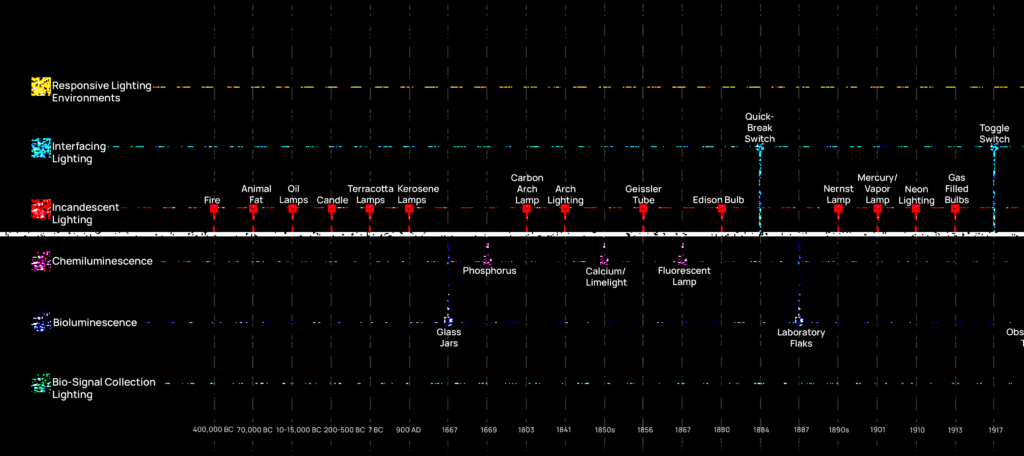
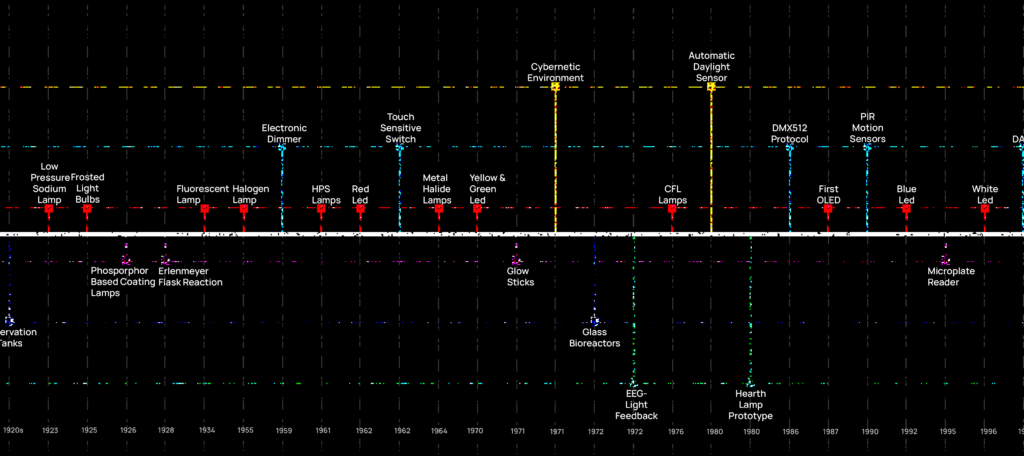
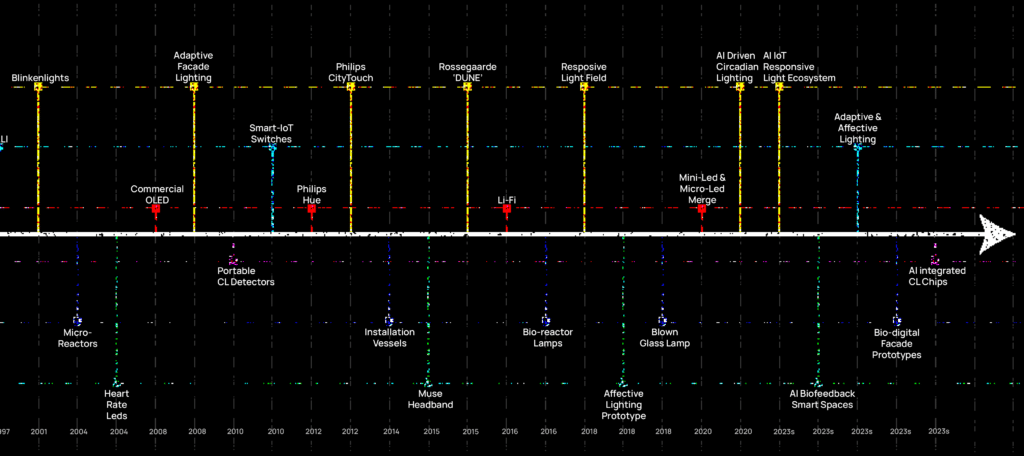
Then, creating a six-section timeline of lighting technologies allowed me to better understand the evolution of light and how current lighting systems are controlled today. I compair with this centuries and past technologies.
RESEARCH QUESTION
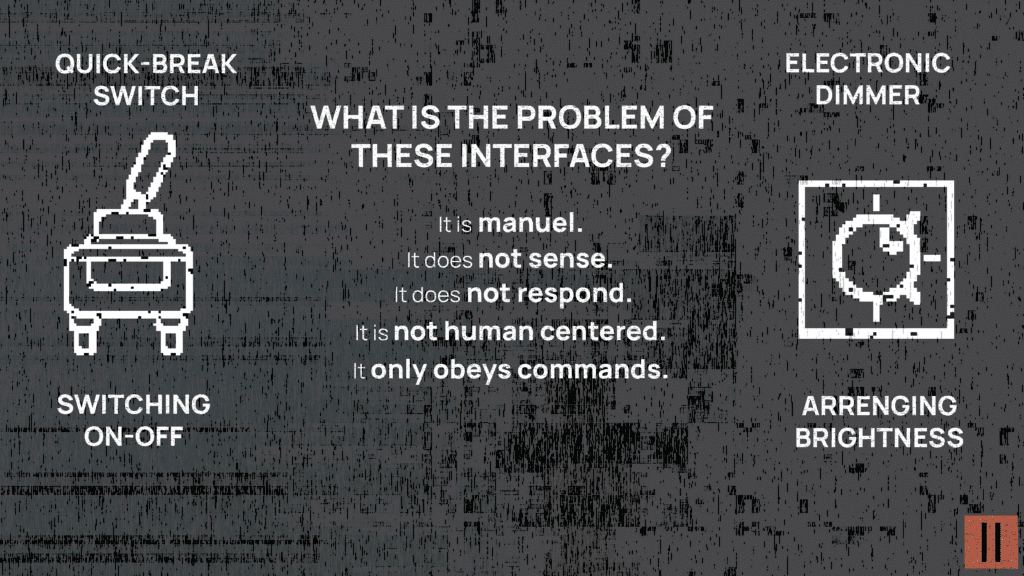
When i comparied with past technologies and this centuries technologies, i found that we still using same mechanisim, which is invented in 1884 and 1956, for swich on or off our light.
METHODS & PROTOTYPING
The research follows an iterative, experimental methodology combining theoretical research, hardware prototyping, and spatial testing. Biosignals are collected, processed, and translated into lighting behaviors to evaluate their impact on spatial atmosphere and human response.
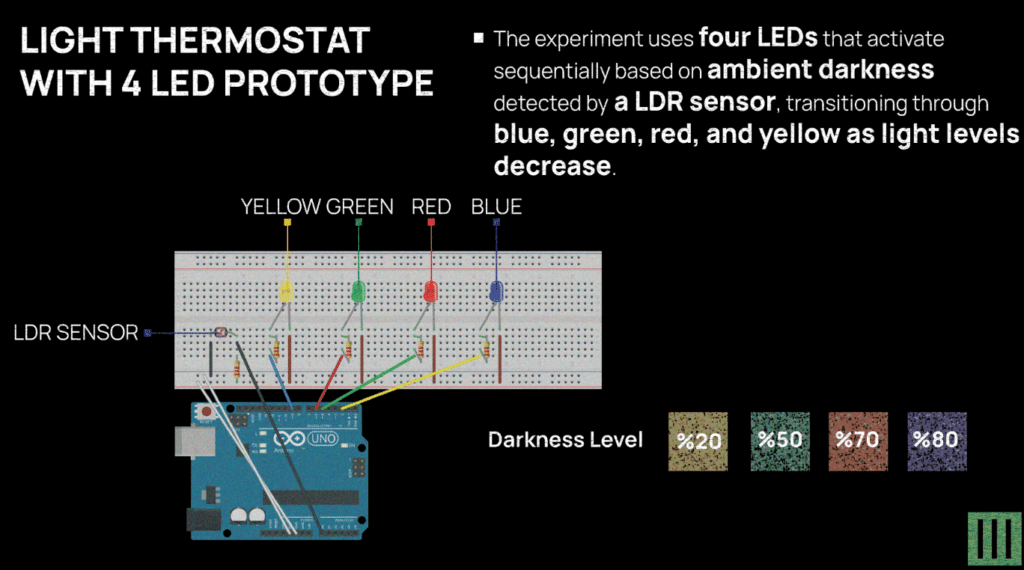
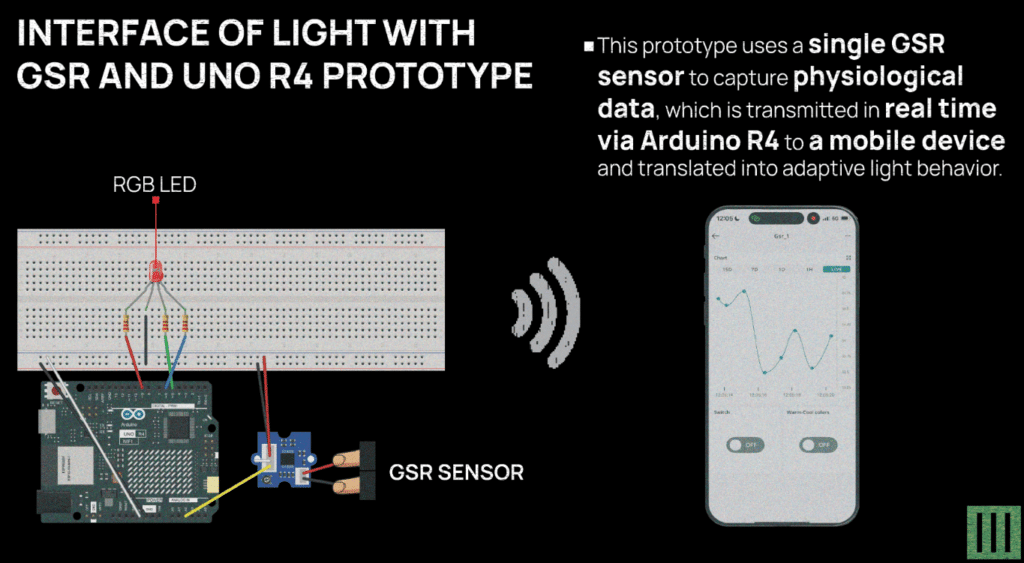
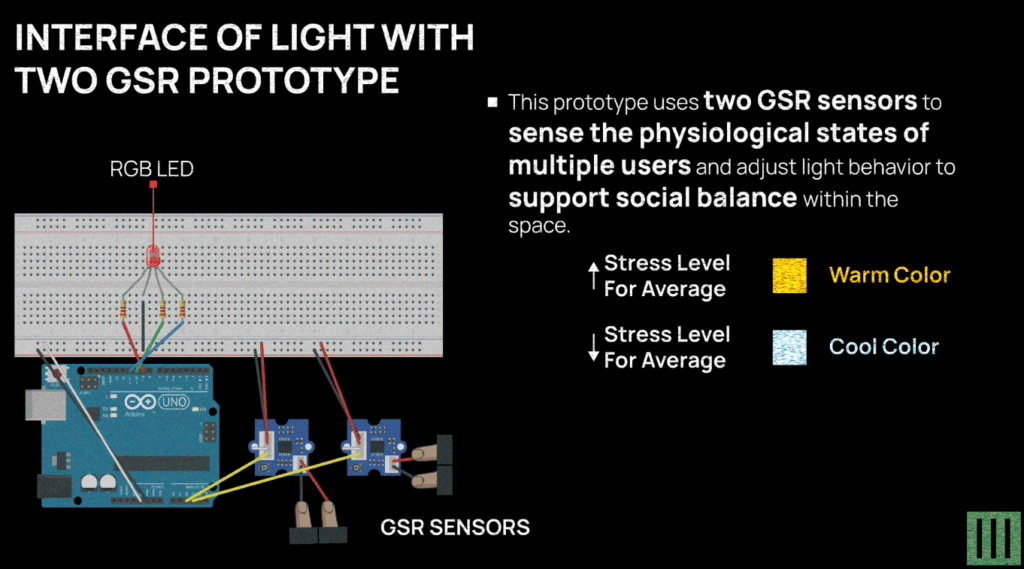
I did 5 prototype. These are light thermostat, light thermostat with 4 color, one gsr, one gsr with sending data to phone and two gsr for social balance.
WHERE AM I RIGHT NOW?
I set up rgb LEDs to photoboot and next phase i will connect these with bio-signals.