
The Starting Point: AI as a Faster Pencil
When I first began this journey on October 9th, I approached AI tools primarily through the lens of efficiency. My initial focus was on faster modeling, optimization, and the ability to test more options in less time. To me, AI was a high-powered calculator—a tool applied after a design idea existed to refine what I had already decided. I saw it as a way to automate the “math” while I focused on the “form.”
The Shift: From “What to Generate” to “What to Answer”
As the course progressed, my understanding shifted significantly. I realized that AI’s most impactful role is not in accelerating design output, but in reshaping the basis on which design decisions are made.
One of the biggest changes in my workflow occurred when I stopped using AI to generate forms and started using it to understand the consequences of my decisions. Before, I often relied on instinct—choosing a massing because it “felt right” visually. However, through our sessions on theory and technical applications, I learned to move beyond intuition.
“AI didn’t tell me what the right answer was. But it removed the comfort of vague intuition. It made trade-offs visible, and once they were visible, they became my responsibility.”
Evidence: Environmental Intelligence
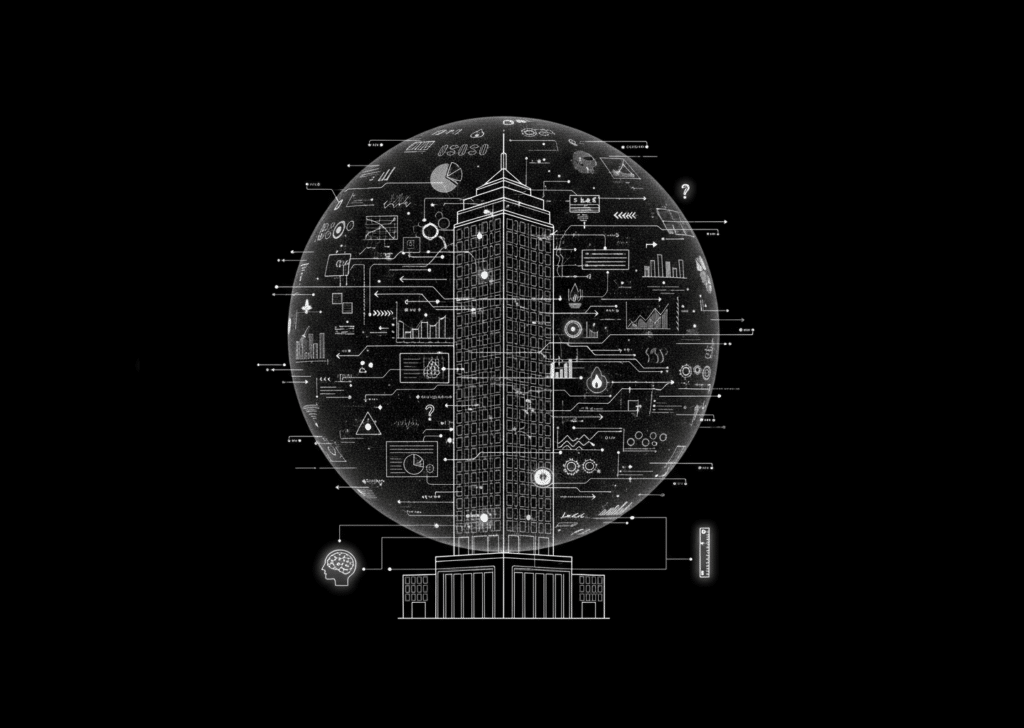
Working with environmental analysis tools (like the simulations from our Environmental Analysis seminar) reinforced this new perspective. By processing thousands of data points on sun exposure, heat accumulation, and airflow, AI became a “Question Generator” for me.
Instead of treating AI outputs as final answers, I learned to treat them as prompts for responsibility:
- Why does this specific area consistently overheat?
- Which design variables actually matter, and which are merely cosmetic?
- How does a small change in orientation affect long-term inhabitant comfort?
The Human Element and Future Expectations
A critical takeaway from our guest lectures is that AI does not replace human thinking; it expands the boundaries of what human thinking can engage with. It surfaces risks and relationships we could never manually detect.
Looking forward, my expectations for the future of AI in AEC are practical:
- Protecting Time and Accuracy: Automation should handle repetitive, rule-based tasks—running simulations consistently and flagging issues early—to remove the fragility of human error under pressure.
- Intentional Design: By reducing manual workload, AI frees us to focus on the “soul” of a project: ethics, spatial judgment, and cultural meaning.
Conclusion
I am leaving this course with more than just a toolkit; I am leaving with a new lens. AI in AEC is the catalyst for a more responsible, data-informed, and transparent built environment. It is no longer just about being faster; it is about being more defensible and intentional in every move we make.
