During the AI in Architecture and Urbanism Seminar, our team built an automated compliance checking system that validates architectural projects directly from IFC models. Building regulation checks are traditionally manual, slow, and error-prone. Architects review 2D drawings, interpret regulations individually, and often wait weeks for compliance feedback. We asked a simple question: what if compliance could be validated automatically from the BIM model itself?
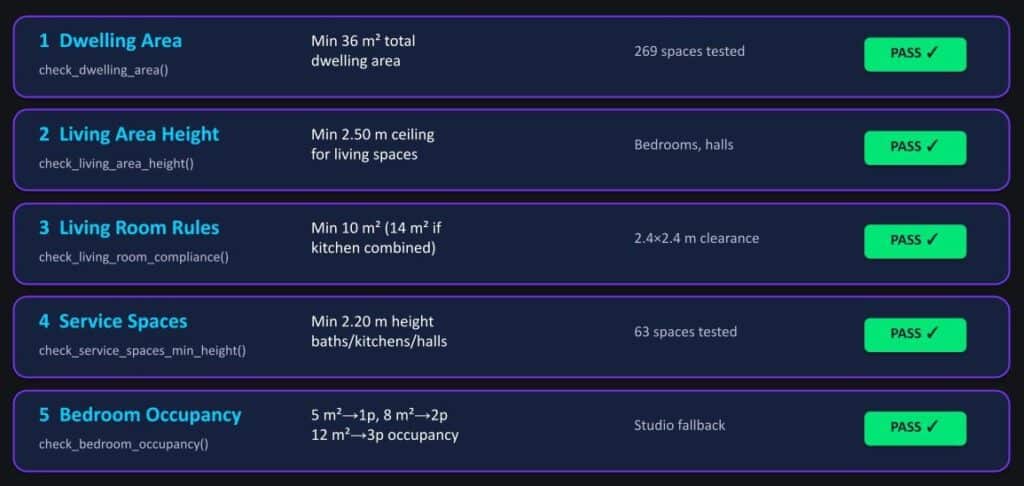
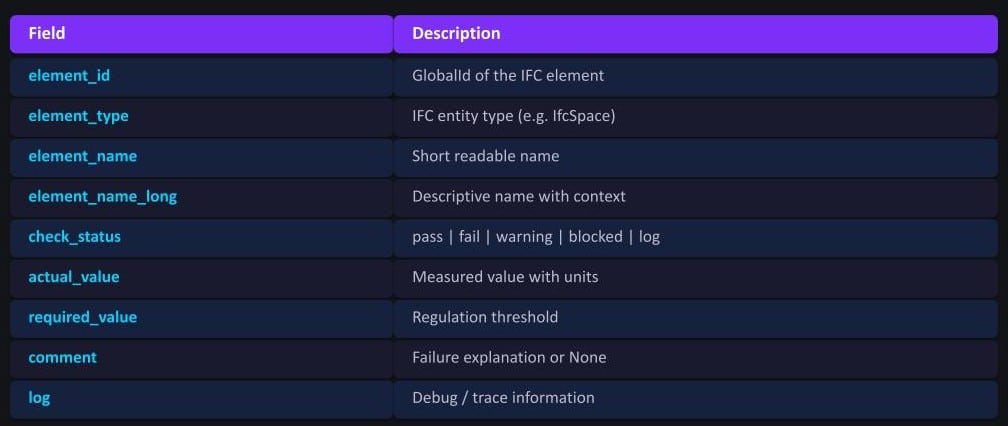
We proposed and presented a modular Python-based system that parses IFC files using IfcOpenShell and runs structured rule-checking modules against Catalunya dwelling regulations. Each checker evaluates specific requirements — such as minimum dwelling area, living room dimensions, ceiling heights, service space standards, and bedroom occupancy — and returns standardized pass/fail results fully aligned with the IFCore schema.
Our Challenge
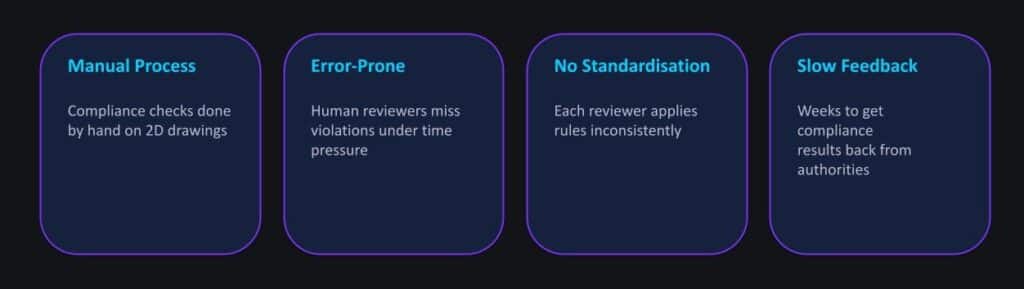
What We Built

Checker Modules
These are the compliance checker modules we chose to implement:
IFCore Schema Compliance
Feature: User Portal
As Team B’s foundational contribution to IFCore, we built a secure, serverless User Portal that enables authentication and session management across the entire platform.
The portal handles sign-up, login, profile management, and role-based access using Cloudflare Workers, Pages, and a D1 database. Built with Better Auth (PBKDF2 for Workers compatibility), it provides secure HTTP-only cookies, CSRF protection, and a useSession() hook that other teams can rely on to gate platform features.
By delivering a lightweight but production-ready authentication system, we unlocked multi-user collaboration within IFCore and created the infrastructure layer that every other feature depends on.
This was not just a login form — it was the backbone that makes the platform usable, secure, and scalable.

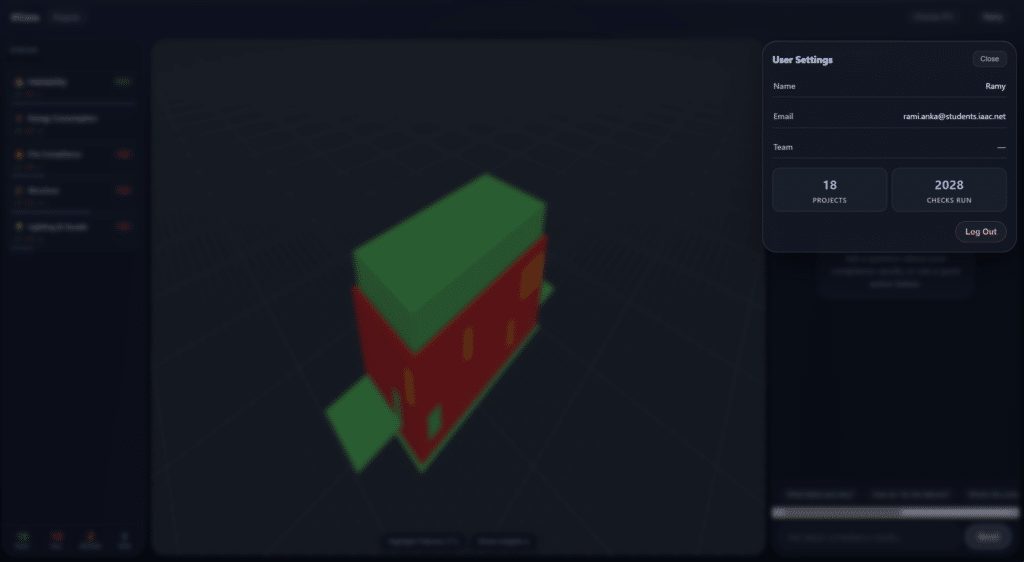
IFCore Platform, Screenshots
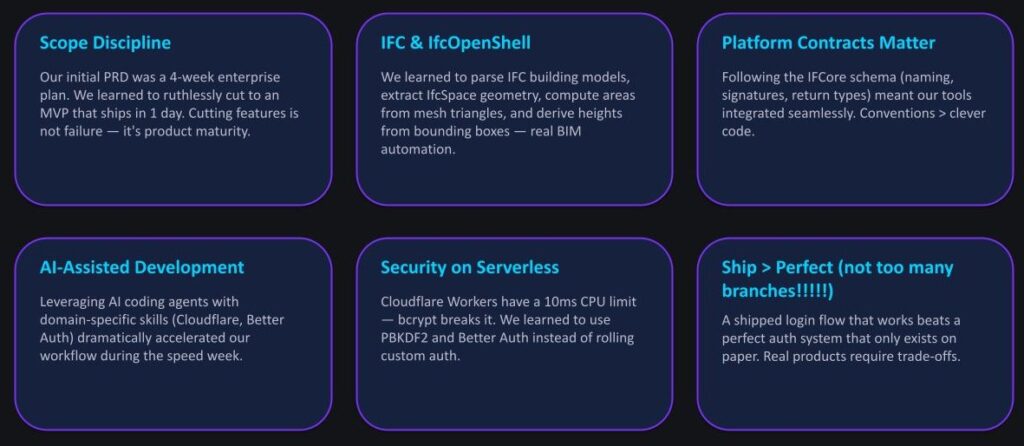
What We Learned