
INTROUCTION
Building regulations are among the most critical and most cumbersome aspects of architectural practice. In Spain, the Documento Básico de Seguridad en Caso de Incendio (DBSI), part of the Technical Building Code (CTE), sets out detailed requirements for fire safety across every typology of building. Yet in most practices today, compliance validation remains a largely manual process: architects cross-referencing dense legal text against digital models, section by section. The result is a system prone to human error, slow to adapt, and disconnected from the 3D models architects already work with. A missed evacuation corridor width, an overlooked fire compartment boundary these are not just technical infractions. They carry real consequences for the people who use buildings.
“What if the model itself could tell you whether it was safe — before it was ever built?”
That question sits at the heart of IFCore, a collaborative AI-powered compliance platform developed by multiple student teams at IAAC. Team Fire Iguanas took ownership of two of its most technically demanding contributions: automating fire safety regulation checks and building the platform’s interactive 3D model viewer.
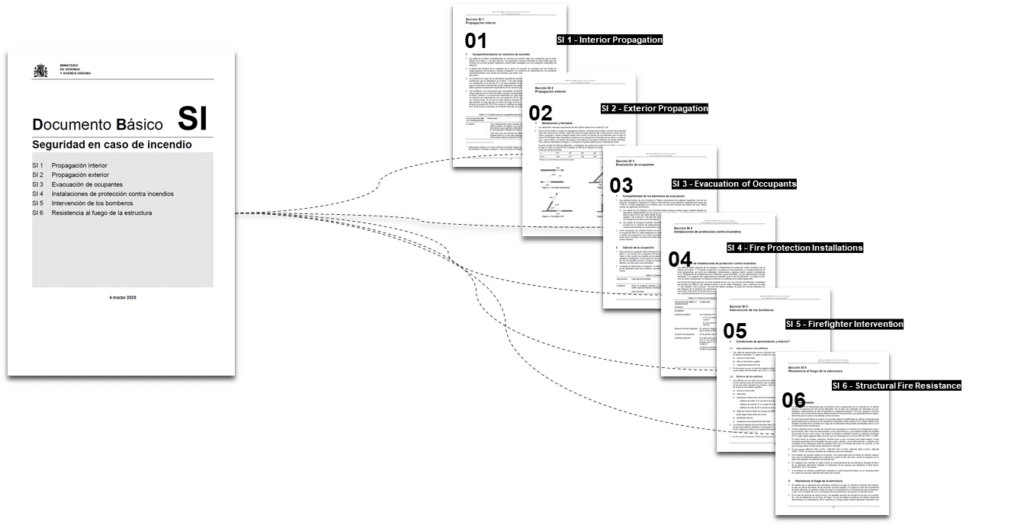
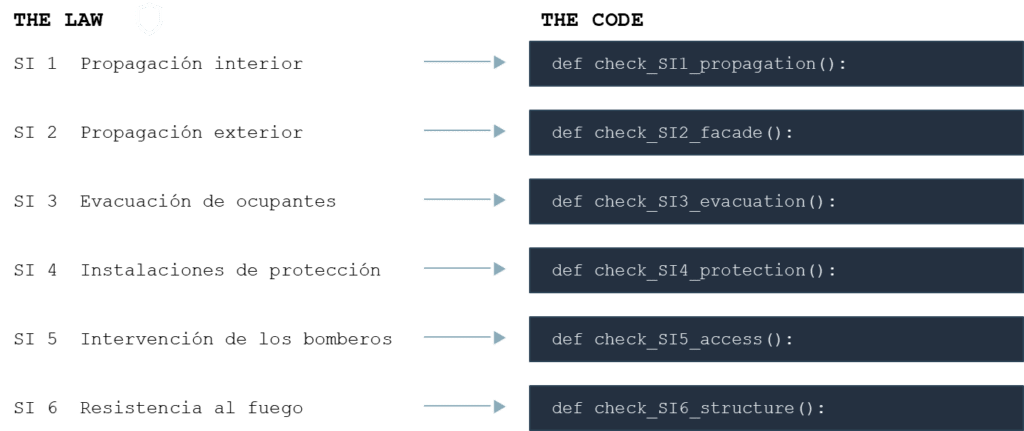
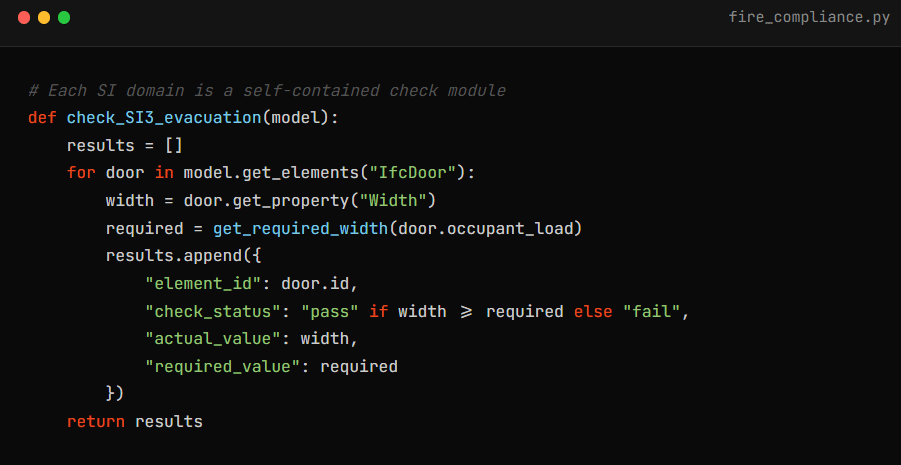
Digitizing the DBSI Regulation
The Architecture Of IFC Compliance Platform
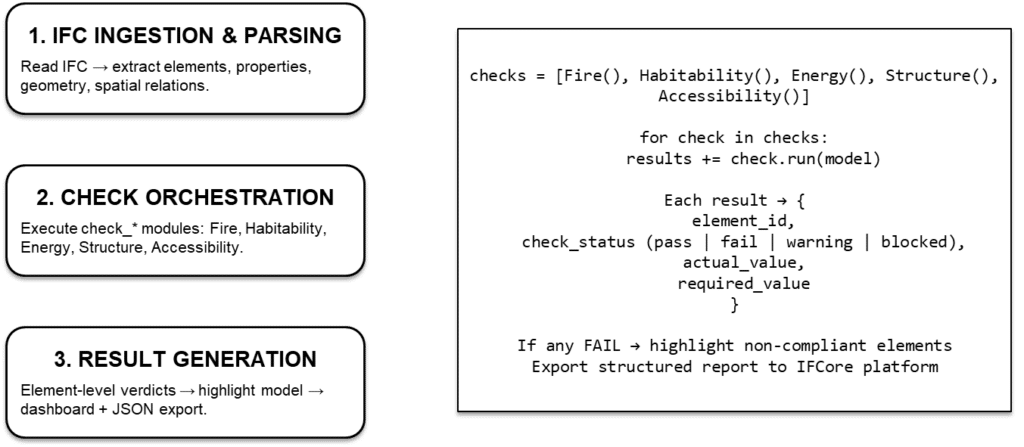
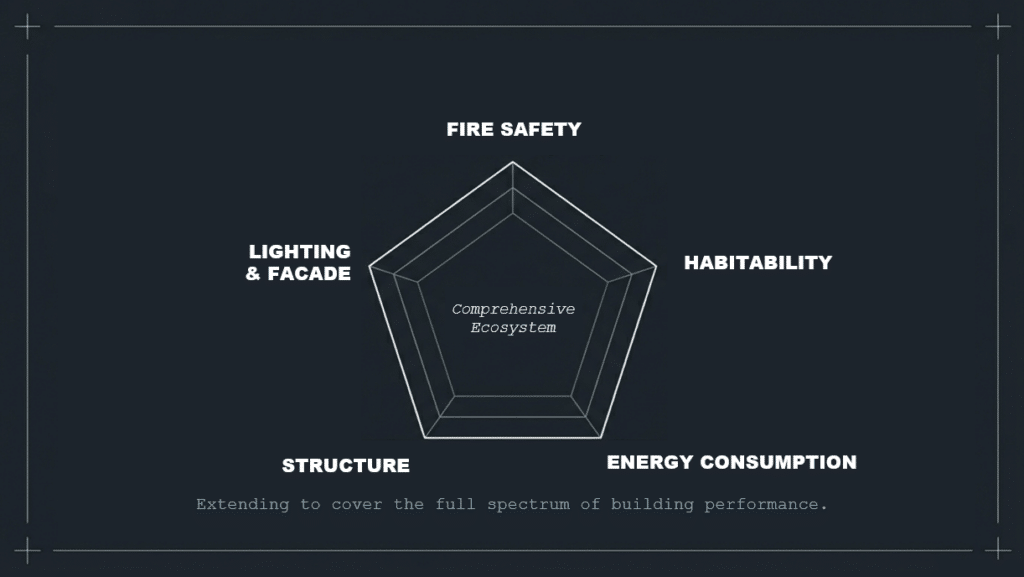
Five Pillars of Validation
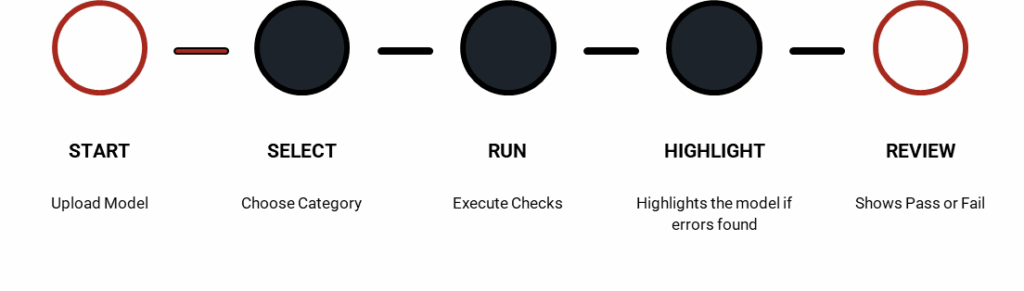
The User Journey
From file upload to actionable insights
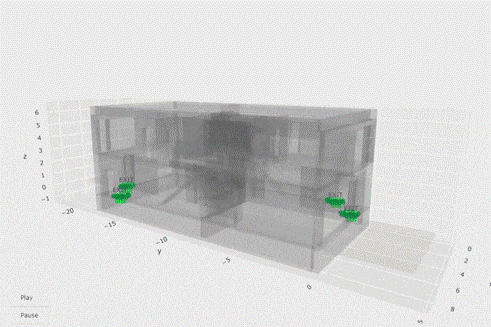
Visualizing
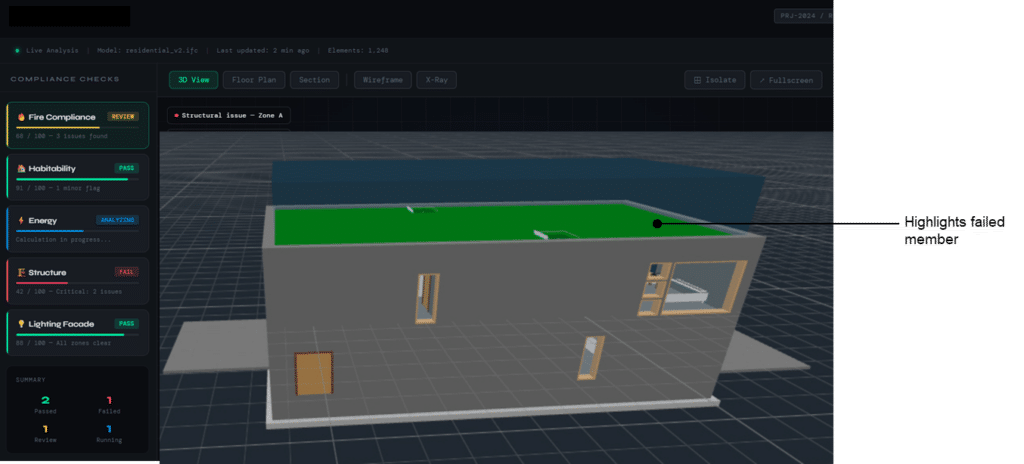
Visualization tests
Door Compliance Check
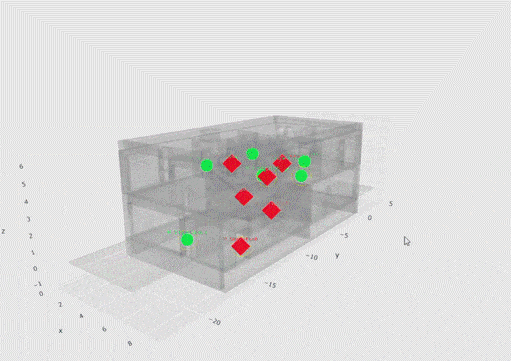

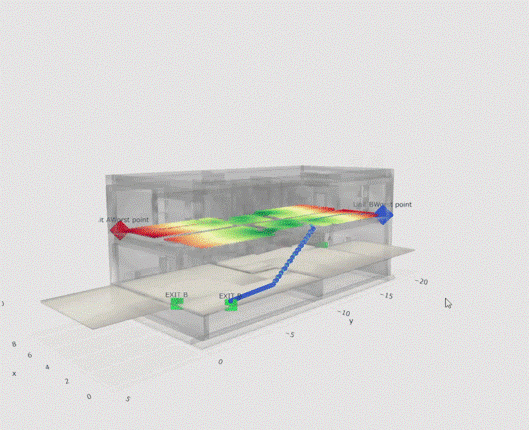
Longest evacuation route
Explore the Project
Final Webiste: https://ifcore-platform.tralala798.workers.dev/projects/d94e19a7-fc8b-4dbb-9092-738b09589cf9
Github Repo: https://github.com/iaac-maai/automatic-fire-compliance-checker
What We Learned
Building IFCore as a collaborative, multi-team effort forced a discipline that solo projects rarely require: designing for integration. Every module had to agree on a shared data contract. The fire checks had to produce results in the same structure as the habitability checks, the energy checks, the accessibility checks. The 3D viewer had to render any of them, without knowing in advance which would be active.
That constraint turned out to be clarifying. It pushed the team toward cleaner abstractions, more explicit interfaces, and a genuine appreciation for how platform thinking differs from feature thinking. The compliance functions are not just scripts they are a structured, machine-readable interpretation of legal text, designed to be extended, audited, and improved over time.
The project raises important questions that extend beyond this course: Who decides how a regulation is encoded? How should ambiguity in legal text be handled when the output is a binary pass or fail? These are not questions with easy answers, but they are questions that the architecture and technology communities will need to confront together as tools like IFCore move from academic experiments to professional practice.
