
Programming & Physical Computing Seminar
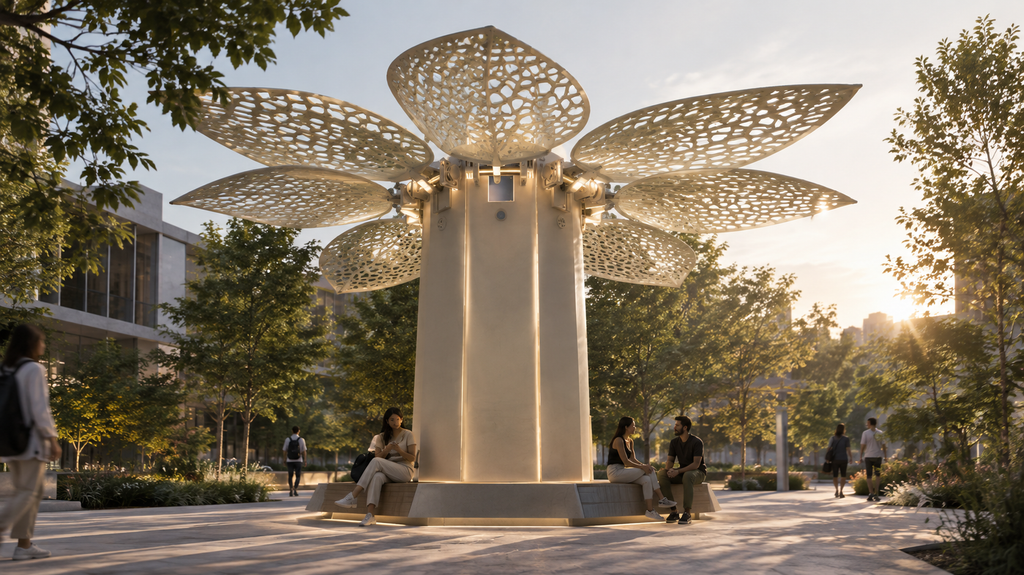
A light-responsive kinetic canopy inspired by nature
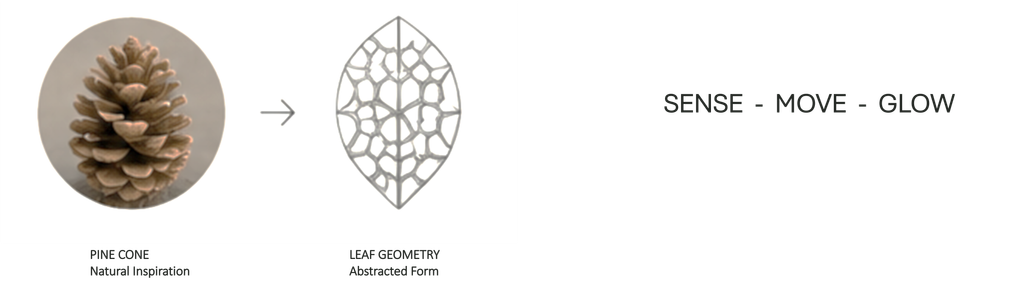
Abstract:
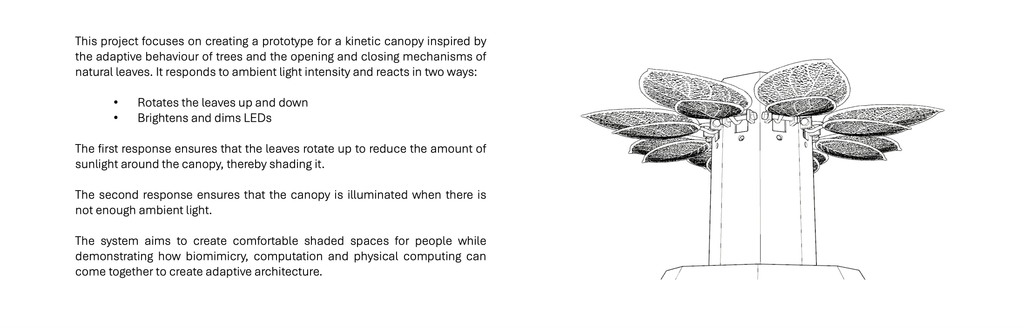
Can architecture respond like nature?
LumiLeaf explores how a light stimulus can trigger physical transformation.
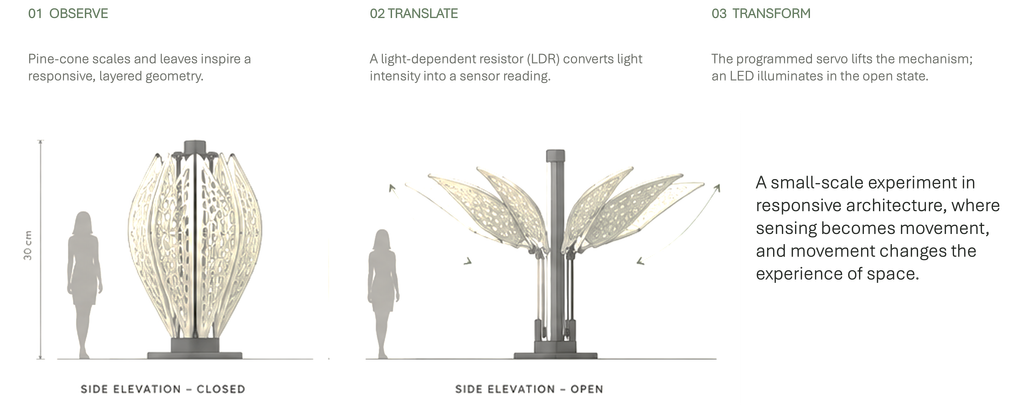
How does it work?
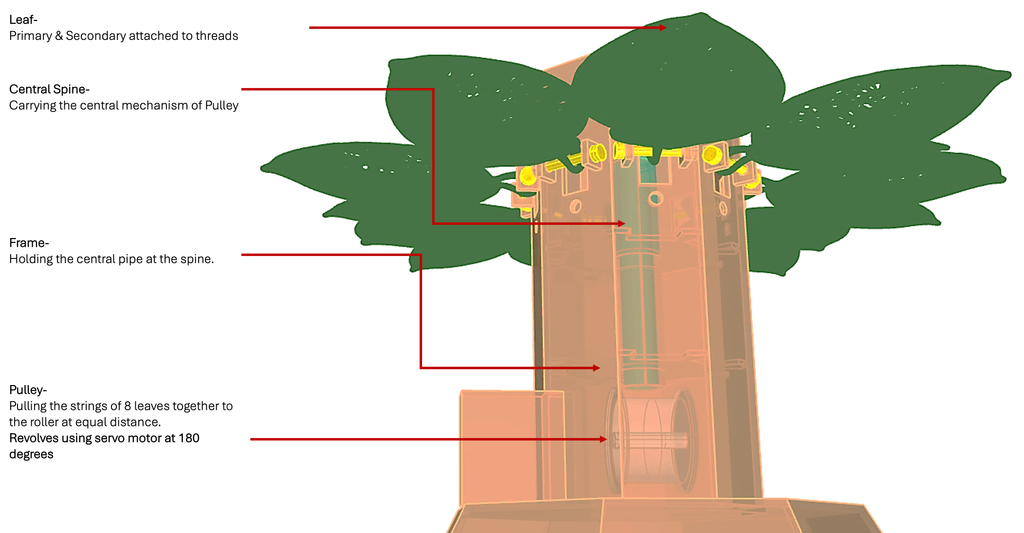
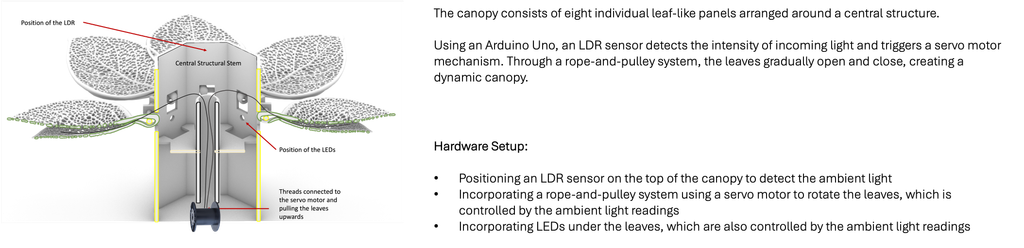
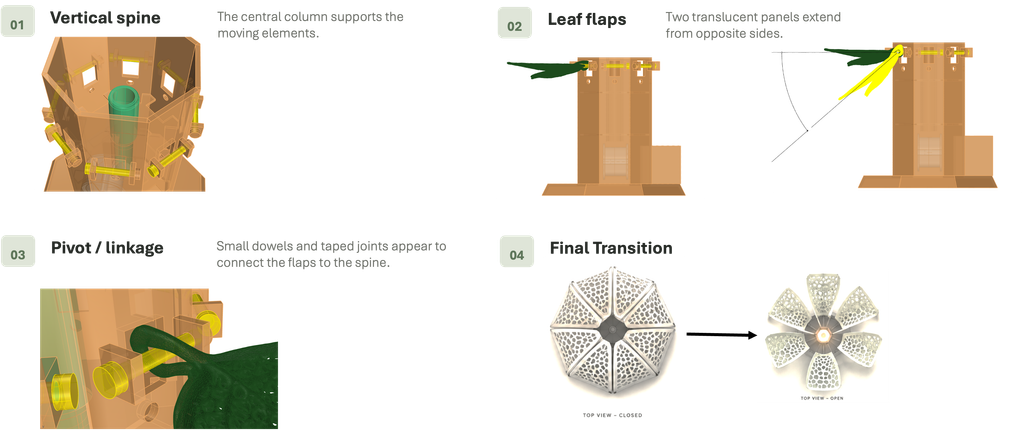
Assembly of LumiLeaf
Circuitry and Code
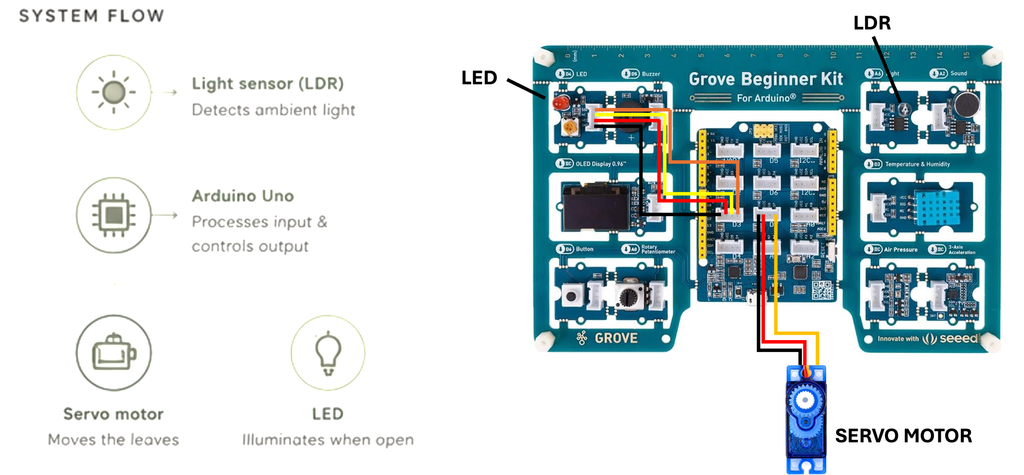
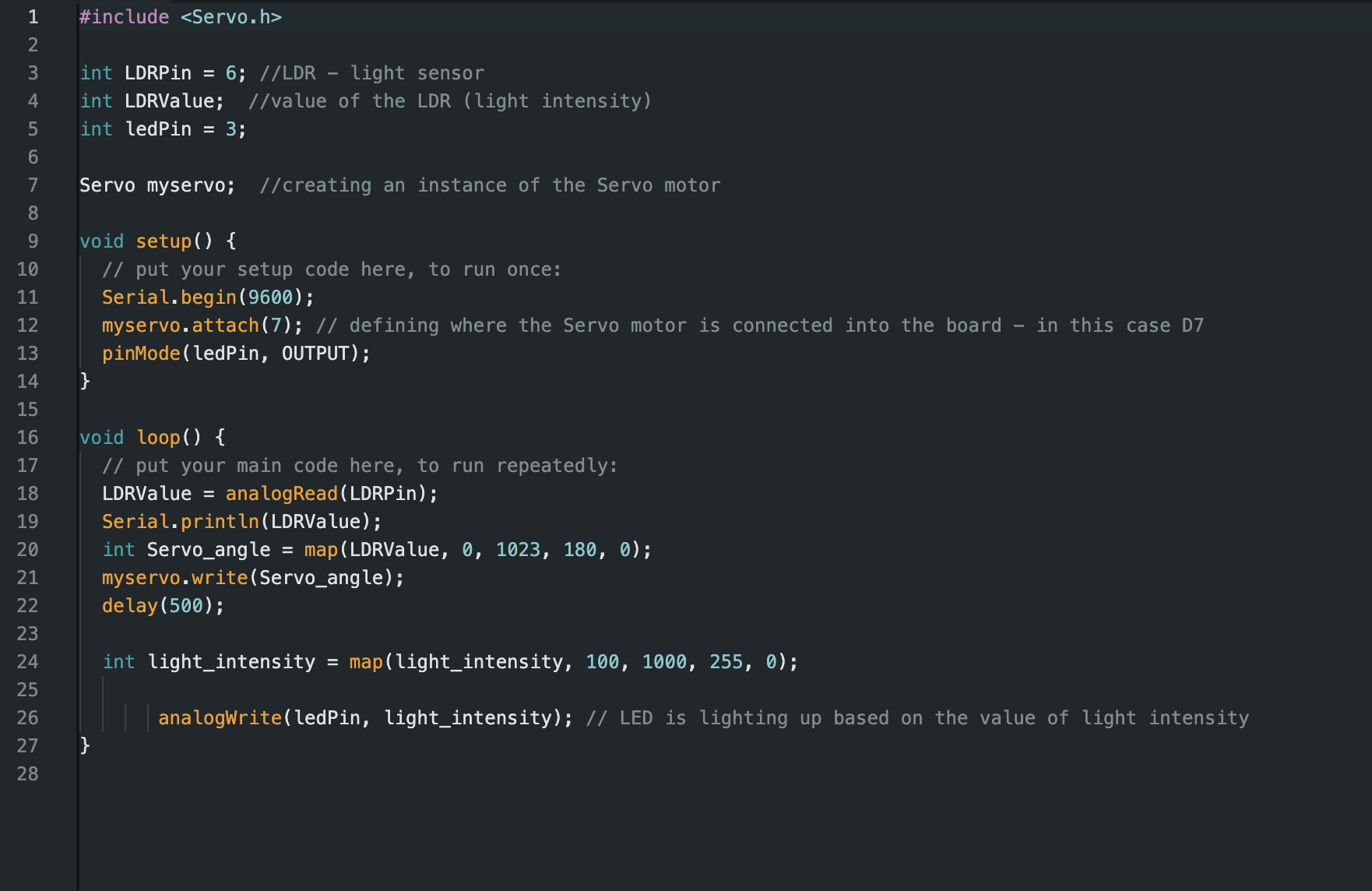
The Arduino script establishes the connection between light sensing and the mechanical movement of the canopy. An LDR (Light Dependent Resistor) continuously measures the surrounding light intensity and sends the readings to the Arduino Uno.
Using the map() function, the sensor values are translated into corresponding servo motor angles, controlling the opening and closing movement of the leaf elements. An LED is also integrated as an output indicator, with its brightness varying according to the detected light intensity.
This code forms the intelligence of the prototype, allowing the canopy to respond dynamically to changing environmental conditions through a simple sensor-based automation system.
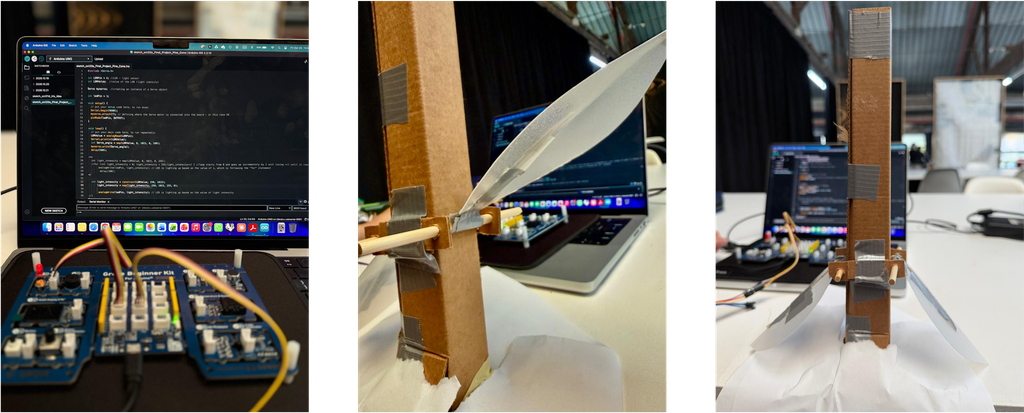
The model explores the mechanical assembly, pivot connections, and pulley-based movement required to open and close the individual leaf elements. Through physical testing, we evaluated the movement, alignment, and responsiveness of the system, translating the initial digital concept into a functional architectural prototype.
