
In what scales activism can challenge monoculture extractivism?
SYNOPOSIS
When a batch of rented hives vanish from a Californian almond farm, six activists tackle the issue at different levels: care, strike, science, market, deep time, and withdrawal. While they attempt to collaborate, each ends up exposing the blind spots in the others’ frameworks. Ultimately, the friction and mismatch between their scales of thought and action prevent them from making an orchestrated impact. The play interrogates how activism moves across space and time, asking: when does a small act remain fatally small?
CHARACTERS
Nina | The first “Rent-a-Bee” truck driver
Ohlone | The second “Rent-a-Bee” truck driver
Astrid | Intern at the Almond Farm
Martin | Owner of the Almond Farm
Bruno | Beekeeper at Bruno’s Native Apiary
Ophelia | Hitchhiker
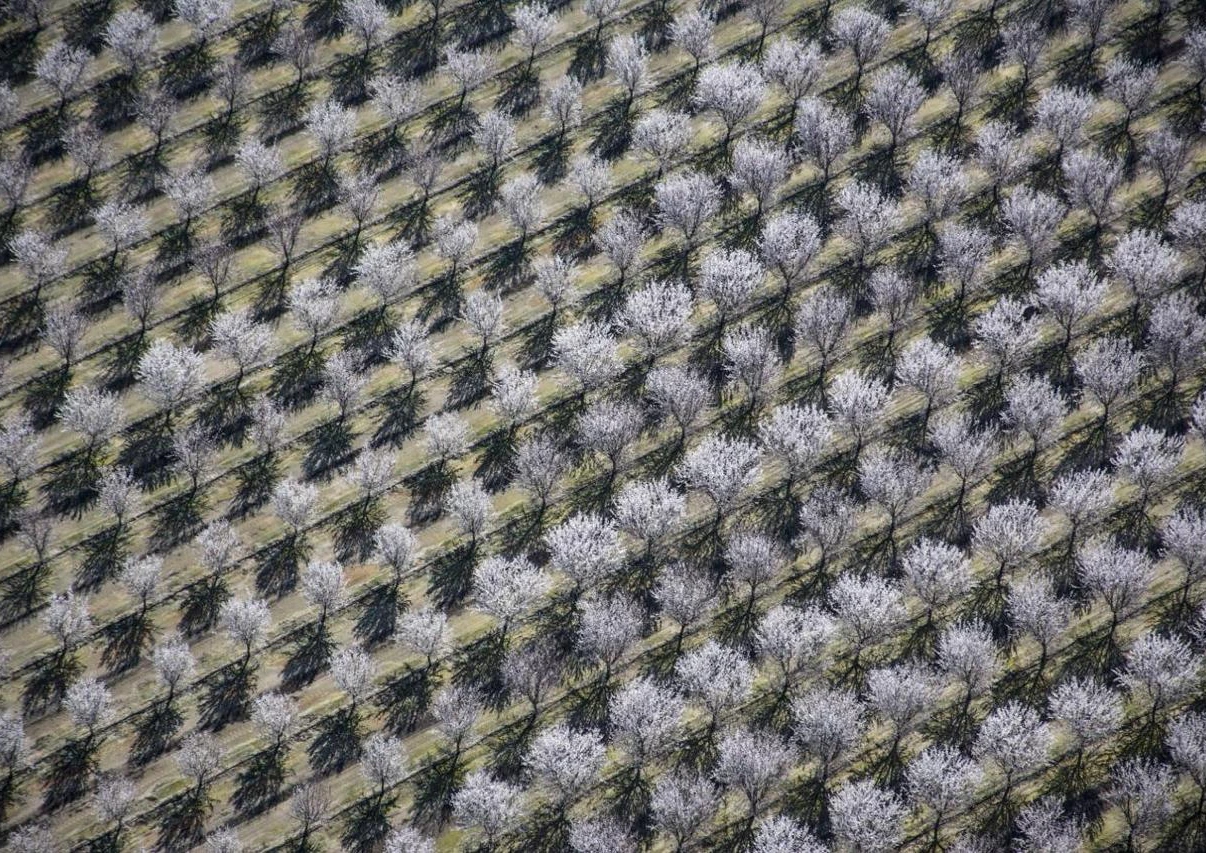
Rows of almond trees in bloom, Steve Proehl (Almond Orchard)
– What’s going on? –
Act 1
Scene 1
Golden Acres Almond Farm, Bakersfield, California, early morning.
Nina and Ohlone arrive at The Almond Farm in their truck to collect the beehives rented from Bruno’s Native Apiary. However, upon arrival, they discover that several of the hives are missing.
NINA: [shocked] Ohlone, a batch of bees is missing again?(a)
OHLONE: [calmly] Oh, “expect the worst”(1).
NINA: We need to find them – “care is necessary across every scale of life!” (2) They actually had such cute stripes!
Nina turns to Astrid, who stands beside the truck, attentively watching as Ohlone loads the beehives inside. (Fig 2)
NINA: Astrid darling, we can’t leave without the bees!
ASTRID: “We are failing but we have not yet failed. We can still fix this.” (3)
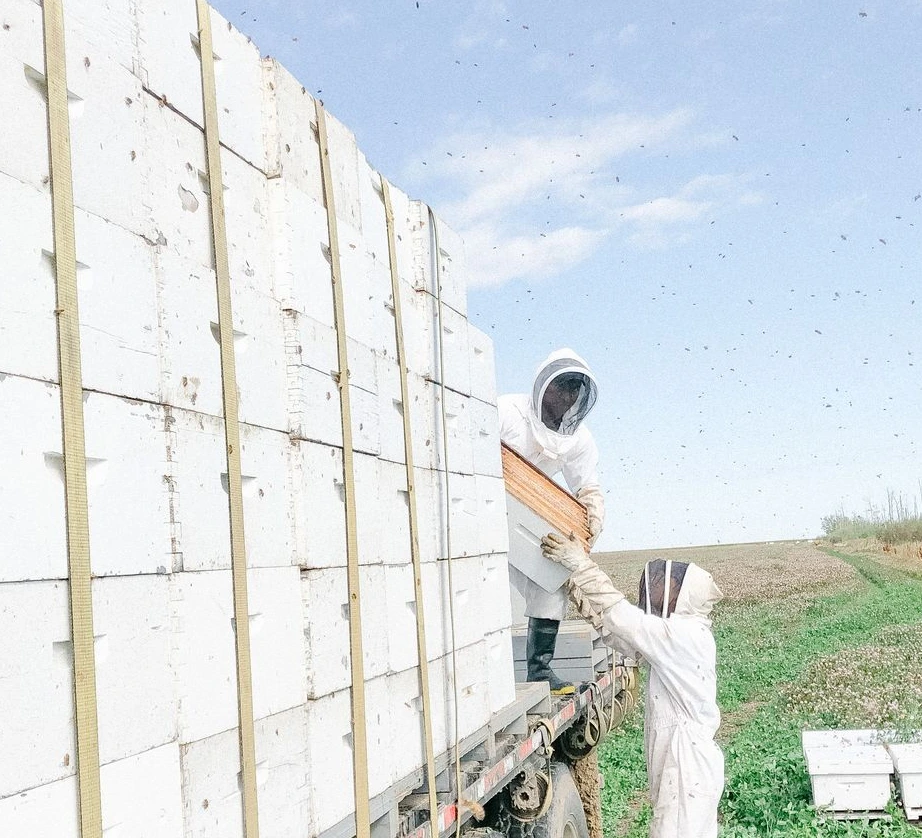
Loading Truck with hives, Peace River Honey
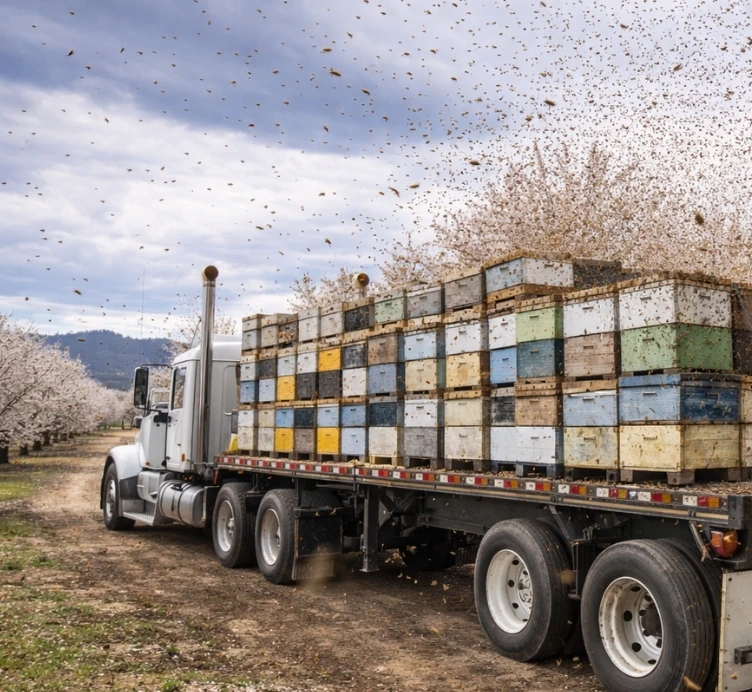
Bees swarming around a truck loaded with hives in a blooming almond orchard, Author unknown,
Martin approaches Nina, Ohlone and Astrid, looking slightly irritated by how long the loading process is taking.
MARTIN: [sharp] What’s going on? (b)
ASTRID: Martin, “we must start today.” This isn’t the first time. “We have no more excuses.”(4)(c)
OHLONE: Well, this isn’t an isolated incident, “this catastrophe will hit us all in one way or another anyway”(5)(d)
NINA: Astrid, darling, I think you are over-exaggerating a bit.
MARTIN: “Does any of that really sound like the end of the world?”(6)
Astrid shows Martin a stack of scientific reports and journals on monoculture farming.
ASTRID: Yes, it does. Millions of hives trucked in for weeks because nothing else could live in these fields (e). A monoculture is a field where only one thing is allowed to live, and even the bees have to be rented. (Fig 4/6) You ”think we can buy or build our way out of a crisis that has been created by buying and building things.” (7) I am on strike now! (Fig 7)
MARTIN: [irritated] Listen, first, you’re an intern, second, I also believe “environmental scientists, journalists, and activists have an obligation to describe environmental problems honestly and accurately.“(8)
ASTRID: These bees are just the first to show it – that nothing could keep them here. ”We are in the midst of the sixth mass extinction, with about 200 species going extinct every single day.”(9)
OHLONE: See? “Another “slow violence”, another civilizational disaster imagined as the result of a “global” event, a sudden extinction of life.“(10)
MARTIN: “The problem that you call “unmanageable” is a situation like the ones that already occur, from which societies recover, and to which they adapt.”(11)
ASTRID: Your indifference is almost the worst of all.(12) I want you to act as you would in a crisis. I want you to act as if our house is on fire. Because it is.(13) (Fig 5)
NINA: Everyone, let’s take a moment. Caring means “recognising and embracing our interdependencies”. (14) Perhaps Astrid is right: sitting down and resting might be just what we need to think more clearly.
MARTIN: [irritated] I had enough. Hey, Ohlone, bring the bee guy down here. I bet he could figure something out.
Nina sits down comfortably beside Astrid. Martin returns to his office and enjoys his pancakes submerged in honey, while Ohlone gets back into the truck and heads out to Bruno’s Native Apiary. (Fig3)
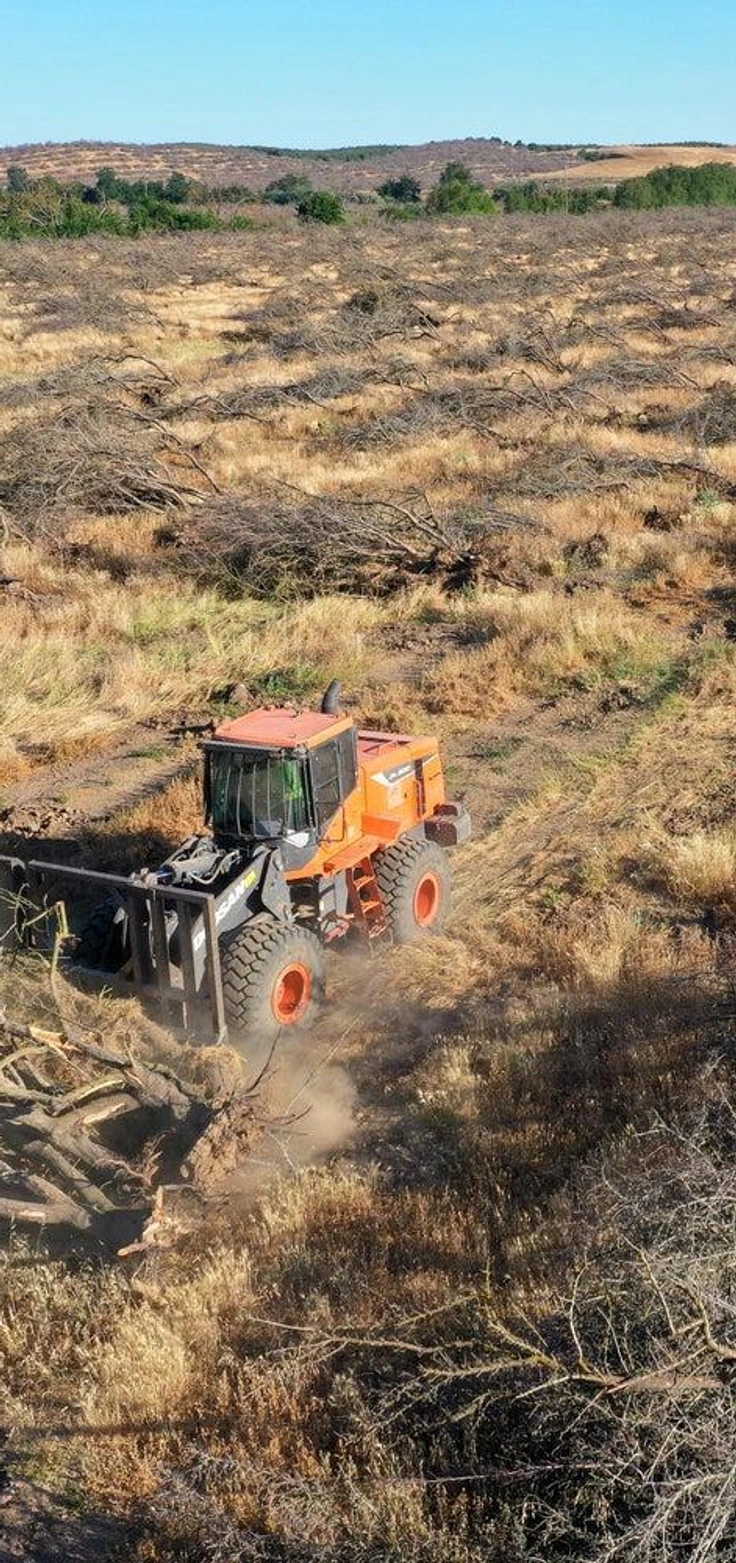
Clearing of Almond Trees California, Justin Sullivan, 2021
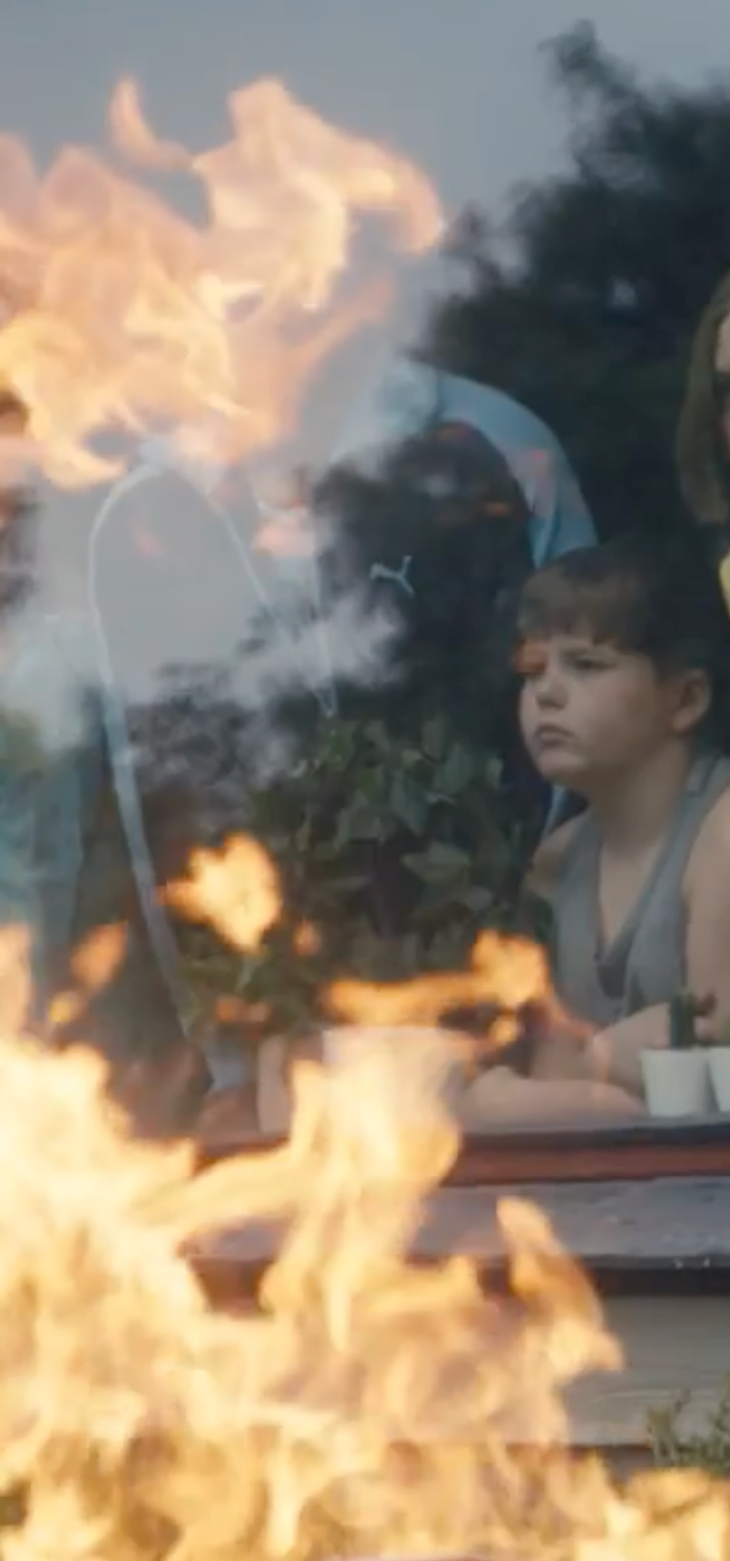
Still from I Want You To Panic, dir. Nina Holmgren, NOWNESS, 2019.
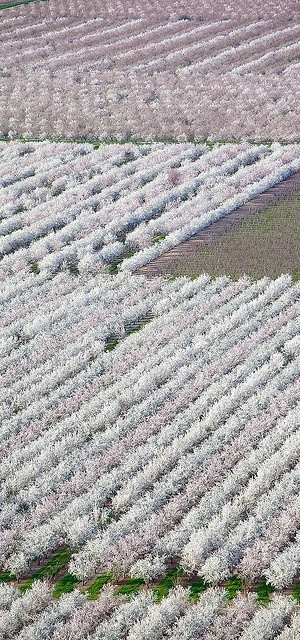
view of almond orchards in bloom, California, Author unknown
– To bee or not to bee –
Act 2
Scene 1
Bruno’s Native Apiary, California, nearly midday.
Ohlone arrives at the Apiary, where he meets Bruno, dressed in his full beekeeping suit and busy inspecting his hives. (Fig 8)
OHLONE: Bruno, another bee problem again.
BRUNO: Curious… The world around us seems to be entering a new “iteration”(15) (g).
OHLONE: “The Sky is Falling“(f), have you not understood the pattern?
BRUNO: “Anyone who believes that” nature is “defined by strict obedience to the laws of causality must never have followed the slow development of a laboratory experiment.”(16)
OHLONE: This would not be the last time. “We once believed ourselves destined to a vast sidereal ocean, now we find ourselves thrown back at the harbor when we started.”(17)
BRUNO: Consequences… Tell me dear Ohlone, are you familiar with Plato’s Cave?(h) (Fig 9)
OHLONE: Prisoners shackled inside a cave, their only perception of the world outside is through the shadows cast onto the cave wall, a hint of an idea of reality.
BRUNO: And how can we use this allegory today? The prisoners are “the totality of speaking humans, who find themselves with no power at all, save that of being ignorant in common”.(18) Outside the cave, is “a world made up not of humans but of nonhumans, indifferent to our quarrels, our ignorances, and the limits of our representations and fictions.”(19)We humans bind our tiny perceptions of reality into self-proclaimed Natural Laws and then panic our way through binding Reality into these laws.
OHLONE: Those “white people are not afraid of being crushed by the falling sky”(20)
BRUNO: That being said, I think we do need to find these bees, I’d like to know that they’re okay.
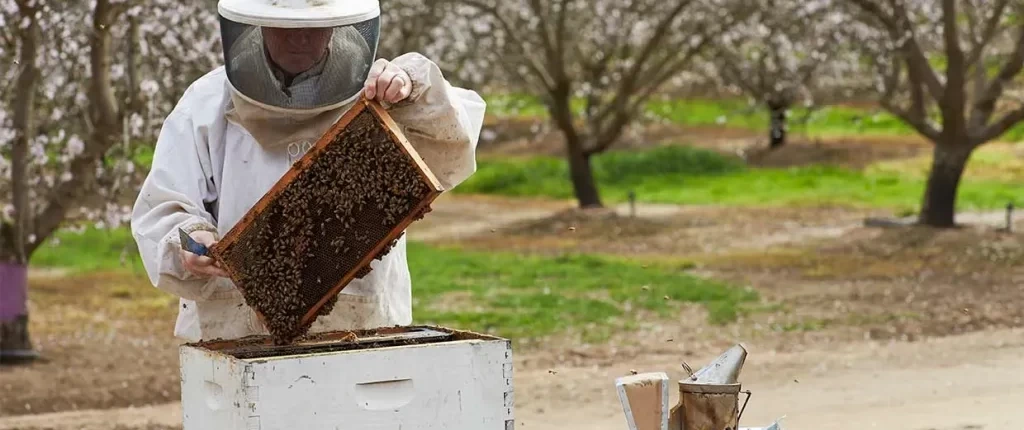
A beekeeper lifts a frame of bees from a hive in an almond orchard, California.
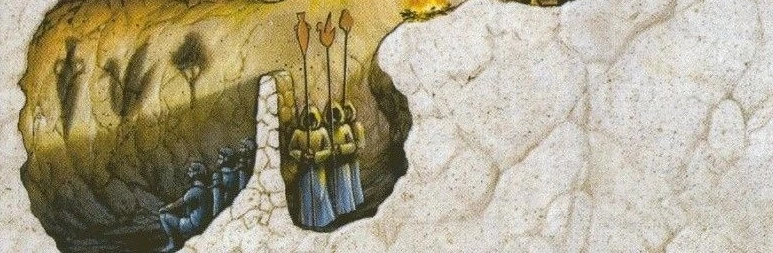
Illustration of Plato’s Allegory of the Cave,
Illustrator unknown; Based on Plato, Republic, Book VII.
Act 2
Scene 2
On the highway back to The Almond Farm
Ohlone and Bruno drive the truck back. On their way, they spot a lone figure walking along the road, they slow down and pull over. (Fig11)
OHLONE: Where are you heading?
OPHELIA: I was looking at these almond trees and simply waved at you. Since you stopped for me, I feel invited to hop in. I am going nowhere, or at least anywhere but “these established cartographies of possibility imposed from above.”(21)(i)
BRUNO: Well, we can drop you by the almond farm down the road. We’re trying to find missing bees.
OPHELIA: Perhaps they will never be found. “The animal proposes. The human imposes”.“An animal is something that flees from the human because it knows it will be used or abused.”(22)
BRUNO: But we’re not trying to hurt the bees. We’re trying to find them. I’d like to know that they’re safe.
OHLONE: Terrans, not humans and not bees (j). We are trying to find not just the bees, but also ourselves. “The other humankind’s hidden under the corporeality of other species, it is hard to keep track of.”(23) So what would you do, Ophelia?
OPHELIA: There is no template. Perhaps we should allow the bees to be. “Leaving them alone does not ignore or deny the need for care.”(24)“The world is formed of chaotic flows. It does not claim to know anything.”(25) Perhaps the bees are not lost. Perhaps it is simply somewhere you haven’t thought to look. Or somewhere you cannot look.
BRUNO: We see eye to eye… Although the bees might be in a fragile situation in this human world, they might need us just like we need them, they just don`t know how to say it. “Nature is constituted exclusively of real objects that have the property of defining what exists but that lack the gift of speech.“(26)
OPHELIA: “Nature has no particular goal in view, and final causes are mere human figments.” (27) You call them missing bees because you need them to be somewhere. But perhaps their existence belongs entirely to itself.
OHLONE: I think you should listen to Ophelia, Bruno. “The human species as whole, and the very idea of a human species, that is being interpellated by this.”(28)
BRUNO: So now what?
OPHELIA: [wondering] “At every moment, with every encounter, how will we imagine the world?”(29)(k)
She asks to be let out. The truck stops. Ophelia steps down and walks away among the almond trees.
BRUNO: I wonder if the bees don’t want to be found.” If I were to affirm that another is speaking through me, I would be demonstrating great naiveté.”(30)
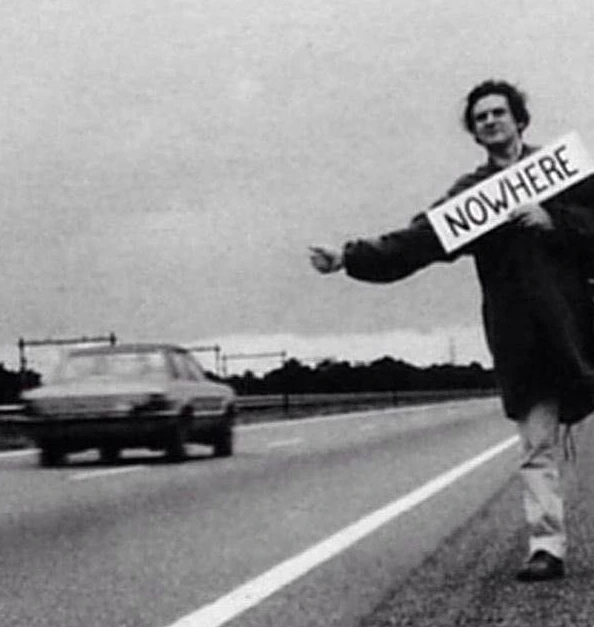
The black-and-white photograph appears to be Nowhere (1980) by Hungarian artist Endre Tót
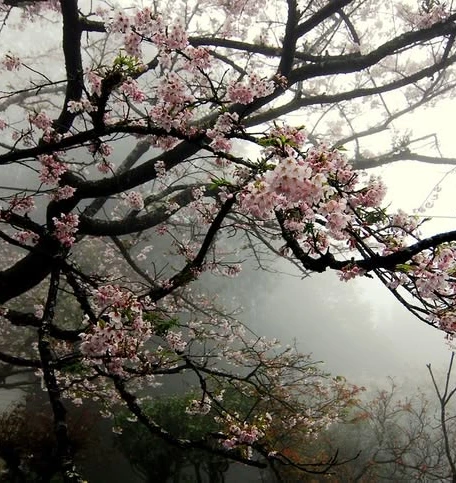
Alomond blossom, weilian, 2015
– Sweets, strikes, and pheromones –
Act 3
Scene 1
Back at The Almond Farm, late afternoon
Nina is still accompanying Astrid sitting beneath the tree. Martin returns shortly after finishing his stack of pancakes. Ohlone and Bruno pull up in the truck, park nearby, and step out to join them.
BRUNO: Hey Nina, what’s going on with the hives? What are you doing?
NINA: We are on it! I once saw a lovely gesture of care in a Winnie-the-Pooh film. (l) (Fig 12).
Nina gets up and pulls out a bag of sweets from the truck.
NINA: Pooh leaves little signs to help someone find their way home. I thought we might try something similar for our poor, lost bee-fellows. Caring is about “the welfare and flourishing of life”(31). And surely that includes one little bee?
MARTIN: [confused] I don’t understand but I agree with “care, persistence, and, I dare say, love, I believe we can moderate the extremes and deepen understanding and respect in the process.”(32)
Nina starts taking long, deliberate steps. With every step, she places a sweet on the ground until she reaches the end of the bag.
ASTRID: I don’t understand her, I am on strike.
Astrid moves down to the edge of the almond farm and places a small stack of fact sheets beside her.
ASTRID: People say one intern is too small to matter. But “no one is too small to make a difference.”(33) “Sometimes not doing things, like just sitting down, speaks much louder than doing things.”(34) “Because if everyone knew how serious the situation is and how little is actually being done, everyone would come and sit down beside me.”(35)
She props up a piece of cardboard with the words INTERN STRIKE FOR THE BEES, written in thick black letters. She adjusts the sign carefully so it faces the road.
Martin turns to Bruno for a solution.
MARTIN: Bruno, what is the required measure to be taken?
BRUNO: I have brought a few vials of pheromones from the original hive and will try to draw the bees back. However, “salvation through Science comes only in a world deprived in advance of any means to become moral, reasonable, and learned.” (36) (Fig 13)
Bruno starts to take out his equipment from the truck and begins preparing the vials of pheromones.
MARTIN: All right, but I still don’t get what Astrid is panicking about. “We will eventually triumph over apocalyptic environmentalism, I believe, because the vast majority of people in the world want both prosperity and nature.” (37) “In so trying, I believe we will bring ourselves closer to the transcendent moral purpose most people, perhaps even Astrid, share.” (38)
BRUNO: It is imperative, however, for one to not mistake the dismissal of Alarm, for the detachment from the crisis entirely. This is the very problem of modern, capitalist thought. ‘Tomorrow,’ the moderns cry, ‘we shall be more detached.’ ‘Tomorrow,’ murmur those who have to be called nonmoderns, ‘we shall be more attached.’(39)
Martin sighs and returns to his office.
Bruno, having finally prepared his equipment, joins Nina, who is patiently waiting. They set off to locate the bees using pheromones.
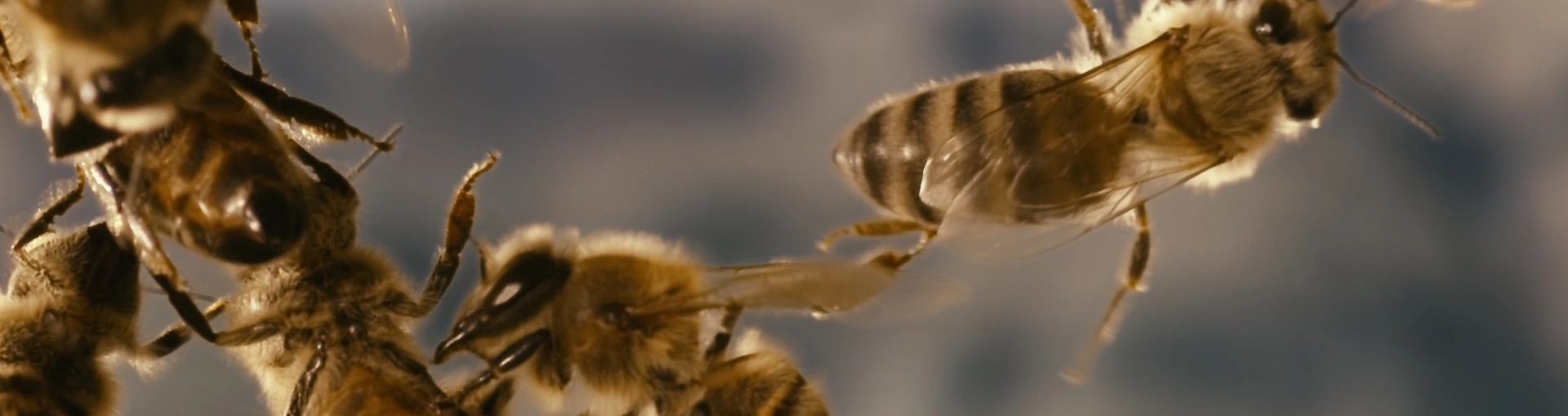
Still from More Than Honey, dir. Markus Imhoof, 2012.
Scene 2
Somewhere in The Almond Farm
Once everyone has gone off to attend to their own tasks, Ohlone is left alone by the truck. He stands there for a while. Then he notices a strangely familiar figure wandering among the almond trees. He approaches and recognises Ophelia, the hitchhiker they picked up on their way to the farm. She is dancing among the trees, surrounded by bees, swaying and drifting without any apparent direction. It is impossible to tell who is following whom, who is leading the dance, or whether they are all simply playing together. The search, once governed by individual wills and beliefs, dissolves into a small, fleeting celebration of movement, as bees and humans seem to share the same rhythm.
Final Curtain
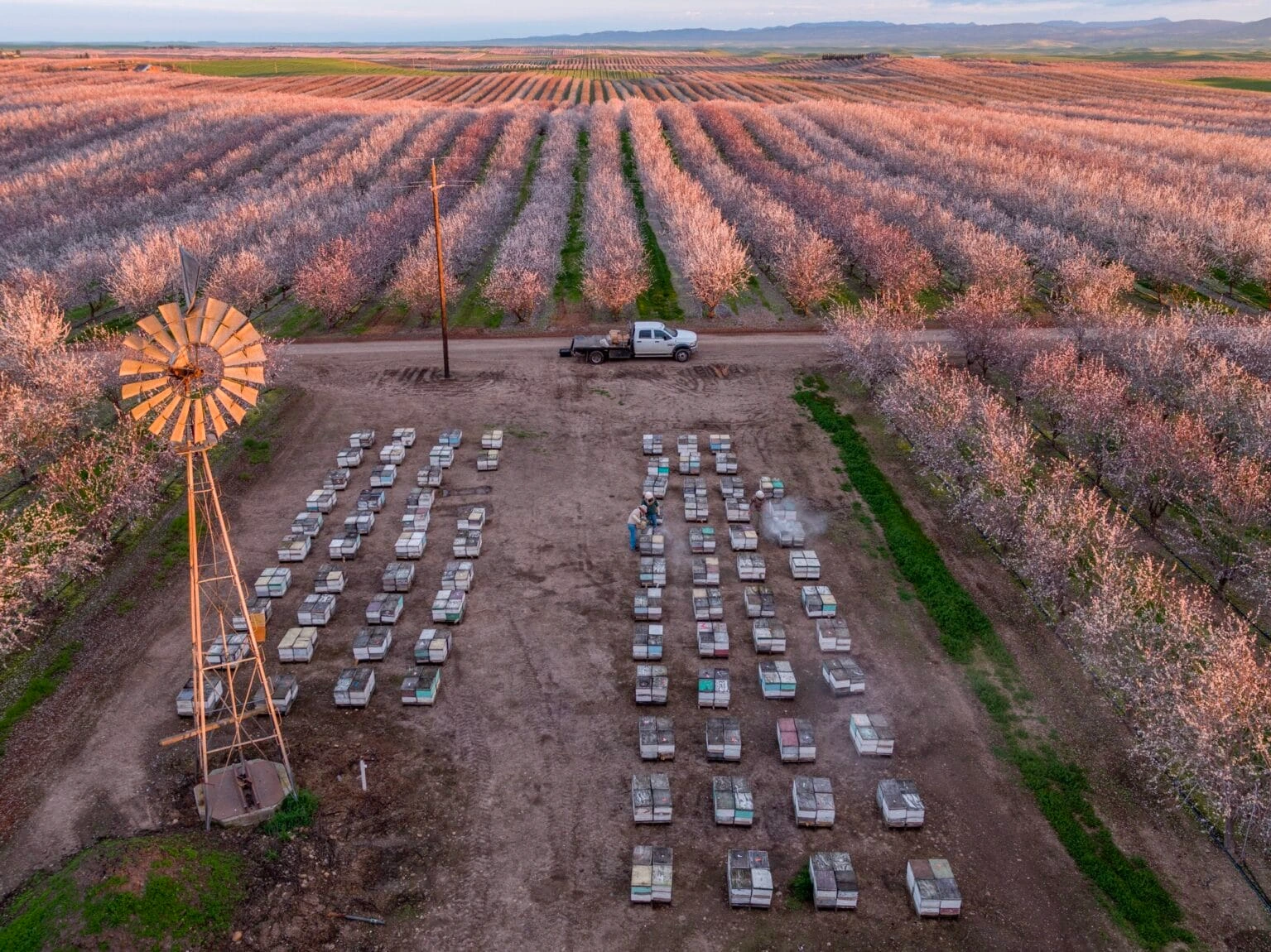
blooming almond orchard, George Steinmetz
Bibliography
Care Collective, The (Andreas Chatzidakis, Jamie Hakim, Jo Littler, Catherine Rottenberg and Lynne Segal). 2020. The Care Manifesto: The Politics of Interdependence. London: Verso.
Danowski, Déborah, and Eduardo Viveiros de Castro. 2017. The Ends of the World. Translated by Rodrigo Nunes. Cambridge: Polity Press.
Latour, Bruno. 2004. Politics of Nature: How to Bring the Sciences into Democracy. Translated by Catherine Porter. Cambridge, MA: Harvard University Press.
MacCormack, Patricia. 2020. The Ahuman Manifesto: Activism for the End of the Anthropocene. London: Bloomsbury Academic.
Shellenberger, Michael. 2020. Apocalypse Never: Why Environmental Alarmism Hurts Us All. New York: Harper.
Thunberg, Greta. 2019. No One Is Too Small to Make a Difference. London: Penguin Books.
Spinoza, Baruch. 1957. The Ethics. As quoted in MacCormack (2020).
Footnote
(a) Nina is a kind-hearted, idealistic woman, compassionate, innocent and slightly naive. She is genuinely devoted to caring for all living beings, but her attempts to put this into practice can be absurd, impractical and wildly disproportionate to the problem at hand.
(b) Martin Alista, an old man in his 50s. He had grey hairs which were once brown, evident from them being still present at the base of his scalp. He still stood straight but the light wrinkles on his face gave his age away. Stern facial features, a scowl that permanently stayed on his face. Martin has spent twenty years running hive logistics for a farm in California, moving large numbers of colonies a season into the almond orchards. He’s quick to raise his voice and slam a clipboard on the truck hood. But every hive count, mite test and delivery route is logged to the decimal. He trusts the data, not the headlines, and he can’t stand people who panic or who preach.
(c) Astrid is a serious, sharp-minded young woman (16), an intern on the almond farm who takes every fact literally and every problem personally. She is honest to the point of bluntness, sees the world in black and white, and refuses to accept “that’s just how it is” as an answer.
(d) He is descended from a Native people who lived on this land long before colonisation and industrial agriculture transformed it. He works reluctantly for an almond company, the only way he can remain close to the land that was once his people’s home. Though they did not cause its environmental destruction, his people have endured centuries of catastrophe at the hands of those who called themselves civilised. They have already witnessed the end of their world, yet they survived and continue to do so. He sees bees as he sees humans: as living beings with their own worlds, communities and histories. He recognises them as individuals, even knows some by name. In secret, he is trying to restore a native forest, planting trees amid the almond fields to provide a home for native bees.
(e) Estimated number of honeybee colonies needed to pollinate California’s almond orchards in the 2024 bloom.
Farmdoc Daily, from the University of Illinois (February 2025), estimated that about 1.4 million acres of almond orchards needed about 2.7 million honeybee colonies in 2024.
(f) An allusion to The Falling Sky: Words of a Yanomami Shaman by Davi Kopenawa and Bruce Albert (2013). For the Yanomami, the falling sky is the image of a world collapsing because its order has been destroyed. Danowski and Viveiros de Castro open The Ends of the World (2017, p. ix)
(g) Bruno is a balanced and calm beekeeper. He spends his days on his bee farm, trying to understand the behaviour of bees, and nature overall, interpreting it through the eyes of a researcher, to eventually share his findings with people, in a hope of better communication with the human and non-human world.
(h) Plato, Republic, Book VII. Latour (Politics of Nature, 2004, pp. 10–14) uses the Cave to criticise the modern split between talking humans chained “inside” and silent nature “outside.” The humans are unable to truly understand and experience the world of nature but only interpret it through nature’s ‘shadows’ cast onto the cave wall. For us, it describes the characters: each argues from inside, from their own shadows, while the bees are outside, indifferent to our quarrels.
(i) Ophelia is an eccentric, enigmatic, and contemplative woman who moves through the world guided by curiosity and intuition rather than social conventions. Deeply observant and attentive to her surroundings, she has a particular sensitivity towards animals and the non-human world, seeing them as independent beings rather than resources to be controlled. Her behaviour is unpredictable, challenging the assumptions of those around her and questioning humanity’s need to control, classify, and assign purpose to everything.
(j) Danowski and Viveiros de Castro, The Ends of the World (2017), p. xii, where they explain the term, which they take from Latour, who opposes “Terrans” to “Humans” or “Moderns.”
“Terrans, not humans and not bees.” (Humans, bees, you are all terrans).
(k) Patrícia MacComarck advocates for a rupture with the prevailing systems that constitute the most fundamental structures of our society; anything originating from within these systems is incapable of generating effective change, as it inevitably ends up fostering new power dynamics. The author proposes working within a novel experimental field—one entirely detached from any existing structure or form of organization. The concept of “potentia” emerges as an intent to spark new frictions and relationships, free from any pre-established expectations — an approach guided solely by the concepts of love and care that the author introduces.
(l) The scene alludes to Pooh’s Heffalump Movie (2005), in which Piglet leaves a trail of jellybeans to help him find his way back and avoid getting lost. Nina playfully adapts this gesture, using sweets to guide lost bees back to their hive.
Reference
(1) Bruno Latour, “Foreword,” in Déborah Danowski and Eduardo Viveiros de Castro, The Ends of the World (2017), p. viii
Adapted: eads “Expecting the worst.”
(2) The Care Collective, The Care Manifesto (2020), p.13
(3) Greta Thunberg, No One Is Too Small to Make a Difference (2019), p. 19
(A Strange World, Berlin, 30 March 2019)
(4) Greta Thunberg, No One Is Too Small to Make a Difference (2019), p. 28
(Can You Hear Me?, London, 23 April 2019)
(5) Déborah Danowski and Eduardo Viveiros de Castro, The Ends of the World (2017), p. 2
(6) Michael Shellenberger, Apocalypse Never (2020), p. 15
(7) Greta Thunberg, No One Is Too Small to Make a Difference (2019), p. 18
(A Strange World, Berlin, 30 March 2019).
(8) Michael Shellenberger, Apocalypse Never (2020), p. 8
(9) Greta Thunberg, No One Is Too Small to Make a Difference (2019), p. 6
(Almost Everything is Black and White, London, 31 October 2018). adapted
(10) Déborah Danowski and Eduardo Viveiros de Castro, The Ends of the World (2017), p. 2 Adapted
“slow violence”
Déborah Danowski and Eduardo Viveiros de Castro, The Ends of the World (2017), p. 3
(11) Michael Shellenberger, Apocalypse Never (2020), p. 24
(12) Greta Thunberg, No One Is Too Small to Make a Difference (2019), p. 4
(Our Lives are in Your Hands, Stockholm, 8 September 2018). Adapted
“Your silence is almost worst of all.”
(13) Greta Thunberg, No One Is Too Small to Make a Difference (2019), p. 12
(Our House is On Fire, Davos, 25 January 2019)
(14) The Care Collective, The Care Manifesto (2020), p.13
(15) Bruno Latour, Politics of Nature (2004), p. 173
(16) Bruno Latour, Politics of Nature (2004), p. 81
Chapter 2, “How to Bring the Collective Together.” Adapted: the original reads “Anyone who believes that nonhumans are defined by strict obedience…”
(17) Déborah Danowski and Eduardo Viveiros de Castro, The Ends of the World (2017), p. 3
(18) Bruno Latour, Politics of Nature (2004), p. 14
(19) Bruno Latour, Politics of Nature (2004), p. 13-14
(20) Davi Kopenawa, quoted in Déborah Danowski and Eduardo Viveiros de Castro, The Ends of the World (2017), p. ix
(21) Patricia MacCormarck, The Ahuman Manifesto (2020), p. 138
(22) Patricia MacCormack, The Ahuman Manifesto (2020), p. 71
(23) Patricia MacCormack, The Ahuman Manifesto (2020), p. 82
(24) Patricia MacCormack, The Ahuman Manifesto (2020), p. 32 adapted
(25) Patricia MacCormack, The Ahuman Manifesto (2020), p. 34
(26) Bruno Latour, Politics of Nature (2004), p. 14
(27) Baruch Spinoza, Ethics, quoted in Patricia MacCormack, The Ahuman Manifesto (2020), p. 35
(28) Déborah Danowski and Eduardo Viveiros de Castro, The Ends of the World (2017), p. 2
(29) Patricia MacCormack, The Ahuman Manifesto (2020), p. 78
(30) Bruno Latour, Politics of Nature (2004), p. 64
(31) The Care Collective, The Care Manifesto (2020), p.13
“Care is also a social capacity and activity involving the nurturing of all that is necessary for the welfare and flourishing of life.”
(32) Michael Shellenberger, Apocalypse Never (2020), p. 274
(33) Greta Thunberg, No One Is Too Small to Make a Difference (2019), p. 8 (Unpopular, Katowice)
(34) Greta Thunberg, No One Is Too Small to Make a Difference (2019), p. 14
(35) Greta Thunberg, No One Is Too Small to Make a Difference (2019), p.4 Adapted (“us”)
(36) Bruno Latour, Politics of Nature (2004), p. 17
(37, 38) Michael Shellenberger, Apocalypse Never (2020), p. 274
(39) Bruno Latour, Politics of Nature (2004), p. 191
Credits
Tiago Barros Aguiar
Lucas Oggioni Cypriano
Evgeniia Efimenko
Karan Ashley Nagpal
Harshit Pandey
Edda Rabold
Ho Lam Yeung
