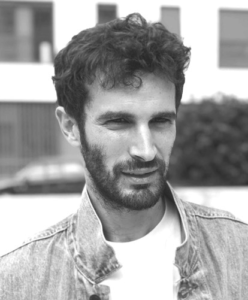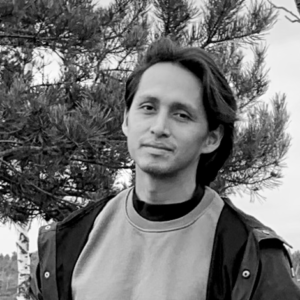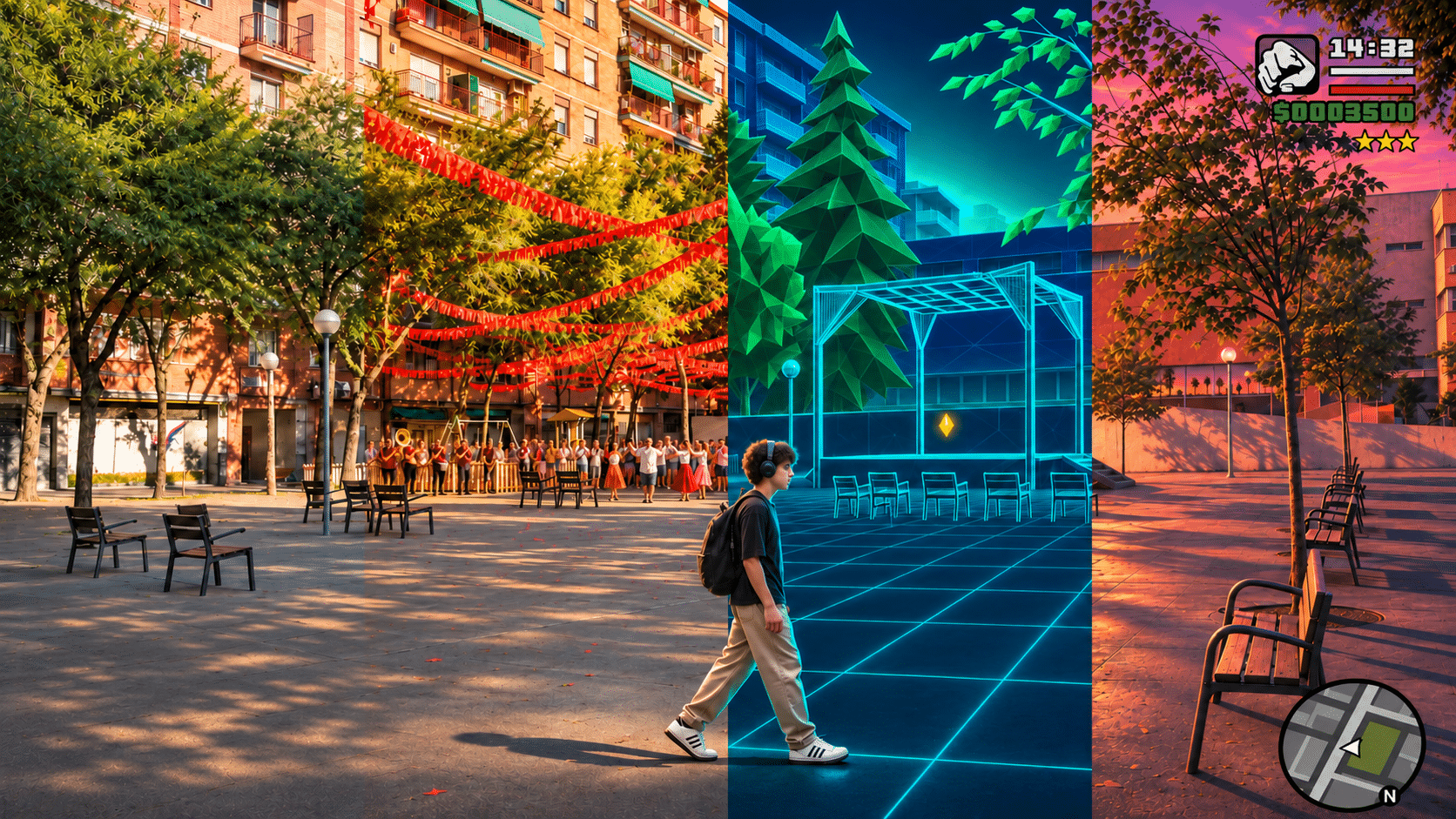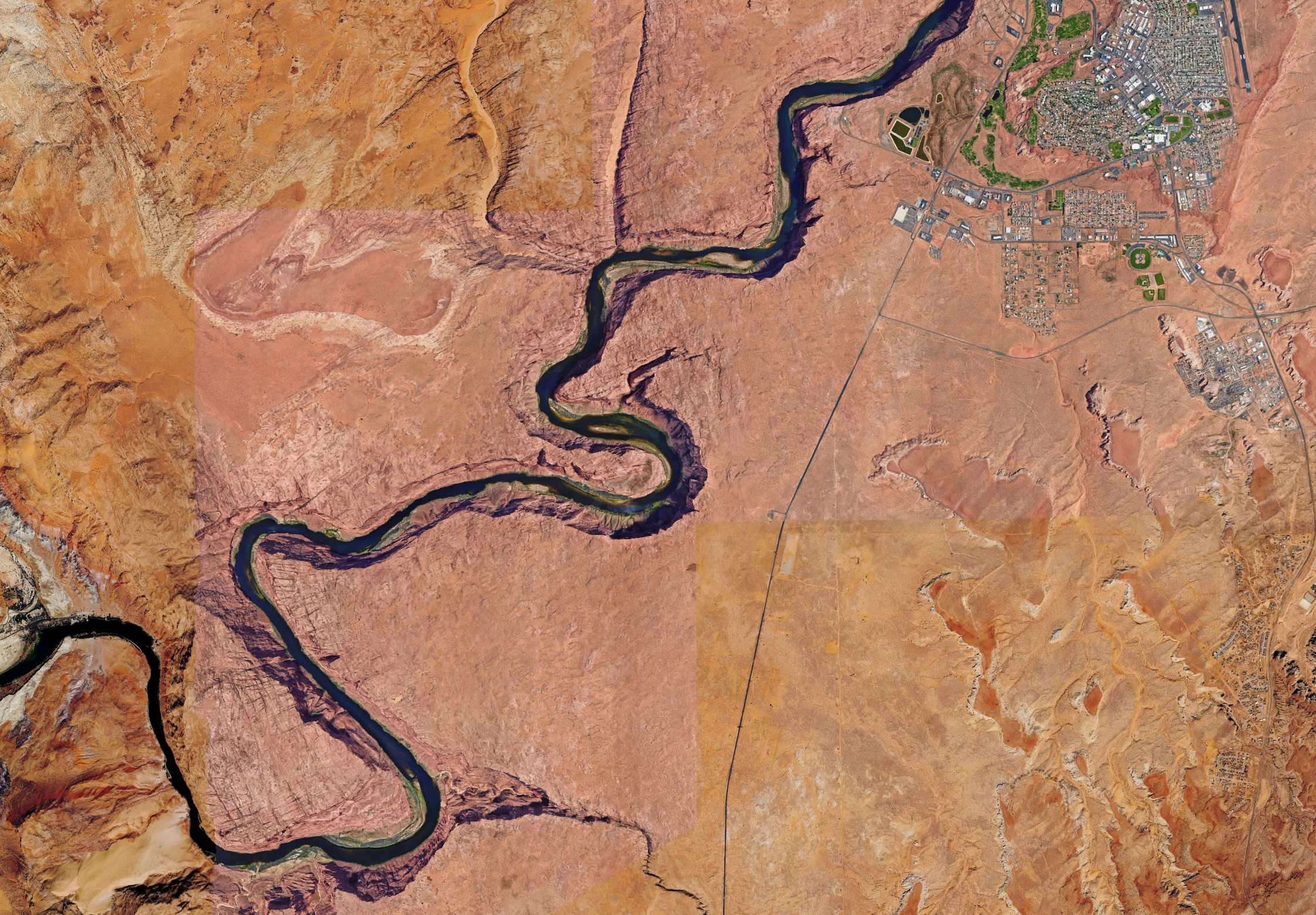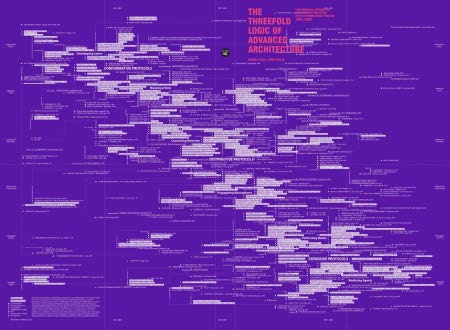
Credits: Manuel Gausa, Jordi Vivaldi
The book The Threefold Logic of Advanced Architecture has documented a striking paradigm shift in the way our spaces of relation, interaction, and sociability are defined. These transformations are closely associated with the embodied and accelerating expansion of technological capacities to process information, intensify communication, and multiply the differential ways in which our environment is defined.
Taking this work as a base camp, the seminar will investigate the theoretical frameworks that accommodate the practice of advanced architecture in the present and coming future. The term investigation derives from the Latin investigare, which is related to vestigium, meaning a trace or footprint. To investigate is, on the one hand, to pursue the traces of something in order to discover it. On the other, it is to explore an uncertain epistemological domain in order to expand the boundaries of knowledge.
Drawing on this twofold understanding, the seminar will unfold along two overlapping dimensions. The first will involve reading and discussing texts related to the themes selected by each student group. These readings will provide the basis for developing a fictional dialogue in which different characters debate substantial questions that shape the multidisciplinary landscape in which advanced architecture operates today.
The course is grounded in The Threefold Logic of Advanced Architecture (Actar Publishers, 2021) and will take the form of lectures, workshops, and critical discussions. Its aim, however, is not to reaffirm the book’s arguments, but to develop a critical approach to advanced architecture. This approach will engage with the proposed bibliography while examining how the concepts articulated in The Threefold Logic of Advanced Architecture can be transcended, expanded, intensified, interrupted, diverted, or reaffirmed.
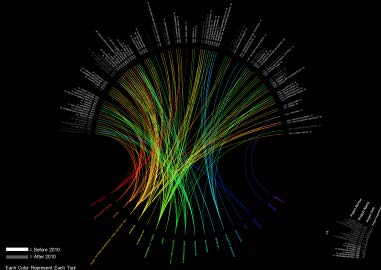
Credits: MAA Theory & Knowledge Seminar
Learning Objectives
At course completion the student will:
● Familiarise with and understand the complexity of the different phases of the whole process of an academic investigation;
● Critically Analyse texts and documents;
● Develop analytical thoughts, conclusions and reasoning during the investigations;
● Know-how necessary to extract a few theoretical principles as a conclusion in any kind of research;
● Write and present a theoretical dialogue that demands to understand various postures and the arguments that each one of them maintain with respect to a contemporary issue directly or indirectly connected to architecture.