
To what extent do digital selves participate in the normalization of the bodies?
SYNOPSIS
Through the idea of normalization in both the digital and physical realms, this play explores the standards of what is considered normal and what disrupts those norms, thereby revealing people’s truest selves. It questions the boundaries of corporeality between the physical and digital self through Instagram profiles, filters, stereotypes and metrics; body and digital self are inseparable; digital body is a way of escaping stereotypes; the body is never raw or natural. It’s shaped by what covers and uses it; the body is nothing more than a set of valves. It is defined by what it can do and how it can be affected, not by its shape or a norm; a body does not need a digital self to be normalized
CHARACTERS
Chad – Senior Manager
Elias – Game Technician
Jane – Movement Therapist
Katty – Cinema Student
Mira – Influencer
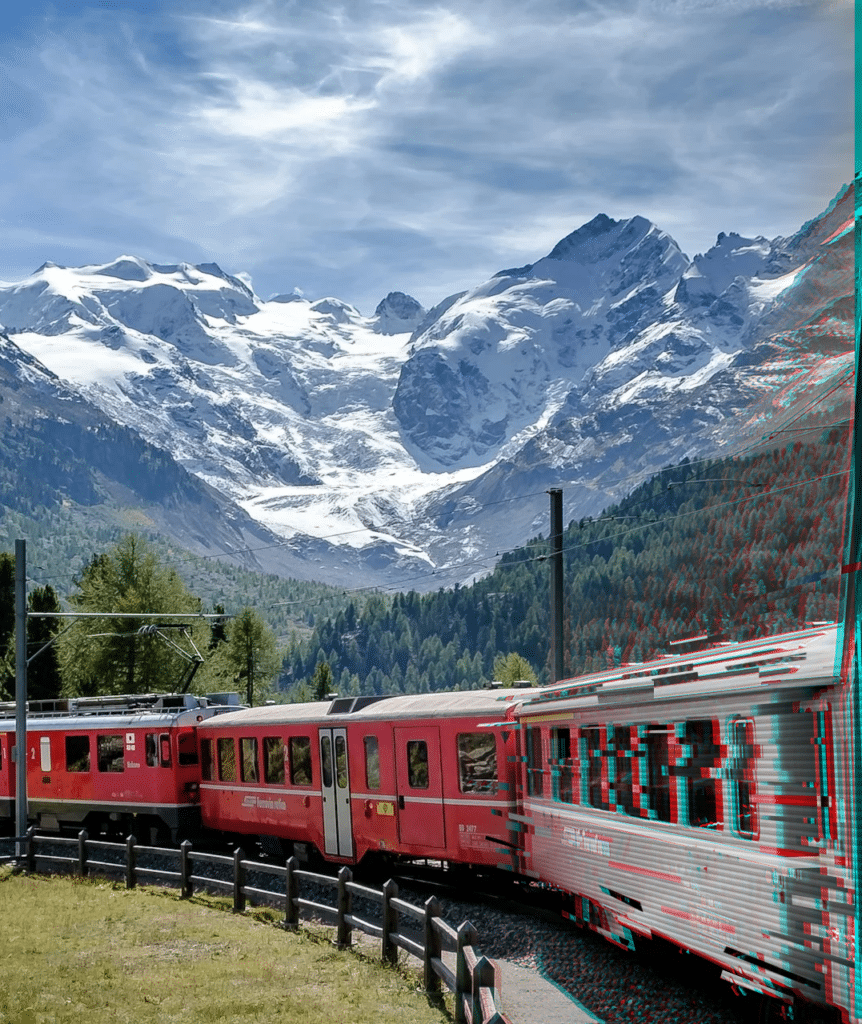
Image edited by the author, “Glitching train” (2026).
– Piz Bernina –
First act
(Five strangers are sitting on a Bernina Railway train compartment going from Chur to Tirano)
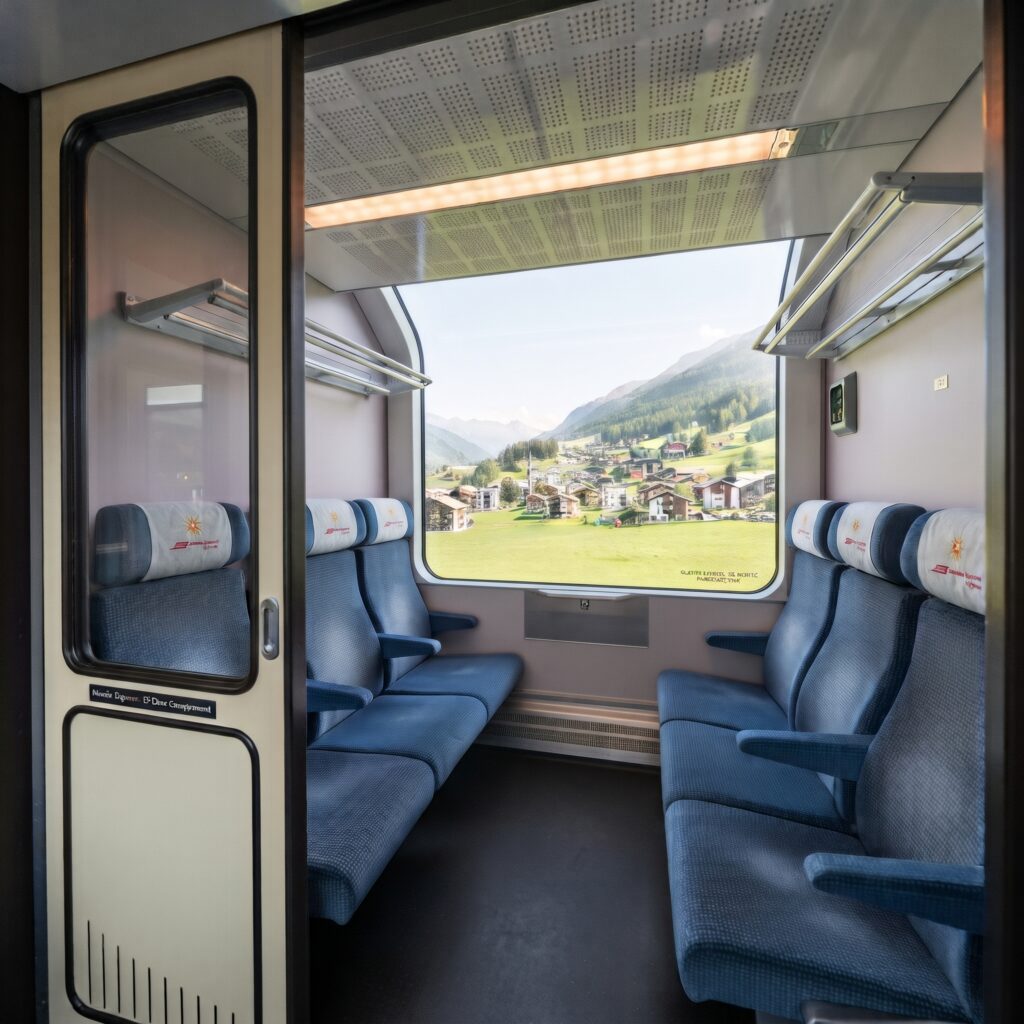
AI generated image, “Empty train carriage (2026).
CONDUCTOR (speaker): Ladies and gentlemen, if you look to your right, you’ll see Piz Bernina, the highest peak in the Eastern Alps.
(A collective gasp. Phones rise immediately)
CHAD: Right on time.
(Chad presses himself against the glass and takes the perfect picture)
CHAD (thinking): Horizon level. Peak centred. Perfect. For the file. (A)
(Across the aisle, Kathy lifts her camera. Instead of photographing the mountain directly, she photographs the reflection of passengers in the window)
CHAD (thinking): The mountain is the object and she’s photographing the windows?
(Katty sits down)
(Mira, intrigued, watches her)
MIRA: Sorry, can you take a picture of me, please? With the view behind.
KATTY: Sure. (takes the phone and frames Mira when…) Wait, you’re Mira right? You have the “body positivity” account on Instagram. My friends love your account. They think you are really authentic. No filters, no editing… right?
MIRA: Yes. That’s the deal. (poses, then stops) Can you get the arm in? The side without the prosthesis. That’s what people want to see. (Takes off her prosthetic arm).(B)
KATTY (lowering the phone): What people want to see? I thought the point was showing what you wanted to show.
MIRA: It is.
KATTY: Then why are you posing for them?
(silence)
MIRA: That’s not the same thing.
(silence)
(Mira’s phone rings. She checks the screen and answers).
MIRA: Hi… No, not yet. I’m on the train, I’m taking it now.
(listens)
MIRA: They loved it? …Rawer. More close-up.
(pause; she glances at Katty)
MIRA: The scar? …Don’t you think that’s a bit excessive?
(listens, forced smile)
MIRA: “Peel off more layers.” Right. Show them the real me. Okay… Bye
(She hangs up and looks at her phone in silence.)

AI generated image, “Digital selfs” (2026)
ELIAS: Is everything ok?
MIRA: Yes- yeah… Sorry, It’s my agent. She wants me to… open up more on my Instagram account. It just feels like it’s never enough for them. “The gaze avidly continues to search for nudity, even when the smallest piece of clothing has been removed, even when all the parts that were hidden have been exhibited in a barefaced manner.” (1) (C)
KATTY: More? How far can you even go from this point?
(Mira pauses for a while)
MIRA: That’s the thing. You never arrive . “Nudity is not a state but an event” (2) (D). There’s always one more layer.
KATTY: You know, I never post as you see me right now, online.
MIRA: Never?
KATTY (Katty shows her own phone): Look. For me “multiplicity is a liberty”. (3) “Online, I could be whatever I wanted.” (E) “As a black, female-identifying, femme, queer there is no pressing pause, no reprieve… the world around me never let me forget these identifiers” (4)
CHAD(without looking up from the file): But nobody can follow a hundred versions. One clear profile. “Each individual has their own place, and each place, its individual.” (5)
KATTY: Found by who?
CHAD: Recruiters. Clients. Anyone who has to “transform the confused, useless or dangerous multitudes into ordered multiplicities.” (6) Otherwise nobody knows what they’re looking at. (F)
KATTY: “If a body without a name is an error, providing more names does not resolve the issue. Rather, it makes and requires a box to be ticked, a categorization to be determined.” (7)
ELIAS: That’s how normalization works: a norm gets repeated until it feels like the only correct way to have a body. It starts on the screen, with likes, filters and the agent’s “more”, and then it comes back to the physical body: the scar you show, the arm you hide.
MIRA: So your filters are a way to escape the categories?
CHAD (annoyed): Or making things harder to understand.
MIRA: People say I’m brave because I show who I really am. Isn’t what you do a kind of hiding?
KATTY: No. I am using the glitch. A glitch isn’t hiding. It’s “an error, a mistake, a failure to function” (8) It allows me to move beyond fixed identities and escape the stereotypes others project onto me.
CHAD: The way I see it: “A failure to function is a body not yet trained. A disciplined body is the prerequisite of an efficient gesture.” (9)
MIRA: So all these versions are still you?
KATTY: Why wouldn’t they be?
MIRA: Because mine don’t feel like me anymore. Just… the next layer.
ELIAS: We are all cyborgs, a messy mixture of digital and biological self. Think of it like that…“A cyborg is a cybernetic organism, a hybrid of machine and organism, a creature of social reality as well as a creature of fiction.” (10)
MIRA: And do what? They’d sell your glitch too.
KATTY: … Maybe. Then stop asking which one is the real you.
ELIAS: From the way I see it… There is no real, raw, original self anymore. “The cyborg would not recognize the Garden of Eden; it is not made of mud and cannot dream of returning to dust.” (11)
MIRA: Maybe there isn’t one. Just this. “The matheme of nudity is, in this sense, simply this: haecce! there is nothing other than this.” (12) (G)

Piz Bernina.

AI generated image, “Window with reflection” (2026).
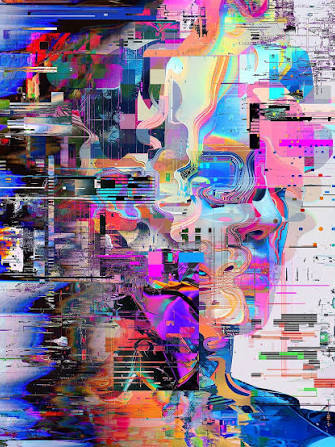
Under the Skin, Marta Timmer.
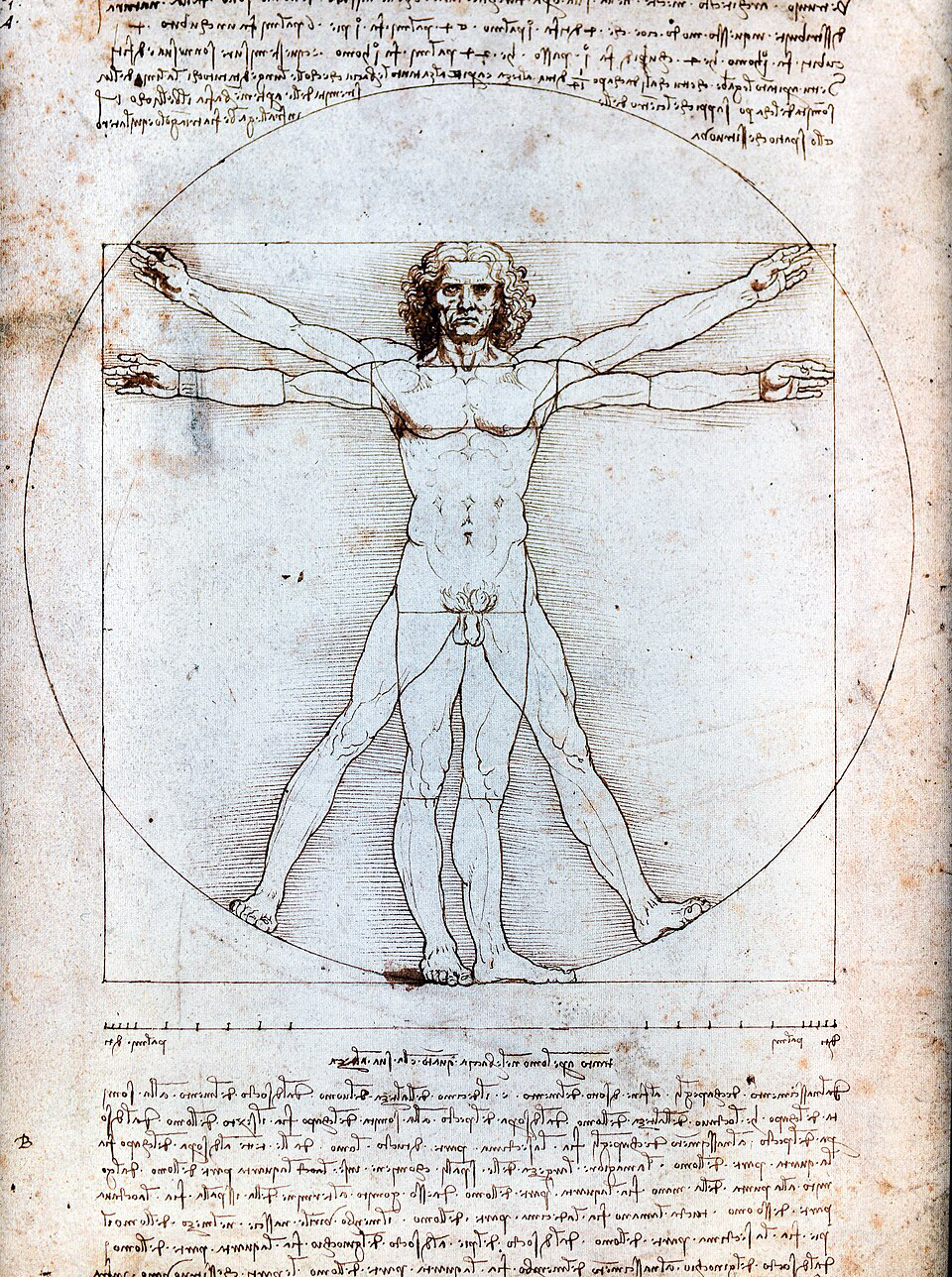
Vitruvian Man, Leonardo da Vinci.
CONDUCTOR(speaker): Ladies and gentlemen, we are now approaching the Bernina tunnel.
CHAD (checking his watch): 11:32. On schedule. I don’t need a screen for that. “Time penetrates the body.” (13) (H)
(The train enters the tunnel. A metallic screech. The train jolts and stops. Lights cut out. Total darkness.)
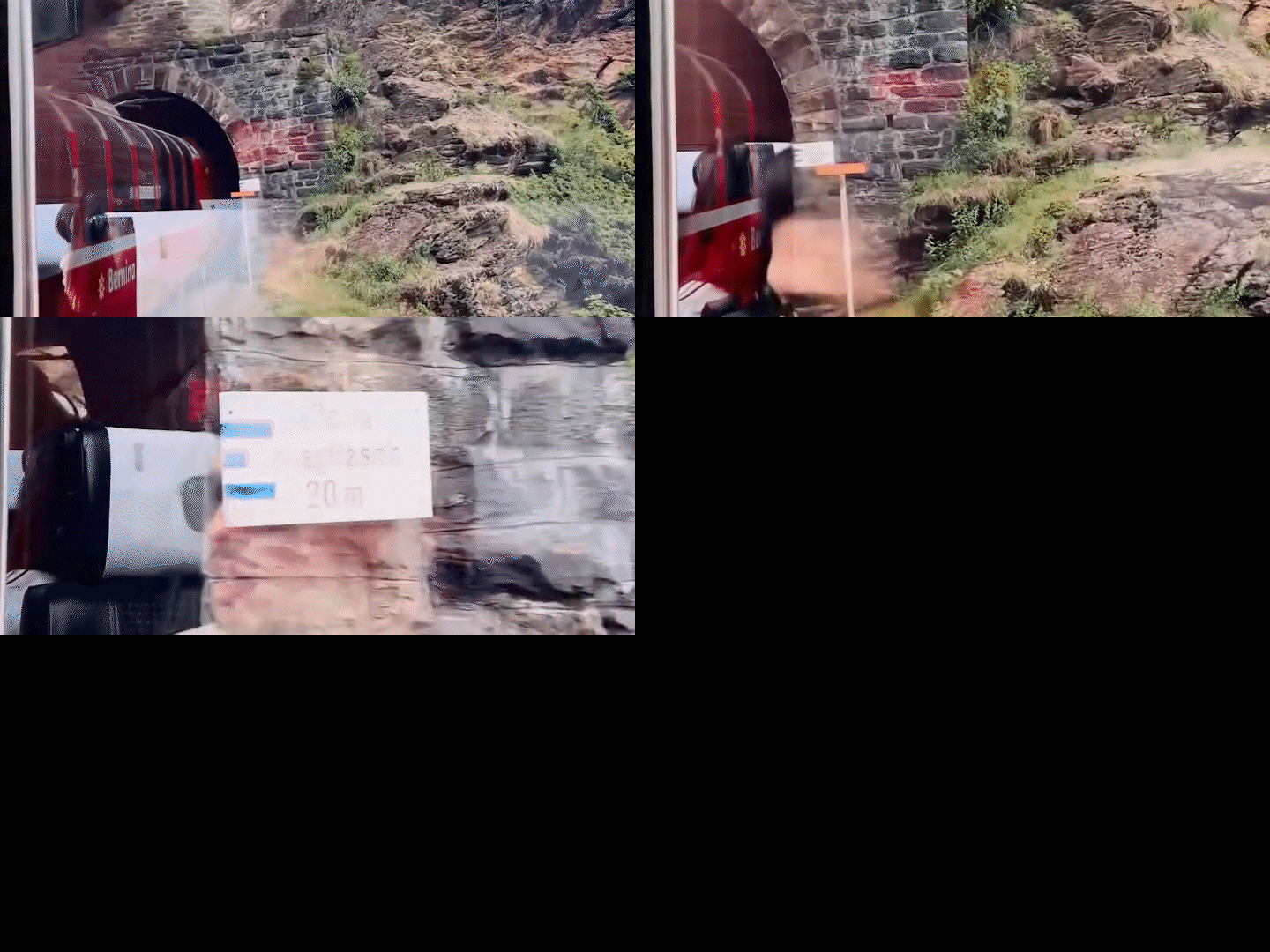
Bernina Express Train Entering a Tunnel in the Swiss Alp. Video cropped and reframed by the author. Adapted from Almeida (2026).

MIRA: What was that? Why did we stop?
CHAD: We’re not supposed to stop here. This isn’t on the schedule. (to himself) “Nothing must remain idle or useless.” (14)
KATTY: I can’t see anything!
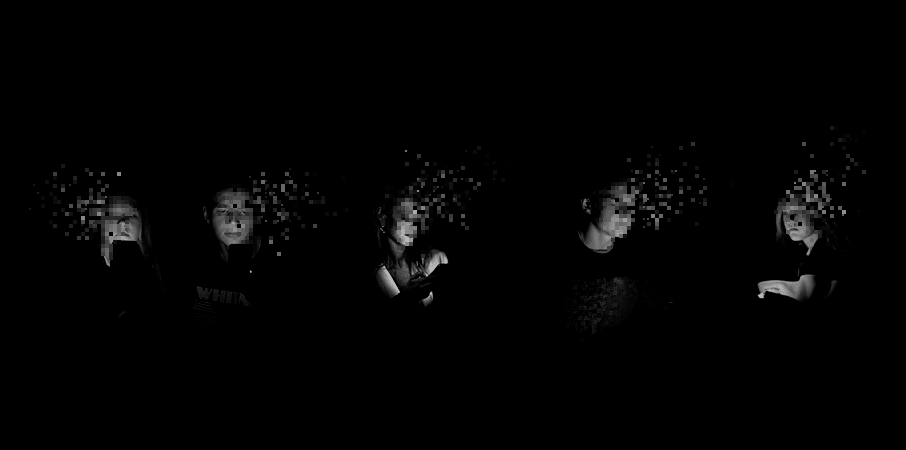
AI generated image, “Faces in the Dark” (2026).
– Chiaroscuro –
Second act
(Train stops in the middle of the tunnerl, the electricity goes off)
CONDUCTOR (speaker): Ladies and gentlemen, due to unforeseen technical issues, the train will experience a short delay in the tunnel. We apologize for the inconvenience.
KATTY (sighing): No, no, no! I have no signal!
(Chad stands up suddenly. Without any sense of the space, he hits his head on the luggage bar and screams)
CHAD: I’m fine. It’s nothing. It is how I say it “a good body is one that can be directed, deployed, retrained and upgraded.”(15) It’s still working fine.(I)
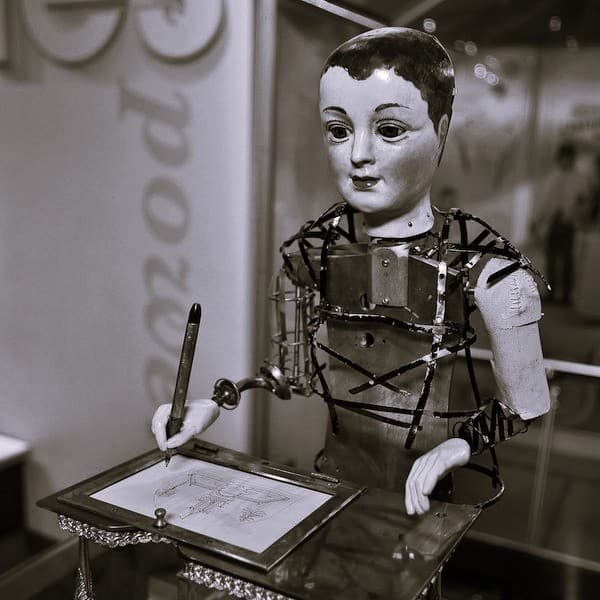
18th Century automaton.
JANE: Still working fine? Is this honestly the question here? It’s like you demand that “you will be organized,[…] articulate your body, otherwise you’re just depraved.” (16) Who taught you that a hurt body is a failed one? Come, sit down. Let me…
(She stops. Her hands hover in the dark. She doesn’t move)
CHAD: I feel something warm on my temple. Is my collar dark there?
JANE: I cannot see it’s dark, I can only understand with my hands. I used to be a surgeon practising medicine but I stopped because I don’t agree with the protocols and wanted to experiment on what the body can do… so I can help you but I will let you first see by yourself what you would do to check if you are okay. (J)
CHAD (reciting, fast): Pressure. Elevate. Check the pupils. Time it. “So that the body may operate as one wishes, with the techniques, the speed and the efficiency that one determines.”(17)
JANE: You recite it like a medical history; “Substitute forgetting for anamnesis, experimentation for interpretation.” (18) Forget the list for one minute. (her hands land; she presses her scarf to his temple) I won’t count your pupils. Hold this.
CHAD: That’s not the sequence. “A breakdown of the total gesture into two parallel series.”(19) Right hand, wound. Left hand, pulse.
JANE: This is why I left the norm. (K) You don’t have to do all these, “your body is your body. Alone it stands and in no need of organs also!” (20) Right now it is just a small bleeding, it’s not just a machine of parts that have to work perfectly you know.
ELIAS: I partly agree on that also, “we do not need a totality in order to work well.” (21)
CHAD: Excuse me but no, I strongly believe that “the human body was entering a machinery of power that explores it, breaks it down and then rearranges it.” (22) Mine entered it long ago and this is the reason I’m still upright. (L)
JANE: This is why you screamed and then said you were fine? Which part of yourself truly said “I’m fine”? Your mind made you believe this to protect your organism in opposition to your body.
CHAD: My discipline did! The place, the hour, the exercise did it. “Discipline is what produces subjected and practised bodies.”(23) What I call “docile bodies.”(23)
ANE: You have been trained like a horse, Chad. “…destroy the instinctive forces in order to replace them with transmitted forces.” (24)
ELIAS: In our era, we are all mixtures of human and machine and of course the in between: the digital self. The cyborg is what we are, and it shapes our politics. Like in a way“…we are all chimeras, theorized and fabricated hybrids of machine and organism; The cyborg is our ontology; it gives us our politics.” (25)
JANE: Politics and the “organism” called society! (M) This is the reason why I cannot exist entirely in the physical world and I need the digital to be my true self…You know I have two different instagram profiles. One professional for my clients and one where I can express freely my research on what more the body can do outside of the norms, like “why not walk on your head or see through your skin?”(26) I move between those two worlds.
CHAD: Profile or no profile, it’s one body. “The body, required to be docile in its minutest operations, opposes and shows the conditions of functioning proper to an organism.”(27) That’s where it’s trained, not on a screen. It works the same either way. (N)
JANE: I strongly disagree.
ELIAS (trying to ease the tension): What you are saying, maybe both are true, despite being contradictory. Most of the times “Irony is about contradictions that do not resolve into larger wholes, and it is about the tension of holding incompatible things together because both or all are necessary and true.” (28)
(The blackout has made bodies matter more than screens)
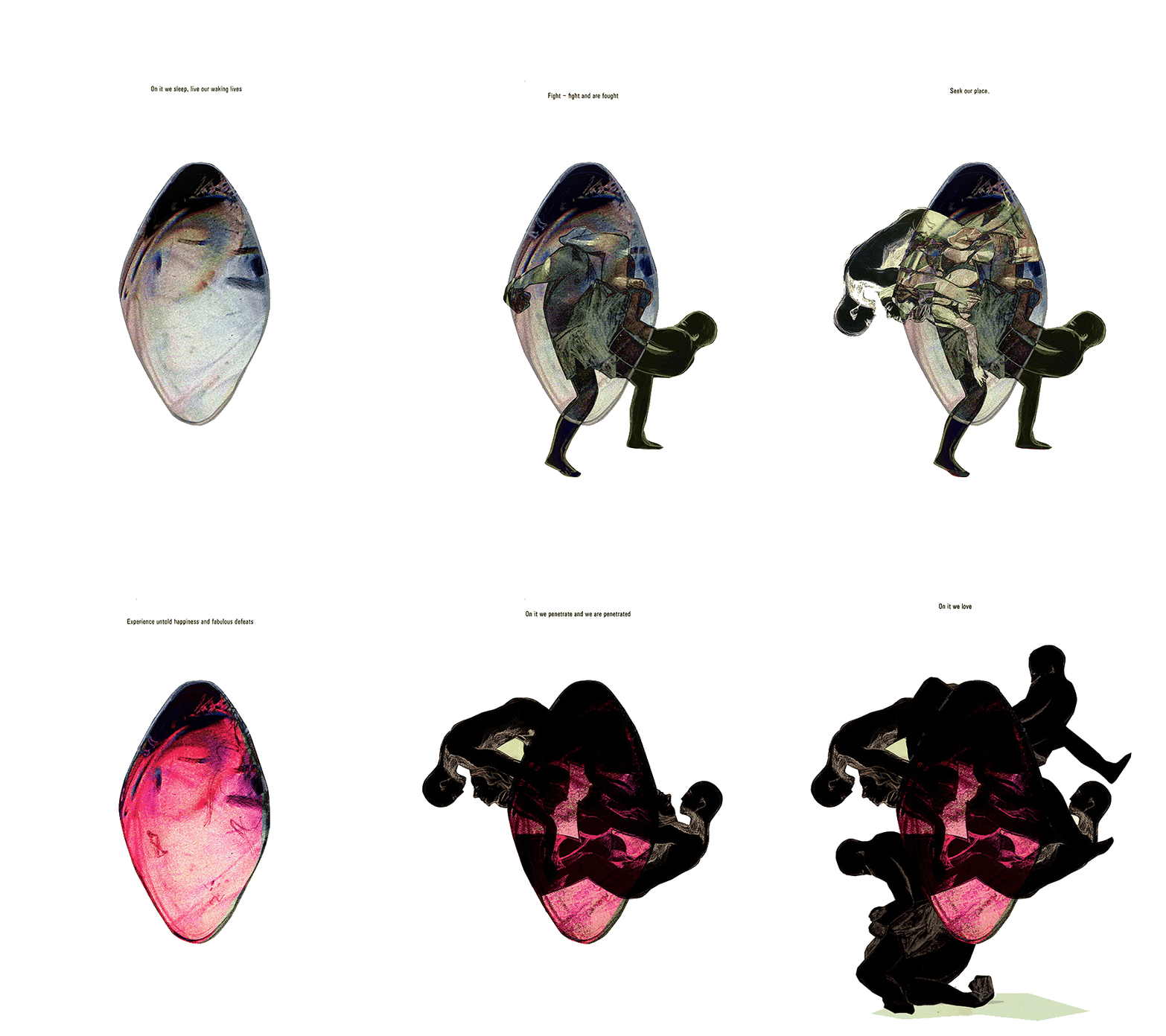
“How do you become a ‘Body without Organs’” by Ayala Tal.
– Mirror –
Third act
(The lights come back on. The engine is still silent. The train stays stopped in the tunnel)
(Outside the window there is only black rock. The glass becomes a mirror: all five faces appear in it, transparent and overlapping. Nobody speaks. For the first time on the trip, nobody is holding a phone)
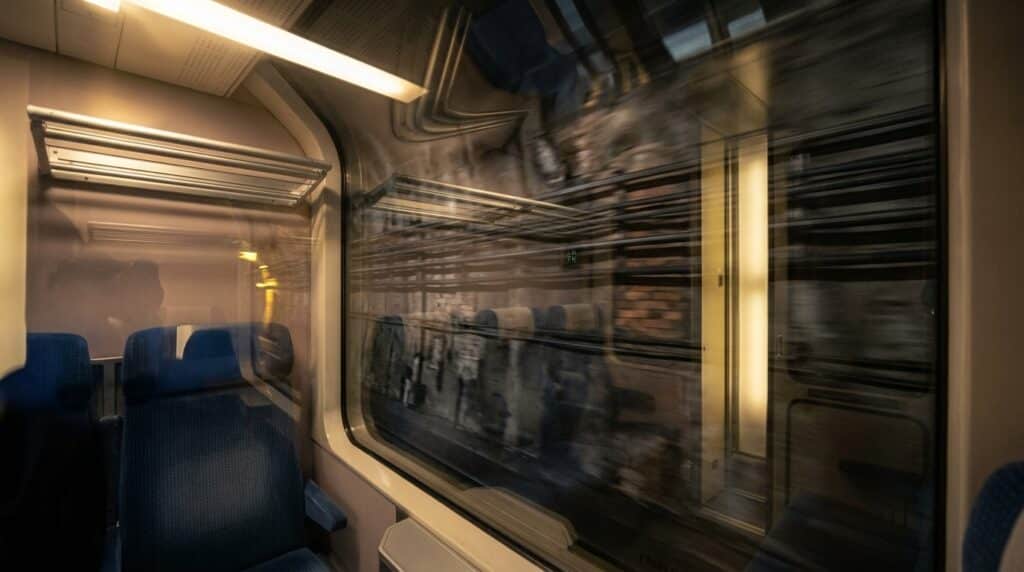
AI generated image, “Train carriage in the tunel” (2026).
CONDUCTOR (speaker): Ladies and gentlemen, power has been restored. We will continue our journey in a few minutes. Thank you for your patience.
ELIAS: Everyone, this trip and discussion has been an absolute pleasure; would you like to be a character in this game that I am working on? I am a game technician for the upcoming GTA 7; I take 3D scans of bodies and put them into the virtual world like games and animations. “…cyborg politics insist on noise and advocate pollution, rejoicing in the illegitimate fusions of animal and machine.” (29)
KATTY: No, I don’t want to be categorized by a specific body type.
CHAD: As long as I do not have to do anything extra. I am for “a better economy of time and gesture.”(30)
(Everyone other than Katty agrees. Elias sets the laptop on the table and angles its screen toward the window. Now two mirrors face each other: the black glass, which stacks everyone together, and the screen, which will give each person a separate body)
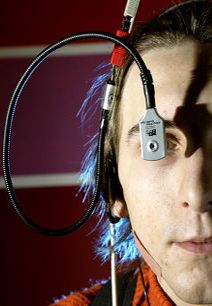
Colour blind artist Neil Harbisson.
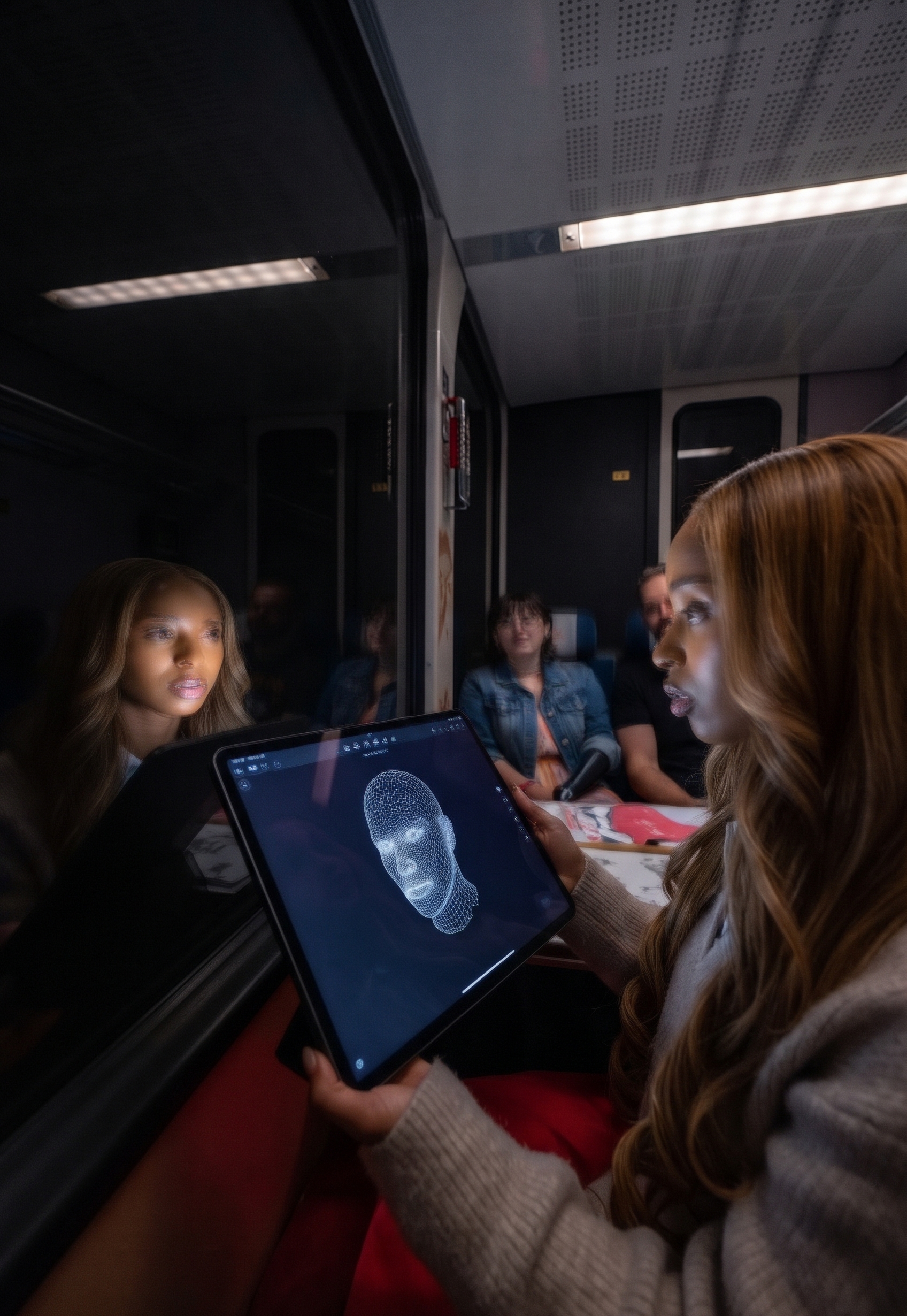
AI generated image, “Scaning and reflection” (2026).
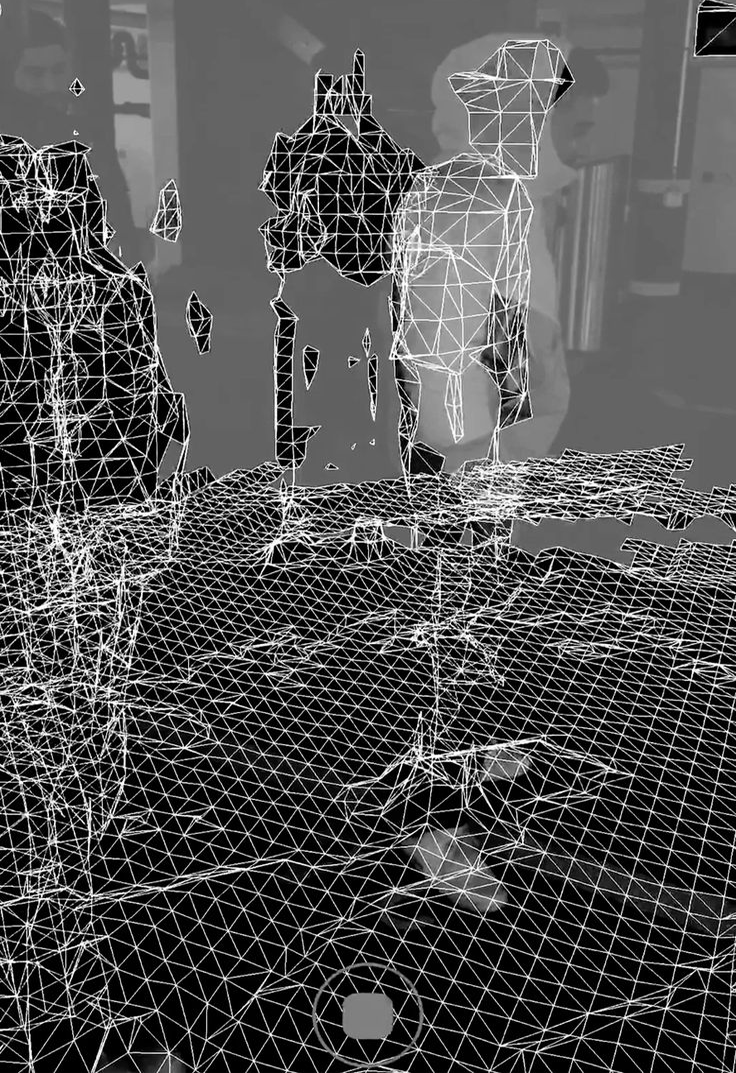
Wireframe 3D scan.
(With his portable 3D scanner and laptop, Elias starts to make digital scans of everyone on Blender)
(Elias presses the button of repair mesh: The mesh closes and tightens, a little younger, a little slimmer. JANE looks at the screen, then at the window, where her real reflection is faint and crumpled)
JANE: All this talk about not normalizing bodies, at the end you are the system that normalizes all of us.
ELIAS: Indeed we are being placed in this society of normalizing, so what we can do is to regain authorship from this system.(31) People once labelled “other” survive by grabbing the tools that labelled them and using them to describe the world themselves.(O)
MIRA: And what will your repair do with my arm? Fill it in? Or keep the gap as a “feature”? “In the glorious body it became possible for the first time to conceive the separation of an organ from its physiological function. But the possibility of discovering another use of the body which this separation allows us to glimpse has remained unexplored.” (32)(P)
CHAD: Your arm is definitely something he wants to include in his game, for DEI reasons.“In discipline, the elements are interchangeable, since each is defined by the place it occupies in a series, and by the gap that separates it from the others.” (33) It is probably my belly that he is going to reduce, or maybe exaggerate. “For the disciplined man, as for the true believer, no detail is unimportant.” (34) (Q)
ELIAS: I do hold the power to tune the defaults. But “Why should our bodies end at the skin, or include at best other beings encapsulated by skin?” (35) If my software is part of your body, it’s part of mine too. I’m not outside the system. None of us is.
CHAD: So you are admitting that there is always someone who filters and normalizes bodies. Good. Someone has to: it must be “a filter, a mechanism that pins down and partitions.”(36) (R)
ELIAS: True, but perhaps the right question would be “who builds the norms and who is responsible for the consequences this brings?”. (S) Despite the norm existing, Jane, you still hold power using a different instagram profile to express what you really think about your profession.
JANE: Yes exactly. This is how “I untie myself from the points of subjectification that secure me and nail me down to a dominant reality”.(37)
MIRA: And even if I do not grasp where the mask ends and where the true self starts, I still can decide what I want the public to perceive of me.
ELIAS: “Confusing boundaries can be a pleasure, but the responsibility is in the construction” of whoever redraws them. (38)
MIRA: But what makes you think you can play God and decide for us?
ELIAS: Why do you think I am constructing the 3D models here in front of you? Feel free to let me know what you want yourself to be like in this digital construct.“The machine is us, our processes, an aspect of our embodiment. We can be responsible for machines; they do not dominate or threaten us.” (39) (T)
MIRA: Despite doing all of this, digital selves still normalize bodies, not by hiding the difference, but by demanding more exposure, from me, from us. “Bodies that “cannot be used, but only exhibited.” (U) (40)
JANE: Well, at times we succumb to normalization; at times we fight against it, either ways include digital selves.
ELIAS: “Single vision produces worse illusions than double vision or many-headed monsters.” (41) Looking from one angle fools you more than looking from several angles at once.
(The engine rumbles. The train moves out of the tunnel. Daylight. The reflections disappear and the mountains are back in the window)
ELIAS: And now we’re gone. (He closes his laptop)

Bernina Express Train Exiting a Tunnel in the Swiss Alps. Video cropped and reframed by the author. Adapted from Almeida (2026).
Final Curtain
Citations
(1) Giorgio Agamben, Nudities, 2011.p. 65
(2) Giorgio Agamben, Nudities,2011 p. 65
(3) Russell, L. (2020). Glitch Feminism: A Manifesto. Verso Books. p.21
(4) Russell, L. (2020). Glitch Feminism: A Manifesto. Verso Books. p.11
(5) Foucault, M. 1995 Discipline and Punish, p.143
(6) Foucault, M. 1995 Discipline and Punish, p.148
(7) Russell, L. 2020. Glitch Feminism: A Manifesto. Verso Books. p.88
(8) Russell, L. (2020). Glitch Feminism: A Manifesto. Verso Books. p.13
(9) Foucault, M. 1995 Discipline and Punish, p.152
(10)Donna Haraway, A Manifesto for Cyborgs Science Technology and Socialist Feminism in the 1980s,
1985, P.65
(11)Donna Haraway, A Manifesto for Cyborgs Science Technology and Socialist Feminism in the 1980s,
1985, P.67
(12)Giorgio Agamben, Nudities, 2009, p.90
(13)Foucault, M. 1995 Discipline and Punish, p. 152, paraphrased
(14)Foucault, M. 1995 Discipline and Punish, p.152
(15)Foucault, M. 1995 Discipline and Punish, p.136, paraphrased
(16)Deleuze, G. and Guattari, F. 1987 A Thousand Plateaus, Ch. 6, p. 159
(17)Foucault, M. 1995 Discipline and Punish, p.138, paraphrased
(18)Deleuze, G. and Guattari, F. 1987 A Thousand Plateaus, Ch. 6, p. 151
(19)Foucault, M. 1995 Discipline and Punish, p.153
(20)Deleuze, G. and Guattari, F. 1987 A Thousand Plateaus, Ch. 6, p. 158
(21)Donna Haraway, A Manifesto for Cyborgs Science Technology and Socialist Feminism in the 1980s,
1985, P.92
(22)Foucault, M. 1995 Discipline and Punish, p.138
(23)Foucault, M. 1995 Discipline and Punish, p.138, paraphrased
(24)Deleuze, G. and Guattari, F. 1987 A Thousand Plateaus, Ch. 6, p. 155
(25)Donna Haraway, A Manifesto for Cyborgs Science Technology and Socialist Feminism in the 1980s,
1985, P.66
(26)Deleuze, G. and Guattari, F. 1987 A Thousand Plateaus, Ch. 6, p. 151
(27)Foucault, M. 1995 Discipline and Punish, p.156
(28)Donna Haraway, A Manifesto for Cyborgs Science Technology and Socialist Feminism in the 1980s,
1985, P.65
(29)Donna Haraway, A Manifesto for Cyborgs Science Technology and Socialist Feminism in the 1980s,
1985, P.95
(30)Foucault, M. 1995 Discipline and Punish, p.148
(31)Donna Haraway, A Manifesto for Cyborgs Science Technology and Socialist Feminism in the 1980s,
1985, P.94
(32)Giorgio Agamben, Nudities (2011), p. 100
(33)Foucault, M. 1995 Discipline and Punish, p. 145
(34)Foucault, M. 1995 Discipline and Punish, p. 140, paraphrased
(35)Donna Haraway, A Manifesto for Cyborgs Science Technology and Socialist Feminism in the 1980s,
1985, P.97
(36)Foucault, M. 1995 Discipline and Punish, p. 144
(37)Deleuze, G. and Guattari, F. 1987 A Thousand Plateaus, Ch. 6, p. 160, paraphrased
(38)Donna Haraway, A Manifesto for Cyborgs Science Technology and Socialist Feminism in the 1980s,
1985, P.66, paraphrased
(39)Donna Haraway, A Manifesto for Cyborgs Science Technology and Socialist Feminism in the 1980s,
1985, P.99
(40)Giorgio Agamben, Nudities, 2011, p. 98
(41)Donna Haraway, A Manifesto for Cyborgs Science Technology and Socialist Feminism in the 1980s,
1985, P.72
FOOTNOTES
(A) The photograph is archived, not circulated. Chad records without exhibiting.
(B) Mira lost her arm in a car accident when she was young.
(C) For Agamben, the striptease is the model for how we relate to nudity: once the last piece of clothing is
gone, the gaze still keeps searching. Mira says this about her agent and her followers. The demand for “more”
is not a phase that will end; it is built into looking for itself.
(D) Agamben sees nudity as an ongoing process of revelation. Mira’s experience shows that online authenticity
is never complete, as platforms and audiences constantly demand more access to her identity.
(E) Russell sees digital spaces as places to explore different identities. Katty uses this freedom to challenge the
idea that a person must have one fixed and consistent identity.
(F) Table is “both a technique of power and a procedure of knowledge.” The readers he names are the ones the
table was built for.
(G) Agamben borrows “matheme”, a formula reduced to its essentials, and gives one for nudity. Haecce is the
Latin he uses, roughly “here it is”, and he glosses it as “there is nothing other than this”. Behind the last layer
there is no secret, only the appearance itself. This is Mira’s first turn: what exhausted her (always one more
layer) becomes a relief. There was never anything hidden to find.
(H) Foucault’s sentence continues: “and with it all the meticulous controls of power.” Chad quotes only the
first half, as a boast about his watch. The omission is the character: he lives the timetable as his own rhythm.
(I) Chad meets his own injury with Foucault’s definition of docility, as comfort: a body is fine as long as it still
functions.
(J) Jane’s break with surgery echoes Deleuze and Guattari’s critique of medicine: the organism is “the
judgment of God, from which medical doctors benefit and on which they base their power.” Against this fixed
order they propose experimentation, warning that society “will not let you experiment in peace.”
(K) “Machine of parts” echoes Deleuze and Guattari’s image of a body reduced to “nothing more than a set of
valves, locks, floodgates, bowls, or communicating vessels, each with a proper name,” a body “that has to be
managed with a whip.” They describe this as a warning: a body controlled part by part, like a factory, instead
of being left free to feel and experiment.
(L) Chad answers with Foucault’s description of the machinery and takes it as credit for his stability.
(M) Antonin Artaud, quoted in Gilles Deleuze and Félix Guattari, “November 28, 1947: How Do You Make
Yourself a Body without Organs?,” in A Thousand Plateaus. Deleuze and Guattari take Artaud’s line further:
“The organs are not its enemies. The enemy is the organism.” The Body without Organs does not reject organs.
It rejects the organism, the fixed, “correct” organization that society imposes on them.
(N) Chad dismisses Jane’s two profiles as irrelevant: the training happens in the body, and a screen adds
nothing. In the source the sentence also says the docile body opposes, but he hears only “functioning.”
(O) Haraway advocates for the idea of how the system has shaped us; now it is our time to shape the system.
(P) In the theology Agamben discusses, the resurrected body still has all its organs, but it no longer needs
them: it doesn’t eat, and it doesn’t reproduce. For the first time, an organ is separated from what it is for.
Agamben says this opens up the possibility of another use of the body, one nobody has explored. Mira turns
this against the “repair mesh”. Her arm is not a defect to fill in, and not a “feature” to show off. Its meaning is
not decided by function or by display.
(Q) The p.140 quote is cut before “the hold it provides for the power that wishes to seize it”, so he hears only
the believer’s half.
(R) In Foucault the filter is the naval hospital at Rochefort. Chad applies it to Elias’s software and treats the
sorting as necessary, without asking who builds the norms.
(S) What Elias says here is the essence of Haraway: asking who wrote the code and who is responsible.
(T) Haraway proposes to take responsibility for how the hybrid gets built.
(U) Agamben compares the resurrected body to advertisements: bodies whose appeal lies in being shown, not
used. For Mira, this is what the digital self does with difference.
BIBLIOGRAPHY
Agamben, G. (2010). Nudity; The glorious body. In Nudities (D. Kishik & S. Pedatella, Trans., pp. 55–103).
Stanford University Press.
Deleuze, G., & Guattari, F. (1987). November 28, 1947: How do you make yourself a body without organs? In
A thousand plateaus: Capitalism and schizophrenia (B. Massumi, Trans., pp. 149–166). University of
Minnesota Press.
Foucault, M. (1977). Discipline and punish: The birth of the prison (A. Sheridan, Trans.). Pantheon Books.
Haraway, D. (1985). A manifesto for cyborgs: Science, technology, and socialist feminism in the 1980s.
Socialist Review, (80), 65–107.
Prophet, J. (2025). My more-than-human digital twin: Embodiment, feminist AI, and the struggle for
representation. AI & Society, 41(3), 2093–2107. https://doi.org/10.1007/s00146-025-02659-2
Russell, L. (2020). Glitch feminism: A manifesto. Verso.
Credits
Aaradhya Bhaiya
Antonella Colitti Mattos Monteiro
Derin Oktar
Evi (Paraskevi) Vardaka
Luis Felipe Erismann Canepa
Margot Schuster
Ching Ho Leo Li
Zofia Wicher
