
How do distributed technologies stimulate modes of attention within a shared experience?
Synopsis
Our work views attention as a critical process for sensing what is real, and asks whether individual perception can ever lead to a complete understanding of a shared moment. Six postures, drawn from the readings, examine how attention is shaped in digitally mediated experience:
- Attention requires mediation; an effortless spectacle conceals the work that shapes its experience.
- Attention is receptivity; suspend assumptions to make room for another.
- Attention gives experience continuity; memory develops through selection and retelling, beyond accumulated recordings.
- Attention takes time; sharing an experience requires giving someone space to tell their story.
- Attention is fluid and collective; watching, recording, and sharing can deepen participation and reveal unexpected connections.
- Attention is relational; meaning emerges by assigning different levels of relevance to information within a given context.
Together, they challenge the assumption that more visibility and more information generate more meaning, and question how systems of representation shape what becomes visible and remembered.
Characters
- Darya (25) – Designer
- David (70) – Retired
- Daniel Serra (38) – Radio Producer
- Júlia Serra (9) – Daniel’s daughter
- Laia (34) – Influencer
- Leo (33) – Software Engineer
Act One — When Many Eyes Become One
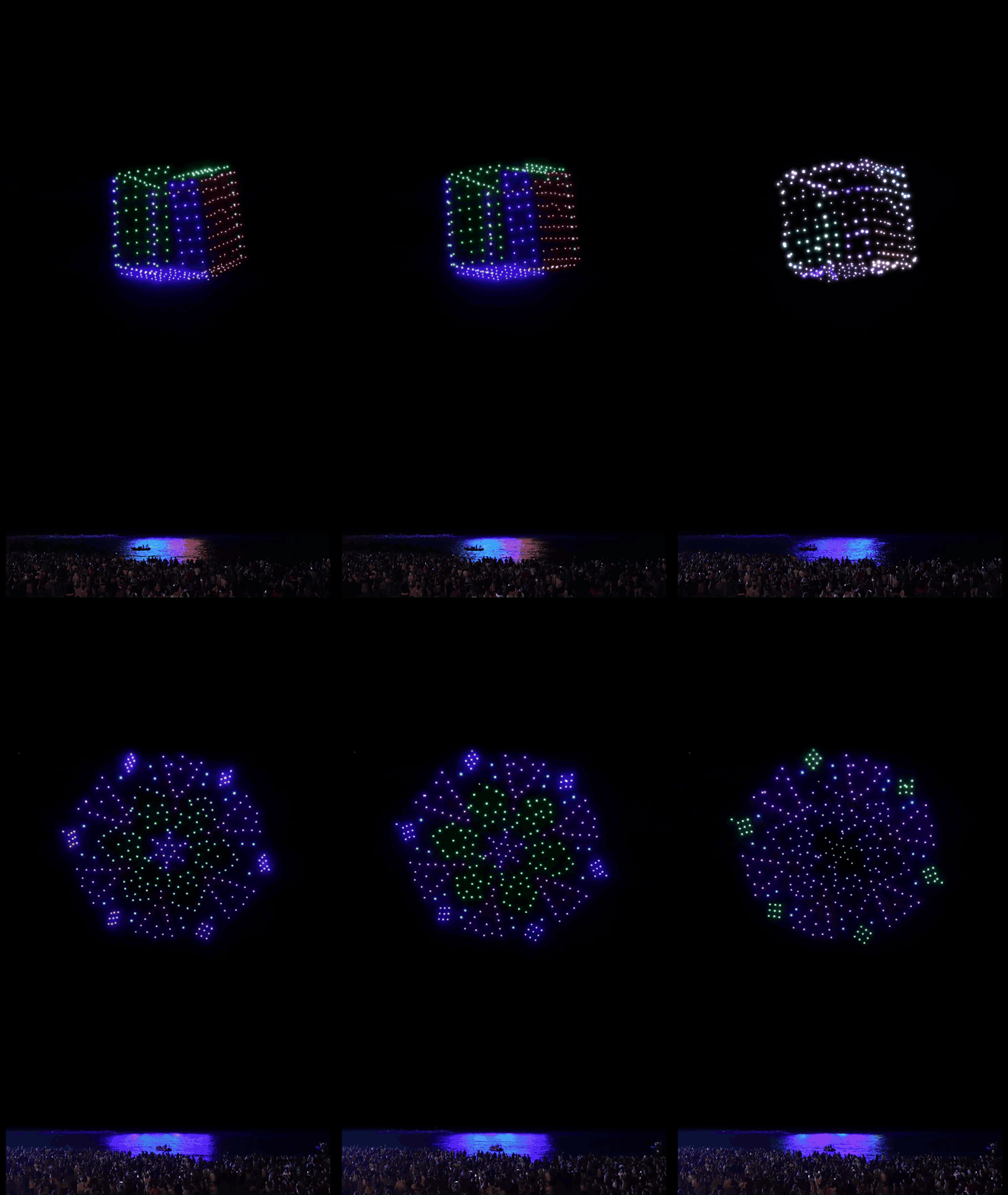
On a warm September evening during Barcelona’s La Mercè festival (a), hundreds of people gather by the Three Chimneys at Platja del Litoral, Sant Adrià de Besòs (b). Above the water, points of light are coming together. At the edge of the crowd, Darya holds a radio to her ear.
DARYA: (into her radio) Next formation in three, two…
The lights spread into wings. Darya turns towards the crowd. A beat later, they cheer.
DARYA: (to herself) Late. Half a second late.
Leo, looking up, nearly walks into her.
LEO: Sorry. I wasn’t paying attention.
DARYA: Nobody’s looking down. That’s the idea. The public is “an examiner, but an absent-minded one” (1).
LEO: You’re with the show? Let me guess. Each drone gets a position and a time?
DARYA: You’ve done this before?
LEO: I’m a software engineer. It made me think of positional encoding. In a Transformer, you have to “inject some information about the relative or absolute position” (2) so the model can use the order of the sequence. Is it something like that here? (c)
DARYA: You sound like my engineers. People should feel it just happens. “The medium is the missing” (3).
Laia edges towards them, phone raised.
LAIA: Sorry, can I squeeze in? From here, the lights sit right between the chimneys.
DARYA: (without turning around) The chimneys aren’t part of the show.
LAIA: They are now.
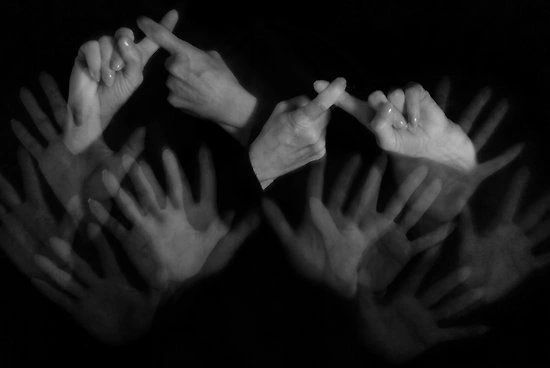
Nearby, Daniel is filming the sky (d). Júlia taps his arm and points towards the water. He turns just long enough to sign WAIT (e). Júlia catches Laia’s eye and points towards the reflection.
LAIA: (crouching to take a photo) Oh, wow. Look at what the waves are doing to it.
Laia tilts her screen towards Júlia. Darya catches a glimpse of the picture.
DARYA: Someone could see that tomorrow and think that’s the show. “A photograph brings the show to people who aren’t actually here” (4).
Daniel glances at Laia’s screen, then turns to Júlia.
DANIEL: (signing) Is that what you were pointing at?
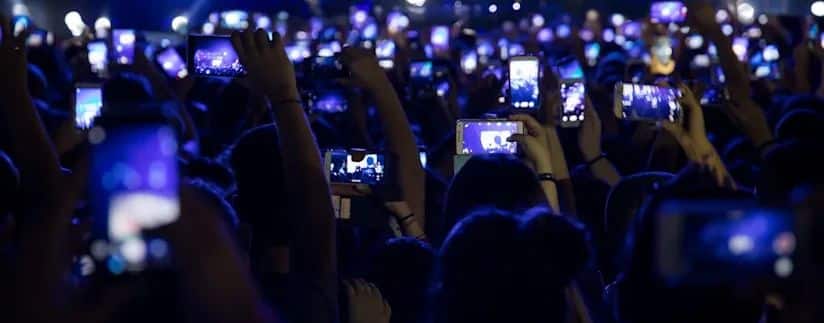
Júlia nods, but Daniel looks back at the sky. Behind them, David watches another row of phones go up.
DAVID: (to himself) All at once. I was taught that prayer meant giving God your full attention (5). I wonder what we’re praying for now. Bread and circuses, with better lighting (f).
He notices Laia checking her photograph.
DAVID: Did you need a screen to notice what was right in front of you?
LAIA: I noticed the chimneys because I was framing the shot. I saw the reflection because she showed me. You saw the phone and decided my attention was “in the wrong place” (6).
DAVID: Does everything have to become a photograph?
LAIA: I went from the sky to the screen to where she was pointing. Three “different modes of attention” (7), if you like. Which one would you have me give up?
DAVID: I was taught that attention could be “a negative effort” (8). Sometimes it takes effort to let a moment pass.
DANIEL: I film so we can keep it. Júlia and I will watch this again one day.
DAVID: Will you?
DANIEL: I mean to. At work I cut hours of tape down to a few minutes. With Júlia, I keep everything. It’s practically “the total record of a life” (9).
LEO: I feel like nobody here is watching the same thing. In the models I work on, “individual attention heads clearly learn to perform different tasks” (10). I follow the lights. (points to Laia) She’s looking for a good shot. (points to Darya) And she’s listening for the cheer.
DARYA: (checking her cue) In ten seconds, they’ll all look at the same thing. Watch.
LEO: So you’re choreographing our attention, too.
DARYA: Of course. You might even find yourself “part of a work of art” (11).
The wings fold. The lights rise into the outline of an eye. The crowd cheers.
On the left, a small cluster of lights lags for a second, then catches up. At the edge of Daniel’s frame, Júlia’s hand reaches for his arm.
DANIEL: (under his breath, still filming) Hold on.
David is still looking at the water.
DARYA: (into her radio) Left side. What was that?
LEO: I saw it. Those lights were late.
LAIA: (checking her screen) Oh. I got it.
Act Two — How Many Eyes Does It Take?
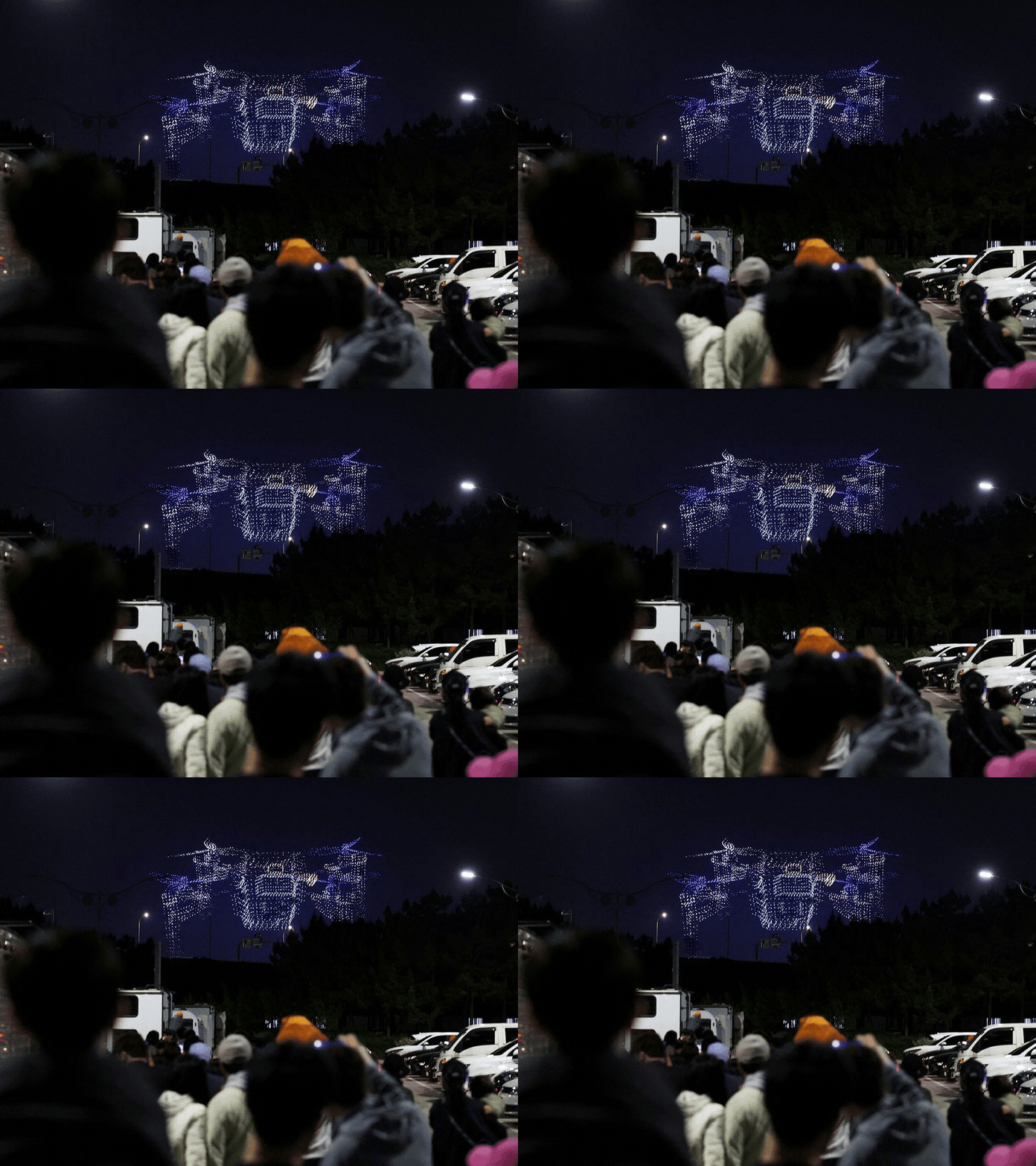
A few seconds later. Overhead, the show carries on. Most of the crowd has not noticed anything.
LEO: Was that delay intentional?
DARYA: (hand up, radio to her ear) Hold on.
LEO: Because the rest held their positions. Only that cluster drifted, as if each step “can depend only on the known outputs” (12). It couldn’t see the problem coming.
DARYA: Hold on. I’m in the middle of something.
DAVID: Let her listen. You want an answer right away, but sometimes you need to wait to understand something (13).
Darya lowers her radio.
DARYA: One transition was out of sync. They’re checking the sequence now.
LEO: Right. Sorry.
LAIA: (watching her clip) I actually liked that part. Those lights hung by the chimneys like they didn’t want to leave. I already posted it.
DARYA: You posted it? Well, that’s just great. “Absolutely everyone has a camera in their pocket and a ready-made platform to accommodate uploads and distributions” (14).
DANIEL: I never post mine. I just keep them. Thousands of them.
LAIA: (reading from her phone) My friend says: “Best bit.”
DARYA: Best bit? Weeks on those transitions, and people are talking about the one that went wrong.
LAIA: Well, they’re still talking about the show.
DARYA: They’re judging a moment without knowing anything about what produced it.
LAIA: They noticed something and showed someone else. “As memes, fashion, crowds, and trending all indicate, we instinctively pay attention to what others pay attention to” (15). That’s not absent-minded.
DARYA: Can I see it?
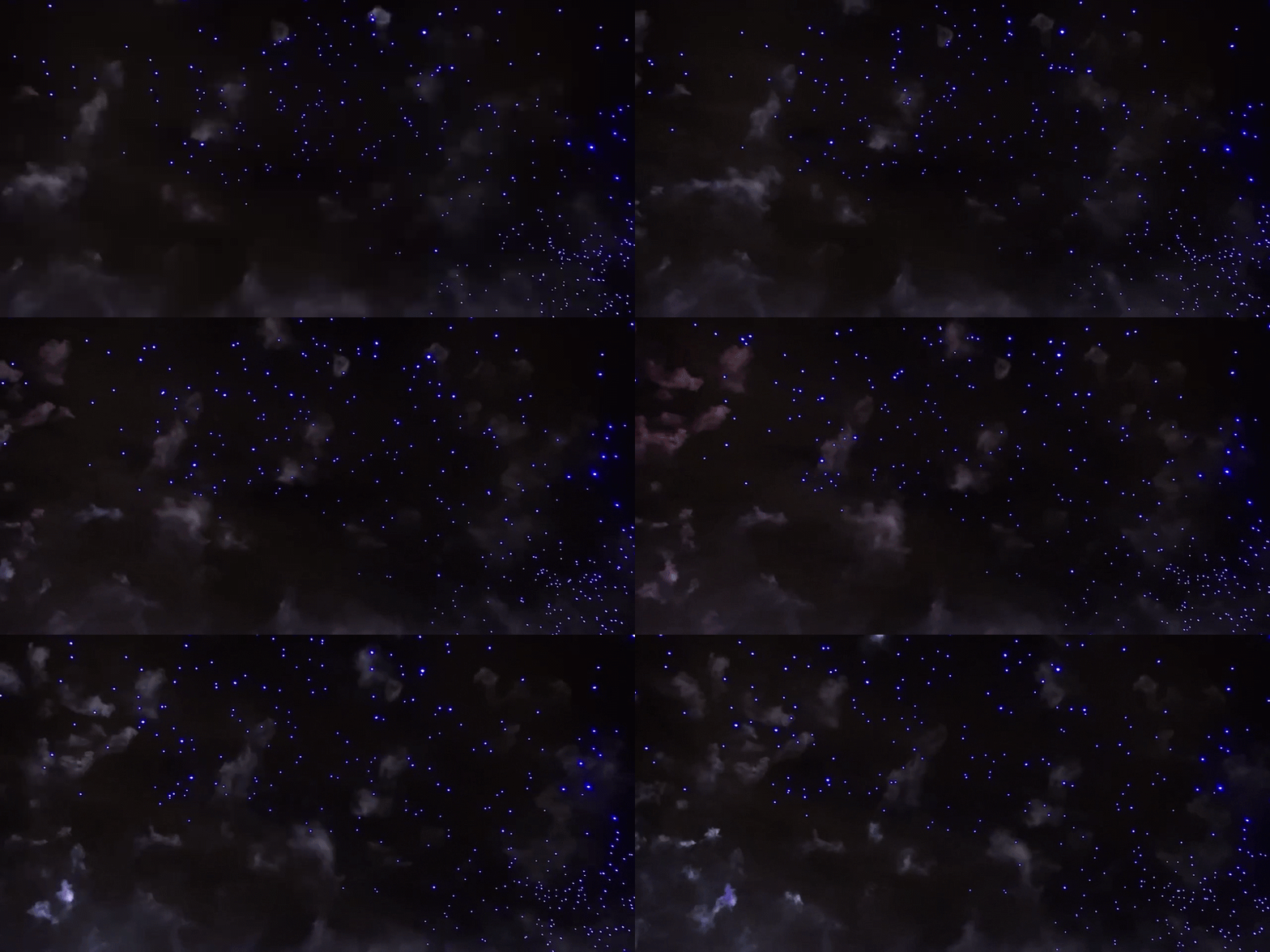
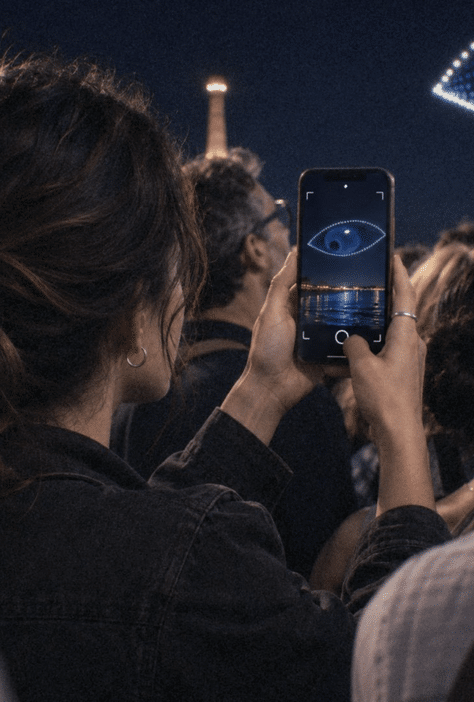
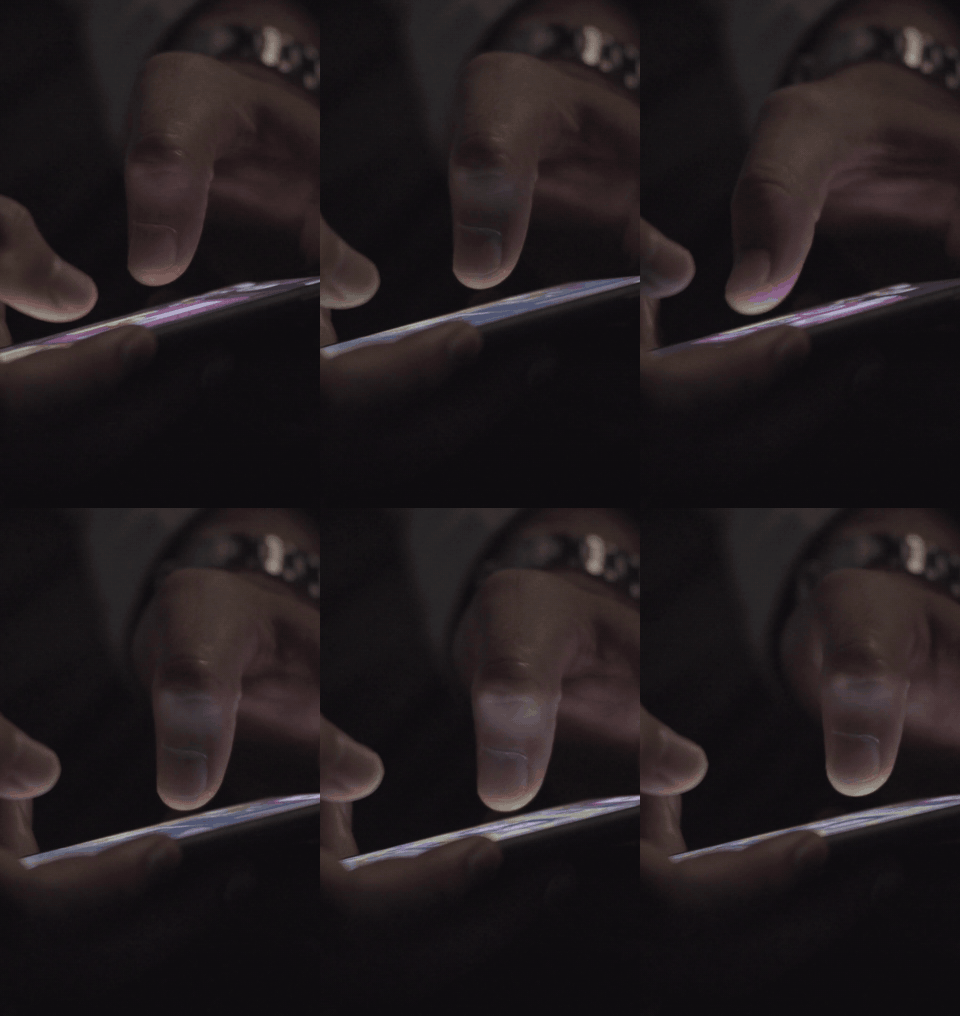
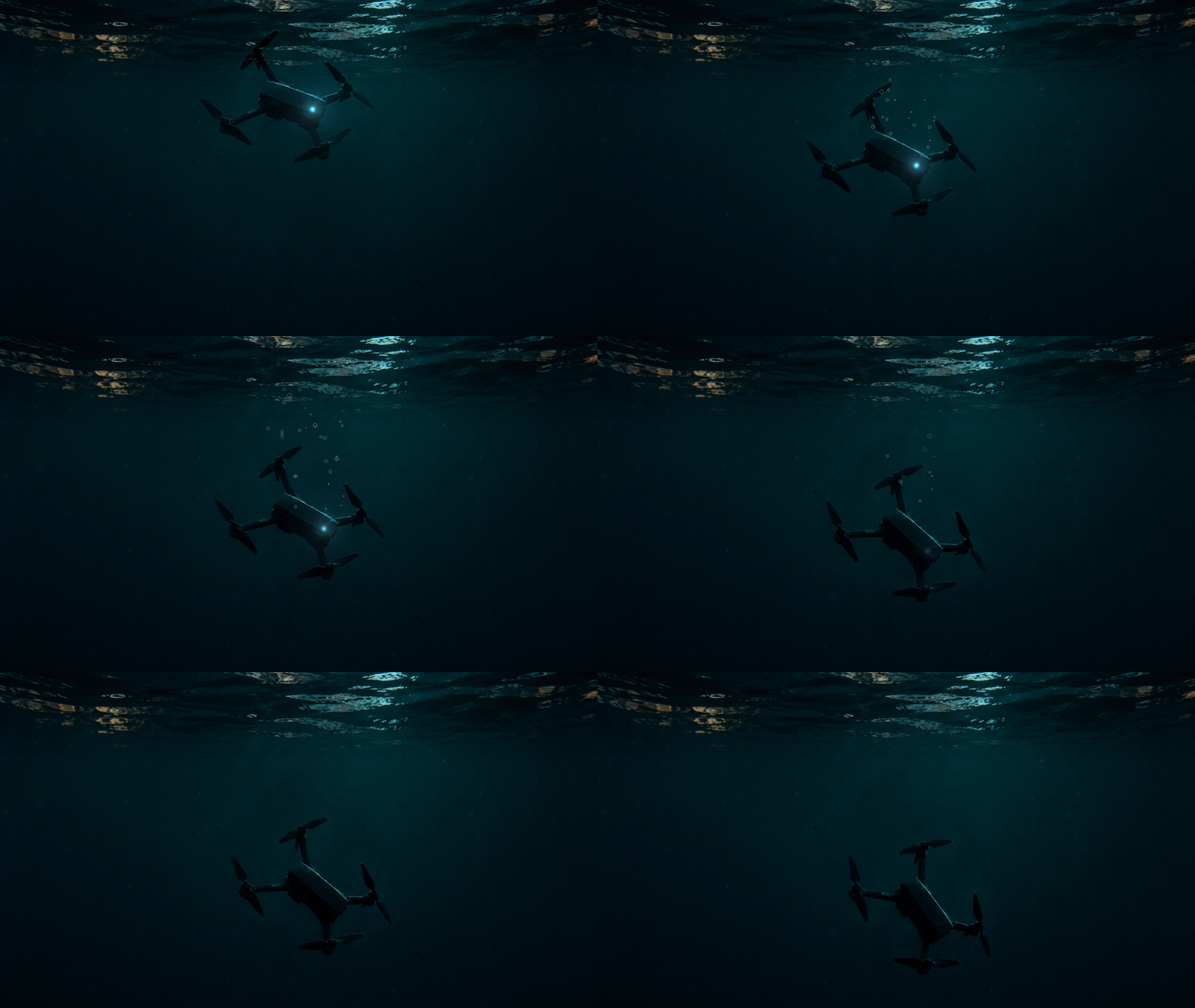
Figs. 4–7 — “Different Events”: the same second, seen by Leo, Darya, Laia and Júlia.
Laia hands her the phone. Leo leans in.
LEO: Go frame by frame. “Recorded footage makes it easier to analyze what happened because it captures details more precisely than we can observe in the moment” (16). Look, these six keep their old positions while the others move.
DARYA: “The camera introduces us to unconscious optics as does psychoanalysis to unconscious impulses” (17). When it works, nobody sees any of this. “Code is the hidden medium of digital culture” (18). One small error and suddenly everyone is watching the machine.
LAIA: So maybe the error is the most honest moment of the night (g). It was slight, sure, but timely enough to provoke a debate (19).
DARYA: Could you post the next transition instead? It’ll be perfect.
LAIA: Why should I replace a moment I liked with one you liked?
DARYA: (quietly, still looking at the clip) “It could have been different” (20).
LEO: Machine learning has the same problem. During training, “the model learns to be more unsure” (21). Maybe tonight so do we (h).
DARYA: You really do turn everything into a computational problem.
LEO: Sorry. Occupational hazard.
DAVID: Did we even see the same thing?
DANIEL: It was smooth. One form, then another. I’ve got it right here.
DAVID: Then let’s see if your memory and your phone agree.
Daniel plays his video. The cluster lags on his screen too. At the edge of the frame, Júlia’s hand taps his arm. His own voice: “Hold on!”
DANIEL: I don’t remember the delay. I don’t remember her trying to get my attention. I remember filming this. “I have the whole thing recorded, but somehow I still don’t know what I actually experienced” (22).
DAVID: Your daughter was pointing at the water. I think what she saw was that the reflection…
He stops himself.
DAVID: (to himself) No. I’m doing it again, explaining someone before she has spoken. “Attention consists of suspending our thoughts, leaving them detached and empty, ready to take in what the other person is actually showing us” (23).
He turns to Júlia, and Daniel signs for him.
DAVID: “What is going through your mind?” (24) (i)
Júlia points down. Above, the formation is steady. Below, its reflection keeps breaking apart.
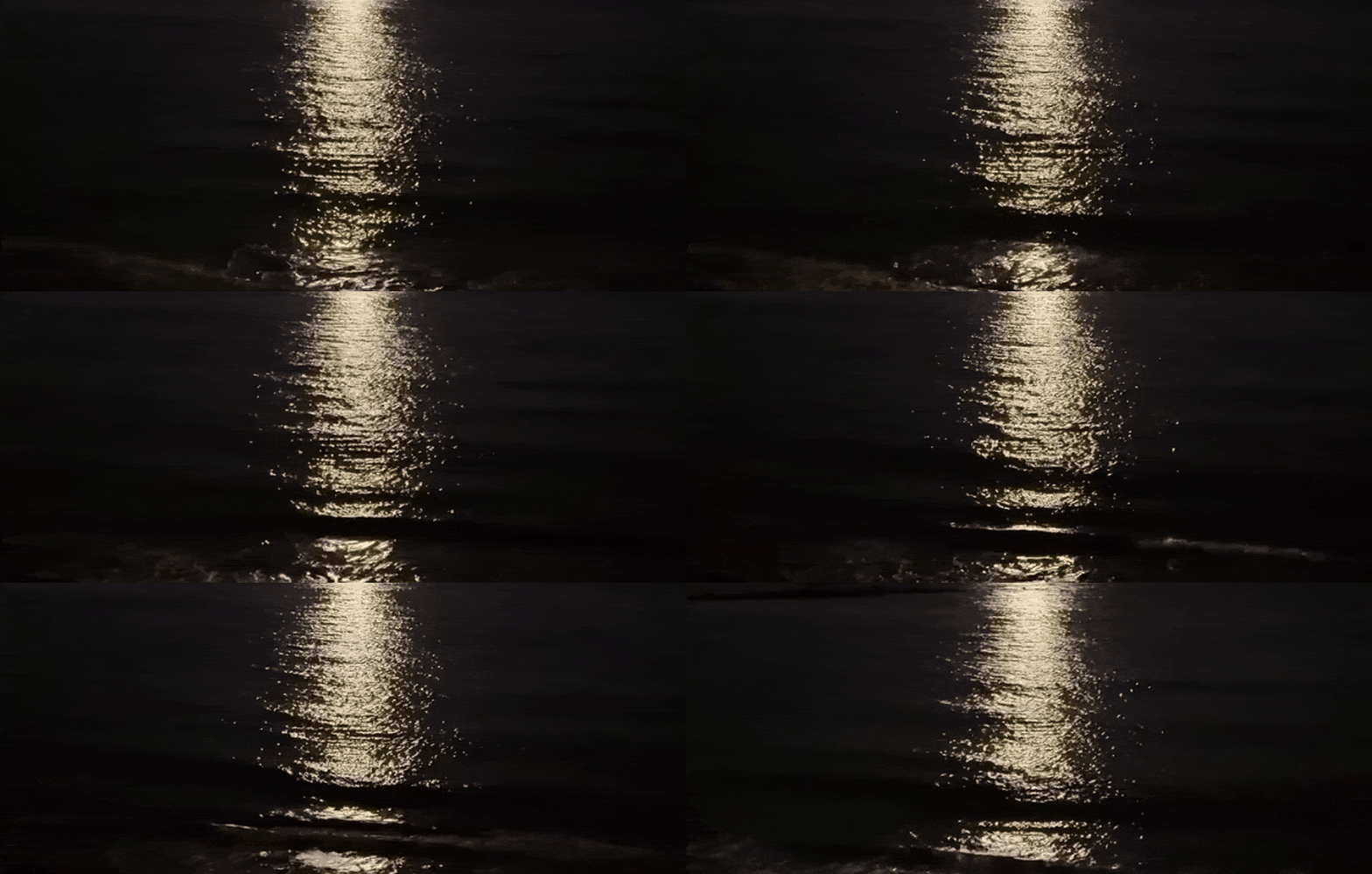
Júlia is signing; Daniel speaks for her.
DANIEL: The one in the sky is perfect. The one in the water is alive.
LAIA: I noticed it, but I never thought about it like that.
LEO: I never looked down. I was too focused on the lights…
Laia raises her phone and hesitates. A notification lights up her screen.
LAIA: Someone’s asking for a video of the next formation.
Darya’s radio crackles: “Next cue is ready.”
DAVID: I wonder what everyone is going to notice this time.
LEO: The outer lights. That’s where it started.
DARYA: The crowd.
Daniel’s eyes meet Júlia’s.
DANIEL: (signing) Where should we look?
Júlia points towards the water. Daniel puts his phone away.
DANIEL: (signing) All right.
The next formation begins.

Act Three — Beyond the Eye’s Reach
This time, the transition works exactly as designed. Daniel and Júlia watch the water together. The cheer arrives right on cue.
DARYA: (exhaling) That’s it. That’s the one.
LAIA: (showing her screen) Got it. Perfect timing.
DARYA: Two hundred people, six months, and thousands of instructions to make ten seconds look effortless. “The equipment-free aspect of reality here has become the height of artifice” (25).
Laia’s phone vibrates.
LAIA: Someone sent me the first transition from the other side of the beach. You can barely see the delay.
LEO: Different angle. Without a reference point, you wouldn’t notice anything went wrong. It’s all about “relating different positions of a single sequence” (26).
LAIA: So for everyone standing over there, it was perfect.
DARYA: It wasn’t perfect. I wanted people to forget the drones and just experience the image. “Presence itself is the work” (27).
DAVID: Does that make your version the only true one?
DARYA: I designed it.
LAIA: And we watched it.
LEO: Technically, both observations are consistent with the same event.
DARYA: Then why does everyone disagree?
DANIEL: Maybe because we don’t remember everything. “To be able to narrate or remember, one must be able to forget or leave out a great deal” (28).
LAIA: I hate missing things. That’s why I record everything. “I want to be fully present for the performance and at the same time take photographs and videos, and send them to my friends and respond to their comments” (29). I don’t see why I should have to choose.
DANIEL: Neither do I. But a recording only repeats what happened, and “remembering means telling the story again and again” (30). Thousands of recordings… but how many stories could I actually tell?
Júlia catches Daniel’s eye. He reaches towards his pocket. Júlia signs: “Looking for your phone again?”
DANIEL: (signing) No. I was going to show you something.
Júlia signs, almost irritated: “Then show me.”
He hesitates, unsure whether she means the video or something else.
The final formation dissolves. The sky goes dark.
LAIA: (checking her notifications) It’s already everywhere. People who weren’t even here are commenting on it (j).
DARYA: Well, at least someone is still paying attention.
LAIA: Someone says it was the most beautiful thing they’ve seen all week. Another says it’s a waste of money. Now “documentation is in the hands of every viewer, not just the professional hired photographer” (31).
DARYA: Beautiful. Waste of money. “Immediacy crushes mediation” (32).
DAVID: But isn’t that exactly what you wanted?
DARYA: Well, yeah, it’s a bit contradictory, but maybe I want both.
DAVID: (to Laia) And what do you think?
LAIA: I loved it. And now I’m curious what everyone else noticed.
DAVID: “The intelligence only grows and bears fruit in joy” (33).
Laia lowers her phone. The crowd is dispersing, leaving empty patches of sand.
Daniel glances at the empty sky. There is nothing left to capture. He turns towards Júlia, still gazing out at the sea.
DANIEL: (signing) What are you looking at?
Júlia gestures towards the water. With the music gone, the waves become audible (k). The reflections have disappeared. For a while, they both remain there, looking.
DANIEL: (signing) Shall we go?
JÚLIA: (signing; projected translation) Hold on. (l)
The sea continues moving where the lights had been.
END
References
(1) Walter Benjamin, The Work of Art in the Age of Mechanical Reproduction (1969), p. 19.
(2) Ashish Vaswani et al., Attention Is All You Need (2017), p. 5.
(3) Anna Kornbluh, Immediacy, or The Style of Too Late Capitalism (2024), PDF p. 2.
(4) Walter Benjamin, The Work of Art in the Age of Mechanical Reproduction (1969), p. 4. Paraphrased.
(5) Simone Weil, Waiting for God (1951), p. 105. Paraphrased.
(6) Claire Bishop, Disordered Attention (2024), p. 18.
(7) Claire Bishop, Disordered Attention (2024), p. 6.
(8) Simone Weil, Waiting for God (1951), p. 111.
(9) Byung-Chul Han, The Crisis of Narration (2024), PDF p. 32.
(10) Ashish Vaswani et al., Attention Is All You Need (2017), p. 7.
(11) Walter Benjamin, The Work of Art in the Age of Mechanical Reproduction (1969), p. 12.
(12) Ashish Vaswani et al., Attention Is All You Need (2017), p. 3.
(13) Simone Weil, Waiting for God (1951), p. 112. Paraphrased.
(14) Anna Kornbluh, Immediacy, or The Style of Too Late Capitalism (2024), PDF p. 16. Paraphrased.
(15) Claire Bishop, Disordered Attention (2024), p. 18.
(16) Walter Benjamin, The Work of Art in the Age of Mechanical Reproduction (1969), p. 15. Paraphrased.
(17) Walter Benjamin, The Work of Art in the Age of Mechanical Reproduction (1969), p. 16.
(18) Anna Kornbluh, Immediacy, or The Style of Too Late Capitalism (2024), PDF p. 17.
(19) Claire Bishop, Disordered Attention (2024), pp. 5–6. Paraphrased.
(20) Anna Kornbluh, Immediacy, or The Style of Too Late Capitalism (2024), PDF p. 4.
(21) Ashish Vaswani et al., Attention Is All You Need (2017), p. 8.
(22) Byung-Chul Han, The Crisis of Narration (2024), PDF p. 10. Paraphrased.
(23) Simone Weil, Waiting for God (1951), p. 111. Paraphrased.
(24) Simone Weil, Waiting for God (1951), p. 115. Paraphrased.
(25) Walter Benjamin, The Work of Art in the Age of Mechanical Reproduction (1969), p. 13.
(26) Ashish Vaswani et al., Attention Is All You Need (2017), p. 2.
(27) Anna Kornbluh, Immediacy, or The Style of Too Late Capitalism (2024), PDF p. 1.
(28) Byung-Chul Han, The Crisis of Narration (2024), PDF p. 33.
(29) Claire Bishop, Disordered Attention (2024), p. 35. Paraphrased.
(30) Byung-Chul Han, The Crisis of Narration (2024), PDF p. 33. Paraphrased.
(31) Claire Bishop, Disordered Attention (2024), p. 4.
(32) Anna Kornbluh, Immediacy, or The Style of Too Late Capitalism (2024), PDF p. 3.
(33) Simone Weil, Waiting for God (1951), p. 110.
Footnotes
(a) We set it during La Mercè because a city festival is when attention is organised in public: the city decides where thousands of people look, and when. The drone show is fictional.
(b) A power station that once produced energy for the city (closed 2011) now produces images. For us the site marks a shift from an economy of energy to an economy of attention.
(c) Darya and Leo share one way of thinking. For Heidegger, technology is a framework that shapes how reality appears, favouring calculative thinking (how is it built, how can it be faster or more spectacular?) over meditative thinking (what does it mean?). Meaning ends up measured in views, clicks and reach.
(d) We don’t read Daniel’s filming as indifference but as care: he records because he’s afraid of losing their time together. Keeping the moment is what takes him out of it.
(e) Júlia is deaf and signs in Catalan Sign Language (LSC). We wanted to ask whose attention a show like this assumes: hers is visual and relational, built on pointing, touch and eye contact. Signed lines are given in English.
(f) We see shows like this as aesthetic and political spectacle. They mobilise social energy without changing anything around them, a steady dose of wonder that leaves little attention for injustice, poverty or the climate. A better society struggles to compete with a good drone show.
(g) A record can be faithful to the facts and still miss the experience. A staged or flawed image can be more honest than a perfect one, what Werner Herzog calls “ecstatic truth”. Memory works the same way: it keeps what mattered, not everything that happened.
(h) In training, label smoothing makes a model less sure of any single answer and more accurate overall. We use it as an image for the group: each new viewpoint makes the event less certain and the picture more complete.
(i) For Weil, attention is an ethical act before it is a skill: being able to ask someone what they are going through. This is David’s turning point, from judging other people’s attention to practising his own.
(j) Benjamin argued that reproduction frees the artwork from its dependence on ritual (1969, §IV). Once the clip circulates, the show no longer belongs to the beach or the night it was made for, but to whoever is watching, wherever they are.
(k) What comes after the sound of the waves? Júlia is already there. Silence has become hard to bear, but when outside stimuli are muted there is room for introspection. An inner life has to be cultivated, and because it does not depend on outside validation, it is all the more powerful.
(l) The title comes back. Before, “Hold on” meant wait: Daniel to Júlia, Darya to Leo. Now Júlia asks her father to stay. For us it marks the shift from protecting attention to sharing it.
Bibliography
Benjamin, Walter. “The Work of Art in the Age of Mechanical Reproduction.” In Illuminations, edited by Hannah Arendt, translated by Harry Zohn. New York: Schocken Books, 1969.
Bishop, Claire. Disordered Attention: How We Look at Art and Performance Today. London: Verso, 2024.
Han, Byung-Chul. The Crisis of Narration. Translated by Daniel Steuer. Cambridge: Polity, 2024.
Heidegger, Martin. “The Question Concerning Technology.” In The Question Concerning Technology and Other Essays, translated by William Lovitt. New York: Harper & Row, 1977.
Heidegger, Martin. Discourse on Thinking. Translated by John M. Anderson and E. Hans Freund. New York: Harper & Row, 1966.
Herzog, Werner. “Minnesota Declaration: Truth and Fact in Documentary Cinema.” 1999.
Kornbluh, Anna. Immediacy, or The Style of Too Late Capitalism. London: Verso, 2024.
Vaswani, Ashish, et al. “Attention Is All You Need.” In Advances in Neural Information Processing Systems 30, 2017.
Weil, Simone. “Reflections on the Right Use of School Studies with a View to the Love of God.” In Waiting for God, translated by Emma Craufurd. New York: Harper & Row, 1951.
Credits
Ala Mohammadi – Arwa Atwa – Bar Fisher – Florencia Licari – Lal Akkuş – Matthias Tebartz van Elst – Olga Melnichenko – Zeynep Sude Yaprak
Full project website: https://readymag.website/u3101909739/6654141/
