
Overview
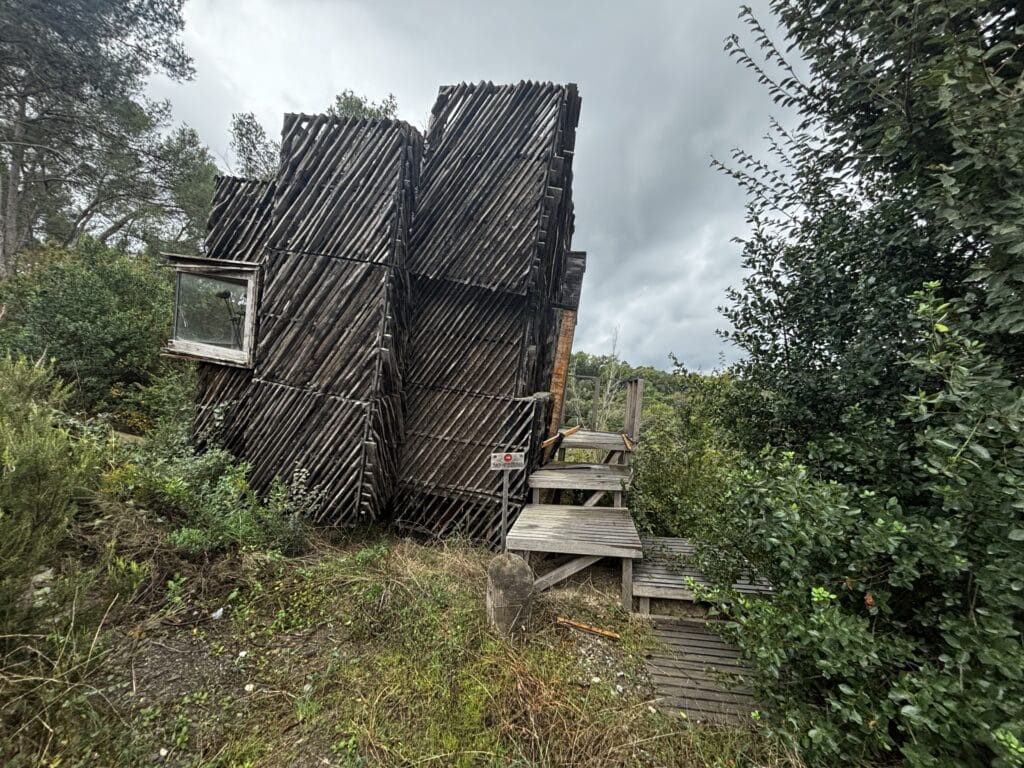
Pedro Pitarch’s Visual Intelligence course, tasked students with creating a 2D and 3D visualization of an existing structure on campus. I chose to analyze and document the condition of the Voxel Quarantine Cabine five years after its installation, highlighting both cosmetic deterioration and a critical structural failure.
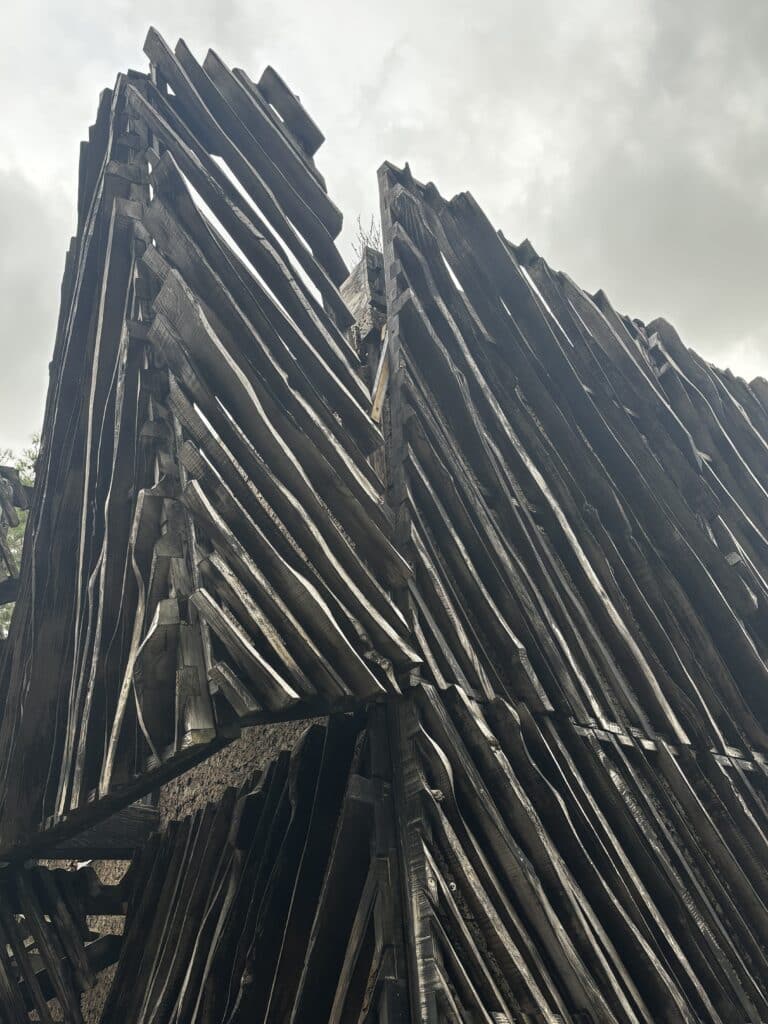
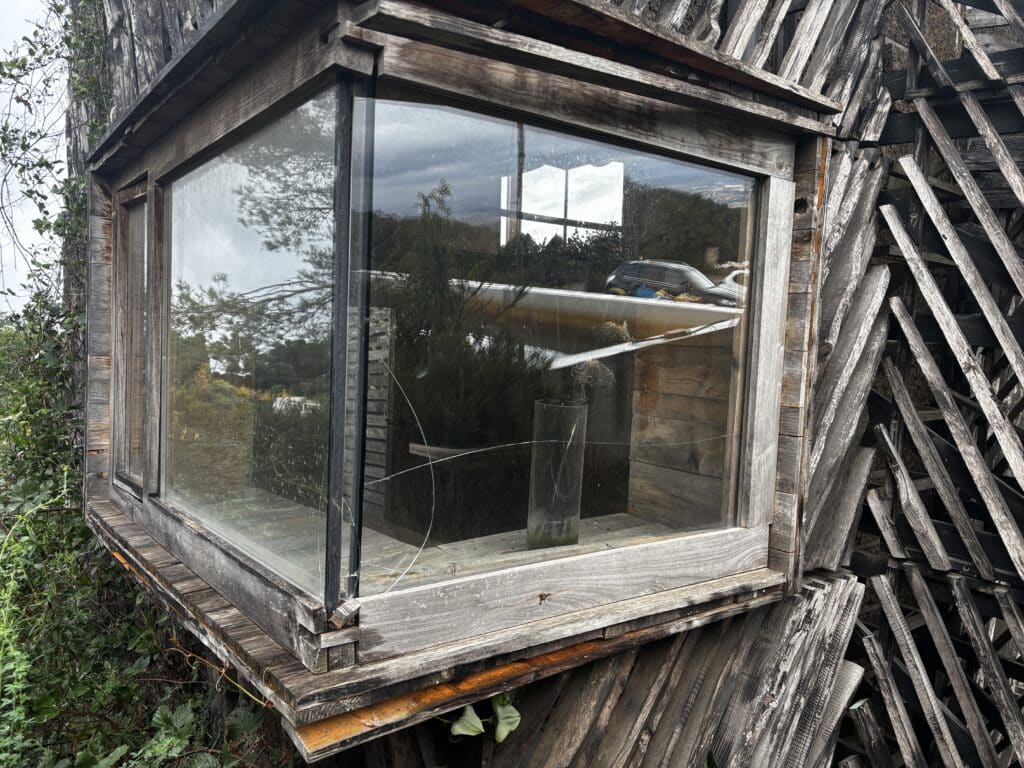
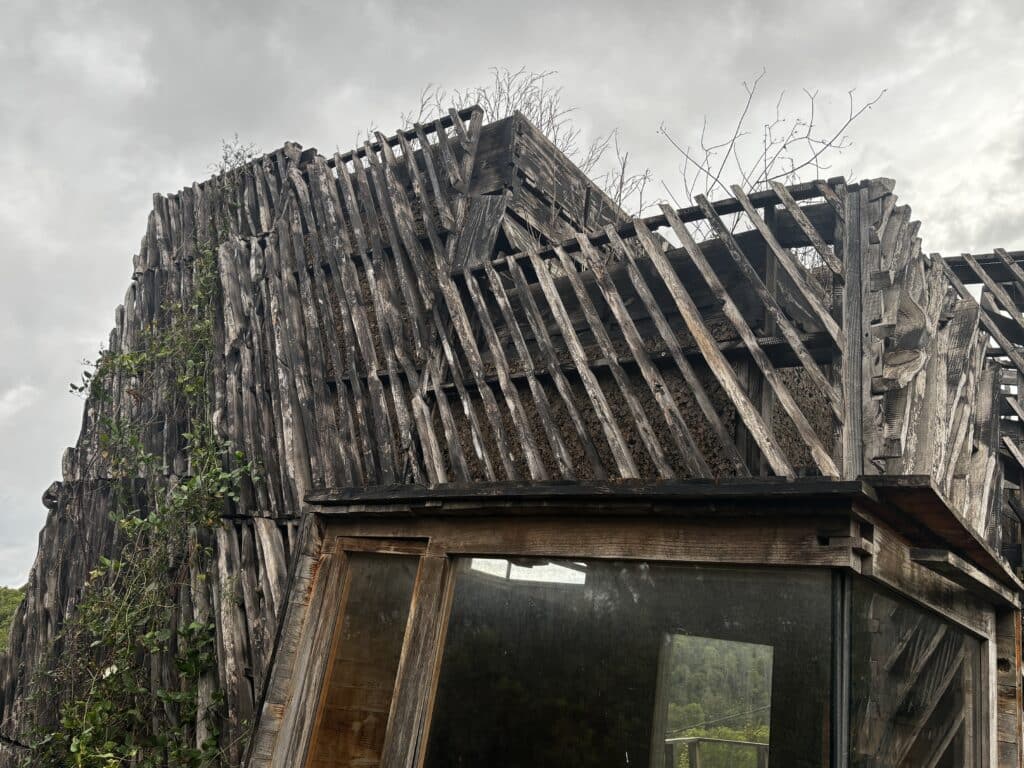
I began with careful observation of the site, noting subtle signs of external wear in the 2D renders : minor glass cracking, surface panel damage, and overgrowth along the moulding. The 3D view allowed me to emphasize the most dramatic development: the failure of a primary support, resulting in the structure’s pronounced tilt. The deliverables juxtapose quiet external decay against structural compromise, using photographic references to anchor the drawings in reality.

Photos of the Damage
Structural Damage

External Damage
Takeaways
This project reinforced the importance of connecting close visual observation with spatial interpretation. The 2D study sharpened my attention to detail and surface damage, while the 3D model highlighted how a single critical failure can redefine an entire form. The exercise underscored the interplay between minor deterioration and major structural consequences, improving both my analytical eye and my ability to narrate architectural narratives visually.
