Prefabricated Slabs Embedding Structure and Finish Through Stress-Driven Geometry and Waste Aggregate Distribution
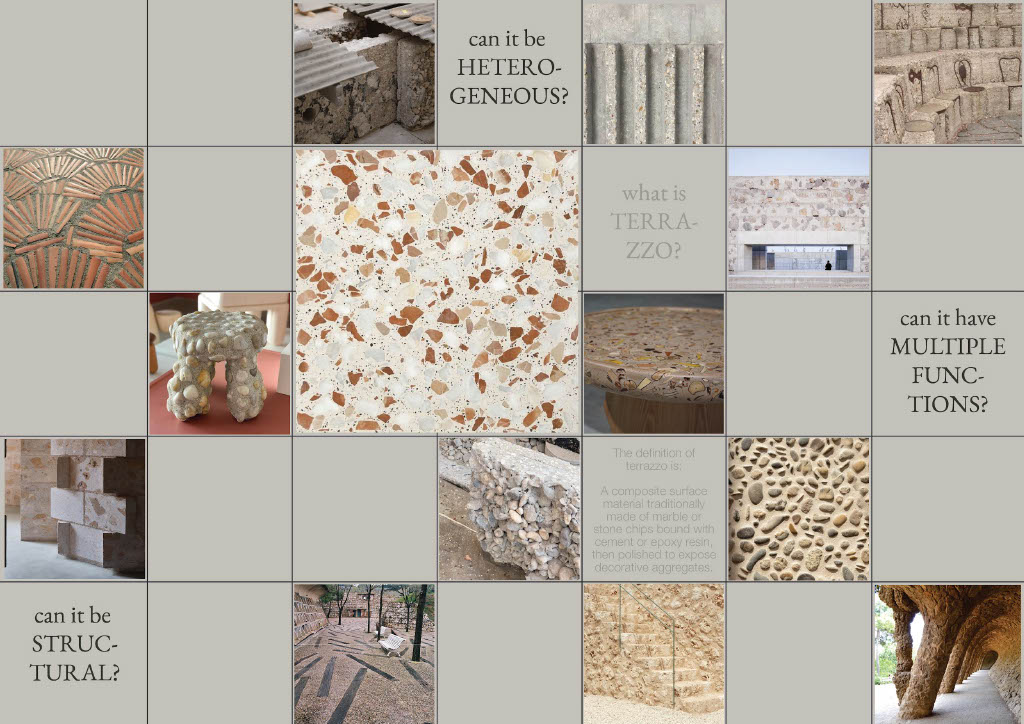
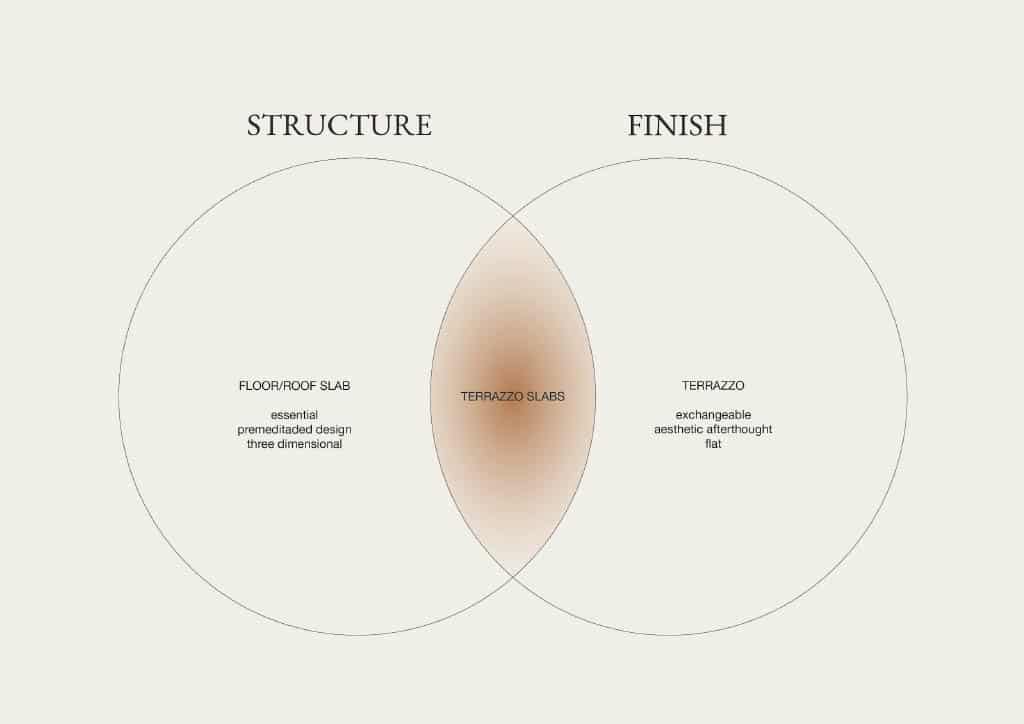
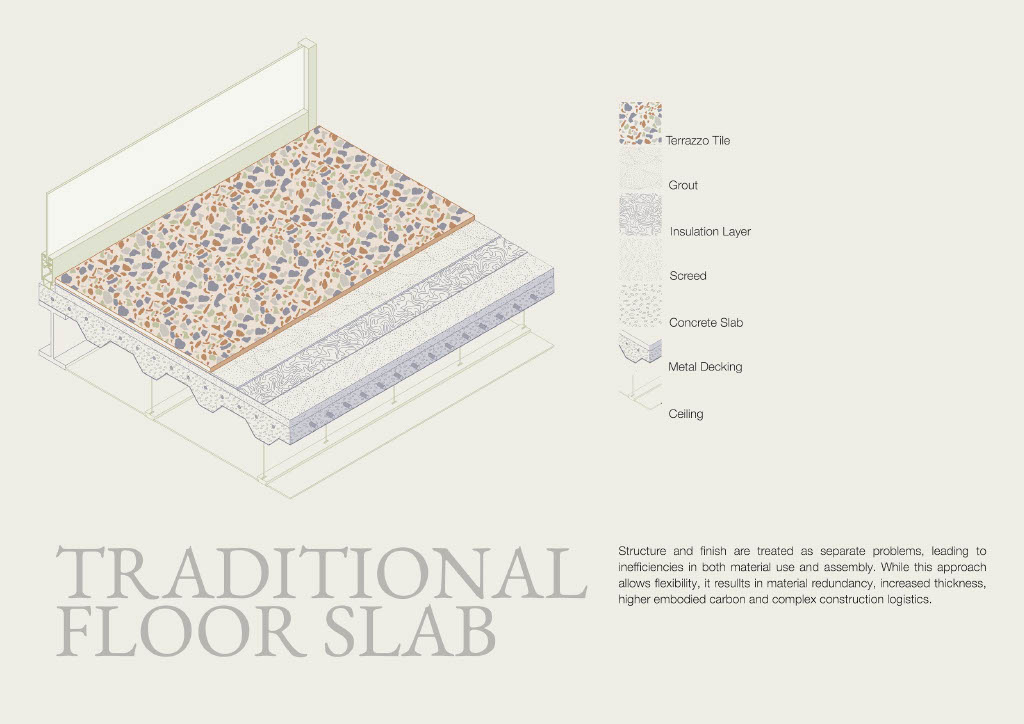
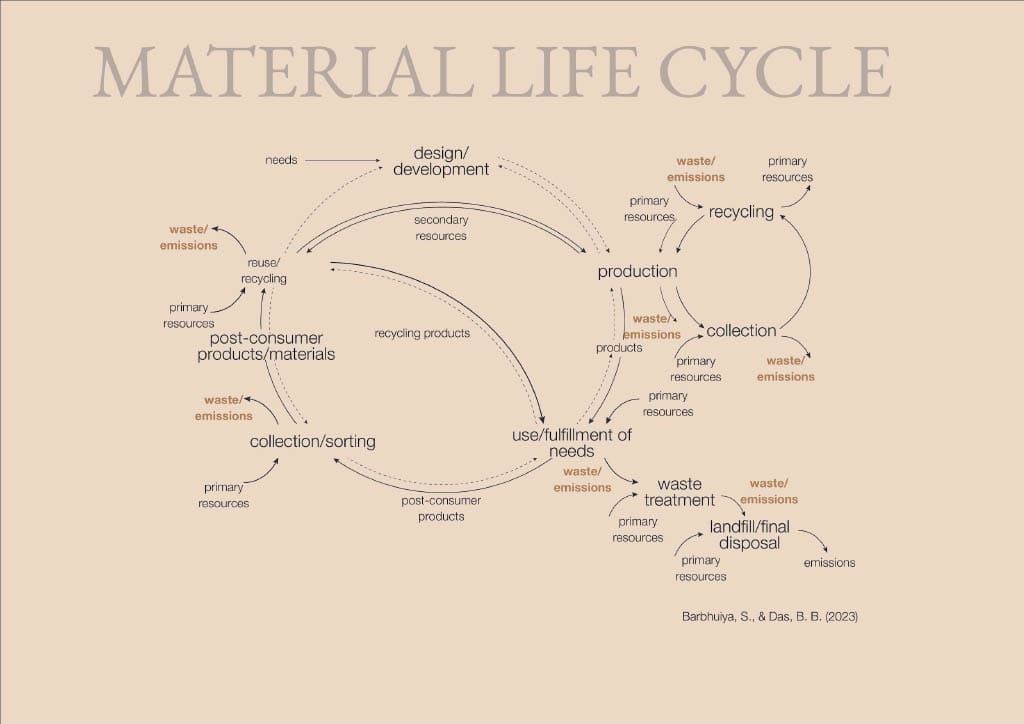
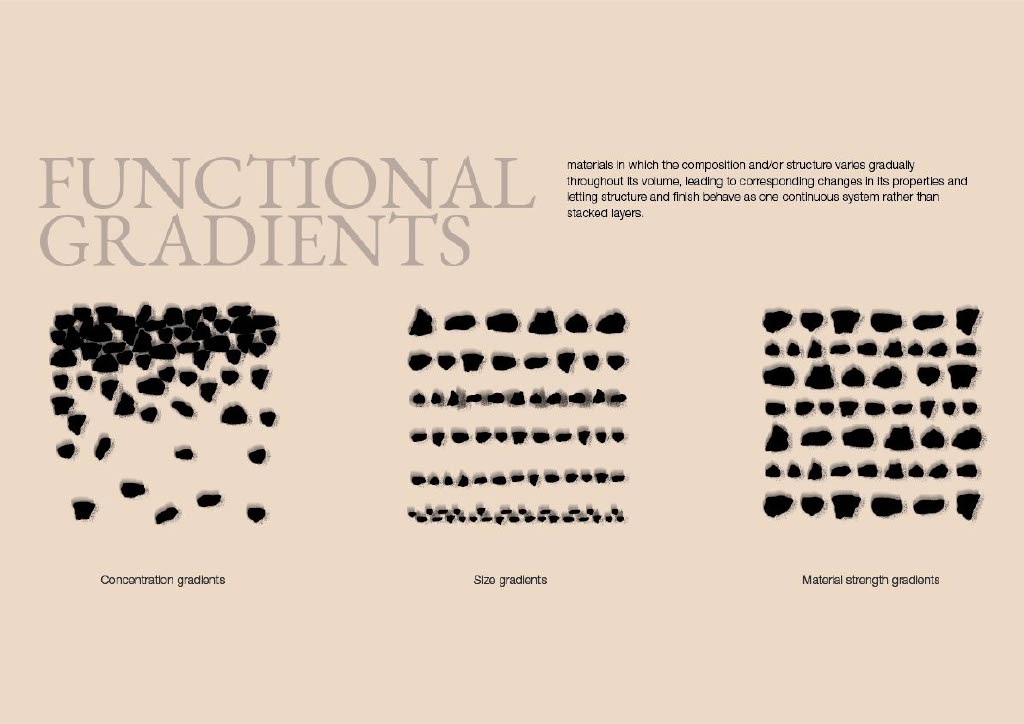
This thesis challenges the conventional separation of structure and finish in floor systems, typically resolved through multilayer assemblies that increase thickness, material redundancy, and construction complexity. While such systems allow formal and technical flexibility, they externalize performance into discrete layers rather than embedding it within a unified material logic. Existing applications of aggregate-based composites treat structural performance and surface finish as separate operations rather than as interdependent parameters. Embedding both functions as an integrated system allows for material optimization as well as efficient and precise assembly on-site. This raises the question: How can waste-derived aggregate composites be developed as a functionally graded material system, through controlled fabrication, to integrate structural performance and finishing within a prefabricated slab element?
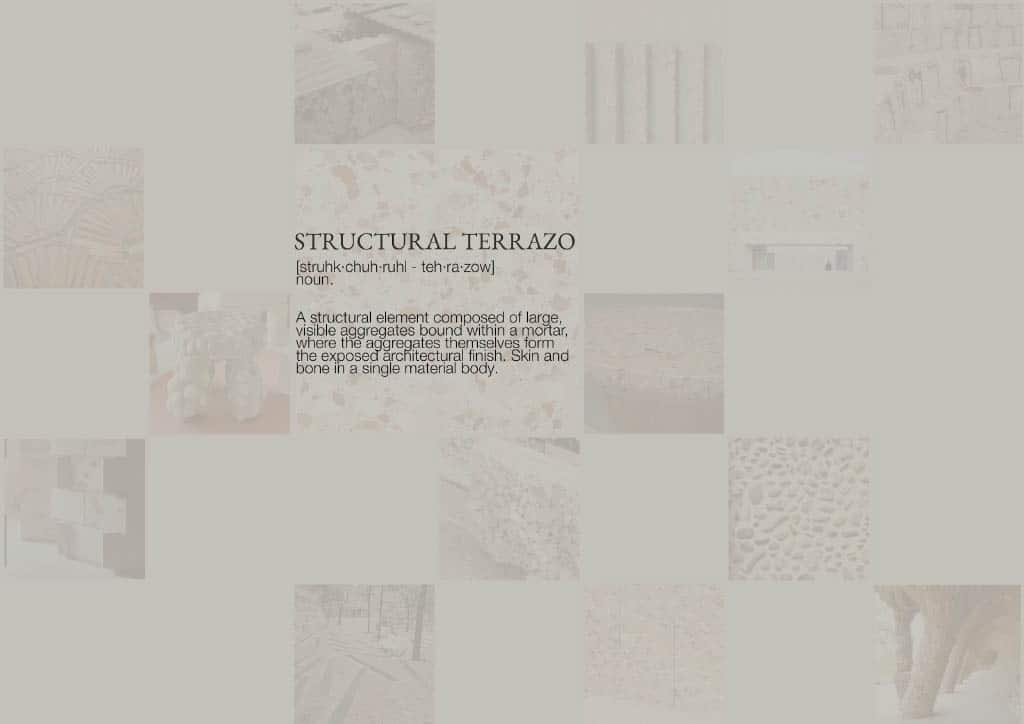
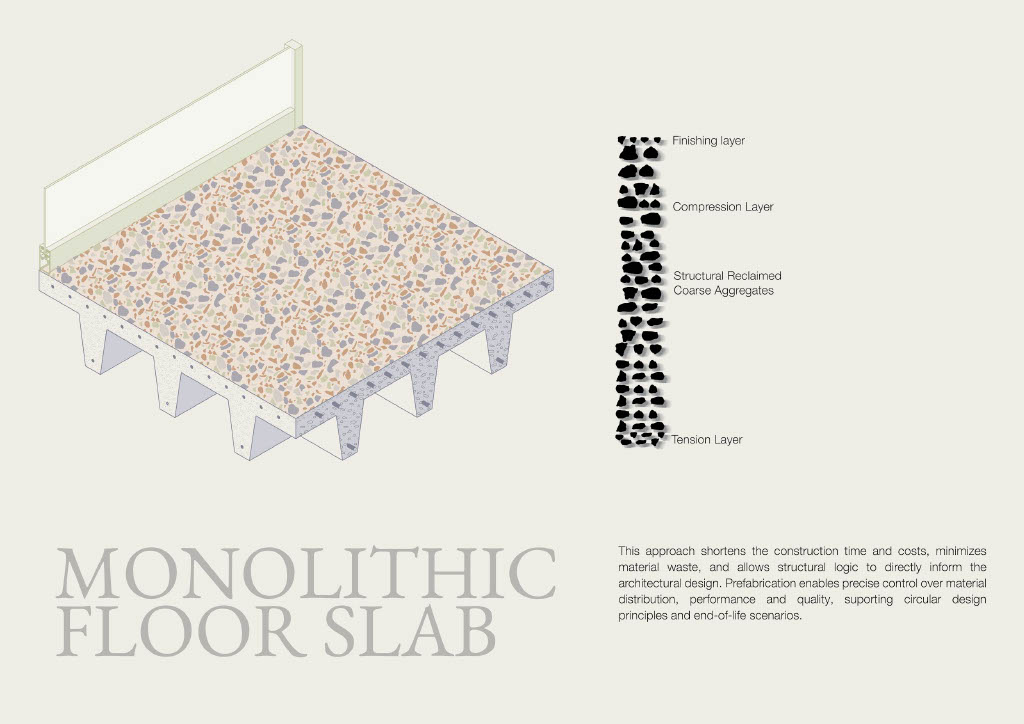
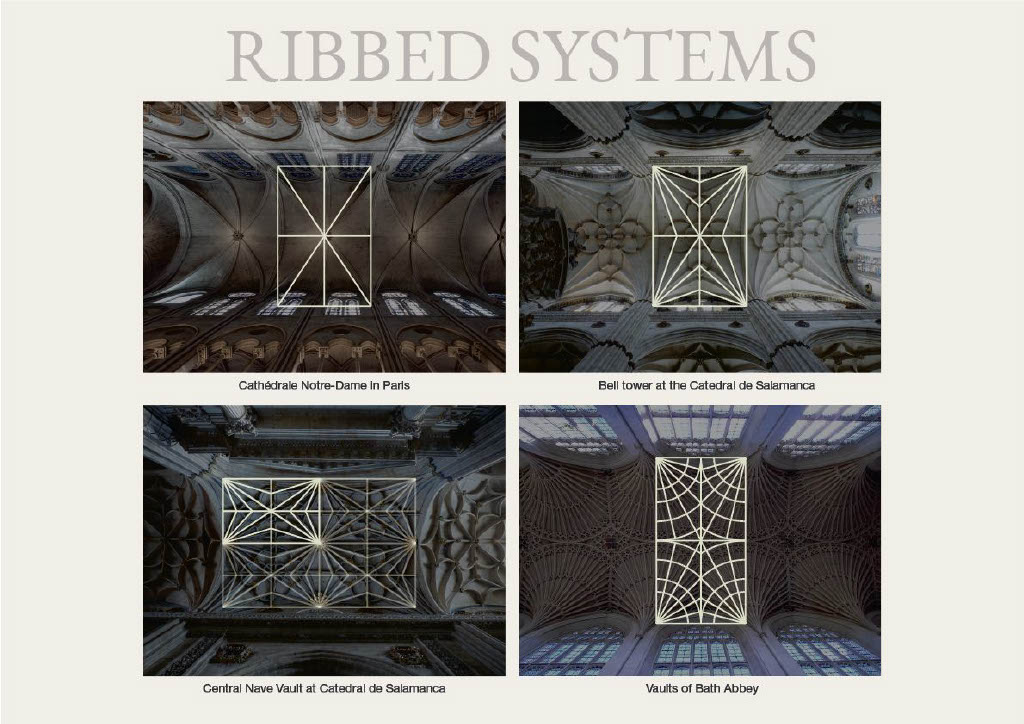
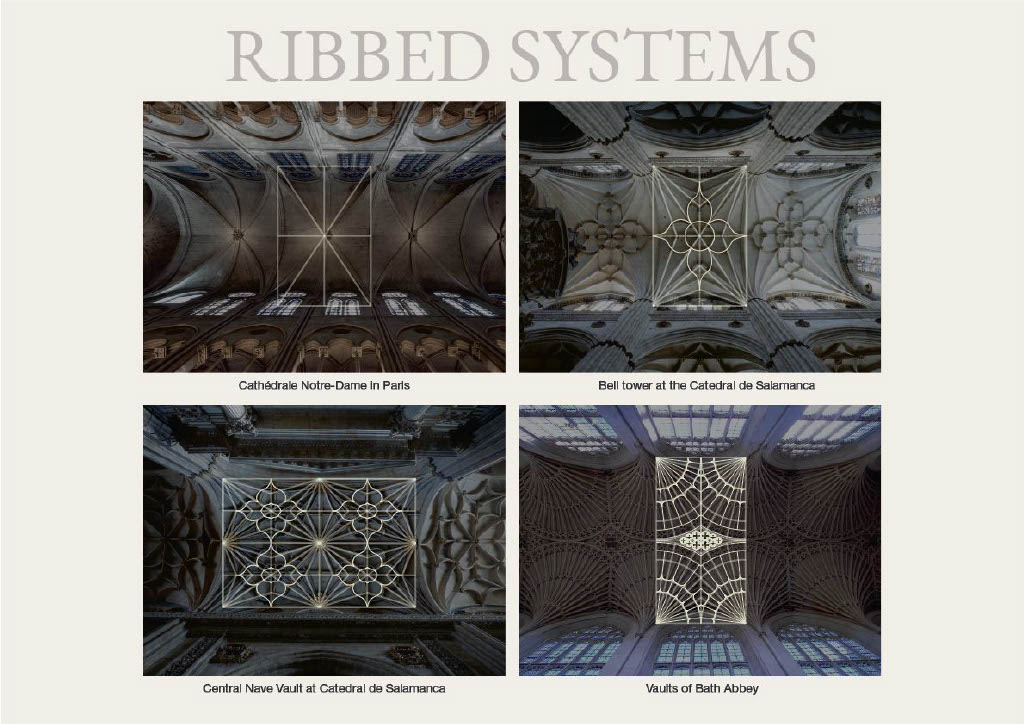
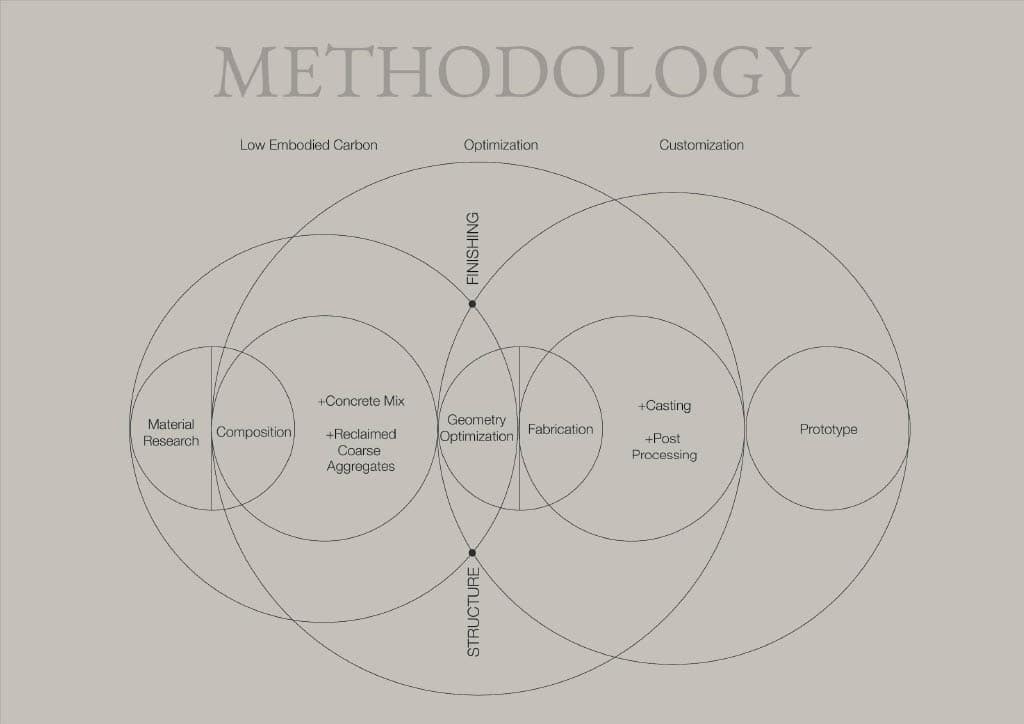
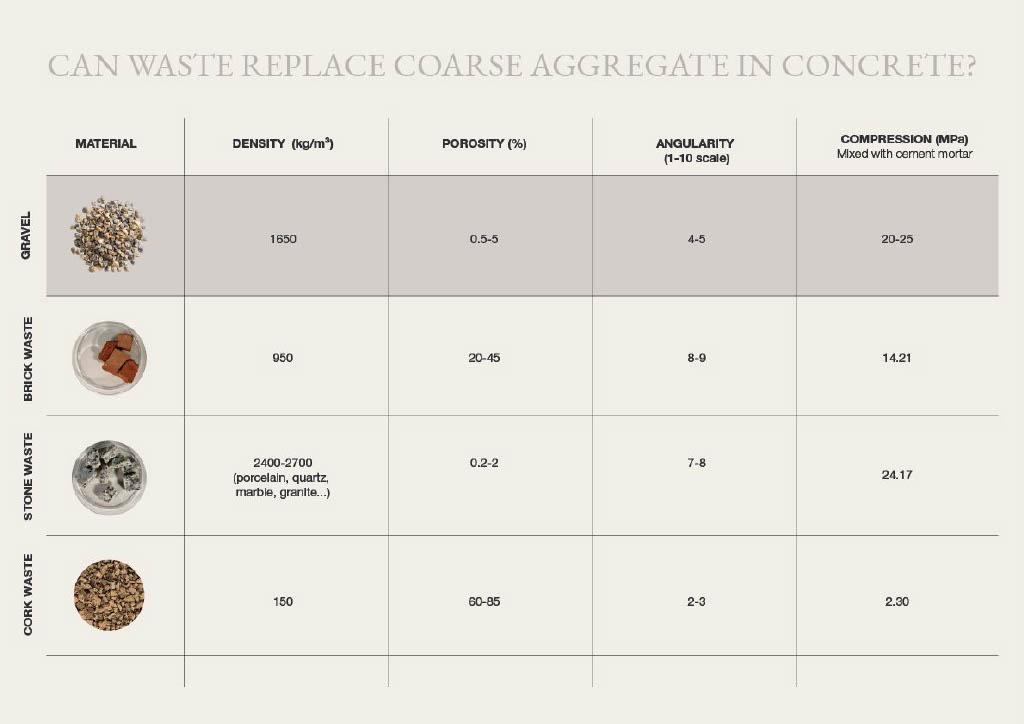
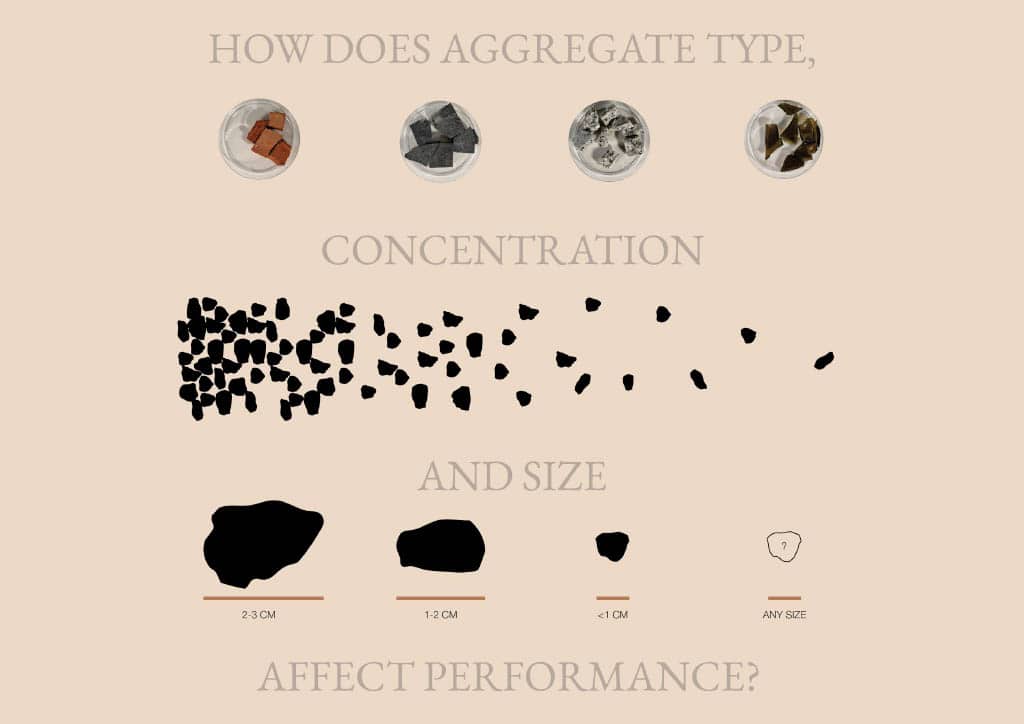
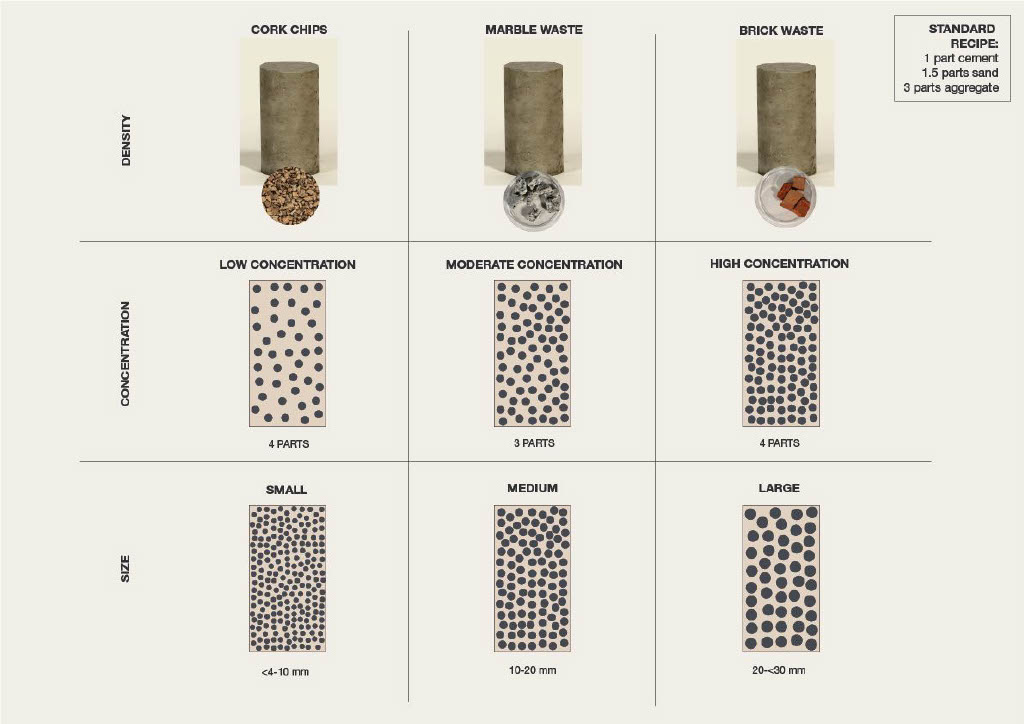
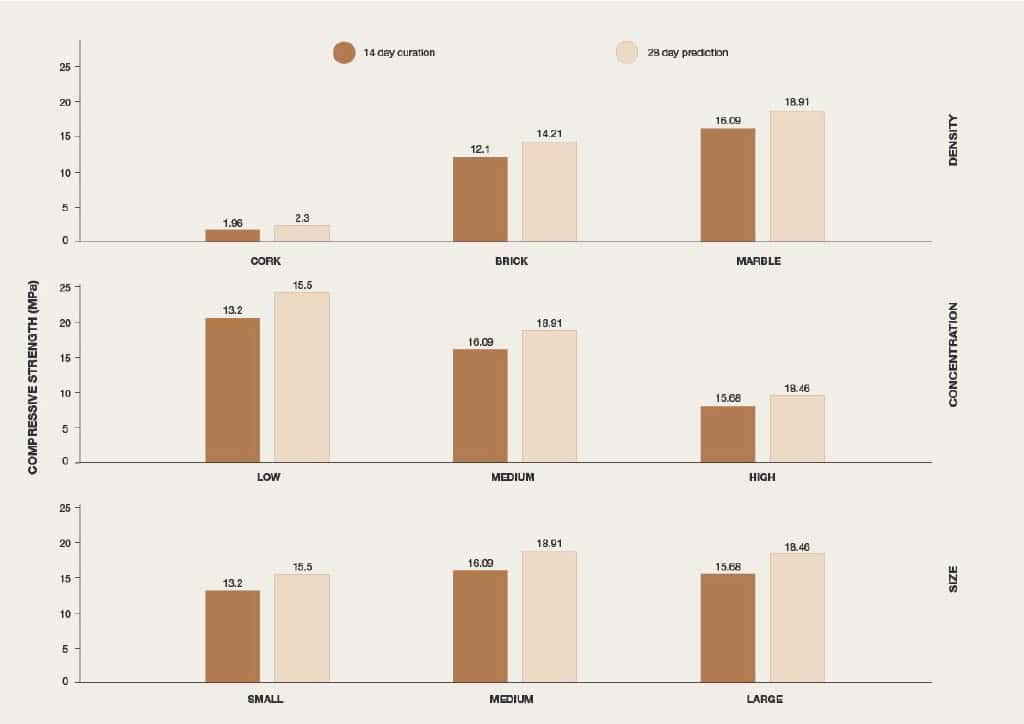
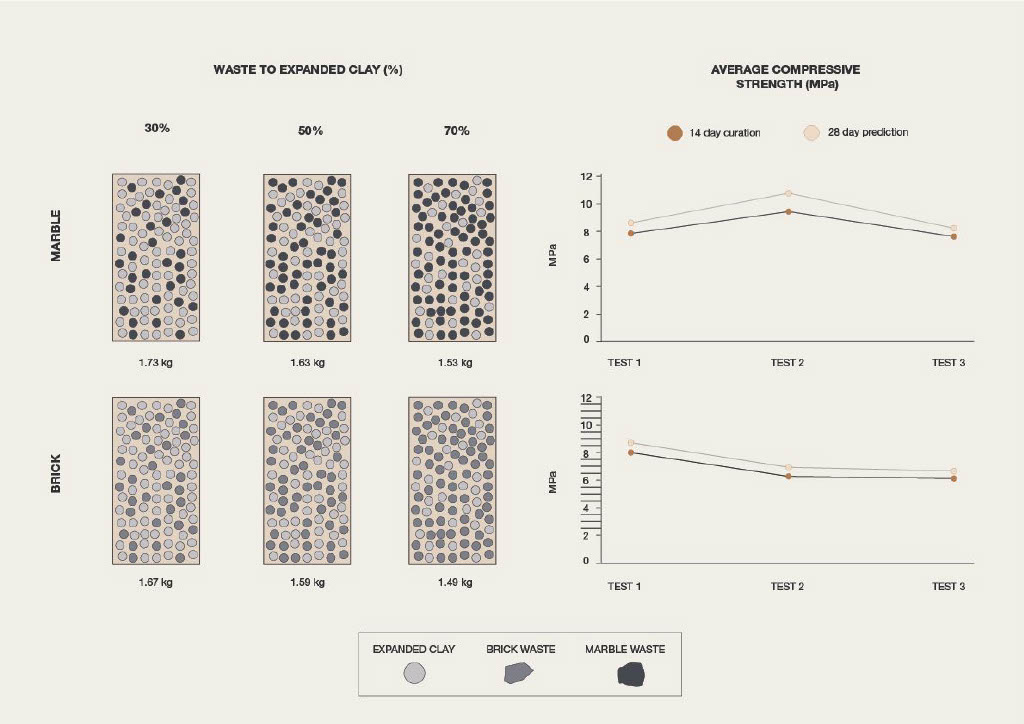
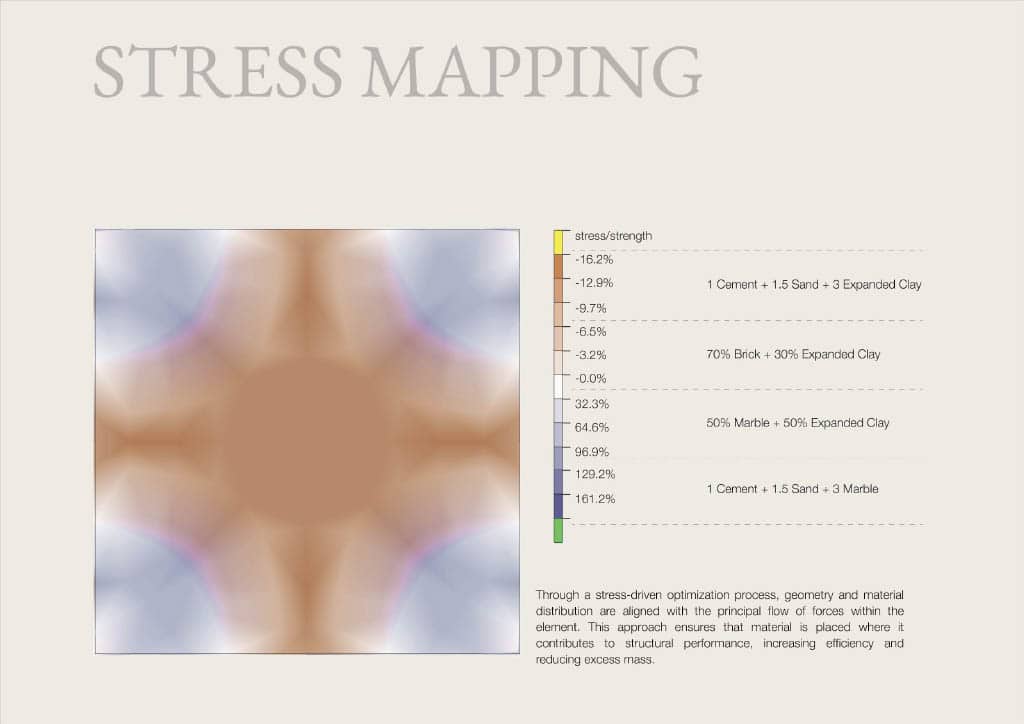
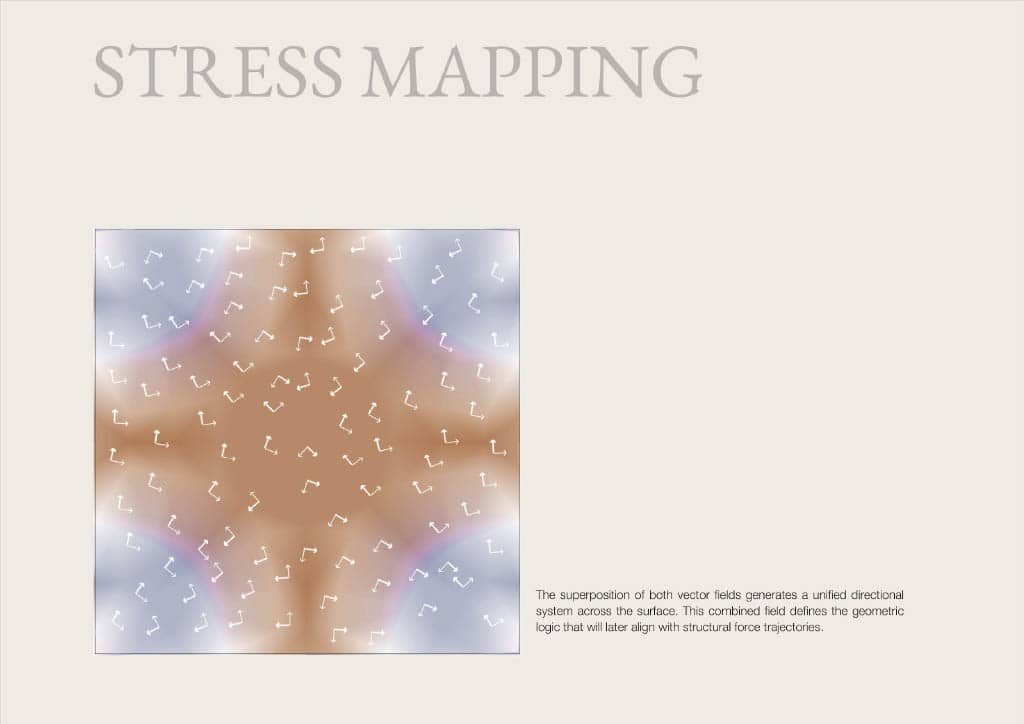
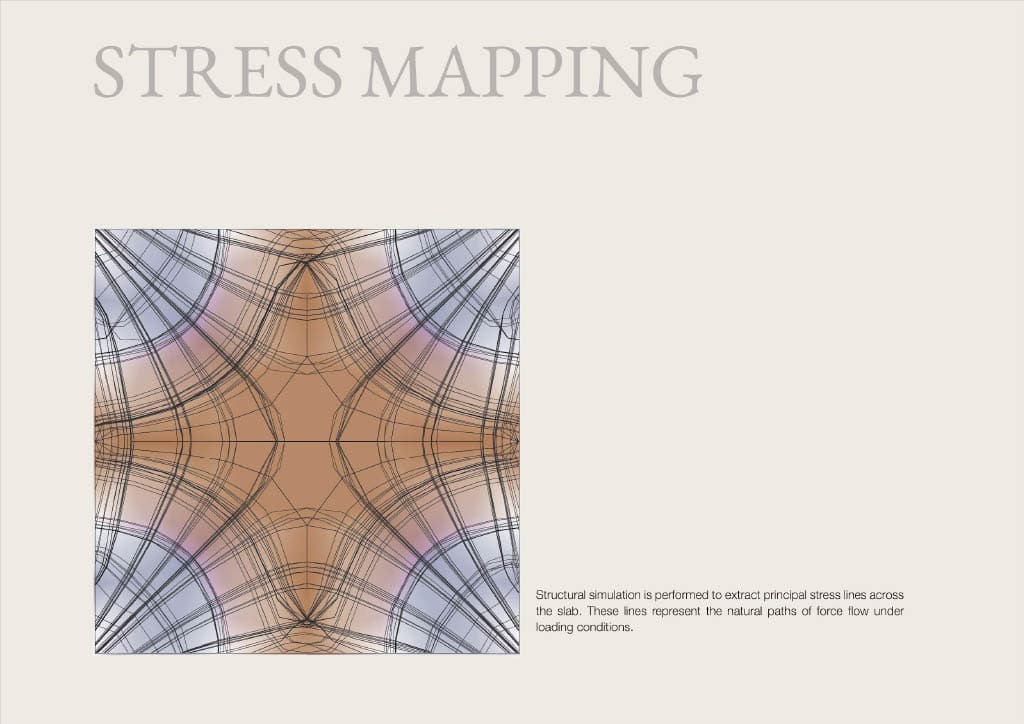
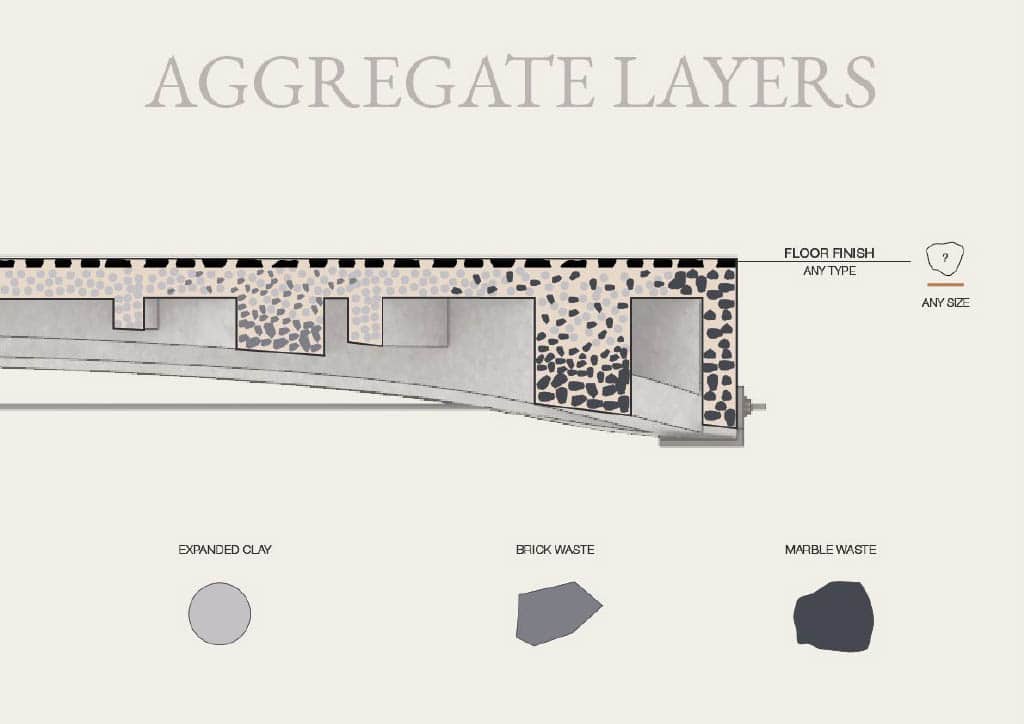
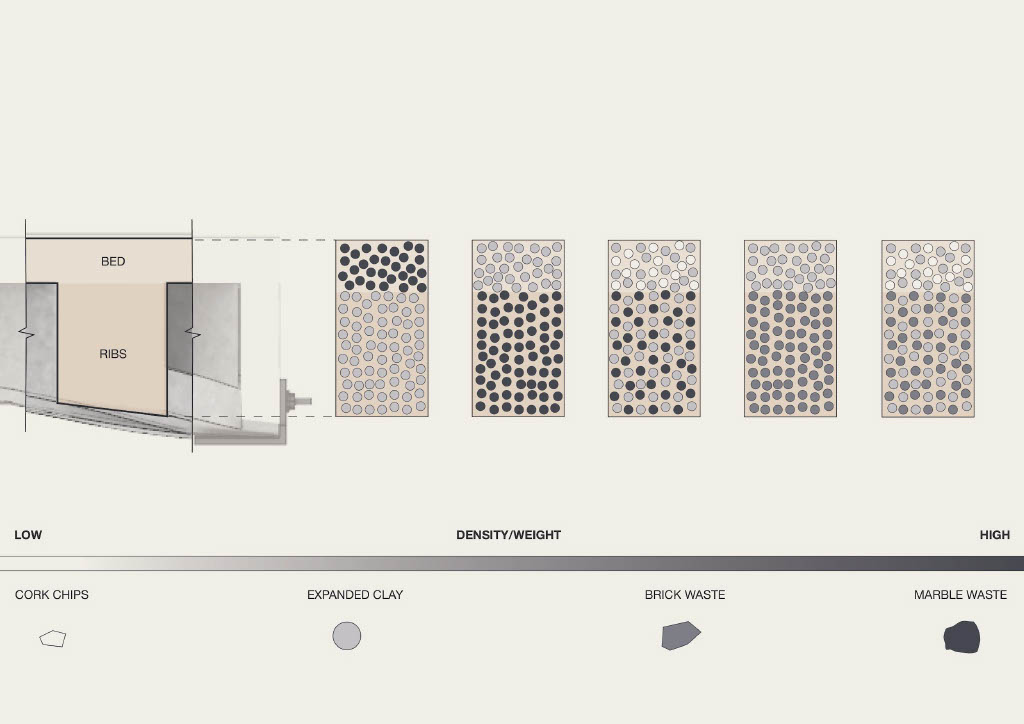
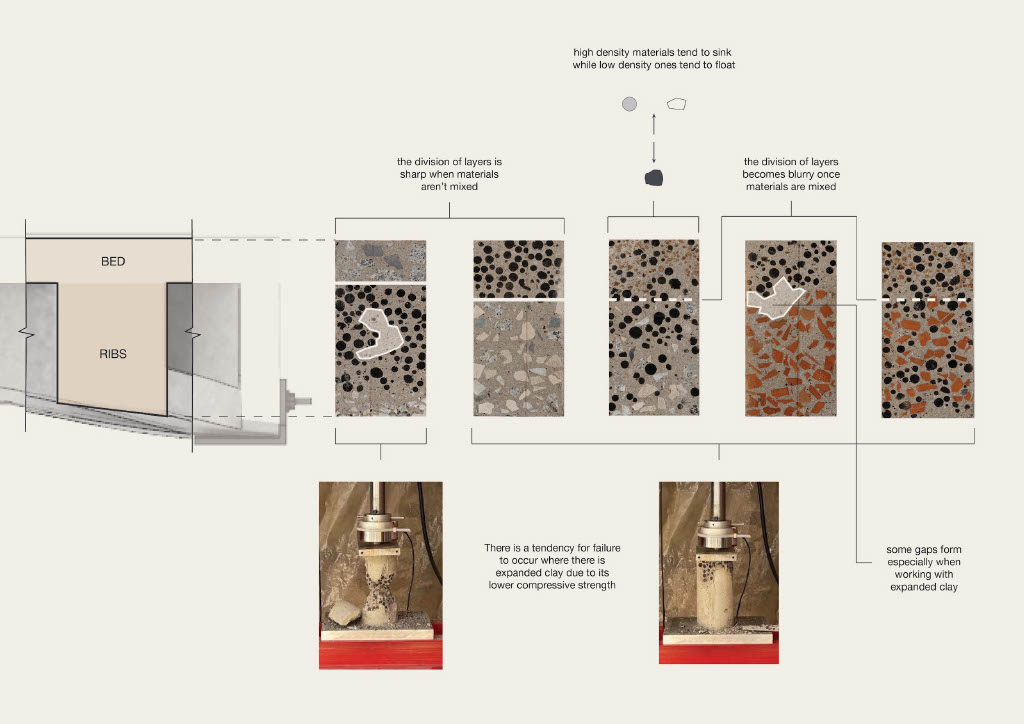
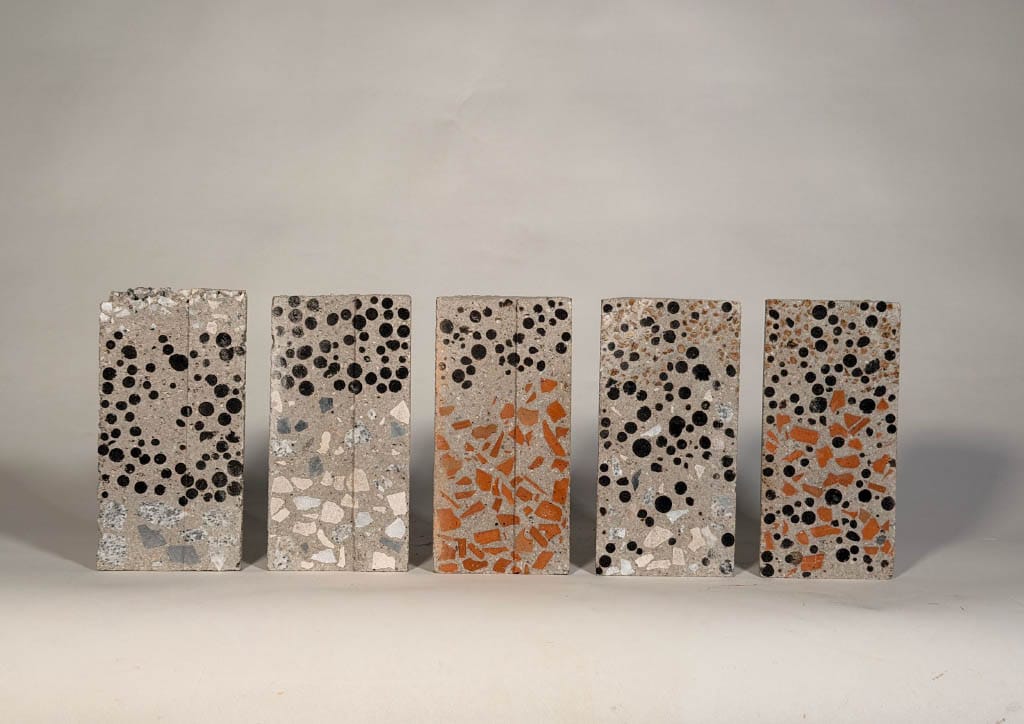
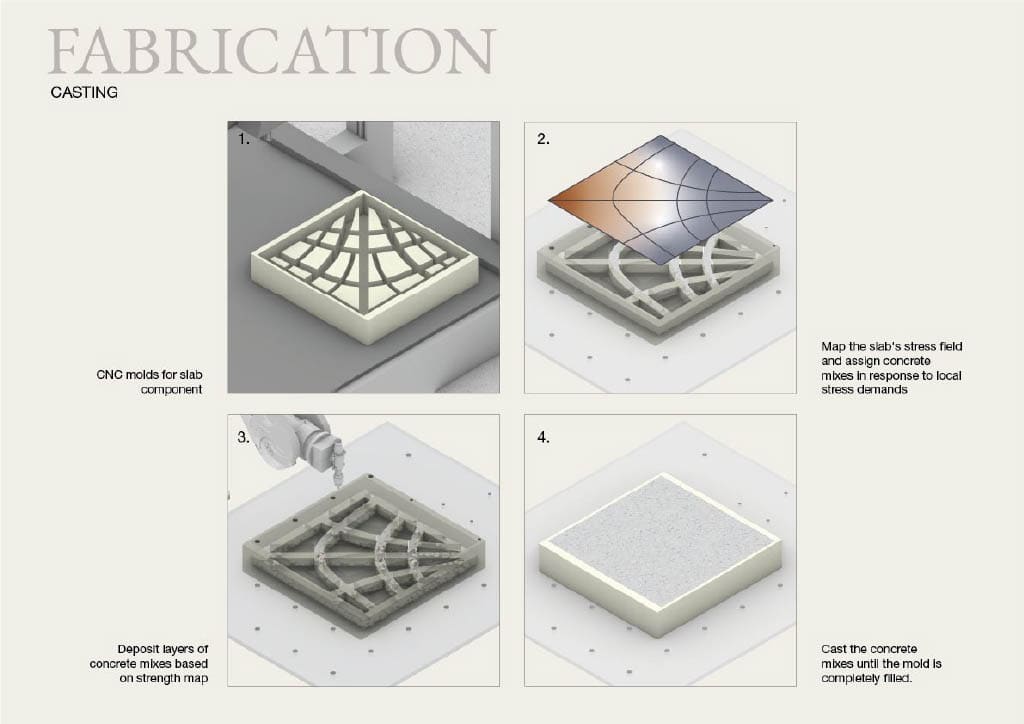
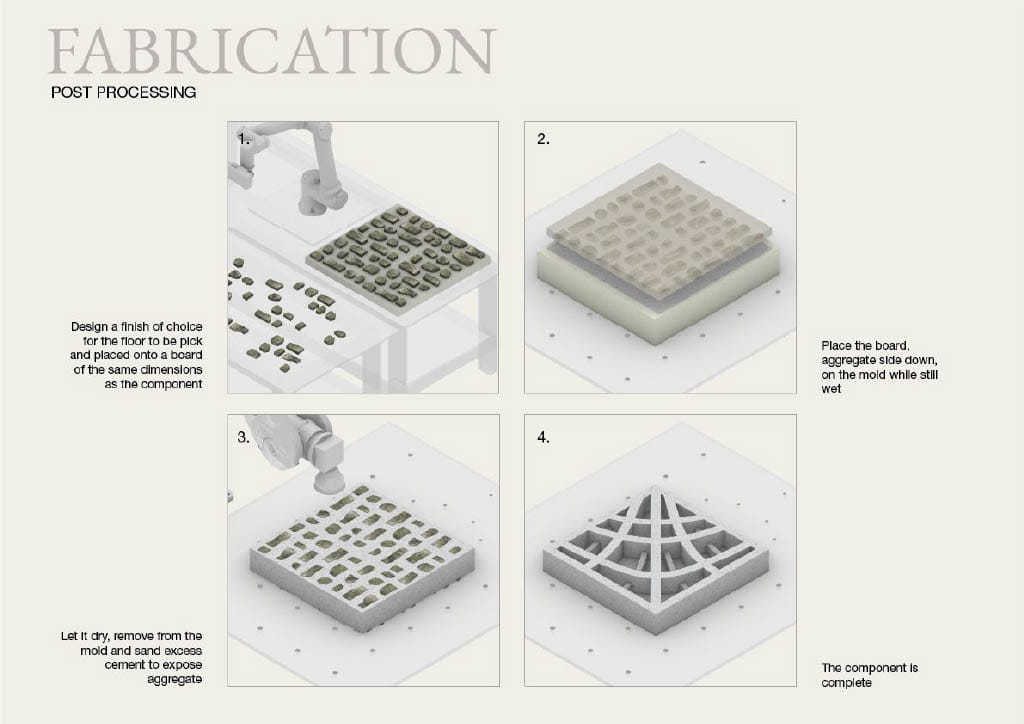
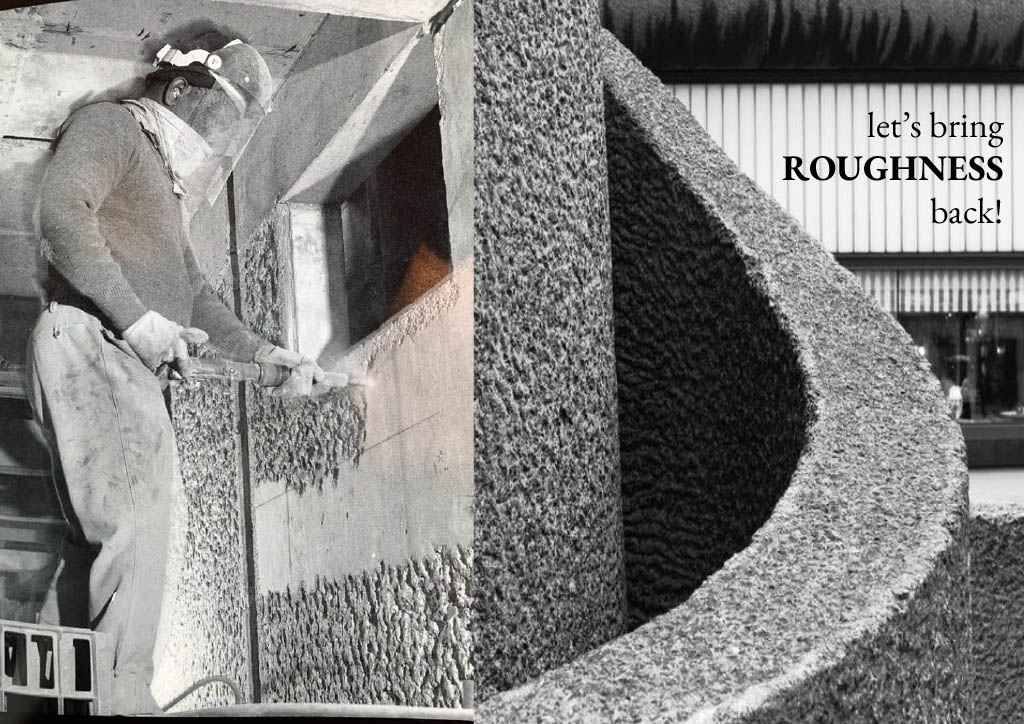
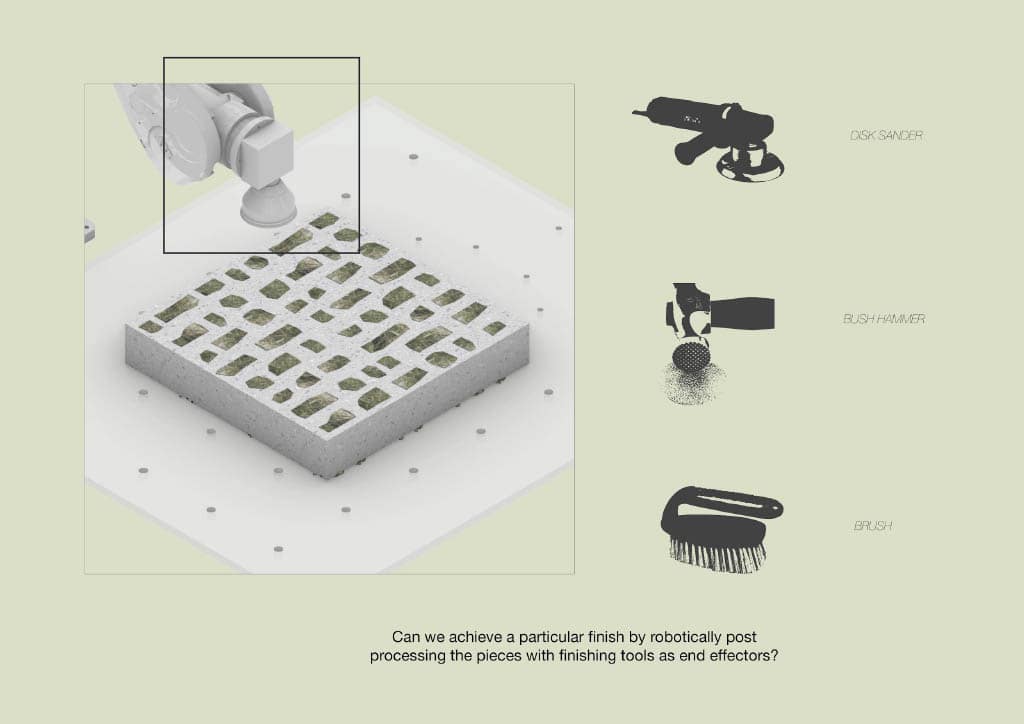
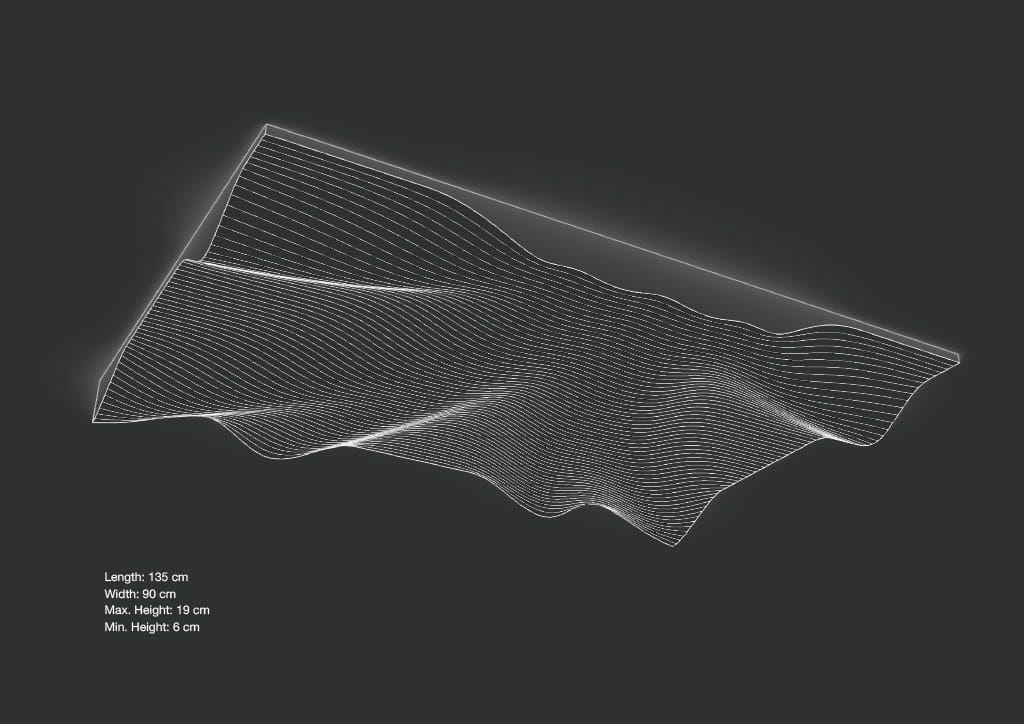
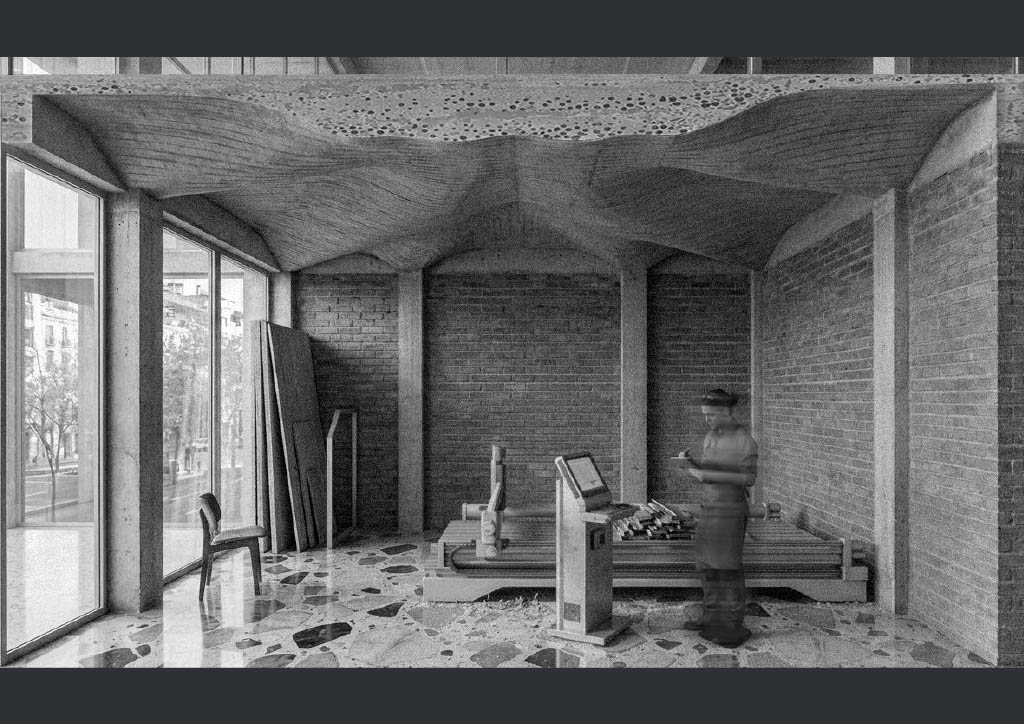
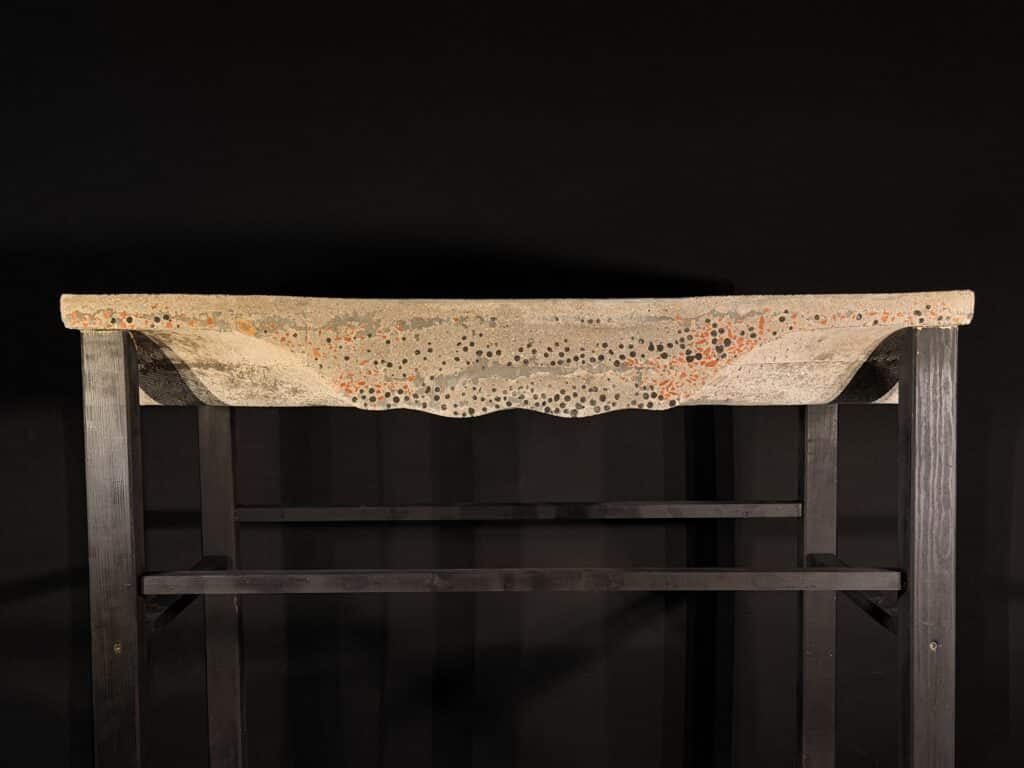
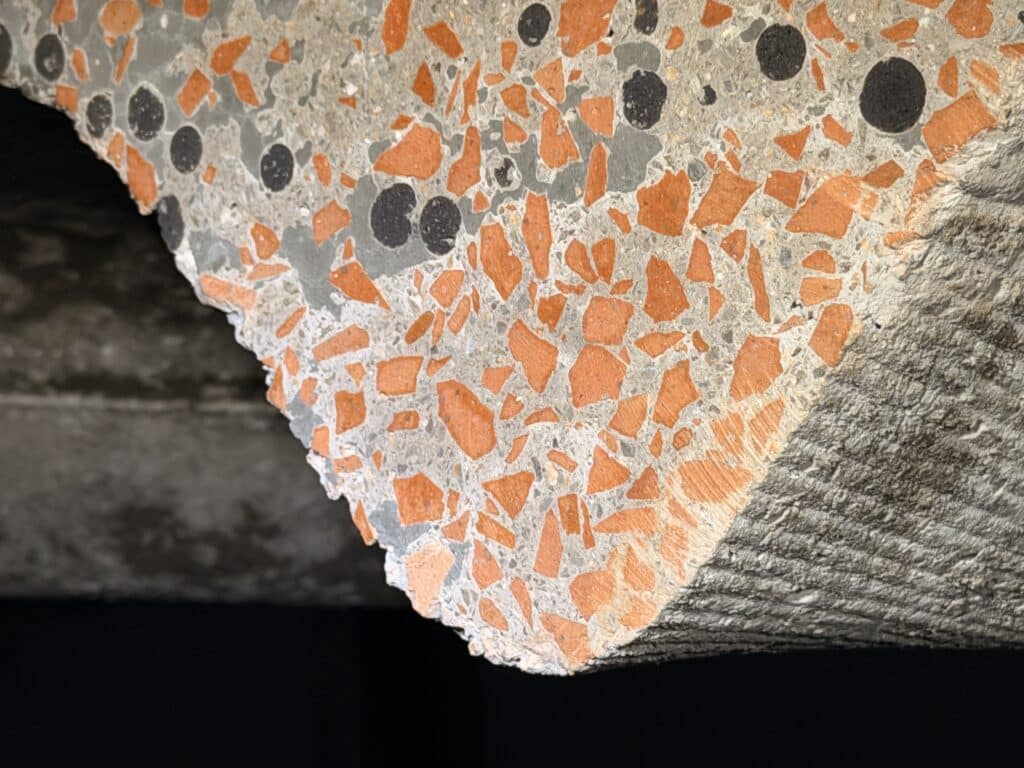
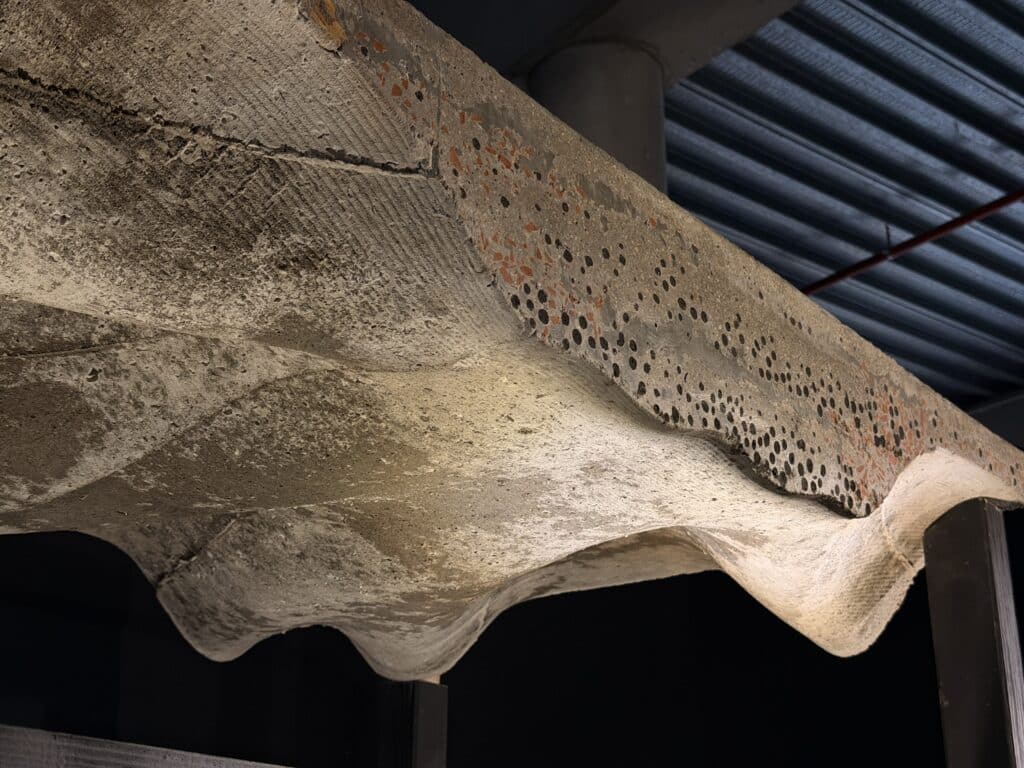
The hypothesis is that when material transitions of waste aggregates are controlled in relation to stress-line geometry, structural efficiency and surface expression are integrated within a single system rather than treated as separate layers. The research contribution lies in achieving a unique aesthetic language in elements suitable for structural performing standards. It will validate the hypothesis through the development of a large-scale prototype of a component-based prefabricated slab element. The prototype investigates the optimization of geometry through ribbed stress lines to minimize material use and reduce overall mass, with direct impact on the building’s embodied carbon. Each component reads as a monolithic element, yet explores controlled material distribution using cement mortar combined with waste aggregates of varying properties, with selection calibrated to the functional requirements of each layer. To physically execute this controlled material distribution, the research integrates advanced digital fabrication techniques. The final phase involves specific post-processing treatments, essential for exposing the customized aggregates and achieving both the final aesthetic expression and the necessary functional surface properties.