
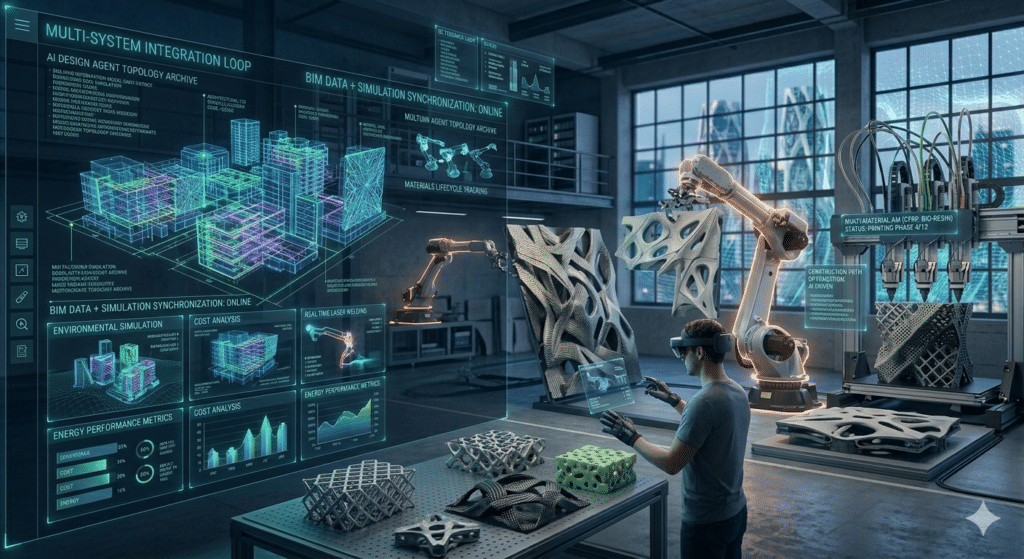
(BIM) is driving a major shift toward automated design and fabrication by providing precise, data-rich digital models that machines can directly interpret. Automated systems use BIM data to generate toolpaths, robotic motions, and fabrication instructions with minimal human input. This integration accelerates prefabrication, improves accuracy, reduces waste, and supports modular construction. As automation grows, BIM becomes the central platform linking digital design to efficient, high-quality physical production
1.1.TOPIC:
The construction industry faces persistent challenges including low productivity, high material waste, labor shortages, and frequent design‑to‑site inconsistencies. Traditional manual fabrication methods struggle to keep pace with increasing project complexity and demand for precision. Without integrated digital workflows, errors multiply between design and production. These limitations highlight the need for smarter, automated systems that connect digital models directly to fabrication processes.
2.Thesis
This study argues that integrating Building Information Modeling (BIM) with automated design and fabrication technologies creates a transformative digital workflow that enhances accuracy, efficiency, and coordination across construction phases. By linking intelligent BIM models to CNC machines, robotics, and prefabrication systems, the industry can reduce errors, accelerate production, and achieve higher‑quality outcomes. BIM becomes the central driver of automation‑enabled construction innovation.
3.Research Aim:
The aim of this research is to investigate how BIM can effectively support and enhance automated design‑to‑fabrication workflows in modern construction. It seeks to analyze digital integration methods, evaluate their impact on productivity and quality, and identify best practices for implementing automation within BIM‑based environments. Ultimately, the study aims to demonstrate how BIM‑driven automation can reshape construction efficiency and project delivery
Interview With Expert
Rudy Riachy is an architect and computational designer ,currently serving as Head of Computational Design at Ramboll. Middle east , He specializes in parametric and data‑driven design, applying advanced digital methods to architecture, engineering, and sustainability. He holds a Master’s in Parametric Design from UPC and frequently speaks on computational innovation.

QUESTIONS TOPICS
How has your professional or academic background influenced the way you apply Beam with an automated design and fabrication workflows?
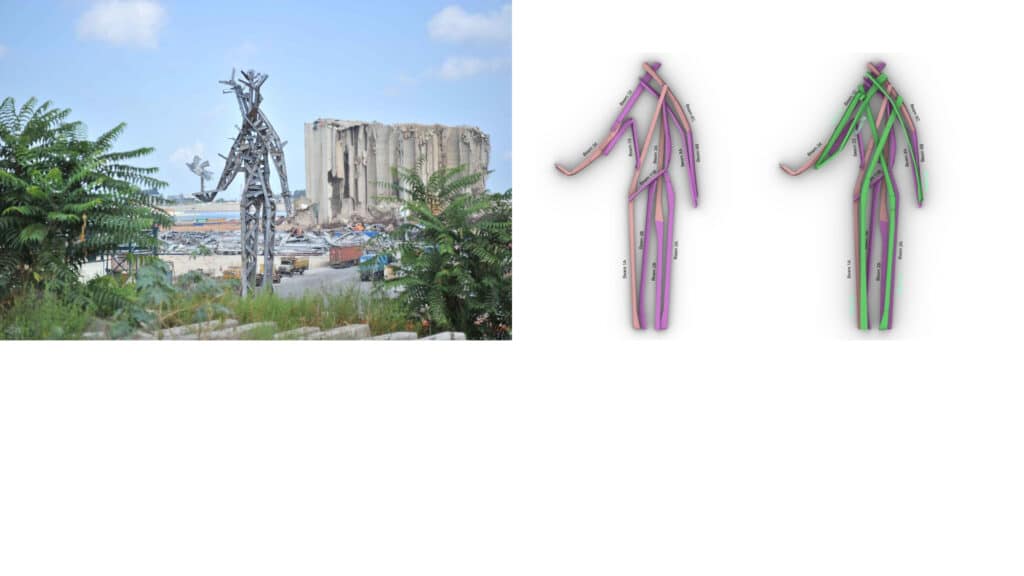
I come from an architectural background, and over the past decade my experience has expanded across architecture, engineering, fabrication, and art, particularly in sculptural work. Early in my career, I worked closely on projects with Nadim Karam, which exposed me to the realities of turning complex forms into buildable elements. This naturally pushed me to think about geometry not just as design, but as something that needs to be rationalized , fabricated, transported, and assembled. Later, in my role within an engineering consultancy environment at Ramboll, my exposure expanded into structural, MEP, sustainability, façade, and multidisciplinary coordination. This strengthened the engineering side of my experience, where design decisions are constantly evaluated against performance, coordination, cost, and environmental impact. Alongside practice, teaching digital fabrication at a master’s level reinforced this way of thinking. It allowed me to structure and communicate the full design-to-build process, from early concept all the way to fabrication and construction sequencing. So when it comes to BIM, I approach it as the central layer that connects all of this together. It’s not just a model, but a system that embeds information about materials, performance, coordination, and carbon impact directly into the design process. This allows workflows to move beyond geometry into informed decision-making, where design, analysis, and fabrication are all aligned from early stages. BIM becomes the foundation for automating not just drawings, but logic, data, and outcomes across the full lifecycle of a project.
how would you define BIM and why it is so central to automation and fabrication and construction?
BIM is often misunderstood as a tool, but it’s actually a structured, data-rich model that gives meaning to geometry. It’s not about Autodesk Revit or any specific platform. It’s about embedding information such as materials, performance, cost, and relationships into the model.That’s what makes it central to automation and fabrication. Once your geometry carries data, it becomes actionable. You can automate quantities, link elements to fabrication processes, simulate construction sequencing, and even track components as part of a digital twin. In practice, combining BIM with scripting and computational workflows allows you to move from static models to dynamic systems. You can test buildability, evaluate carbon and cost implications, and iterate quickly with confidence. What used to take weeks of manual coordination can now be done in a controlled and repeatable way, with significantly fewer errors.So BIM becomes the backbone that connects design, analysis, fabrication, and construction into one continuous workflow.
How do current software’s limitations impact the effectiveness and scalability of the design automation from your perspective?
Software always has limitations, and you feel it very quickly when working on complex problems. There are situations where something that is conceptually simple can become extremely time-consuming because the tool was never designed to handle that level of logic or scale. For example, Rhinoceros 3D without Grasshopper can handle geometry well, but struggles with repetition, variation, and parametric control. Even Grasshopper, as powerful as it is, has its own boundaries when you start dealing with advanced simulations, large datasets, or real-time feedback. This is where computational thinking becomes essential. You start extending tools through scripting, custom components, or plugins. The role shifts from just using software to shaping it around your problem. At the same time, most tools are built based on past industry needs. The challenges we are dealing with today, whether it’s complex geometries, performance-driven design, or integrated analysis, require a different level of flexibility. So the limitation is not just in the software, but in how far you’re able to push it. The more you understand computation, the more you can break those boundaries and build scalable, efficient workflows instead of being constrained by default tools.
what advice would you offer to students or emerging professionals who want to build a career in beam-driven automation and digital fabrication from your perspective?
The biggest mistake I see is people trying to specialize too early without understanding the full picture. Digital fabrication sits at the intersection of three main areas: design, engineering, and computation. You need enough exposure to all three to make informed decisions. Design gives you intent and spatial thinking. Engineering grounds your ideas in reality through materials, forces, and constraints. Computation allows you to scale, automate, and explore possibilities efficiently. My advice is to start broad. Experiment with different materials, tools, and processes. Try 3D printing, CNC, robotic fabrication, even manual making. This builds intuition. Then, at the same time, invest in coding, scripting, and increasingly AI. These are not optional anymore. They are what allow you to remove software limitations, automate repetitive workflows, and create systems instead of one-off solutions. Over time, you can specialize based on what excites you most. But the people who stand out in this field are the ones who can connect design thinking with technical execution and computational logic. That’s where real impact happens.
