Identify and analyse digital tools used in architectural, engineering and construction praxis related to smart constructions and BIM. Students will conduct a podcast interview as a relevant research method with experts in BIM Tools.


Syllabus

BIM & Smart Constructions (BIMSC) THEORY
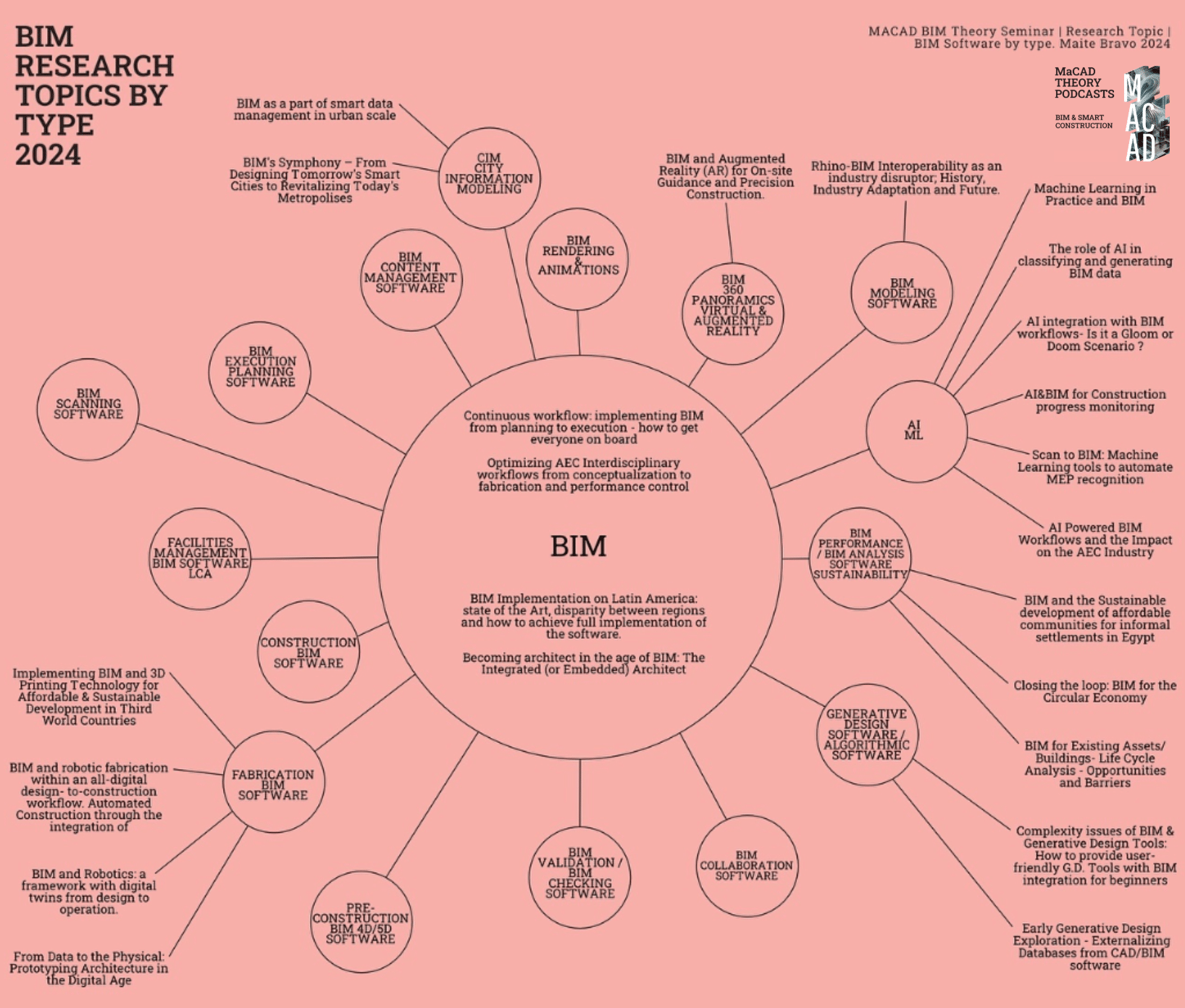
The fast immersion of Advanced Computation Applications and smart constructions into architectural praxis are profoundly transforming the way architecture is conceived, designed, developed, constructed, and inhabited. These developments are not only challenging traditional theoretical frameworks but also revealing the need to formulate and construct novel concepts and principles. This seminar proposes to inquire about this emerging paradigm.

The first edition of this course will inquire into the notion of tools in current architectural praxis from an operational theory perspective. The class will investigate the famous statement by Cedric Price “If technology is the answer, then what is the question? Starting by examining historical developments of fundamental representational tools for architecture, students will investigate recent developments with an emphasis on some aspects related to smart construction and Building Information Modeling | BIM and inquire about their origins, aims, applications, and future projections.

Using a dynamic medium in the format of interviews delivered as audio “podcasts”, students will feature experts in a topic, formulate questions and elaborate theoretical concepts and principles to support their studio proposals. Finally, students will speculate about the impact of these tools and formulate a novel theoretical framework from a critical perspective for the architectural and construction disciplines of the XXI Century.

Learning Objectives

The course aims to offer the following learning objectives:

  • Identify, select, and analyse digital tools used in architectural, engineering and construction praxis related to smart constructions and BIM.
  • Review theoretical and practical precedents, as well as state-of-the-art for smart constructions and BIM.
  • Develop theoretical arguments related to BIM and Smart Constructions to support the student’s studio projects.
  • Conduct research on a specific topic by following a scientific methodology that includes problem formulation, questions, and hypothesis. 
  • Formulate an interview for a guest expert with a clear script that includes an introduction, questions, conclusions, and links.
  • Conduct a podcast interview as a relevant research method for qualitative research techniques involving individual interviews with experts in BIM Tools.
  • Publish podcasts as a valuable skill to communicate, organize, and deliver knowledge to a wider audience.


Faculty


Faculty Assistants


Projects from this course

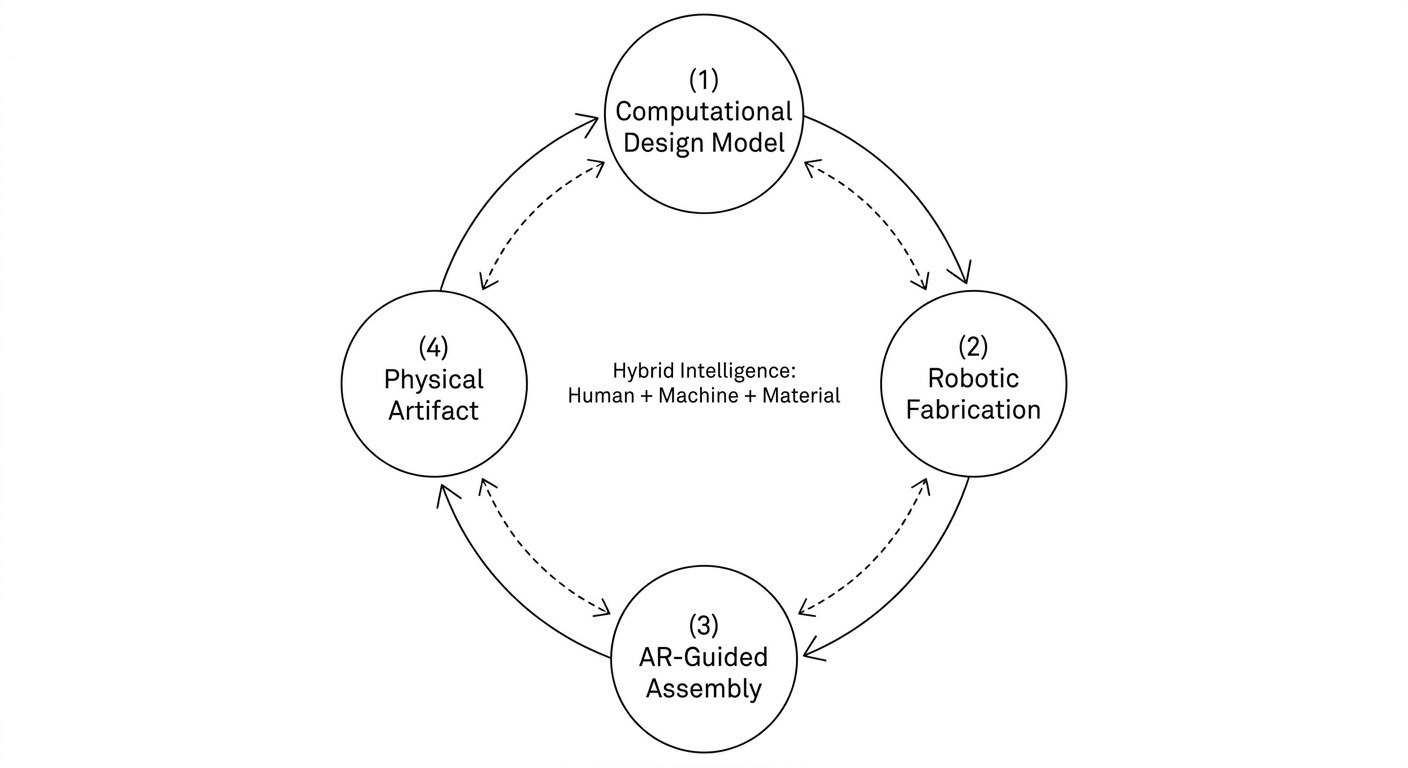
Augmented Robotic Production Systems for Adaptive and Resilient Architecture

Abstract Construction is responsible for a substantial share of global material waste and carbon emissions, and one of the reasons is structural: design, fabrication, and assembly are still treated as separate phases with fragmented handoffs between them. This podcast episode explores what changes when those phases are linked into a single, feedback-driven workflow where parametric … Read more

Designing Productive Friction in BIM Collaborative Workflows

How intentional pauses in digital workflows improve accountability, decision-making, and collaboration in BIM practice. There’s a particular kind of confidence that comes with a smooth workflow. Files transfer without errors, models update on schedule, clash reports run automatically, information moves. That feeling is satisfying. It can also be exactly what should make you pause This … Read more

Beyond the Dashboard: Building Information Modelling as Socio-Technical Governance in Smart Cities

Introduction The smart city stands at a conceptual crossroads. On one side, we encounter an optimistic narrative: Building Information Modelling (BIM), digital twins, and integrated urban dashboards promise unprecedented visibility into city systems, enabling data-driven governance, resource optimization, and responsive urban management. On the other side, a more sobering reality: these sophisticated technical infrastructures often … Read more

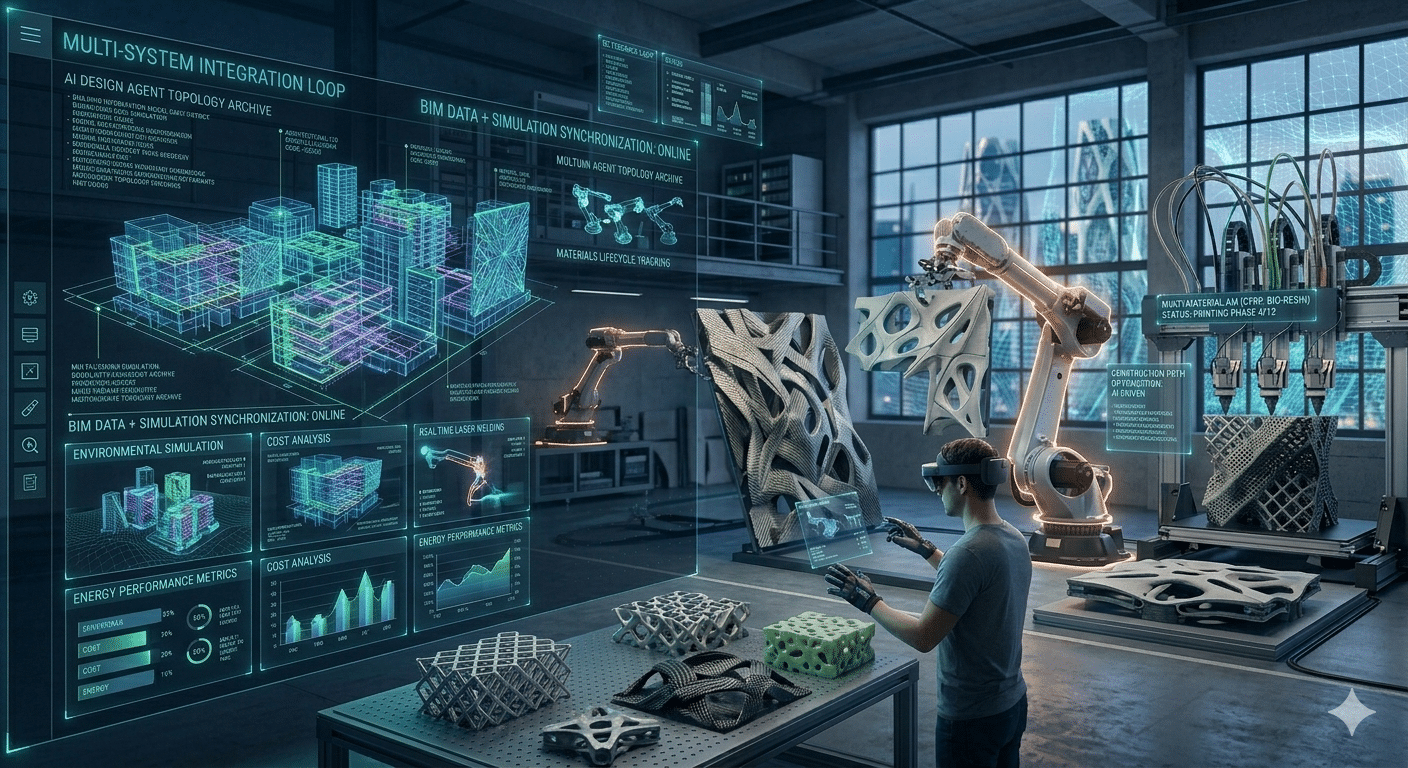
BIM and The Rise of Automated Design Fabrication

BIM and the rise of automated design fabrication

(BIM) is driving a major shift toward automated design and fabrication by providing precise, data-rich digital models that machines can directly interpret. Automated systems use BIM data to generate toolpaths, robotic motions, and fabrication instructions with minimal human input. This integration accelerates prefabrication, improves accuracy, reduces waste, and supports modular construction. As automation grows, BIM … Read more

Digital to Physical: An Interview with Melike Altınışık on Bridging the Geometric Gap

In contemporary architecture, designing a visually stunning, non-standard building envelope is only half the battle. The true test lies in the translation: how do we ensure that the mathematical precision of a parametric model survives the chaotic reality of a construction site? This exact challenge is the driving force behind our ongoing research proposal at … Read more

Data-Driven Parametric Workflows for Environmental Optimization in Architecture: The Development of In-House Tools

Intro In recent years, the AEC industry has begun rethinking traditional linear workflows, where environmental analysis often comes too late to meaningfully influence design.  The development of in-house tools, shows how integrating environmental analysis into parametric, data-driven processes can guide decisions from the outset.  Topic This research investigates how in-house software tools developed by AEC … Read more

Beyond Construction: BIM as a World-Building Tool for Real-Time Game Engines

Abstract This research investigates how Building Information Modeling (BIM) can be leveraged to generate structured and meaningful architectural environments for architectural visualization, video games, and animated films. It explores workflows between BIM tools and real-time game engines, focusing on the transfer and preservation of spatial logic and metadata. The study aims to demonstrate how BIM-based … Read more

BIM in Rhino to faborication world

Expert introduction Milos DimčićCEO &founder of Programming Architecture Milos Dimčić, PhD is an architect, computational designer and software developer specializing in the automation of design and construction workflows in the AEC industry. He has PhD in architecture & structural design from the University of Stuttgart and is guest assistant professor at TU Graz Faculty of … Read more

Parametric Engineering: Collaborate with Structural Data on the Cloud

Topic brief In the AEC industry, building analysis workflows often operate in isolated software environments, causing structural data to lose meaning once it leaves its original authoring tool. This study argues that the value of structural analysis depends not only on computational accuracy, but on the ability of its outputs to remain consistent as they … Read more

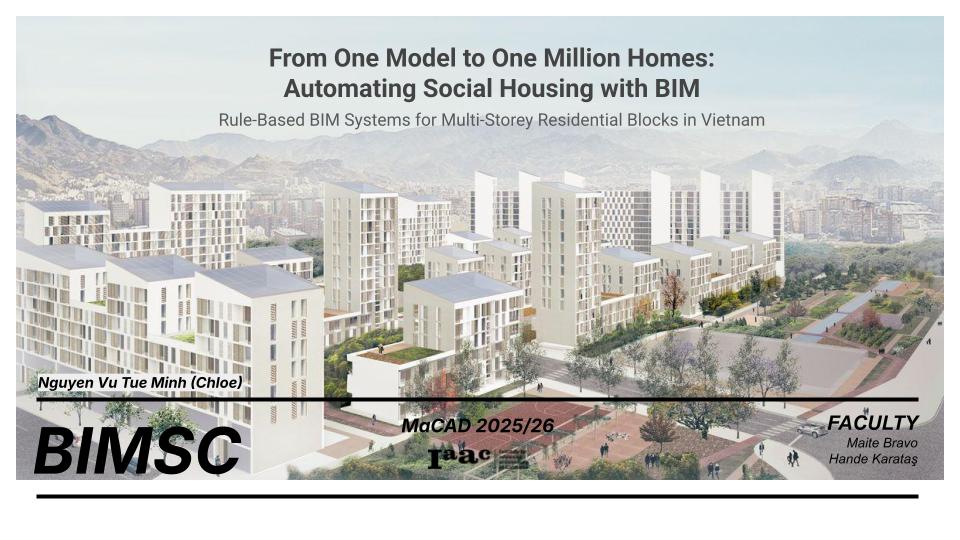
From One Model to One Million Homes: Automating Social Housing with BIM

Rule-Based BIM Systems for Multi-Storey Residential Blocks in Vietnam   Using rule-based BIM master models to automate repetitive social housing design in Vietnam, while addressing real-world challenges of coordination, adoption, and collaboration across large-scale public projects. //CONTEXT Vietnam currently has an ambitious national target to build one million social housing units by 2030. However, progress … Read more

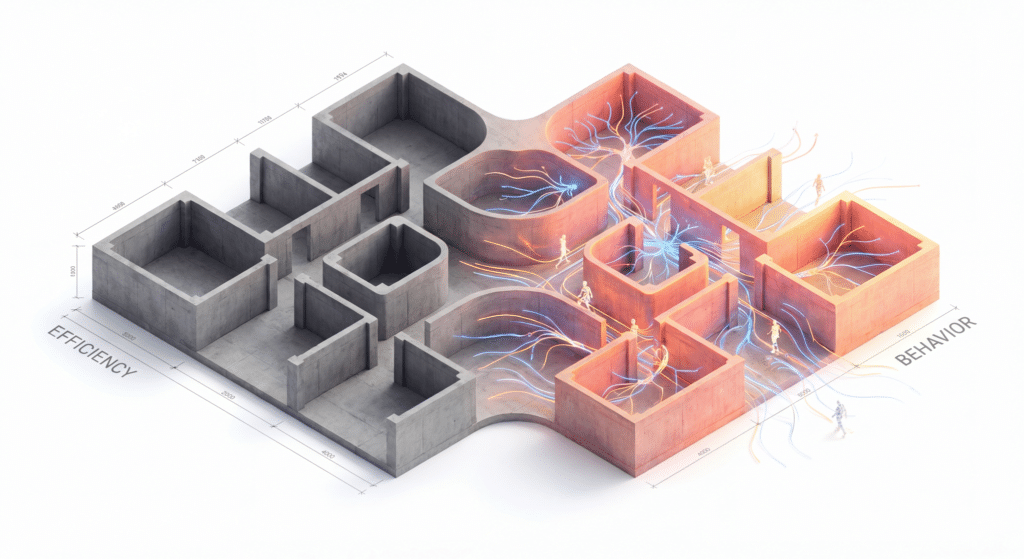
Optimizing For The Mind: Integrating Generative AI and Game Engines into BIM

How architectural neuroimmunology is redefining the relationship between design and human health. The AEC industry optimizes for physical efficiency but neglects the neuro-physiological impact of built environments. This research investigates how Generative AI and Game Engine simulations, integrated into BIM workflows, can enable predictive cognitive performance analysis, transitioning the discipline from Building Information Modeling to … Read more

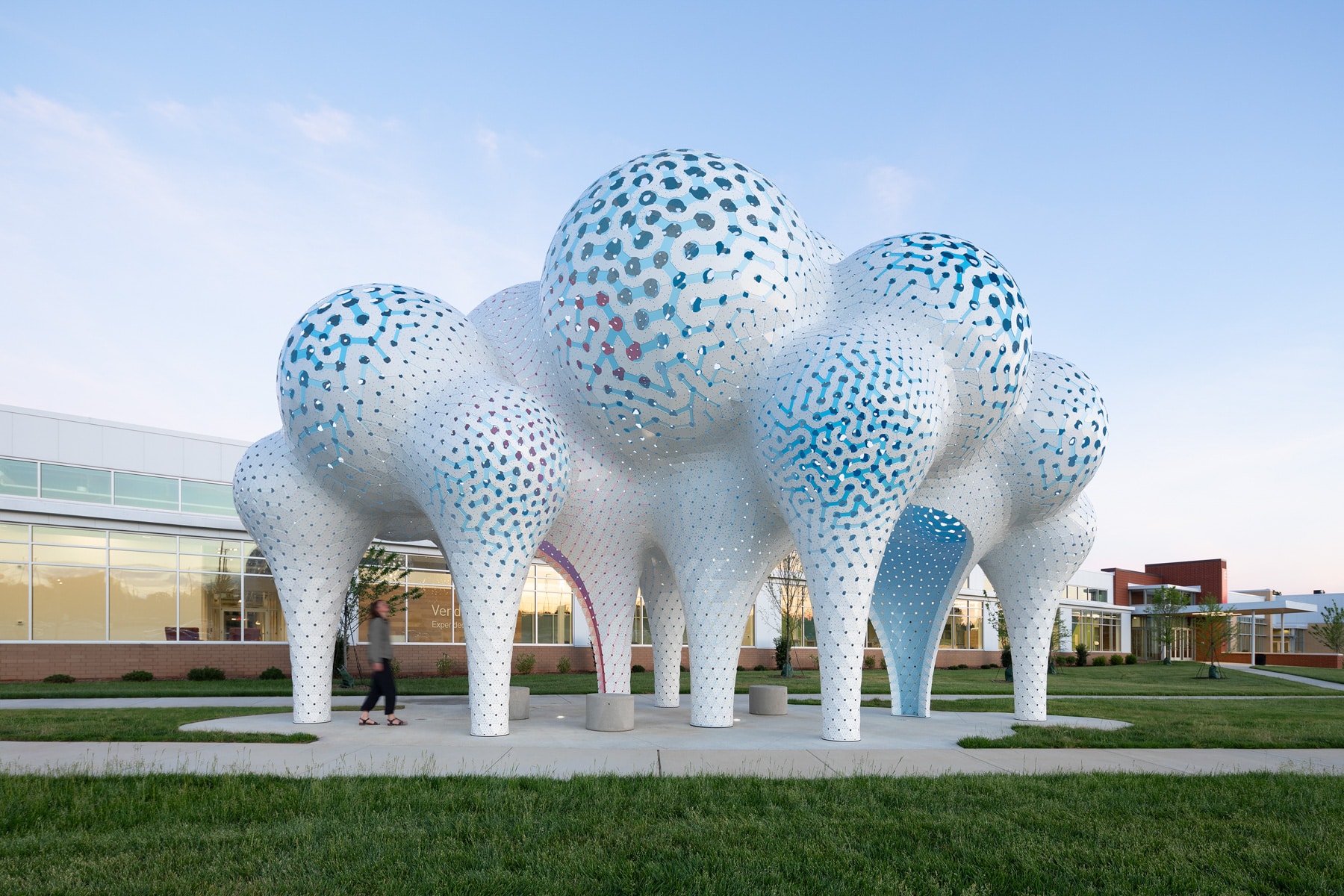
From The Very Many to the Very Least (Podcast)

Abstract In Contemporary Architecture, we are witnessing a shift from standardized building systems towards highly differentiated, data driven and geometrically complex structures. These projects challenge conventional workflows, requiring new methods to manage variation, fabrication logic, and translation of digital models into physical assemblies. Our research investigates how computational design, parametric modelling, and digital fabrication workflows … Read more

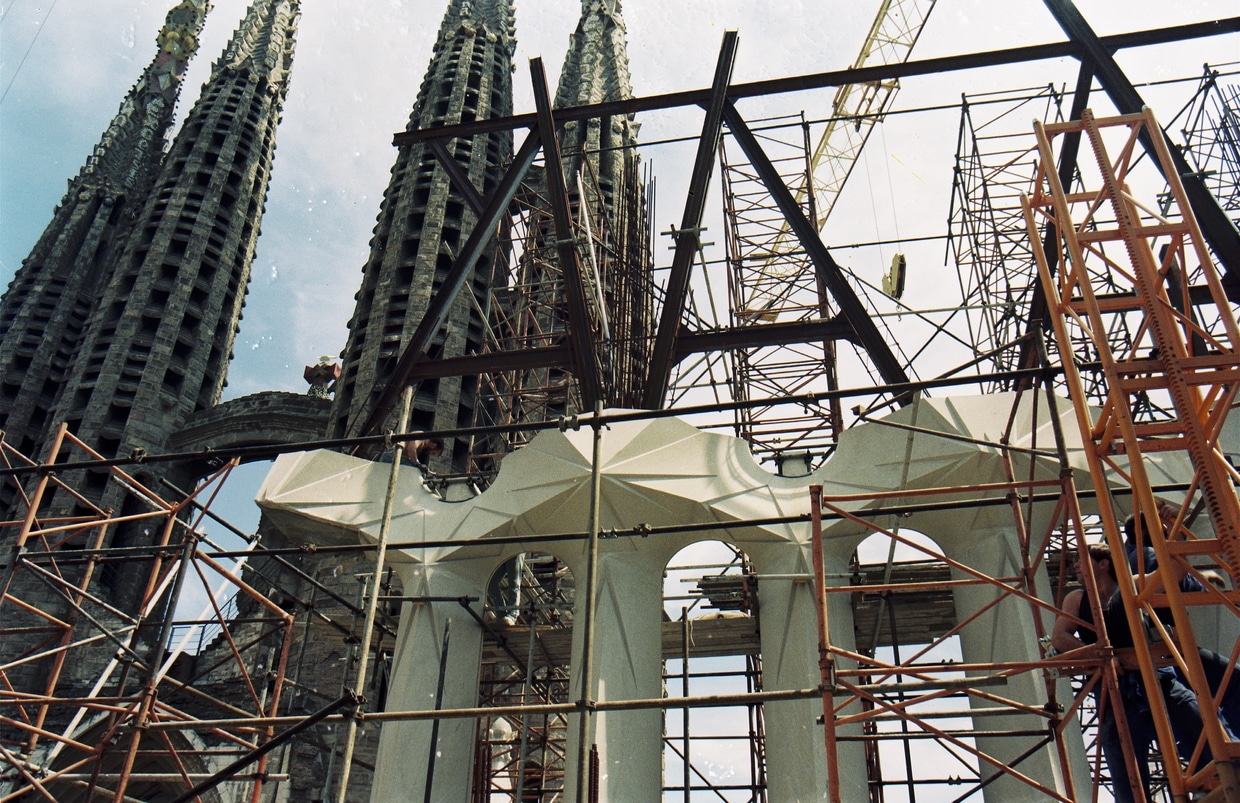
BIM in Ongoing Heritage Construction: The case of the Sagrada Família

Computational Workflows at the Sagrada Família The Sagrada Família in Barcelona is one of the most complex and long-running architectural projects in the world. Begun in 1882 and still under construction today, the basilica sits at the intersection of historical heritage, evolving design intent, and contemporary digital technology. To understand how digital tools support such … Read more

Architectural Creativity in the Age of AI

“Technology is the answer, but what was the question?” Cedric Price, 1966 Data Becoming ART! This research investigates whether AI and BIM enhance architectural creativity or contribute to the standardization of design. It examines whether computational workflows expand the boundaries of architectural expression or gradually replace human intuition with optimized uniformity. The study further explores … Read more

Design Beyond the Project: Reframing Practice Through Scalable Digital Services

A conversation with Jesper Wallgren Introduction In recent years, computational design and BIM workflows have become common tools in architectural practice. However, most of these tools remain confined to individual projects, often developed as internal scripts or one-off automation solutions to solve immediate design problems. While effective in improving efficiency within a project, these tools … Read more

Automated Scan-to-BIM workflows through artificial intelligence: A Conversation with Václav Nežerka

From Point Clouds to Digital Twins: Inside the Cloud2BIM Workflow The Architecture, Engineering, and Construction (AEC) industry is currently undergoing a major technological shift. We are witnessing a definitive transition from manual, labor-intensive site measurements to AI-driven scan-to-BIM workflows. The goal is clear: to unlock the digital potential of existing buildings by creating high-fidelity records … Read more