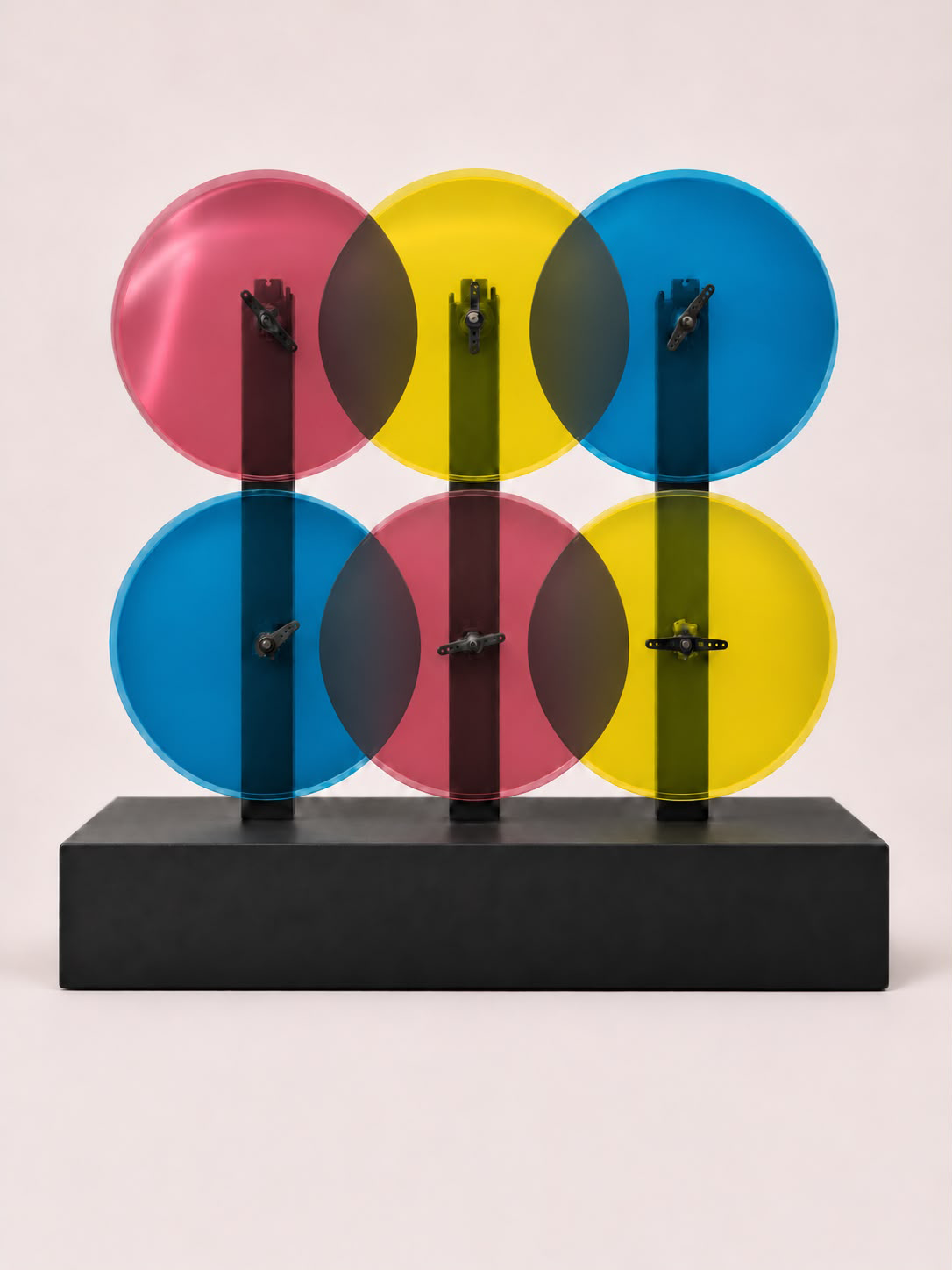
Chromacoustic translates sounds into a visual experience, creating a new and interesting way of experiencing sounds, while also allowing the hearing impaired to experience sounds, noise and music.
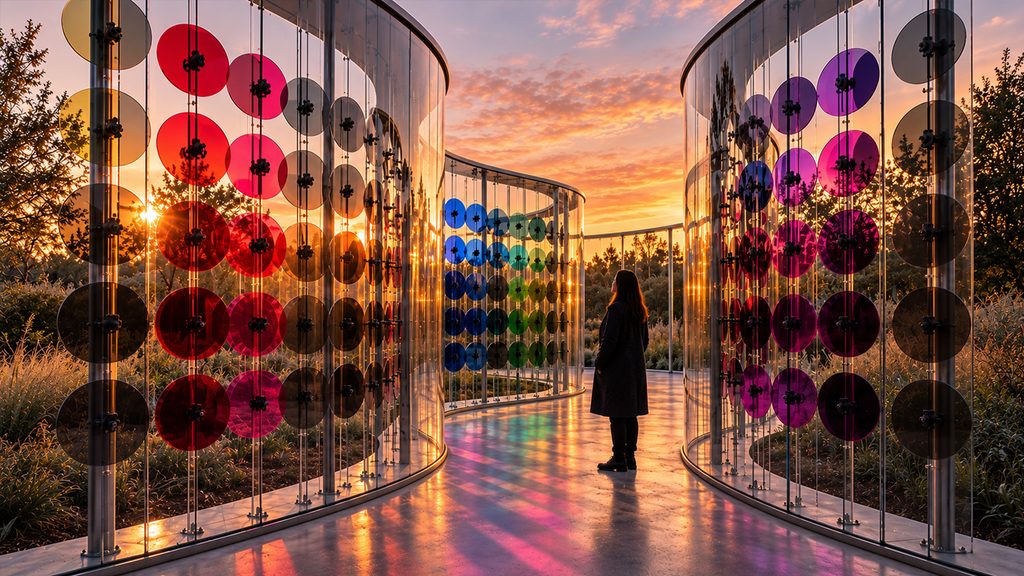
-Conceptual image of sensory experience installation-
THE LOGIC BEHIND
To translate sound into another medium, it must first be differentiated, so that different types of acoustic waves can be depicted in different ways. After that, it can now be translated to a different “language” or medium. Since the objective was to create a Visual Experience, different ways light could be created or manipulated were considered. We decided on the idea of displaying different types of colors depending on the type of sound being detected.
HOW TO MATERIALIZE IT/EXECUTE IT
To detect and process sound, considering the capabilities of the sensors available, we decided upon measuring the intensity of the sound (Volume) and grouping the values intro three ranges; Low, Mid and High.
Converting this different ranges of acoustic signals into something visual required two types of filters, colored and polarizing filters;
- Three colored filters where used to represent the three different intensity values, blue for Low, red for Mid, and yellow for High.
- Polarizing filters served as regulators, allowing more or less light to go through, communicating the quantity of acoustic signals being detected in each range.
THE SENSORS AND ACTUATORS
To detect the sound intensity of the environment, the Grove – Sound sensor with an analog output was used. It’s based on an electret microphone and L358 amplifier.
The Miuzei MF 90 Micro Servo was the actuator driving the movement of the polarizing filters and regulating the quantity of light passing through the colored filters. It allows for 0° to 180° rotation.
SIMULATION OF PROOF OF CONCEPT
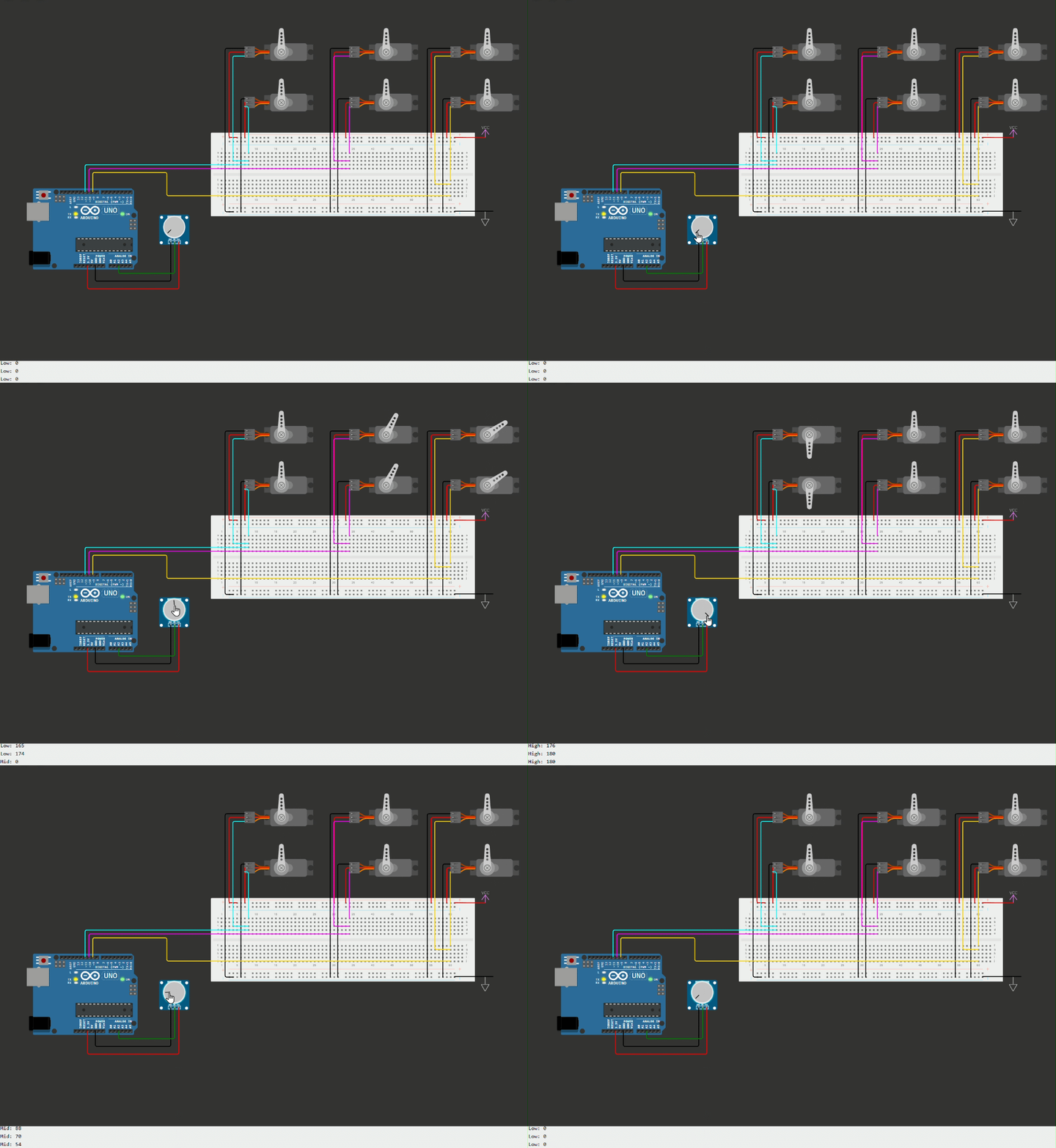
-Animation of virtual simulation of the code and hardware needed for the prototype-
CIRCUIT DIAGRAM
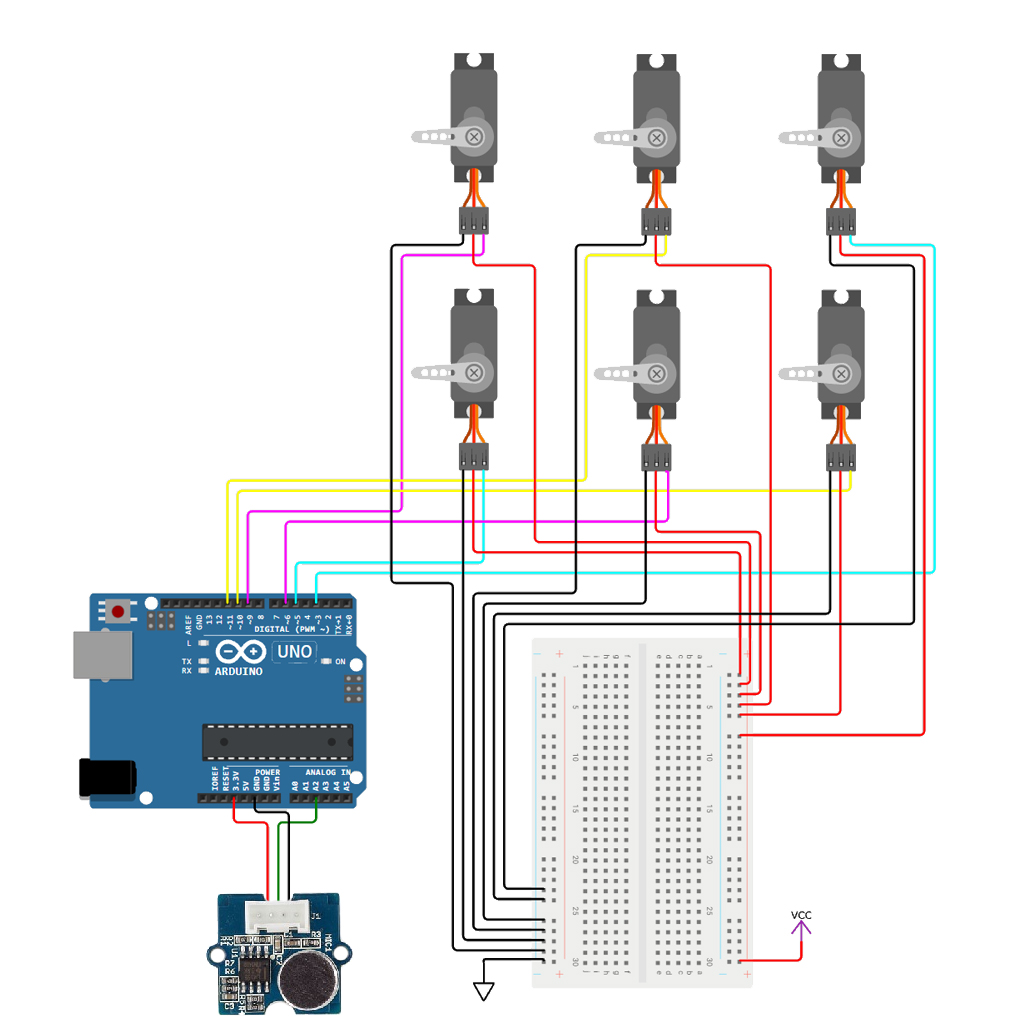
-Final circuit diagram used in the prototype and configuration of the Micro Servos.-
PROJECT CODE
The function of the code can be divided in three main parts:
- Detecting sound intensity.
- Processing the values detected.
- Sending movement signals to the micro servos.
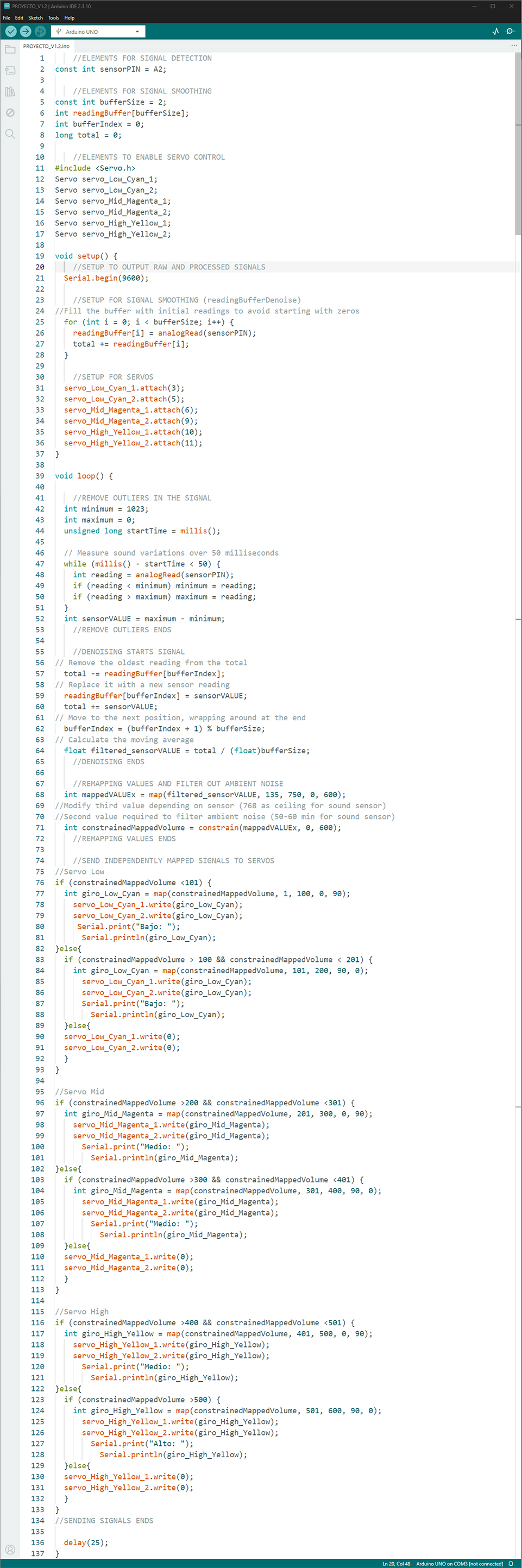
Each part required some considerations for the code to work properly.
The input signal of the sound sensor produced some noise and random “0” values, so the outliers had to be removed and the signal smoothed.
The processed input was then remapped and constrained to ignore ambient sound and to ease the processing for the final step.
The remapped input was then divided into three different ranges with a series of conditions, and remapped again to output a signal appropriate for the micro servos to produce the desired result.
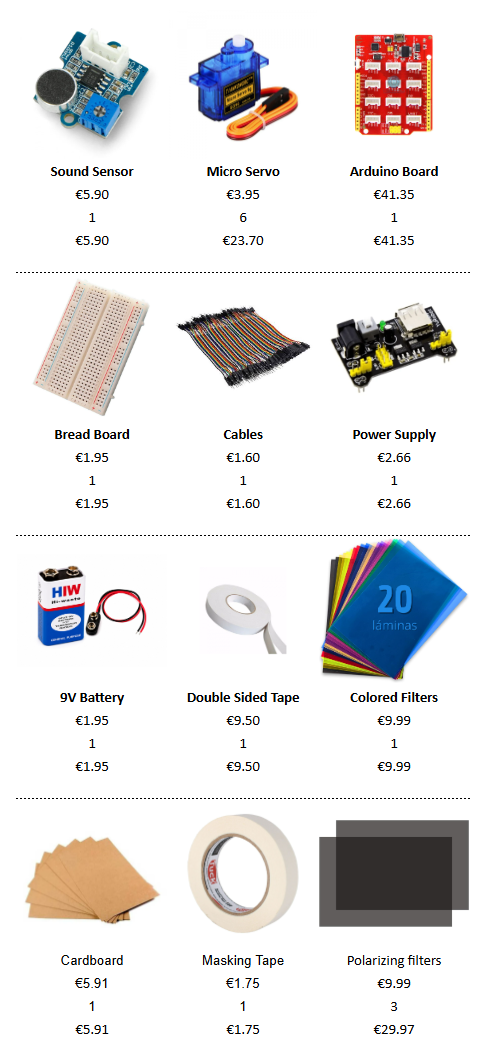
BILL OF MATERIALS
PROTOTYPE