
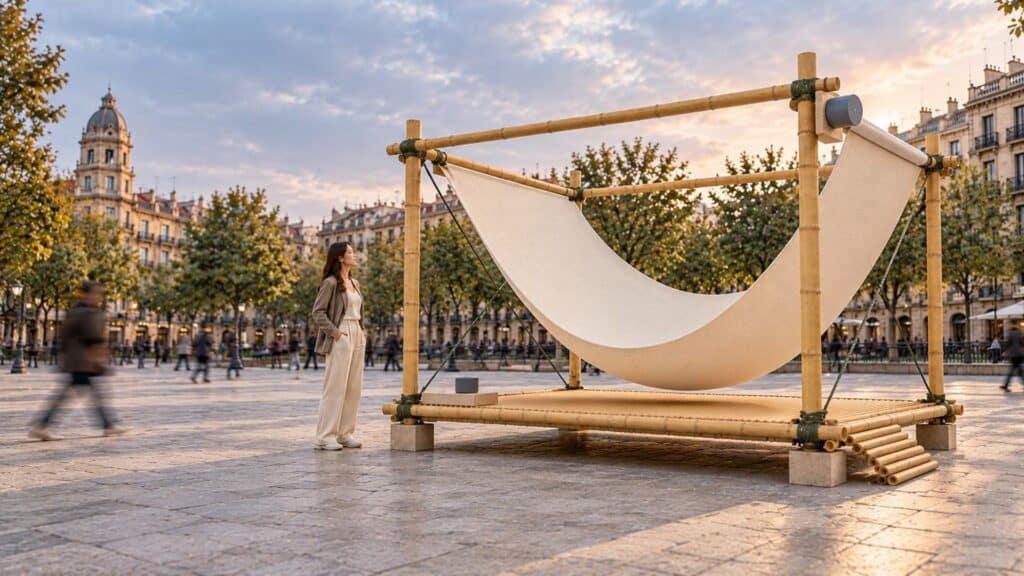
How much can architecture change with very little? Common Threads is a portable bamboo and textile pavilion that answers with one frame, one surface and one motor. Temporary public spaces are usually built for a single use; here, a fabric that responds to light and sound shifts the same structure from an intimate place to rest into a canopy for gathering. Designed to be dismantled, transported and rebuilt, it combines hand-tied rope lashings with digital control.
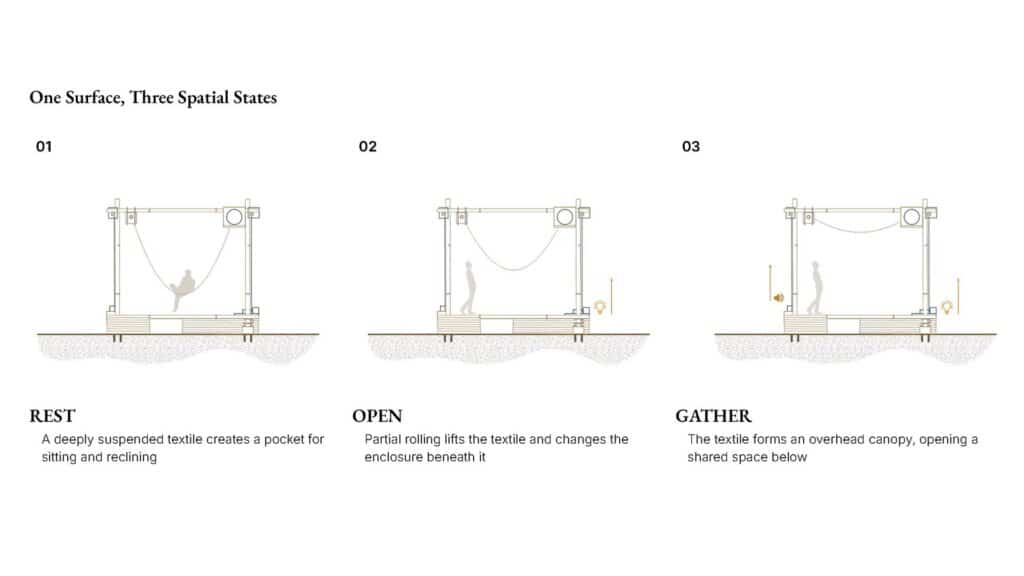
One Surface, Three Spatial States
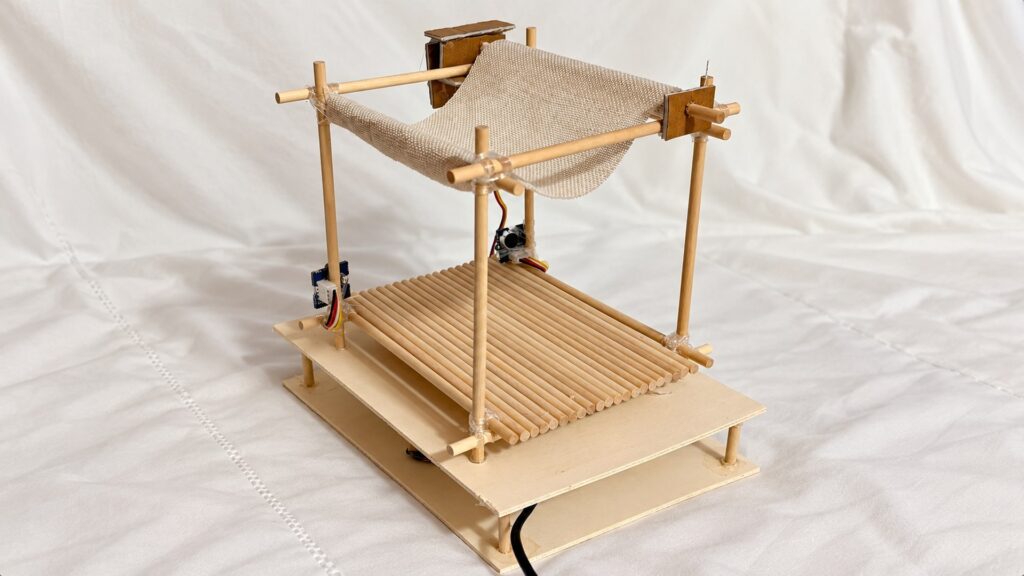
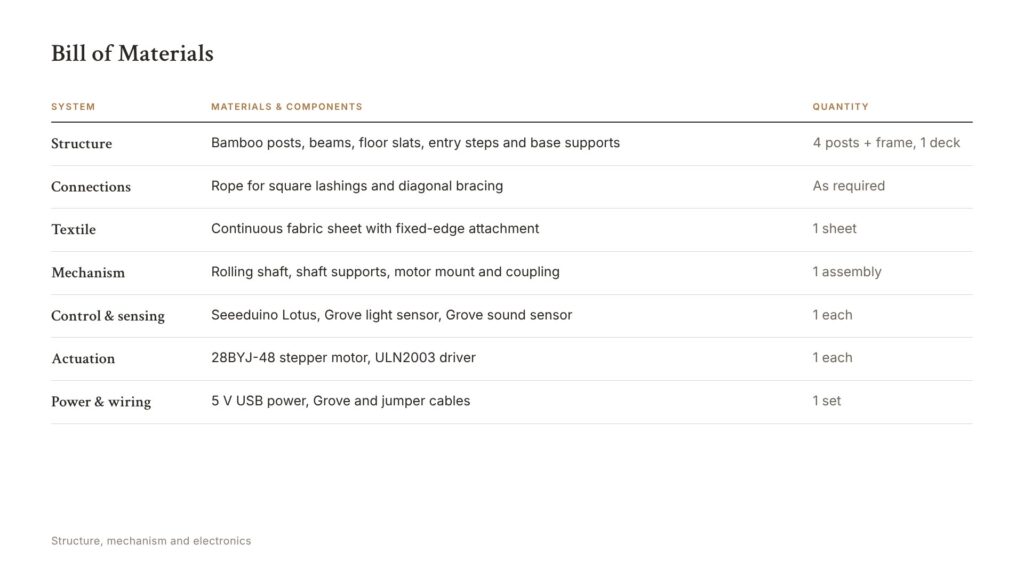
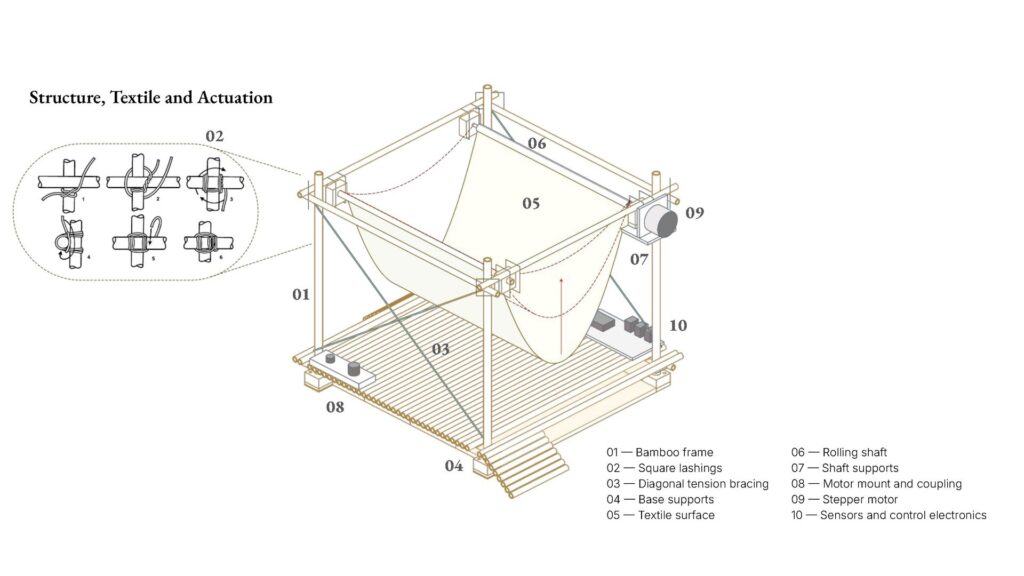
The pavilion is made of a bamboo frame, an elevated bamboo floor and a continuous textile spanning two parallel beams. Square lashings join every member, making the assembly visible in the architecture. Against this fixed frame, the textile is the changing element: its depth sets the relationship between the body and the space around it.
Changing Space Through Rolling
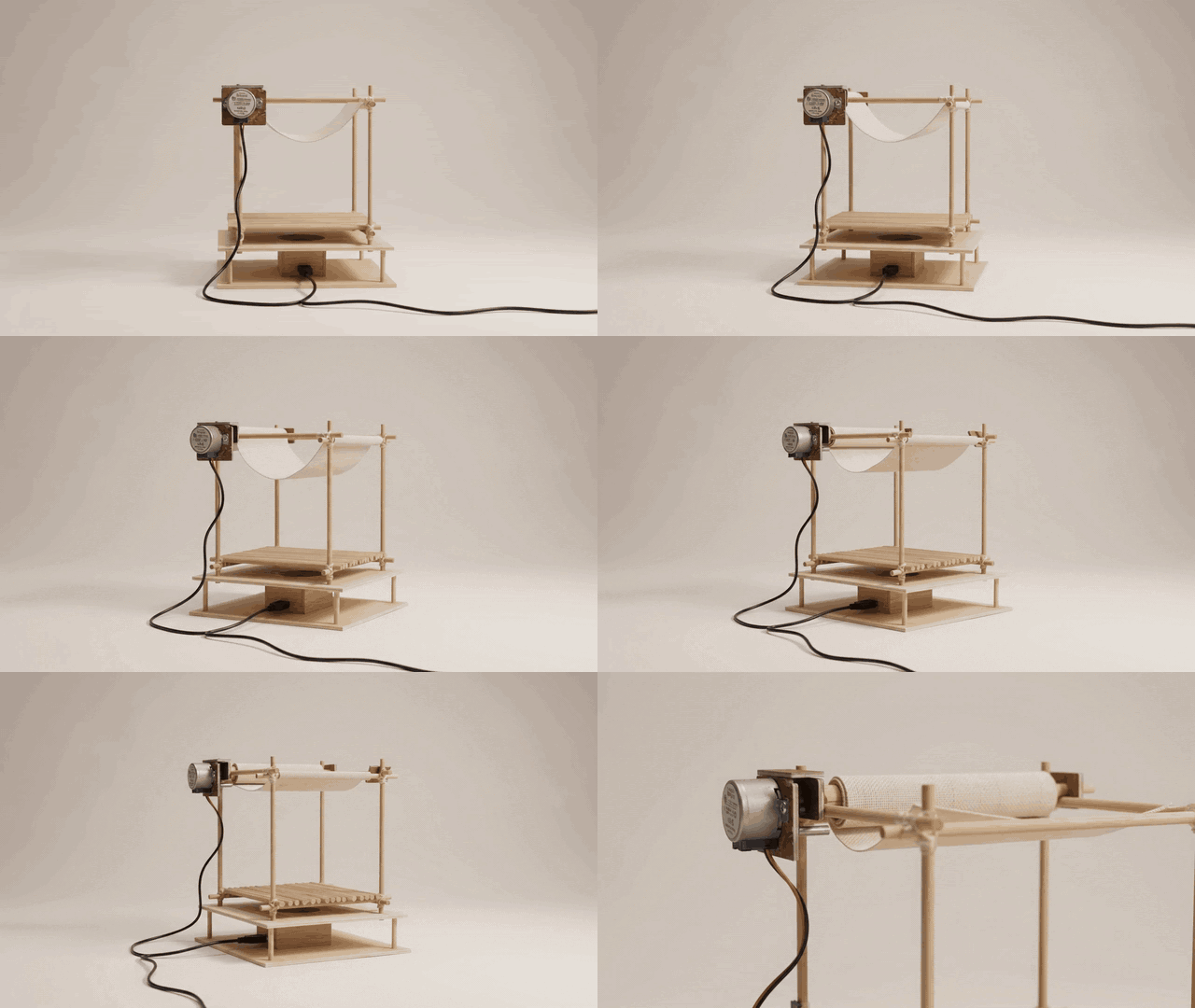
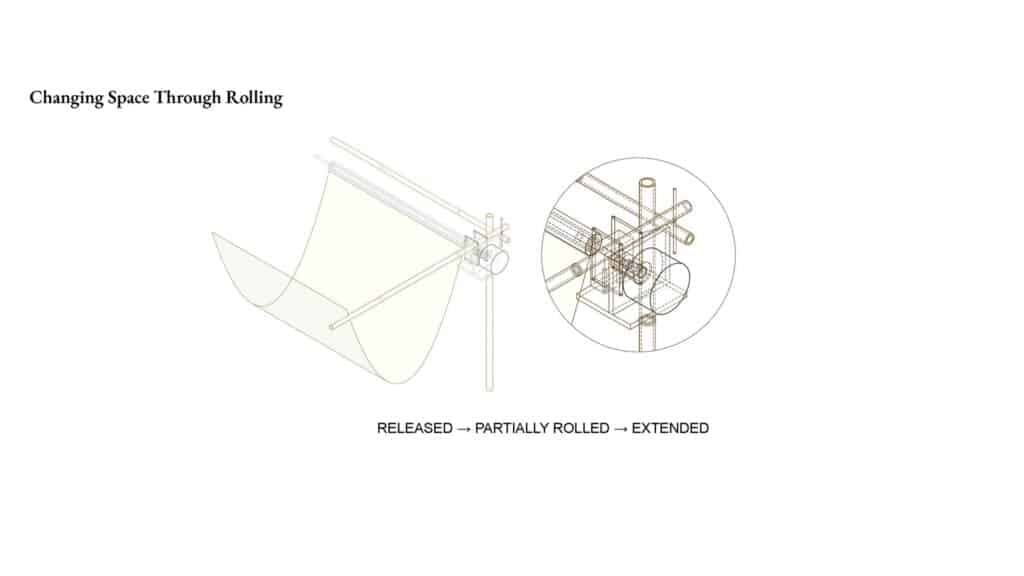
One edge of the fabric is anchored to the frame; the other is fixed to a rolling tube driven by a single stepper motor. Winding the tube shortens the free length of the textile and lifts its curve, while unwinding lets gravity deepen it again. One actuator produces three spatial states.
Sensing and Control Logic
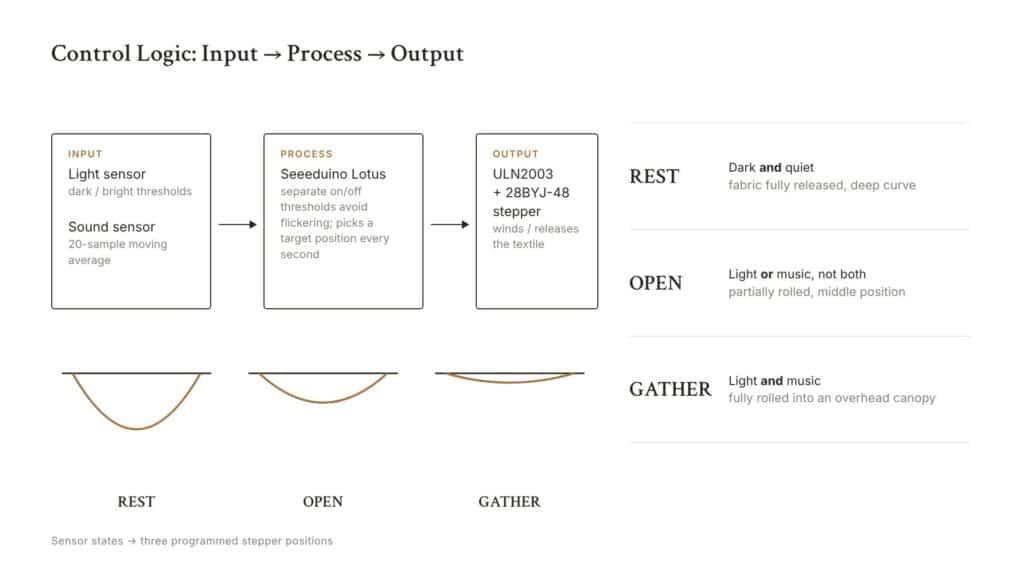
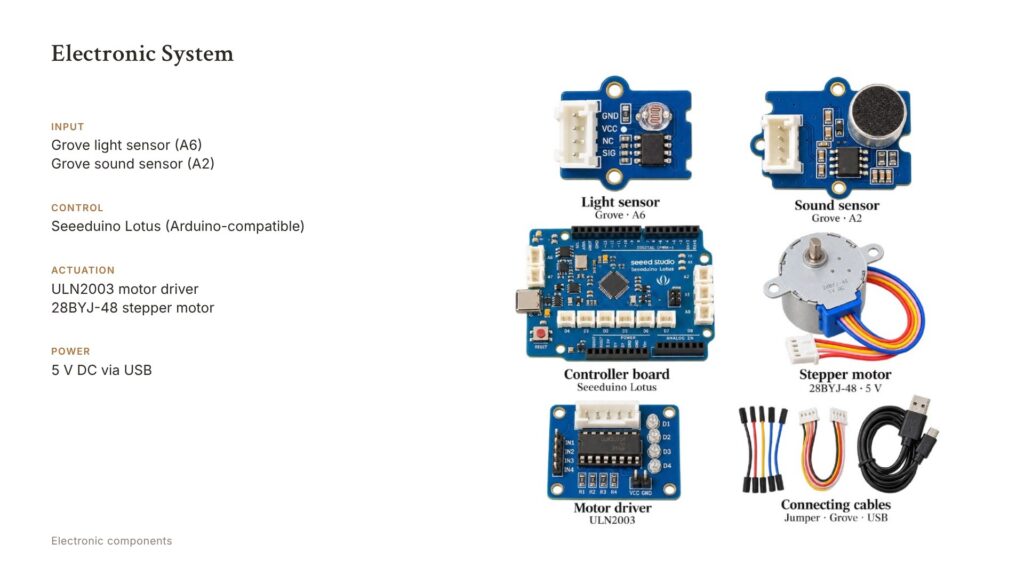
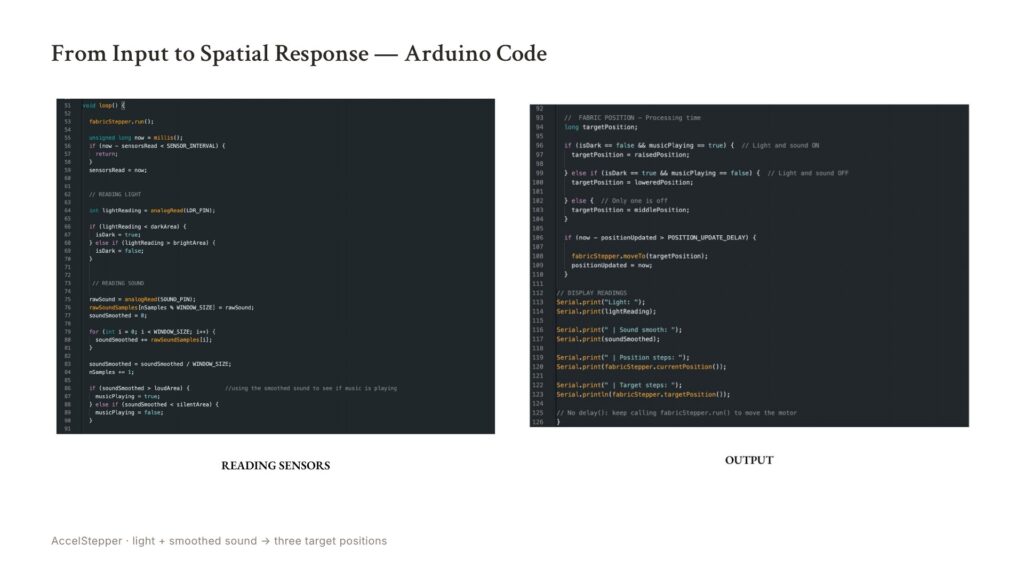
A light sensor and a sound sensor feed a Seeeduino Lotus. Light is read against separate dark and bright thresholds, and sound is averaged over twenty samples, so short noises and flickering light do not trigger movement. Every second, the board picks a target position and the AccelStepper library moves the motor through a ULN2003 driver:
- Dark and quiet: the textile drops into a deep curve for rest.
- Light or music alone: it rises to a middle position.
- Light and music together: it rolls up into a canopy for gathering.
From Servo to Stepper
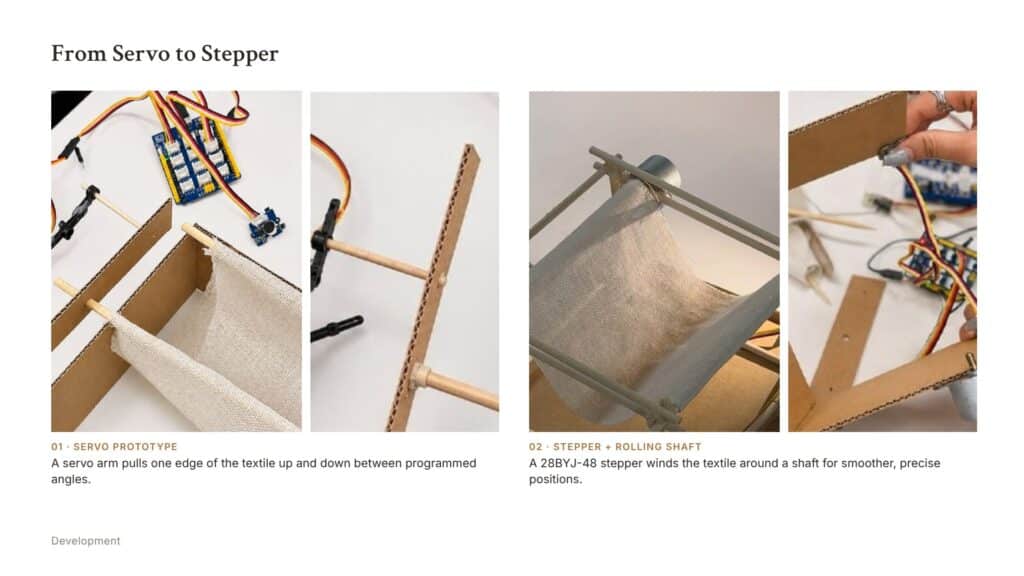
Development started with a servo arm lifting one edge of the fabric. It proved the input–process–output loop but moved abruptly and had limited range, so we switched to a 28BYJ-48 stepper and a horizontal shaft that winds the textile evenly. Code and model developed together: the motor mount, shaft supports and fabric connections were adjusted until the movement was smooth and repeatable.
Bill of Materials
A Portable Kit
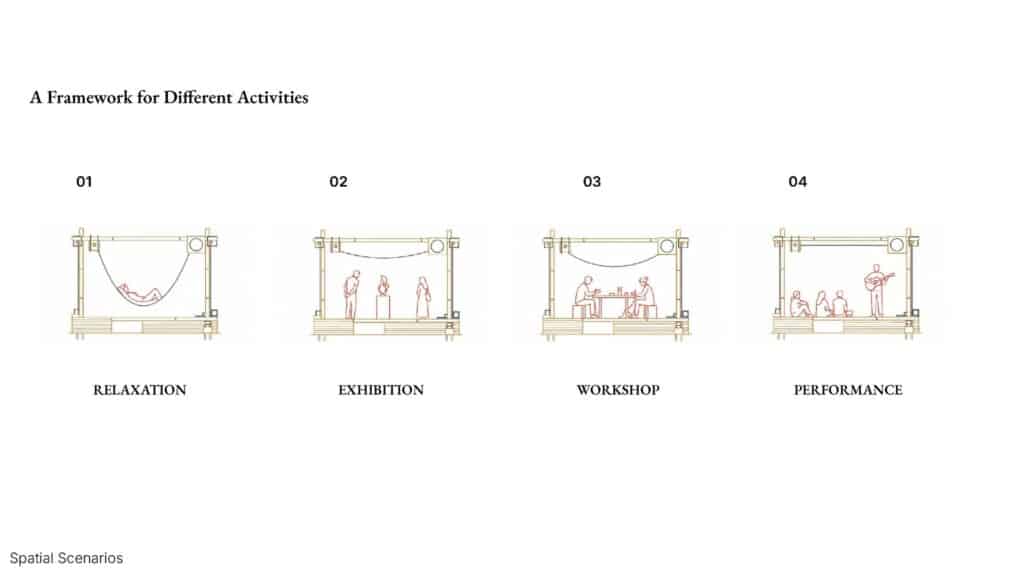
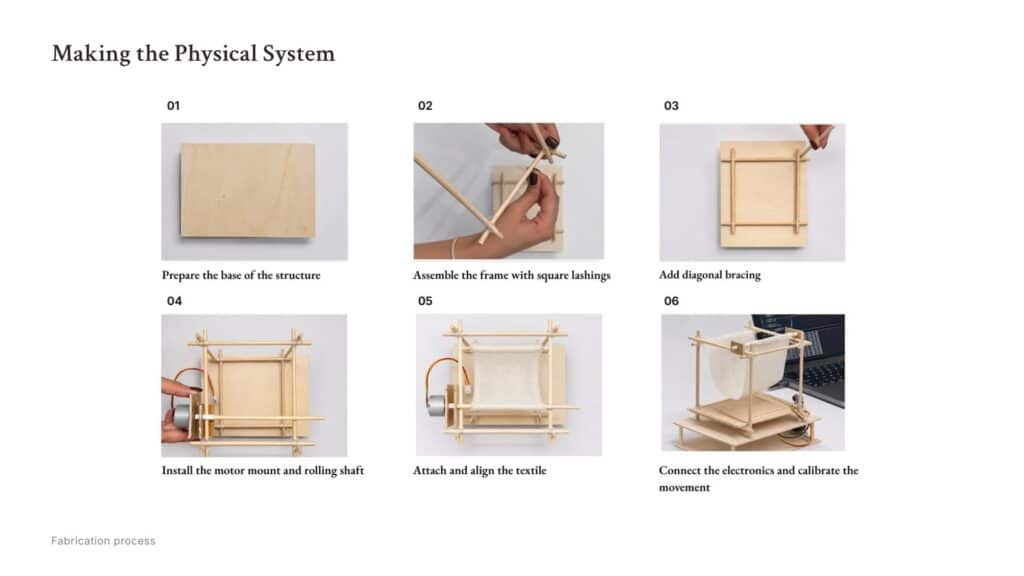
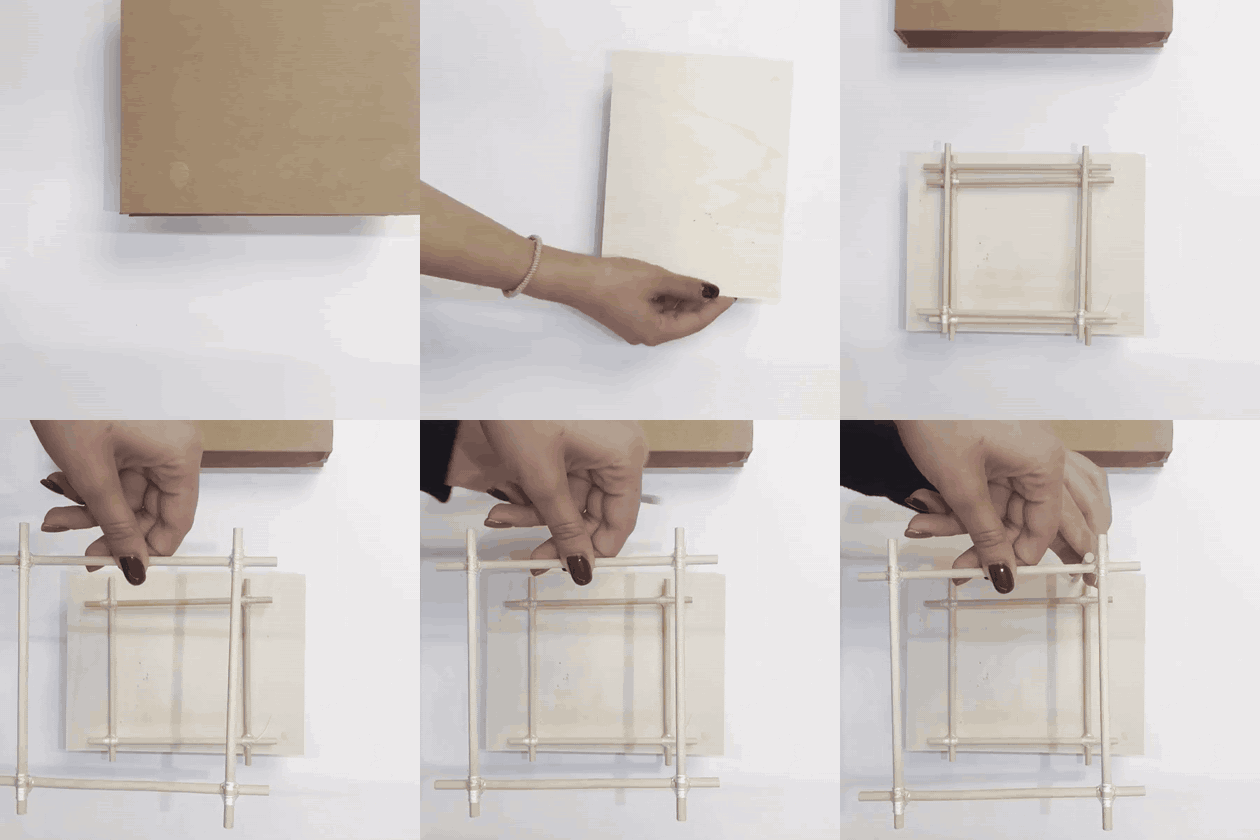
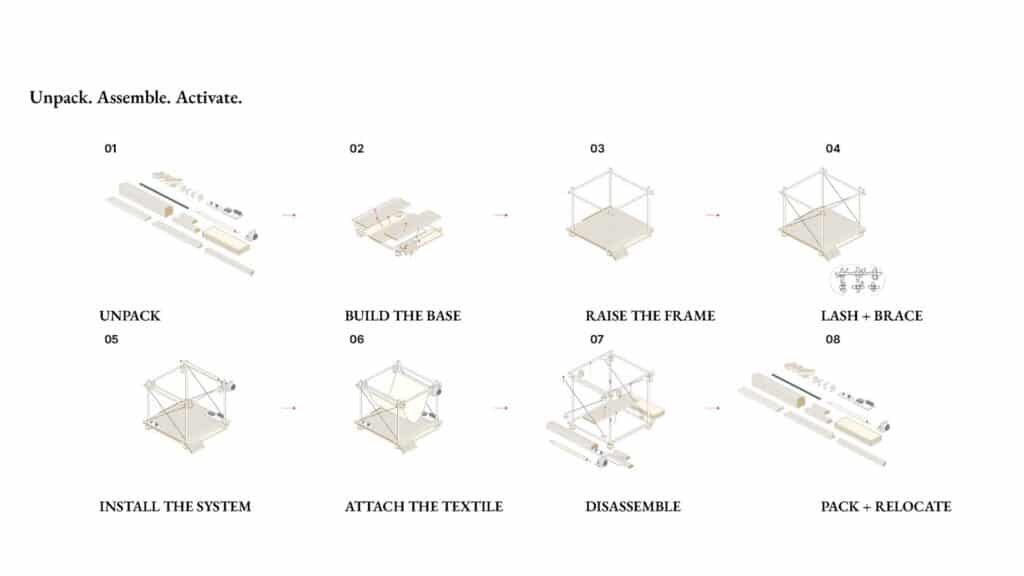
Portability is built into the construction sequence. Bamboo members and floor slats separate into stacks, the textile travels pre-rolled on its tube, and the motor and control unit stay separate. The same kit can be reassembled for exhibitions, workshops, performances or quiet rest.
Prototype in Action
Next Steps
The scaled prototype shows environmental input becoming spatial change. Next, we will:
- Refine textile attachments and rolling alignment.
- Test repeated assembly, disassembly and transport.
- Validate the full-scale structure and textile for seating loads.
- Add occupancy detection so the fabric never moves while in use.
- Build a 1:1 prototype in a public space in Barcelona.
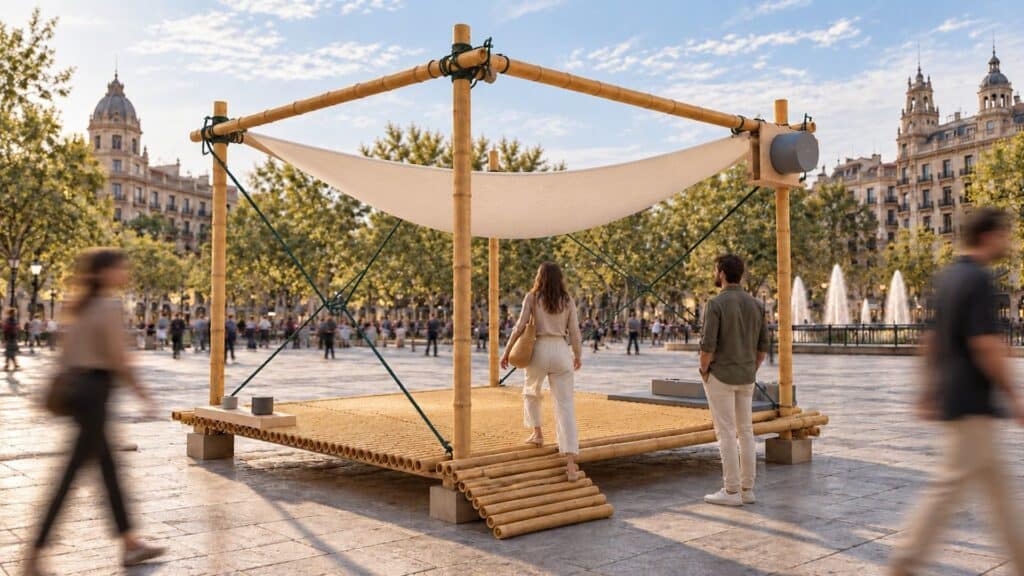
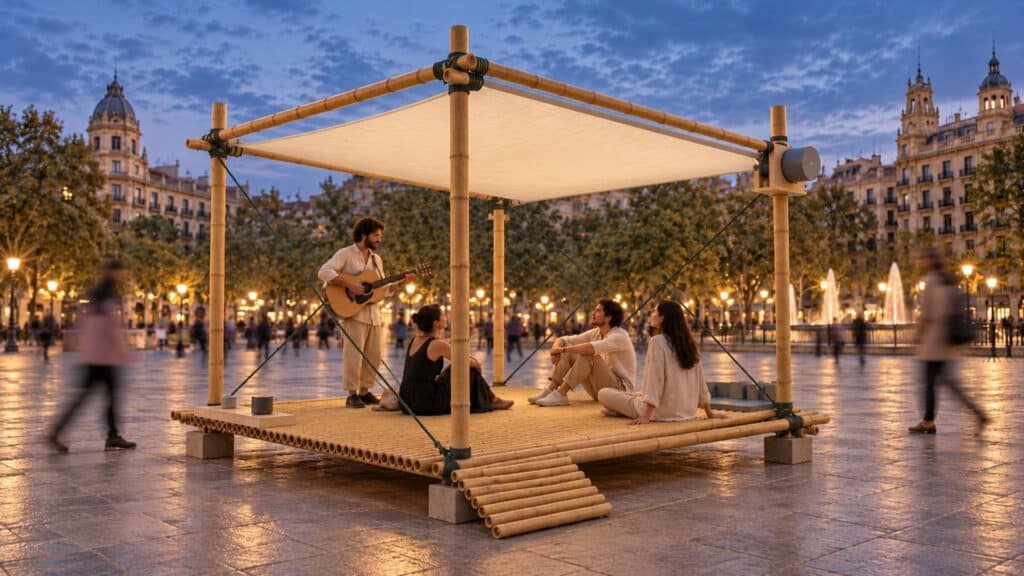
As light shifts and music begins, the fabric redraws the space, turning individual moments of rest into a shared place to gather.
