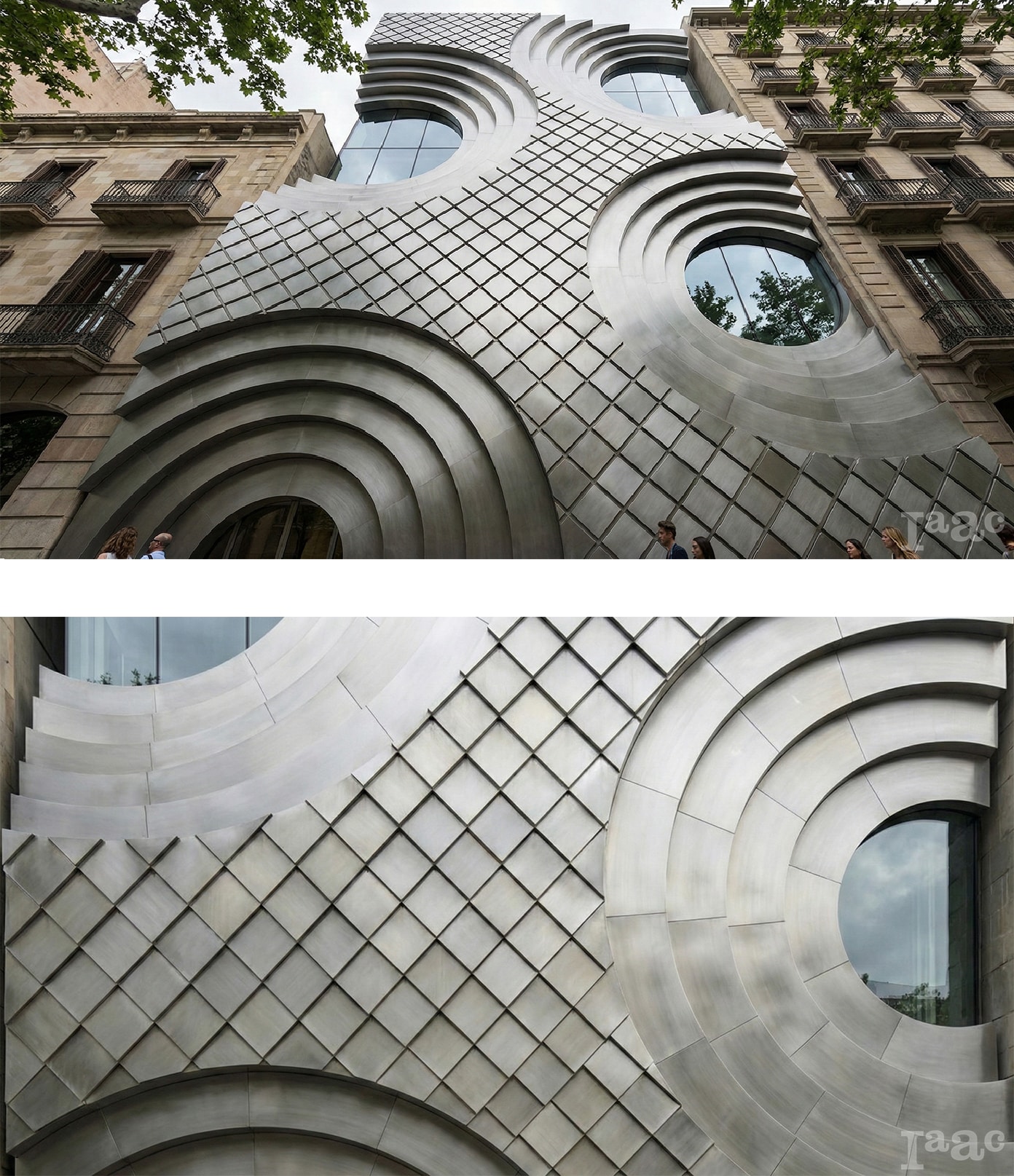
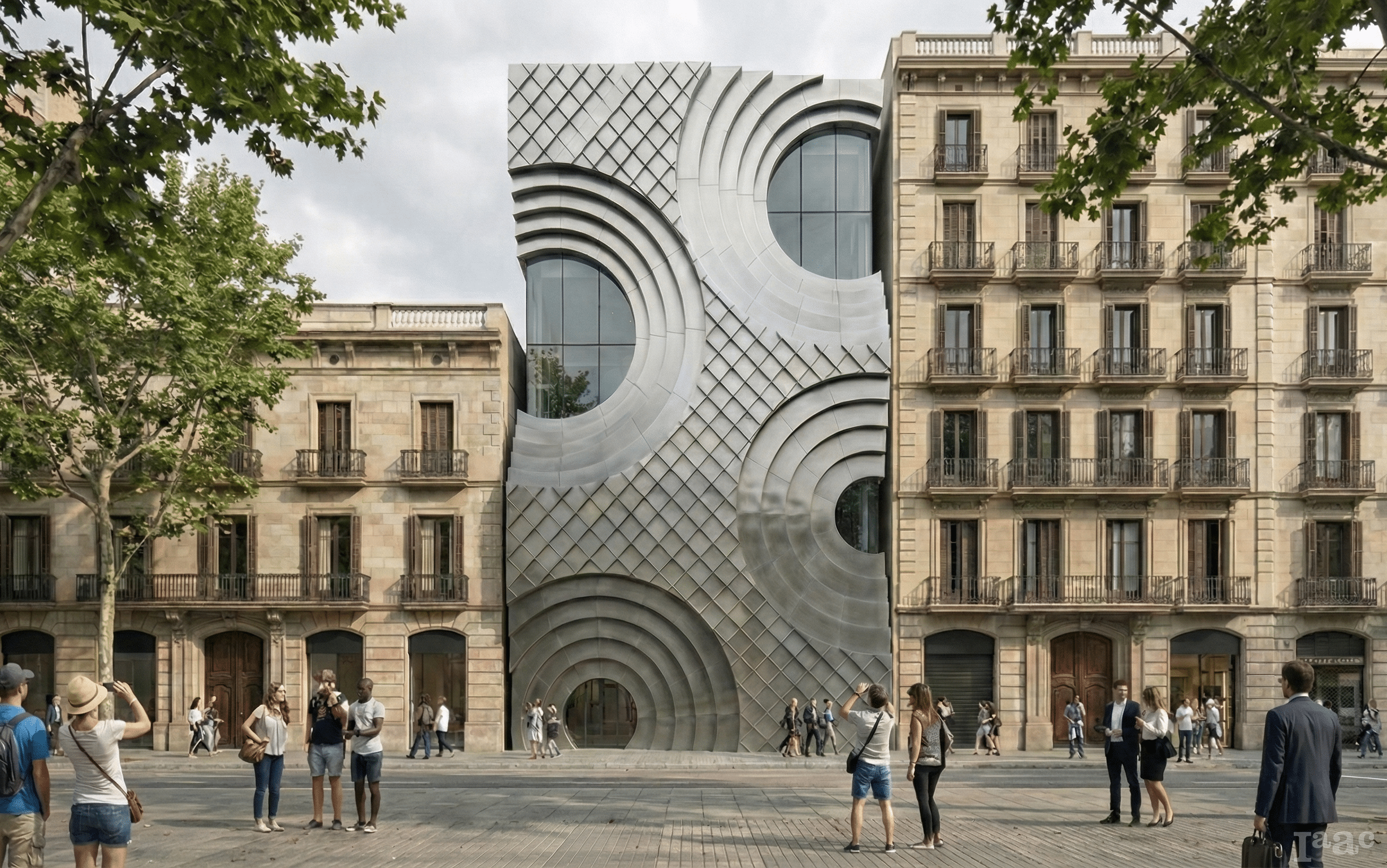
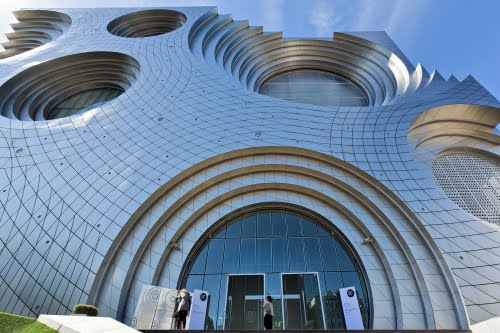
Referential work’s logics

Source: Kring Kumho Culture Complex / Unsangdong Architects
Source: Kring Kumho Culture Complex / Unsangdong Architects
Source: Kring Kumho Culture Complex
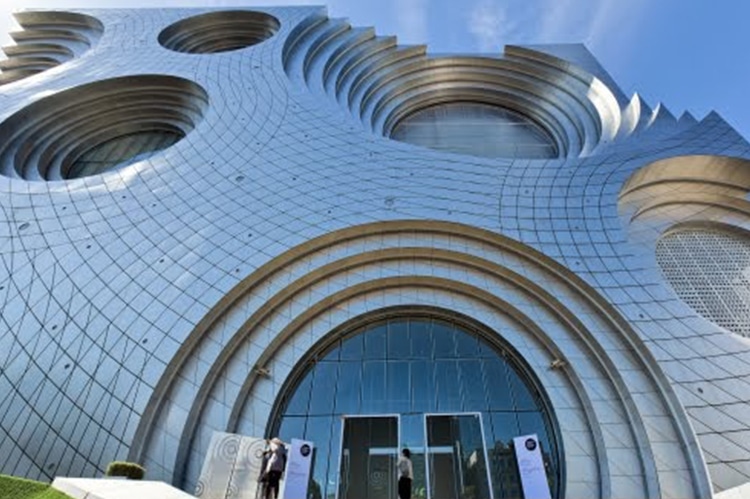
Our referential framework is the Kring Kumho Culture Complex in Seoul by Unsangdong Architects, a building defined by large circular recesses that function as urban windows.
The design exploits these spaces to break the flat exterior, as ‘Kring’ means ‘Circle’ in Dutch. We developed a concentric propagation approach to translate this logic computationally.

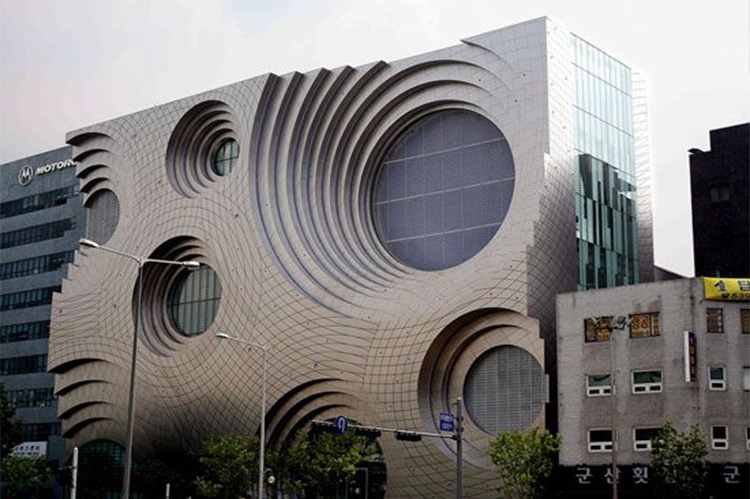
Source: Kring Kumho Culture Complex / Unsangdong Architects
By analyzing it, we identified a clear geometric rule. Looking at the facade, it is immediately clear that it is not just a flat wall punctured by windows.
The logic we identified is that everything originates from the circle. The design implies that the architect did not simply draw an opening, but used that circle to actively deform the surrounding surface. The specific technique we recognized at the core of this design is the offset: the contour of the window is repeated outwards, like an echo. It is this repetition that generates the effect of depth and movement, transforming a simple void into the primary element that defines and organizes the entire facade.
System deconstruction
To rationalize the design, we deconstructed the complex form into three interacting systems. Each system is controlled by specific parameters that allow for real-time iteration of the facade’s density, scale, and texture.

Creating the circles with random radii using points. The foundation of the facade is the generation of these principal openings, acting as the base geometry for the design.

Making the offset extrusion of the circles. This system handles the iterative logic that creates the characteristic concentric rings around the openings.

The final system is the “Skin” that wraps the surface. Crucially, this component is driven by an Attractor Point logic and a curve, where the grid acts as an extrusion responsive to proximity.
Workflow diagram (pseudo code)

Design process (form finding)
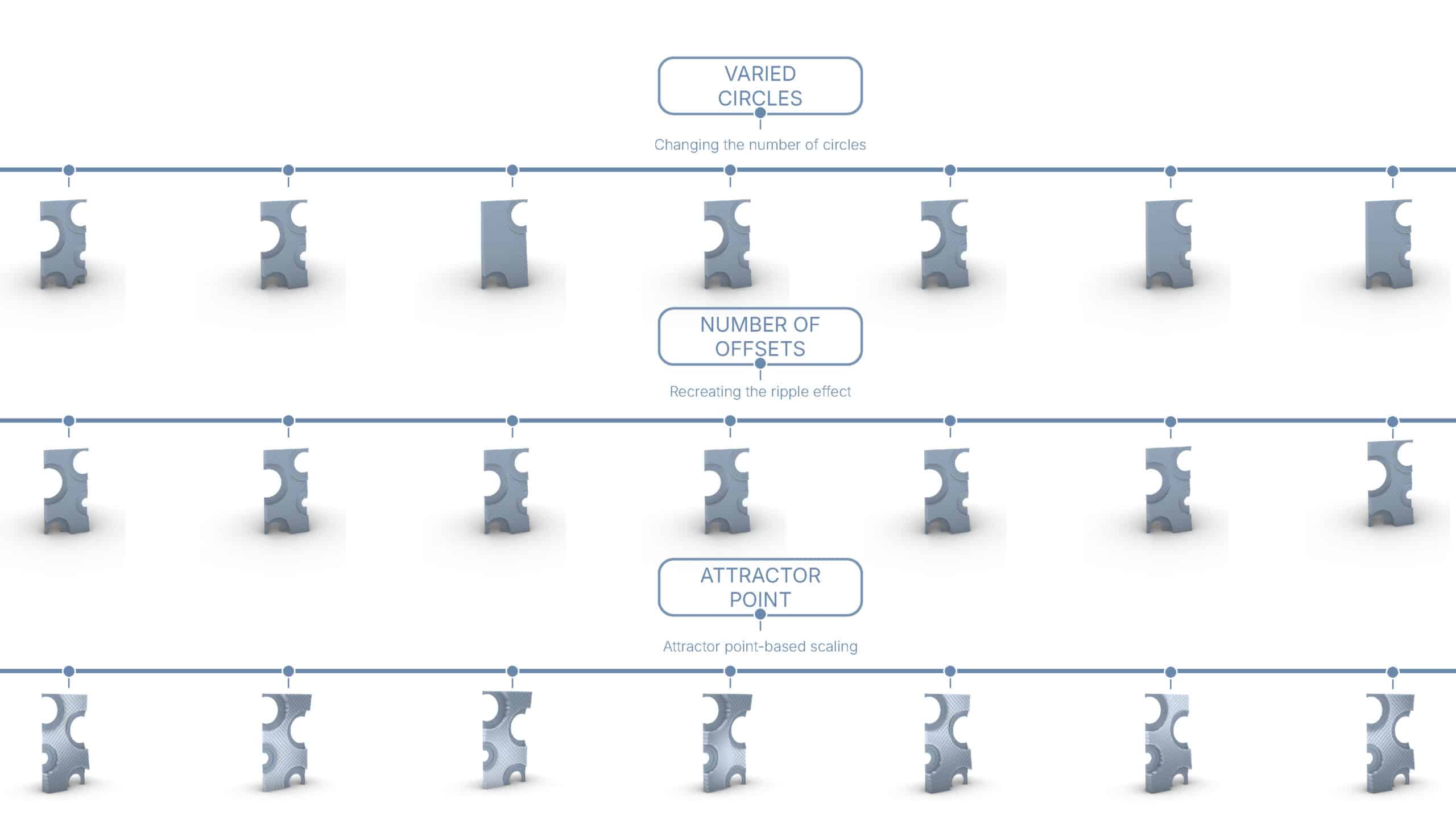
We initiated the form-finding process by generating a series of circles with randomized diameters. These were then iteratively offset to create concentric rings, replicating the ‘repeating’ ripple effect of the reference. To further articulate the geometry and introduce complexity, we applied a projected grid texture to the surface, allowing us to rationalize the form. The entire system is governed by an attractor point strategy, which acts as the primary driver for the design, dynamically controlling the distribution, scale, and deformation of the facade elements.

Iteration Catalog
Video Animation
Render