Introduction
ECO-Data Hub is a digital platform developed to address one of the most pressing challenges in the built environment: the lack of accessible, verified, and comparable environmental data for construction materials. As the industry transitions toward low-carbon practices, the ability to make informed material choices becomes crucial. ECO-Data Hub proposes a unified data ecosystem that enables architects, contractors, and developers to access trustworthy environmental metrics, accelerating the shift toward more sustainable construction processes.
Understanding the Problem
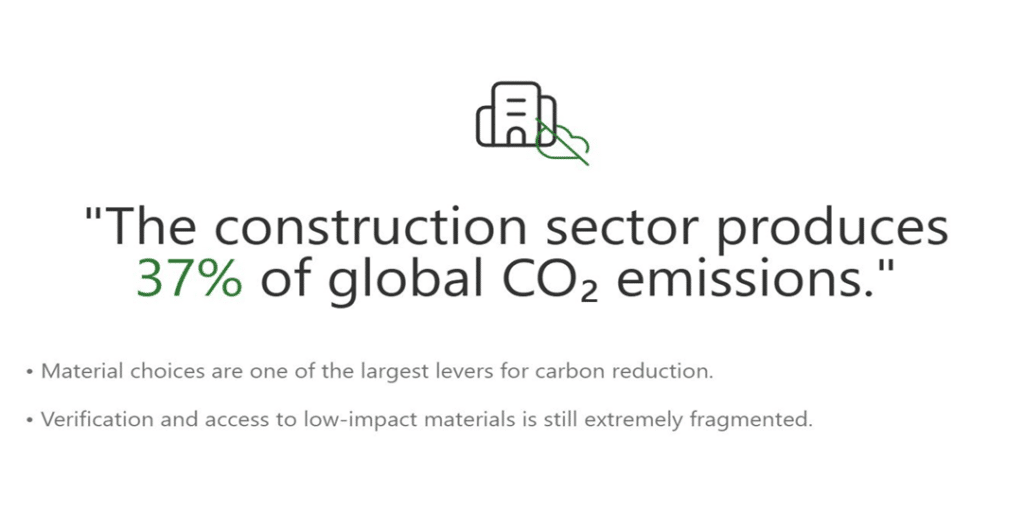
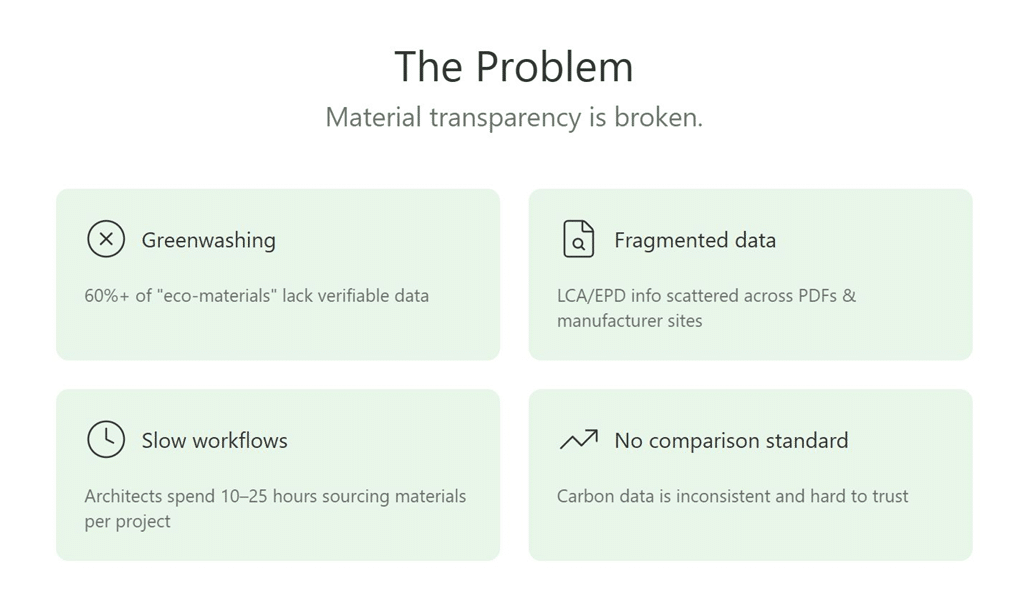
The construction sector accounts for 37% of global CO₂ emissions, yet the environmental impacts of materials remain difficult to access. LCAs, EPDs, and carbon footprint data are scattered across PDFs, supplier websites, or proprietary databases. This fragmentation forces professionals to spend extensive time researching materials, often without clear verification. With new regulations such as the EU Taxonomy and CSRD, the gap between sustainability reporting requirements and available digital tools is widening. ECO-Data Hub identifies this as a core barrier preventing systematic decarbonization in the built environment.
The Solution: A Unified Platform
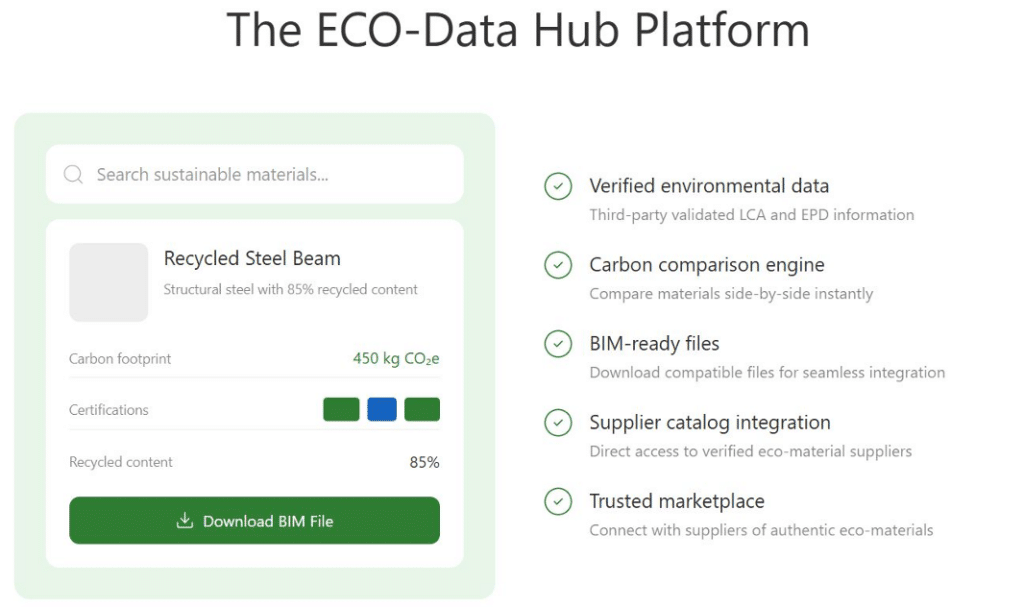
ECO-Data Hub consolidates verified environmental material data into a single, standardized interface. The platform includes CO₂e comparison tools, lifecycle assessment metrics, certifications, material passports, and BIM-ready downloads. By transforming complex datasets into accessible insights, ECO-Data Hub reduces research time by up to 80% and supports compliance-driven workflows. For suppliers, the platform offers visibility and credibility through verified impact data and analytics. This creates a transparent ecosystem where sustainable decision-making becomes the default rather than the exception.
Why Now? Market & Regulatory Context
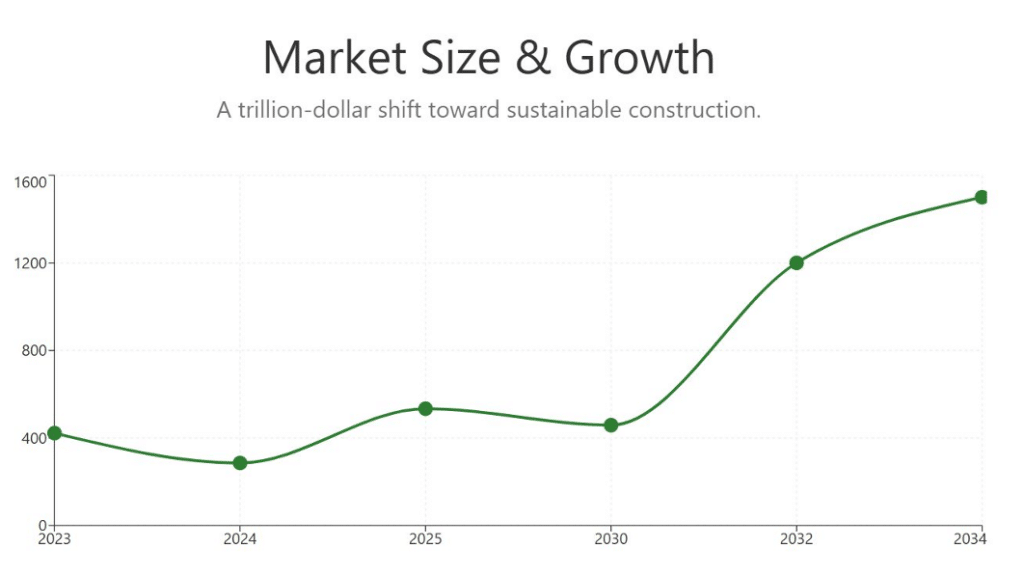
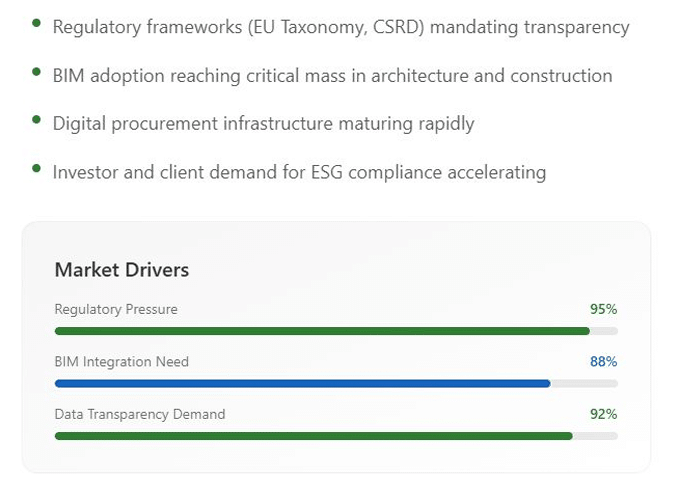
Global demand for sustainable materials is rapidly increasing, with the market projected to grow from $422B to $1.2T by 2032. Europe’s Renovation Wave aims to upgrade 35 million buildings by 2030, further accelerating the need for standardized material data. Regulations such as the EU Taxonomy and Corporate Sustainability Reporting Directive are making environmental transparency mandatory. Simultaneously, BIM adoption and digital procurement platforms are becoming industry norms. ECO-Data Hub enters this evolving landscape at a pivotal moment when environmental data is no longer optional but essential.
Competitive Landscape
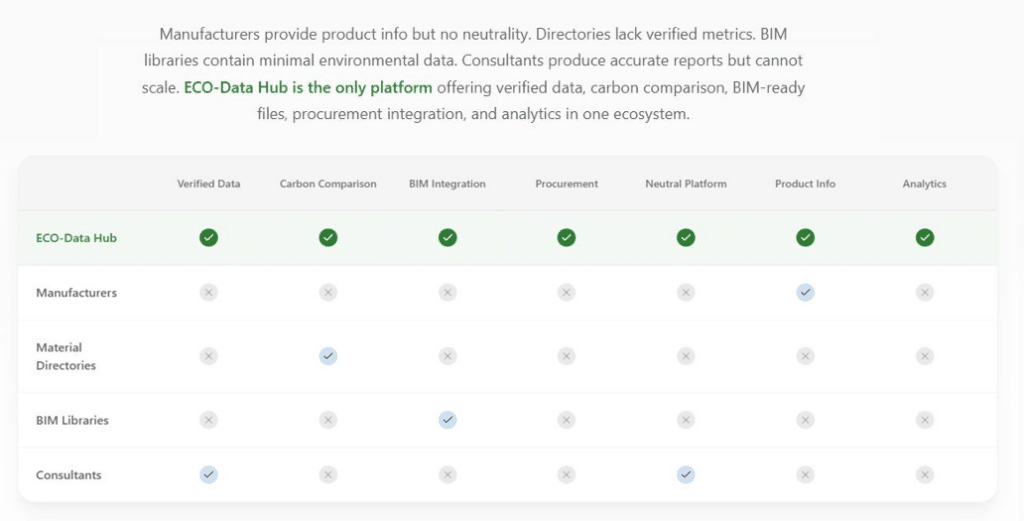
Current solutions remain fragmented. Material suppliers offer isolated datasets without neutrality; green directories provide curated lists without verification; BIM platforms rarely include environmental metadata; and LCA consultants deliver accurate but slow, project-specific reports. ECO-Data Hub distinguishes itself by integrating verification, comparison, BIM output, procurement, and analytics into one system. This holistic approach fills a significant gap in both sustainability and construction technology fields.
Business Model Overview
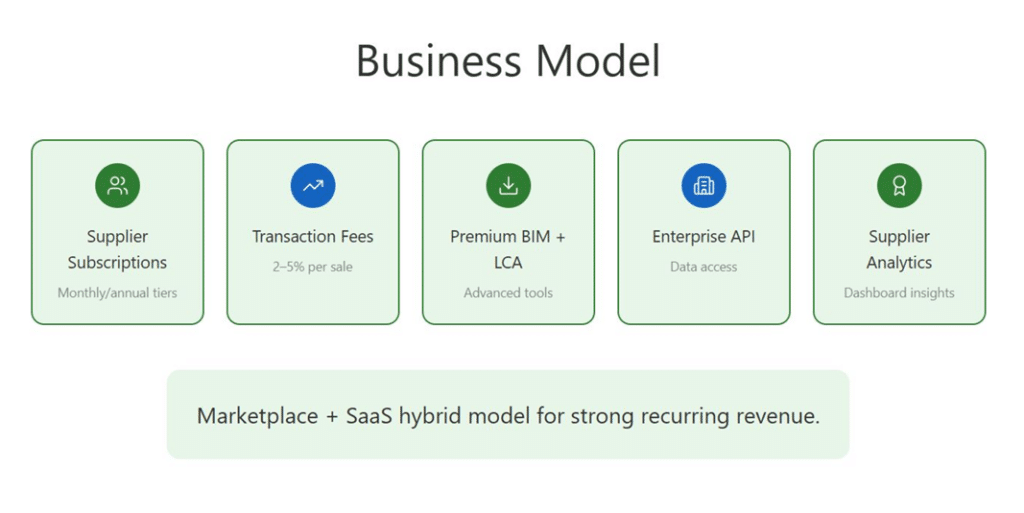
ECO-Data Hub operates through a hybrid marketplace and SaaS model. Revenue streams include supplier subscriptions, transaction fees, premium features for design professionals, enterprise API access, analytics dashboards, and sponsored visibility for materials. This model establishes a balanced income structure, combining stable recurring revenue with scalable marketplace activity.
Target Users and Industry Impact
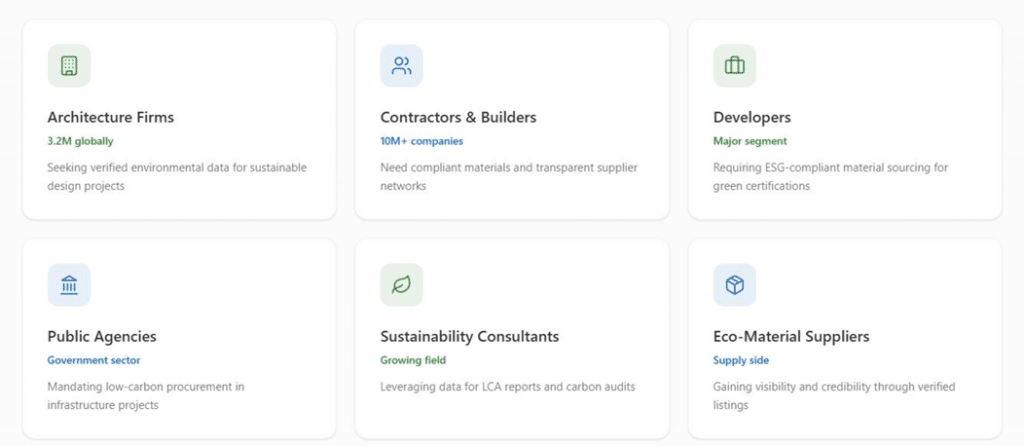
The platform supports architects, engineers, contractors, developers, sustainability consultants, public agencies, and eco-material suppliers. These user groups collectively represent millions of professionals who depend on accurate material data for design and procurement decisions.
Team Structure and Development Approach
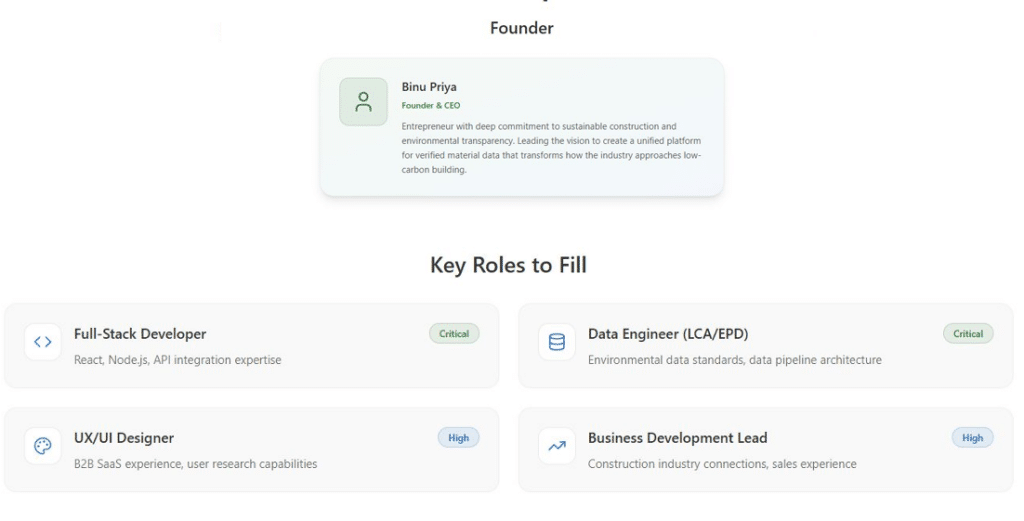
The development roadmap includes the addition of a full-stack developer, data engineer specializing in environmental datasets, UX designer for B2B workflows, and a business development lead. This interdisciplinary team structure ensures the project can grow into a robust digital tool with real-world applicability.
Funding Needs
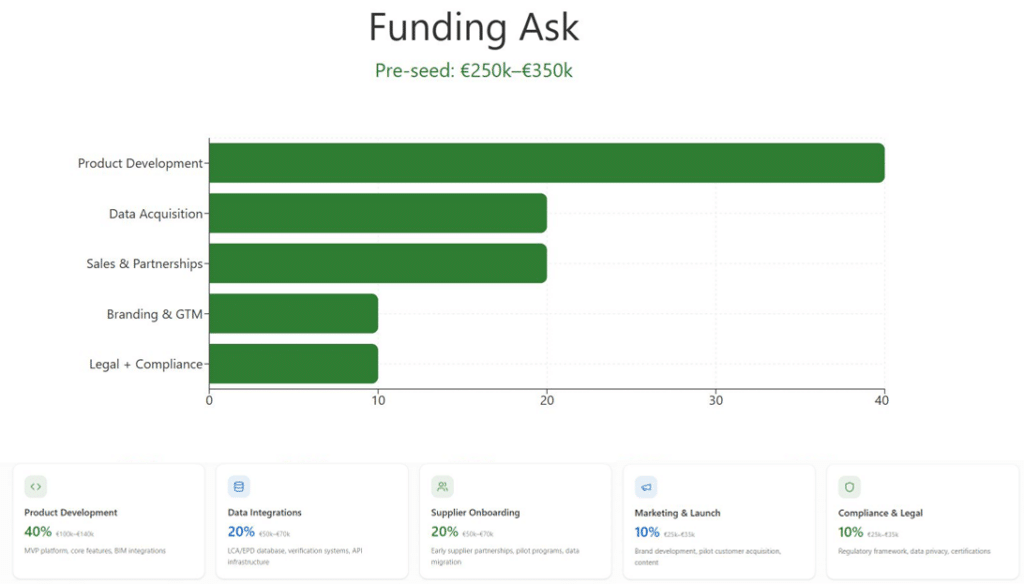
To accelerate development, ECO-Data Hub is seeking €250k–€350k in pre-seed funding. This investment will support MVP development, integration of verified datasets, supplier partnerships, UX/UI refinement, pilot testing with design firms, and regulatory alignment. The funding strategy is structured to ensure both technical progress and early market traction.
Call to Action
ECO-Data Hub positions itself as the environmental data backbone for the future of sustainable construction. By bridging the gap between regulation, design, and material sourcing, the platform contributes directly to broader decarbonization goals. The project invites collaboration from researchers, practitioners, and industry partners who share a commitment to transparent, low-carbon building practices.