
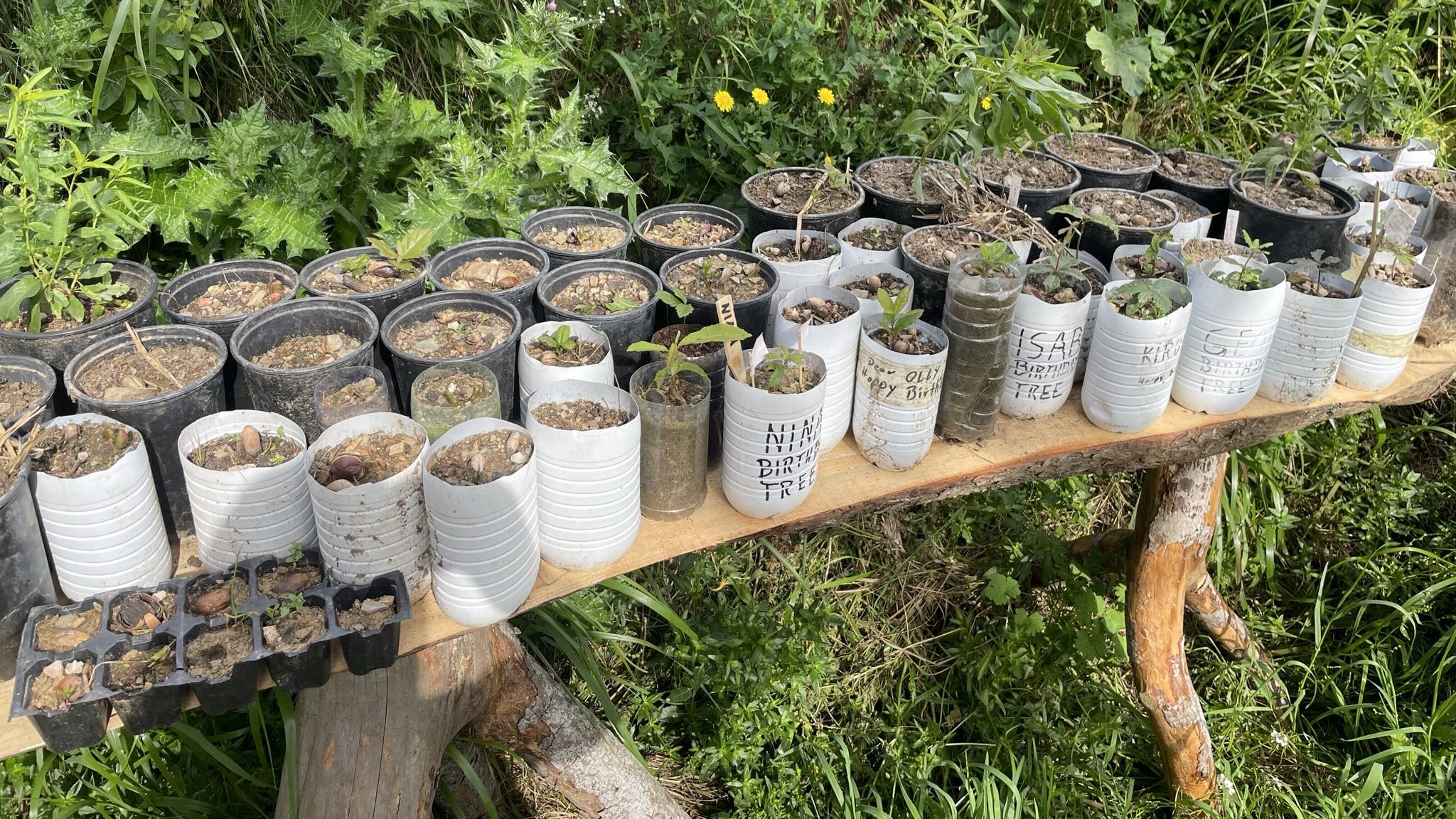
At MAEBB We learned how to cut trees, here is how they grow
Collserola Natural Park, rising above Barcelona, is home to a diverse Mediterranean ecosystem where oaks are among the most emblematic species. Before the hills were cleared and later populated by pioneering pine trees, the two dominant species were the Holm Oak (Quercus ilex) and the White Oak (Quercus alba). The Holm Oak is native to the Mediterranean region and forms the backbone of Collserola’s evergreen forests, thriving in rocky, sunlit soils and enduring long, dry summers. The White Oak, a deciduous species originating from North America, brings contrast with its broad, lobed leaves that turn rich red and gold in autumn. Though less adapted to Mediterranean heat, it can still grow successfully in cooler, moister microhabitats such as north-facing slopes or shaded valleys within the park. Occasionally, Cork Oak (Quercus suber) and small stands of Portuguese or Pyrenean oak appear in transitional zones.
The time and effort I put into collecting, sorting, growing, and planting these trees was rewarding, full of insights, and, in my eyes, ecologically valuable. Initially, I was planning to plant these trees on the still naked hills facing Barcelona and the sea, but Valldaura kept me so busy that I had to stay within its parameters.
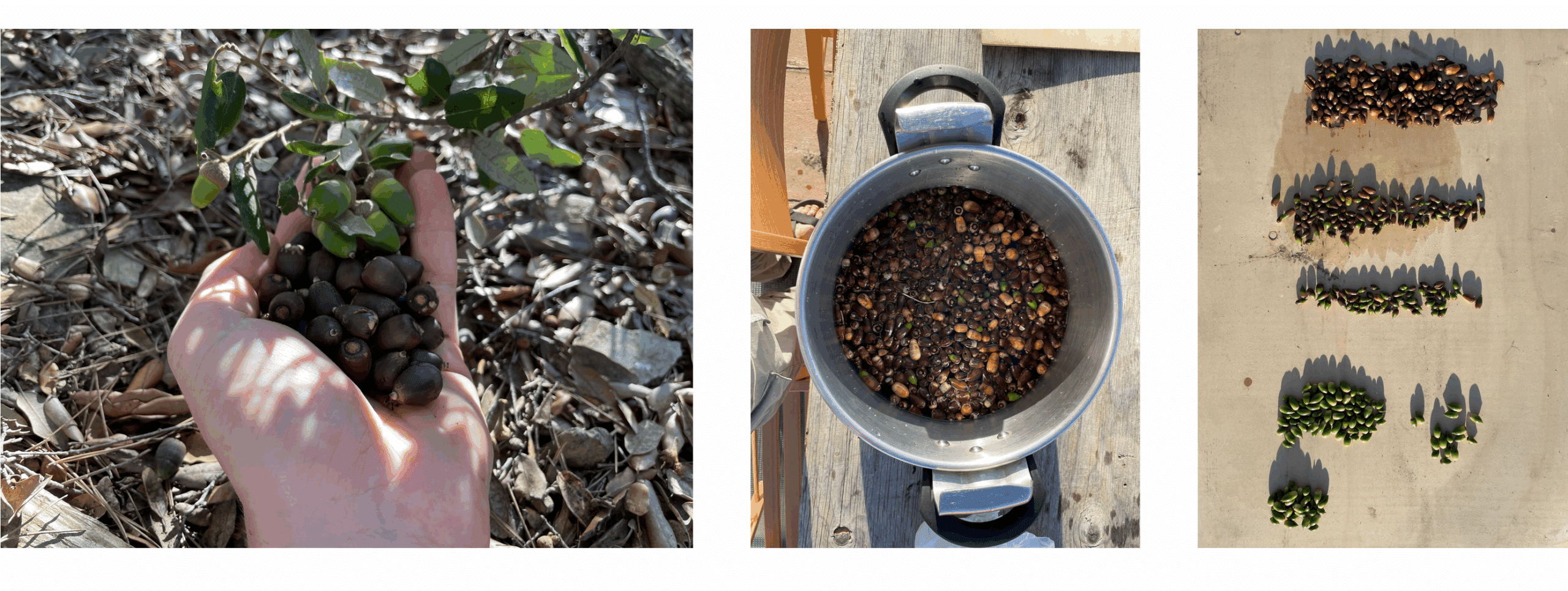
Collecting and Preparing Acorns
The life of an oak begins in autumn (October–November) when acorns ripen and fall. Choose healthy, uncracked acorns, without the typical holes made by acorn weevils (Curculio genus), from strong, mature trees. To test viability, drop them in water: the good ones sink. Plant acorns immediately or store them for a short time in a cool, slightly moist place—never fully dry. The stratification for 45 days in the fridge with moist substrate did not bring significantly better results than planting the acorns immediately. Holm Oak acorns are best sown fresh.
From my experience, it is best to sow acorns directly in deep pots or old milk containers (at least 20 cm) filled with a well-drained mix of local soil and compost. Press the acorn horizontally about 2–3 cm deep. Water lightly and keep them in a protected nursery or the greenhouse over winter. I first germinated them in greenhouse trays, which led to surprisingly fast growth but also curled roots, since they couldn’t grow deeper than the tray bed. Germination began very early in spring, almost in winter. Avoid overwatering; Mediterranean oaks dislike soggy roots.
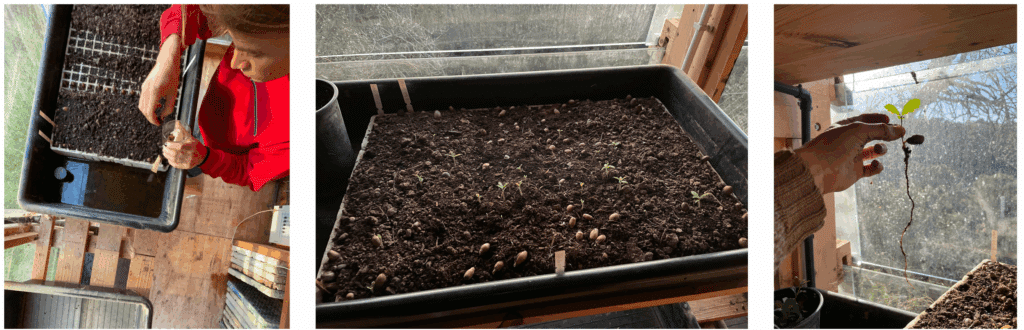
Caring for Seedlings in the Greenhouse
During spring and early summer, seedlings will establish their first strong taproots. Maintain moderate moisture and good air circulation. Gradually expose the young trees to outdoor conditions to harden them off. By the end of their first growing season (around six months old), the seedlings should be 8–15 cm tall with a healthy root system.
When and How to Plant in the Field
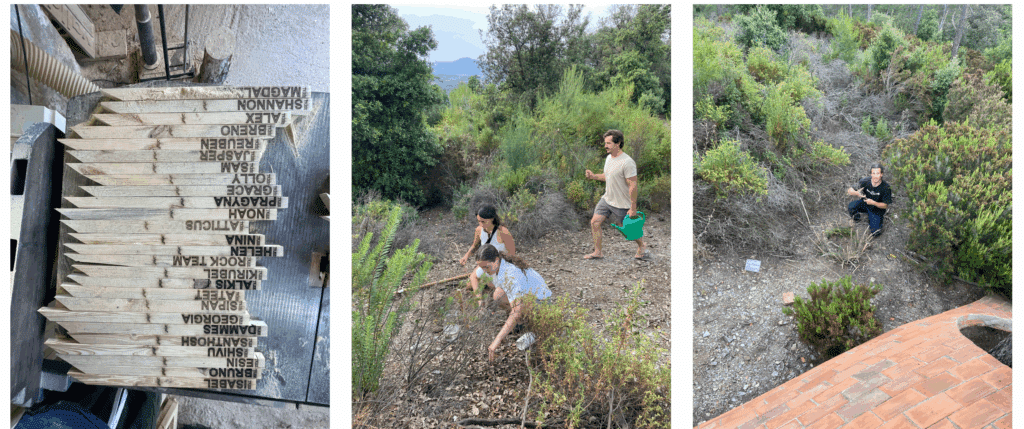
The best time to plant oaks in Collserola is late autumn to early winter (November–January), when rains begin and temperatures drop—about a year after starting the process. Since I was concerned that the roughly 100 successful trees would not make it through the summer in the greenhouse, I organized a big planting session with my fellow Valldaurians. Everyone received a tree as a birthday gift, and we planted them in May. That was a mistake, since it was already too hot and too dry.
The cool, moist months after summer give roots time to establish before the dry season. Choose north- or northeast-facing slopes or partially shaded areas with some soil depth between rocks. I noticed especially good success near large oak trees and when small saplings were grouped together. Dig a hole about 30 cm deep and wide enough for the roots to spread naturally. Set the tree so the root collar is level with the soil surface, then firm the soil gently and water thoroughly.
Because Collserola’s slopes are rocky and home to wild boars, every young tree must be protected at all costs. We built fortresses as tree guards from wooden stakes and dry bushes, surrounding them with rocks to prevent digging. This barrier discourages animals and reduces soil erosion around the root zone. A mulch layer of dry leaves or pine needles helps retain moisture.
Looking Ahead
Even though they grow fast in the beginning patience is key. Oaks grow slowly—when they grow—but within a few years they form deep, resilient roots and need little maintenance. Protect them during the first two summers, water occasionally during droughts, and allow natural vegetation to return around them. Each seedling you plant contributes to restoring the ancient oak forests that define the heart of Collserola and it sequesters carbon so you feel less bad when you skip the carbon offset button next time 😉
Further research could be done on how to protect young trees over the hot summer—perhaps with fog-collecting meshes as tree guards or by following the European project thegreenlink.eu, which aims to restore desertified areas through innovative tree-growing methods.
At the end of the day, it’s also supposed to be fun—and who knows, one day we might grow the trees that the next year of Valldaura students will plant.
