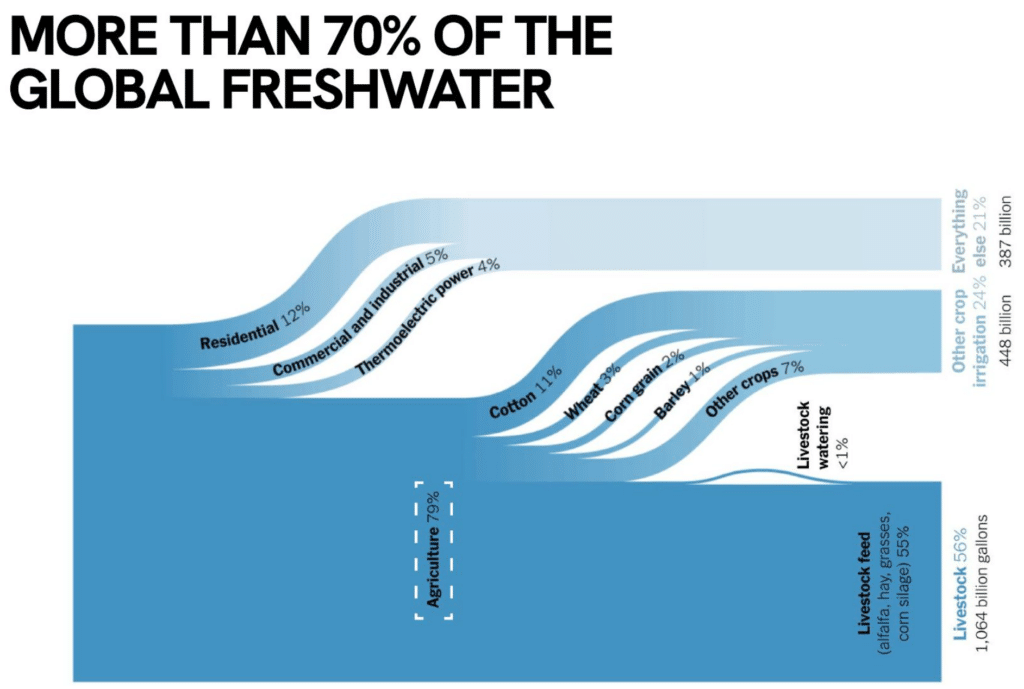
The global agricultural system is facing a severe crisis. Currently, agriculture is responsible for consuming a staggering 79% of global freshwater. Despite this massive consumption, the process is highly inefficient, with 60% of irrigation water being lost. Furthermore, modern farming relies heavily on chemicals, seeing a 70% increase in pesticides, while an estimated 40% of costs are tied directly to transportation.
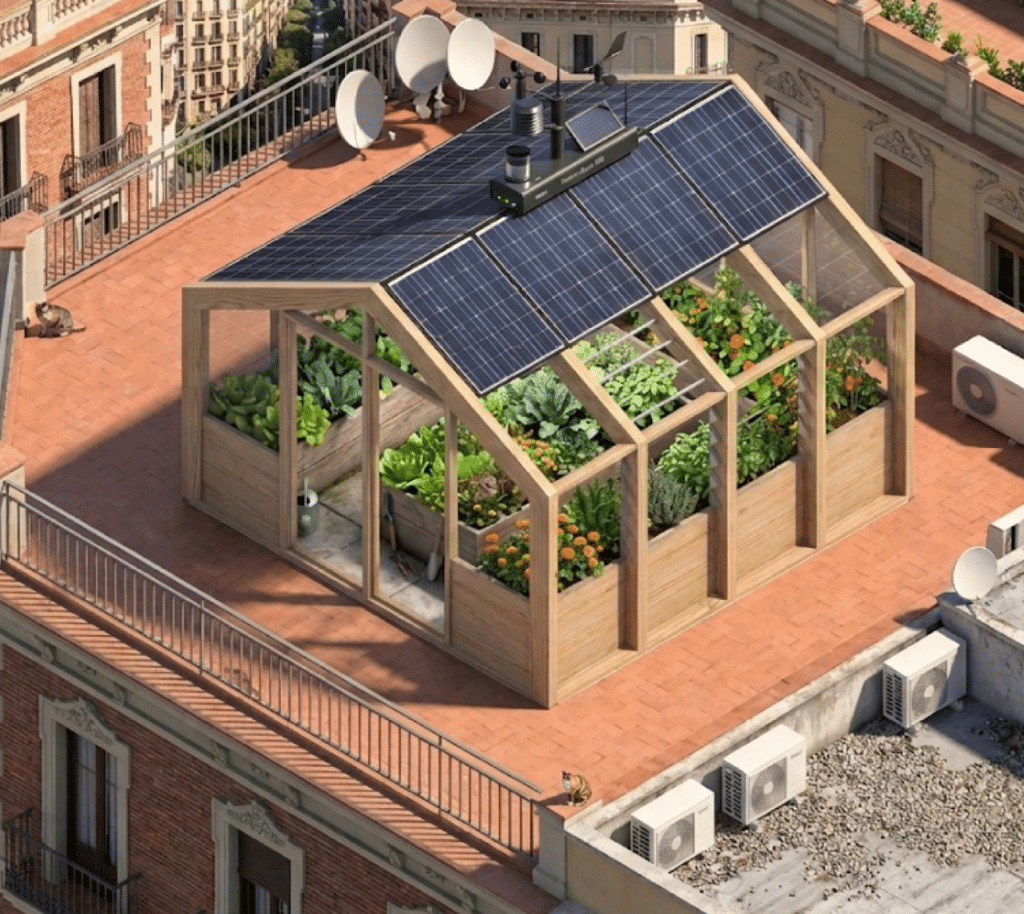
To address this pressing issue, a new project dubbed Holy Woah, proposes a radical shift towards urban rooftop farming. Focusing on Barcelona (a city that has seen a 77% drop in local food production since the 1970s and where only 9% of land is currently used for farming) the project identifies a massive untapped resource: 1,764 hectares of potential farming space right on the city’s rooftops.
Taking inspiration from successful urban farming proofs-of-concept in densely populated cities like Singapore, Hong Kong, and New York (such as Gotham Greens, which uses 95% less water through hydroponics), the project aims to make sustainable farming accessible to everyone.
The continuous agricultural cycle proposed by the Holy Woah is divided into three main stages that feed into a continuous loop:
- Phase 1: Soil & Seed Preparation: This is the starting point. It involves preparing the appropriate substrate or growing medium (which requires a special, lightweight treatment for urban rooftops) and carrying out the initial sowing.
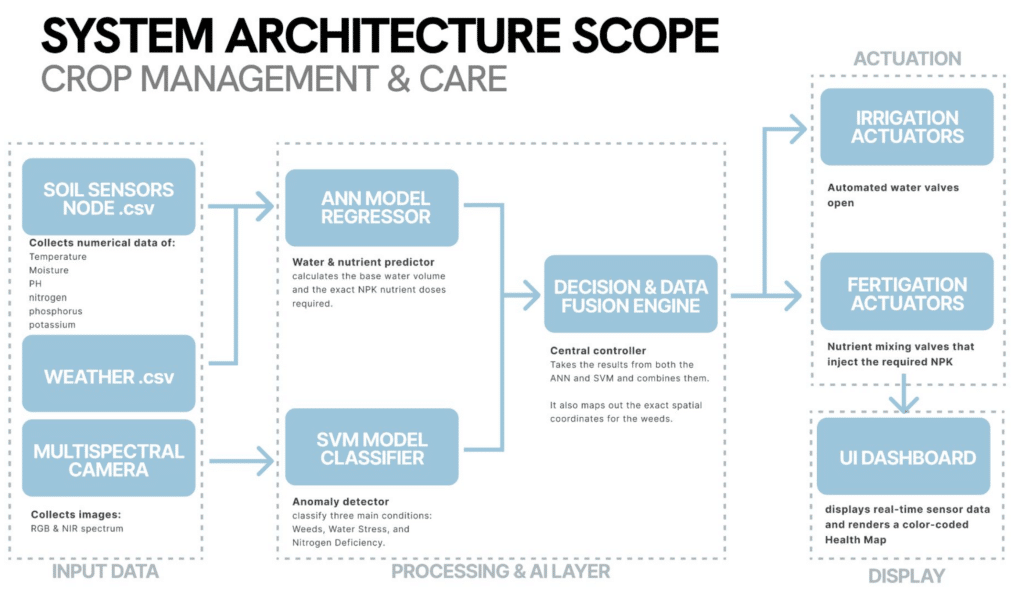
- Phase 2: Plant Care & Fertilization: This is the development and growth stage. This is exactly where the KATS AI system (which we discussed earlier) would have its greatest impact: monitoring water needs, applying fertilizers efficiently, and detecting potential diseases in real-time to ensure plants grow healthy.
- Phase 3: Harvesting & Rotation: This is the final stage where the fresh produce is collected. The mention of “rotation” is crucial, as it indicates that once the crop is harvested, the space is prepared for a different type of plant. This helps prevent nutrient depletion in the system and restarts the cycle.
In short, this is the basic operational model they plan to use to maintain a constant and sustainable flow of food production on the rooftops of Barcelona.
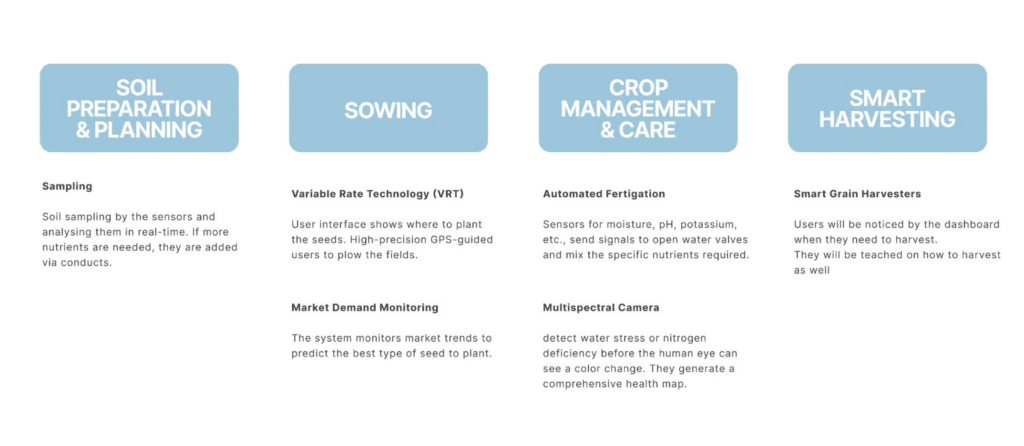
the left side reflects our commitment to reviving local agriculture and drastically reducing water waste, while the right side represents KATS, our custom-built artificial intelligence system. By fusing hands-on plant care with an intelligent, 3-layer machine learning pipeline and a human-in-the-loop feedback system, we aren’t just planting seeds on roofs—we’re building an adaptive, smart ecosystem that learns directly from our urban farmers to make agriculture greener, highly efficient, and completely tailored to the city’s unique microclimates.
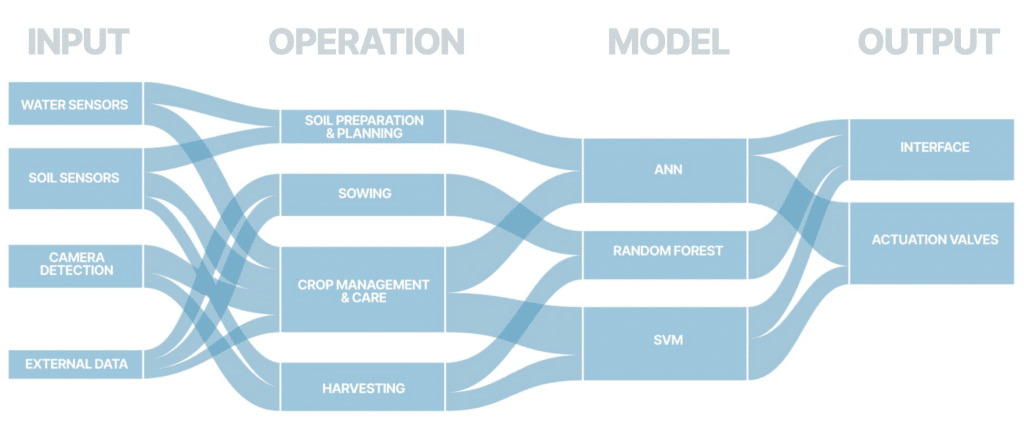
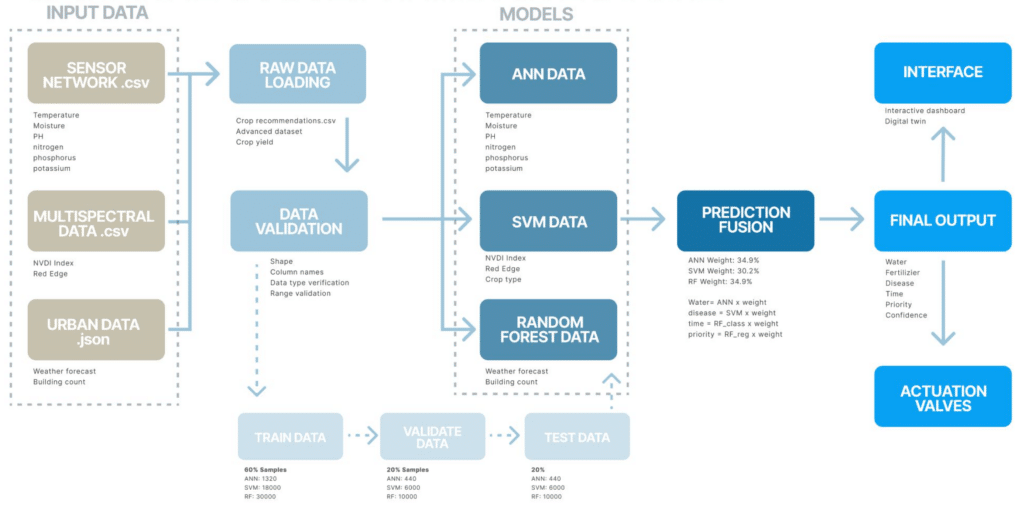
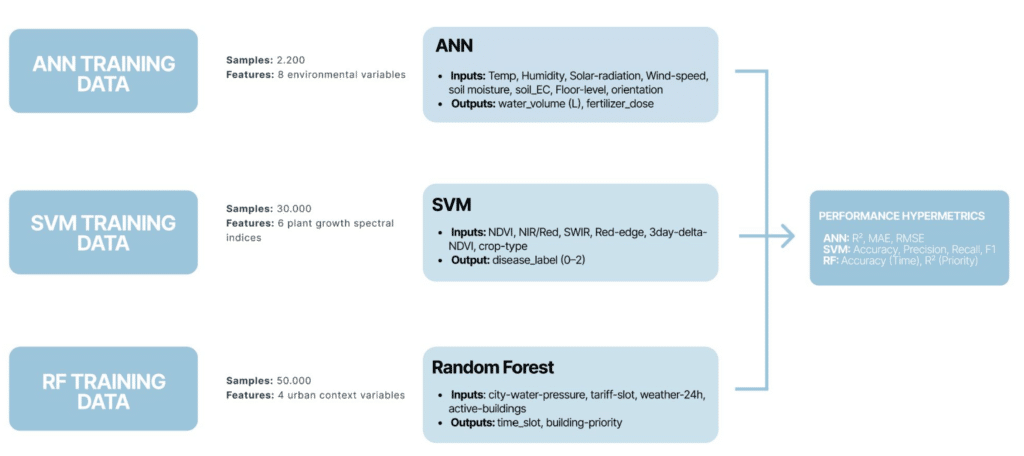
KATS acts as the digital nervous system for these urban farms, operating through a sophisticated 3-layer pipeline that acquires sensor data and processes it using three distinct Machine Learning models:
- ANN (Artificial Neural Network): Dedicated to water optimization, this model analyzes temperature, moisture, humidity, and light to predict and recommend precise water reductions, tackling the massive freshwater waste seen in traditional farming.
- SVM (Support Vector Machine): Focused on plant health, this model uses fungal risk and NDVI data to detect diseases and classify plant stress.
- Random Forest: This model monitors the overall system health based on all environmental sensor inputs.
The system relies on a central “Fusion Engine” that weights the outputs of all three models to produce a single, actionable recommendation.
Human-in-the-Loop (RLHF)
What makes KATS truly groundbreaking is its Human-in-the-Loop (RLHF) feedback mechanism. The AI doesn’t just dictate commands; it collaborates with the urban farmer. When KATS proposes a decision, the farmer can:
- Approve the decision, which reinforces the successful model weights.
- Modify the suggestions, prompting the system to rebalance model contributions.
- Report issues, which triggers a retraining of the models.
Over time, KATS dynamically adjusts its weights to become increasingly aligned with the highly specific micro-climates of individual rooftops.
A Consumer-Grade Experience for the Urban Farmer
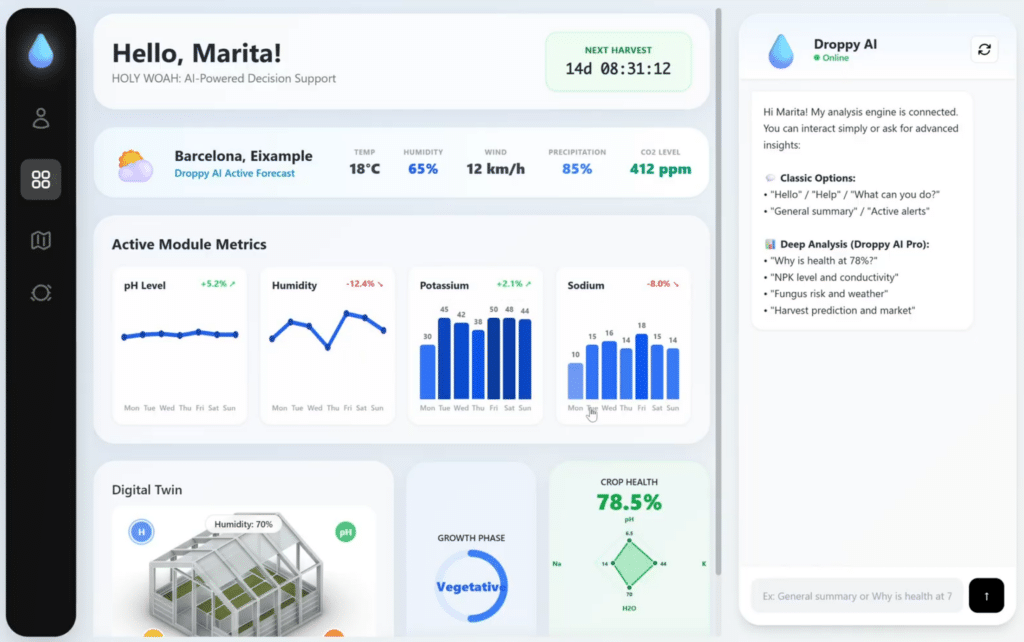
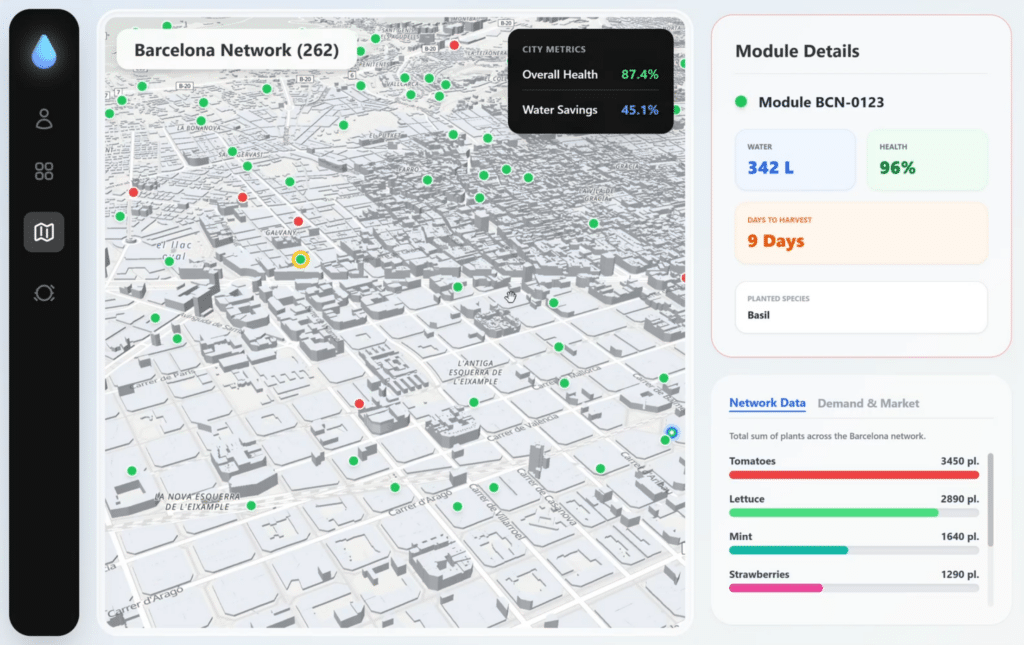
Farming tech is often clunky, but KATS offers a beautifully designed, consumer-app-grade User Interface. Utilizing a light neumorphic design, the dashboard features iOS-style metric widgets, a real-time Digital Twin map of the rooftop farm, and a highly interactive AI chatbot assistant named “Klif” (represented by a water drop mascot).
By marrying the ambitious spatial vision of the Holy Woah project with the bleeding-edge AI architecture of KATS, the future of agriculture doesn’t just look smarter—it looks greener, highly localized, and ready to transform our city skylines.