
A Community Board Game for Mukuru, Nairobi

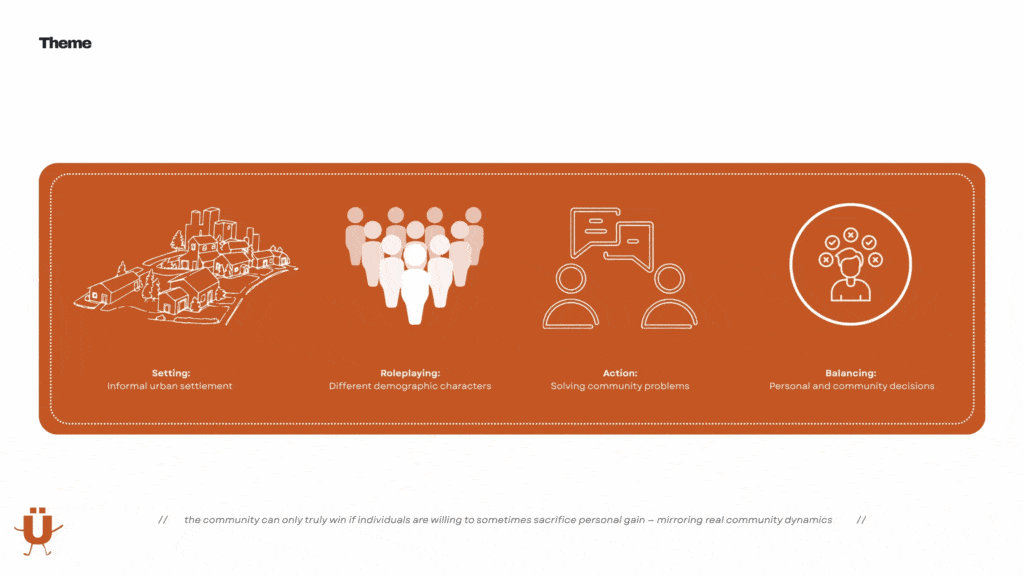
Jumuiya means “community” in Swahili. My Jumuiya is a participatory board game in which 3 to 6 players each embody a different resident of Mukuru, Nairobi — a mother, a factory worker, a doctor, a kid, a teacher, a university student, a market seller, or a person with limited mobility. Each round, a neighbourhood problem is revealed. Players secretly choose a solution, debate it, and vote. The tension is the point: push too hard for personal gain and the community collapses. The only path to collective victory is for individuals to sometimes set aside their own interests for the good of the neighbourhood. That dynamic is not invented — it mirrors what actually happens in community organising.
The Context: Mukuru and the Right to Remain
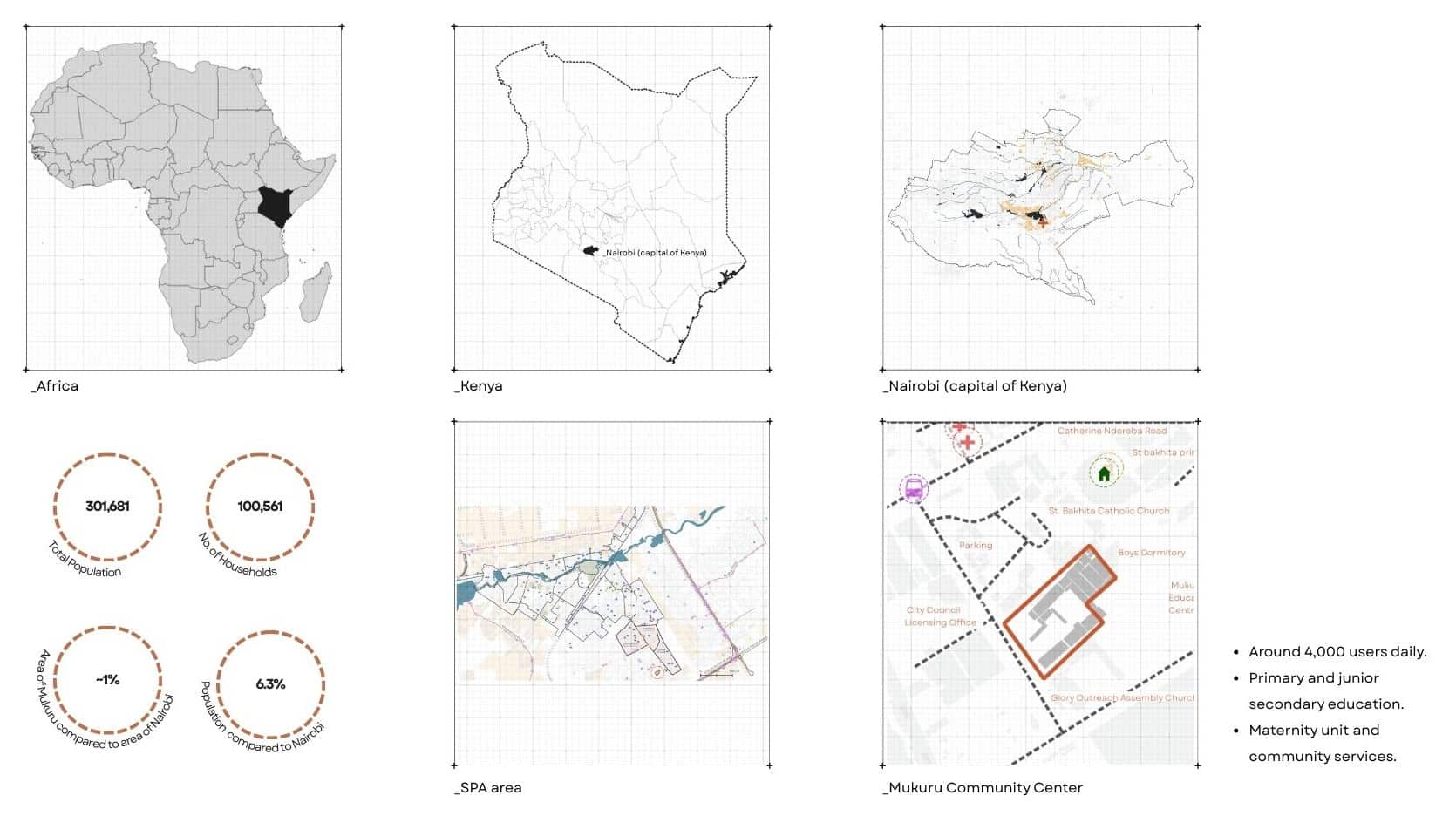
Mukuru is one of Nairobi’s largest informal settlements — home to over 300,000 residents packed into roughly 1% of the city’s total area. Its problems are complex and systemic. Some are immediately visible: open drains running along unpaved streets, informal markets blocking pedestrian routes, trash accumulating on footpaths. Others are buried in daily routines — heat stress, inadequate sanitation, the quiet anxiety of housing insecurity.
In 2019, Mukuru was designated a Special Planning Area (SPA), making it one of the first informal settlements in Kenya to receive formal urban planning recognition. That designation opened a critical window: a chance to shape the neighbourhood’s future without displacing the people who built it. Our project sits inside that window.
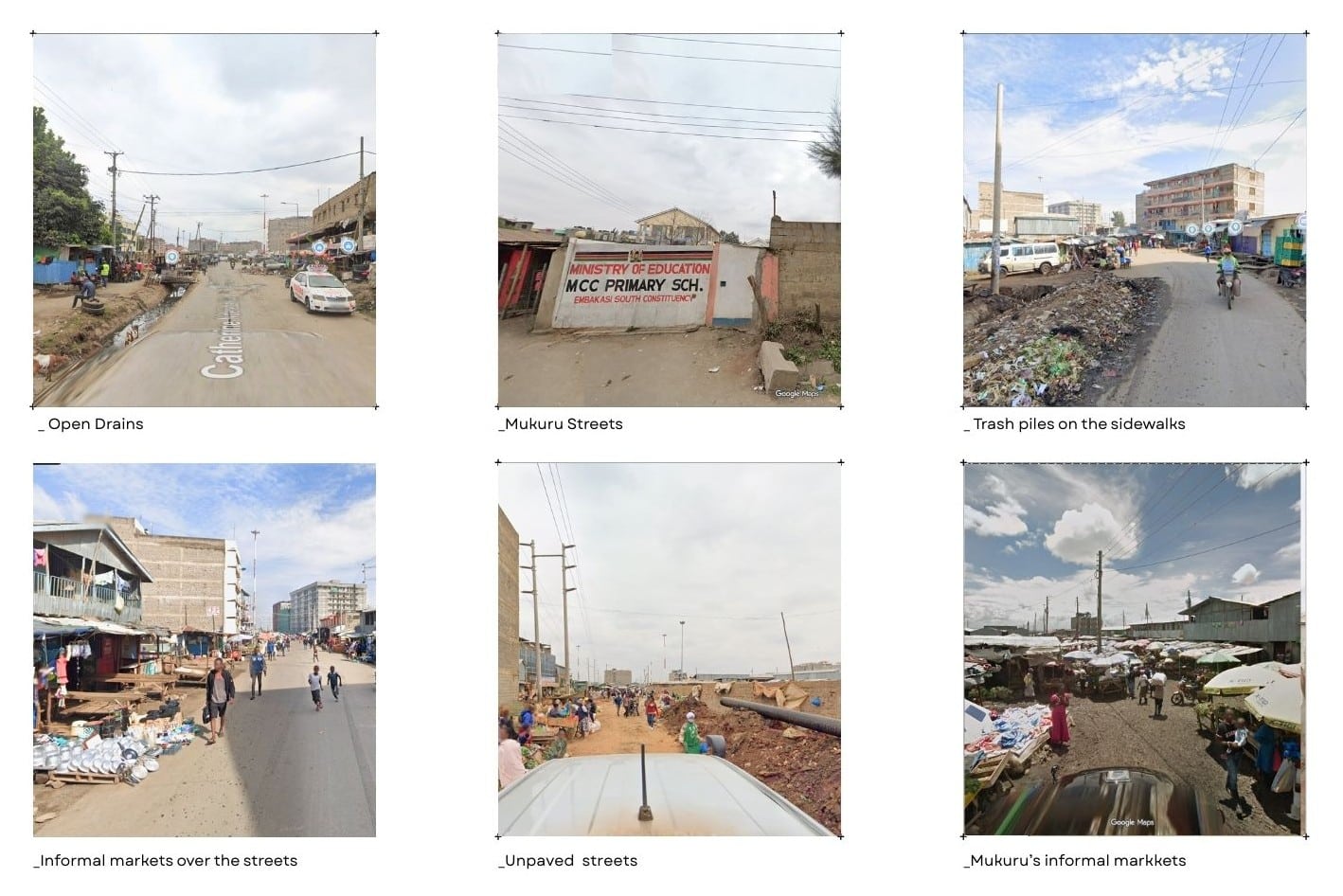
Mukuru’s problems cannot be solved from the outside. They require community voices — across age, gender, occupation, and mobility — to surface needs, debate priorities, and advocate for change. The question we asked was: how do you design a tool that makes that dialogue happen?
The Aims
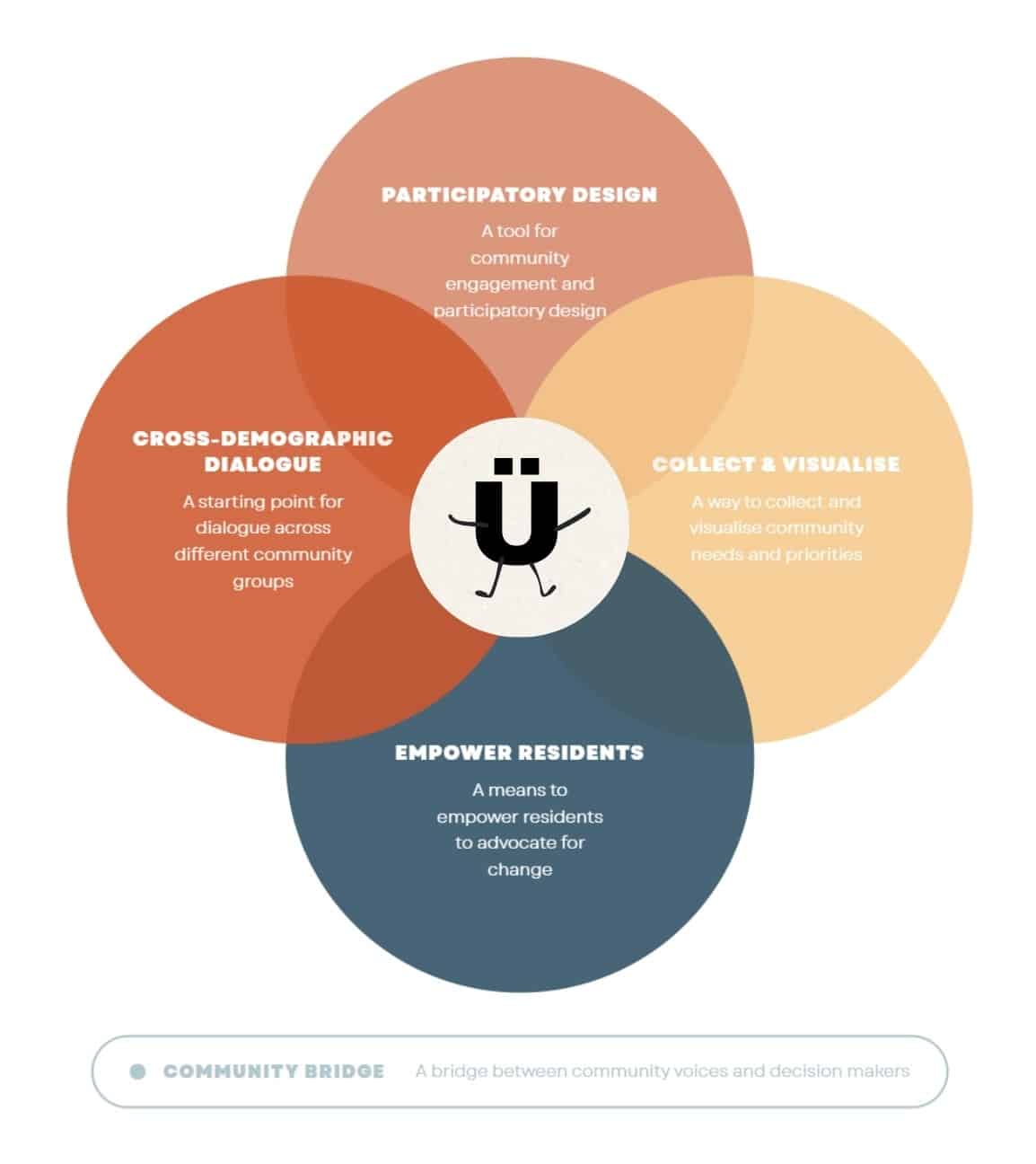
The game was designed to operate on four overlapping levels, visualised as a Venn diagram in our research:
- Participatory Design — a structured tool for community engagement that surfaces needs and priorities that traditional consultation rarely reaches
- Collect & Visualise — a method for gathering real community data through the patterns of play: which problems keep coming up, whose voice gets heard, what solutions get voted down
- Cross-Demographic Dialogue — a starting point for conversation across groups who rarely share a table: children and elders, market sellers and doctors, mobile and mobility-limited residents
- Empower Residents — a means to help community members articulate their needs and build the confidence to advocate for change
Underlying all four is what we call the Community Bridge: the game as a connector between the residents of Mukuru and the institutions — like the Special Planning Area authority — with the power to act on what they hear.
Mechanics and Design
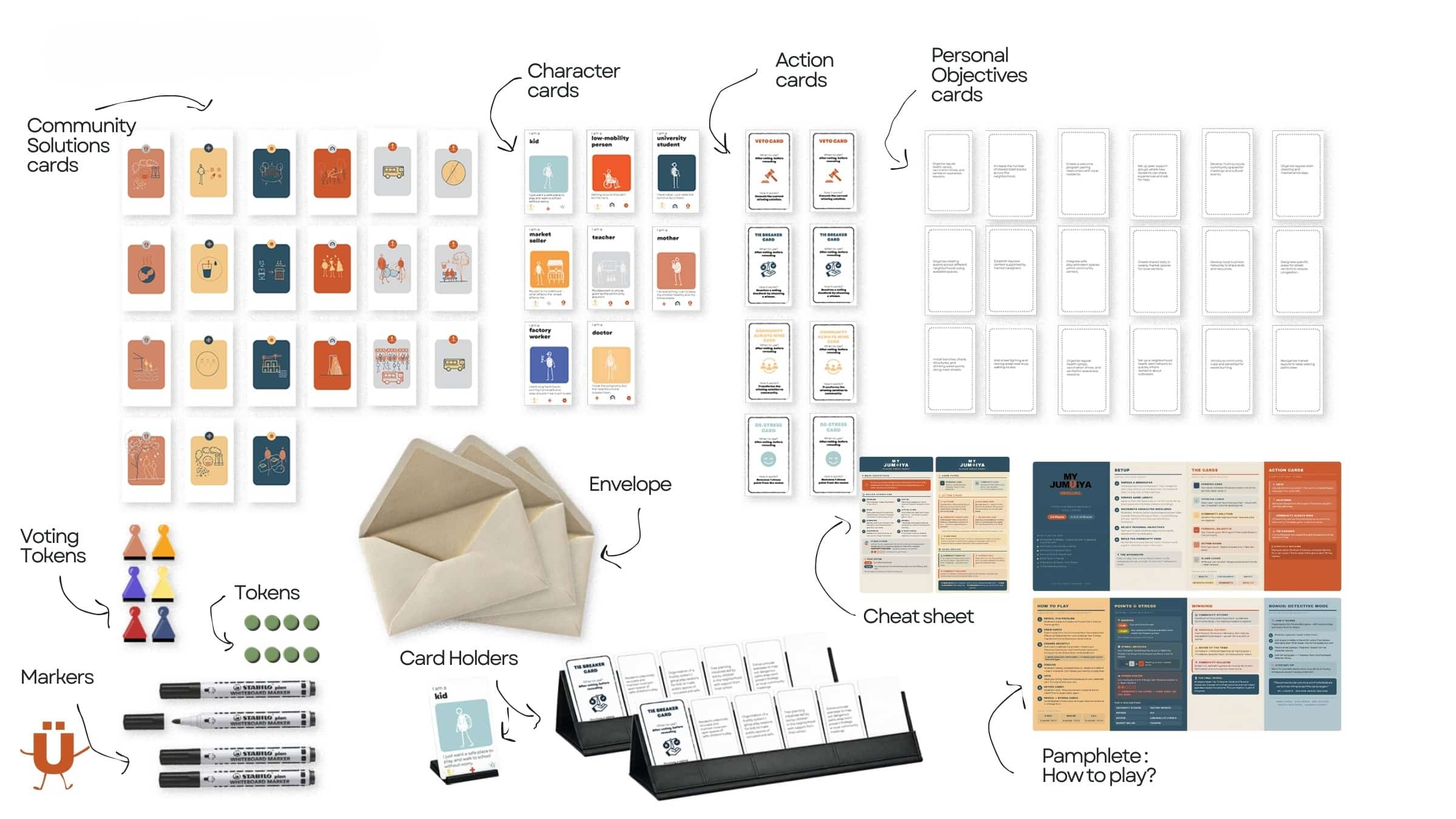
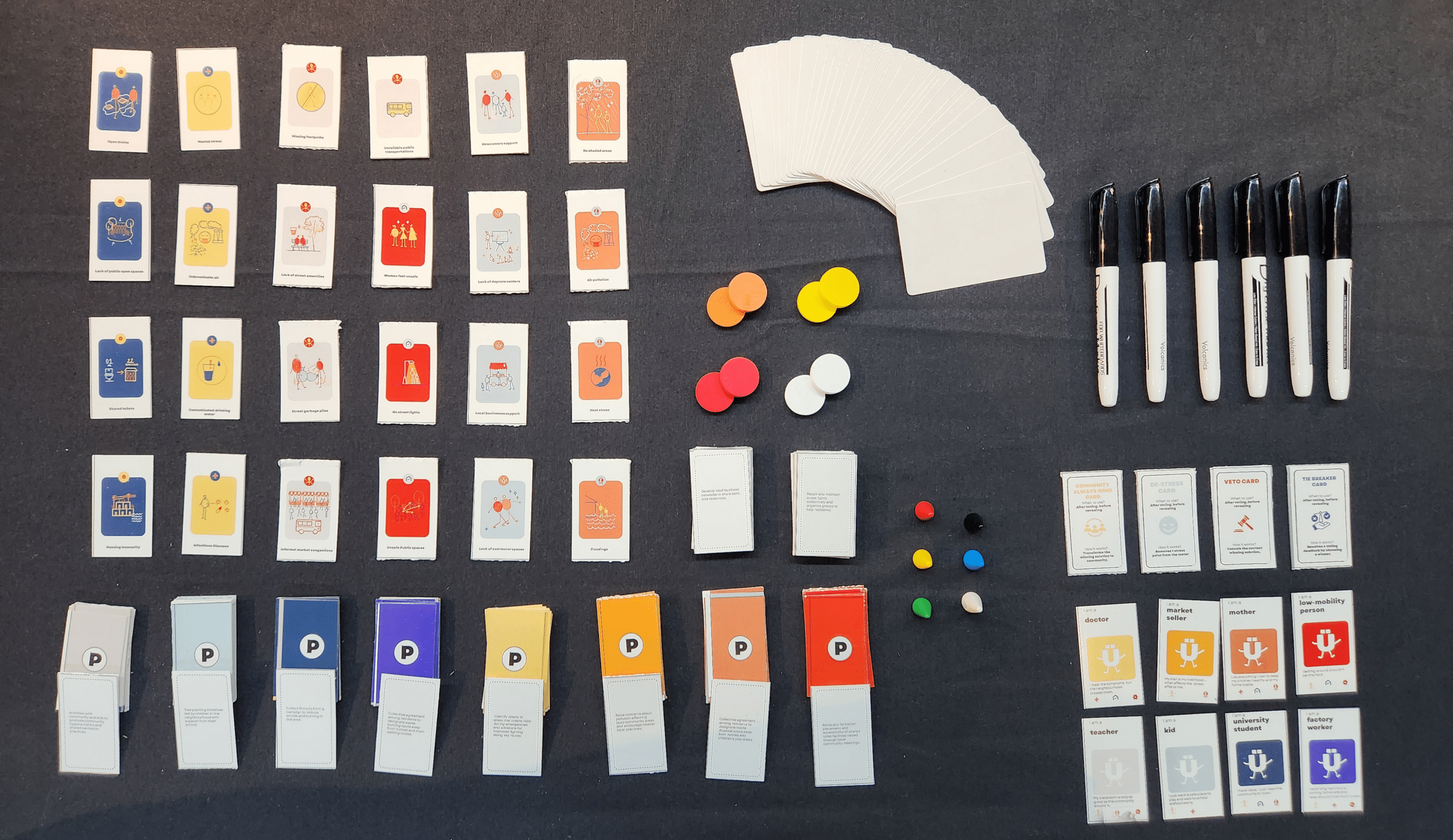
The game includes Character Cards, Problem Cards, Community Solution Cards, Personal Objective Cards, Action Cards, Blank Cards, a physical board, stress tokens, voting tokens, card stands, and envelopes. Each character envelope contains 14 personal objective cards; players select 3 to keep secret for the whole game.
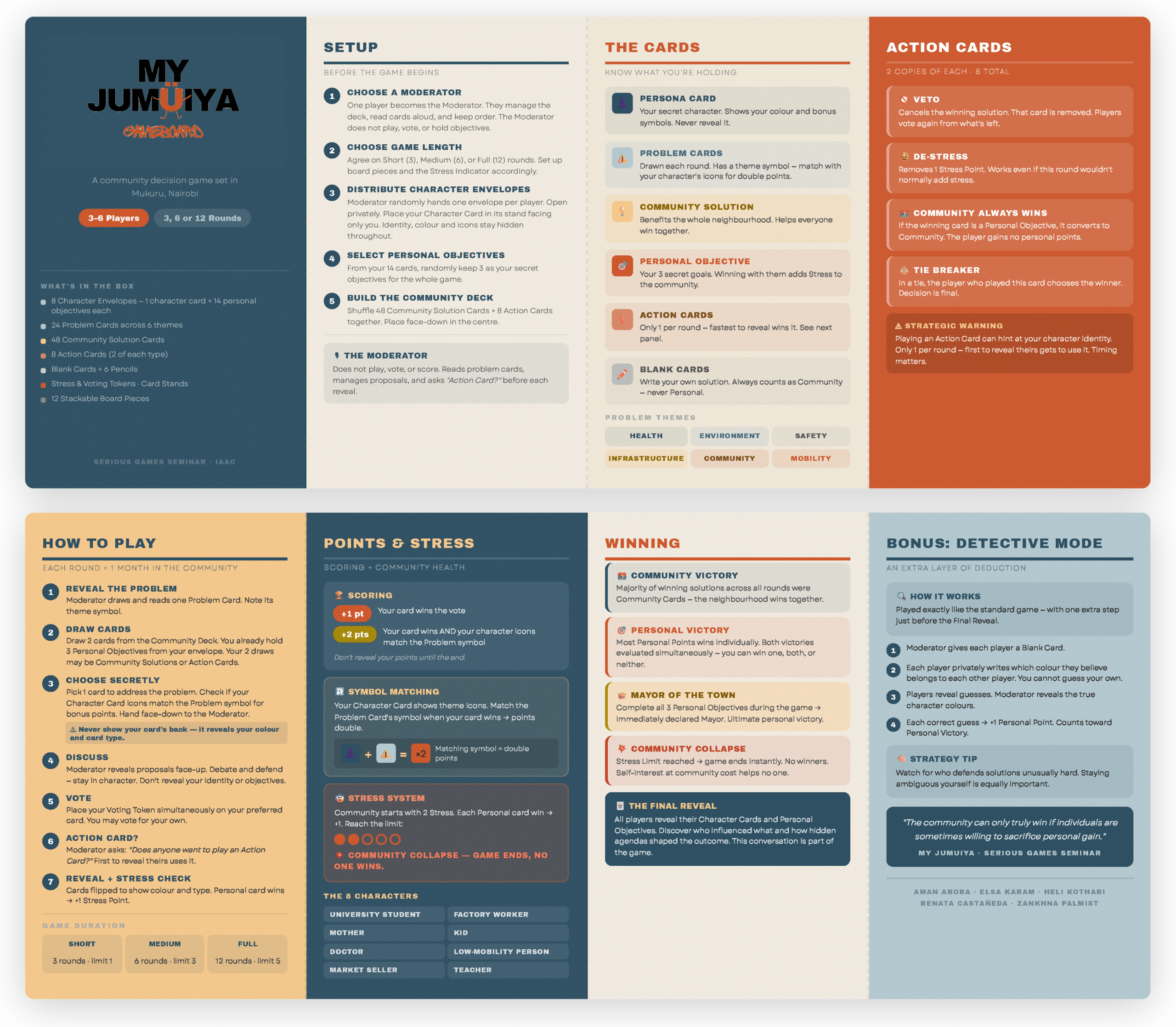
Four Action Cards introduce unpredictable power shifts — a Veto can cancel a winning solution, De-Stress removes community pressure, Community Always Wins converts a personal card into a collective one, and Tie Breaker hands decision power to a single player. Only one Action Card can be played per round, and the first player to reveal theirs wins the right to use it.
Scoring rewards both collective and individual play. Winning a round earns a personal point. Winning while your character’s symbols match the problem’s theme doubles your score. Completing all three personal objectives makes you Mayor. But none of that matters if the community collapses first.
How to play?
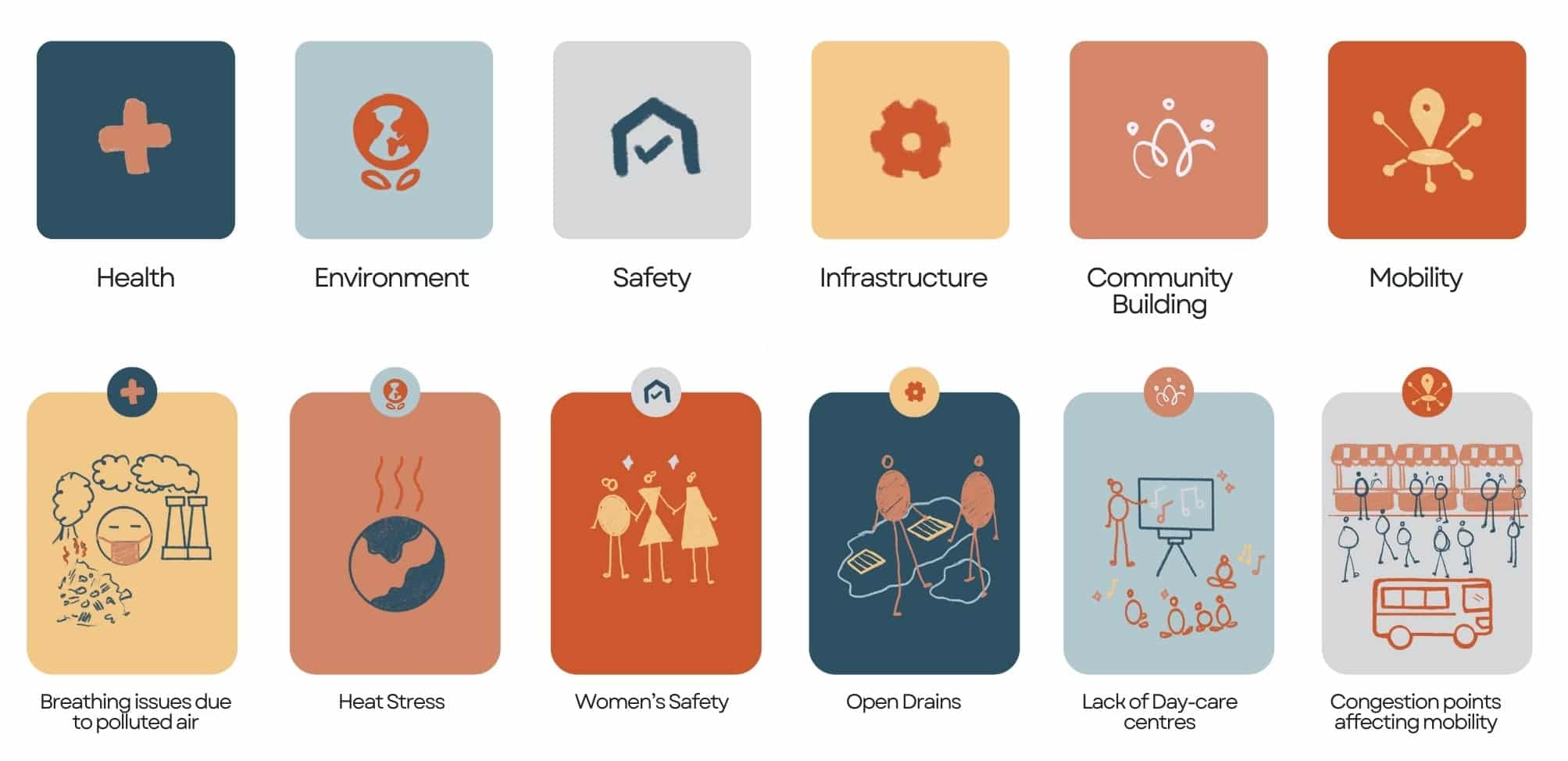
Each round, a Problem Card is revealed: flooding has contaminated the drinking water, or the streets are unsafe due to poor lighting, or informal markets are blocking the roads. Players draw cards from a shared Community Deck and privately choose one solution to propose — either a community-oriented response or a personal objective aligned with their character’s agenda. Cards are handed face-down to a neutral Moderator, then revealed and debated. The group votes on the best solution.
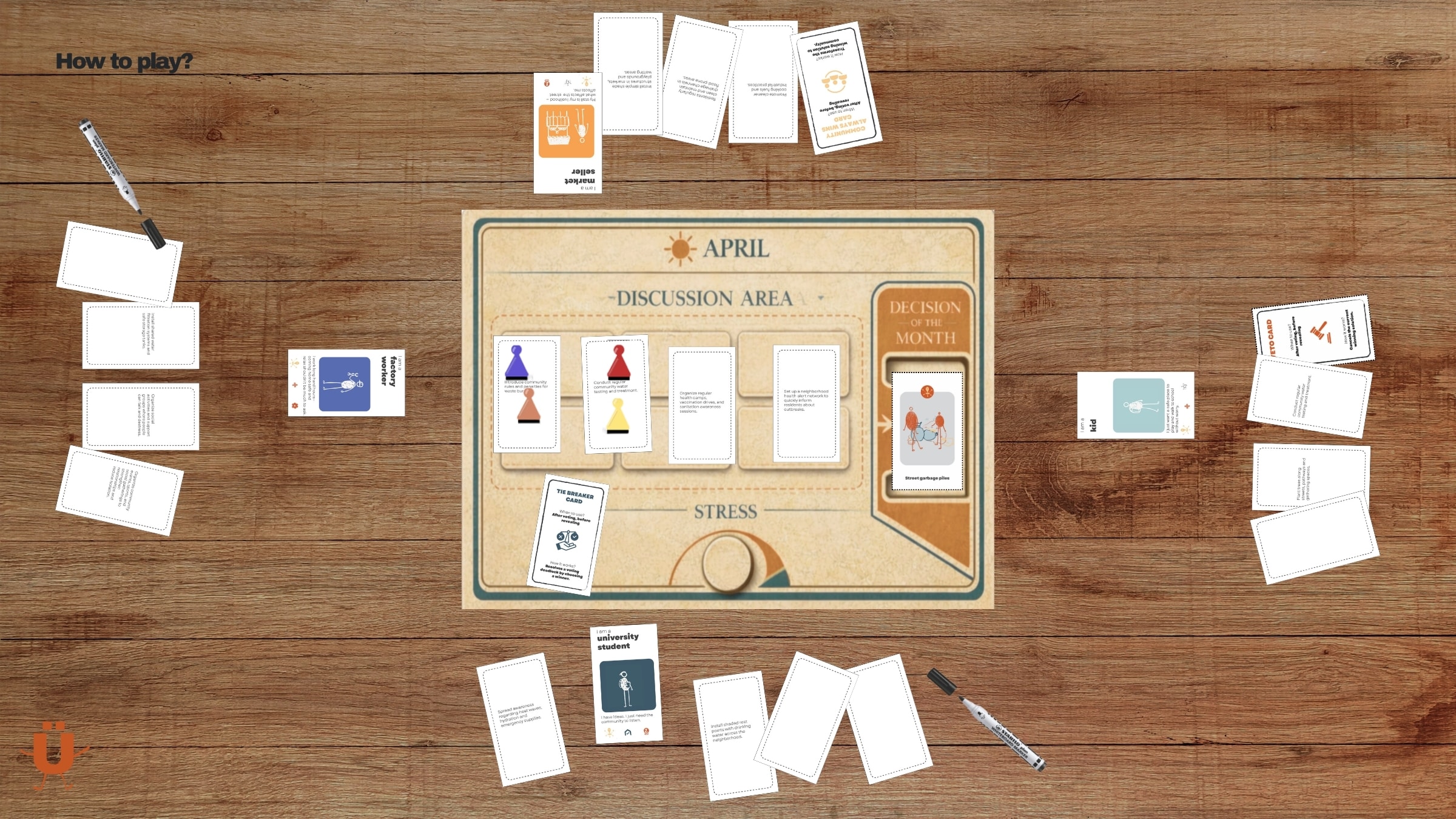
A personal card winning the vote adds Stress to the community. Accumulate too much and the game collapses — no one wins. Four Action Cards introduce unpredictable power shifts: a Veto cancels a winning solution, De-Stress reduces community pressure, Community Always Wins converts a personal card into a collective one, and Tie Breaker hands decision power to a single player. Scoring rewards both collective and individual play — and completing all three personal objectives makes you Mayor. But none of that matters if the community collapses first.
Designing by Playing
The design process was iterative and revelatory. Mapping the 8 characters forced us to think rigorously about demographics we don’t belong to — the daily reality of a low-mobility person navigating unpaved streets, or a market seller whose livelihood disappears when roads get blocked. The process built our own empathy before the game was ever played.
Through participatory playtesting rounds, we found that tension was the engine of engagement. Players became more invested the more their personal interests came into conflict with collective needs. That insight led us to increase the number of personal objective cards — raising the stakes, deepening the drama, and making the eventual community victories feel earned.
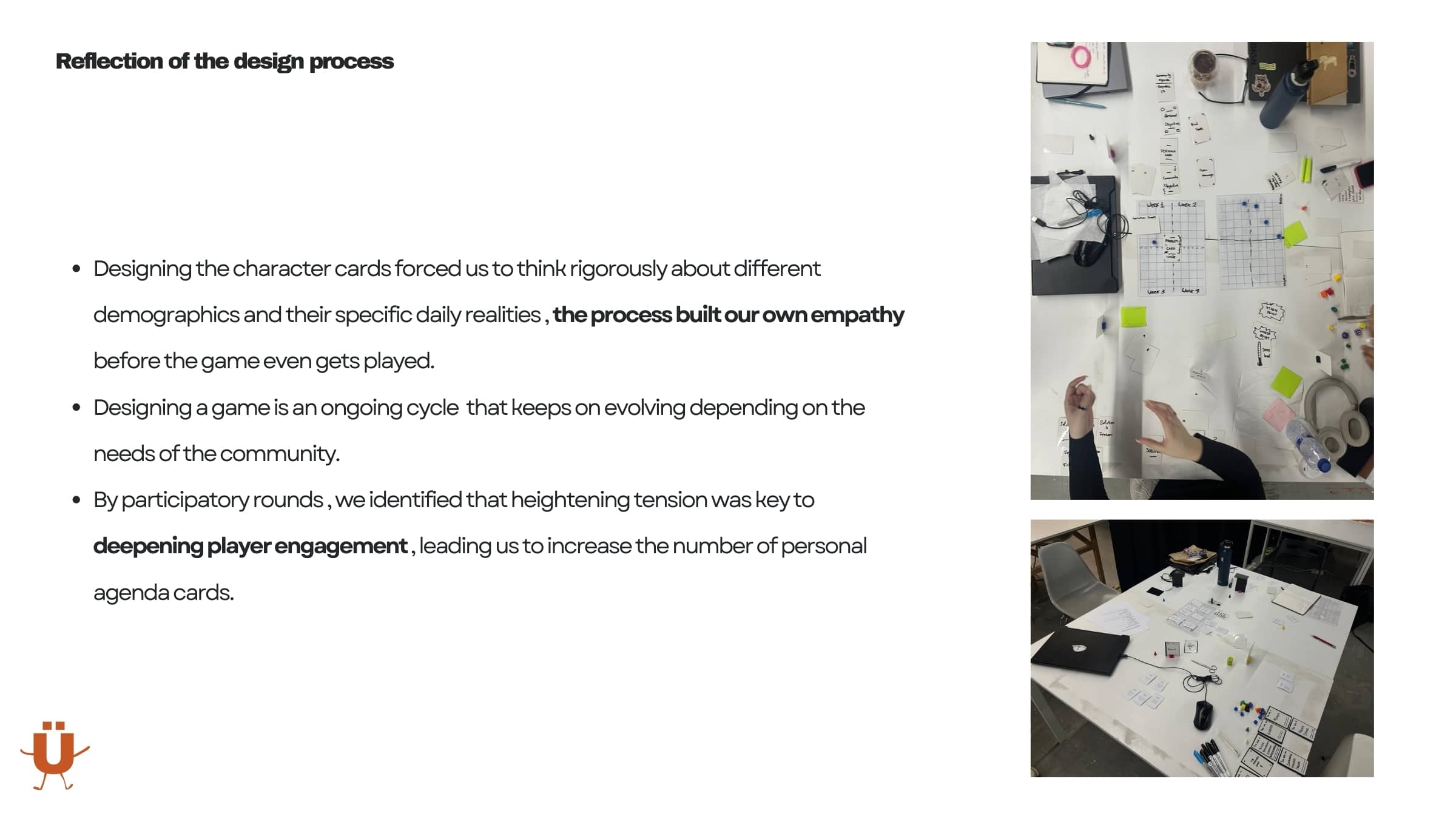
Designing a game, we learned, is never finished. It keeps evolving with the community it is meant to serve.
From Game to Research Tool
My Jumuiya sits at the intersection of two analytical layers: the structural systems of Mukuru — environmental risk, street conditions, infrastructure — and the lived systems of its residents — public perception, community knowledge, daily experience.
The game’s output — the proposals that surface, the problems that recur, the solutions that get voted down — becomes urban data. Played at scale, facilitated by organisations like the SPA, it could generate a real picture of community priorities: not a survey, not a focus group, but a conversation that feels like play.
My Jumuiya is not a solution to Mukuru’s challenges. It is a space where those challenges can be named, debated, and owned by the people who live them.
