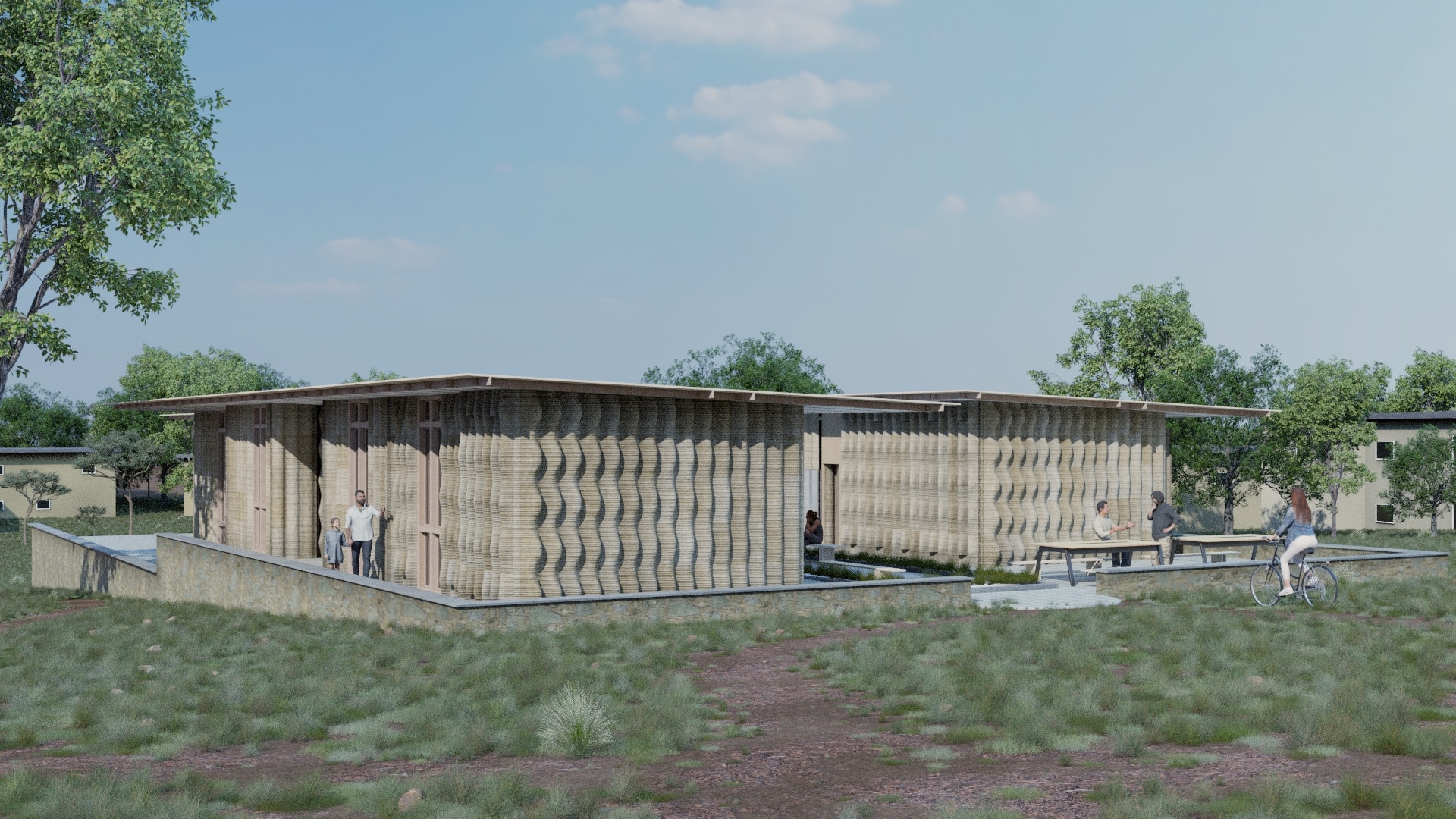
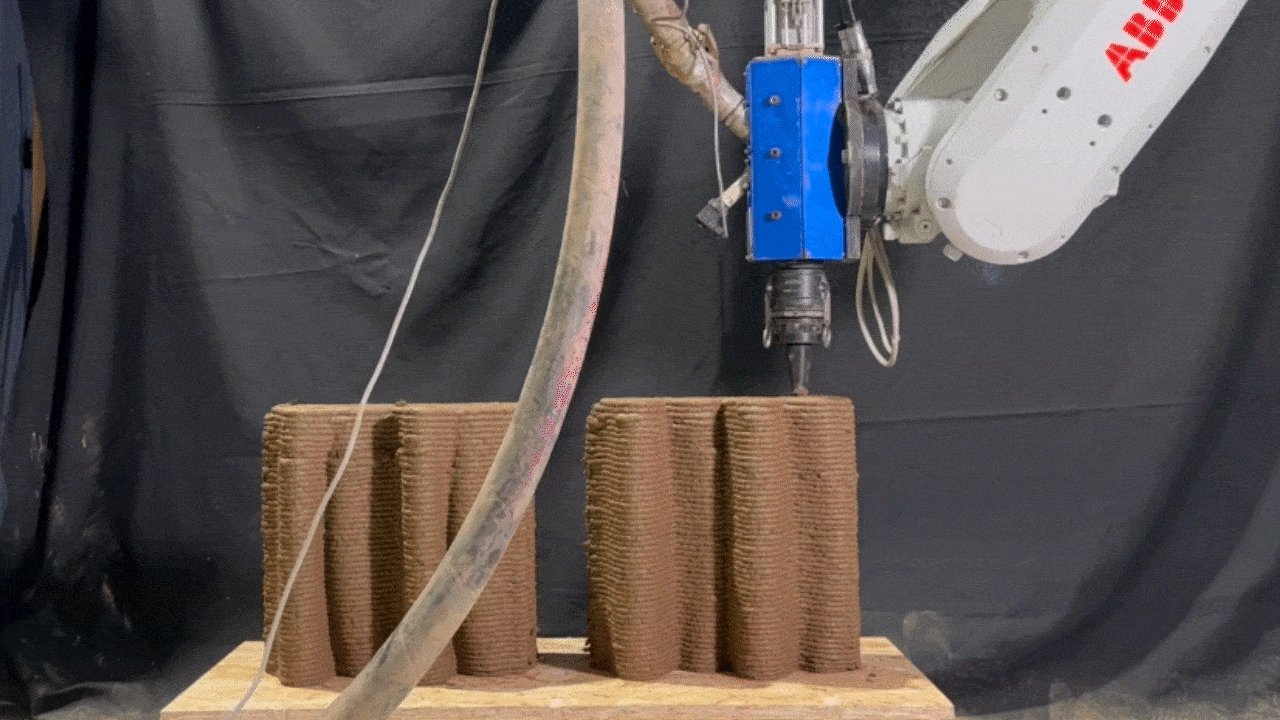
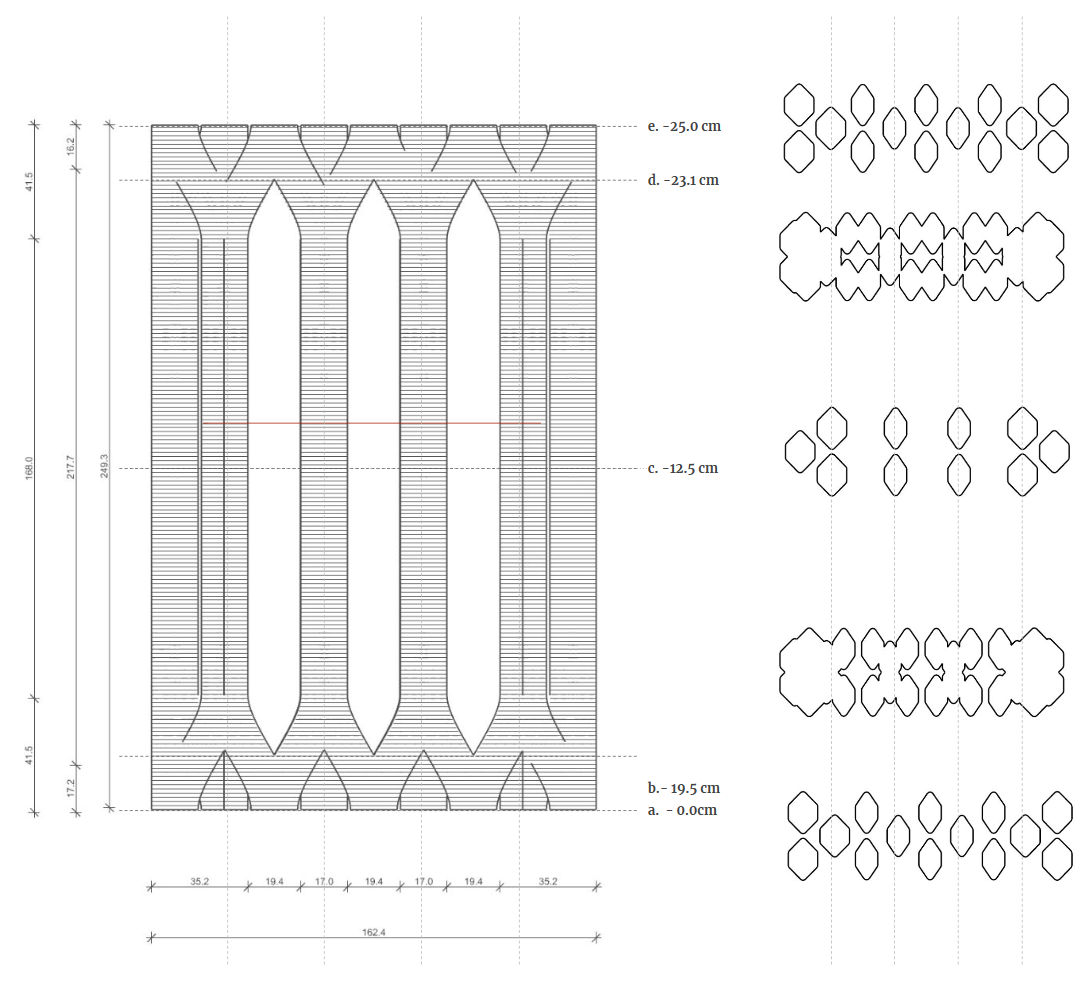
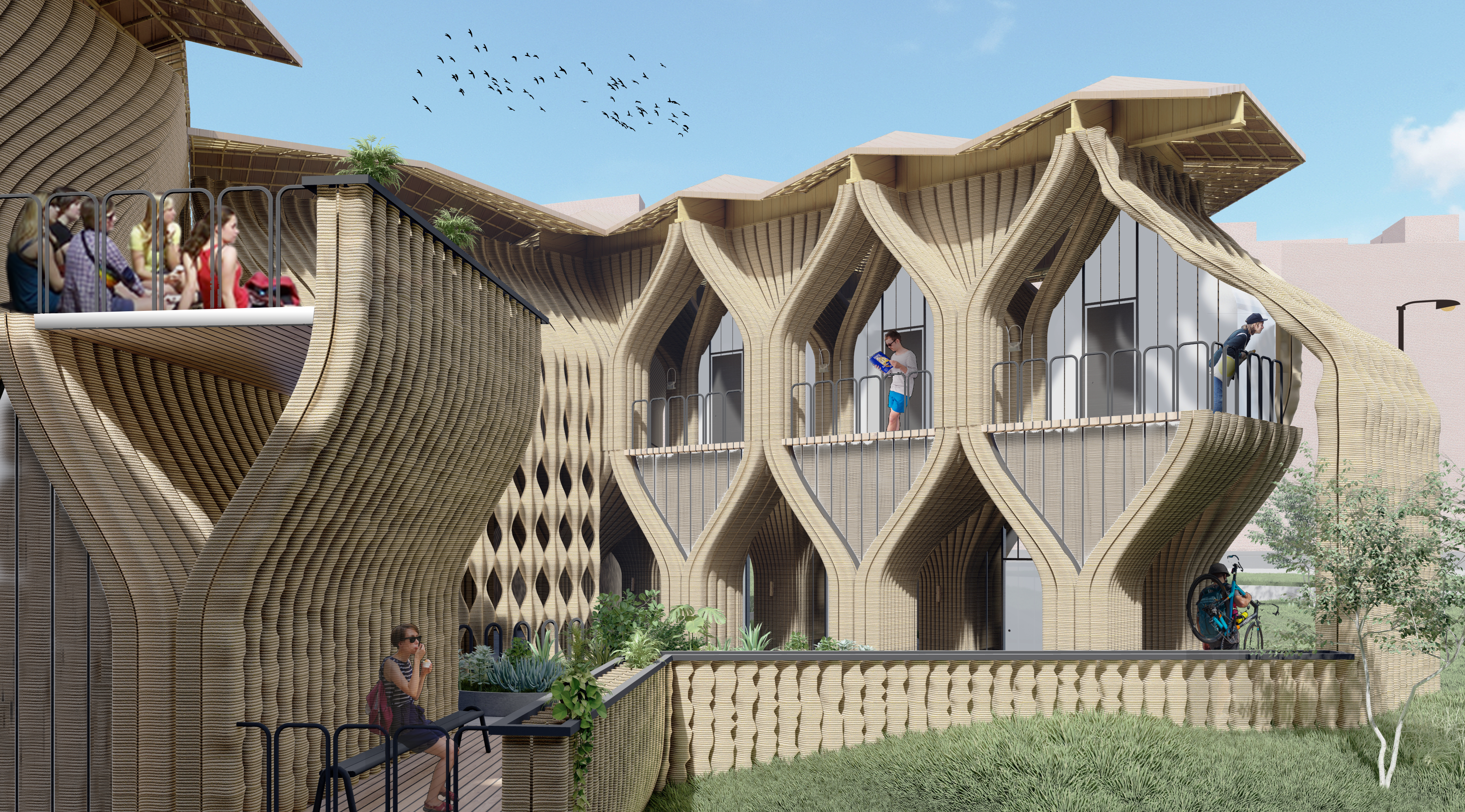
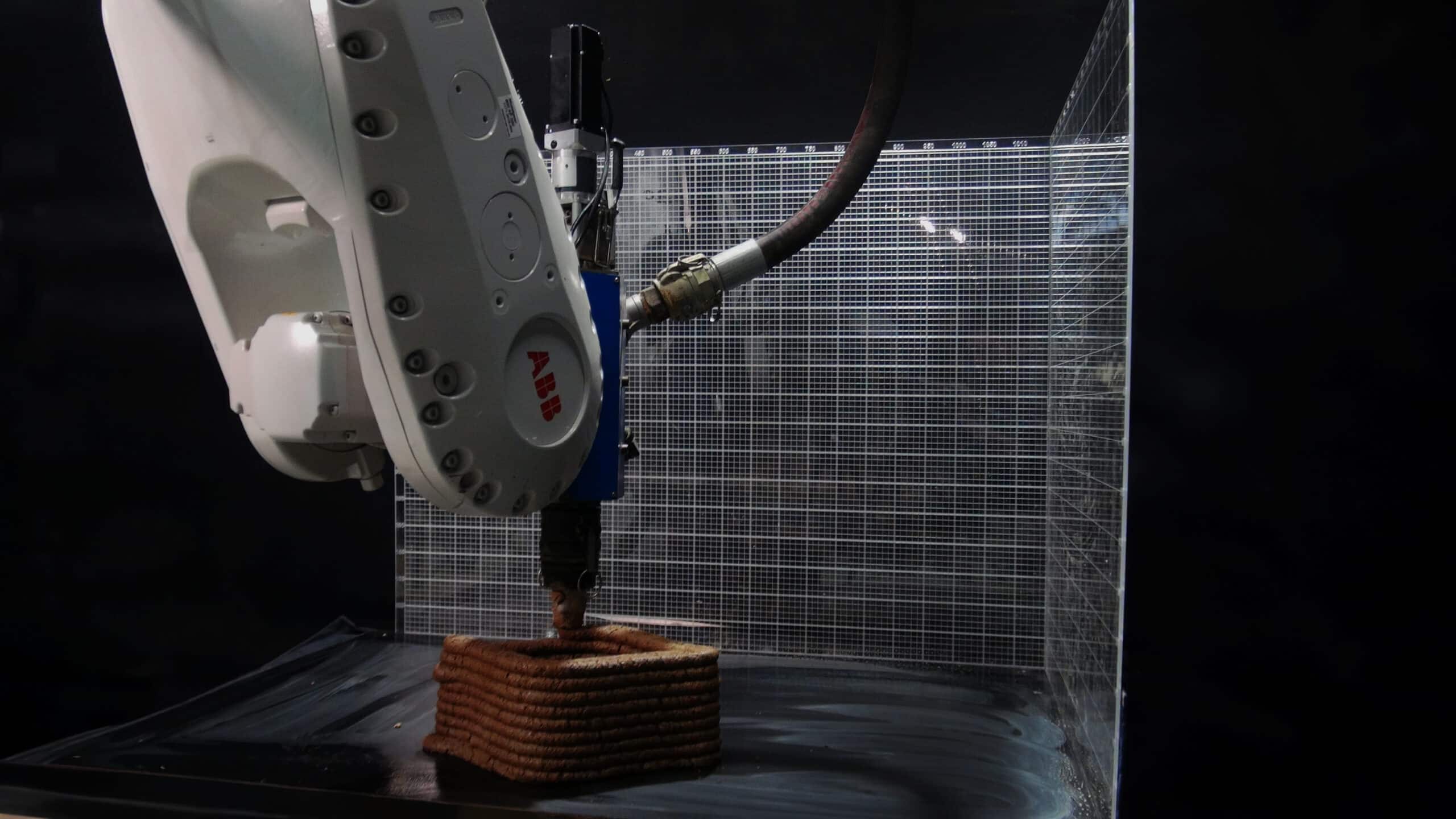
The Postgraduate in 3D Printing Architecture is a 6-month long intensive programme in the field of additive manufacturing of sustainable architecture. Between the use of advanced technology for construction and the desire to develop a holistic design approach to architecture, we engage with different areas of research that include robotic manufacturing, material research and performance-based design. The programme seeks to develop technological and architectural solutions in collaboration with Industry partners to answer the current needs and challenges of our habitat.

Filters

Bandy – House

Rooted in earth, bound by flavor “This co-living brings together four user profiles whose needs and daily rhythms shape the architecture of the project. A married couple with a child requires stability, clear routines, and functional domestic spaces; a young couple with cats needs calm and flexible environments that support living with pets; a divorced … Read more

Research_Windows and Doors

This study investigates door and window joints insertion solutions for 3dPA walls. Two design solutions: framed and a frameless system. The frameless design employs a biodegradable cork-based composite, while the framed configuration uses a sub-frame bonded with the same cork mixture and sand poured into the remaining gaps for stability. Both methods improve structural integration … Read more
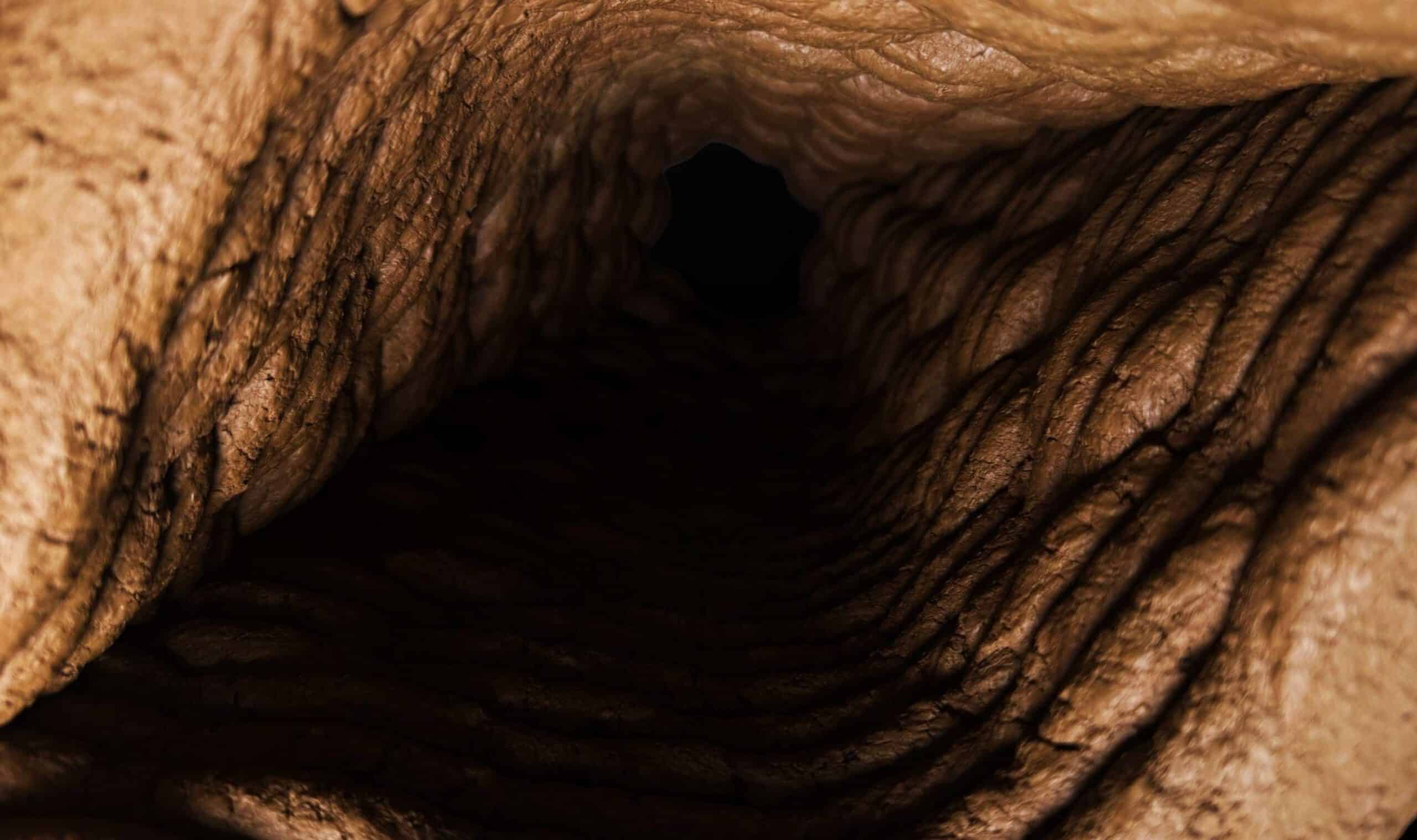
Performative Wall Textures

Introduction & Problem Statement Earthen 3D printing offers a low-carbon, recyclable, and locally sourced alternative to conventional construction materials. However, its architectural use remains limited by a critical issue: wet-state instability during printing. Freshly extruded clay has very low strength and stiffness, so walls usually reach only 15–20 cm per day. Beyond this height, the … Read more

Research _ BUILD – UP

This research focuses on one of the main limitations of 3D printing with earth: low stability in the wet state. Today, the maximum daily printing height is around 20 cm, which limits construction efficiency. This project explores how to improve wet-state stability to enable taller, faster, and more consistent earthen walls. STATE OF THE ART … Read more

Integrated Living

Sustainable Design for Six This project envisions a 3D-printed earth construction, designed for six residents, blending comfortable living with adaptable workspaces for creative professionals, all while maintaining energy efficiency and grid connectivity. We aim to create a sustainable and dynamic community hub within an urban environment. Site Location: La Florista Passive Climate Design: Adapting to … Read more

Quantitative and Rapid Buildability Assessment Techniques for 3D-Printing Earth

3DPA 2024-25 Faculty : Secil Afsar Guest Faculty : Amanda Rivera INTRODUCTION Matrix of material design strategy for 3DPA 2024-2025 ANALYSIS OF PREVIOUS YEARS Mixing strategies from the previous protoypes of 3DPA EXPECTED IMPROVEMENTS Matrix for default design strategies from previous years, and areas for future improvement MATTER RESEARCH Testing different matter mixes, and additives … Read more

Research : Optimizing Self-Shading in Clay 3D-Printed Geometries

Hypothesis Optimizing Self-Shading in Clay 3D-Printed Geometries Methodology Incidence vector analysis:Using the position of the sun in Barcelona to simulate realistic shading.Evaluation of different vectors and orientations to identify optimal shading configurations.Geometric modification:Create geometric modifications according to vectors at a precise hour, 14:00 on 21 June and then at different hours 13:00, 14:00, 15:00, 16:00.Adjusting … Read more

Vertical Openings

This research focuses on the exploration of vertical openings in 3D printed earthen walls. It seeks to answer the question: How to construct medium and large vertical openings in earth 3D printing, providing a maximum opening ratio while minimizing mass and material usage? The objectives of this research are: