During the second year of the Master in Advanced Architecture + Thesis Project (MAA02), students have the unique opportunity to work for a period of 1 year on an Individual Thesis Project, focused on the development of a research or pilot project based on the student’s interest, and the learnings of the first year. IAAC supports the student in selecting their Thesis Project topic in order to better orient them according to their future career interests and opportunities. Each student, according to their specific topic, is assigned one or more Thesis Advisors that follow the development of the work throughout the year.

In parallel to the development of the Individual Thesis Project, the second year of the MAA02 offers a series of seminars enhancing the theoretical, practical and computational skills of the students.

Filters
Course

Wildlife Integrating Landscape Design Artificial Intelligence – WILD.AI — Term_III

CONTEXT DYNAMICS METHODOLOGY ANALYSIS By subtracting different scenarios from one another: The differences start to become clear as to what areas are consisently lost vs what areas are inconsistently lost. The latter being the one where planners and ecologists should focus their efforts the most if aiming to potentialize action. The figure becomes even clearer … Read more
Transient Plastics 3.0

The plastic crisis has reached staggering proportions. If all the plastic waste on Earth were laid out, it would be enough to cover the entire surface of Argentina ankle-deep. Every year, we produce 300 million tons of plastic globally. Yet only 10% remains in use, while more than 80% is discarded. Of this discarded plastic, … Read more

SKYLOFT

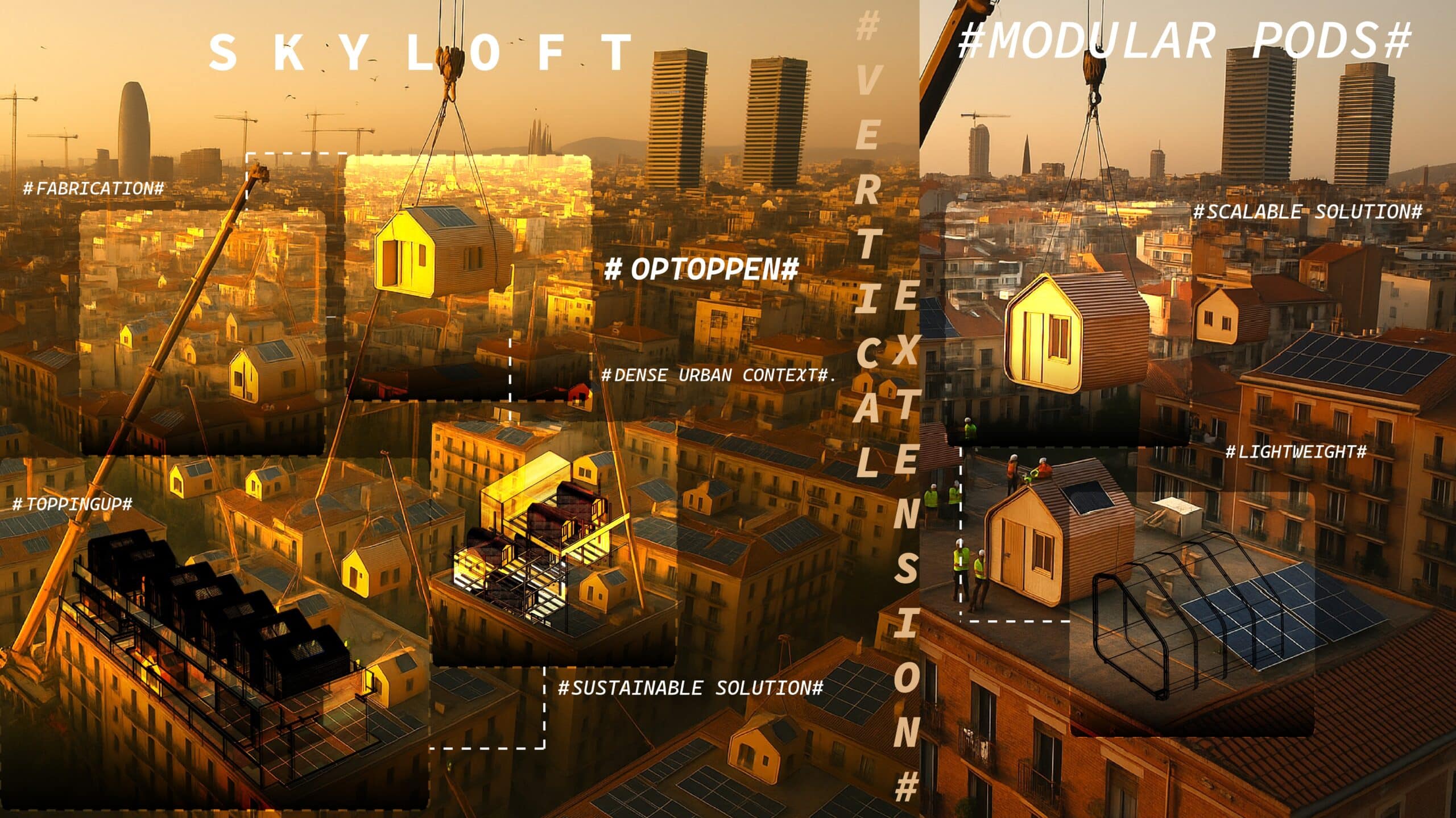
MODULAR PODS VERTICAL EXTENSIONS To address urgent urban housing needs, this thesis explores modular rooftop pods using Digital Twins, CNC fabrication, kerfing, and timber joinery—enabling precise, low-waste, minimum tool required for assembling and sustainable expansion of aging urban buildings through scalable and prefabricated Modular systems Why Vertical extension required ? What’s the purpose of the … Read more

Bio-Build/ final 3rd Term

From Farm to Form It’s estimated that around the world we could create up to 2 billion tones of agricultural waste each year. The EU produces 700 million tones of agricultural waste annually The key point I want to emphasize here is the upcycling of rice husks to unlock greater value. While converting rice husks … Read more

Rooted Eco-Scapes

An Exploration of Root Architecture and Material Study | TERM-2 EFFECTS OF EROSION CAUSES OF EROSION CURRENT SOLUTIONS AND PROBLEMS: THESIS OBJECCTIVE (WHAT IS NEEDED) POTENTIAL SITES STATE OF THE ART 3 MAIN TYPOLOGIES BIOLOGICAL ( ROOT AND SOIL STUDY), STRUCTURAL (SOIL COMPOSITION AND PRINTABILITY), DESIGN (SITE AND SPECIE SPECIFIC DESIGN EXPLORATION) BIOLOGICAL TYPOLOTY – … Read more

Customizing comfort

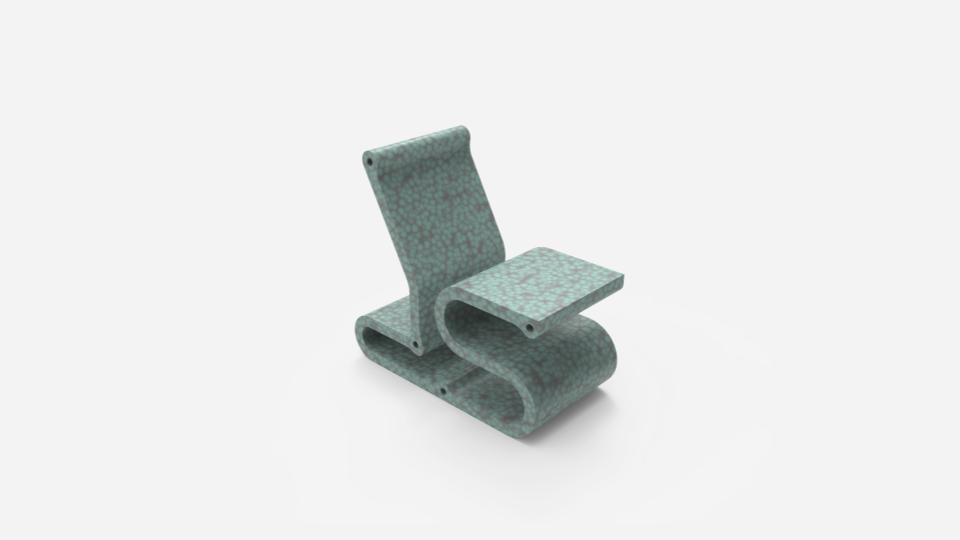
From parts to purpose – embracing circularity by redefining furniture composition Problem In contemporary furniture markets there is a problem of the environmental impact caused by inefficient design, excessive waste generation, and unsustainable consumption. Results are overproduction, resource depletion, and high carbon emissions during production processes. Additionally, limited design solutions don’t fully meet user needs, … Read more

WOODEN MOSAIC

Wooden Mosaic tries to tackle the increasing global demand for timber by using waste branches from Timber industries. These waste branches are transformed into modular blocks with conventional tools, offering a sustainable supplement to the current timber industry. Using the waste wood, the aim IS to decrease the environmental impact associated with logging and wood … Read more

EcoBrickscape

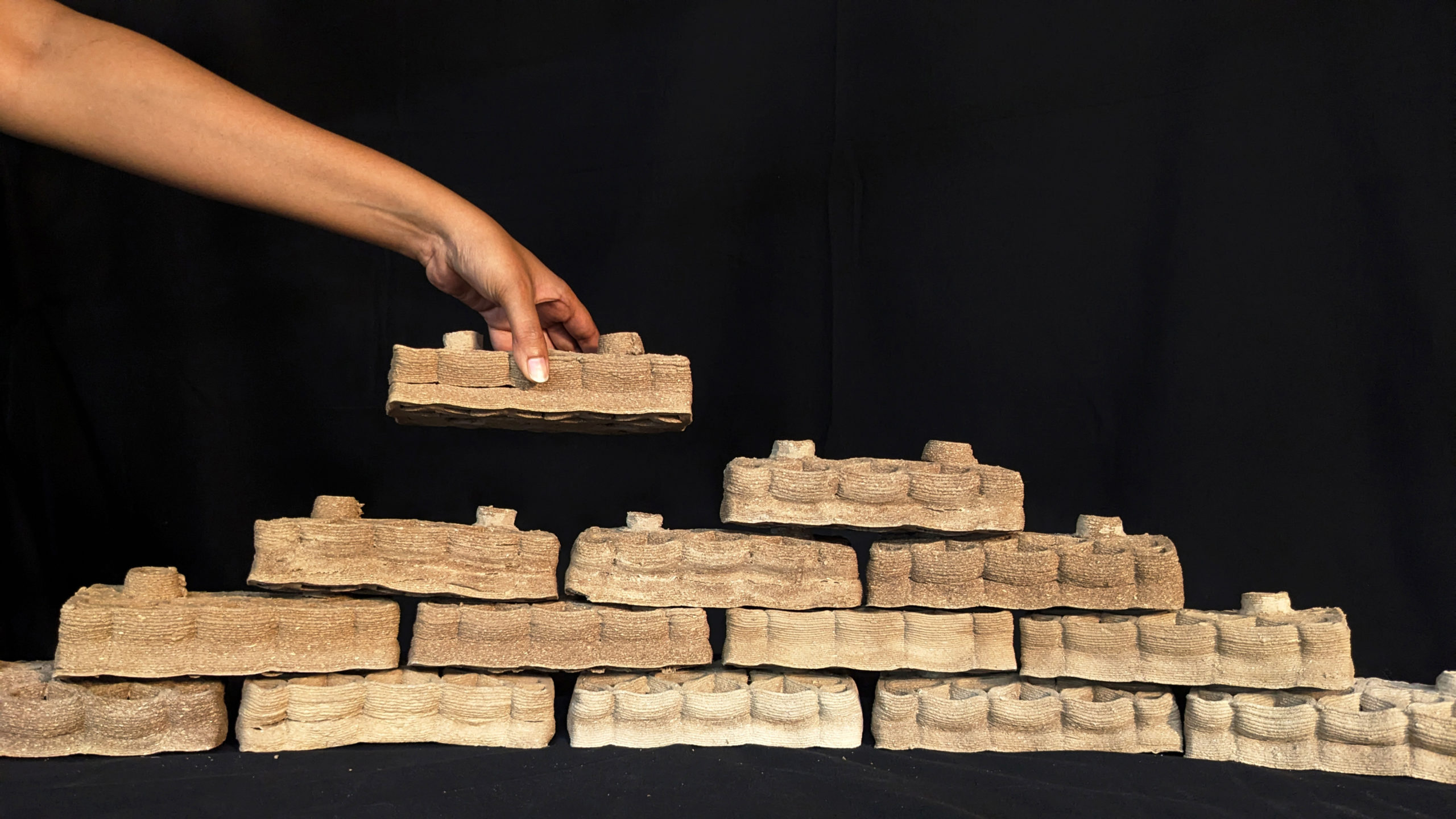
THESIS STATEMENT The objective of this thesis is to investigate the use of sawdust based biocomposite materials in the additive manufacturing of interlocking bricks. EcoBrickscape aims to develop a workflow that facilitates the generation of customizable shapes and infill designs that are optimal for interlocking and aggregating, enabling efficient fabrication and assembly. The study also … Read more

MODERN MODERNISME

Posidonia Oceanica: The Aquatic Seagrass Species Posidonia oceanica is a species of aquatic seagrass that belongs to the Posidoniaceae family. It possesses roots, a rhizomatous stem, and ribbon-like leaves, resembling those of terrestrial plants. These features allow it to anchor itself to the seabed and spread horizontally, forming extensive meadows in the Mediterranean Sea. These … Read more

Second Slice

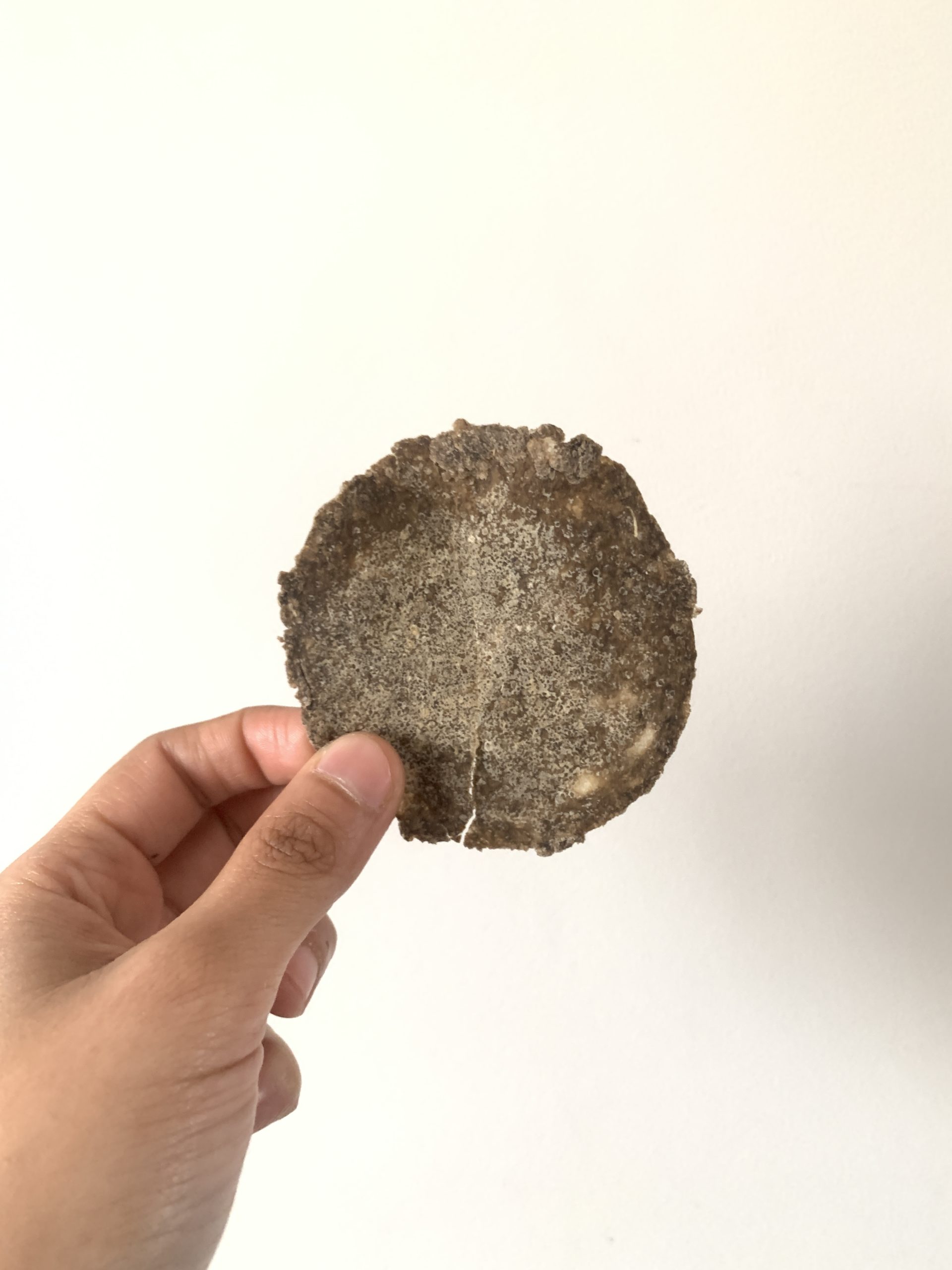
Second Slice Giving bread waste a second chance START-UP Second Slice is a start-up dedicated to transforming the sustainability landscape through the upcycling of bread waste into vegan leather using bread and mycelium. Our mission is to provide an eco-friendly alternative to traditional leather production while simultaneously reducing food waste. By harnessing the power of … Read more

CIRCULAR CLOTHING

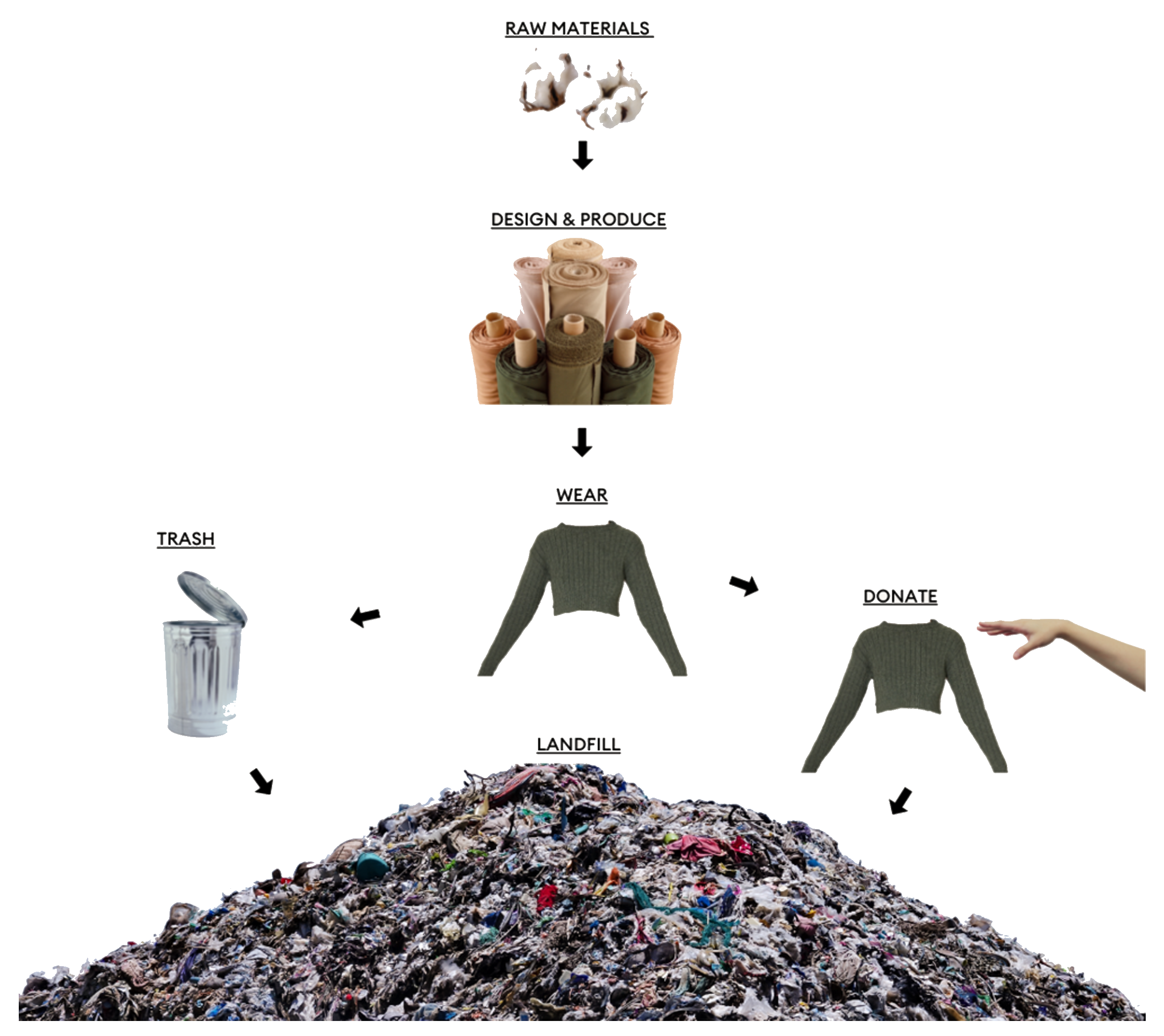
Causal loop diagrams is tool that is used to tell stories about the complex issues within the fast fashion industry. By identifying the interrelationships within the system’s structure, these diagrams helps to understand the impacts and trade-offs associated with different factors. The resulting visual representation then is used to effectively communicate this understanding and facilitate … Read more

Made By You

The Problem According to the World Bank, approximately 68% of the population in Sub-Saharan Africa resides in urban areas. Similarly the International Finance Corporation (IFC) highlights the concentration of furniture imports in urban areas, causing a surge in furniture prices. For locally fabricated furniture, high production costs and inefficient supply chains contribute to expensive furniture … Read more